The rural tranquillity of the lonely, pine-girthed shores of the Maine coast is the setting for this beautiful novel of conflicting aspirations written by one of the most prolific and influential writers in American history. Here is the heartwarming story of a young girl's struggle to belong and fit in, in the face of adversity, and of her upbringing among strong women, grumpy fishermen, annoying gossips, sea captains, and the dreamlike, temptestuous landscape of Orr's Island. THE PEARL OF ORR'S ISLAND is one of the forgotten -- but not lost -- masterpieces of American literature. It reflects Harriet Beecher Stowe's awareness of the complexity of small-town society, her commitment to realism, and her fluency in the local language........ Harriet Elisabeth Beecher Stowe ( June 14, 1811 - July 1, 1896) was an American abolitionist and author. She came from the Beecher family, a famous religious family, and is best known for her novel Uncle Tom's Cabin (1852), which depicts the harsh conditions for enslaved African Americans. The book reached millions as a novel and play, and became influential in the United States and Great Britain, energizing anti-slavery forces in the American North, while provoking widespread anger in the South. Stowe wrote 30 books, including novels, three travel memoirs, and collections of articles and letters. She was influential for both her writings and her public stances on social issues of the day. Life and work: Harriet Elisabeth Beecher was born in Litchfield, Connecticut, on June 14, 1811. She was the seventh of 13 children born to outspoken Calvinist preacher Lyman Beecher and Roxana (Foote), a deeply religious woman who died when Stowe was only five years old. Roxana's maternal grandfather was General Andrew Ward of the Revolutionary War. Her notable siblings included a sister, Catharine Beecher, who became an educator and author, as well as brothers who became ministers: including Henry Ward Beecher, who became a famous preacher and abolitionist, Charles Beecher, and Edward Beecher. Harriet enrolled in the Hartford Female Seminary run by her older sister Catharine, where she received a traditional academic education usually reserved for males at the time with a focus in the classics, including studies of languages and mathematics. Among her classmates was Sarah P. Willis, who later wrote under the pseudonym Fanny Fern. In 1832, at the age of 21, Harriet Beecher moved to Cincinnati, Ohio to join her father, who had become the president of Lane Theological Seminary. There, she also joined the Semi-Colon Club, a literary salon and social club whose members included the Beecher sisters, Caroline Lee Hentz, Salmon P. Chase (future governor of the state and Secretary of Treasury under President Lincoln), Emily Blackwell and others. Cincinnati's trade and shipping business on the Ohio River was booming, drawing numerous migrants from different parts of the country, including many free blacks, as well as Irish immigrants who worked on the state's canals and railroads. Areas of the city had been wrecked in the Cincinnati riots of 1829, when ethnic Irish attacked blacks, trying to push competitors out of the city. Beecher met a number of African Americans who had suffered in those attacks, and their experience contributed to her later writing about slavery. Riots took place again in 1836 and 1841, driven also by native-born anti-abolitionists. It was in the literary club that she met Calvin Ellis Stowe, a widower who was a professor at the seminary. The two married on January 6, 1836. He was an ardent critic of slavery, and the Stowes supported the Underground Railroad, temporarily housing several fugitive slaves in their home. Most slaves continued north to secure freedom in Canada. The Stowes had seven children together, including twin daughters..............
Anne Isabella Noel Byron, 11th Baroness Wentworth and Baroness Byron ( 17 May 1792 - 16 May 1860), nicknamed Annabella and commonly known as Lady Byron, was the wife of poet George Gordon Byron, more commonly known as Lord Byron. A highly educated and strictly religious woman, she seemed an unlikely match for the amoral and agnostic poet, and their marriage soon ended in acrimony. Lady Byron's reminiscences, published after her death by Harriet Beecher Stowe, revealed her fears about an alleged incest Lord Byron had with his half-sister. The scandal about Lady Byron's suspicions accelerated Byron's intentions to leave England and return to the Mediterranean where he had lived in 1810. Their daughter Ada worked as a mathematician with Charles Babbage, the pioneer of computer science. Lady Byron had felt that an education in mathematics and logic would counteract any possible inherited tendency towards Lord Byron's insanity and romantic excess..... Harriet Elisabeth Beecher Stowe ( June 14, 1811 - July 1, 1896) was an American abolitionist and author. She came from the Beecher family, a famous religious family, and is best known for her novel Uncle Tom's Cabin (1852), which depicts the harsh conditions for enslaved African Americans. The book reached millions as a novel and play, and became influential in the United States and Great Britain, energizing anti-slavery forces in the American North, while provoking widespread anger in the South. Stowe wrote 30 books, including novels, three travel memoirs, and collections of articles and letters. She was influential for both her writings and her public stances on social issues of the day. Life and work: Harriet Elisabeth Beecher was born in Litchfield, Connecticut, on June 14, 1811. She was the seventh of 13 children born to outspoken Calvinist preacher Lyman Beecher and Roxana (Foote), a deeply religious woman who died when Stowe was only five years old. Roxana's maternal grandfather was General Andrew Ward of the Revolutionary War. Her notable siblings included a sister, Catharine Beecher, who became an educator and author, as well as brothers who became ministers: including Henry Ward Beecher, who became a famous preacher and abolitionist, Charles Beecher, and Edward Beecher. Harriet enrolled in the Hartford Female Seminary run by her older sister Catharine, where she received a traditional academic education usually reserved for males at the time with a focus in the classics, including studies of languages and mathematics. Among her classmates was Sarah P. Willis, who later wrote under the pseudonym Fanny Fern. In 1832, at the age of 21, Harriet Beecher moved to Cincinnati, Ohio to join her father, who had become the president of Lane Theological Seminary. There, she also joined the Semi-Colon Club, a literary salon and social club whose members included the Beecher sisters, Caroline Lee Hentz, Salmon P. Chase (future governor of the state and Secretary of Treasury under President Lincoln), Emily Blackwell and others. Cincinnati's trade and shipping business on the Ohio River was booming, drawing numerous migrants from different parts of the country, including many free blacks, as well as Irish immigrants who worked on the state's canals and railroads. Areas of the city had been wrecked in the Cincinnati riots of 1829, when ethnic Irish attacked blacks, trying to push competitors out of the city. Beecher met a number of African Americans who had suffered in those attacks, and their experience contributed to her later writing about slavery. Riots took place again in 1836 and 1841, driven also by native-born anti-abolitionists. It was in the literary club that she met Calvin Ellis Stowe, a widower who was a professor at the seminary. The two married on January 6, 1836. He was an ardent critic of slavery, and the Stowes supported the Underground Railroad, temporarily housing several fugitive slaves in their home....
Harriet Elisabeth Beecher Stowe ( June 14, 1811 - July 1, 1896) was an American abolitionist and author. She came from the Beecher family, a famous religious family, and is best known for her novel Uncle Tom's Cabin (1852), which depicts the harsh conditions for enslaved African Americans. The book reached millions as a novel and play, and became influential in the United States and Great Britain, energizing anti-slavery forces in the American North, while provoking widespread anger in the South. Stowe wrote 30 books, including novels, three travel memoirs, and collections of articles and letters. She was influential for both her writings and her public stances on social issues of the day. Life and work: Harriet Elisabeth Beecher was born in Litchfield, Connecticut, on June 14, 1811. She was the seventh of 13 children born to outspoken Calvinist preacher Lyman Beecher and Roxana (Foote), a deeply religious woman who died when Stowe was only five years old. Roxana's maternal grandfather was General Andrew Ward of the Revolutionary War. Her notable siblings included a sister, Catharine Beecher, who became an educator and author, as well as brothers who became ministers: including Henry Ward Beecher, who became a famous preacher and abolitionist, Charles Beecher, and Edward Beecher. Harriet enrolled in the Hartford Female Seminary run by her older sister Catharine, where she received a traditional academic education usually reserved for males at the time with a focus in the classics, including studies of languages and mathematics. Among her classmates was Sarah P. Willis, who later wrote under the pseudonym Fanny Fern. In 1832, at the age of 21, Harriet Beecher moved to Cincinnati, Ohio to join her father, who had become the president of Lane Theological Seminary. There, she also joined the Semi-Colon Club, a literary salon and social club whose members included the Beecher sisters, Caroline Lee Hentz, Salmon P. Chase (future governor of the state and Secretary of Treasury under President Lincoln), Emily Blackwell and others. Cincinnati's trade and shipping business on the Ohio River was booming, drawing numerous migrants from different parts of the country, including many free blacks, as well as Irish immigrants who worked on the state's canals and railroads. Areas of the city had been wrecked in the Cincinnati riots of 1829, when ethnic Irish attacked blacks, trying to push competitors out of the city. Beecher met a number of African Americans who had suffered in those attacks, and their experience contributed to her later writing about slavery. Riots took place again in 1836 and 1841, driven also by native-born anti-abolitionists. It was in the literary club that she met Calvin Ellis Stowe, a widower who was a professor at the seminary. The two married on January 6, 1836. He was an ardent critic of slavery, and the Stowes supported the Underground Railroad, temporarily housing several fugitive slaves in their home. Most slaves continued north to secure freedom in Canada. The Stowes had seven children together, including twin daughters......................
Harriet Elisabeth Beecher Stowe ( June 14, 1811 - July 1, 1896) was an American abolitionist and author. She came from the Beecher family, a famous religious family, and is best known for her novel Uncle Tom's Cabin (1852), which depicts the harsh conditions for enslaved African Americans. The book reached millions as a novel and play, and became influential in the United States and Great Britain, energizing anti-slavery forces in the American North, while provoking widespread anger in the South. Stowe wrote 30 books, including novels, three travel memoirs, and collections of articles and letters. She was influential for both her writings and her public stances on social issues of the day. Life and work: Harriet Elisabeth Beecher was born in Litchfield, Connecticut, on June 14, 1811. She was the seventh of 13 children born to outspoken Calvinist preacher Lyman Beecher and Roxana (Foote), a deeply religious woman who died when Stowe was only five years old. Roxana's maternal grandfather was General Andrew Ward of the Revolutionary War. Her notable siblings included a sister, Catharine Beecher, who became an educator and author, as well as brothers who became ministers: including Henry Ward Beecher, who became a famous preacher and abolitionist, Charles Beecher, and Edward Beecher. Harriet enrolled in the Hartford Female Seminary run by her older sister Catharine, where she received a traditional academic education usually reserved for males at the time with a focus in the classics, including studies of languages and mathematics. Among her classmates was Sarah P. Willis, who later wrote under the pseudonym Fanny Fern. In 1832, at the age of 21, Harriet Beecher moved to Cincinnati, Ohio to join her father, who had become the president of Lane Theological Seminary. There, she also joined the Semi-Colon Club, a literary salon and social club whose members included the Beecher sisters, Caroline Lee Hentz, Salmon P. Chase (future governor of the state and Secretary of Treasury under President Lincoln), Emily Blackwell and others. Cincinnati's trade and shipping business on the Ohio River was booming, drawing numerous migrants from different parts of the country, including many free blacks, as well as Irish immigrants who worked on the state's canals and railroads. Areas of the city had been wrecked in the Cincinnati riots of 1829, when ethnic Irish attacked blacks, trying to push competitors out of the city. Beecher met a number of African Americans who had suffered in those attacks, and their experience contributed to her later writing about slavery. Riots took place again in 1836 and 1841, driven also by native-born anti-abolitionists. It was in the literary club that she met Calvin Ellis Stowe, a widower who was a professor at the seminary. The two married on January 6, 1836. He was an ardent critic of slavery, and the Stowes supported the Underground Railroad, temporarily housing several fugitive slaves in their home. Most slaves continued north to secure freedom in Canada. The Stowes had seven children together, including twin daughters.....................
Palmetto Leaves is a memoir and travel guide written by Harriet Beecher Stowe about her winters in the town of Mandarin, Florida, published in 1873. Already famous for having written Uncle Tom's Cabin (1852), Stowe came to Florida after the U.S. Civil War (1861-1865). She purchased a plantation near Jacksonville as a place for her son to recover from the injuries he had received as a Union soldier and to make a new start in life. After visiting him, she became so enamored with the region she purchased a cottage and orange grove for herself and wintered there until 1884, even though the plantation failed within its first year. Parts of Palmetto Leaves appeared in a newspaper published by Stowe's brother, as a series of letters and essays about life in northeast Florida. Scion of New England clergy, Stowe keenly felt a sense of Christian responsibility that was expressed in her letters. She considered it her duty to help improve the lives of newly emancipated blacks and detailed her efforts to establish a school and church in Mandarin toward these ends. Parts of the book relate the lives of local African-Americans and the customs of their society. Stowe described the charm of the region and its generally moderate climate but warned readers of "excessive" heat in the summer months and occasional cold snaps in winter. Her audience comprises relatives, friends, and strangers in New England who ask her advice about whether or not to move to Florida, which at the time was still mostly wilderness. Although it is a minor work in Stowe's oeuvre, Palmetto Leaves was one of the first travel guides written about Florida and stimulated Florida's first boom of tourism and residential development in the 1880s.... Harriet Elisabeth Beecher Stowe ( June 14, 1811 - July 1, 1896) was an American abolitionist and author. She came from the Beecher family, a famous religious family, and is best known for her novel Uncle Tom's Cabin (1852), which depicts the harsh conditions for enslaved African Americans. The book reached millions as a novel and play, and became influential in the United States and Great Britain, energizing anti-slavery forces in the American North, while provoking widespread anger in the South. Stowe wrote 30 books, including novels, three travel memoirs, and collections of articles and letters. She was influential for both her writings and her public stances on social issues of the day. Life and work: Harriet Elisabeth Beecher was born in Litchfield, Connecticut, on June 14, 1811. She was the seventh of 13 children born to outspoken Calvinist preacher Lyman Beecher and Roxana (Foote), a deeply religious woman who died when Stowe was only five years old. Roxana's maternal grandfather was General Andrew Ward of the Revolutionary War. Her notable siblings included a sister, Catharine Beecher, who became an educator and author, as well as brothers who became ministers: including Henry Ward Beecher, who became a famous preacher and abolitionist, Charles Beecher, and Edward Beecher. Harriet enrolled in the Hartford Female Seminary run by her older sister Catharine, where she received a traditional academic education usually reserved for males at the time with a focus in the classics, including studies of languages and mathematics. Among her classmates was Sarah P. Willis, who later wrote under the pseudonym Fanny Fern. In 1832, at the age of 21, Harriet Beecher moved to Cincinnati, Ohio to join her father, who had become the president of Lane Theological Seminary. There, she also joined the Semi-Colon Club, a literary salon and social club whose members included the Beecher sisters, Caroline Lee Hentz, Salmon P. Chase (future governor of the state and Secretary of Treasury under President Lincoln), Emily Blackwell and others.............
Harriet Elisabeth Beecher Stowe ( June 14, 1811 - July 1, 1896) was an American abolitionist and author. She came from the Beecher family, a famous religious family, and is best known for her novel Uncle Tom's Cabin (1852), which depicts the harsh conditions for enslaved African Americans. The book reached millions as a novel and play, and became influential in the United States and Great Britain, energizing anti-slavery forces in the American North, while provoking widespread anger in the South. Stowe wrote 30 books, including novels, three travel memoirs, and collections of articles and letters. She was influential for both her writings and her public stances on social issues of the day. Life and work: Harriet Elisabeth Beecher was born in Litchfield, Connecticut, on June 14, 1811. She was the seventh of 13 children born to outspoken Calvinist preacher Lyman Beecher and Roxana (Foote), a deeply religious woman who died when Stowe was only five years old. Roxana's maternal grandfather was General Andrew Ward of the Revolutionary War. Her notable siblings included a sister, Catharine Beecher, who became an educator and author, as well as brothers who became ministers: including Henry Ward Beecher, who became a famous preacher and abolitionist, Charles Beecher, and Edward Beecher. Harriet enrolled in the Hartford Female Seminary run by her older sister Catharine, where she received a traditional academic education usually reserved for males at the time with a focus in the classics, including studies of languages and mathematics. Among her classmates was Sarah P. Willis, who later wrote under the pseudonym Fanny Fern. In 1832, at the age of 21, Harriet Beecher moved to Cincinnati, Ohio to join her father, who had become the president of Lane Theological Seminary. There, she also joined the Semi-Colon Club, a literary salon and social club whose members included the Beecher sisters, Caroline Lee Hentz, Salmon P. Chase (future governor of the state and Secretary of Treasury under President Lincoln), Emily Blackwell and others. Cincinnati's trade and shipping business on the Ohio River was booming, drawing numerous migrants from different parts of the country, including many free blacks, as well as Irish immigrants who worked on the state's canals and railroads. Areas of the city had been wrecked in the Cincinnati riots of 1829, when ethnic Irish attacked blacks, trying to push competitors out of the city. Beecher met a number of African Americans who had suffered in those attacks, and their experience contributed to her later writing about slavery. Riots took place again in 1836 and 1841, driven also by native-born anti-abolitionists. It was in the literary club that she met Calvin Ellis Stowe, a widower who was a professor at the seminary. The two married on January 6, 1836. He was an ardent critic of slavery, and the Stowes supported the Underground Railroad, temporarily housing several fugitive slaves in their home. Most slaves continued north to secure freedom in Canada. The Stowes had seven children together, including twin daughters.
For my part I don't care so very much for these 'ere town-hill aristocracy, said Tim Hawkins. "They live here in their gret houses and are so proud they think it's a favor to speak to a farmer in his blue linsey shirt a drivin' his team. I don't want none on 'em lookin' down on me. I am as good as they be; and I guess you make as much in your trade by the farmers out on the hills as you do by the rich folks here in town."..... Harriet Elisabeth Beecher Stowe ( June 14, 1811 - July 1, 1896) was an American abolitionist and author. She came from the Beecher family, a famous religious family, and is best known for her novel Uncle Tom's Cabin (1852), which depicts the harsh conditions for enslaved African Americans. The book reached millions as a novel and play, and became influential in the United States and Great Britain, energizing anti-slavery forces in the American North, while provoking widespread anger in the South. Stowe wrote 30 books, including novels, three travel memoirs, and collections of articles and letters. She was influential for both her writings and her public stances on social issues of the day. Life and work: Harriet Elisabeth Beecher was born in Litchfield, Connecticut, on June 14, 1811. She was the seventh of 13 children born to outspoken Calvinist preacher Lyman Beecher and Roxana (Foote), a deeply religious woman who died when Stowe was only five years old. Roxana's maternal grandfather was General Andrew Ward of the Revolutionary War. Her notable siblings included a sister, Catharine Beecher, who became an educator and author, as well as brothers who became ministers: including Henry Ward Beecher, who became a famous preacher and abolitionist, Charles Beecher, and Edward Beecher. Harriet enrolled in the Hartford Female Seminary run by her older sister Catharine, where she received a traditional academic education usually reserved for males at the time with a focus in the classics, including studies of languages and mathematics. Among her classmates was Sarah P. Willis, who later wrote under the pseudonym Fanny Fern. In 1832, at the age of 21, Harriet Beecher moved to Cincinnati, Ohio to join her father, who had become the president of Lane Theological Seminary. There, she also joined the Semi-Colon Club, a literary salon and social club whose members included the Beecher sisters, Caroline Lee Hentz, Salmon P. Chase (future governor of the state and Secretary of Treasury under President Lincoln), Emily Blackwell and others. Cincinnati's trade and shipping business on the Ohio River was booming, drawing numerous migrants from different parts of the country, including many free blacks, as well as Irish immigrants who worked on the state's canals and railroads. Areas of the city had been wrecked in the Cincinnati riots of 1829, when ethnic Irish attacked blacks, trying to push competitors out of the city. Beecher met a number of African Americans who had suffered in those attacks, and their experience contributed to her later writing about slavery. Riots took place again in 1836 and 1841, driven also by native-born anti-abolitionists. It was in the literary club that she met Calvin Ellis Stowe, a widower who was a professor at the seminary. The two married on January 6, 1836. He was an ardent critic of slavery, and the Stowes supported the Underground Railroad, temporarily housing several fugitive slaves in their home. Most slaves continued north to secure freedom in Canada. The Stowes had seven children together, including twin daughters..................
*Includes pictures *Includes accounts of the Underground Railroad and Tubman's life *Includes online resources and a bibliography for further reading *Includes a table of contents "I was the conductor of the Underground Railroad for eight years, and I can say what most conductors can't say - I never ran my train off the track and I never lost a passenger." - Harriet Tubman The Underground Railroad is one of the most taught topics to young schoolchildren, and every American is familiar with the idea of fugitive slaves escaping to Canada and the North with the help of determined abolitionists and even former escaped slaves like Harriet Tubman. The secrecy involved in the Underground Railroad made it one of the most mysterious aspects of the mid-19th century in America, to the extent that claims spread that 100,000 slaves had escaped via the Underground Railroad. Of course, from a practical standpoint, the Underground Railroad had to remain covert not only for the sake of thousands of slaves, but for a small army of men and women of every race, religion and economic class who put themselves in peril on an ongoing basis throughout the first half of the 19th century, and in the years leading up to the war. Over 150 years later, that same secrecy has helped the Underground Railroad become so romanticized and mythologized that people often visualize it in ways that were far different from reality. Before the American Civil War eliminated slavery, it was a fixture in North America for over 200 years, and by 1850 a trained slave was worth approximately $2,500, around 10 times the sum of a typical annual salary in that day. As a result, the economic dependence on slavery in the South was an extreme one, and in the wake of the Fugitive Slave Act, black people in the North were under constant pressure to defend their "credentials" to bounty hunters and owners. Between the value of slaves in America, rising abolitionist sentiment at home and overseas, and political debates promoting or hindering the movement toward equality, the era in which the Underground Railroad operated cannot be easily fit into a concise body of principles, actions or geography. Harriet Tubman is one of the most famous women in American history, and from an early age every American learns of her contributions to abolition and the Underground Railroad. The woman who became known as the Moses of her people personally led more than 13 expeditions to free slaves in the South, and she was so integral in helping escaped slaves achieve freedom that her name is practically synonymous with the Underground Railroad today. If anything, the central role she played in the Underground Railroad has become so ingrained among subsequent generations that Tubman's life has been shrouded in legend, and other important aspects have been overlooked. In order to fully appreciate and understand both Harriet Tubman's life and the important role she played in the abolitionist movement, it is necessary to examine the circumstances in which she was raised and what events drove her to the path she chose. Anthropologist Douglas Armstrong notes " s]o little information about Tubman has been based on fact and so much based on myth and created history" that it has only been recently that historians have "come to the point where we can recognize her true contributions." In fact, Tubman's entire life consisted of struggles and persistence, whether she was fighting on behalf of slaves, the Union army during the Civil War, or women's rights. After managing to escape the severe beatings and humiliation of slavery herself, she put her life on the line over and over again to help others, and she could proudly boast, "I was the conductor of the Underground Railroad for eight years, and I can say what most conductors can't say - I never ran my train off the track and I never lost a passenger."
This collection of literature attempts to compile many of the classic works that have stood the test of time and offer them at a reduced, affordable price, in an attractive volume so that everyone can enjoy them.
Harriet's group is an eclectic gathering of like hearted beings that gather, write, and exchange energies through poems and prose as well as conversation, laughter and fun. This is a book is a collection of all of our poems from those of us that participate in Harriet's Group that takes place every Wednesday at the Full English Cafe in Austin, Texas
By: Dickens, Charles, 1812-1870; Schayer, Julia Thompson von Stosch, 1840-1928; Stowe, Harriet Beecher, 1811-1896; Molesworth, Mrs., 1839-1921; Wilcox, Ella Wheeler, 1850-1919; Collingwood, Herbert Winslow, 1857-; Ewing, Juliana Horatia Gatty, 1841-1885.............. Juliana Horatia Ewing (3 August 1841 - 13 May 1885) was an English writer of children's stories. She displayed sympathetic insight into children's lives, admiration for things military, and strong religious faith.... Ella Wheeler Wilcox (November 5, 1850 - October 30, 1919) was an American author and poet... Mary Louisa Molesworth, n e Stewart (29 May 1839 - 20 January 1921) was an English writer of children's stories who wrote for children under the name of Mrs Molesworth. Her first novels, for adult readers, Lover and Husband (1869) to Cicely (1874), appeared under the pseudonym of Ennis Graham. Her name occasionally appears in print as M. L. S. Molesworth..........(Schayer, Julia Thompson von Stosch, 1840-1928)......... Charles John Huffam Dickens ( 7 February 1812 - 9 June 1870) was an English writer and social critic. He created some of the world's best-known fictional characters and is regarded by many as the greatest novelist of the Victorian era. His works enjoyed unprecedented popularity during his lifetime, and by the 20th century critics and scholars had recognised him as a literary genius. His novels and short stories enjoy lasting popularity............
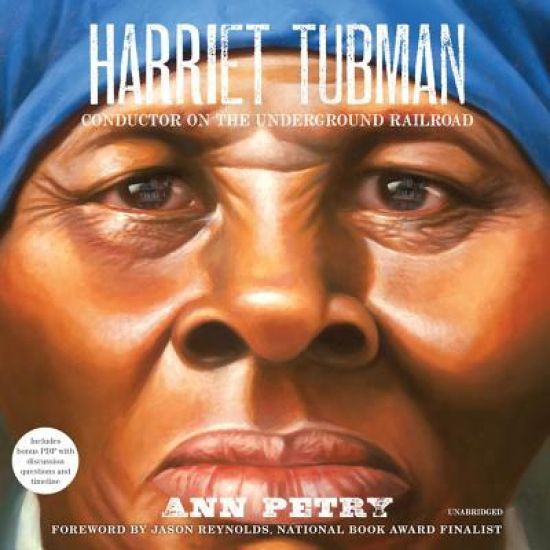
This quintessential middle grade biography of Harriet Tubman now features a foreword written and read by National Book Award finalist Jason Reynolds and additional new material. Harriet Tubman: Conductor on the Underground Railroad was praised by the New Yorker as "an evocative portrait," and by the Chicago Tribune as "superb." It is a gripping and accessible portrait of the heroic woman who guided more than 300 slaves to freedom and who is expected to be the face of the new $20 bill.Harriet Tubman was born a slave and dreamed of being free. She was willing to risk everything--including her own life--to see that dream come true. After her daring escape, Harriet became a conductor on the secret Underground Railroad, helping others make the dangerous journey to freedom.This award-winning introduction to the late abolitionist, which was named an ALA Notable Book and a New York Times Outstanding Book, also includes a supplemental PDF with educational back matter such as a timeline, discussion questions, and extension activities.(c)1955 Ann Petry; copyright renewed 1983 Ann Petry; foreword copyright 2018 Jason Reynolds (P)2018 HarperCollins Publishers
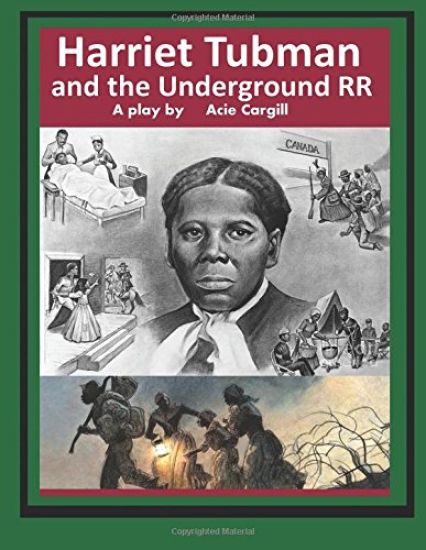
This is a biographical play about Harriet Tubman, an American hero. She escaped from slavery and then helped rescue hundreds of other slaves, guiding them to the Underground Railroad to freedom and sometimes all the way to Canada. She was also a scout, a nurse, and a fighter in the Union Army and after the Civil War she worked for equality of all people of any race or gender.
It was an ordinary day for four friends, until they stumbled across some pretty extraordinary things. Find out what happens to Colby and his three friends when they come face to face with a fire breathing dragon named Harriet
A hilarious and heartfelt debut from multi-award winning, hearing aid wearing, comedian, actor and author Samantha Baines. The intergalactic adventure starts at home with Harriet, who discovers that her hearing-aid can do more than she ever bargained for when she finds an alien in her room. Discovering that her family secretly work for an intergalactic agency, Harriet becomes the Earth's first line of defence as the only one who can understand the invaders. Sure, her hearing aid helps her understand aliens from across the universe, if only she could understand her own feelings.
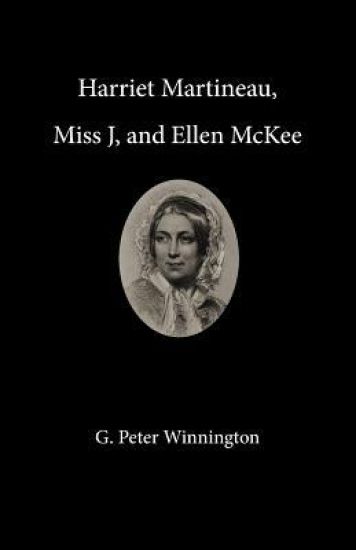
This book reveals the life of Miss J, who accompanied Harriet Martineau on her 1834-36 tour of America, which resulted in her book Society in America. In the 1890s, Miss J's daughter, Ellen McKee, became one of the first women to serve on the London Schools Board. She also pioneered in the provision of facilities for physically impaired children.