Kirjahaku
Etsi kirjoja tekijän nimen, kirjan nimen tai ISBN:n perusteella.
1000 tulosta hakusanalla Heinz Strunk

Mit 15 Jahren ging es f r mich von der Schulbank in die Lehre als Koch und gleich weg aus dem Elternhaus. Mit 18 begannen Aufenthalte im Ausland, Streiche und Abenteuer w hrend der Lehrzeit, Heimweh und die erste Liebe, wie auch der erste Liebeskummer. Der harte Arbeitsalltag, aber auch Rockfestivals, Partys mit Rauschgift und Alkohol folgten, aber auch die Angst im Beruf zu versagen, und der Beginn von M nnerfreundschaften, die bis heute bestehen. Der Stress in der K che ist ( manchmal ) zerm rbend. Aber er ist auch Faszination. In zurzeit drei B chern und mehr als 1000 Seiten, gew hre ich einen Einblick, der viele interessante Geschichten enth lt.


Author's Note The book in it self wish to achieve the substantial truth and memoirs' of a most exceptional advanced society, that still co-exist among us. Their meaning of life and their sacrifice of their lives, live on to inspire us to a much greater cause. They were the men and woman of the last Fuhrer. They truly are remarkable in achieving one of the most Impossible tasks, that has ever persisted against Humanity. This book has no aims in promoting any sort of anti-Americanism, or hate it seeks to follow in the foot steps of Karl Doenitz the last Fuhrer, who strived towards the true purpose of unity, Growth and Acknowledgement of the true Northern Human cause. He is thus Fuhrer Karl Doenitz and his efforts. that would come to change the world for centuries to come.

Introduction to Numerical Methods for Time Dependent Differential Equations
Heinz-Otto Kreiss; Omar Eduardo Ortiz
John Wiley Sons Inc
2014
sidottu
Introduces both the fundamentals of time dependent differential equations and their numerical solutions Introduction to Numerical Methods for Time Dependent Differential Equations delves into the underlying mathematical theory needed to solve time dependent differential equations numerically. Written as a self-contained introduction, the book is divided into two parts to emphasize both ordinary differential equations (ODEs) and partial differential equations (PDEs). Beginning with ODEs and their approximations, the authors provide a crucial presentation of fundamental notions, such as the theory of scalar equations, finite difference approximations, and the Explicit Euler method. Next, a discussion on higher order approximations, implicit methods, multistep methods, Fourier interpolation, PDEs in one space dimension as well as their related systems is provided. Introduction to Numerical Methods for Time Dependent Differential Equations features: A step-by-step discussion of the procedures needed to prove the stability of difference approximationsMultiple exercises throughout with select answers, providing readers with a practical guide to understanding the approximations of differential equationsA simplified approach in a one space dimensionAnalytical theory for difference approximations that is particularly useful to clarify procedures Introduction to Numerical Methods for Time Dependent Differential Equations is an excellent textbook for upper-undergraduate courses in applied mathematics, engineering, and physics as well as a useful reference for physical scientists, engineers, numerical analysts, and mathematical modelers who use numerical experiments to test designs or predict and investigate phenomena from many disciplines.


First Published in 2007. This book is the third volume of previously published essays from Heinz D. Kurz and Neri Salvadori, following Understanding Classical Economics (1998) and Classical Economics and Modern Theory (2003), both published by Routledge. This new collection can be read in isolation but perhaps more fruitfully in conjunction with the previous texts, providing modern interpretations of the classical economists and comparing their analyses with that of contemporary mainstream economics. The essays in the new volume are split between three parts, the first section dealing with classical economics and modern theory focusing specifically on the differences in the analytical structure and content of the theory of value and distribution of Ricardo, on the one hand, and Say and Walras, on the other. The second part is devoted to Piero Sraffa’s contribution, drawing from his hitherto unpublished papers. The final part assesses linear theory of production, concentrating on comparative studies of the contributions of von Neumann, Arrow-Debreu, Georgescu-Roegen and Sraffa. This new volume will be of interest to economic theorists and methodologists in Europe, Asia and America and particularly academics and researchers engaged with theories of production, value, distribution, economic growth and the history of economic thought.

Originally published in 1986, this book takes an inter-disciplinary approach to the options for energy in the future. Written in a clear, easy-to-read style, it proposes that future solutions should not be based solely on cost, given our plentiful energy resources, but on ecological, human and ethical considerations. The book features a quantittive review of energy sources, supported by numerous figures and tables, that includes such long-term solutions as nuclear fission and solar energy. The book allows engineers and students to easily weigh the pros and cons of all energy options to realistically plan for the future.

Originally published in 1986, this book takes an inter-disciplinary approach to the options for energy in the future. Written in a clear, easy-to-read style, it proposes that future solutions should not be based solely on cost, given our plentiful energy resources, but on ecological, human and ethical considerations. The book features a quantittive review of energy sources, supported by numerous figures and tables, that includes such long-term solutions as nuclear fission and solar energy. The book allows engineers and students to easily weigh the pros and cons of all energy options to realistically plan for the future.
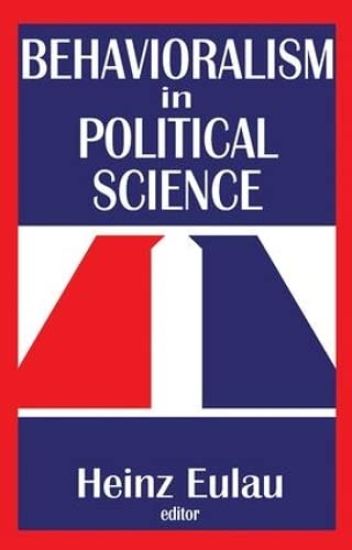
Changes in the thinking of science are usually accompanied by lively intellectual conflicts between opposing or divergent points of view. The clash of ideas is a major ingredient in the stimulation of the life of the mind in human culture. Such arguments and counter-arguments, of proofs and disproofs, permit changes in the arts and sciences to take place. Political science is not exempt from these conflicts.Since the middle of the twentieth century, the study of politics has been rocked by disagreements over its scope, theories, and methods. These disagreements were somewhat less frequent than in most sciences, natural or behavioral, but they have been at times bitter and persuasive. The subject matter of political science politics and all that is involved in politics has a halo effect. The stakes of politics make people fight and sometimes die for what they claim as their due. Political scientists seem to confuse academic with political stakes, behaving as if the victories and defeats on the battleground of the intellect resemble those on the battleground of political life.Three issues seem critical to political science at the time this volume first appeared in the 1960s: First, disagreement over the nature of the knowledge of political things is a science of politics possible, or is the study of politics a matter of philosophy? Second, controversy over the place of values in the study of politics a controversy that makes for a great deal of confusion. Third, disagreements over the basic units of analysis in the study of politics‘should the political scientist study individual and collective behavior, or limit the work to the study of institutions and large-scale processes? This collection brings together the most persuasive writings on these topics in the mid-1960s.

Practical Lubrication for Industrial Facilities, Third Edition
Heinz P. Bloch; Kenneth Bannister
CRC Press
2016
sidottu
Now completely revised and updated, this definitive reference provides a comprehensive resource on the fundamental principles of lubricant application, what products are available, and which lubricants are most effective for specific applications. It also offers a detailed and highly practical discussion of lubrication delivery systems. You’ll gain a clearer understanding of the "why" of relevant industrial lubrication practices, and, importantly, how these practices will facilitate optimized results. Lubricant applications covered include bearings and machine elements in earthbound electric motors, process pumps, gas compressors, gas and steam turbines, as well as many other machine types. An examination of the most advantageous ways to procure lubricants, to understand contaminant filtration, and to implement cost-justified means of lubricant storage is presented. Also provided are expert tips on lubricant handling techniques, procedural setups, how and when to perform oil analyses, critical maintenance practices, equipment reliability issues, and more.
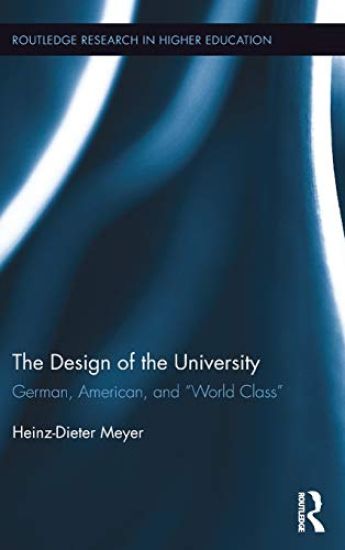
What is the reason for the American university’s global preeminence? How did the American university succeed where the development of the German university, from which it took so much, stalled? In this closely-argued book, Meyer suggests that the key to the American university’s success is its institutional design of self-government. Where other university systems are dependent on the patronage of state, church, or market, the American university is the first to achieve true autonomy, which it attained through an intricate system of engagements with societal actors and institutions that simultaneously act as amplifiers of its impact and as checks on the university’s ever-present corrosive tendencies. Built on a searching analysis of the design thinking of Wilhelm von Humboldt and Adam Smith and closely tracing the learning process by which Americans adapted the German model, The Design of the University dismisses efforts to copy superficial features of the American university in order to achieve world-class rank. Calling attention to the design details of the university and the particulars of its institutional environment, this volume identifies the practices and choices that produced the gold standard for today’s world class higher education.






Kordax, Archaologische Studien Zur Geschichte Eines Antiken Tanzanes Und Zum Ursprung Der Greichischen Komodie
Heinz Schnabel; Schnabel Heinz 1885-
Nabu Press
2010
pokkari