Helen Isle: Magical Sestina Book is a book of sestinas written as random chapters in a book. They tell the story of a girl who discovers that hallowed ground exists not just in the physical form of a graveyard, but also buried in the landscape of the heart.
"DEAR HARRY: -Remembering that you are always complaining that you never have a chance to read, and knowing that you won't get it this summer, if you spend your vacation among people of your own set, I write to ask you to come up here. I admit that I am not wholly disinterested in inviting you. The truth is, Tom and I are invited to spend a fortnight with my old schoolmate, Alice Wayne, who, you know, is the dearest girl in the world, though you DIDN'T obey me and marry her before Frank Wayne appeared. Well, we're dying to go, for Alice and Frank live in splendid style; but as they haven't included our children in their invitation, and have no children of their own, we must leave Budge and Toddie at home. I've no doubt they'll be perfectly safe, for my girl is a jewel, and devoted to the children, but I would feel a great deal easier if there was a man in the house. Besides, there's the silver, and burglars are less likely to break into a house where there's a savage-looking man. (Never mind about thanking me for the compliment.) If YOU'LL only come up, my mind will be completely at rest
Anne Bradstreet was the first American female writer as well as the first American female poet to have her works published.Anne Bradstreet (March 20, 1612 - September 16, 1672), n e Dudley, was the most prominent of early English poets of North America and first writer in England's North American colonies to be published. She is the first Puritan figure in American Literature and notable for her large corpus of poetry, as well as personal writings published posthumously. Born to a wealthy Puritan family in Northampton, England, Bradstreet was a well-read scholar especially affected by the works of Du Bartas. A mother of eight children and the wife of a public officer in the New England community, Bradstreet wrote poetry in addition to her other duties. Her early works read in the style of Du Bartas, but her later writings develop into her unique style of poetry which centers on her role as a mother, her struggles with the sufferings of life, and her Puritan faith...... Helen Stuart Campbell (born Helen Stuart; pen name, "Mrs. Helen Weeks"; July 5, 1839 - July 22, 1918) was a social reformer and pioneer in the field of home economics. She wrote several important studies about women trapped in poverty, and the role that effective home economics could play in lifting women and families out of poverty. Biography: She was born in Lockport, New York to Jane E. (n e Campbell) and Homer H. Stuart. (She later changed her surname to favor her mother's maiden name.) She studied in Warren, Rhode Island and Bloomington, New Jersey. She worked as a professor of economics at the University of Wisconsin from 1893-96, and then as a professor of domestic science at Kansas State Agricultural College from 1896-97. Publications: In the 1860s and 70s, she wrote stories and children's books under the name "Mrs. Helen Weeks". In later life, divorced from husband Dr. Grenville Weeks, Campbell - her new pen name - wrote novels and nonfiction works dealing with home economics and relationships between the individual, the home, the workplace, physical well-being, and childhood. She was active in many organizations that advocated female empowerment and associated with many intellectuals and original thinkers, including writer Charlotte Perkins Gilman. Much of her writing was engaging and vigorous. Her pieces exposed Gilded Age social inequities and public health failures. She was the author of a biography of 17th century colonial American poet, Anne Bradstreet.
Helen Stuart Campbell (born Helen Stuart; pen name, "Mrs. Helen Weeks"; July 5, 1839 - July 22, 1918) was a social reformer and pioneer in the field of home economics. She wrote several important studies about women trapped in poverty, and the role that effective home economics could play in lifting women and families out of poverty. Biography: She was born in Lockport, New York to Jane E. (n e Campbell) and Homer H. Stuart. (She later changed her surname to favor her mother's maiden name.) She studied in Warren, Rhode Island and Bloomington, New Jersey. She worked as a professor of economics at the University of Wisconsin from 1893-96, and then as a professor of domestic science at Kansas State Agricultural College from 1896-97. Publications: In the 1860s and 70s, she wrote stories and children's books under the name "Mrs. Helen Weeks". In later life, divorced from husband Dr. Grenville Weeks, Campbell - her new pen name - wrote novels and nonfiction works dealing with home economics and relationships between the individual, the home, the workplace, physical well-being, and childhood. She was active in many organizations that advocated female empowerment and associated with many intellectuals and original thinkers, including writer Charlotte Perkins Gilman. Much of her writing was engaging and vigorous. Her pieces exposed Gilded Age social inequities and public health failures. She was the author of a biography of 17th century colonial American poet, Anne Bradstreet.
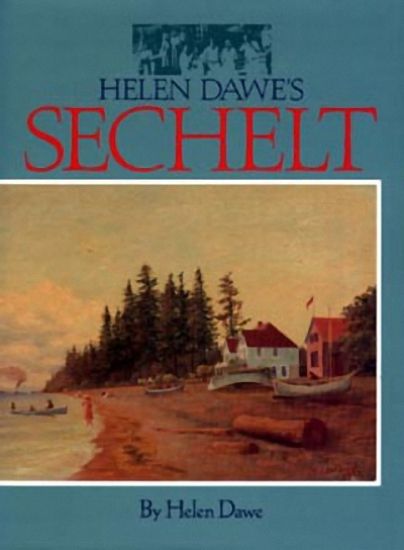
As we enter the 1990s, we mark the 100th anniversary of the decade which saw the establishment of a white settlement at Sechelt, British Columbia. The first of those settlers, Thomas John Cook, was the grandfather of Helen Dawe, who established for herself a reputation as the foremost chronicler of Sechelt history. Helen Dawe's Sechelt brings together her work on the founding and development of a community that has since become the hub of the Sunshine Coast. The book features a personal and anecdotal view of many of Secheit's founders, both white and Indian, and contains over 120 vintage photographs, taken from one of the most impressive private collections in the province.The result is much more than a local history. It is both a case study of how modem British Columbia was built, and a personal introduction to some of the people who were its builders.
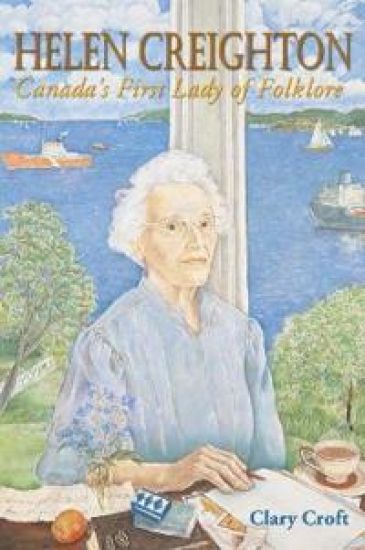
Helen Creighton was born at the turn of the nineteenth century and until her death in 1989, she made a remarkable contribution towards retrieving the stories, songs, and legends that have shaped the culture and the people of the Maritimes. Written by her prot g and fellow folklorist, Clary Croft, this intimate biography offers both an intriguing portrait of a woman whose life was destined to become woven into the fabric of Canadian folklore, and a fascinating glimpse into the social mores of her time.
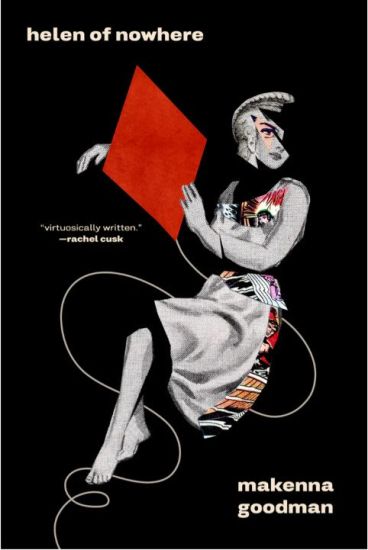
An electrifying novel about the delights and dangers of starting over. In the middle of the countryside, a realtor is showing a disgraced professor around an idyllic house. She speaks not only about the home's many wonderful qualities but about its previous owner, the mystifying Helen, whose presence still seems to suffuse every fixture. Through hearing stories of Helen's chosen way of living, the man begins to see that his own story is not actually over--rather, he is being offered a chance to buy his way into the simple life, close to the land, that's always been out of reach to him. But as evening fades into black, he will learn that the asking price may be much higher, and stranger, than anticipated. Philosophically and formally adventurous, at once intimate and cosmic in scope, Helen of Nowhere asks: What must we give up in exchange for true happiness?
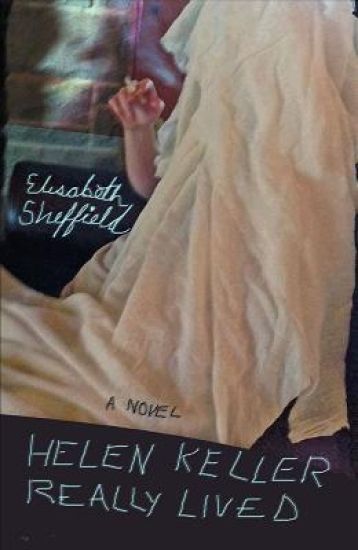
What does it mean to really live? Or not?Set in eastern, upstate New York, Helen Keller Really Lived features a fortyish former barfly and grifter who must make a living in the wake of her wealthy husband’s death, and who finds work in a clinic helping women seeking reproductive assistance. The other main character is the grifter’s dead ex-husband, a Ukrainian hooker-to-healer success story, who prior to his demise was a gynecologist and after, an amateur folklorist, or ghostlorist, who collected and provided scholarly commentary on the stories of his fellow “revenants.”Their intertwined stories explore the mistakes, miscarriages, inadequacies, and defeats that may have led to their divorce, including his failure (according to her) to “fully live.”As it investigates the theme of what it means to “really live” or not, Elisabeth Sheffield’s brilliant new novel is also an exploration of virtual reality in the sense of the experience provided by literature. It is a novel awash in a multitude of voices, from the obscenity-laced, Nabokovian soliloquys of the dead Ukrainian doctor, to the trade-school / midcentury-romance-novel-constrained style of his dead mother-in-law.
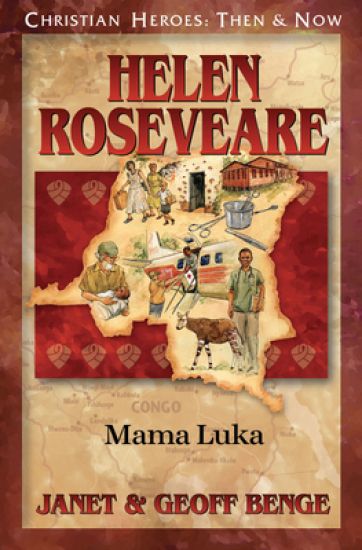
Helen Roseveare served as a medical missionary in the Congo during one of the most chaotic periods in the nation's history. Arriving in 1953, Helen felt God lay on her heart the task of training future nurses to provide desperately needed medical care in the Congo. Helen worked tirelessly as a doctor in the villages and jungles, training medical workers and overseeing the building of hospitals. Gifted with an incredible amount of strength and energy, Helen yearned to see the Congo flourish. Even in the face of violence during the struggle for independence from Belgian colonial rule, Helen refused to give up (1925-2016).
"If ever anyone was born to be a photographer, Helen Levitt was. Looking at these pictures triggers that tingling feeling you get from photographs by artists like Lartigue, Kertesz, and Cartier-Bresson: a feeling that the camera is less an expertly operated tool than the seamless extension of a mind and body that are preternaturally alert to the world." --The New York Times "Levitt's photographs, like her city, though occasionally they rise to beauty, are mostly too quick for it. Instead, they have the quality of frozen street-corner conversation: she went out, saw something wonderful, came home to tell you all about it, and then, frustrated, said, 'You had to be there, ' and you realize, looking at the picture, that you were." --Adam Gopnik, The New Yorker Helen Levitt, the visual poet laureate of New York City, published her magnum opus Crosstown in 2001 to great acclaim. The book immediately sold out, never to be reprinted, making it a classic volume of street photography for the cognoscenti. Levitt went on to author two smaller volumes, Here and There and Slide Show, her first monograph exclusively featuring her little-known color work, which have garnered her accolades from around the globe. Most recently, she was named the 2008 recipient of the SPECTRUM International Prize for Photography of the Foundation of Lower Saxony, an honor previously bestowed on such luminaries as Robert Adams and Sophie Calle. Her final book: Helen Levitt, was released in conjunction with a retrospective exhibition at Germany's Sprengel Museum Hannover, the exhibit included her most iconic works, intermixed with never-before-seen color work. Combining seven decades of New York City street life with her seminal work in Mexico City, Helen Levitt's self-titled compilation features the master works of an incomparable career.
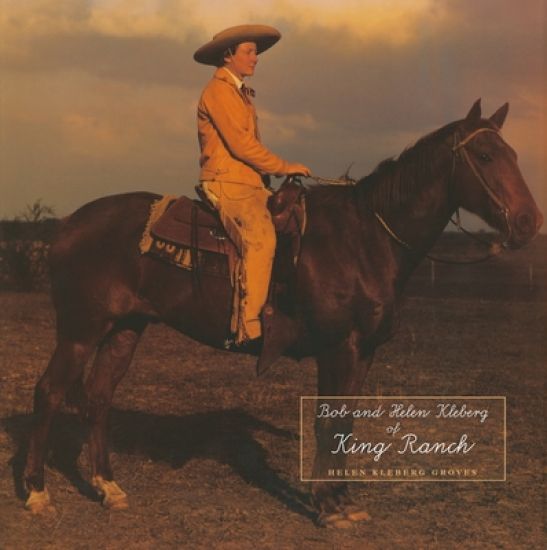
King Ranch. The name is embroidered in the tapestry of Texas, rising from the sunbaked coastal plains in the infancy of the state itself. King Ranch is the inspiration of legends and speculation, tradition and history. Rawhide-tough through drought, Indian attacks, Civil War, and the Great Depression, among other trials, King Ranch is the star of Texas.Now the memoirs of Helen King Kleberg Alexander-Groves, the only child of Bob and Helen Kleberg, give a personal glimpse of life on the storied ranch of the Kings and the Klebergs. This intimate and compelling book chronicles not only the history of the ranch but also the life of Bob and Helen Kleberg, the first family of cattle ranching. From the Santa Gertrudis, the first cattle breed developed in America and the first breed recognized worldwide in over a century, to the Triple Crown–winning Thoroughbred Assault, Bob and Helen Kleberg changed the ranching industry. The memoirs of “Helenita” open the door to the romance of Southwest cattle ranching, as well as the grit, glory, and inner workings of King Ranch in Texas and its ranches around the world.With over 200 photographs, some by Toni Frissell and many by her close friend and fellow photographer Helen Kleberg herself, this lavishly illustrated portrait includes accounts of the Klebergs’ famous hospitality, extended not only to the celebrities who were entertained regularly but also to the Kineños, the loyal ranch hands first brought to King Ranch by Captain King. Hemingwayesque photos depict hunting adventures in the Texas brush country—for which the ranch is still famous.Bob and Helen Kleberg of King Ranch is a view from the center of the King Ranch legacy, perpetuated now for some 150 years. Bob and Helen Kleberg of King Ranch is a requisite addition to the library of any ranching, history, or Texana aficionado.
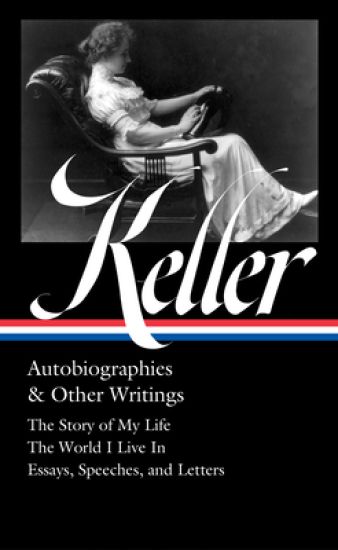
In her own words, the legendary American icon who overcame adversity to become a brilliant writer and powerful advocate for the disabled: The Story of My Life, The World I Live In, plus a dozen revealing personal letters, public speeches, essays, and more Here, in a deluxe hardcover edition, is the inspiring story of an American icon--"the greatest woman of our age," as Winston Churchill put it--in her own words. The Story of My Life (1903), published just before she became the first deaf-blind college graduate in the United States, brought Helen Keller worldwide fame, and has remained a touchstone for generations. Recounting her astonishing relationship with her teacher, Annie Sullivan, "the Miracle Worker," it offers still-vivid testimony of the transformative power of love and faith in overcoming adversity. Keller's underappreciated literary artistry and philosophical acumen are especially evident in the personal essays that make up The World I Live In (1908): exploring her own "disability," she reflects profoundly on language, thinking, dreams, belief, and the relations between the senses. Also included are more than a dozen letters, speeches, essays, and other works--most of them from out-of-print, uncollected, or previously unpublished sources--charting more than 50 years of Keller's exemplary life and career. These pieces reveal her commitments to women's rights, workers' rights, racial justice, and peace, as well as her advocacy for the disabled. Kim E. Nielsen, Keller's biographer and the author of A Disability History of the United States, introduces the volume, which includes a 16-page portfolio of photographs and a newly researched chronology of Keller's life, along with authoritative notes and an index.
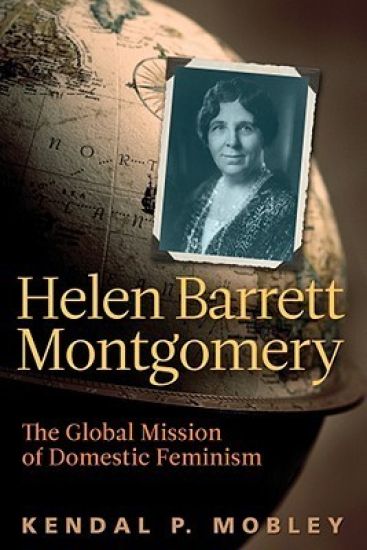
Helen Barrett Montgomery (1861-1934) was a social reformer, a Baptist luminary, and a prominent intellectual of the American women's ecumenical missionary movement. In this definitive biography, Kendal Mobley analyzes the intellectual development of a fascinating woman and locates her in the context of her rapidly-changing times. Mobley explores Montgomery's early family influences, her education and spiritual development, and her relationship with other notable individuals of the era, including Susan B. Anthony. As Mobley points out, Montgomery believed that Christianity gave women equal spiritual and social status with men. Consequently, she saw ""woman's work for woman"" as the cutting edge of a global movement for women's emancipation.