Paul Howard Williams (1954-81) ArtWorkYoung British Artist 1970's London&Paris With most of Pauls artwork there were no titles, only the materials, unsigned, as if not dispensing with any piece, just, yet... These are (mostly) abstract expressionist pieces, of their time, and also ahead of his time. Abstract and expressionist (as in not figurative), they 'can be whatever you want them to be'. Yet, there are many, many figurative references, hints and forms, that are also expressive. As the viewer takes them, how they appear, as faces, a skull, or in the built landscapes, as they chime with the viewer, clearly of Paul's worldview, and life, also of the viewer. There are wonderful vignettes. Like a milk bottle, Parisian window shutters, a deckchair to see the world, the universe, from. There is abstract Landscape, Universal Space, and the felt Transcendental. Pictures, often with near perfect, but never of course perfect, geometric shapes, trapezium and especially circles, or ellipses. Folding and gluing of paper and card as two to three and more multi-dimensional constructions, Paul would use newspaper print, discarded cigarette packets, and found packaging, plain brown or grey paper, and the blackest, reddest, bluest of colour. Occasionally green and yellow. With overdrawn marks whether of chalk, gauche, or paint, made deliberately, and over an indefinite period of time. So that the finished, discarded pieces appear as if unfinished, as every artwork must, leaving room for the viewer, the appreciator... When I'm 64 2018. The Movie. f/b Paul Williams Artwork 1954-81 Enjoy...You Tube: Landscapes Transcendental Spaces: Collage Painting Drawing Construction Sketches. Apparition Explosion Faces in the crowd Windows: Women sitting/playing a flute Paris shutters: painting drawing folded paper constructions overmarked or found as marked card/packaging Deckchair on the Titanic Earth Sky Depend de Vous Le Dancer1 Dancer2 Disque Bleu Japanese print painted copied with from originals Black/White/Grey on Brown paper packaging: Green Blue Space 1 & 2 Part lot of 15 parcels Door/Wall/Fenced-in Insect/Dancer unfolding or collapsing sketches Buildings built environment sketches Matisse Gauloise Longue Caporal L'HUMANITE...changer... Worm bullet-face emerging Milk bottle ledge shutters weather (Paris) Arched Window Battleground flag Landscape blood-lightning Ellipse paintings: Bus-Stop with Moon Cataclysm Cellular Cataclysm Earth Sun cataclysm Egg Moon cataclysm Ellipse tryptych Door/Wall photo with ellipse Starting/finishing-post ellipse painting Tower Block Skull Sun Moon Sea ellipses Landscape Leviathan red spot blood rock sea... Coat and scarf Tom Allen Centre poster 1982 Portrait of Claire Bear Self Portrait Paul Williams (1954-81) (2) Walthamstow Art College 1970-72Chelsea College of Art 1972-75Newham Community Murals 1975-81
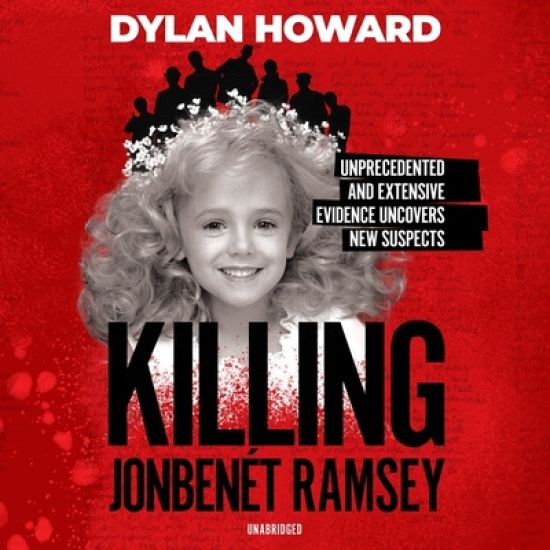
Resolving for the murder of a child beauty queen and a botched investigationThe killing of six-year-old beauty queen JonBen t Ramsey--found in the basement of her family home in Boulder, Colorado, with a smashed skull and a garrote placed around her neck--remains one of America's most shameful unsolved crimes. A flawed investigation, fraught with police, prosecutorial misconduct, and widespread evidence tampering, means that the little girl's killer remains at large after more than two decades.Now, as told in Killing JonBen t Ramsey an unflinching new investigation into the crime, will seek to finally secure justice for JonBen t. Investigative journalist Dylan Howard has assembled a crack team of internationally renowned criminal investigators, experts, and lawyers with the express aim of finding her killer.They have sifted through scores of new tips and leads, pored over never-before-seen crime scene evidence, searched through hundreds of pages of coroners' reports, police statements, and private journals, and conducted many exclusive new interviews. They have petitioned courts and law enforcement agencies, gathered archival material, and utilized new scientific advances.This is not a retelling of JonBen t's story; it is an active investigation of her murder. Combining the compulsive draw of a Hollywood movie blockbuster, the addictive thrill of the police procedural, and the heartwrenching tragedy of the real-life murder of a beautiful toddler and the consequences for her family, Killing JonBen t Ramsey seeks to put right one of the modern age's most monstrous wrongs.
Resolving for the murder of a child beauty queen and a botched investigationThe killing of six-year-old beauty queen JonBen t Ramsey--found in the basement of her family home in Boulder, Colorado, with a smashed skull and a garrote placed around her neck--remains one of America's most shameful unsolved crimes. A flawed investigation, fraught with police, prosecutorial misconduct, and widespread evidence tampering, means that the little girl's killer remains at large after more than two decades.Now, as told in Killing JonBen t Ramsey an unflinching new investigation into the crime, will seek to finally secure justice for JonBen t. Investigative journalist Dylan Howard has assembled a crack team of internationally renowned criminal investigators, experts, and lawyers with the express aim of finding her killer.They have sifted through scores of new tips and leads, pored over never-before-seen crime scene evidence, searched through hundreds of pages of coroners' reports, police statements, and private journals, and conducted many exclusive new interviews. They have petitioned courts and law enforcement agencies, gathered archival material, and utilized new scientific advances.This is not a retelling of JonBen t's story; it is an active investigation of her murder. Combining the compulsive draw of a Hollywood movie blockbuster, the addictive thrill of the police procedural, and the heartwrenching tragedy of the real-life murder of a beautiful toddler and the consequences for her family, Killing JonBen t Ramsey seeks to put right one of the modern age's most monstrous wrongs.
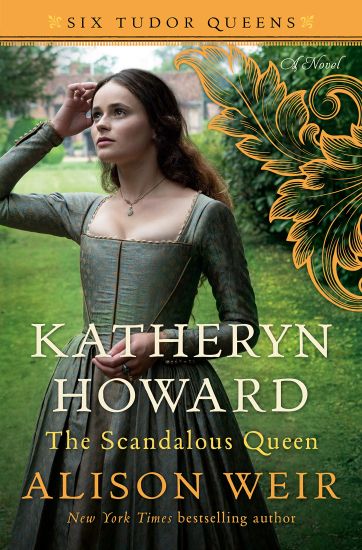
This sumptuous novel in New York Times bestselling author Alison Weir's Six Tudor Queens series--"a vivid re-creation of a Tudor tragedy" (Kirkus Reviews)--details the life of nineteen-year-old Katheryn Howard, King Henry VIII's fifth wife. "Absolutely stunning . . . Katheryn emerges from this beautifully realized portrayal as beguiling, vivacious, and, in the end, tragically na ve."--Tracy Borman, author of The Private Lives of the Tudors Divorced, Beheaded, Died, Divorced, Beheaded, Survived In the spring of 1540, Henry VIII is desperate to be rid of his German queen, Anna of Kleve. Prematurely aged and with an ever-growing waistline, he casts an amorous eye on a pretty nineteen-year-old, Katheryn Howard. Like her cousin Anne Boleyn, Katheryn is a niece of the Duke of Norfolk, England's premier Catholic peer, who is scheming to replace Anna of Kleve with a good Catholic queen. A flirtatious, eager participant in the life of the royal court, Katheryn readily succumbs to the king's attentions when she is pushed into his path by her ambitious family. Henry quickly becomes besotted, and the wedding takes place a mere fortnight after the king's union to Anna is annulled. Henry tells the world that his new bride is a rose without a thorn and extols her virtue, while Katheryn delights in the pleasures of being queen and the rich gifts her adoring husband showers upon her: the gowns, the jewels, and the darling lapdogs. She comes to love the ailing, obese king, enduring his nightly embraces with fortitude and kindness. If she can bear him a son, her triumph will be complete. But Katheryn has a past of which Henry knows nothing, and which comes back to haunt her--even as she courts danger yet again.
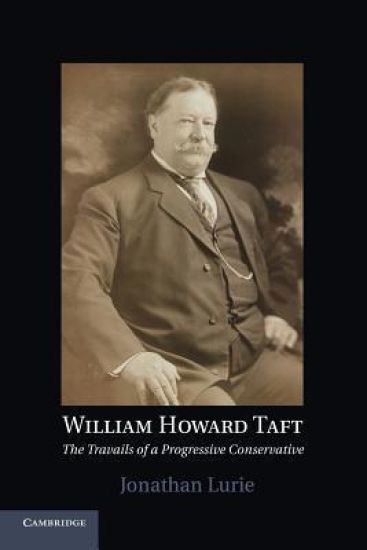
In this biographical study of the only American ever to have been both President and Chief Justice of the United States, Jonathan Lurie reassesses William Howard Taft's multiple careers, which culminated in Taft's election to the presidency in 1908 as the chosen successor to Theodore Roosevelt. By 1912, however, the relationship between Taft and Roosevelt had ruptured. Lurie re-examines the Taft–Roosevelt friendship and concludes that it rested on flimsy ground. He also places Taft in a progressive context, taking Taft's own self-description as 'a believer in progressive conservatism' as the starting point. At the end of his biography, Lurie concludes that this label is accurate when applied to Taft.