Kirjojen hintavertailu. Mukana 11 244 527 kirjaa ja 12 kauppaa.

Kirjahaku

Etsi kirjoja tekijän nimen, kirjan nimen tai ISBN:n perusteella.

1000 tulosta hakusanalla Keith Harding

The Trial of Helen Watt, Widow of the Deceased Alexander Keith of Northfield, and William Keith, Eldest Lawful son ... for the Alledged Murder of the Said Alexander Keith ... on the 4th, 5th, and 6th Days of September 1766,
The 18th century was a wealth of knowledge, exploration and rapidly growing technology and expanding record-keeping made possible by advances in the printing press. In its determination to preserve the century of revolution, Gale initiated a revolution of its own: digitization of epic proportions to preserve these invaluable works in the largest archive of its kind. Now for the first time these high-quality digital copies of original 18th century manuscripts are available in print, making them highly accessible to libraries, undergraduate students, and independent scholars.This collection reveals the history of English common law and Empire law in a vastly changing world of British expansion. Dominating the legal field is the Commentaries of the Law of England by Sir William Blackstone, which first appeared in 1765. Reference works such as almanacs and catalogues continue to educate us by revealing the day-to-day workings of society.++++The below data was compiled from various identification fields in the bibliographic record of this title. This data is provided as an additional tool in helping to insure edition identification: ++++British LibraryT121535Pp.xvii-xx misnumbered xviii-xxi. The text is continuous according to the list of contents. With a final leaf containing an announcement of a royal pardon to the convicts.London, 1766. xxi i.e.xx],2,9-54, 2]p.; 8
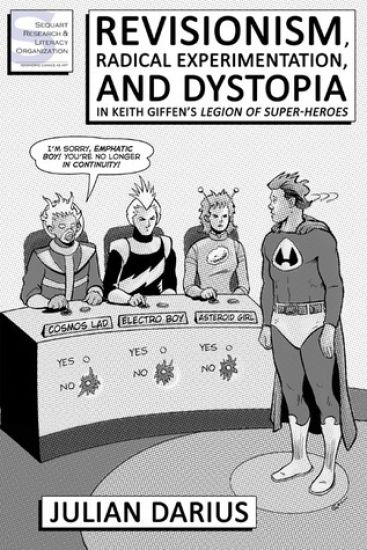
Revisionism, Radical Experimentation, and Dystopia in Keith Giffen's Legion of Super-Heroes
No other run divides Legion of Super-Hero fans like Keith Giffen's. To detractors, it dismantled everything good about the series.In this short book, Dr. Julian Darius argues that Giffen's run offered an ambitious and unprecedented response to the growing maturity of super-hero comics - one that, far from trashing Legion history, actually respected it.From Sequart Organization.
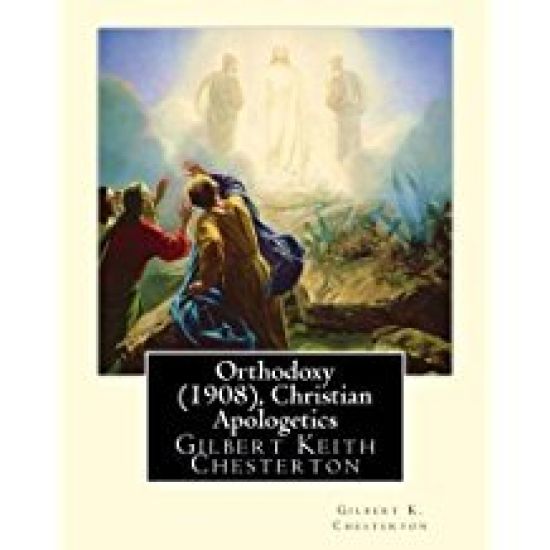
Orthodoxy (1908), By Gilbert K. Chesterton ( Christian Apologetics ): Gilbert Keith Chesterton

Orthodoxy (1908), By Gilbert K. Chesterton ( Christian Apologetics ): Gilbert Keith Chesterton

Gilbert K. Chesterton

Createspace Independent Publishing Platform
2016
nidottu
Orthodoxy (1908) is a book by G. K. Chesterton that has become a classic of Christian apologetics. Chesterton considered this book a companion to his other work, Heretics, writing it expressly in response to G.S. Street's criticism of the earlier work, "that he was not going to bother about his theology until I had really stated mine".In the book's preface Chesterton states the purpose is to "attempt an explanation, not of whether the Christian faith can be believed, but of how he personally has come to believe it." In it, Chesterton presents an original view of Christian religion. He sees it as the answer to natural human needs, the "answer to a riddle" in his own words, and not simply as an arbitrary truth received from somewhere outside the boundaries of human experience. The book was written when Chesterton was an Anglican. He converted to Catholicism 14 years later. Chesterton chose the title, Orthodoxy, to focus instead on the plainness of the Apostles' Creed, though he admitted the general sound of the title was "a thinnish sort of thing". Chesterton (The Man Who Knew Too Much) capped his brilliant literary career with this exploration of "right thinking," and how it led to his acceptance of the Christian faith. Although this is a very personal account of his conversion, Chesterton makes it clear he came to a rational decision based upon his scholarly examination of Christianity's arguments, intending to provide a "positive" companion to the previous Heretics.... Gilbert Keith Chesterton, KC*SG (29 May 1874 - 14 June 1936), better known as G. K. Chesterton, was an English writer, poet, philosopher, dramatist, journalist, orator, lay theologian, biographer, and literary and art critic. Chesterton is often referred to as the "prince of paradox."Time magazine has observed of his writing style: "Whenever possible Chesterton made his points with popular sayings, proverbs, allegories-first carefully turning them inside out." Chesterton is well known for his fictional priest-detective Father Brown, and for his reasoned apologetics. Even some of those who disagree with him have recognized the wide appeal of such works as Orthodoxy and The Everlasting Man.Chesterton, as a political thinker, cast aspersions on both Progressivism and Conservatism, saying, "The whole modern world has divided itself into Conservatives and Progressives. The business of Progressives is to go on making mistakes. The business of the Conservatives is to prevent the mistakes from being corrected."Chesterton routinely referred to himself as an "orthodox" Christian, and came to identify this position more and more with Catholicism, eventually converting to Catholicism from High Church Anglicanism. George Bernard Shaw, Chesterton's "friendly enemy" according to Time, said of him, "He was a man of colossal genius." Biographers have identified him as a successor to such Victorian authors as Matthew Arnold, Thomas Carlyle, Cardinal John Henry Newman, and John Ruski
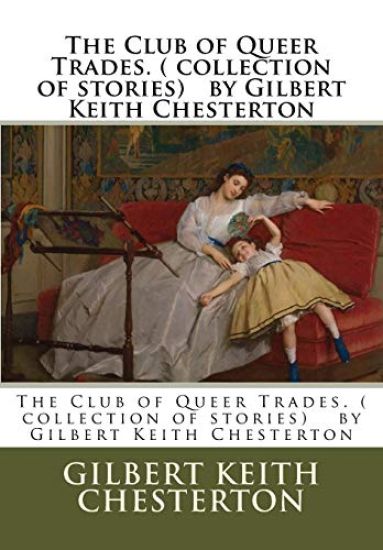
The Club of Queer Trades. ( collection of stories) by Gilbert Keith Chesterton

The Club of Queer Trades. ( collection of stories) by Gilbert Keith Chesterton

G. K. Chesterton

Createspace Independent Publishing Platform
2016
nidottu
Characters Stories 1.The Tremendous Adventures of Major Brown 2.The Painful Fall of a Great Reputation 3.The Awful Reason of the Vicar's Visit 4.The Singular Speculation of the House-Agent 5.The Noticeable Conduct of Professor Chadd 6.The Eccentric Seclusion of the Old Lady The Club of Queer Trades is a collection of stories by G. K. Chesterton first published in 1905.Each story in the collection is centered on a person who is making his living by some novel and extraordinary means (a "queer trade", using the word "queer" in the sense of "peculiar"). To gain admittance one must have invented a unique means of earning a living and the subsequent trade being the main source of income.
What's Wrong with the World (1910). By: Gilbert Keith Chesterton, dedicated By: C. F. G. Masterman: Charles Frederick Gurney Masterman PC (24 October
Gilbert Keith Chesterton, KC*SG (29 May 1874 - 14 June 1936), better known as G. K. Chesterton, was an English writer, poet, philosopher, dramatist, journalist, orator, lay theologian, biographer, and literary and art critic. Chesterton is often referred to as the "prince of paradox". Time magazine has observed of his writing style: "Whenever possible Chesterton made his points with popular sayings, proverbs, allegories-first carefully turning them inside out." Chesterton is well known for his fictional priest-detective Father Brown, and for his reasoned apologetics. Even some of those who disagree with him have recognised the wide appeal of such works as Orthodoxy and The Everlasting Man.Chesterton, as a political thinker, cast aspersions on both Progressivism and Conservatism, saying, "The whole modern world has divided itself into Conservatives and Progressives. The business of Progressives is to go on making mistakes. The business of the Conservatives is to prevent the mistakes from being corrected."Chesterton routinely referred to himself as an "orthodox" Christian, and came to identify this position more and more with Catholicism, eventually converting to Catholicism from High Church Anglicanism. George Bernard Shaw, Chesterton's "friendly enemy" according to Time, said of him, "He was a man of colossal genius."Biographers have identified him as a successor to such Victorian authors as Matthew Arnold, Thomas Carlyle, Cardinal John Henry Newman, and John Ruskin.... Charles Frederick Gurney Masterman PC (24 October 1873 - 17 November 1927) was a radical Liberal Party politician, intellectual and man of letters, He worked closely with such Liberal leaders as David Lloyd George and Winston Churchill in designing social welfare projects, including the National Insurance Act of 1911. During the First World War, he played a central role in the main government propaganda agency....
Appreciations and Criticisms of the Works of Charles Dickens (1911). By: Gilbert Keith Chesterton: Charles John Huffam Dickens ( 7 February 1812 - 9 J
Gilbert Keith Chesterton, KC*SG (29 May 1874 - 14 June 1936), better known as G. K. Chesterton, was an English writer, poet, philosopher, dramatist, journalist, orator, lay theologian, biographer, and literary and art critic. Chesterton is often referred to as the "prince of paradox". Time magazine has observed of his writing style: "Whenever possible Chesterton made his points with popular sayings, proverbs, allegories-first carefully turning them inside out." Chesterton is well known for his fictional priest-detective Father Brown, and for his reasoned apologetics. Even some of those who disagree with him have recognised the wide appeal of such works as Orthodoxy and The Everlasting Man.Chesterton, as a political thinker, cast aspersions on both Progressivism and Conservatism, saying, "The whole modern world has divided itself into Conservatives and Progressives. The business of Progressives is to go on making mistakes. The business of the Conservatives is to prevent the mistakes from being corrected."Chesterton routinely referred to himself as an "orthodox" Christian, and came to identify this position more and more with Catholicism, eventually converting to Catholicism from High Church Anglicanism. George Bernard Shaw, Chesterton's "friendly enemy" according to Time, said of him, "He was a man of colossal genius."Biographers have identified him as a successor to such Victorian authors as Matthew Arnold, Thomas Carlyle, Cardinal John Henry Newman, and John Ruskin.. Charles John Huffam Dickens ( 7 February 1812 - 9 June 1870) was an English writer and social critic. He created some of the world's best-known fictional characters and is regarded by many as the greatest novelist of the Victorian era.His works enjoyed unprecedented popularity during his lifetime, and by the twentieth century critics and scholars had recognised him as a literary genius. Born in Portsmouth, Dickens left school to work in a factory when his father was incarcerated in a debtors' prison. Despite his lack of formal education, he edited a weekly journal for 20 years, wrote 15 novels, five novellas, hundreds of short stories and non-fiction articles, lectured and performed extensively, was an indefatigable letter writer, and campaigned vigorously for children's rights, education, and other social reforms. Dickens's literary success began with the 1836 serial publication of The Pickwick Papers. Within a few years he had become an international literary celebrity, famous for his humour, satire, and keen observation of character and society. His novels, most published in monthly or weekly instalments, pioneered the serial publication of narrative fiction, which became the dominant Victorian mode for novel publication.The instalment format allowed Dickens to evaluate his audience's reaction, and he often modified his plot and character development based on such feedback. For example, when his wife's chiropodist expressed distress at the way Miss Mowcher in David Copperfield seemed to reflect her disabilities, Dickens improved the character with positive features. His plots were carefully constructed, and he often wove elements from topical events into his narratives.Masses of the illiterate poor chipped in ha'pennies to have each new monthly episode read to them, opening up and inspiring a new class of readers.
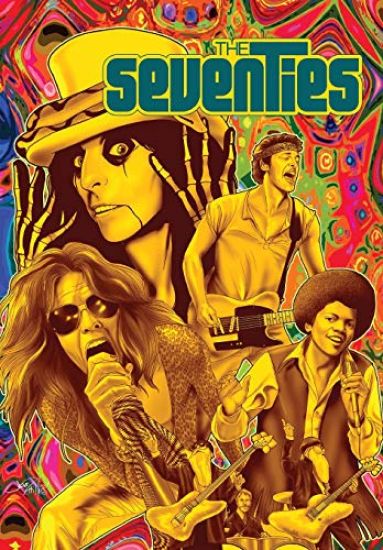
Orbit: The Seventies: David Bowie, Alice Cooper, Keith Richards and Michael Jackson
Defining 70s music is a challenge. Spinning out of the Motown sound, funk, soul, and R & B influenced the burgeoning soft and hard rock genre. Smooth jazz replaced the big band sound popular since World War II. Protest songs from the 60s continued to fight "the man" and "his" war in Vietnam. Disco, the feel-good, dance until you drop, pop culture phenomenon, dominated the second half of the decade. It was the golden age of vinyl, and the sexy party music wore out the needles on record players everywhere. Showcasing the musicians who dominated the Billboard Hot 100, Orbit: The Seventies features the biographies of David Bowie, Alice Cooper, Keith Richards, Michael Jackson, and many more. With a striking cover from famed comic book artist Joe Phillips, this collected edition revisits the "Me Decade" through the eyes of the artists who shaped it. This series has been featured in Rolling Stone magazine.
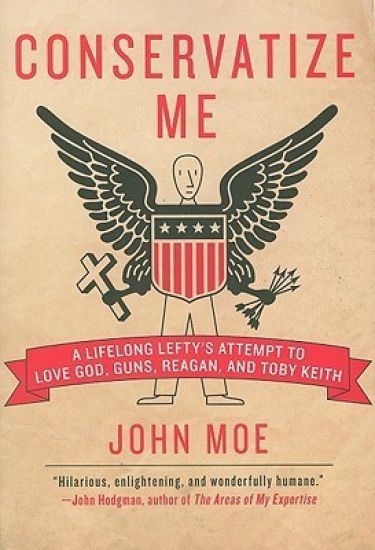
Conservatize Me: A Lifelong Lefty's Attempt to Love God, Guns, Reagan, & Toby Keith
It has been said that everyone in America is firmly planted in red or blue--permanently conservative or irreversibly liberal. But are we all really that locked in to the left or the right? A lifelong liberal, John Moe was determined to find out. So he reset his radio dials from NPR to Rush Limbaugh, joined some of today's most influential conservative thinkers for a series of "conversion sessions," made pilgrimages to the Ronald Reagan and Richard M. Nixon museums, and spent the Fourth of July in the most Bush-friendly county in the country, in an attempt to discover if there was actually a conservative trapped inside him yearning to be set free.Conservatize Me is a fresh, humorous, and highly entertaining look at our country's political landscape, one that will strike a powerful chord with millions of disgruntled Americans while stimulating the mind and tickling the funny bone.
Memoirs of Field Marshal Leopold Count Daun, Translated From a French Manuscript, and Interspersed With Many Curious Anecdotes; Among Which is a Full and Particular Account of Field Marshal Keith. By And. Henderson, A. M
The 18th century was a wealth of knowledge, exploration and rapidly growing technology and expanding record-keeping made possible by advances in the printing press. In its determination to preserve the century of revolution, Gale initiated a revolution of its own: digitization of epic proportions to preserve these invaluable works in the largest archive of its kind. Now for the first time these high-quality digital copies of original 18th century manuscripts are available in print, making them highly accessible to libraries, undergraduate students, and independent scholars.Rich in titles on English life and social history, this collection spans the world as it was known to eighteenth-century historians and explorers. Titles include a wealth of travel accounts and diaries, histories of nations from throughout the world, and maps and charts of a world that was still being discovered. Students of the War of American Independence will find fascinating accounts from the British side of conflict. ++++The below data was compiled from various identification fields in the bibliographic record of this title. This data is provided as an additional tool in helping to insure edition identification: ++++British LibraryT085238London: printed for R. Withy and J. Ryall; and sold by A. Dodsley, 1757. 4],84p.; 8