Introduction to Logic is a proven textbook that has been honed through the collaborative efforts of many scholars over the last five decades. Its scrupulous attention to detail and precision in exposition and explanation is matched by the greatest accuracy in all associated detail. In addition, it continues to capture student interest through its personalized human setting and current examples. The 14th Edition of Introduction to Logic, written by Copi, Cohen & McMahon, is dedicated to the many thousands of students and their teachers - at hundreds of universities in the United States and around the world - who have used its fundamental methods and techniques of correct reasoning in their everyday lives.
I've had diabetes for sixty years, and I can tell you from personal experience managing diabetes is not as easy as it looks. Today, we have more resources available for managing diabetes than ever before, so to bolster your attitude to take advantage of the resources read this book You will learn about the discovery of insulin by Dr. Frederick Banting and Charles Best. You will learn of the exciting stories of how insulin saved young people like James Havens (the first American to receive insulin), Elizabeth Hughes, and Teddy Ryder. They overcame unbelievable challenges and went on to live exceptional lives.Impelling guidelines based upon a step-by-step approach are taught for Type 1 and Type 2 diabetes self-management Also, humorous and heart-breaking stories illustrate how relevant these action strategies are for better well-being.Unlike hundreds of other books about managing diabetes, this one is from a perspective of handling it by using God's wisdom (the skill for living).The purpose of The Way of Wisdom is to introduce fundamental principles for living from the book of Proverbs. These principles can encourage hope, provide strength, and give motivation daily What is the best meal plan to feel good and maintain appropriate blood glucose levels? This book includes information on carb counting, feeling full while still losing weight (volumetrics), and using the glycemic index and glycemic load for foods. Easy to understand strategies show the importance of the timing of when to eat and move to maintain healthy, normal blood glucose levels.This book teaches how to build habits for coping with stress, moving more, losing weight, and overall better health and well-being Developing these habits will provide a foundation for a positive attitude and a life of gratitude that looks on the brighter side of life. You will discover from scientific research the benefits of gratitude like being more compliant with meal planning, reducing stress, moving more, and being optimistic. God's wisdom will reinforce a step-by-step approach to daily look on the brighter side of life.The Way of Wisdom provides the tools for motivation, not just for a day but also for a lifetime The strategies in this book are not just theoretical, intellectual ideas. I've proven these strategies are essential skills in my diabetes management for six decades For more insights on motivation and management, read my new book on "17 Wise Ways to Daily Outsmart Diabetes."
Teachers, researchers, and theoreticians whose work has been influenced by Kenneth Goodman contribute articles to this book. There is a common theme in the linkages to Goodman's foundational work in understanding language, learning and teaching.
This work is the culmination of ten years of detailed research and extensive interviews on Hispanics in the U.S. Catholic Church. It documents the people, places, and events that molded this group into the largest segment of the Church.
What if what we think we know about ecology and environmental policy is just wrong? What if environmental laws often make things worse? What if the very idea of nature has been hijacked by politics? What if wilderness is something we create in our minds, as opposed to being an actual description of nature? Developing answers to these questions and developing implications of those answers are our purposes in this book. Two themes guide us—political ecology and political entrepreneurship. Combining these two concepts, which we develop in some detail, leads us to recognize that sometimes in their original design and certainly in their implementation, major U.S. environmental laws are more about opportunism and ideology than good management and environmental improvement.
"To those outside the military, and even to those serving, the rank structure can sometimes be over simplified. It appears that we rack and stack everyone in the organization, and the person with the most rank “wins”—he or she is in charge, and everyone else has to follow orders that flow from the top. While there is certainly benefit in adhering to a chain of command, the interaction between the various ranks up and down that chain, officer and enlisted, becomes the connective tissue that creates a cohesive, successful organization inside of which good decisions and high morale thrive. The most senior member of a unit has the responsibility—and the honor—of leading. But to be successful, the planning and decision-making at the top must reflect a thorough understanding of the strengths at every level of the organization, for it is the enlisted leaders who will ultimately execute those plans in battle, and win."—Foreword by General Peter Pace, U.S. Marine Corps, 16th Chairman of the Joint Chiefs of Staff.This book brings together the stories of six former senior enlisted advisors to the Joint Chiefs of Staff. Each tells in their own words how they got their start, how mentors encouraged them along the way, and how they eventually became the highest-ranking enlisted member in their respective service."With invaluable lessons this is a book for junior service members, senior enlisted leaders, officers, but also for those with no connection to the military.“Books on leadership are many, but none are as practical, clear, and proven as Breaching the Summit. Sure to be of value to every level of military leader, it is equally relevant and valuable to leaders in government, in businesses of every size, and in every boardroom. The uniquely experienced, gifted, and tested authors have led, inspired, and mentored thousands in their extraordinary careers of service to our nation. They lived, observed, and led from the most junior ranks to the pinnacle of military service - they walked the talk. This book should be at the very top of every leader’s list, to be read and reread.” — Adm. Gary Roughead, U.S. Navy (retired)Chief of Naval Operations (2007–2011)“Six outstanding American military leaders served our nation admirably and now share their life experiences and the leadership lessons they learned. This book is a must-read for all service members - both enlisted and officer - aspiring to be successful leaders in uniform and beyond. Thank you to each of the authors for selflessly sharing their experiences and insights on leadership and life.” — Gen. Frank J. Grass, U.S. Army (retired), 27th Chief of the National Guard Bureau (2012–2016)“These extraordinary enlisted leaders have ‘walked the talk,’ and we should listen. Senior noncommissioned officers are the backbone of the finest armed forces in the world. This book shows why.” — Adm. Thad W. Allen, U.S. Coast Guard (retired), 23rd Commandant of the U.S. Coast Guard (2006–2010)“A collection of personal vignettes that teach practical leadership lessons, Breaching the Summit is a must-read for leaders at all levels. The authors have served as their services’ highest-ranking noncommissioned officers and are the epitome of the U.S. military’s professional, all-volunteer force.” — Gen. Ed Eberhart, U.S. Air Force (retired), Commander, NORAD/USNORTHCOM (2002–2005), CEO, Armed Forces Benefit Association“The stories in this book are riveting, powerful, and, best of all, true. The leaders who share their stories shaped our armed forces to be the greatest in the history of our nation. I had the privilege of working very closely with Jim and Paula Roy for over two years. They represent the very finest examples of great parents, humble and inspirational leaders, and compassionate partners, and they showed us all how to have fun while performing at the very highest levels of command.” — Adm. Timothy J. Keating, U.S. Navy (retired), Commander, NORAD/USNORTHCOM (2004–2007), USPACOM (2007–2009)“This book is a catalyst to renew the reader’s commitment to reach and exceed their potential—personally and professionally—while also taking joy in fulfilling their respective duties and responsibilities.” — Col. Paul H. Atterbury, U.S. Marine Corps (retired), Judge Advocate (1994–2014)“I found this book inspiring, interesting, and instructive. Six remarkably accomplished authors share their powerful personal narratives, and their diverse and compelling stories lift up essential leadership lessons for us all, whether military or civilian. If you are anywhere along the continuum of leadership—from leading yourself to leading organizations—and want to become a better leader, read this book!” — Vice Adm. Manson K. Brown, U.S. Coast Guard (retired), Assistant Secretary of Commerce (2010–2014)“Of all the books I’ve read on military leadership, this is one of the absolute best. It’s a great opportunity to learn from some of our nation’s top enlisted leaders—a must-read for all service members.” — Chief Master Sgt. W. Allen Usry, U.S. Air Force (retired), Command Senior Enlisted Leader, NORAD/USNORTHCOM (2009–2011)“Breaching the Summit is a motivating and inspiring read. The life lessons and stories shared will serve readers from any walk of life. The wisdom of these senior enlisted leaders in our U.S. military, tempered with their great sense of humility, reaffirms what makes our nation great. The advice these remarkable patriots have given has personally and professionally benefited me.” — Chief Master Sgt. James A. Cody, U.S. Air Force (retired), 17th Chief Master Sergeant of the Air Force (2013–2017)“Breaching the Summit is a must-read for those in leadership, those striving to become leaders, or those who want to become a better version of themselves. You will learn traits you want to possess, traits you already have and have forgotten, and traits that will guide you through your own leadership. You will connect and reminisce through the stories that helped mold these average individuals to become six of our top enlisted military leaders. Learn from their lessons of leadership as you become familiar with who they were before they became who they are now.” — Pam Swan, Director, Military Relations for Veterans United Home Loans“Brilliantly illustrating the concept ‘grow where you’re planted,’ Breaching the Summit highlights six disparate individuals’ adaptation of the basic tenets of leadership on their journey to the top of their respective services. Whether you are just beginning your own journey, or merely searching for additional inspiration to refine your own leadership style, the principles stressed in these pages provide a solid foundation for success.” — Force Master Chief Johnny Walker, U.S. Navy (retired), Naval Education and Training Command (2007–2009), MCPON Executive Assistant (2009–2011)“Written by proven senior enlisted leaders, Breaching the Summit is a compendium of personal and professional experiences that distills success for all who choose the life of servant leadership in our military.” — Command Sgt. Maj. Mark Ripka, U.S. Army (retired), Command Senior Enlisted Leader, USJFCOM/USAFRICOM (2007–2011)“Breaching the Summit is an insightful, informative walk through the phases of an enlisted career from some of the most successful leaders in modern history. This is a must-read primer for anyone on a journey through the ranks of our glorious military. Read this book. Learn from the real-life lessons that molded some of our greatest enlisted leaders.” — Chief Master Sgt. John M. Harris, U.S. Air National Guard (retired), Command Chief Master Sergeant, Louisiana ANG (2006–2010), President, EANGUS“I thoroughly enjoyed this book. This is not just for the ‘seasoned’ leader - anyone can relate to these lessons, no matter their level of leadership. I felt as though I were sitting in a Leadership 101 symposium!” — Fleet Master Chief April Beldo, U.S. Navy (retired)Manpower, Personnel, Training, and Education Command (2013–2017)“As I’m passing 10 years since I left my own naval service behind, I am amazed at how the leadership truths in this book apply to any industry, not just the military. Making sure everyone knows their individual role in the unit’s success, take the time to get the little things right, coach each other up, down, and all around, and all the other lessons. MCPON West said it best: don’t just take care of your crew, challenge them to grow and be ready to take the reins. This book is not just for practitioners of the art of war—it is for anyone who wants to lead their organization to excellence!” — Capt. Bob Schuetz, U.S. Navy (retired), Deputy Commander and Chief of Staff, COMSUBPAC (2006–2008), Plant GM, Columbia Generating Station“CMSAF Roy’s anecdote of re-digging the water line in Michigan at age 10 was a foretaste of his sense of duty and doing the right things right throughout his AF career. His is a life well lived that resulted in Airmen being well led—including this one.” — Lt. Gen. Loren M. Reno, U.S. Air Force (retired), Deputy Chief of Staff, USAF Logistics, Installations and Mission Support (2009–2012)“MCPOCG Skip Bowen has a truly remarkable legacy of principled leadership built over an incredible career in the Coast Guard. His story, and the stories of the other leaders who reached the top positions in our military, are inspiring examples of linking personal and organizational success from the entry level to the summit. This book is a great read!” — Vice Adm. David P. Pekoske, U.S. Coast Guard (retired), Vice Commandant, USCG (2009–2010), Administrator, TSA“What an amazing opportunity to read about these great leaders! MCPON Rick West’s story shines light onto his sacrifice and compassion for the U.S. Sailor. Mentor, motivator, and total compassion describe MCPON West. His understanding of tactical and strategic level of knowledge provided excellence across the fleet. Most importantly, he is a chief’s chief who connected and continues to connect with the CPO Mess at large.” — Fleet Master Chief Susan Whitman, U.S. Navy (retired), U.S. Pacific Fleet (2015–2018)“This book offers exceptional insight into what has shaped some of the finest senior enlisted leaders in modern history. Through easy-to-follow stories, Breaching the Summit showcases the impact small life events have in developing leaders. This team of authors has captured service-specific leadership challenges that have significance in today’s joint warfighting environment, and I would consider Breaching the Summit a must-read for officers and senior enlisted looking to lead the military into the future.” — Fleet Master Chief Mark Rudes, U.S. Navy (retired), Senior Enlisted Leader, PACOM (2012–2016)“Breaching the Summit is a colorful and compelling look at the formative years, experiences, and philosophies behind our nation’s preeminent senior enlisted leaders. America’s faith in and empowerment of its enlisted corps has long been recognized as our true strategic advantage when it comes to military success at sea, in the air, and on land. Preston, Barrett, West, Roy, Jelinski-Hall, and Bowen show how humble beginnings and solid, consistent principles fueled their journeys and struck a chord with a generation of troops inclined to question the motives and methods of leadership. A must-read for anyone seeking insight on how to get the most out of people, or for anyone who doubts the tenacity of our young men and women wearing the uniform today.” — Command Master Chief Scott Fleming, U.S. Navy (retired), Joint Task Force Guantanamo, MCPON Executive Assistant (2011–2013)“From their humble beginnings to the pinnacle of their careers as the most senior noncommissioned officers of the U.S. Armed Forces, nowhere else will you find a compilation of lessons learned like those included here. These six senior enlisted leaders provide insights from which service members of all ages and ranks can learn, and that can serve as guides to a successful military career. I am proud to have served alongside these fine NCOs.” — Command Sgt. Maj. Richard J. Burch, U.S. Army (retired), 9th Command Sergeant Major of the Army National Guard (2010–2012)“With stories from the lives and experiences of six of our top enlisted military leaders, Breaching the Summit offers the gift of leadership honing. This book is not only a must–read for current and future military leaders, but for those in the civilian sector as well. These warriors allow you to experience their personal stories of highs and lows on their way to the top enlisted leadership billet of each military branch. Though different in the challenges they faced, they are the same in telling the reason for their successes. Patton once said: ‘Your character is defined by how high you bounce when you hit bottom.’ Each chapter illustrates how they took challenges head on and bounced to the pinnacle position of their respective professions. They suffered the pain of discipline to not suffer the pain of regret. I have added this to my professional library of leadership and urge all leaders - present and future - to do the same.” — 1st Sgt. Mark Gordon, U.S. Marine Corps (retired), Subject matter expert for combat profiling, Camp Lejeune“Whenever a new initiative was considered, I knew no one had their finger on the pulse of the fleet like the MCPON and the SGTMAJ of the USMC. The troops see in these senior enlisted leaders a role model, parental figure, and most importantly, their potential best selves. Their hard-earned insights have value for any aspiring leader in any walk of life. HOOYAH!” — Juan Garcia, 17th Assistant Secretary of the Navy, Manpower and Reserve Affairs (2009–2016)“Breaching the Summit is an amazing blend of leadership lessons from six very successful military leaders who started in humble beginnings and advanced to the highest levels of the enlisted corps. Their ability to weave personal and professional insights on their journey to mastering their tradecraft and leadership skills provides a blueprint of success for others. The evolutionary journey of learning leadership, practicing leadership, and then executing leadership is highlighted through their experiences. For those just starting their leadership journey and those who are seasoned leaders, there is much to be learned in this book.” — Chief Master Sgt. Steve McDonald, U.S. Air Force (retired), Command Chief, Air Combat Command (2014–2017)“It has been my pleasure to be associated with CMSAF James Roy for the last 25 years, beginning on the island of Guam, where he led the CE ‘dirt boyz’ in support of that critical infrastructure mission. Chief Roy possessed a keen insight into personal leadership then, which served our squadron well through five typhoon encounters and continued to serve him well throughout his successful military career, culminating as the Chief Master Sergeant of the Air Force. I’m proud to have played a small part in such a superb leader’s life.” — Col. D. H. “Scott” Showers, U.S. Air Force (retired), Commander, 36th Civil Engineer Squadron, Andersen AFB, Guam (1994–1996)“Breaching the Summit gives a rare glimpse into the lives of leaders who served in the highest enlisted positions in the U.S. military. A must-read for any leader who’d like to make a difference in their organization—there’s more common ground than you might think! Problem solvers, influencers, getting pushed out of their comfort zones, and passing it along were a few chunks that jumped out at me. Bravo on this collaboration of some AWESOME human beings!” — Chief Master Sgt. Marty Klukas, U.S. Air Force (retired), Command Senior Enlisted Leader, USTRANSCOM (2011-2014)“MCPON Rick West’s leadership style is more than a pillar from which many grew their naval careers—his motivation to challenge yourself is the foundation by which I continue to live and approach complex situations. His ability to build a cohesive, winning team is second to none. HOOYAH COB!” — Machinist’s Mate 1st Class Rich Hawkins, U.S. Navy (retired), Captain, Delta Air Lines“The U.S. military has long been a preeminent organization for producing leaders of exceptional capability and character. The authors of this book are among the best the military has to offer. It comes as no surprise that their thoughts would be insightful and well worth the attention of both aspiring and experienced leaders from all backgrounds and areas of interest.” — Mike Watt, CEO, Scientific Research Corporation
Researchers analyzed alternative price and credit policies for depot-level reparable parts and consumables to identify options that would provide units with greater predictability in budget execution, simplify turn-in transactions to reduce reliance on credits, help the supply chain operate more efficiently, and free up the time that commanders, leaders, and soldiers currently spend on managing credits and changing prices throughout the year.
The book deserves wide readership among applied economic modellers who want to take their field forward by supplementing judgement with statistical evidence.”
Kenneth R. French; Martin N. Baily; John Y. Campbell; John H. Cochrane; Douglas W. Diamond; Darrell Duffie; Anil K. Kashyap; Frederic S. Mishkin; Raghuram G. Rajan; David S. Scharfstein; Robert J. Shiller; Hyun Song Shin; Matthew J. Slaughter; Jeremy C. Stein; René M. Stulz
In the fall of 2008, fifteen of the world's leading economists--representing the broadest spectrum of economic opinion--gathered at New Hampshire's Squam Lake. Their goal: the mapping of a long-term plan for financial regulation reform. The Squam Lake Report distills the wealth of insights from the ongoing collaboration that began at these meetings and provides a revelatory, unified, and coherent voice for fixing our troubled and damaged financial markets. As an alternative to the patchwork solutions and ideologically charged proposals that have dominated other discussions, the Squam Lake group sets forth a clear nonpartisan plan of action to transform the regulation of financial markets--not just for the current climate--but for generations to come. Arguing that there has been a conflict between financial institutions and society, these diverse experts present sound and transparent prescriptions to reduce this divide. They look at the critical holes in the existing regulatory framework for handling complex financial institutions, retirement savings, and credit default swaps. They offer ideas for new financial instruments designed to recapitalize banks without burdening taxpayers. To lower the risk that large banks will fail, the authors call for higher capital requirements as well as a systemic regulator who is part of the central bank. They collectively analyze where the financial system has failed, and how these weak points should be overhauled. Combining an immense depth of academic, private sector, and public policy experience, The Squam Lake Report contains urgent recommendations that will positively influence everyone's financial well-being--all who care about the world's economic health need to pay attention.
A seminal shift has taken place in the relationship between Internet usage and politics. At the turn of the century, it was presumed that digital communication would produce many positive political effects like improvements to political information retrieval, support for public debate and community formation or even enhancements in citizen participation in political decision-making. While there have been positive effects, negative effects have also occurred including fake news and other political disinformation, social media appropriation by terrorists and extremists, ‘echo-chambers’ and "filter bubbles", elections influenced by hostile hackers and campaign manipulation by micro-targeting marketing. It is time for critical re-evaluation. Designed to encourage critical thinking on the part of the student, internationally recognized experts, Jan A.G.M. van Dijk and Kenneth Hacker, chronicle the political significance of new communication technologies for the promotion of democracy over the last two decades. Drawing upon structuration theory and network theory and real-world case studies from across the globe, the book is logically structured around the following topics: Political Participation and Inclusion Habermas and the Reconstruction of Public Space Media and Democracy in Authoritarian States Democracy and the Internet in China E-government and democracy Views of democracy and Internet useUnderpinned by up-to-date literature, this important textbook is aimed at students and scholars of communication studies, political science, sociology, political communication, and international relations.
A seminal shift has taken place in the relationship between Internet usage and politics. At the turn of the century, it was presumed that digital communication would produce many positive political effects like improvements to political information retrieval, support for public debate and community formation or even enhancements in citizen participation in political decision-making. While there have been positive effects, negative effects have also occurred including fake news and other political disinformation, social media appropriation by terrorists and extremists, ‘echo-chambers’ and "filter bubbles", elections influenced by hostile hackers and campaign manipulation by micro-targeting marketing. It is time for critical re-evaluation. Designed to encourage critical thinking on the part of the student, internationally recognized experts, Jan A.G.M. van Dijk and Kenneth Hacker, chronicle the political significance of new communication technologies for the promotion of democracy over the last two decades. Drawing upon structuration theory and network theory and real-world case studies from across the globe, the book is logically structured around the following topics: Political Participation and Inclusion Habermas and the Reconstruction of Public Space Media and Democracy in Authoritarian States Democracy and the Internet in China E-government and democracy Views of democracy and Internet useUnderpinned by up-to-date literature, this important textbook is aimed at students and scholars of communication studies, political science, sociology, political communication, and international relations.
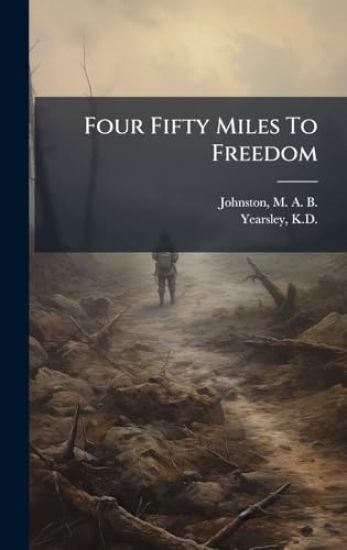
"Four Fifty Miles To Freedom" recounts the daring escape of two British officers, M.A.B. Johnston and K.D. Yearsley, from a German prisoner-of-war camp during World War I. This gripping narrative details their arduous journey across enemy territory, fraught with danger and uncertainty, as they strive to reach neutral Holland and reclaim their freedom. The book offers a compelling first-hand account of the challenges faced by prisoners of war and the indomitable spirit required to overcome seemingly insurmountable odds. A testament to courage and resilience, this story captures the harrowing realities of wartime escape and the unwavering determination to return home. This work has been selected by scholars as being culturally important, and is part of the knowledge base of civilization as we know it. This work was reproduced from the original artifact, and remains as true to the original work as possible. Therefore, you will see the original copyright references, library stamps (as most of these works have been housed in our most important libraries around the world), and other notations in the work. This work is in the public domain in the United States of America, and possibly other nations. Within the United States, you may freely copy and distribute this work, as no entity (individual or corporate) has a copyright on the body of the work. As a reproduction of a historical artifact, this work may contain missing or blurred pages, poor pictures, errant marks, etc. Scholars believe, and we concur, that this work is important enough to be preserved, reproduced, and made generally available to the public. We appreciate your support of the preservation process, and thank you for being an important part of keeping this knowledge alive and relevant.
This work has been selected by scholars as being culturally important and is part of the knowledge base of civilization as we know it.This work is in the public domain in the United States of America, and possibly other nations. Within the United States, you may freely copy and distribute this work, as no entity (individual or corporate) has a copyright on the body of the work.Scholars believe, and we concur, that this work is important enough to be preserved, reproduced, and made generally available to the public. To ensure a quality reading experience, this work has been proofread and republished using a format that seamlessly blends the original graphical elements with text in an easy-to-read typeface.We appreciate your support of the preservation process, and thank you for being an important part of keeping this knowledge alive and relevant.
Nausea is a complex sensation that results from the interaction of certain fixed biological factors, such as gender, with changeable psychological factors, such as anxiety. This is the first book to provide a complete, in-depth explanation of what we know about nausea, along with the latest research results on its causes and treatment. As it is the product of long-term collaboration between scientists from the three main approaches to studying and treating nausea--psychology, gastroenterology and physiology--the information this book provides in both comprehensive and well integrated.
Because the constitutional separation of powers often leads to delay or obstruction rather than coordinated policymaking, U.S. presidents are increasingly acting unilaterally to move policy. With the issuance of executive orders, signing statements, and policy memoranda, unilateralism has become a defining feature of the American presidency. Can Congress effectively use checks and balances to counter presidential unilateralism? Strategic Responsiveness takes a theoretically developed and empirically oriented approach— situated within legal and historical contexts—to explore the system of separated powers. The authors find that Congress is not as weak as many perceive it to be and show how members of Congress often anticipate individualized policy loss and choose to respond. These policy struggles shape the constitutional order as surely as broad, statutory constraints might. While the aggrandizement of the presidency and the usurpation of congressional control are not countered, ordinary policy losses are. For members and senators, presidential overreach is fine as long as the policy wins continue, but policy losses may motivate members to reassert congressional prerogatives in policymaking through increased oversight. Strategic Responsiveness reveals how profoundly important policy-level disputes are in the politics of maintaining a particular constitutional order.
Because the constitutional separation of powers often leads to delay or obstruction rather than coordinated policymaking, U.S. presidents are increasingly acting unilaterally to move policy. With the issuance of executive orders, signing statements, and policy memoranda, unilateralism has become a defining feature of the American presidency. Can Congress effectively use checks and balances to counter presidential unilateralism? Strategic Responsiveness takes a theoretically developed and empirically oriented approach— situated within legal and historical contexts—to explore the system of separated powers. The authors find that Congress is not as weak as many perceive it to be and show how members of Congress often anticipate individualized policy loss and choose to respond. These policy struggles shape the constitutional order as surely as broad, statutory constraints might. While the aggrandizement of the presidency and the usurpation of congressional control are not countered, ordinary policy losses are. For members and senators, presidential overreach is fine as long as the policy wins continue, but policy losses may motivate members to reassert congressional prerogatives in policymaking through increased oversight. Strategic Responsiveness reveals how profoundly important policy-level disputes are in the politics of maintaining a particular constitutional order.