Kirjojen hintavertailu. Mukana 12 550 368 kirjaa ja 12 kauppaa.

Kirjahaku

Etsi kirjoja tekijän nimen, kirjan nimen tai ISBN:n perusteella.

1000 tulosta hakusanalla Kyle Styron

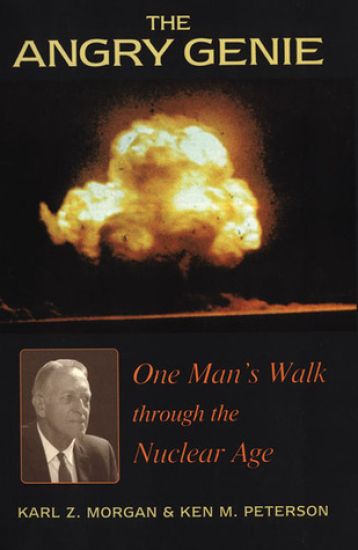
The Angry Genie

The Angry Genie

Kyle Z. Morgan; Ken M. Peterson

University of Oklahoma Press
1999
nidottu
Karl Z. Morgan was a physicist at the Manhattan Project and Oak Ridge National Laboratory, where he was director of health physics from the late 1940s until his retirement in 1972. He collaborated with leading trial lawyer Ken M. Peterson to write this extraordinary memoir about the dawn of the nuclear age and the moral dilemmas associated with nuclear energy.A deeply humane and religious scientist, Morgan regards his own role, in meeting the challenges presented by the ""angry genie"" of nuclear energy, with the same unblinking eye he focuses on government, the military, and the nuclear industry. He tells harrowing tales of radiation accidents and near-disasters, and shows the actual and potential consequences of the clumsiness, recklessness, and carelessness of fallible human beings.
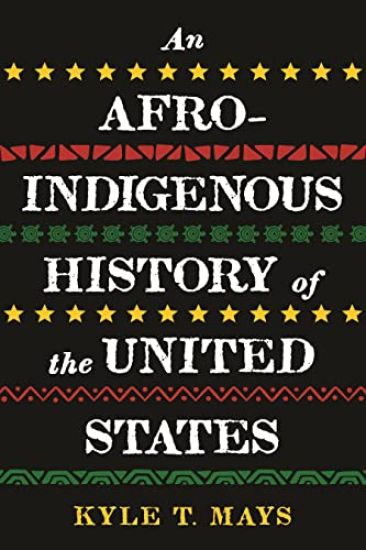
Afro-Indigenous History of the United States, An
The first intersectional history of the Black and Native American struggle for freedom in our country that also reframes our understanding of who was Indigenous in early America Beginning with pre-Revolutionary America and moving into the movement for Black lives and contemporary Indigenous activism, Afro-Indigenous historian Kyle T. Mays argues that the foundations of the US are rooted in antiblackness and settler colonialism, and that these parallel oppressions continue into the present. He explores how Black and Indigenous peoples have always resisted and struggled for freedom, sometimes together, and sometimes apart. Whether to end African enslavement and Indigenous removal or eradicate capitalism and colonialism, Mays show how the fervor of Black and Indigenous peoples calls for justice have consistently sought to uproot white supremacy. Mays uses a wide-array of historical activists and pop culture icons, "sacred" texts, and foundational texts like the Declaration of Independence and Democracy in America. He covers the civil rights movement and freedom struggles of the 1960s and 1970s, and explores current debates around the use of Native American imagery and the cultural appropriation of Black culture. Mays compels us to rethink both our history as well as contemporary debates and to imagine the powerful possibilities of Afro-Indigenous solidarity. Includes an 8-page photo insert featuring Kwame Ture with Dennis Banks and Russell Means at the Wounded Knee Trials; Angela Davis walking with Oren Lyons after he leaves Wounded Knee, SD; former South African president Nelson Mandela with Clyde Bellecourt; and more.
Afro-Indigenous History of the United States, An
The first intersectional history of the Black and Native American struggle for freedom in our country that also reframes our understanding of who was Indigenous in early America Beginning with pre-Revolutionary America and moving into the movement for Black lives and contemporary Indigenous activism, Afro-Indigenous historian, Kyle T. Mays argues that the foundations of the US are rooted in antiblackness and settler colonialism, and that these parallel oppressions continue into the present. He explores how Black and Indigenous peoples have always resisted and struggled for freedom, sometimes together, and sometimes apart. Whether to end African enslavement and Indigenous removal or eradicate capitalism and colonialism, Mays show how the fervor of Black and Indigenous peoples calls for justice have consistently sought to uproot white supremacy. Mays uses a wide-array of historical activists and pop culture icons, "sacred" texts, and foundational texts like the Declaration of Independence and Democracy in America. He covers the civil rights movement and freedom struggles of the 1960s and 1970s, and explores current debates around the use of Native American imagery and the cultural appropriation of Black culture. Mays compels us to rethink both our history as well as contemporary debates and to imagine the powerful possibilities of Afro-Indigenous solidarity.
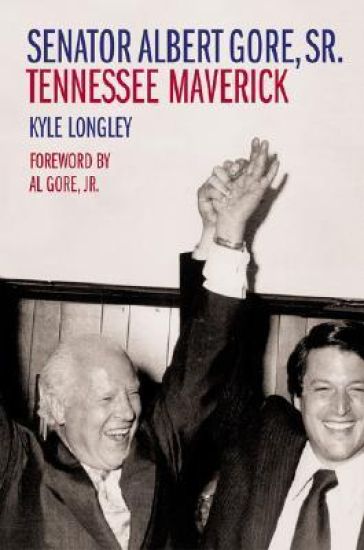
Senator Albert Gore, Sr.

Senator Albert Gore, Sr.

Kyle Longley

Louisiana State University Press
2004
sidottu
Best remembered as the father of Vice President Al Gore, Albert Gore, Sr., worked tirelessly in politics himself, a Democratic congressman and senator from 1939 to 1971 and a representative of southern liberalism and American reformism. In the first comprehensive biography of Gore, Kyle Longley has produced an incisive portrait of a significant American political leader and an arresting narrative of the shaping of a southern and American political tradition. His research includes archival sources from across the country as well as interviews with Gore's colleagues, friends, and family.Longley describes how the native of Possum Hollow, Tennessee, became known during his political career as a maverick, a man who, according to one journalist, would ""rock almost anybody's boat."" For his actions, Gore often paid a heavy price, personally and professionally. Overshadowed by others in Congress such as Lyndon Johnson, J. William Fulbright, Richard Russell, and Barry Goldwater, Gore nonetheless played a major role on the important issues of taxes, the Interstate Highway system, civil rights, nuclear power and arms control, and the Vietnam War.Longley situates Gore as part of a generation of politicians who matured on the messages of William Jennings Bryan, Woodrow Wilson, and Franklin Roosevelt. In the South, Gore belonged to a staunch group of liberals who battled traditional conservative forces, often within their own party. He and others such as Estes Kefauver, Frank Porter Graham, and Ralph Yarborough set the stage for subsequent generations, including that of Jimmy Carter and Jim Sasser, and later Bill Clinton, Al Gore, Jr., and John Edwards. From his career shines one encapsulating moment in 1952: squared off on the floor of the Senate against Strom Thurmond, who wanted Gore to sign the ""Southern Manifesto"" declaring southern resistance to desegregation, Gore responded simply, classically, ""Hell no.
Reimagining Process

Reimagining Process

Kyle Jensen

Southern Illinois University Press
2014
nidottu
For more than four decades, the dominant model for pedagogy and research in the field of composition has been a how-centered process approach to writing instruction, which involves studying the writing that students produce to expose the various stages of their writing process. By looking at notes, outlines, and multiple drafts, often presented by students together in the form of a portfolio, instructors can identify unproductive habits that students may have and provide techniques that help them improve their writing. In this groundbreaking volume, Kyle Jensen critiques traditional how-centered process instruction and presents a sound, practical methodology by which portfolios and online writing archives—digital interfaces that expose the marks of revision writers make during composition—might be employed to develop theories about what writing is: how it occurs, functions, circulates, creates meaning, and forms its subjects. Offering online writing archives as a way to envision a transdisciplinary approach to writing studies, Reimagining Process does not abandon the prevailing concepts of process pedagogy but rather casts them in wider contexts to conceive new ways of teaching and studying writing.
Anagnorisis

Anagnorisis

Kyle Dargan

Northwestern University Press
2018
nidottu
Anagnorisis, a concept Aristotle describes in his Poetics, refers to a moment in a play—a tragedy specifically—when the hero gains recognition of the true nature of his own character, condition, or relationship with an antagonistic entity. Watching—repeatedly, on a digital loop—the rampant state-sponsored murder of African-Americans over the past five years has lead the poet to a recognition that James Baldwin reflected as a prospect over thirty years ago. That being that an African-American, never has been and, in no current lifetime, will likely not be considered an equal citizen of this country with an equal right to life. Instead of responding to that reality with sadness or hurt (or even anger) the poems in the collection book operate in “functional disillusionment”—a vocal, sustained and actively manifested disbelief in the social, economic and legal systems black Americans are subject to. The poems speak back to America: “we no longer have faith in you and will not until you give us reason.” The poems are not concerned with gratitude. They are not concerned with coddling the sensibilities of the country’s racial, class, sexual majorities. “The white man believes you when you go to him with that old sweet talk, ‘cause you've been sweet-talking him ever since he brought you here,” Malcolm X once said. “Stop sweet-talking him. Tell him how you feel. Tell him what kind of hell you've been catching[.]” Though it may have been perceived as a threat initially, it is more of a crucial communication strategy, for how can a country get better for a people when those people are constantly asked to temper and carefully couch (or silence) their honest laments? The poet recognizes the hell we have been catching. These poems aim to allow readers to know how catching that hell feels.
Panzer Herz

Panzer Herz

Kyle Dargan

NORTHWESTERN UNIVERSITY PRESS
2023
nidottu
A poet’s final barbed compilation that pierces the inherited and self-inflicted experiences of masculinity The keen and jagged blade that is Kyle Dargan’s eye is drawn in Panzer Herz: A Live Dissection, the final poetic compilation of a lived and inherited masculinity. Dargan targets the armored heart, or “panzer herz”—a site where desire, violence, family, politics, blackness, and capitalism all intertwine with gender. Pierced with the question—What if the heart, in the aforementioned capacity, was not a constricting vessel, struggling to withstand internal and external pressures, but instead was a space of release?—the collection opens a cishet masculinity to the inquiries and explorations that the traditional conscription of gender discourages and often vilifies. I long to abandon this violent / vagrancy, but the roads . . . teem with other men who know / no training, who see upon me / my teachers’ marks and ache / for the elicitation of drawn steel. The denser blades of compassion and accountability are Dargan’s arms of choice to carry, and not conceal, the weapons he uses to probe his own heart and the hearts of the men and women who shaped him into a man that has been . . . and is unbecoming. The poetic paring of layered lines, the nicking of the process, these poems crimson the page—and not for scarlet spectacle. These versed incisions and sutures are the oeuvre dedicated to the outgrowing of the writer and the “man” that began it.
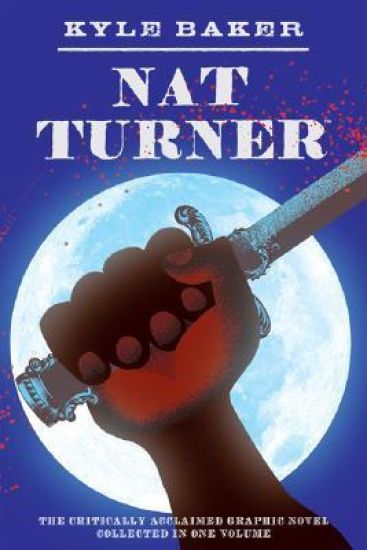
Nat Turner

Nat Turner

Kyle Baker

Abrams
2008
nidottu
The story of Nat Turner and his slave rebellion—which began on August 21, 1831, in Southampton County, Virginia—is known among school children and adults. To some he is a hero, a symbol of Black resistance and a precursor to the civil rights movement; to others he is monster—a murderer whose name is never uttered. In Nat Turner, acclaimed author and illustrator Kyle Baker depicts the evils of slavery in this moving and historically accurate story of Nat Turner’s slave rebellion. Told nearly wordlessly, every image resonates with the reader as the brutal story unfolds. Find teaching guides for Nat Turner and other titles at abramsbooks.com/resources. This graphic novel collects all four issues of Kyle Baker’s critically acclaimed miniseries together for the first time in hardcover and paperback. The book also includes a new afterword by Baker. “A hauntingly beautiful historical spotlight. A-” —Entertainment Weekly “Baker’s storytelling is magnificent.” —Variety “Intricately expressive faces and trenchant dramatic pacing evoke the diabolic slave trade’s real horrors.” —The Washington Post “Baker’s drawings are worthy of a critic’s attention.”—Los Angeles Times “Baker’s suspenseful and violent work documents the slave trade’s atrocities as no textbook can, with an emotional power approaching that of Maus.”—Library Journal, starred review
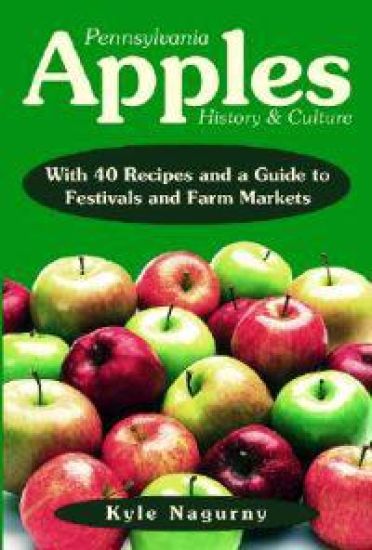
Pennsylvania Apples

Pennsylvania Apples

Kyle D. Nagurny

Stackpole Books
2002
pokkari
Apple cider, applesauce, apple butter, apple pie, apple fritters, apple pandowdy, these are just a few of the 'wonderful good' Pennsylvania Dutch apple foods that have been passed down by generations of Pennsylvanians. Apples have always been an important part of Pennsylvania's agricultural and food heritage. This book traces the history and lore of the fruit in the Keystone State, goes into the orchards and records the oral history of the descendants of apple growers, discusses the state's apple varieties, explores the industry as it thrives today, and ends in the kitchen with tips on storage and recipes for delicious apple entrees and desserts.
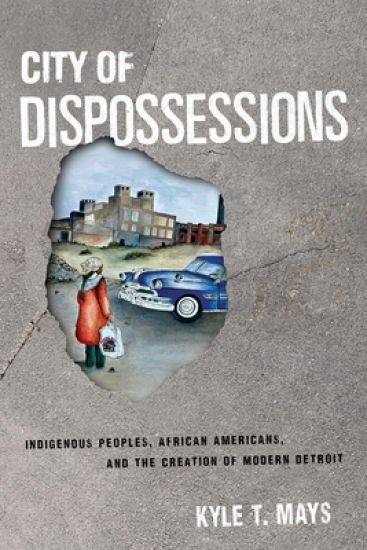
City of Dispossessions

City of Dispossessions

Kyle T. Mays

UNIVERSITY OF PENNSYLVANIA PRESS
2022
sidottu
In July 2013, Detroit became the largest city in U.S. history to declare bankruptcy. The underlying causes were decades of deindustrialization, white flight, and financial mismanagement. More recently it has been heralded a comeback city as wealthy white residents resettle there. Yet, as Kyle T. Mays argues, we cannot understand the current state of Detroit without also understanding the longer history of Native American and African American dispossession that has defined the city since its founding. How has dispossession impacted the development of modern U.S. cities? And how does comparing the historical experiences of Native Americans and African Americans in an urban context help us comprehend histories of race, sovereignty, and colonialism? Using archives, oral and family histories, and community documents, City of Dispossessions is a cultural, intellectual, and social history that argues that physical and symbolic forms of dispossession of Native Americans and African Americans, and their reactions to dispossession, have been central to Detroit's modern development. The book begins with the first settlement by the Frenchman Cadillac in 1701 and chronicles how the logic of dispossession has continued into the present, through a wide range of forms that include memorialization of the "disappearing Indian," the physical dispossession of African Americans through urban renewal, and gentrification. Mays also chronicles the wide-ranging forms of expression through which Black and Indigenous Detroiters have contested dispossession, such as the Red and Black Power movements and culturally relevant education. Through lively, accessible prose as well as historical and contemporary examples, City of Dispossessions will be of interest to readers of urban studies, Indigenous Studies, and critical ethnic studies.
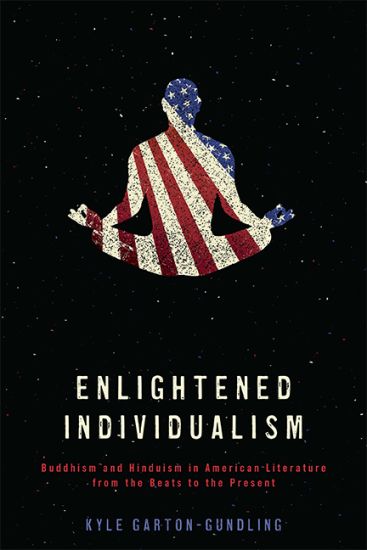
Enlightened Individualism

Enlightened Individualism

Kyle Garton-Gundling

Ohio State University Press
2019
sidottu
Buddhism and Hinduism have spread in the US largely through texts and are now recognizable facets of American literature and culture. But the US has defined itself through goal-oriented individualism, whereas Buddhism and Hinduism teach that individuality is a delusion and thus worldly desires are misguided. Given this apparent contradiction, what can Buddhist and Hindu influences offer American identities? Enlightened Individualism explores how post-1945 American writers, including Jack Kerouac, Alice Walker, and Maxine Hong Kingston, have tried to answer this question. Playing on enlightenment as both Anglo-American liberalism and Asian mysticism, this book argues that recent American literature seeks to reconcile seemingly incompatible liberal models of individual autonomy with Buddhist and Hindu ideals of transcending selfhood. This "enlightened individualism" uses Buddhist and Hindu philosophy to reframe American freedom in terms of spiritual liberation, and it also reinterprets Asian teachings through Western traditions of political activism and countercultural provocation. Garton-Gundling argues that even though works by Kerouac, Walker, Kingston, and others wrestle with issues of exoticism and appropriation, their characters are also meaningfully challenged and changed by Asian faiths. These literary adaptations, then, can help Americans reenvision individualism in a more transcendent and cosmopolitan context.
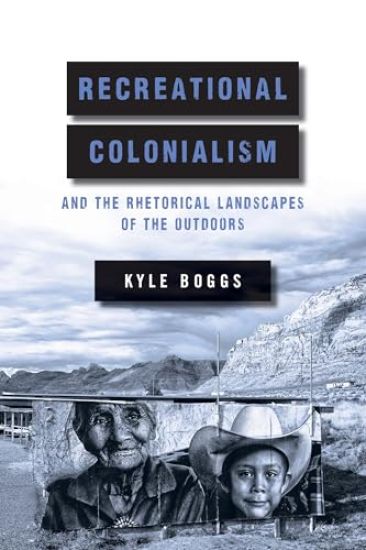
Recreational Colonialism and the Rhetorical Landscapes of the Outdoors
In Recreational Colonialism and the Rhetorical Landscapes of the Outdoors, Kyle Boggs chronicles the struggle between Indigenous peoples who have rooted religious and cultural ties to outdoor sites across the US and elsewhere and the settlers who claim the right to freely recreate in those same places. Synthesizing theories of rhetoric, environmental studies, and settler colonialism, Boggs confronts the ways that settler colonial experiences and expectations have been narrated through rhetorical practices on these so-called public lands. Fusing journalism and personal narrative with scholarly research, Boggs's argument comes to bear on his central case study of a northern Arizona ski development on a mountain held sacred by at least thirteen Indigenous tribes. In illuminating the striking ways that settler imaginaries are accommodated, performed, and sustained in the everyday, Boggs offers a powerful reminder that even during leisure activities (in this case, sports such as ultrarunning, rock climbing, and skiing), complex webs of power control who can access resources and land and who has the right to protect histories and cultures.
Enlightened Individualism

Enlightened Individualism

Kyle Garton-Gundling

OHIO STATE UNIVERSITY PRESS
2021
pokkari
Buddhism and Hinduism have spread in the US largely through texts and are now recognizable facets of American literature and culture. But the US has defined itself through goal-oriented individualism, whereas Buddhism and Hinduism teach that individuality is a delusion and thus worldly desires are misguided. Given this apparent contradiction, what can Buddhist and Hindu influences offer American identities? Enlightened Individualism explores how post-1945 American writers, including Jack Kerouac, Alice Walker, and Maxine Hong Kingston, have tried to answer this question. Playing on enlightenment as both Anglo-American liberalism and Asian mysticism, this book argues that recent American literature seeks to reconcile seemingly incompatible liberal models of individual autonomy with Buddhist and Hindu ideals of transcending selfhood. This "enlightened individualism" uses Buddhist and Hindu philosophy to reframe American freedom in terms of spiritual liberation, and it also reinterprets Asian teachings through Western traditions of political activism and countercultural provocation. Garton-Gundling argues that even though works by Kerouac, Walker, Kingston, and others wrestle with issues of exoticism and appropriation, their characters are also meaningfully challenged and changed by Asian faiths. These literary adaptations, then, can help Americans reenvision individualism in a more transcendent and cosmopolitan context.
Recreational Colonialism and the Rhetorical Landscapes of the Outdoors
In Recreational Colonialism and the Rhetorical Landscapes of the Outdoors, Kyle Boggs chronicles the struggle between Indigenous peoples who have rooted religious and cultural ties to outdoor sites across the US and elsewhere and the settlers who claim the right to freely recreate in those same places. Synthesizing theories of rhetoric, environmental studies, and settler colonialism, Boggs confronts the ways that settler colonial experiences and expectations have been narrated through rhetorical practices on these so-called public lands. Fusing journalism and personal narrative with scholarly research, Boggs's argument comes to bear on his central case study of a northern Arizona ski development on a mountain held sacred by at least thirteen Indigenous tribes. In illuminating the striking ways that settler imaginaries are accommodated, performed, and sustained in the everyday, Boggs offers a powerful reminder that even during leisure activities (in this case, sports such as ultrarunning, rock climbing, and skiing), complex webs of power control who can access resources and land and who has the right to protect histories and cultures.
A Rabble in Arms

A Rabble in Arms

Kyle F. Zelner

New York University Press
2009
sidottu
While it lasted only sixteen months, King Philip's War (1675-1676) was arguably one of the most significant of the colonial wars that wracked early America. As the first major military crisis to directly strike one of the Empire's most important possessions: the Massachusetts Bay Colony, King Philip's War marked the first time that Massachusetts had to mobilize mass numbers of ordinary, local men to fight. In this exhaustive social history and community study of Essex County, Massachusetts's militia, Kyle F. Zelner boldly challenges traditional interpretations of who was called to serve during this period. Drawing on muster and pay lists as well as countless historical records, Zelner demonstrates that Essex County's more upstanding citizens were often spared from impressments, while the "rabble" — criminals, drunkards, the poor— were forced to join active fighting units, with town militia committees selecting soldiers who would be least missed should they die in action. Enhanced by illustrations and maps, A Rabble in Arms shows that, despite heroic illusions of a universal military obligation, town fathers, to damaging effects, often placed local and personal interests above colonial military concerns.
A Rabble in Arms

A Rabble in Arms

Kyle F. Zelner

New York University Press
2010
pokkari
While it lasted only sixteen months, King Philip's War (1675-1676) was arguably one of the most significant of the colonial wars that wracked early America. As the first major military crisis to directly strike one of the Empire's most important possessions: the Massachusetts Bay Colony, King Philip's War marked the first time that Massachusetts had to mobilize mass numbers of ordinary, local men to fight. In this exhaustive social history and community study of Essex County, Massachusetts's militia, Kyle F. Zelner boldly challenges traditional interpretations of who was called to serve during this period. Drawing on muster and pay lists as well as countless historical records, Zelner demonstrates that Essex County's more upstanding citizens were often spared from impressments, while the "rabble" — criminals, drunkards, the poor— were forced to join active fighting units, with town militia committees selecting soldiers who would be least missed should they die in action. Enhanced by illustrations and maps, A Rabble in Arms shows that, despite heroic illusions of a universal military obligation, town fathers, to damaging effects, often placed local and personal interests above colonial military concerns.
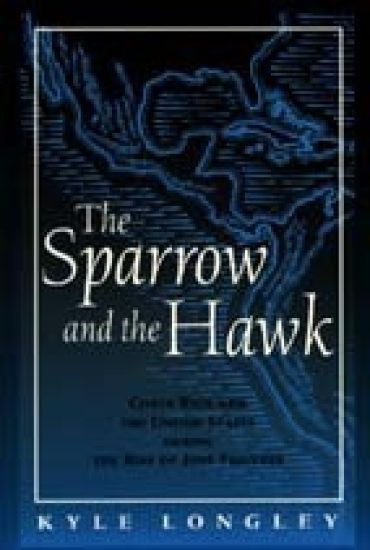
The Sparrow and the Hawk

The Sparrow and the Hawk

Kyle Longley

The University of Alabama Press
1997
nidottu
"Extensively documented study stresses Figueres' ability to manipulate symbols and service influential contacts, which afforded Costa Rica space to pursue nationalist agenda, resisting US domination without provoking US intervention"--Handbook of Latin American Studies, v. 58.http://www.loc.gov/hlas/
The Listening

The Listening

Kyle Dargan; Quincy Troupe

University of Georgia Press
2004
pokkari
Kyle Dargan's debut collection of poetry, The Listening, searches through the cluttered surface of contemporary life to tune into the elemental sounds within the marrow of living/life. Throughout the collection, Dargan interweaves elements of his heritage with the present day—jazz influences blend with hip-hop; neoslave narratives run parallel with the intimate tale of civil rights leaders; post-9/11 America is juxtaposed with family portraits of the sixties and seventies—to reveal the continuous, though ever changing, music of the world around us. Whether capturing the famous Ali-Frazier fight in Manila or a trip to the local barbershop, Muddy Waters or boyhood blacktop games, Dargan gives voice to the most poignant and fleeting aspects of our everyday existence. With singular incisiveness and vigor, these poems act simultaneously as psalms and elegies, praising life at the same time they lament its inevitable passing.
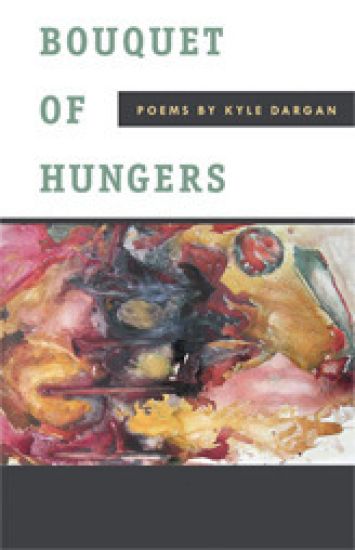
Bouquet of Hungers

Bouquet of Hungers

Kyle Dargan

University of Georgia Press
2007
pokkari
Kyle Dargan's new collection of poetry reflects his many passions as a poet, his deep engagament with what it means to work in the African American literary tradition, and his lively voice, infused with hip-hop sensibility and idiom. Skillfully blending vernacular and elegant diction, his clipped and reflective phrasings create animated poems that take on a myriad of concerns. Moving through such subjects as a midnight wait in the Washington, D.C., bus station, men on exhibit at the 1904 World's Fair, the sights and sounds of an Indiana karaoke bar, and an imagined escaped slave turned to stone, Dargan's work continually shifts lenses to examine an America increasingly stifled by dogmas and inept social categories. At the core of the book is compassion for the individuals who populate it, and from that compassion grows a hunger for the old identities, in which we encase ourselves, to come undone.From "Palinode, Once Removed": The day we pursue metaphor, I will / teach them about the brain—how there is a center / to catch discrepancy between the expected / and the perceived. Stimulate the mechanism. / you are working in metaphor. / Though surprising / I am not a metaphor. This is: I am a period, / small and dark. If you read me correctly, / you are to stop. Pause. Breathe.