Why is science often considered the opposite of literature? Lars O. Erikson examines the relationship between these two fields in eighteenth-century France and finds that the major intellectual and scientific transitions of the period can be better understood by paying attention to literary developments, particularly in genres not traditionally associated with learned societies. Erikson examines works by Diderot and Maupertuis and identifies a shared renegade spirit he calls ""essayistic science."" He demonstrates how the essay, a vague genre characterized by an openness to lay audiences, a self-reflective character, and an insistence on broad overviews, was used to react to a crisis in knowledge and to question the production of facts. Consequently, essayistic science does not deal with facts but with ""metafacts,"" breaking down scientific traditions and bridging objective science with subjective literature.
Starfall consists of three dramatic dialogues among real people in imagined settings. Anchoring each of the dialogues is the great Russian film director and theoretician Sergei Eisenstein, whose artistic theories (in all their formations and reformations) run throughout the book, illustrating the influences that affected the Soviet art world in the period between the two world wars. I "The Aquarians" Eisenstein meets Bertolt Brecht in the first-class compartment of a train heading from Berlin to Moscow in May 1932. They spend the night discussing and arguing about everything from the use of Renaissance magic in art to "some kind of Wagnerian Gesamtkunstwerk, " in which everything in art is connected. "The Sorcerer's Apprentices" takes place at a meeting held in Moscow on 14 April 1935, on the occasion of performances given during a visit by a noted Chinese actor, Mei Lan-Fang, and his troupe, the prime representatives of early twentieth-century "classical" Chinese theater. Conceived as a series of speeches by noted members of the Soviet theater and film circles (Eisenstein again), "The Sorcerer's Apprentices" contrasts the Russian theater with that of the Chinese, the German (antifascist, emigre theater of Brecht and Erwin Piscator), and even the avant-garde British drama (as presented by Gordon Craig). "Ash Wednesday, " set in the Moscow Planetarium in April 1940, has Eisenstein engaged in a dialogue with the philosopher, critic, and literary historian Mikhail Bakhtin. The speak about German culture - in particular Eisenstein's desire to stage Wagner's The Valkyrie, which Bakhtin appears to object to on both political and artistic grounds; the influence of astrology in Soviet literarycircles; and jazz music as a symbol of pure art.
Rediscovering a lost luminary of modernism and the Russian avant-garde This kaleidoscopic biography offers readers a compelling microhistory of a revolutionary moment in art and politics through its portrait of an enigmatic but influential figure: Ivan Aksyonov authored the first book-length study about Pablo Picasso, translated Elizabethan drama, and was a literary adviser to Vsevolod Meyerhold, as well as a teacher of Sergei Eisenstein in Meyerhold's institute and an important critic, before dying in 1935. Lars Kleberg traces Aksyonov's influences, interlocutors, and creative output in multiple genres and media to bring a complicated and fascinating character back to life. Kleberg invites us to reconsider the avant-garde and to understand the political and artistic ferment of the revolutionary era and its aftermath in new, deeper ways.
Rediscovering a lost luminary of modernism and the Russian avant-garde This kaleidoscopic biography offers readers a compelling microhistory of a revolutionary moment in art and politics through its portrait of an enigmatic but influential figure: Ivan Aksyonov authored the first book-length study about Pablo Picasso, translated Elizabethan drama, and was a literary adviser to Vsevolod Meyerhold, as well as a teacher of Sergei Eisenstein in Meyerhold's institute and an important critic, before dying in 1935. Lars Kleberg traces Aksyonov's influences, interlocutors, and creative output in multiple genres and media to bring a complicated and fascinating character back to life. Kleberg invites us to reconsider the avant-garde and to understand the political and artistic ferment of the revolutionary era and its aftermath in new, deeper ways.
A retired schoolteacher, dying of cancer, refuses to go to a hospital and remains at his home in the Swedish countryside, where he records his daily thoughts as the disease progresses
To readers familiar with Lars Gustafsson's work, the playful philosophizing of Sigsmund will come as no surprise, as he leisurely pulls together seeming fragments into a narrative of 1970s Berlin that at once looks back to Homer, Dante, and the Faust legend and ahead to space warfare and intergalactic travel, childhood memories of Sweden, Marxist-Leninism, sports competition, art, epistemology, daydreams--nothing is excluded from the purview of Gustafsson's lighthearted humanism. And behind it all broods the restless spirit of the author's alter ego, the warring king, Sigismund III of Poland (d. 1632).
What is happiness in an age of packaged needs and liberated desires? Lars Gustafsson's Stories of Happy People is a collection of ten short fictions that maps the range of contentment, from inner joy to the edges of despair. "Uncle Sven and the Cultural Revolution" finds a politically indifferent Swedish research engineer, in Mao's China as an industrial consultant, surprised by his own imagination. "The Four Railroads of Iserlohn" lead to poignant, illusionary journeyings. The half-felt yearnings of displaced intellectuals, trying to break out of the stasis of their existence, are explored in "The Art of Surviving November," "What Does Not Kill Us, Tends to Make Us Stronger," and "The Fugitives Discover That They Knew Nothing." "A Water Story" is a sketch of the elusive staying power of love. The protected, private universes of the mentally retarded, the insane, and the senile are opened to view in "Greatness Strikes Where It Pleases," "The Bird in the Breast," and "Out of the Pain." In all of these stories, Gustafsson, one of Sweden's leading men of letters and philosophical writer par excellence, places lives of seeming smallness within the wider context of the culture and history of our hapless era.
Lars Gustafsson, one of Sweden’s leading men of letters, is known in the English-speaking world primarily for his novels and short stories, but he is also a distinguished poet with ten discrete volumes published to date in addition to the collective edition of his work for the years 1950-1980. In The Stillness of the World Before Bach: New Selected Poems, readers will recognize in Gustafsson’s verse the playful erudition and imaginative philosophizing that give his fiction its unique appeal. Gustafsson, writes editor Christopher Middleton, “has remained distinctively a poet, insofar as his novels and essays usually combine exploratory and fabulous features with keen observation, a fascination with character in conflict as the subjective (or existential) axis of history, and a delight in story for its own complex or simple sake.” The selections for The Stillness of the World Before Bach were made by Christopher Middleton of the University of Texas at Austin in close association with the author, with whom he also collaborated for his own versions of many of the poems. Other translations were contributed by Robin Fulton, Philip Martin Yvonne L. Sandstroem, and Harriett Watts.
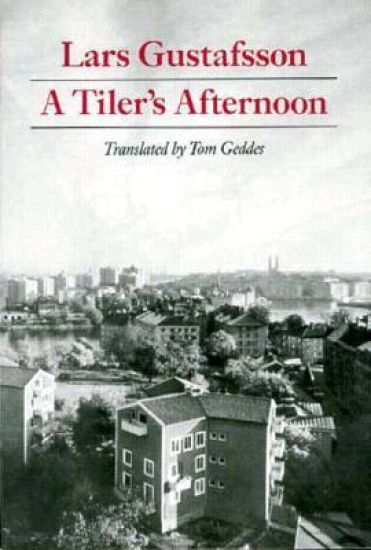
In his newest novel, A Tiler's Afternoon, Lars Gustafsson invites us to share a day's work with Torsten Bergman, an aging, semi-retired tile-layer. On this particular day, Torsten arrives at an empty suburban villa, partially renovated and left unfinished. A master craftsman, he knows what to do and goes about his business, all the while reminiscing over his past, considering what may be left of his future, daydreaming about the mysterious Sophie K., the absent occupant of the villa's upstairs flat. No one checks on the work. With the close of the day comes Torsten's growing unease over hours spent on perhaps futile labor. "But at that moment there was a loud knocking at the door - no, more of a pounding than a knocking. It sounded as if by some strange coincidence the whole world had come to life again and was trying to get in." Like Samuel Beckett, Lars Gustafsson turns the plainest of circumstances into poignant universals. There are yet roads to travel after we say we cannot go on.
Lars Gustafsson is one of Sweden's leading and most prolific men of letters; a poet, philosopher, and fiction writer with dozens of books to his credit since his literary debut, at the age of twenty, in 1956. Although known in the English-speaking world primarily for his novels, Gustafsson is nevertheless one of the most frequently translated of contemporary Swedish poets. Elegies and Other Poems is a companion volume to The Stillness of the World before Bach (New Directions, 1988). As in that earlier volume, editor Christopher Middleton has made his selection from several of the poet's books and included his own translations as well as those of others, Yvonne Sandstroem, Bill Brookshire, and Philip Martin. Readers of Gustafsson's fiction will recognize in his verse the elegant mix of intellect and sheer play, the ruminations of a mind that apprehends humanity in the riddles of the universe.
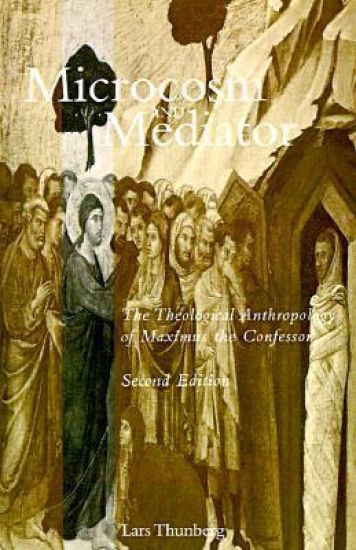
One of the outstanding Christian thinkers of all time, Maximus the Confessor (ca. 580-662) exerted a powerful formative influence on the Church when it was still one and undivided. Maximus left his stamp on Christianity as it is now recognized by all three broad streams of Christian faith: Eastern Orthodox, Roman Catholic, and Protestant. Yet for centuries the detailed study of Maximus's writings was neglected. The first edition of Thunberg's Microcosm and Mediator (1965) helped to transform this situation of indifference into one of intense interest in Maximus and the subtleties of his thinking. This new edition has been revised and expanded, with updated references and bibliographies. The focus of Microcosm and Mediator is Maximus's anthropology, his highly developed general reflections on human nature. Maximus understands man as, not only a being - a microcosm - who reflects the constitution of the created universe, but also as a being - a mediator - created in the image of God, whose task it is, in Christ, to reconcile the spiritual and the sensible into one homogeneous unity.
Since the days of Adam Smith, Mercantilism has been a hotly debated issue. Condemned at the end of the 18th century as a "false" system of economic thinking and political practice, it has returned paradoxically to the forefront in regard to issues such as the creation of economic growth in developing countries. This concept is often used in order to depict economic thinking and economic policy in early modern Europe; its meaning and content has been highly debated for over two hundred years. Following on from his 1994 volume Mercantilism – The Shaping of an Economic Language, this new book from Lars Magnusson presents a more synthetic interpretation of Mercantilism not only as a theoretical system, but also as a system of political economy. This book incorporates samples of material from the 1994 publication alongside new material, ordered in a new set of chapters and up-date discussions on mercantilism up to the present day. Tracing the development of a particular political economy of Mercantilism in a period of nascent state making in Western and Continental Europe from the 16th to the 18th century, the book describes how European rulers regarded foreign trade and industrialisation as a means to achieve power and influence amidst international competition over trades and markets. Returning to debates concerning whether Mercantilism was a system of power or of wealth, Magnusson argues that it is in fact was both, and that contemporaries almost without exception saw these goals as interconnected. He also emphasises that Mercantilism was an all-European issue in a time of trade wars and the struggle for international power and recognition. In examining these issues, this book offers an unrivalled modern synthesis of Mercantilist ideas and practices.
When first confronted with the prospect of having my collected papers published, I felt both awe and confusion, but I calmed down when I realized that the purpose was not to honor the author, but to be of service to the mathematical community. If young scholars of a future generation should desire to find out what some mathematicians of the twentieth century were up to, they would indeed have reason to be thankful if spared the need to seek this information from a multi tude of sources. As an introduction it seems polite and useful to begin with a brief outline of my life, especially as related to my professional activity. I was born the eighteenth of April 1907 in Helsingfors, Finland. My father was a professor of mechanical engineering at the Poly technical Institute. My mother died in childbirth when I was born. At the time of my early childhood Finland was under Russian sovereignty, but with a certain degree of autonomy, sometimes observed and sometimes disregarded by the czar who was, by today's standards, a relatively benevolent despot. Civil servants, including professors, were able to enjoy a fairly high standard of living, a condition that was to change radically during World War I and the Russian revolution that followed.
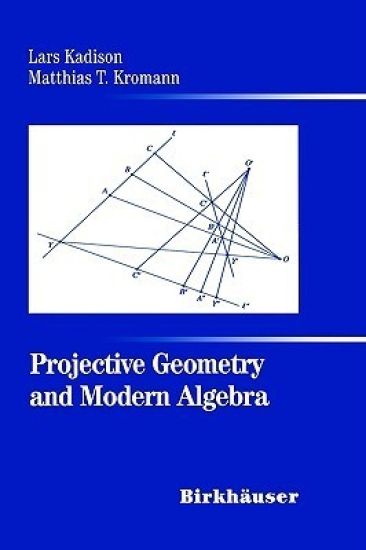
This work serves as an introduction to the theory of projective geometry. Techniques and concepts of modern algebra are presented for their role in the study of projective geometry. Topics covered include: affine and projective planes; homogeneous co-ordinates; and Desargues' theorem.
The term convexity used to describe these lectures given at the Univer sity of Lund in 1991-92 should be understood in a wide sense. Only Chap ters I and II are devoted to convex sets and functions in the traditional sense of convexity. The following chapters study other kinds of convexity which occur in analysis. Most prominent is the pseudo-convexity (plurisubh- monicity) in the theory of functions of several complex variables discussed in Chapter IV. It relies on the theory of subharmonic functions in R^, so Chapter III is devoted to subharmonic functions in R"^ for any n. Existence theorems for constant coefficient partial differential operators in R'^ are re lated to various kinds of convexity conditions, depending on the operator. Chapter VI gives a survey of the rather incomplete results which are known on their geometrical meaning. There are also natural classes of "convex" functions related to subgroups of the linear group, which specialize to sev eral of the notions already mentioned. They are discussed in Chapter V. The last chapter. Chapter VII, is devoted to the conditions for solvability of microdifferential equations, which can also be considered as a branch of convexity theory. The whole chapter is an exposition of a part of the thesis of J.-M. Trepreau.
Should today's society be termed an information or a network society? This book provides an alternative choice--the hypercomplex society, which is a critical, complex-theoretical understanding of society whose growing level of social complexity represents the basic challenge of our current society. This original understanding of society is presented through a historical analysis of the emergence of the current state of hypercomplexity and polycentrism. The functioning of communication, mass media, and the public sphere in the hypercomplex society is also analyzed and the Internet is characterized as a communication infrastructure particularly shaped by the hypercomplex society. The book concludes with a cultural self-observation of the hypercomplex society.