Kirjojen hintavertailu. Mukana 12 016 292 kirjaa ja 12 kauppaa.

Kirjahaku

Etsi kirjoja tekijän nimen, kirjan nimen tai ISBN:n perusteella.

1000 tulosta hakusanalla Lee H. Butler

Nixon, Ford and the Abandonment of South Vietnam

Nixon, Ford and the Abandonment of South Vietnam

J. Edward Lee; H.C. “Toby” Haynsworth

McFarland Co Inc
2002
pokkari
South Vietnam fell because of events occurring thousands of miles away from the battlefields--in China, the Soviet Union, Latin America, the Middle East, and Washington's corridors of power, along protest lines, and around America's dinner tables. These other wars being fought by American presidents Richard Nixon and Gerald Ford profoundly impacted what happened in Vietnam. This work examines those other conflicts and the political, social, and economic factors involved with them that distracted and crippled the presidencies of Richard Nixon and Gerald Ford and led to the eventual abandonment of the U.S.-supported South Vietnamese regime. Nixon entered office with the goal of bringing the world together, but saw that goal ruined by the 1973 war in the Middle East, preoccupations with China and the Soviet Union, a weak economy, Watergate, and his disgraceful exit from the White House. Ford's presidency was tainted almost from the beginning because of the pardon he granted to Nixon, but the American public, tired of war and concerned about the economy, was ready to hear that the war had come to an end. An argument is presented that the war could have been won if the "other wars" had been fought by presidents willing to honor the American commitment to its allies in South Vietnam.
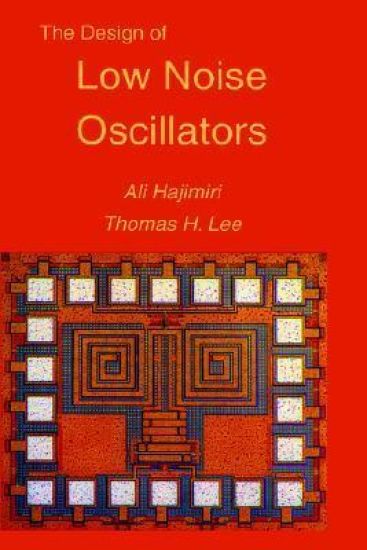
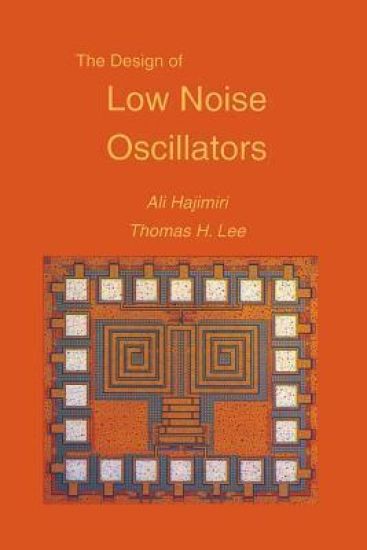
The Design of Low Noise Oscillators

The Design of Low Noise Oscillators

Ali Hajimiri; Thomas H. Lee

Springer
1999
sidottu
It is hardly a revelation to note that wireless and mobile communications have grown tremendously during the last few years. This growth has placed stringent requi- ments on channel spacing and, by implication, on the phase noise of oscillators. C- pounding the challenge has been a recent drive toward implementations of transceivers in CMOS, whose inferior 1/f noise performance has usually been thought to disqualify it from use in all but the lowest-performance oscillators. Low noise oscillators are also highly desired in the digital world, of course. The c- tinued drive toward higher clock frequencies translates into a demand for ev- decreasing jitter. Clearly, there is a need for a deep understanding of the fundamental mechanisms g- erning the process by which device, substrate, and supply noise turn into jitter and phase noise. Existing models generally offer only qualitative insights, however, and it has not always been clear why they are not quantitatively correct.
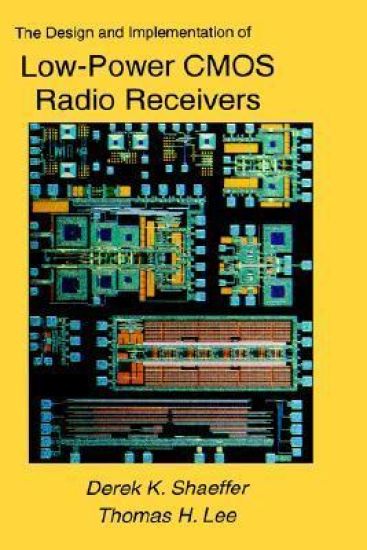
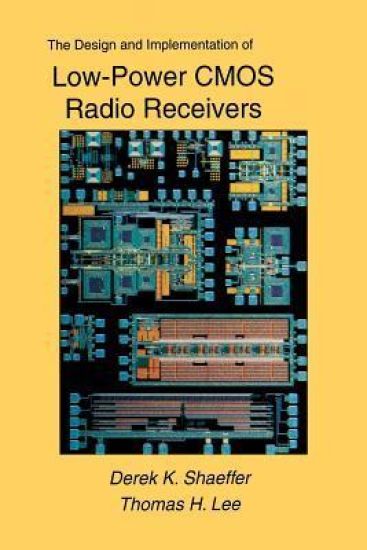
The Design and Implementation of Low-Power CMOS Radio Receivers
It is hardly a profound observation to note that we remain in the midst of a wireless revolution. In 1998 alone, over 150 million cell phones were sold worldwide, representing an astonishing 50% increase over the previous year. Maintaining such a remarkable growth rate requires constant innovation to decrease cost while increasing performance and functionality. Traditionally, wireless products have depended on a mixture of semicond- tor technologies, spanning GaAs, bipolar and BiCMOS, just to name a few. A question that has been hotly debated is whether CMOS could ever be suitable for RF applications. However, given the acknowledged inferiority of CMOS transistors relative to those in other candidate technologies, it has been argued by many that “CMOS RF” is an oxymoron, an endeavor best left cloistered in the ivory towers of academia. In rebuttal, there are several compelling reasons to consider CMOS for wi- less applications. Aside from the exponential device and density improvements delivered regularly by Moore’s law, only CMOS offers a technology path for integrating RF and digital elements, potentially leading to exceptionally c- pact and low-cost devices. To enable this achievement, several thorny issues need to be resolved. Among these are the problem of poor passive com- nents, broadband noise in MOSFETs, and phase noise in oscillators made with CMOS. Beyond the component level, there is also the important question of whether there are different architectural choices that one would make if CMOS were used, given the different constraints.
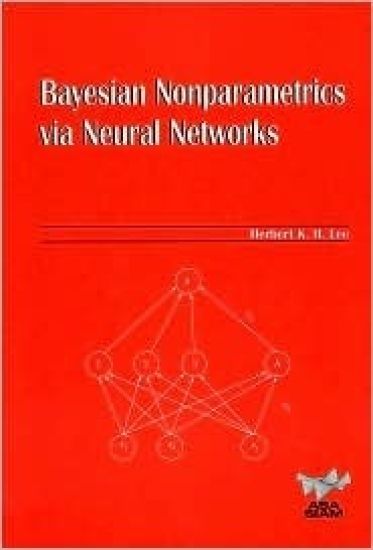
Bayesian Nonparametrics Via Neural Networks

Bayesian Nonparametrics Via Neural Networks

Herbert K. H. Lee

Society for Industrial Applied Mathematics,U.S.
2004
pokkari
Bayesian Nonparametrics via Neural Networks is the first book to focus on neural networks in the context of nonparametric regression and classification, working within the Bayesian paradigm. Its goal is to demystify neural networks, putting them firmly in a statistical context rather than treating them as a black box. This approach is in contrast to existing books, which tend to treat neural networks as a machine learning algorithm instead of a statistical model. Once this underlying statistical model is recognized, other standard statistical techniques can be applied to improve the model. The Bayesian approach allows better accounting for uncertainty. This book covers uncertainty in model choice and methods to deal with this issue, exploring a number of ideas from statistics and machine learning. A detailed discussion on the choice of prior and new noninformative priors is included, along with a substantial literature review. Written for statisticians using statistical terminology, Bayesian Nonparametrics via Neural Networks will lead statisticians to an increased understanding of the neural network model and its applicability to real-world problems.To illustrate the major mathematical concepts, the author uses two examples throughout the book: one on ozone pollution and the other on credit applications. The methodology demonstrated is relevant for regression and classification-type problems and is of interest because of the widespread potential applications of the methodologies described in the book.
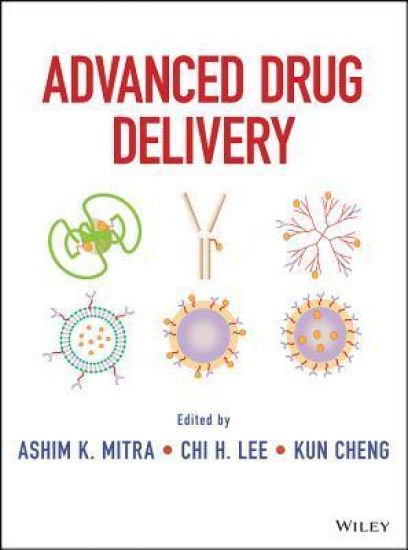
Advanced Drug Delivery

Advanced Drug Delivery

Ashim Mitra; Chi H. Lee; Kun Cheng

John Wiley Sons Inc
2013
sidottu
Provides both fundamentals and new and emerging applications Advanced Drug Delivery brings readers fully up to date with the state of the science, presenting the basics, formulation strategies, and therapeutic applications of advanced drug delivery. The book demonstrates how core concepts of pharmaceutical sciences, chemistry, and molecular biology can be combined and applied in order to spark novel ideas to design and develop advanced drug delivery systems for the treatment of a broad range of human diseases. Advanced Drug Delivery features contributions from an international team of pharmaceutical scientists. Chapters reflect a thorough review and analysis of the literature as well as the authors' firsthand experience developing drug delivery systems. The book is divided into four parts: Part I, Introduction and Basics of Advanced Drug Delivery, explores physiological barriers, stability, transporters, and biomaterials in drug deliveryPart II, Strategies for Advanced Drug Delivery, offers tested and proven strategies for advanced delivery of both small molecules and macromoleculesPart III, Translational Research of Advanced Drug Delivery, focuses on regulatory considerations and translational applications of advanced drug delivery systems for the treatment of cardiovascular diseases, cancer, sexually transmitted diseases, ophthalmic diseases, and brain diseasesPart IV, Future Applications of Advanced Drug Delivery in Emerging Research Areas, examines stem cell research, cell-based therapeutics, tissue engineering, and molecular imaging Each chapter provides objectives and assessment questions to help readers grasp key concepts and assess their knowledge as they progress through the book. Advanced Drug Delivery is recommended for graduates and upper-level undergraduates in the pharmaceutical sciences who need a solid foundation in the basics. It is also recommended for pharmaceutical professionals who want to take advantage of new and emerging applications in advanced drug delivery systems.
Relay Feedback

Relay Feedback

Qing-Guo Wang; Tong H. Lee; Lin Chong

Springer London Ltd
2012
nidottu
Relay feedback has attracted considerable research attention for more than a century but there has been no recent summary of the many newly-developed tools and results now available for this important area as a whole, those that have been published tending to focus on one process or controller type only. Relay Feedback is divided into three parts, the first of which is devoted to the analysis of relay feedback systems within a general setting with information on: existence of solutions; existence of limit cycles; local and global stability of limit cycles; limit cycles with more than two switchings per period; plants with time delay; relays with asymmetric hysteresis. The second part, on the improvement of process identification shows the reader how to: modify a standard relay to provide better excitation of a process at a number of important frequencies; devise new algorithms designed to make better use of information from relay feedback tests. The book's third part is a presentation of recent developments in control design providing: a unified framework for the design of internal-model, proportional-integral-derivative or general-single-loop controllers for SISO or MIMO systems with or without time delays; characterisation of time delays and non-minimum phase zeros for closed-loop systems. Relay Feedback presents a comprehensive, up-to-date and detailed treatment of relay feedback theory, the use of relay feedback for process identification and the use of identified models for general control design in a single volume. The work assumes only knowledge of linear system theory on the part of the reader and should therefore be of use to graduate students and practising engineers as well as to researchers.
The Design of Low Noise Oscillators

The Design of Low Noise Oscillators

Ali Hajimiri; Thomas H. Lee

Springer-Verlag New York Inc.
2013
nidottu
It is hardly a revelation to note that wireless and mobile communications have grown tremendously during the last few years. This growth has placed stringent requi- ments on channel spacing and, by implication, on the phase noise of oscillators. C- pounding the challenge has been a recent drive toward implementations of transceivers in CMOS, whose inferior 1/f noise performance has usually been thought to disqualify it from use in all but the lowest-performance oscillators. Low noise oscillators are also highly desired in the digital world, of course. The c- tinued drive toward higher clock frequencies translates into a demand for ev- decreasing jitter. Clearly, there is a need for a deep understanding of the fundamental mechanisms g- erning the process by which device, substrate, and supply noise turn into jitter and phase noise. Existing models generally offer only qualitative insights, however, and it has not always been clear why they are not quantitatively correct.
The Design and Implementation of Low-Power CMOS Radio Receivers

The Design and Implementation of Low-Power CMOS Radio Receivers

Derek Shaeffer; Thomas H. Lee

Springer-Verlag New York Inc.
2013
nidottu
It is hardly a profound observation to note that we remain in the midst of a wireless revolution. In 1998 alone, over 150 million cell phones were sold worldwide, representing an astonishing 50% increase over the previous year. Maintaining such a remarkable growth rate requires constant innovation to decrease cost while increasing performance and functionality. Traditionally, wireless products have depended on a mixture of semicond- tor technologies, spanning GaAs, bipolar and BiCMOS, just to name a few. A question that has been hotly debated is whether CMOS could ever be suitable for RF applications. However, given the acknowledged inferiority of CMOS transistors relative to those in other candidate technologies, it has been argued by many that “CMOS RF” is an oxymoron, an endeavor best left cloistered in the ivory towers of academia. In rebuttal, there are several compelling reasons to consider CMOS for wi- less applications. Aside from the exponential device and density improvements delivered regularly by Moore’s law, only CMOS offers a technology path for integrating RF and digital elements, potentially leading to exceptionally c- pact and low-cost devices. To enable this achievement, several thorny issues need to be resolved. Among these are the problem of poor passive com- nents, broadband noise in MOSFETs, and phase noise in oscillators made with CMOS. Beyond the component level, there is also the important question of whether there are different architectural choices that one would make if CMOS were used, given the different constraints.
Hbr's 10 Must Reads for Healthcare Leaders Collection

Hbr's 10 Must Reads for Healthcare Leaders Collection

Harvard Business Review; Thomas H. Lee; Daniel Goleman

Harvard Business Review Press
2019
nidottu
The one collection every healthcare leader needs.The landscape of today's healthcare industry is constantly changing, and it's your job to lead your team to success. This collection from Harvard Business Review offers the ideas and strategies to help get you there. HBR's 10 Must Reads for Healthcare Leaders Collection includes the popular books HBR's 10 Must Reads on Leadership for Healthcare, HBR's 10 Must Reads on Strategy for Healthcare, HBR's 10 Must Reads on Innovation, and HBR's 10 Must Reads on Change Management. This unique compilation offers insights from world-class experts on making the leap from being a good practitioner to being a great leader, leading effectively through times of rapid change, and achieving the best healthcare outcomes at the lowest cost. The collection includes forty articles selected by HBR's editors from renowned thought leaders including Michael Porter, Peter Drucker, John Kotter, Rosabeth Moss Kanter, Jim Collins, W. Chan Kim, and Renee Mauborgne, plus the bonus article "Engaging Doctors in the Health Care Revolution," by Thomas H. Lee, MD, and Toby Cosgrove, MD. HBR's 10 Must Reads for Healthcare Leaders Collection is an invaluable resource for any doctor or hospital administrator looking to grow as a leader and to having a positive impact on colleagues and patients alike.HBR's 10 Must Reads series is the definitive collection of ideas and best practices for leaders at every level. These books offer essential reading selected from the pages of Harvard Business Review on topics critical to the success of every manager. Each book is packed with advice and inspiration from leading experts such as Clayton Christensen, Peter Drucker, Rosabeth Moss Kanter, John Kotter, Michael Porter, Daniel Goleman, Theodore Levitt, and Rita Gunther McGrath.
Desiderios

Desiderios

Sylvia S. Lee; Megan H. Lee; M. H. Lee

Comsparc Publishing
2019
nidottu
Max is a newly inducted soldier of the Legion, the military power that holds influence in every corner of Balavan. He seems like any other soldier, smart and strong, but not all is what it seems on the surface. He has a secret that even his closest friend, Thom, isn't privy to. Thom is only 18 years old but holds thousands of lives in the palm of his hand. Following in the footsteps of his father, the former General of the Legion, Thom has risen to the top of the Legion's ranks. When his childhood friend Max goes missing, Thom launches a single-man search party to find him at all costs. Trip is the leader of the Desiderios, a rebel group hoping to free Balavan from the clutches of the Legion. The Desiderios know the corrupt nature of the Legion, even if they hide it so well from the citizens. Trip knows to what length the Legion will go to in order to gain power, and along with his second-in-command, Violet, he'll do anything it takes to stop them from destroying more lives. In the world of Balavan, anything goes, and loyalties waver in the line of fire. The Legion's forces clash against the guerillas of the Desiderios, and it's anyone's game.
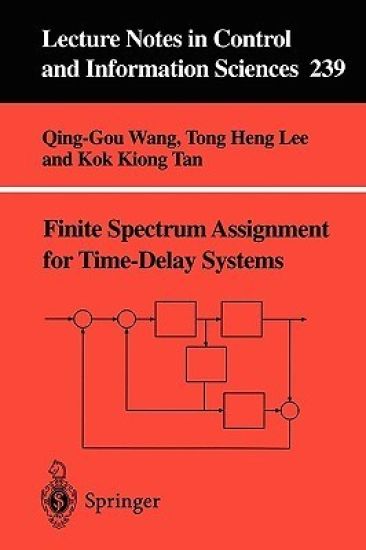
Finite-Spectrum Assignment for Time-Delay Systems

Finite-Spectrum Assignment for Time-Delay Systems

Qing-Guo Wang; Tong H. Lee; Kok K. Tan

Springer London Ltd
1998
nidottu
The presence of considerable time delays in many industrial processes is well recognized and achievable performances of conventional unity feedback control systems are degraded if a process has a relatively large time delay compared to its time constants. In this case, dead time compensation is necessary in order to enhance the performances. The most popular scheme for such compensation is the Smith Predictor, but it is unsuitable for unstable or lightly damped processes because the compensated closed-loop system always contains the process poles themselves. An alternative scheme for delay elimination from the closed-loop is the finite spectrum assignment (FSA) strategy and it can arbitrarily assign the closed-loop spectrum. One may note that the Smith­ Predictor Control can be found in delay systems control books and many process control books, but the FSA control is rarely included in these books. It is therefore timely and desirable to fill this gap by writing a book which gives a comprehensive treatment of the FSA approach. This is useful and worthwhile since the FSA provides not only an alternative way but also certain advantages over the Smith-Predictor. The book presents the state-of-the-art of the finite spectrum assignment for time-delay systems in frequency domain. It mainly contains those works carried out recently by the authors in this field. Most of them have been published and others are awaiting publication. They are assembled together and reorganized in such a way that the presentation is logical, smooth and systematic.
Relay Feedback

Relay Feedback

Qing-Guo Wang; Tong H. Lee; Lin Chong

Springer London Ltd
2002
sidottu
Relay feedback has attracted considerable research attention for more than a century but there has been no recent summary of the many newly-developed tools and results now available for this important area as a whole, those that have been published tending to focus on one process or controller type only. Relay Feedback is divided into three parts, the first of which is devoted to the analysis of relay feedback systems within a general setting with information on: existence of solutions; existence of limit cycles; local and global stability of limit cycles; limit cycles with more than two switchings per period; plants with time delay; relays with asymmetric hysteresis. The second part, on the improvement of process identification shows the reader how to: modify a standard relay to provide better excitation of a process at a number of important frequencies; devise new algorithms designed to make better use of information from relay feedback tests. The book's third part is a presentation of recent developments in control design providing: a unified framework for the design of internal-model, proportional-integral-derivative or general-single-loop controllers for SISO or MIMO systems with or without time delays; characterisation of time delays and non-minimum phase zeros for closed-loop systems. Relay Feedback presents a comprehensive, up-to-date and detailed treatment of relay feedback theory, the use of relay feedback for process identification and the use of identified models for general control design in a single volume. The work assumes only knowledge of linear system theory on the part of the reader and should therefore be of use to graduate students and practising engineers as well as to researchers.
Advances in the Theory of Varieties of Semigroups

Advances in the Theory of Varieties of Semigroups

Edmond W. H. Lee

BIRKHAUSER VERLAG AG
2023
nidottu
This monograph thoroughly explores the development of the theory of varieties of semigroups and of two related algebras: involution semigroups and monoids. Through this in-depth analysis, readers will attain a deeper understanding of the differences between these three types of varieties, which may otherwise seem counterintuitive. New results with detailed proofs are also presented that answer previously unsolved fundamental problems. Featuring both a comprehensive overview as well as highlighting the author’s own significant contributions to the area, this book will help establish this subfield as a matter of timely interest. Advances in the Theory of Varieties of Semigroups will appeal to researchers in universal algebra and will be particularly valuable for specialists in semigroups.
Women’s Activism in Malaysia

Women’s Activism in Malaysia

Julian C. H. Lee

Birkhauser Verlag AG
2018
sidottu
In this book, the author draws on over a decade of first-hand experience as an academic-activist and on interviews with women in Malaysia’s women’s rights movement. Despite a considerable array of challenges to their participation in the public and political spheres, the movement is especially vibrant. Presenting insights from feminist activists in Malaysia, the book explores the Women’s Candidacy Initiative’s efforts to promote independent women in Parliament; the work of women’s coalition the Joint Action Group for Gender Equality; how activists understand and experience the concept of feminism; and finally the place of men in feminism. Women’s Activism in Malaysia will be of interest to students and scholars across a range of disciplines including gender studies, politics and sociology.