Kirjojen hintavertailu. Mukana 11 699 587 kirjaa ja 12 kauppaa.

Kirjahaku

Etsi kirjoja tekijän nimen, kirjan nimen tai ISBN:n perusteella.

1000 tulosta hakusanalla Luke Pitcher

Luke's Halloween Activity Book: (Personalized Book for Children), Games: mazes, connect the dots, coloring, & poems, Large Print One-Sided: Use marker
This book is a special way to say "Happy Halloween" to Luke. Luke's personalized activity book for everyone's favorite holiday includes: mazes, connect the dots, crossword puzzle, coloring, and poems. The delightful seasonal poems and fun autumn illustrations have been carefully selected to engage and inspire children: scarecrows, owls, witches, vampires, and more. Luke's name has been featured throughout this fall book with "Tips and Tricks" for using this book Images are on one side of the page so that markers, gel pens, crayons, or colored pencils can be used. Pages can be easily removed. We have dozens of personalized Halloween books with other popular names. If you wish to purchase this book with a name not included in our list, please contact us at florabellapublishing.com. Please see our "Big Halloween Activity Games for Little Thinkers" that has more mazes, connect the dots, rebuses, and more by Florabella Publishing.

Luke Coles and the Flower of Chiloe: Amazon Exclusive Holiday 2017 Edition

Luke Coles and the Flower of Chiloe: Amazon Exclusive Holiday 2017 Edition

Josh Walker

Createspace Independent Publishing Platform
2017
nidottu
After one-hundred-fifty years, monster hunter Luke Coles returns to Mexico to face a monster from his past. Join him as he remembers his early encounters with the supernatural, relives his first love, and recalls the event which led him to join the Caleuche, an enchanted ship whose crew--a Viking, a mute mage, a Dutch pirate captain, and a member of Chinese nobility--travel the world fighting ghosts, myths, and creatures out of folklore.
Letter Tracing for Kids Luke Trace my Name Workbook: Tracing Books for Kids ages 3 - 5 Pre-K & Kindergarten Practice Workbook
LUKE Name Tracing Workbook - Preschoolers Kindergarten Practice Workbook - Toddlers Writing Notebook - Learn How to Write LUKE - Preschoolers Activities Teaching your child the basics of writing is a difficult task especially if he or she is full of energy and finds it more difficult to focus. In order to give him a push in the first years of school or kindergartner, we are presenting a revolutionary way of teaching your baby the basics of the alphabet: the name tracing workbook for children. Why our workbook? The name tracing workbook has been designed specifically to teach children the basic of spelling and writing. By learning to write his own name, your child will develop the abilities and skills needed in the first years of schools while having fun. The 100 pages activity book is the perfect choice if you are searching to invest in your child's education from the beginning so don't hesitate and get him the only workbook he needs LEARNING THE FIRST LETTERS teaching your toddler the first letters and how to spell his or her name is difficult, which is why we have designed a special workbook that will make the learning process easier and a lot more fun, adding to the baby's educational fund. PERSONALIZED WORKING: the name is the first word any child should learn how to spell, but it is almost impossible to find special help for that task. LUKE Name Tracing Workbook is divided in 12 themed chapters that will teach your toddler how to spell his or her name in a fun and interactive way. WHAT IT CONTAINS: LUKE Name Tracing Workbook counts no less than 100 pages divided in 12 themed sheets that propose recognition activities, letter tracing practice and letter games, that are sure to teach your child the basics of writing and spelling. FOR TODDLERS: LUKE Name Tracing Workbook is made especially for children aged 3 to 6 so your son or daughter will be well prepared for both kindergarten and first grade Learning the alphabet will be a piece of cake if your kid will already have the foundation letter tracing so why not give him a head start in school. THE PERFECT GIFT: offering a present to a toddler that is both fun and parents-approved is an almost impossible task, but the name tracing workbook has it all: it is educational, personalized and made especially for youngsters ages 3 to 6 so, if you're trying to bring a smile on a kid's face, this is it
Luke's Gift: A Harlow Brother Romance

Luke's Gift: A Harlow Brother Romance

Kaylie Newell

Blackstone Publishing
2018
cd
After serving in the army, Luke Harlow returns home in time for the holidays to help his brothers raise their twelve-year-old half sister. With his new job as Marietta's police officer, Luke finds himself in the middle of a festive mystery that the entire town will want solved before Christmas morning.Mary Best is Marietta Courier's most promising young reporter. When she starts spending time with sexy Luke Harlow to write an article about his heroic military service, she begins to suspect there's more to this new police recruit than meets the eye. He's kind, generous, and very mysterious. When anonymous gifts start appearing around town for people in need, Mary knows there's a story there. A magical one. It doesn't take long for the breadcrumbs to lead right back to Luke.As the gifts pile up, so does everyone's urge to unmask Marietta's secret Santa. Luke is deeply private, and Mary is deeply curious-opposites who'll find themselves tumbling toward each other amidst the snowy backdrop of a town fully embraced in the spirit of Christmas. But when Mary uncovers Luke's secret, will she be able to bury her reporter's instincts for the sake of love? And will Luke finally be able to trust someone with his heart?
Luke and the Journey Through Science

Luke and the Journey Through Science

Talha Khalid

Createspace Independent Publishing Platform
2018
nidottu
Luke and the Journey Through Science takes a young Luke and his teacher through various moments in scientific history to show kids (and even adults) how key scientific figures helped bring about the amazing scientific innovations we see today. From Benjamin Franklin's experiments on electricity to space travel and beyond, readers will learn how scientific ingenuity, passion and a dream helped shape our world. Are you ready to take a journey through science? #LukeandtheJourneyThroughScience
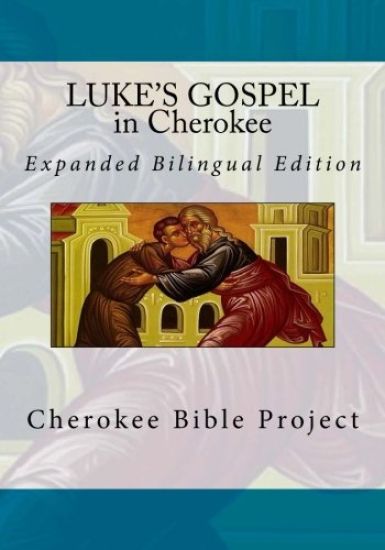
Luke's Gospel in Cherokee: Expanded Bilingual Edition

Luke's Gospel in Cherokee: Expanded Bilingual Edition

Dale Walosi Ries; Brian Wilkes; Johannah Meeks Ries

Createspace Independent Publishing Platform
2018
nidottu
Luke's Gospel contains narrative history, genealogy, sermons, parables (19 of them), and prophesy. Luke, a doctor and a Greek-speaking Christian, accompanied Paul on mission journeys, which he wrote about in the Acts of the Apostles. This Gospel was written to record an accurate account of the life of Jesus Christ. Luke wrote presenting Jesus as the "Son of Man," and the Savior of all humanity, using a literary level of Greek to reach the non-Jewish world. While the Cherokee Gospels were translated directly from the Greek Textus Receptus rather than from an existing translation such as the King James Version, response from Cherokee clergy and language teachers infomred us that they would prefer the English be taken from the King James. We present each verse in Old Syllabary, New Syllabary, and phonetic Cherokee as well as English to promote study of the Cherokee language.
Luke Fowler

Luke Fowler

JRP Ringier
2009
sidottu
A central figure in Glasgows vibrant art scene, Luke Fowlers cinematic collages break down conventional approaches to biographical and documentary film-making. Fowlers films have often been linked to British Free Cinema, whose distinctive aesthetic cam.
Luke the Historian of Israel’s Legacy, Theologian of Israel’s ‘Christ’
David Moessner proposes a new understanding of the relation of Luke’s second volume to his Gospel to open up a whole new reading of Luke’s foundational contribution to the New Testament. For postmodern readers who find Acts a ‘generic outlier,’ dangling tenuously somewhere between the ‘mainland’ of the evangelists and the ‘Peloponnese’ of Paul—diffused and confused and shunted to the backwaters of the New Testament by these signature corpora—Moessner plunges his readers into the hermeneutical atmosphere of Greek narrative poetics and elaboration of multi-volume works to inhale the rhetorical swells that animate Luke’s first readers in their engagement of his narrative. In this collection of twelve of his essays, re-contextualized and re-organized into five major topical movements, Moessner showcases multiple Hellenistic texts and rhetorical tropes to spotlight the various signals Luke provides his readers of the multiple ways his Acts will follow "all that Jesus began to do and to teach" (Acts 1:1) and, consequently, bring coherence to this dominant block of the New Testament that has long been split apart. By collapsing the world of Jesus into the words and deeds of his followers, Luke re-configures the significance of Israel’s "Christ" and the "Reign" of Israel’s God for all peoples and places to create a new account of ‘Gospel Acts,’ discrete and distinctively different than the "narrative" of the "many" (Luke 1:1). Luke the Historian of Israel’s Legacy combines what no analysis of the Lukan writings has previously accomplished, integrating seamlessly two ‘generically-estranged’ volumes into one new whole from the intent of the one composer. For Luke is the Hellenistic historian and simultaneously ‘biblical’ theologian who arranges the one "plan of God" read from the script of the Jewish scriptures—parts and whole, severally and together—as the saving ‘script’ for the whole world through Israel’s suffering and raised up "Christ," Jesus of Nazareth. In the introductions to each major theme of the essays, this noted scholar of the Lukan writings offers an epitome of the main features of Luke’s theological ‘thought,’ and, in a final Conclusions chapter, weaves together a comprehensive synthesis of this new reading of the whole.
Luke the Historian of Israel’s Legacy, Theologian of Israel’s ‘Christ’
David Moessner proposes a new understanding of the relation of Luke’s second volume to his Gospel to open up a whole new reading of Luke’s foundational contribution to the New Testament. For postmodern readers who find Acts a ‘generic outlier,’ dangling tenuously somewhere between the ‘mainland’ of the evangelists and the ‘Peloponnese’ of Paul—diffused and confused and shunted to the backwaters of the New Testament by these signature corpora—Moessner plunges his readers into the hermeneutical atmosphere of Greek narrative poetics and elaboration of multi-volume works to inhale the rhetorical swells that animate Luke’s first readers in their engagement of his narrative. In this collection of twelve of his essays, re-contextualized and re-organized into five major topical movements, Moessner showcases multiple Hellenistic texts and rhetorical tropes to spotlight the various signals Luke provides his readers of the multiple ways his Acts will follow "all that Jesus began to do and to teach" (Acts 1:1) and, consequently, bring coherence to this dominant block of the New Testament that has long been split apart. By collapsing the world of Jesus into the words and deeds of his followers, Luke re-configures the significance of Israel’s "Christ" and the "Reign" of Israel’s God for all peoples and places to create a new account of ‘Gospel Acts,’ discrete and distinctively different than the "narrative" of the "many" (Luke 1:1). Luke the Historian of Israel’s Legacy combines what no analysis of the Lukan writings has previously accomplished, integrating seamlessly two ‘generically-estranged’ volumes into one new whole from the intent of the one composer. For Luke is the Hellenistic historian and simultaneously ‘biblical’ theologian who arranges the one "plan of God" read from the script of the Jewish scriptures—parts and whole, severally and together—as the saving ‘script’ for the whole world through Israel’s suffering and raised up "Christ," Jesus of Nazareth. In the introductions to each major theme of the essays, this noted scholar of the Lukan writings offers an epitome of the main features of Luke’s theological ‘thought,’ and, in a final Conclusions chapter, weaves together a comprehensive synthesis of this new reading of the whole.
Luke/Acts and the End of History

Luke/Acts and the End of History

Kylie Crabbe

De Gruyter
2021
isokokoinen pokkari
Luke/Acts and the End of History investigates how understandings of history in diverse texts of the Graeco-Roman period illuminate Lukan eschatology. In addition to Luke/Acts, it considers ten comparison texts as detailed case studies throughout the monograph: Polybius's Histories, Diodorus Siculus's Library of History, Virgil's Aeneid, Valerius Maximus's Memorable Doings and Sayings, Tacitus’s Histories, 2 Maccabees, the Qumran War Scroll, Josephus's Jewish War, 4 Ezra, and 2 Baruch. The study makes a contribution both in its method and in the questions it asks. By placing Luke/Acts alongside a broad range of texts from Luke's wider cultural setting, it overcomes two methodological shortfalls frequently evident in recent research: limiting comparisons of key themes to texts of similar genre, and separating non-Jewish from Jewish parallels. Further, by posing fresh questions designed to reveal writers' underlying conceptions of history—such as beliefs about the shape and end of history or divine and human agency in history—this monograph challenges the enduring tendency to underestimate the centrality of eschatology for Luke's account. Influential post-war scholarship reflected powerful concerns about "salvation history" arising from its particular historical setting, and criticised Luke for focusing on history instead of eschatology due to the parousia’s delay. Though some elements of this thesis have been challenged, Luke continues to be associated with concerns about the delayed parousia, affecting contemporary interpretation. By contrast, this study suggests that viewing Luke/Acts within a broader range of texts from Luke's literary context highlights his underlying teleological conception of history. It demonstrates not only that Luke retains a sense of eschatological urgency seen in other New Testament texts, but a structuring of history more akin to the literature of late Second Temple Judaism than the non-Jewish Graeco-Roman historiographies with which Luke/Acts is more commonly compared. The results clarify not only Lukan eschatology, but related concerns or effects of his eschatology, such as Luke’s politics and approach to suffering. This monograph thereby offers an important corrective to readings of Luke/Acts based on established exegetical habits, and will help to inform interpretation for scholars and students of Luke/Acts as well as classicists and theologians interested in these key questions.
Luke and Acts with(in) Second Temple Judaism
The Gospel of Luke and the Acts of the Apostles are nearly always attributed to a single gentile author writing for a gentile audience. Many studies thus concentrate on how Luke and Acts as gentile Christian texts relate to Hellenistic culture or the Roman Empire, with little to no consideration to their ancient Jewish context. Attention to Luke and/or Acts in relation to Judaism is often limited and tends to focus on either the author’s familiarity with Jewish scripture and tradition or the author’s perspective on Torah obedience for gentile followers of Jesus. Even then, scholars assume that “Luke,” as one of the first writers to designate Jesus’ followers as “Christian” (Acts 11:26; 26:28), situates Christianity outside of Judaism. This volume resituates Luke and Acts with(in) Second Temple Judaism. Several contributions make a case for Luke and Acts being written by a Jew for an audience that included Jews. Various kinds of Jewish settings and intellectual traditions are accordingly appreciated for interpreting key topics in Luke and Acts (e.g., Torah observance, messianism, and eschatology). Additionally, the volume includes discussions on how Luke and Acts might be appreciated within their Greco-Roman environment in light of their Jewish heritage and possibly even as ancient Jewish texts. Finally, Luke and Acts are compared to other early Christian writings as they concern Judaism and Jews, including Jewish followers of Jesus, based on more nuanced and recent understandings of the complexity of early Jewish-Christian relations.
Luke's Portrait of Gentiles Prior to Their Coming to Faith
Christoph W. Stenschke examines Luke's portrait of the Gentiles' state prior to their coming to Christian faith. Following the history of research, he commences with Luke's direct references to the Gentiles prior to faith and then draws conclusions concerning their state from the Gentile encounter with Jesus and Christian salvation. This includes Luke's notes on the condition of Gentiles and on their appropriation of salvation. Finally conclusions from Luke's portrayal of Gentile Christians are drawn.With his approach Christoph W. Stenschke challenges some previous contributions to Lukan anthropology. He argues that the main study in the field (J.-W. Taeger, Der Mensch und sein Heil) does not sufficiently consider all the evidence. By concentrating on the Gentiles in Luke-Act (including Samaritans and God-fearers) the author's thesis covers all the relevant material. Contrary to Taeger, who suggests that Gentiles do not need 'salvation' as much as 'correction', he discovers that Luke portrays Gentiles prior to faith in a condition requiring God's saving intervention. Thorough correction has to accompany and follow this salvation. Though allowing for distinct Lukan emphases, this portrait is not essentially at odds with that of other NT authors.These results further show that the Areopagus speech needs to and can be satisfactorily interpreted in its context and in conjunction with similar statements. The author further argues that Luke's narrative sections and the characterization they present should no longer be neglected in favour of the speeches. Luke's portrayal of Gentiles prior to faith also bears on his understanding of sin and provides additional justification for the Gentile mission. Christoph W. Stenschke challenges proposals of Luke's alleged anti-Judaism and provides some hitherto little-noticed correctives.
Luke-Acts and the Rhetoric of History

Luke-Acts and the Rhetoric of History

Clare K. Rothschild

Mohr Siebeck
2004
nidottu
Although the view that Luke-Acts represents early Roman period historiography is widespread, still many scholars express dissent. Resulting from rather narrow understandings of ancient historiography, skeptics favor 'theological' as over and against 'historical' approaches, drawing too sharp a contrast between the two. Though this contrast has been fruitful within Lukan studies, pointing to various apologetic purposes of the works, it tends to overlook that theology is an integral aspect of the composition of all historical works.Clare K. Rothschild aims to shift the focus from revealing and defending theological motifs in Luke-Acts to attention to distinct historiographical methods and interests. She proposes that some of the compositional elements separated by past scholarship as characteristics of Lukan theology - in particular patterns of recurrence, prediction, use of the expression 'dei', and hyperbole - are, first and foremost, elements of rhetorical historiography with counterparts in other Hellenistic and early Roman period histories. As the rhetorical techniques of these historians, they directly support prologue claims to accuracy and truth, not undermining generic understandings of the works as historiography in favor of theological readings, but supporting this designation. While they may have implications for understanding an author's theology, their primary purpose is revealed by their function as tools of the craft of history.
Luke's Wealth Ethics

Luke's Wealth Ethics

Christopher M. Hays

Mohr Siebeck
2010
nidottu
The theme of wealth is one of the perennial hot topics in Lukan interpretation, as scholars have often found Luke's teachings on the proper use of wealth to be intractably self-contradictory. Christopher M. Hays addresses the apparent incongruity in Luke's ethical paraenesis. Alternately disputing and drawing upon earlier accounts of Lukan wealth ethics, he argues that Luke's Gospel narrates a spectrum of behaviors which actualize the basic principle of renunciation of all. Undertaking a narrative-critical, ethic description, he shows that in Luke's Gospel the manifestation of a disciple's renunciation depends upon two factors: the disciple's vocation and his or her wealth. The author proceeds to analyze the text of Acts and to demonstrate that Luke displays the Jerusalem community, and to a lesser extent, the Diaspora Church, as faithfully appropriating and enacting Jesus' teachings on possessions.
Luke-Acts and 'Tragic History'

Luke-Acts and 'Tragic History'

DooHee Lee

Mohr Siebeck
2013
nidottu
This volume is the result of an interdisciplinary study that delves into both ancient historiography and the New Testament. DooHee Lee surveys characteristics of the 'tragic history' style employed by ancient Greek, Jewish, and Latin historians such as Herodotus, Thucydides, Phylarchus, Polybius, Dionysius of Halicarnassus, Josephus, Livy and more. Readers will learn what the 'tragic history' style is about and how popular it was among ancient historians. After this, the author examines how Luke-Acts adopts this particular historiographical style as an effective means of communication of the Gospel message to the world. Overall, this book will enable its readers to experience history and the New Testament simultaneously. Many stories excerpted and described by DooHee Lee will be interesting to readers in general as well as to researchers of Greco-Roman historiography and the New Testament.
Luke-Acts and Jewish Historiography

Luke-Acts and Jewish Historiography

Samson Uytanlet

Mohr Siebeck
2014
nidottu
In this book, Samson Uytanlet states his observation that there is an unnecessary disjunction between Luke's theology and literature in previous studies on Luke-Acts: Luke's theology is typically studied in light of Jewish writings while Luke's literature is studied in relation with Greco-Roman works. The author shows that there are theological, literary, and ideological elements that ancient Greco-Roman and Jewish writings share which are also present in Luke's work. In areas where they diverge, however, Luke-Acts shows closer affinity to Jewish writings.
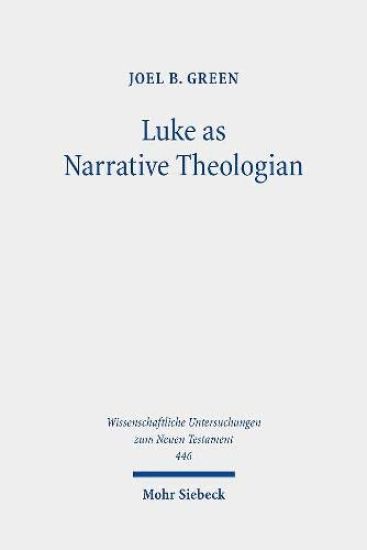
Luke as Narrative Theologian

Luke as Narrative Theologian

Joel B. Green

Mohr Siebeck
2020
sidottu
This collection of essays by Joel B. Green draws together studies on Luke's theology over a thirty-year period - from the early days when many scholars questioned whether one might refer to Luke as a "theologian," to contemporary studies pursuing a variety of approaches to discerning Luke's message. These essays contribute to our understanding of the theological and narrative unity of Luke-Acts by pursuing a variety of topics (e.g., salvation, wealth and poverty, baptism, resurrection, and conversion) and more focused examinations of selected Lukan texts, such as the birth narrative, Jesus's crucifixion, Jesus's ascension, the Pentecost episode, and the stories of Cornelius and Lydia.