There are now more than 1000 therapeutic communites world wide. Yet the fervour which heralded the approach has cooled. Nick Manning tells the story of the therapeutic community movement. Against this background he provides a new analysis of the leading British community, the Henderson Hospital, and examines the development of community based therapeutic communities in Australia by the Richmond fellowship. A statistical evaluation of the effectiveness of the latter is provided. Considerable attention is paid to recent sociology, psychology and critical theory as a basis for reinvigorating therapeutic community work in the changing context of the 1990s is provided.
Modern society is beginning to re-examine its whole relationship with animals and the natural world. Until recently issues such as animal welfare and environmental protection were considered the domain of small, idealistic minorities. Now, these issues attract vast numbers of articulate supporters who collectively exercise considerable political muscle. Animals, both wild and domestic, form the primary focus of concern in this often acrimonious debate. Yet why do animals evoke such strong and contradictory emotions in people - and do our western attitudes have anything in common with those of other societies and cultures? Bringing together a range of contributions from distinguished experts in the field, Animals and Society explores the importance of animals in society from social, historical and cross-cultural perspectives.
Modern society is beginning to re-examine its whole relationship with animals and the natural world. Until recently issues such as animal welfare and environmental protection were considered the domain of small, idealistic minorities. Now, these issues attract vast numbers of articulate supporters who collectively exercise considerable political muscle. Animals, both wild and domestic, form the primary focus of concern in this often acrimonious debate. Yet why do animals evoke such strong and contradictory emotions in people - and do our western attitudes have anything in common with those of other societies and cultures? Bringing together a range of contributions from distinguished experts in the field, Animals and Society explores the importance of animals in society from social, historical and cross-cultural perspectives.
First published in 2005. Samuel Manning's classic work is indispensable for any>one interested in the history of Egyptology. Arranged in the form of a journey proceeding through Alexandria, Cairo, Assouan and Abu-Simbel, the book contains a wealth of archaeological and historical information. Manning's prose pulses with the excitement familiar to anyone who has ventured into unexplored territory, whether physically or in his imagination.
Peter K Manning has been a key figure in scholarship on police organization for the past three decades. His work has been widely celebrated for its contribution to key debates on democratic policing, crime analysis and technology.Building on a wealth of original ethnographic research, in this book Manning develops his dramaturgical framework to formulate a theory of police organization. The Police Mandate will be essential reading for all policing scholars, as well as sociologists and criminologists alike.
This book examines the history of popular drug cultures and mediated drug education, and the ways in which new media - including social networking and video file-sharing sites - transform the symbolic framework in which drugs and drug culture are represented. Tracing the emergence of formal drug regulation in both the US and the United Kingdom from the late nineteenth century, it argues that mass communication technologies were intimately connected to these "control regimes" from the very beginning. Manning includes original archive research revealing official fears about the use of such mass communication technologies in Britain. The second half of the book assesses on-line popular drug culture, considering the impact, the problematic attempts by drug agencies in the US and the United Kingdom to harness new media, and the implications of the emergence of many thousands of unofficial drug-related sites.
In the second edition of this influential book, leading scholars Kathleen Manning, Jillian Kinzie, and John H. Schuh advocate an original approach by presenting 11 models of student affairs practice, including both traditional and innovative programs. Based on a qualitative, multi-institutional research project, One Size Does Not Fit All explores a variety of policies, practices, and programs that contribute to increased student engagement, success, and learning. This book is a must read for all higher education administrators and student affairs professionals.New to this Revised Edition: Refinement of models in light of recent NSSE data and current developments in higher education, including budget cuts and the economic crisis, Updated information throughout about model assessment and techniques to renew divisions of student affairs, A deeper analysis of how models of student affairs practice relate to institutional mission and purposes, End-of-chapter discussion questions to guide thinking about ways to incorporate models in one’s own context, An entirely new Part IV, including chapters on "Catalysts and Tools for Change" and "Redesigning Your Student Affairs Division."
In the second edition of this influential book, leading scholars Kathleen Manning, Jillian Kinzie, and John H. Schuh advocate an original approach by presenting 11 models of student affairs practice, including both traditional and innovative programs. Based on a qualitative, multi-institutional research project, One Size Does Not Fit All explores a variety of policies, practices, and programs that contribute to increased student engagement, success, and learning. This book is a must read for all higher education administrators and student affairs professionals.New to this Revised Edition: Refinement of models in light of recent NSSE data and current developments in higher education, including budget cuts and the economic crisis, Updated information throughout about model assessment and techniques to renew divisions of student affairs, A deeper analysis of how models of student affairs practice relate to institutional mission and purposes, End-of-chapter discussion questions to guide thinking about ways to incorporate models in one’s own context, An entirely new Part IV, including chapters on "Catalysts and Tools for Change" and "Redesigning Your Student Affairs Division."
Instructors are under pressure to integrate technology into their traditional or online instruction, but often they aren't sure what to do or why they should do it. The Technology Toolbelt for Teaching offers instructors a down-to-earth guide to common technologies, explains the pedagogical purposes they serve, and shows how they can be used effectively in online or face-to-face classrooms. Designed to be easy to use, the book includes a decision-making matrix for each technology tool: a series of questions that teachers can use to decide whether these tools support their teaching goals. This comprehensive resource contains an array of useful tools that address problems of organization such as a time management calendar, aids for scheduling meetings, and mind-mapping or graphic organizers. The authors also include a variety of online tools for communication and collaboration, and tools to present content, help establish presence, and assess learning. Praise for The Technology Toolbelt for Teaching "Feeling overwhelmed and even afraid of integrating technology into your course? Fear no more! Susan Manning and Kevin Johnson have provided the ultimate guide that explains not only the various technology tools that can support faculty work and enhance coursework but also provides sound advice to help faculty choose the right tool for the job. This is a must-read for all faculty regardless of their experience with technology."?Rena M. Palloff and Keith Pratt, managing partners, Crossroads Consulting Group, and authors, Building Online Learning Communities and Collaborating Online "The Technology Toolbelt for Teaching delivers exactly what it promises: a concrete overview of a wide variety of tools, complete with examples specific to practitioners in both K?12 and higher education. Authors Susan Manning and Kevin Johnson provide practical applications rather than philosophy, and solutions rather than platitudes. This is a must for any teacher working with?or wanting to start working with?technology."?Jane Bozarth, author, Social Media for Trainers; eLearning coordinator, State of North Carolina "Creating compelling learning experiences for students is fraught with decision points. Add one or more technology options to the equation, and the number of directions to take learners seems to grow limitlessly, and can either paralyze the instructional design process or cause us to take on too much. Enter The Technology Toolbelt for Teaching. Manning and Johnson's handy guide ? and the decision-making matrix that frames each of the tools it demystifies ? is an essential resource for choosing paths wisely."?Jonathan Finkelstein, author, Learning in Real Time; founder and executive producer, LearningTimes Includes 50+ fresh and useful technology tools for teaching A decision matrix for choosing and using the right tools Examples for using each tool in higher education and K?12
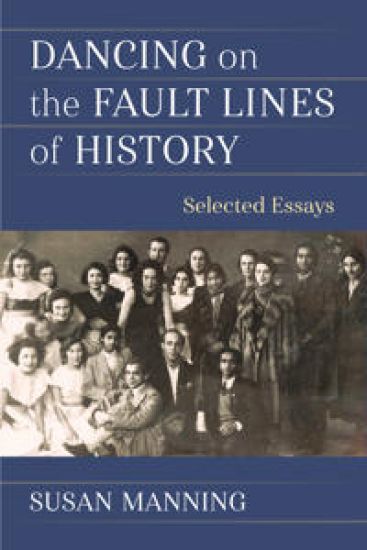
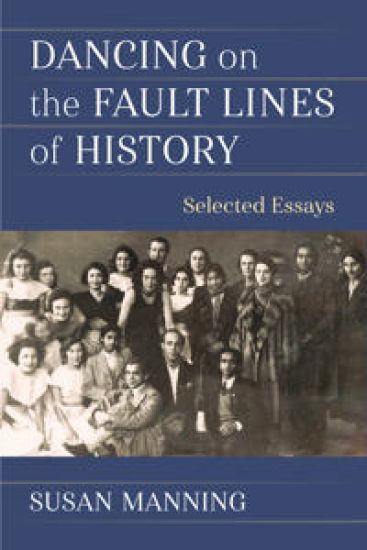
Dancing on the Fault Lines of History collects essential essays by Susan Manning, one of the founders of critical dance studies, recounting her career writing and rewriting the history of modern dance. Three sets of keywords—gender and sexuality, whiteness and Blackness, nationality and globalization—illuminate modern dance histories from multiple angles, coming together in varied combinations, shifting positions from foreground to background. Among the many artists discussed are Isadora Duncan, Vaslav Nijinsky, Ted Shawn, Helen Tamiris, Katherine Dunham, José Limón, Pina Bausch, Reggie Wilson, and Nelisiwe Xaba. Calling for a comparative and transnational historiography, Manning ends with an extended case study of Mary Wigman’s multidimensional exchange with artists from Indonesia, India, China, Korea, and Japan. Like the artists at the center of her research, Manning’s writing dances on the fault lines of history. Her introduction and annotations to the essays reflect on how and why these keywords became central to her research, revealing the autobiographical resonances of her scholarship as she confronts the cultural politics of the late twentieth and early twenty-first centuries.
Dancing on the Fault Lines of History collects essential essays by Susan Manning, one of the founders of critical dance studies, recounting her career writing and rewriting the history of modern dance. Three sets of keywords—gender and sexuality, whiteness and Blackness, nationality and globalization—illuminate modern dance histories from multiple angles, coming together in varied combinations, shifting positions from foreground to background. Among the many artists discussed are Isadora Duncan, Vaslav Nijinsky, Ted Shawn, Helen Tamiris, Katherine Dunham, José Limón, Pina Bausch, Reggie Wilson, and Nelisiwe Xaba. Calling for a comparative and transnational historiography, Manning ends with an extended case study of Mary Wigman’s multidimensional exchange with artists from Indonesia, India, China, Korea, and Japan. Like the artists at the center of her research, Manning’s writing dances on the fault lines of history. Her introduction and annotations to the essays reflect on how and why these keywords became central to her research, revealing the autobiographical resonances of her scholarship as she confronts the cultural politics of the late twentieth and early twenty-first centuries.
Chronic obesity is on the rise; our food is laced with additives and chemicals; and the environment is being devastated by factory farming, pesticides, fertilizers and monoculture. It is time to re-evaluate what we eat and how we eat it, and re-think the practices of agribusiness, food processing manufacturers and supermarkets. This insightful volume unpacks the growth of obesogenic environments in which fast-food outlets proliferate and a diet heavy in saturated fats, refined sugars and ultra-processed foods is increasing the incidence of diabetes, heart disease and cancer as well as behavioural disorders and allergies. It explores how our bodies and brains respond to different flavours and food groups, and the ways in which corporations have exploited this through the creation of hyperpalatable food products that deliver a sensory ‘bliss point’ while withholding nutritional value, and marketing their products to maximize profit at the expense of public health. It examines the disastrous impact of modern agribusiness on climate change, biodiversity loss and antibiotic resistance, and analyses the controversy around the safety and regulation of genetically modified crops, as well as their impact on farming communities and their potential to bring about food shortages. Finally, solutions to regaining a healthier relationship with food are carefully evaluated, from eating organic produce to reintroducing family meals, and from changing how we buy food to adopting a plant-based diet.With 150 illustrations in colour
"Food's Frontier" provides a survey of pioneering agricultural research projects underway in Ethiopia, Zimbabwe, Uganda, India, China, Chile, Brazil, Mexico, and Peru by a writer both well-grounded technically and sensitive to social and cultural issues. The book starts from the premise that the 'Green Revolution' which averted mass starvation a generation ago is not a long-term solution to global food needs and has created its own very serious problems. Based on increasing yields by extensive use of pesticides, chemical fertilizers, and monoculture - agribusiness-style production of single crops - this approach has poisoned both land and farm workers, encouraged new strains of pests that are resistant to ever-increasing amounts of pesticides, and killed the fertility of land by growing single crops rather than rotating crops that can replenish nutrients in the soil. Solutions to these problems are coming from a reexamination of ancient methods of agriculture that have allowed small-scale productivity over many generations. Research in the developing world, based on alternative methods and philosophies, indigenous knowledge, and native crops, joined with cutting edge technology, offer hope for a more lasting solution to the world's increasing food needs.
'The most destructive force in the American West is its commanding views, because they foster the illusion that we command', begins Richard Manning's vivid, anecdotally driven account of the American plains from native occupation through the unraveling of the American enterprise to today. As he tells the story of this once rich, now mostly empty landscape, Manning also describes a grand vision for ecological restoration, currently being set in motion, that would establish a prairie preserve larger than Yellowstone National Park, flush with wild bison, elk, bears, and wolves. Taking us to an isolated stretch of central Montana along the upper Missouri River, Manning peels back the layers of history and discovers how key elements of the American story - conservation, the New Deal, progressivism, the yeoman myth, and the idea of private property - have collided with and shaped this incomparable landscape. An account of great loss, "Rewilding the West" also holds out the promise of resurrection - but rather than remake the plains once again, Manning proposes that we now find the wisdom to let the prairies remake us.
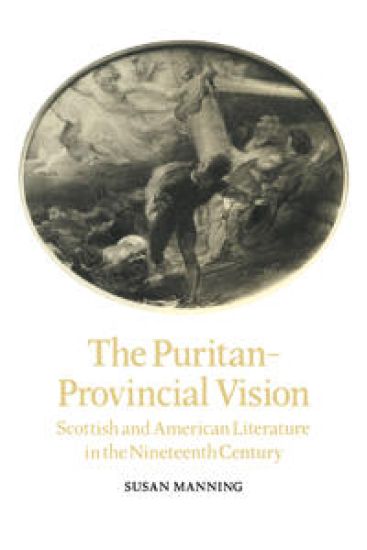
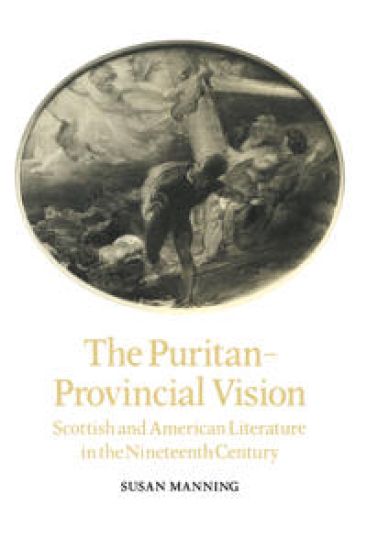
This book suggests an interpretation of the characteristic qualities of Scottish and American literatures. Considering the self-consciously different stance which sets them apart from English literature, the author develops the constituents of the 'puritan-provincial vision': a particular way of looking at life and man's relationship to what lies beyond himself. The book begins with the writings of Calvin and culminates in detailed comparisons of individual works of Scottish and American nineteenth-century prose, questioning the literary and human consequences of this vision through theological, philosophical, political and literary contexts. This puritan-provincial vision is not exclusive to Scottish and American literature so the features discussed here will interest those concerned with other literatures written in English.
Wolves excitedly greet each other as members of the pack come together; a bumble bee uses its long tongue to reach the nectar at the base of a foxglove flower; a mongoose swiftly and deftly bites its prey to death; young cheetahs rest quietly together, very close to sleep. Now in full colour, this revised and updated edition of Manning and Dawkins' classic text provides a beautifully written introduction to the fundamentals of animal behaviour. Tinbergen's four questions of causation, evolution, development and function form the fundamental framework of the text, illustrated with fascinating examples of complex behavioural mechanisms. The authors provide accounts of all levels of behaviour from the nerve cell to that of the population. The strengths of An Introduction to Animal Behaviour as a textbook include its clear explanations and concise, readable text and the enthusiasm of the authors for their subject.
A three-level (B1+ to C1) integrated skills course for higher education students at university or on foundation courses. Designed specifically for students preparing for university, this integrated skills course develops language and real academic skills essential for successful university studies across disciplines. With authentic lectures and seminars, language informed by the Cambridge Academic Corpus and Academic Word Lists, the course guarantees that students learn real, up-to-date English that is relevant to their university studies. The Teacher's Book provides extensive teacher support including teaching notes and additional worksheets for the classroom.
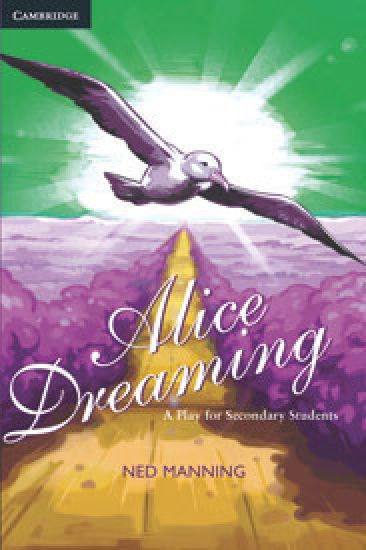
Alice Dreaming is a play for secondary students that tells a uniquely Australian story. Trapped by the expectations of others, a girl escapes into her imagination. Following an albatross, Alice takes a journey across Australia that eventually brings her closer to home and an understanding of who she is. Inspired by Alice's Adventures in Wonderland and The Wizard of Oz, it is a play written about teenagers, for teenagers. Embracing a non-naturalistic theatrical language, Alice Dreaming can incorporate a number of performance elements, including puppetry, mask, music and dance. Roles are suitable for performance by both boys and girls. The cast includes 29 speaking roles plus chorus. The play runs for 60-80 minutes. Designed to provoke discussion and debate, Alice Dreaming can be used as a classroom resource to develop student thinking around both personal issues and social issues, including the environment, politics and Australian history.
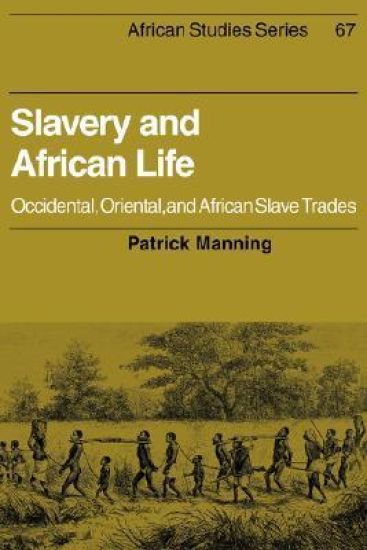
This interpretation of the impact of slavery on African life emphasizes the importance of external demand for slaves - from Occidental and Oriental purchasers - in developing an active trade in slaves within Africa. The book summarizes a wide range of recent literature on slavery for all of tropical Africa. It analyzes the demography, economics, social structure, and ideology of slavery in Africa from the beginning of large-scale exports in the seventeenth century to the gradual elimination of slavery in the twentieth century. While the book is primarily a general survey, it presents original research and analysis, especially in the author’s demographic model, computer simulation of the slave trade, and analysis of slave prices. The demographic, economic, and social analyses are carefully introduced, so that the book may serve not only as a general introduction to African slavery for an undergraduate audience, but as a primer on interdisciplinary application of social science methodology.
This book suggests an interpretation of the characteristic qualities of Scottish and American literatures. Considering the self-consciously different stance which sets them apart from English literature, the author develops the constituents of the 'puritan-provincial vision': a particular way of looking at life and man's relationship to what lies beyond himself. The book begins with the writings of Calvin and culminates in detailed comparisons of individual works of Scottish and American nineteenth-century prose, questioning the literary and human consequences of this vision through theological, philosophical, political and literary contexts. This puritan-provincial vision is not exclusive to Scottish and American literature so the features discussed here will interest those concerned with other literatures written in English.