Kirjojen hintavertailu. Mukana 11 717 486 kirjaa ja 12 kauppaa.

Kirjahaku

Etsi kirjoja tekijän nimen, kirjan nimen tai ISBN:n perusteella.

1000 tulosta hakusanalla Maral Atmaca

Moral Difficulties Connected with the Bible

Moral Difficulties Connected with the Bible

James Augustus Hessey

Trieste Publishing
2018
nidottu
Trieste Publishing has a massive catalogue of classic book titles. Our aim is to provide readers with the highest quality reproductions of fiction and non-fiction literature that has stood the test of time. The many thousands of books in our collection have been sourced from libraries and private collections around the world.The titles that Trieste Publishing has chosen to be part of the collection have been scanned to simulate the original. Our readers see the books the same way that their first readers did decades or a hundred or more years ago. Books from that period are often spoiled by imperfections that did not exist in the original. Imperfections could be in the form of blurred text, photographs, or missing pages. It is highly unlikely that this would occur with one of our books. Our extensive quality control ensures that the readers of Trieste Publishing's books will be delighted with their purchase. Our staff has thoroughly reviewed every page of all the books in the collection, repairing, or if necessary, rejecting titles that are not of the highest quality. This process ensures that the reader of one of Trieste Publishing's titles receives a volume that faithfully reproduces the original, and to the maximum degree possible, gives them the experience of owning the original work.We pride ourselves on not only creating a pathway to an extensive reservoir of books of the finest quality, but also providing value to every one of our readers. Generally, Trieste books are purchased singly - on demand, however they may also be purchased in bulk. Readers interested in bulk purchases are invited to contact us directly to enquire about our tailored bulk rates.
Moral Discernment in the Christian Life

Moral Discernment in the Christian Life

Westminster/John Knox Press,U.S.
2007
nidottu
James M. Gustafson has been a leading and formative figure in the field of Christian ethics over the past fifty years. His many contributions to theological ethics have helped to define and shape ethical thinking by Christians who reflect on great moral issues. Gustafson's work must be dealt with by all students in this discipline, and his perceptive insights have given clarity and guidance to the process of moral discernment. The essays collected here are ones that have had a significant impact on discussions and debates over recent decades.The Library of Theological Ethics series focuses on what it means to think theologically and ethically. It presents a selection of important and otherwise unavailable texts in easily accessible form. Volumes in this series will enable sustained dialogue with predecessors though reflection on classic works in the field.
Moral Dilemmas

Moral Dilemmas

J. Philip Wogaman

Westminster/John Knox Press,U.S.
2009
nidottu
How can we make decisions that are consistent with our basic values? We must first, J. Philip Wogaman says, identify basic moral presumptions that can guide our thought as we face moral dilemmas. These basic moral presumptions include equality, grace, the value of human life, the unity of humankind, preferential claims for the poor and marginalized, and the goodness of creation. The burden of proof, he argues, must be borne by decisions that are contrary to such presumptions. He pulls into the conversation difficult ethical issues such as divorce, sexuality, abortion, political choices, economic justice, affirmative action, homosexuality, nuclear disarmament, economic globalization, global warming, international security, environmental policies, and military power. In the process, he provides a smart and helpful guide to Christian ethical behavior.
Moral Exhortation

Moral Exhortation

Abraham J. Malherbe

Westminster/John Knox Press,U.S.
1989
nidottu
This volume in the Library of Early Christianity series presents primary documents that reveal insights about the ethics and morality of Greco-Roman culture. In so doing, this book provides a foundation for understanding the ethical contexts in which the New Testament was crafted.The Library of Early Christianity is a series of eight outstanding books exploring the Jewish and Greco-Roman contexts in which the New Testament developed.
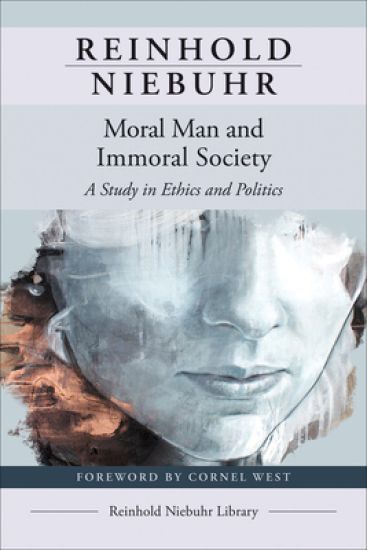
Moral Man and Immoral Society

Moral Man and Immoral Society

Reinhold Niebuhr

Presbyterian Publishing Corporation
2021
pokkari
One of the theological classics of the twentieth century, Niebuhr's Moral Man and Immoral Society argues that using moral persuasion and shaming to affect the behavior of such collectives as corporations and nation states is fruitless, as these groups will inevitably seek to promote only their self-interest. He calls for a realistic assessment of group behavior and enumerates how individual morality can mitigate social immorality. This edition includes a foreword by Cornel West that explores the continued interest in Niebuhr's thought and its contemporary relevance.
Moral Literacy

Moral Literacy

Barbara Herman

Harvard University Press
2008
nidottu
A distinguished moral philosopher and a leading interpreter of Kant's ethics, Barbara Herman draws on Kant to address timeless issues in ethical theory as well as ones arising from current moral problems, such as obligations to distant need, the history of slavery as it bears on affirmative action, and the moral costs of reparative justice. Challenging various Kantian orthodoxies, Herman offers a view of moral competency as a complex achievement, governed by rational norms and dependent on supportive social conditions. She argues that the objectivity of duties and obligations does not rule out the possibility of or need for moral invention. Her goal is not to revise Kant but to explore the issues and ask the questions that he did not consider. Some of the essays involve explicit interpretation of Kant, and others are prompted by ground-level questions. For example, how should we think about moral character given what we know about the fault lines in normal development? If ordinary moral life is saturated by the content of local institutions, how should our accounts of moral obligation and judgment accommodate this?
Moral Dimensions

Moral Dimensions

T. M. Scanlon

The Belknap Press
2010
nidottu
In a clear and elegant style, T. M. Scanlon reframes current philosophical debates as he explores the moral permissibility of an action. Permissibility may seem to depend on the agent’s reasons for performing an action. For example, there seems to be an important moral difference between tactical bombing and a campaign by terrorists—even if the same number of non-combatants are killed—and this difference may seem to lie in the agents’ respective aims. However, Scanlon argues that the apparent dependence of permissibility on the agent’s reasons in such cases is merely a failure to distinguish between two kinds of moral assessment: assessment of the permissibility of an action and assessment of the way an agent decided what to do. Distinguishing between these two forms of assessment leads Scanlon to an important distinction between the permissibility of an action and its meaning: the significance for others of the agent’s willingness to act in this way. An action’s meaning depends on the agent’s reasons for performing it in a way that its permissibility does not. Blame, he argues, is a response to the meaning of an action rather than its permissibility. This analysis leads to a novel account of the conditions of moral responsibility and to important conclusions about the ethics of blame.
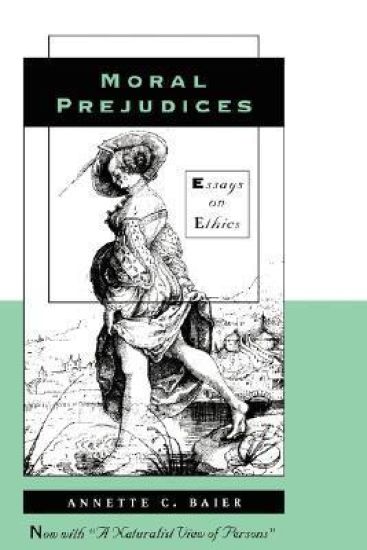
Moral Prejudices

Moral Prejudices

Annette C. Baier

Harvard University Press
1995
nidottu
Annette Baier delivers an appeal for our fundamental moral notions to be governed not by rules and codes but by trust: a moral prejudice. Along the way, she gives us the best feminist philosophy there is. Baier’s topics range from violence to love, from cruelty to justice, and are linked by a preoccupation with vulnerability and inequality of vulnerability, with trust and distrust of equals, with cooperation and isolation. Throughout, she is concerned with the theme of women’s roles. In this provocative exploration of the implications of trusting to trust rather than proscription, Baier interweaves anecdote and autobiography with readings of Hume and Kant to produce an entertaining, challenging, and highly readable book.
Moral Essays, Volume I
Topics in Stoicism.Seneca, Lucius Annaeus, born at Corduba (Cordova) ca. 4 BC, of a prominent and wealthy family, spent an ailing childhood and youth at Rome in an aunt’s care. He became famous in rhetoric, philosophy, money-making, and imperial service. After some disgrace during Claudius’ reign he became tutor and then, in AD 54, advising minister to Nero, some of whose worst misdeeds he did not prevent. Involved (innocently?) in a conspiracy, he killed himself by order in 65. Wealthy, he preached indifference to wealth; evader of pain and death, he preached scorn of both; and there were other contrasts between practice and principle. We have Seneca’s philosophical or moral essays (ten of them traditionally called Dialogues)—on providence, steadfastness, the happy life, anger, leisure, tranquility, the brevity of life, gift-giving, forgiveness—and treatises on natural phenomena. Also extant are 124 epistles, in which he writes in a relaxed style about moral and ethical questions, relating them to personal experiences; a skit on the official deification of Claudius, Apocolocyntosis (in LCL 15); and nine rhetorical tragedies on ancient Greek themes. Many epistles and all his speeches are lost. His moral essays are collected in Volumes I–III of the Loeb Classical Library’s ten-volume edition of Seneca.
Moral Essays, Volume II
Topics in Stoicism.Seneca, Lucius Annaeus, born at Corduba (Cordova) ca. 4 BC, of a prominent and wealthy family, spent an ailing childhood and youth at Rome in an aunt’s care. He became famous in rhetoric, philosophy, money-making, and imperial service. After some disgrace during Claudius’ reign he became tutor and then, in AD 54, advising minister to Nero, some of whose worst misdeeds he did not prevent. Involved (innocently?) in a conspiracy, he killed himself by order in 65. Wealthy, he preached indifference to wealth; evader of pain and death, he preached scorn of both; and there were other contrasts between practice and principle. We have Seneca’s philosophical or moral essays (ten of them traditionally called Dialogues)—on providence, steadfastness, the happy life, anger, leisure, tranquility, the brevity of life, gift-giving, forgiveness—and treatises on natural phenomena. Also extant are 124 epistles, in which he writes in a relaxed style about moral and ethical questions, relating them to personal experiences; a skit on the official deification of Claudius, Apocolocyntosis (in LCL 15); and nine rhetorical tragedies on ancient Greek themes. Many epistles and all his speeches are lost. His moral essays are collected in Volumes I–III of the Loeb Classical Library’s ten-volume edition of Seneca.
Moral Essays, Volume III
Topics in Stoicism.Seneca, Lucius Annaeus, born at Corduba (Cordova) ca. 4 BC, of a prominent and wealthy family, spent an ailing childhood and youth at Rome in an aunt’s care. He became famous in rhetoric, philosophy, money-making, and imperial service. After some disgrace during Claudius’ reign he became tutor and then, in AD 54, advising minister to Nero, some of whose worst misdeeds he did not prevent. Involved (innocently?) in a conspiracy, he killed himself by order in 65. Wealthy, he preached indifference to wealth; evader of pain and death, he preached scorn of both; and there were other contrasts between practice and principle. We have Seneca’s philosophical or moral essays (ten of them traditionally called Dialogues)—on providence, steadfastness, the happy life, anger, leisure, tranquility, the brevity of life, gift-giving, forgiveness—and treatises on natural phenomena. Also extant are 124 epistles, in which he writes in a relaxed style about moral and ethical questions, relating them to personal experiences; a skit on the official deification of Claudius, Apocolocyntosis (in LCL 15); and nine rhetorical tragedies on ancient Greek themes. Many epistles and all his speeches are lost. His moral essays are collected in Volumes I–III of the Loeb Classical Library’s ten-volume edition of Seneca.