Kirjahaku
Etsi kirjoja tekijän nimen, kirjan nimen tai ISBN:n perusteella.
1000 tulosta hakusanalla Mohammad Nehal
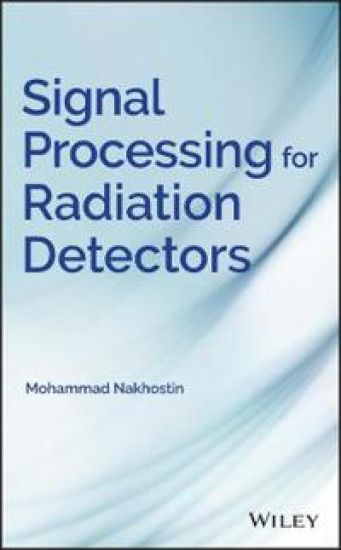
Presents the fundamental concepts of signal processing for all application areas of ionizing radiation This book provides a clear understanding of the principles of signal processing of radiation detectors. It puts great emphasis on the characteristics of pulses from various types of detectors and offers a full overview on the basic concepts required to understand detector signal processing systems and pulse processing techniques. Signal Processing for Radiation Detectors covers all of the important aspects of signal processing, including energy spectroscopy, timing measurements, position-sensing, pulse-shape discrimination, and radiation intensity measurement. The book encompasses a wide range of applications so that readers from different disciplines can benefit from all of the information. In addition, this resource: Describes both analog and digital techniques of signal processingPresents a complete compilation of digital pulse processing algorithmsExtrapolates content from more than 700 references covering classic papers as well as those of todayDemonstrates concepts with more than 340 original illustrations Signal Processing for Radiation Detectors provides researchers, engineers, and graduate students working in disciplines such as nuclear physics and engineering, environmental and biomedical engineering, and medical physics and radiological science, the knowledge to design their own systems, optimize available systems or to set up new experiments.
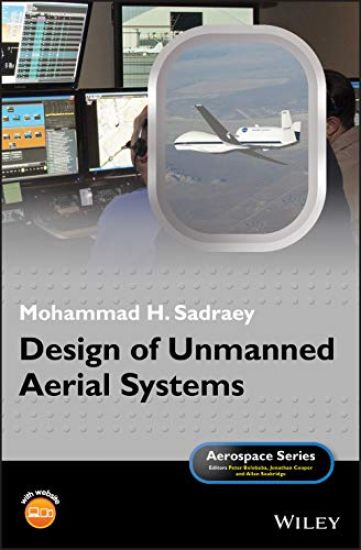
Provides a comprehensive introduction to the design and analysis of unmanned aircraft systems with a systems perspective Written for students and engineers who are new to the field of unmanned aerial vehicle design, this book teaches the many UAV design techniques being used today and demonstrates how to apply aeronautical science concepts to their design. Design of Unmanned Aerial Systems covers the design of UAVs in three sections—vehicle design, autopilot design, and ground systems design—in a way that allows readers to fully comprehend the science behind the subject so that they can then demonstrate creativity in the application of these concepts on their own. It teaches students and engineers all about: UAV classifications, design groups, design requirements, mission planning, conceptual design, detail design, and design procedures. It provides them with in-depth knowledge of ground stations, power systems, propulsion systems, automatic flight control systems, guidance systems, navigation systems, and launch and recovery systems. Students will also learn about payloads, manufacturing considerations, design challenges, flight software, microcontroller, and design examples. In addition, the book places major emphasis on the automatic flight control systems and autopilots. Provides design steps and procedures for each major componentPresents several fully solved, step-by-step examples at component levelIncludes numerous UAV figures/images to emphasize the application of the conceptsDescribes real stories that stress the significance of safety in UAV designOffers various UAV configurations, geometries, and weight data to demonstrate the real-world applications and examplesCovers a variety of design techniques/processes such that the designer has freedom and flexibility to satisfy the design requirements in several waysFeatures many end-of-chapter problems for readers to practice Design of Unmanned Aerial Systems is an excellent text for courses in the design of unmanned aerial vehicles at both the upper division undergraduate and beginning graduate levels.
An Introduction to the Finite Element Method for Differential Equations
Mohammad Asadzadeh
Wiley-Blackwell
2020
sidottu
Master the finite element method with this masterful and practical volume An Introduction to the Finite Element Method (FEM) for Differential Equations provides readers with a practical and approachable examination of the use of the finite element method in mathematics. Author Mohammad Asadzadeh covers basic FEM theory, both in one-dimensional and higher dimensional cases. The book is filled with concrete strategies and useful methods to simplify its complex mathematical contents. Practically written and carefully detailed, An Introduction to the Finite Element Method covers topics including: An introduction to basic ordinary and partial differential equationsThe concept of fundamental solutions using Green's function approachesPolynomial approximations and interpolations, quadrature rules, and iterative numerical methods to solve linear systems of equationsHigher-dimensional interpolation proceduresStability and convergence analysis of FEM for differential equations This book is ideal for upper-level undergraduate and graduate students in natural science and engineering. It belongs on the shelf of anyone seeking to improve their understanding of differential equations.
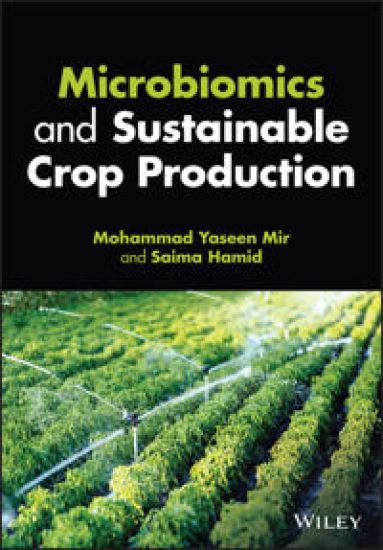
Microbiomics and Sustainable Crop Production
Mohammad Yaseen Mir; Saima Hamid
Wiley-Blackwell
2023
sidottu
Microbiomics and Sustainable Crop Production Microbiomics and Sustainable Crop Production presents an overview of the current state of the art in microbiome research, discussing many new technologies and approaches in order to bridge knowledge gaps between field and lab experimental systems. New and emerging strategies to improve the survival and activity of microbial inoculants are covered, including the use of selected indigenous microbes, optimizing microbial delivery methods, and taking advantage of modern gene editing tools to engineer microbial inoculants. The two highly qualified authors address new molecular tools and powerful biotechnological advances, providing readers with knowledge of the complex chemical and biological interactions that occur in the rhizosphere and ensuring that strategies to engineer the rhizosphere are safe, beneficial to productivity, and result in improvements to the sustainability of agricultural systems. The relationship between phyllosphere microbial communities and functional traits of plants is also explored. Finally, approaches and priority areas for future research on phyllosphere microbiology are suggested. Topics covered in this comprehensive resource include: Transmission modes of bacteria and fungi and the nature of their interactions in the endosphere Characteristics of ‘core microbiomes’, which may be deployed to organize otherwise uncontrollable dynamics of resident microbiomes Model microbiome-plant systems, as well as the stability, resilience, and assembly of agricultural microbiomes Engineering and management of agricultural microbiomes for improving crop health, including reasons to modify plant microbiomes Microbiome research in the omics era and new efforts and challenges in assigning functions to microbes For students of plant biotechnology, agricultural sciences, and agricultural engineering, along with researchers working in related fields, Microbiomics and Sustainable Crop Production is an important resource to understand many complex modern ideas related to the subject and how they can be applied to practical applications.
Understand a cutting-edge new class of error correction codes with this introduction Channel coding is a pivotal technique employed to account for potential errors due to channel noise or interference by adding layers of redundancy to information prior to transmission or storage. Should errors appear in the transmitted sequence upon reaching its destination, they can be corrected with reference to the redundant layers. Polar codes are a new class of error correction codes that provably achieve the capacity of binary discrete memoryless channels. Their distinct advantages have led to their incorporation in the logical control channels of the fifth generation of wireless communications (5G). Possessing robust and competitive error correction capabilities for short and medium-length codes positions them strategically to fulfill a pivotal role in various communication systems as we move towards the sixth generation of wireless communication (6G) and beyond. Polar Codes provides a thorough, accessible overview of this new class of codes and its applications. Beginning with the foundational theories underlying polar codes, it guides readers through the construction of polar codes, their variants, and their encoding and decoding processes. The result is a must-have for coding researchers and professionals looking to develop an edge in the wireless communications of the future. Polar Codes readers will also find: Continuous connections between discussed concepts and current 5G standardsSnippets of code in MATLAB/Python to illustrate key toolsEnd of chapter problems and bibliographical notes to facilitate learning and provide references for further reading. Polar Codes is ideal for graduate students and researchers in coding and information theory, as well as engineers working in communications and related industries.
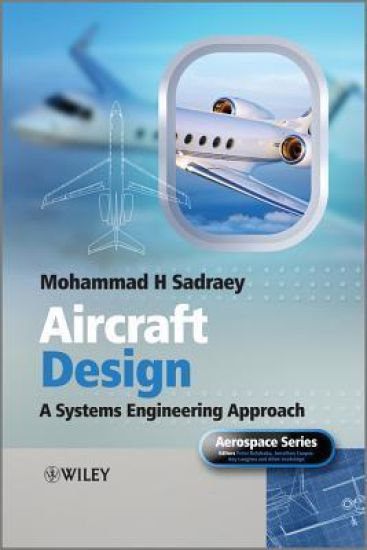
A comprehensive approach to the air vehicle design process using the principles of systems engineering Due to the high cost and the risks associated with development, complex aircraft systems have become a prime candidate for the adoption of systems engineering methodologies. This book presents the entire process of aircraft design based on a systems engineering approach from conceptual design phase, through to preliminary design phase and to detail design phase. Presenting in one volume the methodologies behind aircraft design, this book covers the components and the issues affected by design procedures. The basic topics that are essential to the process, such as aerodynamics, flight stability and control, aero-structure, and aircraft performance are reviewed in various chapters where required. Based on these fundamentals and design requirements, the author explains the design process in a holistic manner to emphasise the integration of the individual components into the overall design. Throughout the book the various design options are considered and weighed against each other, to give readers a practical understanding of the process overall. Readers with knowledge of the fundamental concepts of aerodynamics, propulsion, aero-structure, and flight dynamics will find this book ideal to progress towards the next stage in their understanding of the topic. Furthermore, the broad variety of design techniques covered ensures that readers have the freedom and flexibility to satisfy the design requirements when approaching real-world projects. Key features: • Provides full coverage of the design aspects of an air vehicle including: aeronautical concepts, design techniques and design flowcharts • Features end of chapter problems to reinforce the learning process as well as fully solved design examples at component level • Includes fundamental explanations for aeronautical engineering students and practicing engineers • Features a solutions manual to sample questions on the book’s companion website Companion website - www.wiley.com/go/sadraey
Sid Mohamed El Mangali, Traite De Venerie (1880)
Mohammad Ibn Mankali; Florian Pharaon
KESSINGER PUBLISHING, LLC
2009
pokkari
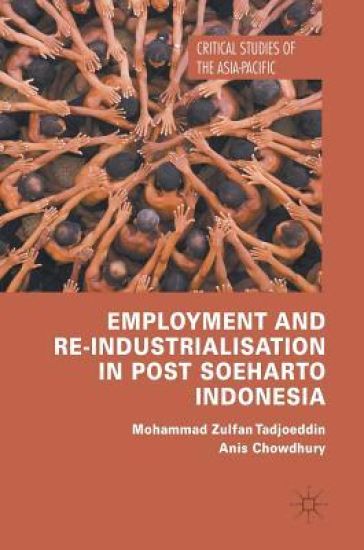
Employment and Re-Industrialisation in Post Soeharto Indonesia
Mohammad Zulfan Tadjoeddin; Anis Chowdhury
Palgrave Macmillan
2018
sidottu
This book studies the challenges for Indonesia, once a miracle economy, as it faces premature deindustrialisation, rising inequality and domestic and external factors impacting its export-oriented industrialization. Since the fall of Soeharto, Indonesia has undergone a far-reaching systemic transition from centralised and autocratic governance to a highly decentralised and democratic system. Complicated by regional variations, the country is now being called upon to respect labour rights and, amidst slow global economic recovery, is facing increased competition from other low-labour-cost countries, especially within the ASEAN Economic Community. Tadjoeddin and Chowdhury posit that Indonesia cannot recreate its past miracle based on cheap labour and suppression of labour rights. It will need to move quickly to high value-added activities driven by productivity growth and to develop its domestic market.
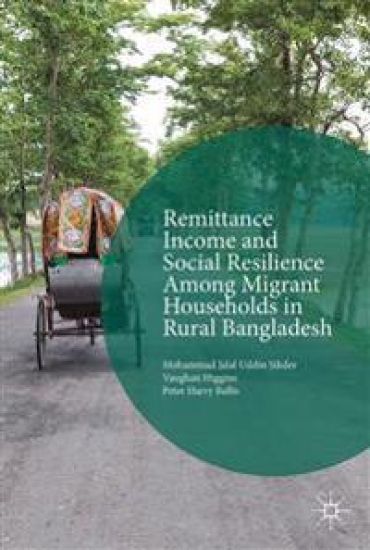
Remittance Income and Social Resilience among Migrant Households in Rural Bangladesh
Mohammad Jalal Uddin Sikder; Vaughan Higgins; Peter Harry Ballis
Palgrave Macmillan
2017
sidottu
This book examines how migrant remittances contribute to household social resilience in rural Bangladesh. Using a mixed methods approach, the authors show that remittances play a crucial role in enhancing the life chances and economic livelihoods of rural households, and that remittance income enables households to overcome immediate pressures, adapt to economic and environmental change, build economic and cultural capital, and provide greater certainty in planning for the future. However, the book also reveals that the social and economic benefits of remittances are not experienced equally by all households. Rural village households endure a precarious existence and the potentially positive outcomes of remittances can easily be undermined by a range of external and household-specific factors leading to few, if any, benefits in terms of household social resilience.
This book studies the engagement of various Muslim communities with Bihar politics from colonial times to present-day India. It debunks several myths in highlighting Muslim resistance to the Two-Nation theory, and counters the ‘Isolation Syndrome’ faced by Muslim communities after Independence. Using rare archival sources and hitherto unexamined Urdu texts, this book offers a nuanced exploration of complex themes such as the struggle against Bengali hegemony, communalism, regionalism and alienation before Independence, recent language politics, the political assertion of low-caste Muslims in current Bihar, as well as their quest for social and gender justice. An important contribution to the study of South Asian Islam, this book will interest students and scholars of modern Indian history, politics, sociology, religion, gender, and minority studies.
For the public at large Shi’ism often implies a host of confused representations, suggesting more often than not obscurantism, intolerance, political violence and other ignominies running hot or cold in response to world events. In fact for many people, Shi’ism stands for "radical Islam", or – worse – "Islamic terrorism". In some respects, nothing is more familiar than Shi’ism, and yet nothing is more misunderstood. For some twenty years the media have increased their coverage of the phenomenon. Never, or only rarely, do they formulate the question we ask here: what is Shi’ism? What is this belief that inspires millions of people dispersed throughout the world? This book provides a broad based introduction to Shi’i Islam. It examines what the Shi’i believe, how they see themselves and how they view the world. It includes a thorough examination of doctrine, philosophy, the Shi’i approach to the Qur’an and the historical evolution of Shi’ism as a branch of Islam. Too often, and too quickly, the conclusion is drawn that Shi’ism is a marginal heretical sect, fundamentally alien to the deeper truth of the great religion of Islam, thrust by historical accident onto the political stage. Shi’ism either speaks the truth of Islam, meaning that it is a truth of terror, or it is entirely foreign to Islam and, therefore, merits outright rejection, as Islamic fundamentalists and some individuals repeatedly claim. This book intends to explain why such common misunderstandings of Shi’ism have taken root.Written in an accessible format and providing a thorough overview of Shi’ism, this book will be an essential text for students and scholars of Islamic Studies or Iranian Studies.
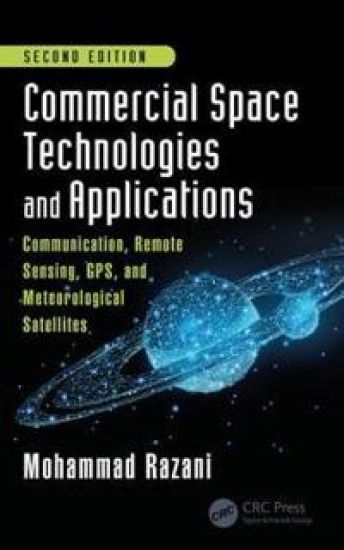
Commercial Space Technologies and Applications: Communication, Remote Sensing, GPS, and Meteorological Satellites, Second Edition
Mohammad Razani
CRC Press
2018
sidottu
This new edition introduces and examines the space technologies that benefit our everyday lives. Each chapter now includes exercises and problems, and the content covers new satellites and emerging technologies. It explores the ever-improving quality of satellite systems and services, and also investigates ways to bring about higher resolution satellite imagery and lower satellite costs. The focus is on man-made satellites, which are becoming smaller, smarter, cheaper, and easier to launch, having a longer life span, and are less susceptible to interference. Furthermore, the book considers advances in several key technologies that affect the satellite industry.Includes extensive study questions and exercises after each chapter. Explains present commercial space technology and its future outlook. Explores the many applications of space technologies and their impact on our lives, including real world examples. Presents a future outlook on robotics, communications and navigation, and human health and nanotechnology. Provides a clear understanding of space, space technologies, space applications, space security, space regulations, a space roadmap, and their impact on the lives of humans now and for generations to come.
The British withdrawal from the Gulf in 1971 brought to an end the British Imperial era in the history of the Trucial States and marked the birth of the United Arab Emirates. This book, first published in 1978, establishes the political, social, economic and cultural heritage of the UAE and explains the formative issues in the development of the new state. From 1892 to 1971 the history of the Gulf was determined by the British presence. Initially the region was regarded by the British as no more than a part of the strategic defence of India, but by 1945 oil and international air communication had given the region a new strategic importance. This volume examines both the early India Office policy of non-interference in the internal affairs of the region and the circumstances after 1947 which prompted the Foreign Office to interfere in certain internal issues. The second half of the book seeks to explain the development of Arab nationalism, the growth of Iranian activities and the relations of the Trucial States with their Western neighbours, Saudi Arabia and Qatar. The last chapter provides an historical explanation for the present interstate boundaries and political geography of the region.
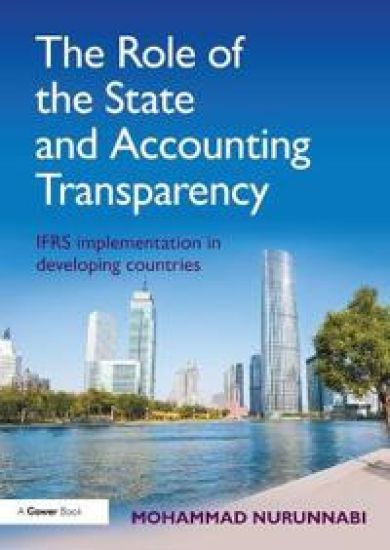
Dr Mohammad Nurunnabi examines the factors that affect the implementation of International Financial Reporting Standards (IFRS) in developing countries and answers these specific research questions: - What is the relative impact of accounting regulatory frameworks and politico-institutional factors on the implementation of IFRS in developing countries? - How do cultural factors affect said implementation? - How does a study of implementing IFRS help to build an understanding of a theory of the role of the state in accounting change in developing countries? This follows a mixed methodology approach, in which interviews are conducted, IFRS-related enforcement documents and annual reports are evaluated. More than 138 countries have adopted IFRS, yet the International Accounting Standards Board (IASB) does not provide an implementation index. Financial reporting varies by country, even within the area of the world that has apparently adopted IFRS and Nurunnabi offers an important viewpoint that considers the issues of IFRS implementation from various perspectives. This is an invaluable resource for Undergraduate, Masters and PhD students, policy makers (at local, regional and international level) namely the IASB, World Bank, IMF, practitioners and users, giving them the necessary insight into the financial reporting environment and the state’s attitude towards accounting transparency. Most importantly, this book contributes to military and democratic political regimes and the Max Weberian view of the theory of the role of the state’s attitude towards accounting transparency.
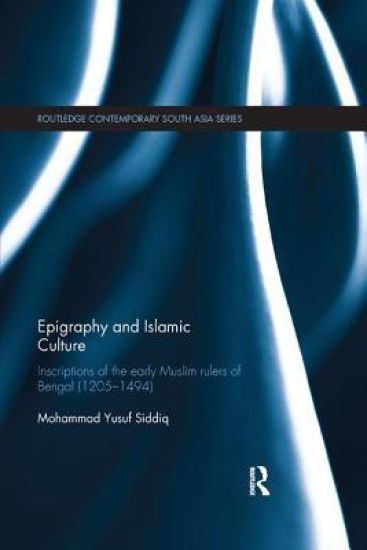
Architectural inscriptions are a fascinating aspect of Islamic cultural heritage because of their rich and diverse historical contents and artistic merits. These inscriptions help us understand the advent of Islam and its gradual diffusion in Bengal, which eventually resulted in a Muslim majority region, making the Bengali Muslims the second largest linguistic group in the Islamic world.This book is an interpretive study of the Arabic and Persian epigraphic texts of Bengal in the wider context of a rich epigraphic tradition in the Islamic world. While focusing on previously untapped sources, it takes a fresh look into the Islamic inscriptions of Bengal and examines the inner dynamics of the social, intellectual and religious transformations of this eastern region of South Asia. It explores many new inscriptions including Persian epigraphs that appeared immediately after the Muslim conquest of Bengal indicating an early introduction of Persian language in the region through a cultural interaction with Khurasan and Central Asia. In addition to deciphering and editing the epigraphic texts, the information derived from them has been analyzed to construct the political, administrative, social, religious and cultural scenario of the period. The first survey of the Muslim inscriptions in India ever to be attempted on this scale, the book reveals the significance of epigraphy as a source for Islamic history and culture. As such, it will be of interest to students and scholars of Asian Studies, Asian History and Islamic Studies.
NGOs (Non-Governmental Organizations) have emerged in both a development and aid capacity in Bangladesh, providing wide-reaching public services to the country’s population living in extreme poverty. However, resistance to and limitations of NGO-led development - which in conjunction with Bangladesh’s social transformation - led to a new religious-based NGO development practice.Looking at the role of Islamic NGOs in Bangladesh, the book investigates new forms of neoliberal governmentality supported by international donors. It discusses how this form of social regulation produces and reproduces subjectivities, particularly Muslim women subjectivity, and has combined religious and economic rationality, further complicating the boundaries and the relationship between Islam, modernity, and development. The book argues that both secular and Islamic NGOs target women in the name of empowerment but more importantly as the most reliable partners to meet their debt obligations of micro-financing schemes, including shari’a-based financing. The targeted women, in turn, experience Islamic NGOs as less coercive and more sensitive to their religious environment in the rural village community than are secular NGOs. Providing a comparative study of the role of religious and secular NGOs in the implementation of neoliberal policies and development strategies, this book will be a significant addition to research on South Asian Politics, Development Studies, Gender Studies, and Religion.
This study examines the traditional theory of just war in the light of modern principles of international law relating to the prohibition on the use of force repeatedly stressed by UNGA (United Nations General Assembly) resolutions and accepted by the ICJ (International Court of Justice). The author expresses doubts as to whether actions by some permanent members of the Security Council starting from September 1996 until April 2003, in the Balkans and the Persian Gulf, are legitimate under the just war theory, or any other rules of international law, and analyses in detail the claims made by the allied powers to justify their actions. The book also examines the significance of the transformation in the limitation and prohibition of the use of force in the contemporary legal system, by studying the origin of those tenets and their reflection in both the national laws of individual states and the international laws of armed conflict.
Colloquial Arabic (Levantine) provides a step-by-step course in Levantine Arabic as it is used today. Combining a user-friendly approach with a thorough treatment of the language, it equips learners with the essential skills needed to communicate confidently and effectively in Levantine Arabic in a broad range of situations. No prior knowledge of the language is required.Key features include: progressive coverage of speaking, listening, reading and writing skills structured, jargon-free explanations of grammar an extensive range of focused and stimulating exercises realistic and entertaining dialogues covering a broad variety of scenarios useful vocabulary lists throughout the text additional resources available at the back of the book, including a full answer key and bilingual glossaries.Balanced, comprehensive and rewarding, Colloquial Arabic (Levantine) is an indispensable resource both for independent learners and students taking courses in Levantine Arabic.Colloquials are now supported by FREE AUDIO available online. All audio tracks referenced within the text are free to stream or download from www.routledge.com/cw/colloquials. Recorded by native speakers, the audio complements the book and will help enhance learners’ listening and speaking skills.By the end of this course, you will be at Level B1 of the Common European Framework for Languages and at the Intermediate-Low on the ACTFL proficiency scales.