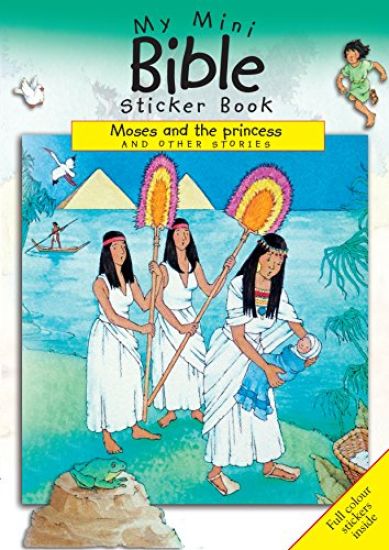
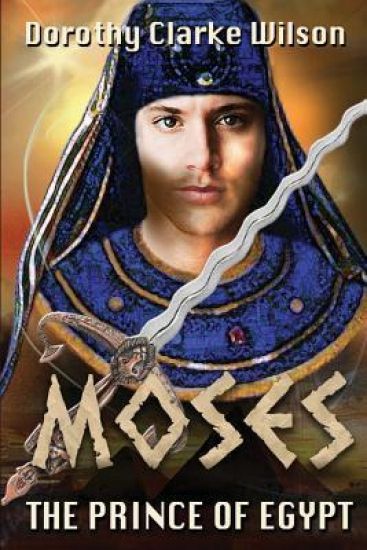
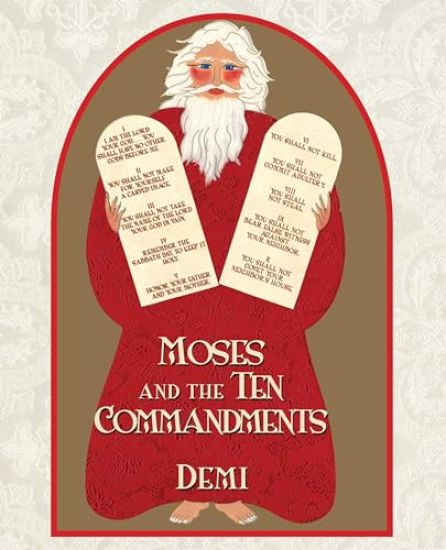
This book contains a selection of best-loved Bible stories including Moses and the Princess. Children read the stories, choose the matching stickers and complete each of the pictures.
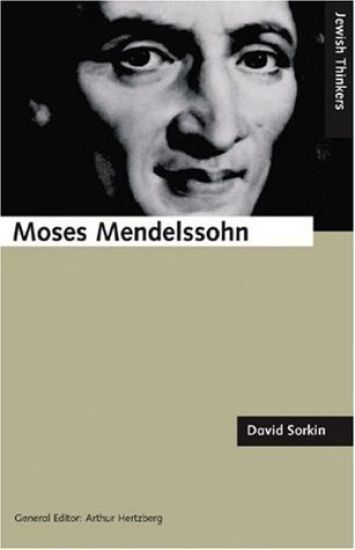
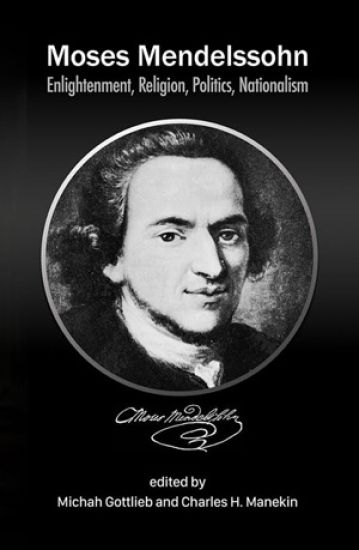
Moses Mendelssohn (1729-1786) was the premier Jewish thinker of his day and one of the best-known figures of the German Enlightenment, earning the sobriquet "the Socrates of Berlin". Mendelssohn has been treated as a symbol of the modern Jewish predicament, symbolising the conflict between Jewish tradition and secular culture.
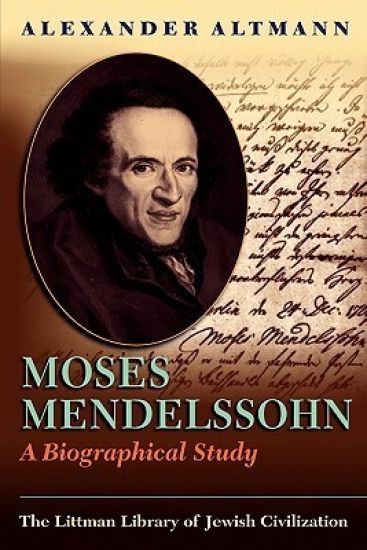
Alexander Altmann’s acclaimed, wide-ranging biography of Moses Mendelssohn (1729–96) was first published in 1973, but its stature as the definitive biography remains unquestioned. In fact, there has been no subsequent attempt at an intellectual biography of this towering and unusual figure: no other Jew so deeply rooted in the Jewish tradition was at the same time so much a part of the intellectual life of the German Enlightenment in the second half of the eighteenth century. As such, Moses Mendelssohn came to be recognized as the inaugurator of a new phase in Jewish history; all modern Jews today are in his debt. Altmann presents Moses Mendelssohn in strictly biographical terms. He does not attempt to assess his significance with the hindsight of historical perspective nor to trace his image in subsequent generations, but rather to observe his life from the period within which it was set. Altmann has written an absorbing and compelling narrative that makes a whole epoch come alive with great drama, for Mendelssohn’s life was a kaleidoscope of the European intellectual scene, Jewish and non-Jewish. As both a prominent philosopher and a believing Jew, Mendelssohn became a spokesman for the Jews and Judaism; he was one of the rare figures who become the symbol of an era. Through Altmann’s skilful use of hitherto unpublished archival material, the reader is introduced to the vast array of people—men of letters, artists, politicians, scientists, philosophers, and theologians—with whom Mendelssohn was in contact, and sometimes in conflict. What was Mendelssohn’s Judaism like? To what extent did the disparate worlds of Judaism and modern Enlightenment jostle each other in his mind and to what degree could he harmonize them? These questions are not easily answered, and it is only in the aggregate of a multitude of accounts of experiences, reaction, and statements on his part that the answer is to be found. Alexander Altmann’s analysis of this wealth of material is extraordinary in its discernment, subtlety, and clarity of expression. This masterly work will be of interest not only to those who are concerned with Jewish intellectual history but also to those interested in eighteenth-century cultural and social history, philosophy and theology, literary criticism, aesthetics, and the other areas of intellectual activity in ferment at that time. The general reader will also find much of contemporary relevance in Mendelssohn’s life, not only because of his exemplary devotion to reason and tolerance, but also because of his lifelong struggle with the basic dilemma of the Jew in the modern world: the attraction of assimilation versus the singularity of Jewish life, and the preservation of Jewish identity versus integration in the wider society.
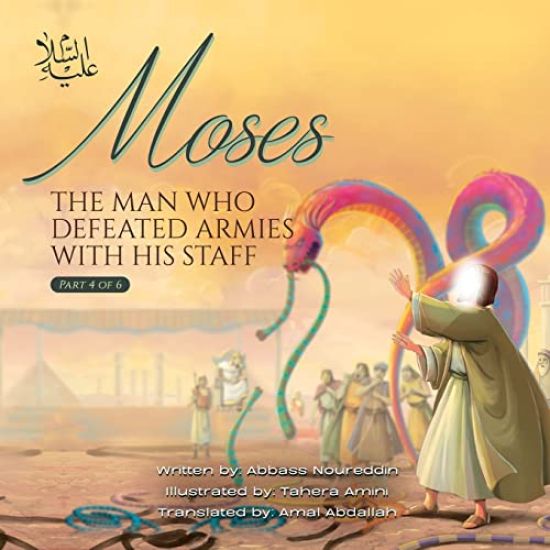
Moses (as) was granted great miracles and singlehandedly defeated the great armies of the Pharoah freeing his people from decades of slavery and humiliation. Despite this, his people were ungrateful and boastful, lacking fortitude, integrity and courage. Moses (as) always remained humble and advised them kindly and tried to build a monotheistic society.The inspirational stories of Prophet Moses (as) contain relevant lessons for all human beings and especially young readers. Moses (as) espoused values of courage, humility, and integrity despite the challenges from his own community whilst he remained resolute.
This special edition of the celebrated autobiographies of Moses Roper and Harriet Jacobs bring together the lives of two incredible individuals that made a difference in American history simply because they refused to give up despite how impossible their dreams seemed to be. Moses Roper and Harriet Jacobs were born in the waning days of slavery in the United States and though their experiences read like a script for a movie, their stories are no different than the thousands that were never acknowledged publicly during the almost three centuries that slavery blighted the history of America. Published in one volume for the first time and edited with additional biographical material not published previously.
Moses is a shepherd watching over his flock. He loves his sheep and keeps them safe. One day, Moses is looking for a ram that wandered off and finds a colorful burning bush hidden in a cave. When he approaches the bush, Moses hears the voice of God giving him a new flock to shepherd.Find out how Moses' life changes, and how God helps him realize his true purpose of obeying God's command and saving God's people-even when Moses doubts he can.
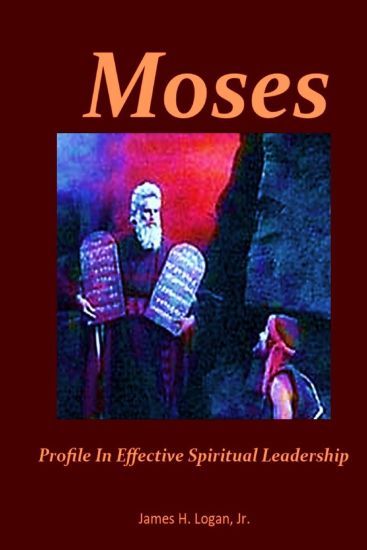
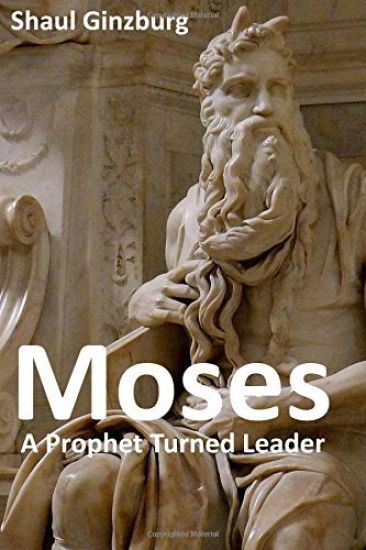
The name and man Moses towers over all of Pentateuchal history for he is mentioned almost 300 times in the book of Exodus alone and almost 750 times in the entire TaNaKh (OT). But this fails to account for the fact that he is further mentioned over 700 times in the rest of the Old Testament, as a whole and some 80 times in the New Testament. In fact, Moses is accorded a unique status among mortals in Deuteronomy 34:11, which noted that, "No one has ever shown the mighty power or performed the awesome deeds that Moses did in the sight of all Israel." Moses was a man of many tasks: he was a prophet, a priest, a leader of Israel, a poet, a miracle worker, a hero of the exodus, a receiver of God's word, and the founder of God's law as well as being a savvy political administrator. He is the author of the first five books of the Old Testament, and he is variously described as "a man of God," and "a servant of the Lord" (Neh. 10:29). No wonder he is so highly regarded in Scripture.
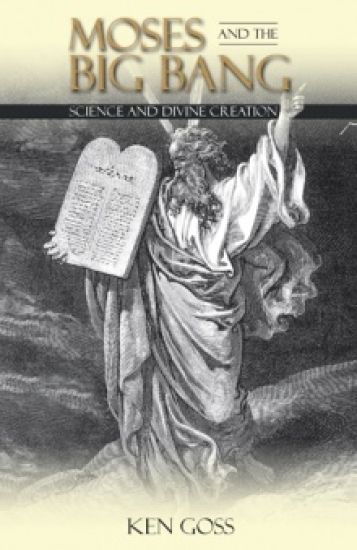
Moses and the Big Bang is a result of a lifelong interest in the subject of origins. On one hand, the scientific community digs deeply into the physics of the origin of the universe. On the other hand, the faithful Christians believe that God is the creator of all things. How can both be true? Do the findings of scientists support the concept of a creator God? That is the subject of this book.
This study guide is designed to help you apply the teachings from Moses - Shocked in the Desert to your life so that you can have a greater awareness of God's ways, seeing more accurately and hearing more clearly what he is trying to show you or speak to you. This guide is a hands-on tool to help you break out of old patterns of thinking and strongholds that have kept you from moving forward in your spiritual journey.
In Moses among the Idols: Mediators of the Divine in the Ancient Near East, Balogh simultaneously redefines one of the greatest figures in the history of religion and challenges the historically popular understanding of ancient Mesopotamian idols as the idle objects of antiquated faiths. Drawing on interdisciplinary research and methods of comparison, Balogh not only offers new insight into the lives of idols as active mediators between humanity and divinity, she also makes the case that when it comes to understanding the figure of Moses, Mesopotamian idols are the best analogy that the ancient Near East provides. This new understanding of Moses, idols, and the interplay between the two on the stage of history and within the biblical text has been made possible only with the recent publication of pertinent texts from ancient Mesopotamia. Drawing from the fields of Assyriology, biblical studies, comparative religion, and archaeology, Balogh identifies a problem with Moses’s status, and offers an unexpected solution to that problem. Moses among the Idols centers on the question: What is it that transforms Moses from an inadequate representative of Yahweh who is “uncircumcised of lips” to “god to Pharaoh” (Exodus 6:28-7:1)? In this moment, Moses undergoes a status change best understood through comparison with the induction ritual for ancient Mesopotamian idols as described in the texts of the Mis P?, “Washing” or “Purification of the Mouth.” This solution to the problem of Moses’s status explains not only his status change, but also why Moses radiates light after speaking with YHWH (Exod 34:29-35), and his peculiar relationship with YHWH and people of Israel. The comparative, interdisciplinary perspective provided by Balogh allows one to read these and other millennia-old interpretive issues anew, and to do so in a way that underscores the contribution of in-depth comparison to our understanding of ancient civilizations, texts, and intellectual frameworks.
In order to understand our ancient history described by Moses in the Bible we need to, not only look at various interpreted Hebrew words for texts but also look at similar histories from other ancient descriptions and look for a comparison of content. That is exactly what this book does. Certainly, the Biblical history provides reasonable adaptation, but Hebrew is a difficult language to understand as they had very few words and verbs we arbitrary. We can rely on many interpretations, but Moses also tried to make his history of thousands of years condensed which made interpretations even more difficult. Instead of looking at sentences that seem widely unacceptable to modern history, science, and physical artifacts and deciding to either look at science and ignore the Moses writings or the opposite, there is a third option. This book compares over 200 different texts and traditions from around the world and those statements of Moses. With them an interpretation "free from dogmatic tampering" and we find there is no true separation between the scientific and Biblical histories. Let me open up your vision and help you understand the Bible at the same time.Don't get me wrong, many of the religions blended around the many different texts had twisted reason out or their histories completely, but sometimes, you can find a little sanity even from a nut and that is what this book accomplishes.