
Kirjahaku
Etsi kirjoja tekijän nimen, kirjan nimen tai ISBN:n perusteella.
1000 tulosta hakusanalla Mrs Frederick Locker
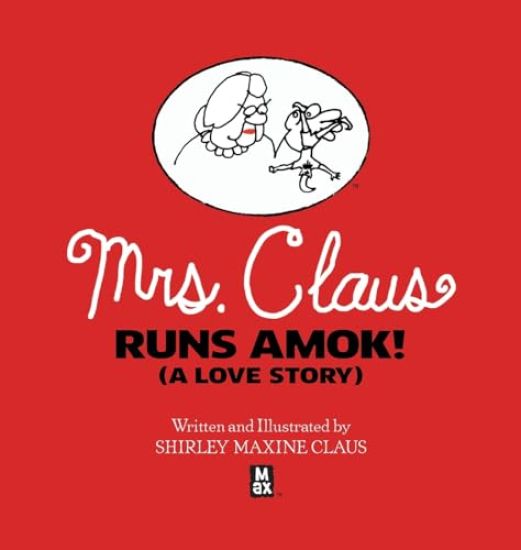
Imagine the pressures of living with several hundred elves and twelve arrogant reindeer (so they can fly... whatever), plus a husband who does nothing but make toys - all day, every day - and then gives them away. How do you run a household like that And balancing the checking account? Forget it.This is the wretched plight of Mrs. Santa Claus. All year long, day after numbing day, she mends tiny elf socks and cooks tiny elf meals, serving them on tiny elf plates, and for what? A great big "Ho-Ho-Ho " is about as good as it gets for a girl stuck at the top of the world without cable.Unlike everyone else at the North Pole, Mrs. Claus is only human, and come December she is tethered to sanity with a loose knot. In quiet desperation, she waits for her annual night off - Christmas Eve. It's the one night of the year when her man is far, far away. The one night when she has no responsibility whatsoever. But this year something is amiss. This year, Mrs. Claus is beyond a good book. She's beyond a warm comforter and a nice cup of hot cocoa. Waybeyond. Nothing too serious mind you. Nothing you couldn't mend with a sip or two of chardonnay, but nonetheless difficult to explain when Santa returnshome, because this Christmas Eve... Mrs. Claus Runs Amok
Hard Cover Update 24 November 2022 Over the coming months this First Edition Hard Cover will be the only way to buy the original text of Mrs. Vanderbilt. Ari Newman is now modernizing and re-writing the book which will first be released on MrVanderbilt.com. Thereafter, the new Mrs. Vanderbilt will be featured in Kindle, Soft Cover, and Hard. In describing this Newman writes, "One point of great gratitude I must express is to someone I do not even know. In fact, this person, A. Kracht, gave a horrible yet very helpful review on Amazon when Volume 1 initially came out. In the movie business, like the TV industry, we test market products and can make some changes before a film's release. In Television, the "pilot" is used for this purpose and the genesis of some very successful shows are pilots that are radically different from a show's eventual run. As a film producer I was trained and therefore as a writer viewed comments about Volume 1 in the same manner - a great gift. Receiving feedback and altering the material accordingly can be, and has been for me, a rewarding experience and several great life lessons. I often think of the difference between the Seinfeld pilot and the show being a major hit as a prime example. In this respect, Volume 2 is written completely differently than Volume 1 and I think the book and the commercial product itself is better for it. So thank you to my anonymous reviewer and all those who gave comments." IntroductionIn the summer of 1895, at the height of the Gilded Age, Newport, Rhode Island was the summer playground of American nobility. Three young and beautiful heiresses from rival families struggle to define their place within the House of Vanderbilt, balancing love, birthright, and responsibility to their respective families with their own hopes and desires. Each has the potential to attain the prize---the mantle of MRS. VANDERBILT, the "American Queen".-Twenty year old Gertrude, daughter of the current "Mrs. Vanderbilt" and Cornelius Vanderbilt II, is torn between her sexuality and her parents' insistence that she be properly married to a man who will add social status to their ruling branch of the House of Vanderbilt. -Gertrude's first cousin Consuelo, daughter of Alva Vanderbilt and William K. Vanderbilt, is being forced into a loveless marriage with England's Duke of Marlborough. Alva believes that if Consuelo is the first American to become a European Duchess, both she and her branch of the Vanderbilt family will attain status equal to her nemesis, the reigning Mrs. Vanderbilt, and her longtime adversary, the current "Queen" of High Society, Mrs. Caroline Astor.-Gertrude's brother Neily Vanderbilt has been in love with Grace, of the House of Astor, since they were teenagers. Several years earlier, as the most sought after debutante, she was secretly engaged to Neily's older brother, William Vanderbilt heir apparent, who died while studying at Yale. Mrs. Vanderbilt threatens Neily, the next in line that marrying an Astor would mean giving up his birthright, along with the social status and the riches that would make him one of the wealthiest and most powerful men in the world. As the families' matriarchs and patriarchs rule and manipulate the lives of their offspring to achieve their own aims, their children will be forced to choose between love and independence or status and wealth. Seen through the eyes of an eighteen year old lady's maid, and written in the second person, the time-honored stories of these young women, their suitors and lovers, secrets and betrayals, are told through a fictional author who uses alternate history to share their struggles and pain with empathy and insight.
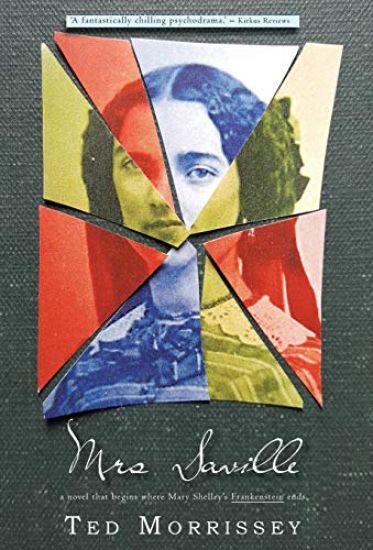
Margaret Saville's husband has been away on business for weeks and has stopped replying to her letters. Her brother, Robert Walton, has suddenly returned after three years at sea, having barely survived his exploratory voyage to the northern pole. She still grieves the death of her youngest child as she does her best to raise her surviving children, Felix and Agatha. The depth of her brother's trauma becomes clear, so that she must add his health and sanity to her list of cares. A bright spot seems to be a new friendship with a young woman who has just returned to England from the Continent, but Margaret soon discovers that her friend, Mary Shelley, has difficulties of her own, including an eccentric poet husband, Percy, and a book she is struggling to write. Margaret's story unfolds in a series of letters to her absent husband, desperate for him to return or at least to acknowledge her epistles and confirm that he is well. She is lonely, grief-stricken and afraid, yet in these darkest of times a spirit of independence begins to awaken. Mrs Saville begins where the novel Frankenstein ends.
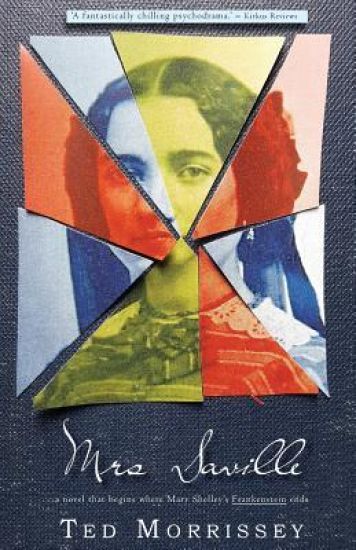
Margaret Saville's husband has been away on business for weeks and has stopped replying to her letters. Her brother, Robert Walton, has suddenly returned after three years at sea, having barely survived his exploratory voyage to the northern pole. She still grieves the death of her youngest child as she does her best to raise her surviving children, Felix and Agatha. The depth of her brother's trauma becomes clear, so that she must add his health and sanity to her list of cares. A bright spot seems to be a new friendship with a young woman who has just returned to England from the Continent, but Margaret soon discovers that her friend, Mary Shelley, has difficulties of her own, including an eccentric poet husband, Percy, and a book she is struggling to write. Margaret's story unfolds in a series of letters to her absent husband, desperate for him to return or at least to acknowledge her epistles and confirm that he is well. She is lonely, grief-stricken and afraid, yet in these darkest of times a spirit of independence begins to awaken. 'Mrs Saville' begins where Mary Shelley's 'Frankenstein' ends. This paperback edition includes the short story "A Wintering Place" and an Afterword by the author.
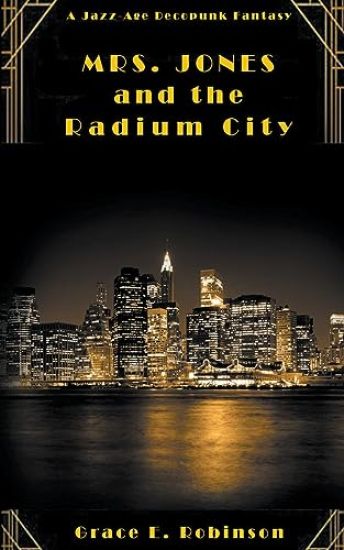
In 1920s Los Angeles, Cornelia Jones moves in the top circles of society, thanks to her privileged upbringing as well as her marriage to the brilliant scientist and inventor, John Jones. But when John, on the verge of completing his latest invention that has the potential to usher in a new technological age, is critically injured in a laboratory accident, it's up to Cornelia to investigate what happened and bring the perpetrators to justice. Good thing she knows magic. Aided by Adelaide, a young society debutante eager to learn the ways of both science and magic, Cornelia embarks on a journey to discover who's responsible for these nefarious deeds. But the deeper she dives into John's world, Cornelia realizes that evil is alive and well in this bright new age of progress. A secret organization moving in the shadows seems to have mysterious and sinister plans for her husband's altruistic creation. The world is changing as the Twenties begin to roar, and if Cornelia and Adelaide fail to stop the villains, then both Cornelia's world and the rest of the planet will change more horrifically than anyone could imagine.
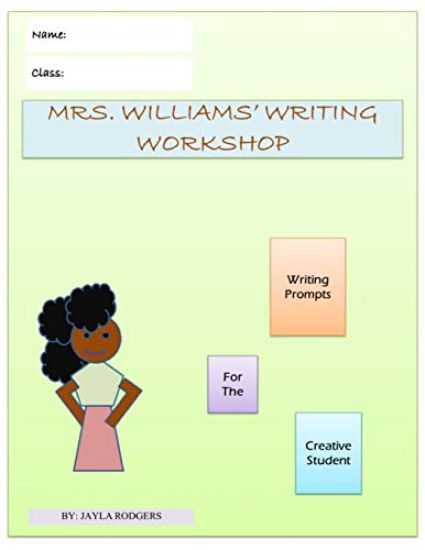
Mrs. Williams' Writing Workshop: Writing Prompts For The Creative Student
Jayla Rodgers
Augusta Publishing House
2018
nidottu
Writing prompts can help ease the stress of having writer's block. With the assistance of Mrs. Williams' Writing Workshop, creativity can be expressed, and personal interests can be uncovered. This workbook can help the student's struggling with creative expression to progress, and help the student's who express effortlessly to maintain momentum.
Anthony Trollope (1815-1882) was one of the most successful, prolific and respected English novelists of the Victorian era. He wrote penetrating novels on political, social, and gender issues and conflicts of his day. In 1867 Trollope left his position in the British Post Office to run for Parliament as a Liberal candidate in 1868. After he lost, he concentrated entirely on his literary career. While continuing to produce novels rapidly, he also edited the St Paul's Magazine, which published several of his novels in serial form. His first major success came with The Warden (1855) - the first of six novels set in the fictional county of Barsetshire. The comic masterpiece Barchester Towers (1857) has probably become the best-known of these.
Charles John Huffam Dickens FRSA (7 February 1812 - 9 June 1870) was an English writer and social critic. He created some of the world's best-known fictional characters and is regarded by many as the greatest novelist of the Victorian era. His works enjoyed unprecedented popularity during his lifetime, and by the 20th century, critics and scholars had recognised him as a literary genius. His novels and short stories are still widely read today. Born in Portsmouth, Dickens left school to work in a factory when his father was incarcerated in a debtors' prison. Despite his lack of formal education, he edited a weekly journal for 20 years, wrote 15 novels, five novellas, hundreds of short stories and non-fiction articles, lectured and performed readings extensively.
Charles John Huffam Dickens FRSA (7 February 1812 - 9 June 1870) was an English writer and social critic. He created some of the world's best-known fictional characters and is regarded by many as the greatest novelist of the Victorian era. His works enjoyed unprecedented popularity during his lifetime, and by the 20th century, critics and scholars had recognised him as a literary genius. His novels and short stories are still widely read today. Born in Portsmouth, Dickens left school to work in a factory when his father was incarcerated in a debtors' prison. Despite his lack of formal education, he edited a weekly journal for 20 years, wrote 15 novels, five novellas, hundreds of short stories and non-fiction articles, lectured and performed readings extensively.
George Bernard Shaw (1856-1950) was an Irish playwright, critic, polemicist and political activist. Born in Dublin, he moved to London when he turned twenty. Having rejected formal schooling, he educated himself by independent study in the reading room of the British Museum; he also began his career there by writing novels for which he could not find a publisher. His first success was as a music and literary critic, but he was drawn to drama and authored more than sixty plays during his career. Typically his work is leavened by a delightful vein of comedy, but nearly all of it bears earnest messages. He remains the only person to have been awarded both a Nobel Prize (1925) for his contribution to literature and an Oscar (1938) for Pygmalion.
Lucy Madox Brown Rossetti (19 July 1843 - 12 April 1894) was a British artist, author and model associated with the Pre-Raphaelites. She was married to the writer and art critic William Michael Rossetti. She began painting in 1868, and along with her half sister Catherine, modelled and worked as an assistant under their father. Other female Pre-Raphaelite artists such as Georgiana Burne-Jones, the sister of Thomas Seddon and Marie Spartali Stillman also took lessons in the same studio. Working mainly in watercolours, she exhibited in Dudley Museum and Art Gallery from 1869 to 1872. Her painting, The Duet, which was exhibited at the Royal Academy in 1870, was described by Dante Gabriel Rossetti as a "perfect picture". She stopped painting in 1874.
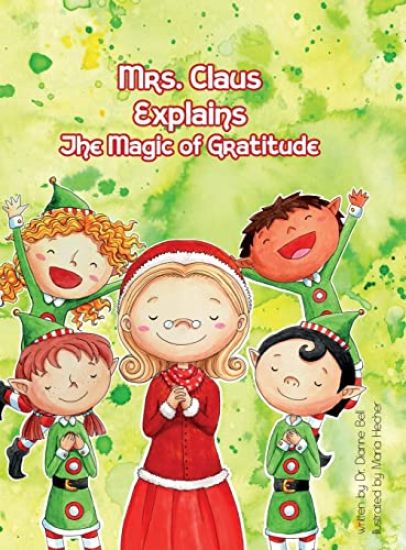
It's time for school at the North Pole. Join Mrs. Claus as she teaches the elves important lessons and stories inspired by Santa Claus. Hurry, you don't want to miss her class
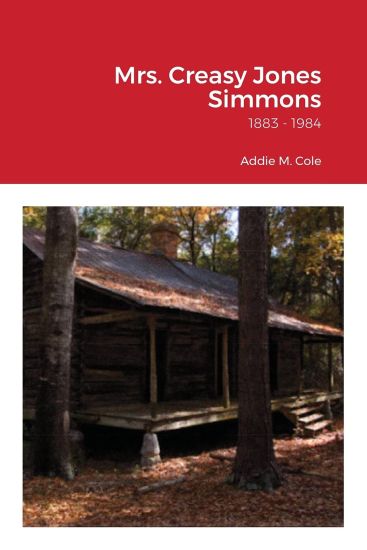
A gangly girl grows into a classy lady. Creasy Jones Simmons exemplifies the characteristics of a person on a mission to overcome trials, tribulations, obstacles, and the era in that she lived. Encompassed in the pages of this book, Mrs. Creasy Jones Simmons 1883-1984, is camaraderie and closeness in a far-reaching neighborhood, love and fortification, existence and expiration, amusement and enjoyment, and the details of a well-lived life of a fabulous lady during a different period in America. During her lifetime, she experienced numerous historical events such as the first electric lighting system using overhead wires, the first World's Fair that opened in Chicago, IL, the 1918 Pandemic Influenza, and the 1950s and 1960s Civil Rights Movements. Through what many believed to be some of the toughest of time, Mrs. Creasy Jones Simmons, better known as Aunt Creasy, loved life and lived it to her fullest. Aunt Creasy maximized her ability to experience all that life offered her. She made the most of what she had, no matter how small, and reconciled not to accept less than the life she was capable of living. Aunt Creasy remained zestful, alive, and awake to life. This story offers humor, lessons, and the overall message that life is worth living. The overall message is to never fall asleep in life's waiting room. Live your best life. Aunt Creasy did.
This work has been selected by scholars as being culturally important and is part of the knowledge base of civilization as we know it.This work is in the public domain in the United States of America, and possibly other nations. Within the United States, you may freely copy and distribute this work, as no entity (individual or corporate) has a copyright on the body of the work.Scholars believe, and we concur, that this work is important enough to be preserved, reproduced, and made generally available to the public. To ensure a quality reading experience, this work has been proofread and republished using a format that seamlessly blends the original graphical elements with text in an easy-to-read typeface.We appreciate your support of the preservation process, and thank you for being an important part of keeping this knowledge alive and relevant.
This work has been selected by scholars as being culturally important and is part of the knowledge base of civilization as we know it.This work is in the public domain in the United States of America, and possibly other nations. Within the United States, you may freely copy and distribute this work, as no entity (individual or corporate) has a copyright on the body of the work.Scholars believe, and we concur, that this work is important enough to be preserved, reproduced, and made generally available to the public. To ensure a quality reading experience, this work has been proofread and republished using a format that seamlessly blends the original graphical elements with text in an easy-to-read typeface.We appreciate your support of the preservation process, and thank you for being an important part of keeping this knowledge alive and relevant.
Mrs. Mallard's Ducklings;
Clelia C. Benjamin Delafield; Leonard 1916-2000 Weisgard
Hassell Street Press
2021
sidottu
This work has been selected by scholars as being culturally important and is part of the knowledge base of civilization as we know it.This work is in the public domain in the United States of America, and possibly other nations. Within the United States, you may freely copy and distribute this work, as no entity (individual or corporate) has a copyright on the body of the work.Scholars believe, and we concur, that this work is important enough to be preserved, reproduced, and made generally available to the public. To ensure a quality reading experience, this work has been proofread and republished using a format that seamlessly blends the original graphical elements with text in an easy-to-read typeface.We appreciate your support of the preservation process, and thank you for being an important part of keeping this knowledge alive and relevant.