Kirjojen hintavertailu. Mukana 12 016 292 kirjaa ja 12 kauppaa.

Kirjahaku

Etsi kirjoja tekijän nimen, kirjan nimen tai ISBN:n perusteella.

1000 tulosta hakusanalla Philo

Philosophers on Film from Bergson to Badiou
Philosophers on Film from Bergson to Badiou is an anthology of writings on cinema and film by many of the major thinkers in continental philosophy. The book presents a selection of fundamental texts, each accompanied by an introduction and exposition by the editor, Christopher Kul-Want, that places the philosophers within a historical and intellectual framework of aesthetic and social thought.Encompassing a range of intellectual traditions—Marxism, phenomenology, psychoanalysis, poststructuralism, gender and affect theories—this critical reader features writings by Bergson, Benjamin, Adorno and Horkheimer, Merleau-Ponty, Baudrillard, Irigaray, Lyotard, Deleuze, Kristeva, Agamben, Žižek, Nancy, Cavell, Rancière, Badiou, Stiegler, and Silverman. Many of the texts discuss cinema as a mass medium; others develop phenomenological analyses of particular films. Reflecting upon the potential of films to challenge dominant forms of ideology, the anthology considers the ways in which they can disrupt the clichés of capitalist images and offer radical possibilities for creating new worlds of visceral experience outside the grasp of habitual forms of knowledge and subjectivity. Ranging from the early silent period of cinema through the classics of European and Hollywood cinema to the early twenty-first century, the films discussed offer a vivid sense of these philosophers’ concepts and ideas, casting new light on the history of cinema. This reader is an essential and valuable resource for a wide range of courses in film and philosophy.
Philosophers on Film from Bergson to Badiou
Philosophers on Film from Bergson to Badiou is an anthology of writings on cinema and film by many of the major thinkers in continental philosophy. The book presents a selection of fundamental texts, each accompanied by an introduction and exposition by the editor, Christopher Kul-Want, that places the philosophers within a historical and intellectual framework of aesthetic and social thought.Encompassing a range of intellectual traditions—Marxism, phenomenology, psychoanalysis, poststructuralism, gender and affect theories—this critical reader features writings by Bergson, Benjamin, Adorno and Horkheimer, Merleau-Ponty, Baudrillard, Irigaray, Lyotard, Deleuze, Kristeva, Agamben, Žižek, Nancy, Cavell, Rancière, Badiou, Stiegler, and Silverman. Many of the texts discuss cinema as a mass medium; others develop phenomenological analyses of particular films. Reflecting upon the potential of films to challenge dominant forms of ideology, the anthology considers the ways in which they can disrupt the clichés of capitalist images and offer radical possibilities for creating new worlds of visceral experience outside the grasp of habitual forms of knowledge and subjectivity. Ranging from the early silent period of cinema through the classics of European and Hollywood cinema to the early twenty-first century, the films discussed offer a vivid sense of these philosophers’ concepts and ideas, casting new light on the history of cinema. This reader is an essential and valuable resource for a wide range of courses in film and philosophy.
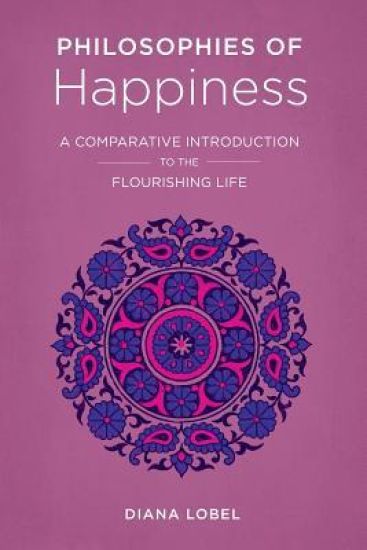
Philosophies of Happiness

Philosophies of Happiness

Diana Lobel

Columbia University Press
2017
sidottu
What does it mean to be truly happy? In Philosophies of Happiness, Diana Lobel provides a rich spectrum of arguments for a theory of happiness as flourishing or well-being, offering a global, cross-cultural, and interdisciplinary perspective on how to create a vital, fulfilling, and significant life. Drawing upon perspectives from a broad range of philosophical traditions-Eastern and Western, ancient and contemporary-the book suggests that just as physical health is the well-being of the body, happiness is the healthy and flourishing condition of the whole human being, and we experience the most complete happiness when we realize our potential through creative engagement. Lobel shows that while thick descriptions of happiness differ widely in texture and detail, certain themes resonate across texts from different traditions and historical contexts, suggesting core features of a happy life: attentive awareness; effortless action; relationship and connection to a larger, interconnected community; love or devotion; and creative engagement. Each feature adds meaning, significance, and value, so that we can craft lives of worth and purpose. These themes emerge from careful study of philosophical and religious texts and traditions: the Greek philosophers Aristotle and Epicurus; the Chinese traditions of Confucius, Laozi, and Zhuangzi; the Hindu Bhagavad Gita; the Japanese Buddhist tradition of Soto Zen master Dogen and his modern expositor Shunryu Suzuki; the Western religious traditions of Augustine and Maimonides; the Persian Sufi tale Conference of the Birds; and contemporary research on mindfulness and creativity. Written in a clear, accessible style, Philosophies of Happiness invites readers of all backgrounds to explore and engage with religious and philosophical conceptions of what makes life meaningful.
Philosophies of Happiness

Philosophies of Happiness

Diana Lobel

Columbia University Press
2017
pokkari
What does it mean to be truly happy? In Philosophies of Happiness, Diana Lobel provides a rich spectrum of arguments for a theory of happiness as flourishing or well-being, offering a global, cross-cultural, and interdisciplinary perspective on how to create a vital, fulfilling, and significant life. Drawing upon perspectives from a broad range of philosophical traditions-Eastern and Western, ancient and contemporary-the book suggests that just as physical health is the well-being of the body, happiness is the healthy and flourishing condition of the whole human being, and we experience the most complete happiness when we realize our potential through creative engagement. Lobel shows that while thick descriptions of happiness differ widely in texture and detail, certain themes resonate across texts from different traditions and historical contexts, suggesting core features of a happy life: attentive awareness; effortless action; relationship and connection to a larger, interconnected community; love or devotion; and creative engagement. Each feature adds meaning, significance, and value, so that we can craft lives of worth and purpose. These themes emerge from careful study of philosophical and religious texts and traditions: the Greek philosophers Aristotle and Epicurus; the Chinese traditions of Confucius, Laozi, and Zhuangzi; the Hindu Bhagavad Gita; the Japanese Buddhist tradition of Soto Zen master Dogen and his modern expositor Shunryu Suzuki; the Western religious traditions of Augustine and Maimonides; the Persian Sufi tale Conference of the Birds; and contemporary research on mindfulness and creativity. Written in a clear, accessible style, Philosophies of Happiness invites readers of all backgrounds to explore and engage with religious and philosophical conceptions of what makes life meaningful.
Philosophy and Poetry

Philosophy and Poetry

Ranjan Ghosh

Columbia University Press
2019
sidottu
Ever since Plato’s Socrates exiled the poets from the ideal city in The Republic, Western thought has insisted on a strict demarcation between philosophy and poetry. Yet might their long-standing quarrel hide deeper affinities? This book explores the distinctive ways in which twentieth-century and contemporary continental thinkers have engaged with poetry and its contribution to philosophical meaning making, challenging us to rethink how philosophy has been changed through its encounters with poetry.In wide-ranging reflections on thinkers such as Heidegger, Gadamer, Arendt, Lacan, Merleau-Ponty, Deleuze, Irigaray, Badiou, Kristeva, and Agamben, among others, distinguished contributors consider how different philosophers encountered the force and intensity of poetry and the negotiations that took place as they sought resolutions of the quarrel. Instead of a clash between competing worldviews, they figured the relationship between philosophy and poetry as one of productive mutuality, leading toward new modes of thinking and understanding. Spanning a range of issues with nuance and rigor, this compelling and comprehensive book opens new possibilities for philosophical poetry and the poetics of philosophy.
Philosophy for Polar Explorers
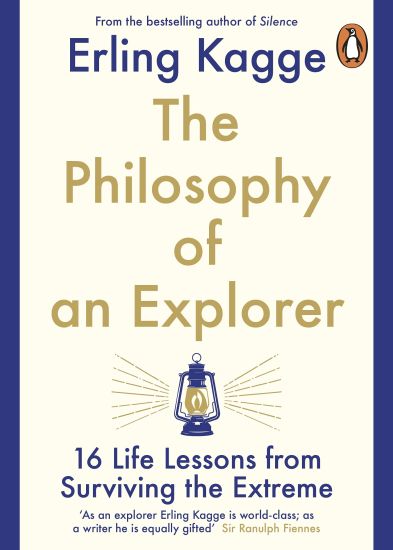
'Erling Kagge transforms and consoles us' Alain de Botton ____________________________Surviving extreme conditions can teach us to lead a fulfilled life. No one knows this better than Erling Kagge, who was the first man in history to reach all of the Earth's poles by foot - the North, the South, and the summit of Everest. In Philosophy for Polar Explorers he brings together the wisdom and expertise he has gained from the expeditions that have taken him to the limits of the earth, and of human endurance.In sixteen meditative but practical lessons - from cultivating an optimistic outlook, to getting up at the right time, to learning to take pleasure in the small things and comfort in solitude - Erling Kagge reveals what survival in the most extreme conditions can teach us about how to lead a meaningful life. Wherever we may be headed. ____________________________'His wisdom will soothe and awaken' Fearne Cotton'A delightful book that explores the strange land between getting out of bed in the morning and reaching for the moon Tristan Gooley'A wonderfully deft Swiss army knife of a book' Dan Richards'As an explorer Erling Kagge is world class; as a writer he is equally gifted' Sir Ranulph Fiennes 'Erling Kagge is a philosophical adventurer - or perhaps an adventurous philosopher' The New York Times'An author for our noisy times, full of a rare and deeply redemptive languor and perspective' Alain de Botton
Philosophy

Philosophy

DK Children
2020
sidottu
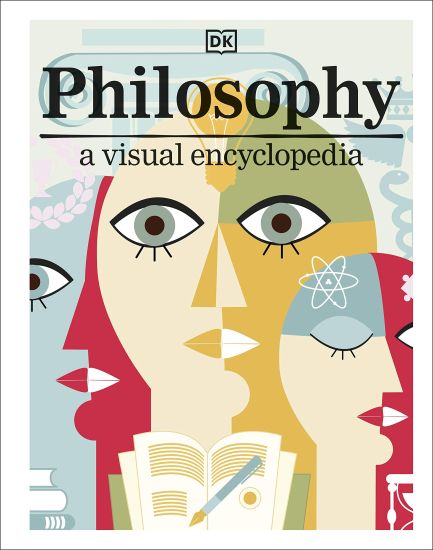
The perfect book for young readers looking to explore some of life's biggest questions.Thousands of years ago, ancient philosophers asked some important questions: "What is real?", "What is everything made of?", "Why does evil exist?", and "What can I know?" These questions have gone on to spark passionate debates about our existence and how we understand the world around us. In this engaging and accessible introduction to philosophy, readers aged 11+ will be introduced to a variety of philosophical ideas through the teachings of Plato, Confucius, Simone de Beauvoir, and many more.Vibrant, reader-friendly illustrations bring the history of ideas and thinking to life, and provide topics for reflection and debate. With biographies of the most influential philosophers from around the world, young readers will explore the questions that have been fundamental to the development of scientific study, logical thinking, religious beliefs, freedom in society, and much more. Thought experiments peppered throughout will help to connect readers with the theories presented so they can apply them to their own lives.
Philosophers Who Changed History

Philosophers Who Changed History

Simon Blackburn

DORLING KINDERSLEY LTD
2024
sidottu
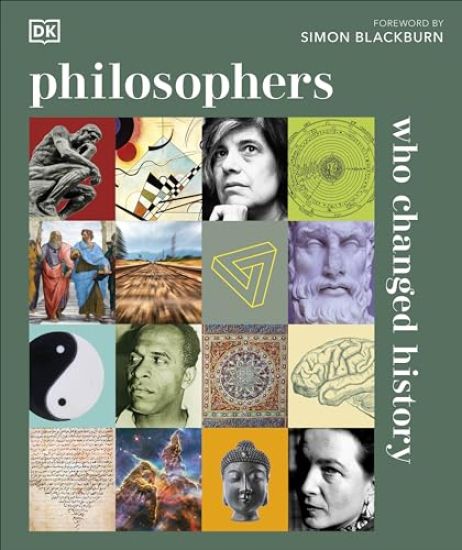
This visual celebration of the world's most celebrated thinkers tells the fascinating stories of their lives and pioneering ideas.Philosophers Who Changed History places well-known philosophers in their historical and cultural context, showing you how they came to influence philosophy as we know it today.This illustrated guide is ideal for those interested in philosophy, politics, history, and literature or who would like to broaden their general understanding of philosophy and the lives of philosophers.Inside this book on philosophers, you’ll find: -An overview of the lives and works of around 80 of the world's most influential philosophers - from the Classical era to the present-Eight pages of brand-new content with 12 new entries, including Frederick Douglass and Luce Irigaray-Lavishly illustrated portraits of each philosopher, alongside photographs of their homes, studies and personal artefactsIn this philosophy guide, each philosopher is introduced with a realistic portrait and biographical entries which trace the friendships, loves, and rivalries that inspired and influenced them. Entries explore the key ideas and working methods of each individual and set their ideas in context, conveying a powerful sense of the place and the period of history in which they lived. Philosophers Who Changed History provides revealing insights into what drove each individual to develop new ways of understanding the world.
Philosophy and Life

Philosophy and Life

A. C. Grayling

PENGUIN BOOKS LTD
2024
pokkari
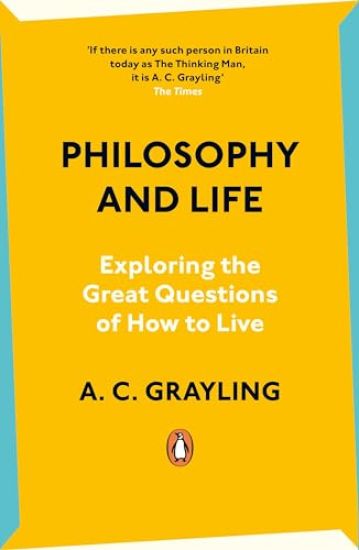
'Grayling brings satisfying order to daunting subjects' Steven Pinker'An enthusiastic thinker who embraces humour, common sense and lucidity' Independent_______________From the eminent philosopher, an authoritative exploration of the great questions of how to live'There is a question everyone has to ask and answer - in fact, has to keep on asking and keep on answering. It is, 'How should I live my life?' meaning, 'What values shall I live by? 'What sort of person should I be? What shall I aim for?' The great majority of people do not ask this question, they merely answer it unthinkingly, by adopting conventional views of life and what matters in it...'From Stoics to existentialists, in philosophy and literature, discussion of the philosophy of life -- of love and death, of courage, fortitude and wisdom -- challenges us all to think about what kinds of life are truly worth living. In this summation of a lifetime thinking and writing about this great question, A. C. Grayling explores with clarity and depth the ideas that each of us must use in answering it for ourselves.Drawing on the lives, experiences and works of a fantastically eclectic range of thinkers -- taking in not only philosophers such as Confucius, Seneca and Nietzsche, but also authors from Shakespeare to Ursula LeGuin, and modern thinkers such as Martha Nussbaum and Bernard Williams - Philosophy and Life brings together wisdom from across eras and continents in a tour de force on the philosophy of being human in a complicated world.
Philosophy of Mind

Philosophy of Mind

Andreas Sofroniou

Lulu.com
2019
nidottu
The philosophy of the mind deals with the examination of problems revolving around the concept of the mind. The mental may be distinguished from the physical in various ways: intentionality and consciousness provide important features of mental states. An important part of the argument is the claim that mental states are known in a special way: they are directly given, transparent to their owner and known infallibly.Monist and materialist believe that reality is physical and explained by natural science; sought in various ways to understand the mind in material terms. Behaviourism advocates that psychology should concern itself exclusively with observation of behaviour, disregarding introspection altogether. Others propose that mental states are the same as states of the brain. Dissatisfaction with these overly simple attempts to incorporate the mental into the physical realm led to the development of functionalism.
Philosophical Writings

Philosophical Writings

Sylvie Le Bon de Beauvoir

University of Illinois Press
2005
sidottu
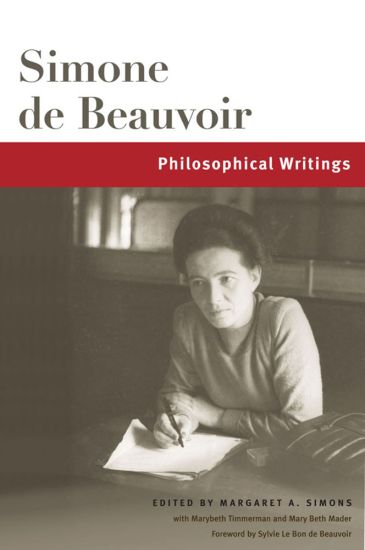
Despite growing interest in her philosophy, Simone de Beauvoir remains widely misunderstood. She is typically portrayed as a mere intellectual follower of her companion, Jean-Paul Sartre. In Philosophical Writings, Beauvoir herself shows that nothing could be further from the truth. Beauvoir's philosophical work suffers from a lack of English-language translation or, worse, mistranslation into heavily condensed popular versions. Philosophical Writings provides an unprecedented collection of complete, scholarly editions of philosophical texts that cover the first twenty-three years of Beauvoir's career, including a number of recently discovered works. Ranging from metaphysical literature to existentialist ethics, Philosophical Writings brings together diverse elements of Beauvoir's work while highlighting continuities in the development of her thought. Each of the translations features detailed notes and a scholarly introduction explaining its larger significance. Revelatory and long overdue, Philosophical Writings adds to the ongoing resurgence of interest in Beauvoir's thought and to her growing influence on today's philosophical curriculum.
Philosophical Instruments

Philosophical Instruments

Daniel Rothbart; Rom Harré

University of Illinois Press
2007
sidottu
The surprising roles of instruments and experimentation in acquiring knowledge In Philosophical Instruments Daniel Rothbart argues that our tools are not just neutral intermediaries between humans and the natural world, but are devices that demand new ideas about reality. Just as a hunter's new spear can change their knowledge of the environment, so can the development of modern scientific equipment alter our view of the world. Working at the intersections of science, technology, and philosophy, Rothbart examines the revolution in knowledge brought on by recent advances in scientific instruments. Full of examples from historical and contemporary science, including electron scanning microscopes, sixteenth-century philosophical instruments, and diffraction devices used by biochemical researchers, Rothbart explores the ways in which instrumentation advances a philosophical stance about an instrument's power, an experimenter's skills, and a specimen's properties. Through a close reading of engineering of instruments, he introduces a philosophy from (rather than of) design, contending that philosophical ideas are channeled from design plans to models and from model into the use of the devices.
Philosophy, Crime, and Criminology

Philosophy, Crime, and Criminology

University of Illinois Press
2006
nidottu
Philosophy, Crime, and Criminology represents the first systematic attempt to unpack the philosophical foundations of crime in Western culture. Utilizing the insights of ontology, epistemology, aesthetics, and ethics, contributors demonstrate how the reality of crime is informed by a number of implicit assumptions about the human condition and unstated values about civil society. Charting a provocative and original direction, editors Bruce A. Arrigo and Christopher R. Williams couple theoretically oriented chapters with those centered on application and case study. In doing so, they develop an insightful, sensible, and accessible approach for a philosophical criminology in step with the political and economic challenges of the twenty-first century. Revealing the ways in which philosophical conceits inform prevailing conceptions of crime, Philosophy, Crime, and Criminology is required reading for any serious student or scholar concerned with crime and its impact on society and in our lives.
Philosophical Writings Volume 1

Philosophical Writings Volume 1

Sylvie Le Bon de Beauvoir

University of Illinois Press
2021
nidottu
Despite growing interest in her philosophy, Simone de Beauvoir remains widely misunderstood. She is typically portrayed as a mere intellectual follower of her companion, Jean-Paul Sartre. In Philosophical Writings, Beauvoir herself shows that nothing could be further from the truth. Beauvoir's philosophical work suffers from a lack of English-language translation or, worse, mistranslation into heavily condensed popular versions. Philosophical Writings provides an unprecedented collection of complete, scholarly editions of philosophical texts that cover the first twenty-three years of Beauvoir's career, including a number of recently discovered works. Ranging from metaphysical literature to existentialist ethics, Philosophical Writings brings together diverse elements of Beauvoir's work while highlighting continuities in the development of her thought. Each of the translations features detailed notes and a scholarly introduction explaining its larger significance. Revelatory and long overdue, Philosophical Writings adds to the ongoing resurgence of interest in Beauvoir's thought and to her growing influence on today's philosophical curriculum.