Kirjojen hintavertailu. Mukana 12 484 308 kirjaa ja 12 kauppaa.

Kirjahaku

Etsi kirjoja tekijän nimen, kirjan nimen tai ISBN:n perusteella.

1000 tulosta hakusanalla Phyllis L. Neumann

Growing Up on Prairie Farms: A Rough and Tumble Childhood

Growing Up on Prairie Farms: A Rough and Tumble Childhood

Phyllis Pahl Mitchell

Ink Lake Publications
2015
nidottu
For anyone who has wondered what it was like to live on the prairies of the United States in the early 1900s, here is your answer. This is not just a memoir, but a history. Phyllis Mitchell was born in Nebraska in 1921 and grew up on prairie farms where her parents were sharecroppers. Phyllis and her five siblings worked alongside her parents, as the family lived off the land without electricity or plumbing. Despite dealing with The Great Depression, The Dust Bowl, locusts, floods, illnesses, accidents, and even a frightening tornado, they all managed to not just exist but thrive. Phyllis's two older brothers were constantly coming up with clever schemes, while her older sister seemed to always be on horseback, helping out in the fields. Phyllis's two younger sisters at times needed guidance and protection. This includes the one who wouldn't get out of bed until she was assured that her father had built a "ro-ri-un fi-re" that would warm the kitchen. They all rode horses to one-room school houses. And, in a horse-drawn wagon, they occasionally traveled to the nearest town to trade cream and eggs for other commodities. Her brothers also sold watermelons and skunk pelts. With their father, the children grubbed trees, riding on the bigger trees as they bounced to earth after being cut down. At home, Phyllis learned from her mother how to cook and sew, skills which came in handy when she was hired by nearby families to serve at times as a live-in domestic helper. Here she observed how wealthier families lived. Meanwhile, she excelled at school where she prepared to be a teacher. Although the book focuses on her childhood, we also see Phyllis as she begins teaching in the same kinds of prairie schools that she once had attended. As a teacher, she exercised her same resourcefulness and creativity. During World War II, she helped the war effort by becoming a telegraph operator and station manager, surprisingly challenging and, at times, dangerous jobs. The book ends with her unusually impromptu wedding to the man who, as a high schooler, had 'tormented' her in high school band. Part Little House on the Prairie, part Whole Earth Catalog, this memoir combines a compelling personal narrative with delightful explanations of the early technologies that allowed a farming family to eke out an existence in the face of daunting obstacles.
How to Say it for Executives

How to Say it for Executives

Phyllis Mindell

Penguin Books Canada Ltd
2005
pokkari
An expert on professional communications teaches business executives the fundamental principles of how to get their ideas across, with guidelines on how to prepare and deliver effective speeches, effectively use gestures, avoid words and phrases that undermine authority, handle hostile people, foster participation, and more. Original.
Rocky Mountain National Park

Rocky Mountain National Park

Phyllis J. Perry

Arcadia Publishing (SC)
2008
nidottu
Rocky Mountain National Park is often called "the crown jewel" of the nation's park system. Set in Colorado in the southern part of the Rocky Mountain chain, which forms the backbone of North America, the park contains 72 named peaks above 12,000 feet with the tallest of these, Longs Peak, rising to 14,259 feet. Established in 1915 as a national park, it now hosts more than two million visitors every year. Vacationers enjoy picnicking, hiking, camping, climbing, skiing, and simply admiring the beauties of the park, which include alpine plants, wildflowers, aspen, conifers, lakes, streams, waterfalls, and an abundance of birds and animals.
Aid Effectiveness in Africa

Aid Effectiveness in Africa

Phyllis R. Pomerantz

Lexington Books
2004
nidottu
A significant contribution to the ongoing debate on aid effectiveness, Aid Effectiveness in Africa starts from the premise that money alone will not bring sustained development to Africa. With grounding in years of experience and fieldwork, Phyllis R. Pomerantz examines the relationship between aid donors and recipients and the extent to which trust is present in today's aid environment. Pomerantz concludes that there are serious gaps, created in part by a striking lack of knowledge of the African context and culture on the part of the donors, and troublesome institutional constraints that make it difficult for aid agencies to change the way they operate. Joining the urgent call to transform aid agencies and increase aid effectiveness, and eschewing pat solutions and simple formulae, the book offers realistic recommendations and provides an eloquent argument for further, far-reaching reform.
Rhetorics for Community Action

Rhetorics for Community Action

Phyllis Mentzell Ryder

Lexington Books
2010
sidottu
Rhetorics for Community Action: Public Writing and Writing Publics, by Phyllis Mentzell Ryder, offers theory and pedagogy to introduce public writing as a complex political and creative action. To write public texts, we have to invent the public we wish to address. Such invention is a complex task, with many components to consider: exigency that brings people together; a sense of agency and capacity; a sense of how the world is and what it can become. All these components constantly compete against texts that put forward other public ideals—opposing ideas about who really has power and who really can create change. Teachers of public writing must adopt a generous response to those who venture into this arena. Some scholars believe that to prepare students for public life, university classes should partner with grassroots community organizations, rather than nonprofits that serve food or tutor students. They worry that a service-related focus will create more passive citizens who do not rally and resist or grab the attention of government leaders or corporations. With carefully contextualized study of an after-school arts program, an area soup kitchen, and parks organizations, among others, Ryder shows that many so-called "service" organizations are not passive places at all, and she argues that the main challenge of public work is precisely that it has to take place among all of these compelling definitions of democracy. Ryder proposes teaching public writing by partnering with multiple community nonprofits. She develops a framework to help students analyze how their community partners inspire people to action, and offers a course design that support them as they convey those public ideals in community texts. But composing public texts is only part of the challenge. Traditional newspapers and magazines, through their business models and writing styles, reinforce a dominant role for citizens as thinking and reading, but not necessarily acting. This civic role is also professed
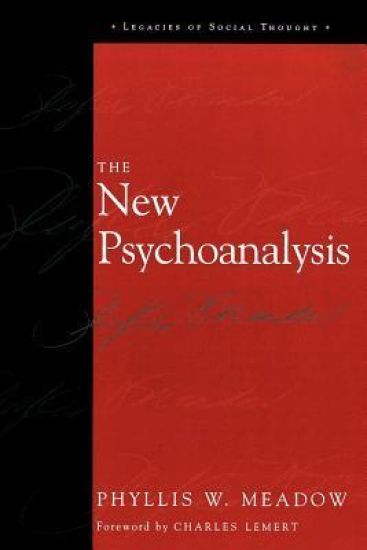
The New Psychoanalysis

The New Psychoanalysis

Phyllis W. Meadow

Rowman Littlefield Publishers
2003
nidottu
The New Psychoanalysis explores and explains important developments in psychoanalytic thought and practice since Freud’s death in 1939. Drawing on the experience of her many years of clinical work with patients, as well as research and teaching in the training institutes she directs, Phyllis W. Meadow offers convincing testimony of the power of the unconscious forces that drive our thinking, feeling, and behaving. She shows how the mind unfolds in the face of tensions native to the unconscious life and how psychoanalysis is applicable to the full range of emotional disorders. This highly accessible book is ideal for the therapist or psychologist, as well as the social theorist or general reader, who is concerned with the hold of aggression on the lives of human beings facing a world still as violent and destructive as it was in Freud’s day. The introduction, by Charles Lemert, provides a challenging essay on the connections between psychoanalytic and social theories.
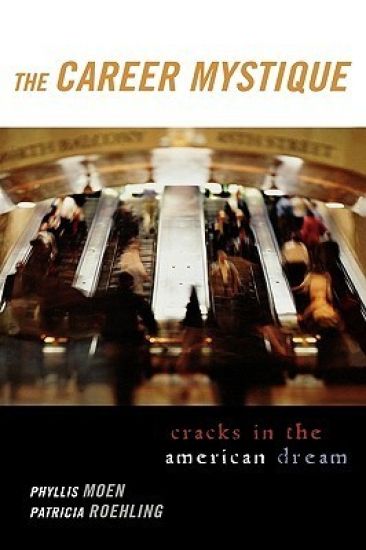
The Career Mystique

The Career Mystique

Phyllis Moen; Patricia Roehling

Rowman Littlefield Publishers
2004
sidottu
The Career Mystique shows that most Americans-men and women-continue to embrace the myth that hard work, long hours, and continuous employment pay off, even though it is out of date and out of place in twenty-first-century America. Phyllis Moen and Patricia Roehling argue that the lock step arrangements around education, work, family, and retirement no longer fit the realities and risks of contemporary living, yet the roles, rules, and regulations spawned by the career mystique remain in place. This books shows that ambiguities and uncertainties about the future abound in boardrooms, in offices, and on factory floors, as Americans face the realities of corporate restructuring, chronic job insecurity, and double demands at work and at home. Moen and Roehling show the career mystique for what it is: a false myth standing in the way of creating new, alternative workplaces and career flexibilities. Based on research funded by the Alfred P. Sloan Foundation and the National Institute on Aging.
The Career Mystique

The Career Mystique

Phyllis Moen; Patricia Roehling

Rowman Littlefield Publishers
2004
nidottu
The Career Mystique shows that most Americans-men and women-continue to embrace the myth that hard work, long hours, and continuous employment pay off, even though it is out of date and out of place in twenty-first-century America. Phyllis Moen and Patricia Roehling argue that the lock step arrangements around education, work, family, and retirement no longer fit the realities and risks of contemporary living, yet the roles, rules, and regulations spawned by the career mystique remain in place. This books shows that ambiguities and uncertainties about the future abound in boardrooms, in offices, and on factory floors, as Americans face the realities of corporate restructuring, chronic job insecurity, and double demands at work and at home. Moen and Roehling show the career mystique for what it is: a false myth standing in the way of creating new, alternative workplaces and career flexibilities. Based on research funded by the Alfred P. Sloan Foundation and the National Institute on Aging.
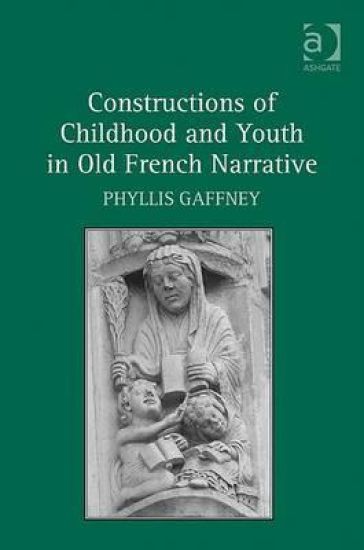
Constructions of Childhood and Youth in Old French Narrative

Constructions of Childhood and Youth in Old French Narrative

Phyllis Gaffney

Ashgate Publishing Limited
2011
sidottu
What do we know of medieval childhood? Were boundaries always clear between childhood and young adulthood? Was medieval childhood gendered? Scholars have been debating such questions over half a century. Can evidence from imaginative literature test the conclusions of historians? Phyllis Gaffney's innovative book reveals contrast and change in the portrayal of childhood and youth by looking at vernacular French narratives composed between 1100 and 1220. Covering over sixty poems from two major genres - epic and romance - she traces a significant evolution. While early epics contain only a few stereotypical images of the child, later verse narratives display a range of arguably timeless motifs, as well as a growing awareness of the special characteristics of youth. Whereas juvenile epic heroes contribute to the adult agenda by displaying precocious strength and wisdom, romance children are on the receiving end, requiring guidance and education. Gaffney also profiles the intriguing phenomenon of enfances poems, singing the youthful deeds of established heroes: these 'prequels' combine epic and romance features in distinctive ways. Approaching the history of childhood and youth through the lens of literary genre, this study shows how imaginative texts can both shape and reflect the historical development and cultural construction of emotional values.
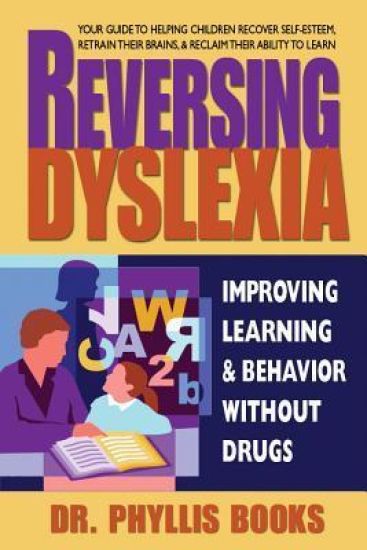
Reversing Dyslexia

Reversing Dyslexia

Phyllis Books

Square One Publishers
2013
nidottu
Most people do not realize that dyslexia is more than just a reading problem. It is often accompanied by social, psychological, and even physical issues that can make many everyday tasks seem unmanageable. Whether you suffer from dyslexia yourself or are the parent of a dyslexic child, dealing with the overall challenges of this learning disorder can be overwhelming. Unfortunately, mainstream treatment focuses mainly on compensatory techniques and workarounds, not a cure, leaving dyslexics feeling hopeless and stuck. In her new book, Dr. Phyllis Books offers a new approach to dyslexia and a convincing reason to hope again. Drawing upon her vast experience and a wealth of scientific research, she declares that dyslexia can actually be reversed in a large number of cases. Reversing Dyslexia begins by redefining dyslexia, offering the most comprehensive view of this problem yet. It describes dyslexia s common symptoms, lists its associated conditions, and details the many theories that surround this issue. It goes on to explain how the brain develops, revealing how an improperly functioning brain may be rewired and repaired through the right combination of therapies, all of which are described in detail. It then shows how important nutrition, exercise, play, and music are to learning ability, and concludes with invaluable advice on how to choose the right school for your dyslexic child. By providing a modern perspective on dyslexia, this book lays the groundwork for significant improvements not only in reading but also in general learning ability, emotional stability, and psychological well-being. Having worked with thousands of children, parents, and educators, Dr. Books has spent over twenty-five years disproving the idea that dyslexia is a permanent condition. ""Reversing Dyslexia "" can teach you how to disprove it as well.
Crossing Mountains

Crossing Mountains

Phyllis Ngai

AltaMira Press,U.S.
2012
sidottu
Collaboration among contemporary Native American communities and local public schools is vital for nurturing Native languages. Although public schools cannot bear the entire burden, Native-language education will remain on the margins without their support. Using case studies of school districts on the Flathead Indian Reservation in Montana, Crossing Mountains provides important insights about integrating Native-language learning into public education. Phyllis Ngai argues that carefully designed and inclusive Native-language programs can benefit communities and students regardless of ethnic identity by providing for language-revitalization and promoting intercultural competence.
Values in Conflict

Values in Conflict

Phyllis O'Callaghan

University Press of America
1997
nidottu
Relatively new and increasingly popular in higher education are interdisciplinary programs that address questions of values. Both these elements characterize Graduate Liberal Studies Programs offering a Master's degree in liberal arts. Because the degree does not confine itself to the canons of a particular discipline and students enter this program with a variety of backgrounds, this book introduces the ways of learning, reading and writing that go on in the various liberal arts (history, philosophy, literature, art, etc.). A student does not read a poem in the same way he or she reads a Medieval Chronicle; why the difference? And how can we in some way synthesize these various approaches to knowledge and bring them all to bear on a subject, an issue, a question? This book tackles these and other challenges in graduate liberal education including the role of technology and the increase in multicultural, interdiscliplinary research, offering essays that discuss these changes with pragmatic recommendations. Contents: Humanities: Reading Theology, John F. Haught; Philosophy as a Mode of Liberal Learning, Jesse Mann; Teaching Literature in a Liberal Studies Program, Michael J. Collins; Seeing Art as Cultural Inquiry, Diane Apostolos-Cappadona; Understanding History, Phyllis O'Callaghan. Science, Technology and Social Science: Science, Technology, and Society, Thomas P. McManus; Understanding Interrelatedness in the Social Sciences, Elizabeth James; Liberal Studies Education in the Information Age, Deborah Everhart; Locating the Self in a Universe of Values: Triangulation, Liberal Studies, and Sociology, William F. McDonald. Values Issues: The Disclipline of Dialogue, Francis Ambrosio; Multiculturalism and American History, Ronald Johnson; The Information Explosion and the Quest for Knowledge, Chester Gillis. Liberal Studies: The Scholar and Students: Research and Liberal Learning, Richard B. Schwartz; The Wisdom of Merlyn, Mary Anne Grant. Index. Contributors.
Montessori Comes to America

Montessori Comes to America

Phyllis Povell

University Press of America
2009
nidottu
What role did women's leadership play in the introduction and revival of the Montessori Method in America? Phyllis Povell explores this question through the contributions of Maria Montessori and Nancy McCormick Rambusch, who brought the Montessori Method to the American educational scene. Introduced to the U. S. in the early 20th century by Montessori herself, the Method lapsed into oblivion after WWI. Thanks to Rambusch, it was reborn after the launching of Sputnik. In Montessori Comes to America, Povell traces the evolution of women's leadership and its influence on the Montessori Method's development. She includes insights from her own formative years, showing how childhood, education and career all shape women into leaders. New research not only illuminates the unique roles of two historic early childhood educators, but also updates the historical record and reveals the human dimension behind one of the most colorful chapters in American educational development.