

Kirjahaku
Etsi kirjoja tekijän nimen, kirjan nimen tai ISBN:n perusteella.
1000 tulosta hakusanalla Quentin Labridy
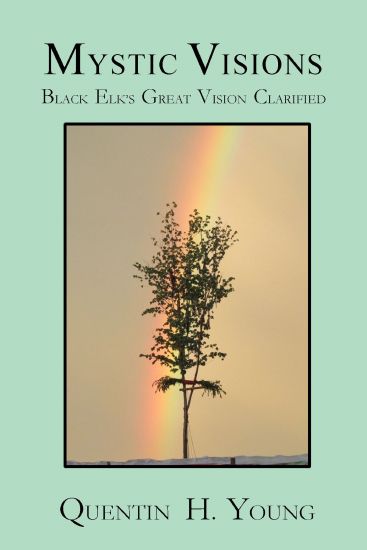
Based on the compelling vision of Nicolas Black Elk as written by John G. Neihardt in Black Elk Speaks, Quentin H. Young has unlocked its messages, as he clarifies each detail of the vision. A vision given for all people of the world then, now, and for the future, and explains why a vision given to a young Lakota boy in 1872 has relevance today.Black Elk Speaks: As Black Elk, the bay horse, the blacks, whites, sorrels and buckskin horses all marched; they came to a cloud shaped like a tepee with a rainbow for its door. When Black Elk looked through the rainbow door, he saw six old men (Grandfathers) sitting inside. The eldest Grandfather spoke to Black Elk in a gentle manner and said; Enter and do not be afraid. As the Grandfather was speaking, all the horses whinnied, showing their support for Black Elk. He entered the lodge and stood in front of the Six Grandfathers. They looked older than men of the earth could be. The eldest Grandfather said; Your Grandfathers are having a gathering, and have sent for you, to instruct you. Black Elk said he knew these were not just old men; they were the powers of the six directions, and he was frightened.
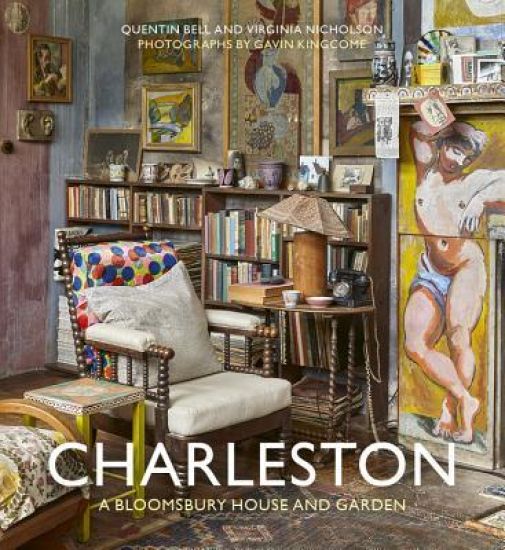
The newly revised and updated Charleston: A Bloomsbury House & Garden is the definitive publication on the Bloomsbury Group's rural outpost in the heart of the Sussex Downs. “It’s absolutely perfect…”, wrote the artist Vanessa Bell when she moved to Charleston in 1916. For fifty years, Vanessa and her fellow painter Duncan Grant lived, loved and worked in this isolated Sussex farmhouse, together transforming the house and garden into an extraordinary work of art and creating a rural retreat for the Bloomsbury group. Now, Vanessa’s son, Quentin Bell, and her granddaughter Virginia Nicholson tell the inside story of their family home, linking it with some of the pioneering cultural figures who spent time there, including Vanessa’s sister Virginia Woolf, the economist Maynard Keynes, the writer Lytton Strachey and the art critic Roger Fry. Taking readers through each room of the house – from Clive Bell's Study, the Dining Room, the Kitchen and the Garden Room, through to individual bedrooms, the Studios and the Library – Quentin Bell relives old memories, including having T.S. Eliot over for a dinner party and staging plays in the Studio, while Virginia Nicholson details the artistic techniques (stencilling, embroidery, painting, sculpture, ceramics and more) used to embellish and enliven the once simple farmhouse. In this refreshed edition of the original 1997 publication, Gavin Kingcombe’s specially commissioned photographs breathe life into the colourful interiors and garden of the Sussex farmhouse, while updated text and captions by Virginia Nicholson capture the evolution of Charleston as it continues to inspire a new generation. For lovers of literature, decorative arts, and all things Bloomsbury, Charleston: A Bloomsbury House & Garden offers a window onto a truly unique creative hub.
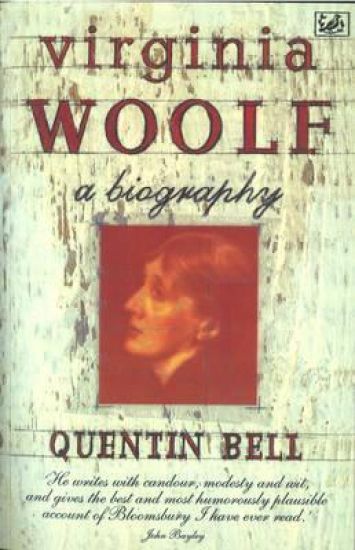
As the nephew of Virginia Woolf, Quentin Bell enjoyed an initimacy with his subject granted to few biographers. Compelling, moving and entertaining, Quentin Bell's biography was awarded the James Tait Black Memorial Prize and the Duff Cooper Memorial Prize.
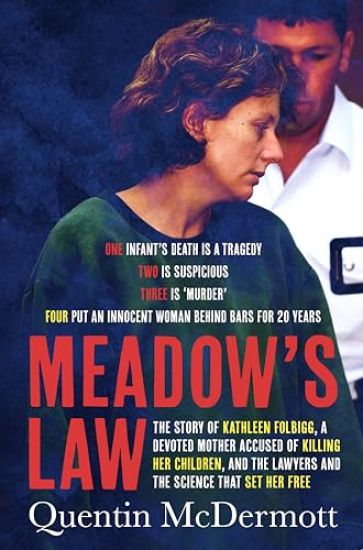
The remarkable story of a battle between science and the law, and a mother's fight for justice In 2003, Kathleen Folbigg was found guilty of smothering her four young children to death, one by one. Medical experts told her trial that they had never come across a family like hers, where three or more infants had died from natural causes. Extracts from diaries she had written were judged to be virtual admissions of guilt, and Folbigg was sentenced to 40 years in jail. But did she do it?This is a gripping and meticulously researched account of one of Australia's most infamous criminal cases, written by investigative journalist Quentin McDermott, whose groundbreaking work with ABC's Australian Story helped trigger a push by scientists to uncover the genetic cause of two of the children's deaths. It is also the story of how dedicated teams of lawyers, friends and supporters fought to achieve Kathleen Folbigg's eventual pardon, release and acquittal after 20 years behind bars.Meadow's Law is a must-read for anyone interested in true crime, justice, science and the power of investigative journalism.
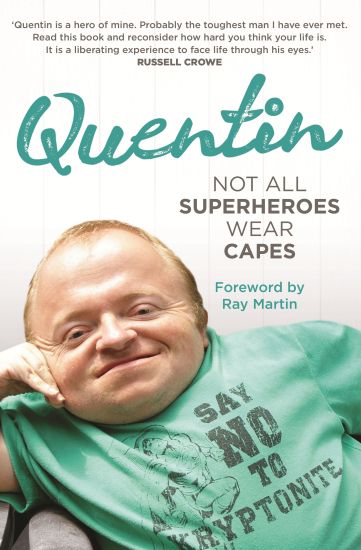
When he was a kid, Quentin Kenihan loved Superman. Ironic, really. Quentin didn't need kryptonite to reveal his weakness - born with a rare bone disorder, osteogenesis imperfecta, his bones broke all on their own.When Quentin was seven, Mike Willesee made a documentary about him. Australians fell in love with his wit, and never-say-die attitude. Over the years he grew up before our eyes. But there was a dark side to his life. The true story was never told ... until now. A story of abandonment, drug addiction, dark days and thoughts of suicide. Battling through it all, Quentin's resilience is inspiring.Quentin is now determined to live life the best he can. Just turned 41, he is a filmmaker, stand-up comedian, radio host, actor and film critic; he's hung out with Angelina, accidentally ripped Jennifer Lopez's dress, talked sex with Jean-Claude Van Damme, appeared in MAD MAX and interviewed Julia Gillard, all the while showing that living in a wheelchair doesn't mean staying still.This is an unforgettable, brutally honest, at times heartbreaking memoir. Quentin Kenihan is living proof that superheroes don't need capes, just the right attitude!'Quentin is a hero of mine. Probably the toughest man I have ever met. Read this book and reconsider how hard you think your life is. It is a liberating experience to face life through his eyes.' - RUSSELL CROWE
This work offers insight into the part played by superstition in British history - the omens and beliefs that have guided kings and shaped the course of battles. Fact, myth and slapstick have all played their part in the story of these islands, and popular versions of events sometimes differ from those found in the standard history books. This book contains over 400 current and continuing customs, over 300 things to see, and over 150 haunted sites. Each of the customs and celebrations included is given its appropriate day, from New Year's Day to Hogmanay, from Shetland to the Channel Islands. When relevant, a story or event is included.

The Other Machiavelli is a unique compendium of the Florentine political thinker's writings on liberty and self-government. The selections, drawn from the Discourses and Machiavelli's other 'republican' writings, are conveniently organized on the basis of subject matter. As such, The Other Machiavelli constitutes a much-needed corrective and companion to 'The Prince.'

Storied pilot Homer Stockert, born in Churubusco, Indiana, won air races in Fort Wayne in the 1920s, earning him legendary fame while only in his twenties. In 1933, he established the Stockert Flying Service at Bendix Field, South Bend, Indiana, an airport built by entrepreneur Vincent Bendix. After serving as a test pilot of the P-47 Thunderbolt fighter aircraft in Evansville, Indiana, during World War II, Stockert returned to Bendix Field to expand his flying service with his business-savvy wife, Dora. Stockert led a successful life of leadership in private aviation until his death in 1971.
"In many ways the mind of the Victorian age was absorbed by invention and innovation. A passion for technology and learning resulted in a period not only of discovery but of practical application of the sciences. This volume examines this age of invention and the evolution of fields such as metallurgy, automotive engineering, aerodynamics and industrial arts"--Provided by publisher.
Though Heinz Ketchup is one of the most recognized corporate symbols in the world, few people know anything at all about the founder of this global brand, H. J. Heinz. Whereas industrial giants Rockefeller, Carnegie, Westinghouse, and Mellon are household names, Heinz has slipped into obscurity. Yet during a time of great transfers of wealth brought about in part by these famous robber barons, Heinz was well known for his humane treatment of his employees, customers, and suppliers. At the same time Heinz built a commercial empire by his use of industrialized food processing before Henry Ford. This book includes over forty photographs many of which are being published for the first time. Quentin R. Skrabec, Jr., lives in Maumee, Ohio.

Henry Clay Frick, reviled in his own time, infamous in ours, was blamed for the Johnstown Flood (which killed 2,200 people) as well as the violent Homestead Strike of 1892, and survived an assassination attempt, yet at the same time was an ardent philanthropist, giving more than $100 million during his lifetime and in his will, while insisting on anonymity. This biography explores the contradictions in this great industrialist's nature and avoids the extremes of both hagiography and denunciation.
In the 1890s, the Carnegie Veterans Association began as a group of boyhood friends and older Andrew Carnegie steel partners united to share business ideas, but it evolved into a powerful secretive network in American business circles. By 1925, these Carnegie lieutenants controlled more than 60 percent of the country's industrial assets. Haunted by their past with Carnegie Steel, they demanded a new ethical relationship with labor and adopted a philanthropic philosophy of paternal capitalism, building libraries, churches, schools, and hospitals. Ultimately, their experiments in industrial democracy and "progressive industrialism" failed, but their efforts formed the root of future cooperative management and employee participation. This chronicle of the evolution and legacy of this influential association offers a new, more complex perspective on Carnegie and demonstrates how he and his lieutenants helped to shape America's view of capitalism.
The Green Vision of Henry Ford and George Washington Carver
Quentin R. Skrabec
McFarland Co Inc
2013
pokkari
Henry Ford and George Washington Carver had a unique friendship and a shared vision. This book details their paths to "green" manufacturing and the start of the chemurgic movement in America. It covers a number of little known projects such as their efforts to use ethanol as a national fuel, the use of soybeans for plastic production, and the use of waterpower for factories. This study of their collaboration shows how capitalism can drive the green movement and expand American industry.
The rubber industry was born in bankruptcy and built through bankruptcies. As this history details, many of the great rubber barons--Charles Goodyear, Harvey Firestone, B.F. Goodrich, F.A. Seiberling--found themselves or their companies in bankruptcy courts. Fortunately, the industry has always proven as elastic as its product. From the early search for an American location to process the rubber of the tropics to the collapse of the industry, this is the story of rubber in America.
Any biography of Henry Clay's 46 year political career quickly becomes entangled with his monumental, though youthful, political leadership of the War Hawks in urging the Madison Administration to arm the United States for war with Great Britain. He continued to advise in the war's progress and ended by being one of the five distinguished Americans to treat for peace with a difficult team of mediocre British envoys. There has been no detailed treatment of his major role in this early American war until this present work.
American business has always had deep roots in community. For over a century, the country looked to philanthropic industrialists to finance hospitals, parks, libraries, civic programs, community welfare and disaster aid. Worker-centered capitalists saw the workplace as an extension of the community and poured millions into schools, job training and adult education. Often criticized as welfare capitalism, this system was unique in the world. Lesser known capitalists like Peter Cooper and George Westinghouse led the movement in the mid- to late 1800s. Westinghouse, in particular, focused on good wages and benefits. Robber barons like George Pullman and Andrew Carnegie would later succeed in corrupting the higher benefits of worker-centered capitalism. This is the story of those accomplished Americans who sought to balance the accumulation of wealth with communal responsibility.
The history of aluminum: metallurgy, engineering, global business and politics--and the advance of civilization itself. The earth's most abundant metal, aluminum remained largely inaccessible until after the Industrial Revolution. A precious commodity in 1850s, it later became a strategic resource: while steel won World War I, aluminum won World War II. A generation later, it would make space travel possible and the 1972 Pioneer spacecraft would carry a message from mankind to extraterrestrial life, engraved on an aluminum plate. Today aluminum, along with oil, is the natural resource driving geopolitics, and China has taken the lead in manufacture.