Kirjahaku
Etsi kirjoja tekijän nimen, kirjan nimen tai ISBN:n perusteella.
1000 tulosta hakusanalla Rodney L McCulloh
Health and Risk Communication provides a critical and comprehensive overview of the core issues surrounding health and risk communication from the perspective of applied linguistics. It outlines the ways applied linguistics differs from other methods of understanding health and risk communication, assesses the benefits and limitations of the approaches used by different scholars in the field, and offers an innovative framework for consolidating past research and charting new directions.Utilizing data from clinical interactions and everyday life, this book addresses a number of crucial questions including: How are the everyday actions we take around health constructed and constrained through discourse? What is the role of texts in influencing health behaviour, and how are these texts put together and interpreted by readers? How are actions and identities around health and risk negotiated in situated social interactions, and what are the factors that influence these negotiations? How will new technologies like genetic screening influence the way we communicate about health? How does communication about health and risk help create communities and institutions and reflect and reproduce broader ideologies and patterns of power and inequality within societies?Health and Risk Communication: An Applied Linguistic Perspective is essential reading for advanced students and researchers studying and working in this area.

NGOs have proliferated in number and become increasingly influential players in world politics in the past three decades. From the 1970s, with the access of social movements and private NGOs to local and international institutions, NGOs have enjoyed an opening to bring impact global policy debates. Yet NGOs find themselves highly constrained in bringing their material and epistemic resources to bear in the security arena where their activities normally must be authorized by states, or international organizations acting with authority delegated from states. They also find their activities, particularly in the security arena come frequently under attack as lacking accountability or lacking legitimacy, as NGOs are self-appointed private actors, often representing only themselves, they are seen by many as self-appointed meddlers in transnational affairs,This book provides a comprehensive and accessible analysis whether, or the extent to which, NGOs can contribute as private actors to authoritative governance outcomes in the security realm, and thereby help mitigate armed violence by plugging governance gaps in this arena that state actors, or international governmental organizations (IGOs) either neglect, or can better address with NGO assistance. This book examines the current and future issues surrounding this objective in four sections: (i) a practitioner’s perspective of the potentials of conflict governance NGOs, (ii) global civil society and legitimation of conflict governance NGO activities, (iii) conflict governance NGOs as norm entrepreneurs and norm diffusion in global governance (iv) conflict governance NGOs in action.
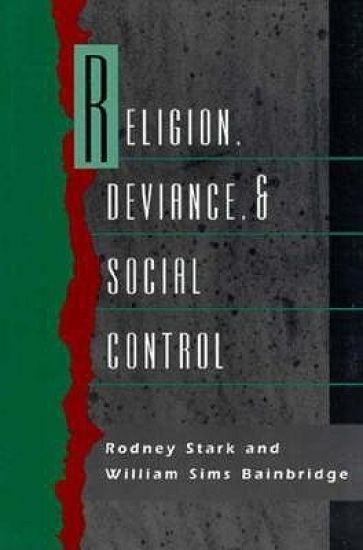
Does religion have the power to regulate human behavior? If so, under what conditions can it prevent crime, delinquency, suicide, alcoholism, drug abuse, or joining cults? Despite the fact that ordinary citizens assume religion deters deviant behavior, there has been little systematic scientific research on these crucial questions. This book is the first comprehensive analysis, drawing on a wide range of historical and contemporary data, and written in a style that will appeal to readers from many intellectual backgrounds.
This book deals with the rapid changes in contemporary molecular biology, particularly genome sciences, and the manner in which they can be understood through the lens of political economy. Specifically, the work investigates the case of the United States-led Genome Project (HGP), in order to show that even large-scale basic science is closely bound up in the progression of capitalist social relations. The work has, in part, been motivated by the lack of rigorous analysis of the HGP. Most the existing literature tends to present either a chronological review of events surrounding the HGP or describe it thematically. In contrast, this book contributes to a needed discussion concerning the 'why and how' of the HGP emergence. It elucidates the features within capitalist social relations which have simultaneously enable the HGP and ensure its amenability to systemic demands. The work's most compelling elements are both historical and analytical. Historically, it places the HGP within the context of wider political, economic and social issues. Related to this, it puts forward an analytical, explanatory understanding of the project's emergence, making it a valuable tool for both political economists, science & society theorists, and even bioethicists.
Perspectives on Projects
Rodney J. Turner; Martina Huemann; Frank T. Anbari; Christophe N. Bredillet
Routledge
2010
sidottu
Modern project management had its genesis in the field of operations research in the late 1940s, but today it is a much more diverse subject. It has evolved and developed a much wider range of methods, techniques, and skills that the project manager can draw upon.Not all these skills are relevant to every project, but an assortment of them will be relevant to most. This book aims to describe for students, researchers and managers the full range of skills that project managers can use to develop their methodologies.The authors group the skills into nine perspectives, representing nine schools of project management research and theory. By attaching a metaphor to each of these perspectives, students, researchers and managers are better able to understand each approach and decide whether it is best suited to the development of a strategy for managing their project. Perspectives on Projects builds upon the various theoretical orientations that the field of project management has developed. Featuring several case studies, drawn from a variety of settings, to illustrate how the different schools can provide different perspectives on projects, this book is an ideal text for anyone involved in project management.
Perspectives on Projects
Rodney J. Turner; Martina Huemann; Frank T. Anbari; Christophe N. Bredillet
Routledge
2010
nidottu
Modern project management had its genesis in the field of operations research in the late 1940s, but today it is a much more diverse subject. It has evolved and developed a much wider range of methods, techniques, and skills that the project manager can draw upon.Not all these skills are relevant to every project, but an assortment of them will be relevant to most. This book aims to describe for students, researchers and managers the full range of skills that project managers can use to develop their methodologies.The authors group the skills into nine perspectives, representing nine schools of project management research and theory. By attaching a metaphor to each of these perspectives, students, researchers and managers are better able to understand each approach and decide whether it is best suited to the development of a strategy for managing their project. Perspectives on Projects builds upon the various theoretical orientations that the field of project management has developed. Featuring several case studies, drawn from a variety of settings, to illustrate how the different schools can provide different perspectives on projects, this book is an ideal text for anyone involved in project management.
A Philanthropic Covenant with Black America
Rodney Jackson; Tavis Smiley; Emmett D. Carson
John Wiley Sons Inc
2009
sidottu
A Philanthropic Covenant will feature eight essays from several prominent African American grantmakers, scholars, activists and clergy that will examine critical elements of modern philanthropy and how they affect Black communities for good and for ill. Each chapter will include statistical documentation of the issues, strategic recommendations to improve the quality of Black life, and examples of outstanding models already being practiced throughout the country. A Philanthropic Covenant is intended to inform individuals, grantors, religious organizations, fundraisers and youth how philanthropy--time, talent and treasure--can be strategically mobilized to assist Black communities in dealing more effectively with the issues outlined in The Covenant with Black America. Throughout the book, emphasis will be placed on the role, responsibilities and potential of African Americans and African-American philanthropy, in particular, to affect positive change in their own communities.
This first edition text developed and evolved to meet three pedagogical goals we deemed essential for those studying allied health and are pre-professional. The use of microbiology case studies were modified to maintain their value as tools that result in critical thinking and knowledge retention while providing a more realistic context for preparing future health care professionals. Consequently, the text has real life, personally-oriented microbiology cases appropriate for those in nursing, pharmacy, and other allied health disciplines (pre-med, pre-PA, CLS, etc.). This format presents material as a story about the patient as well as information regarding their family circumstances, personal characteristics, and individual motivations.
Essentials of Child Welfare
Rodney A. Ellis; Catherine N. Dulmus; John S. Wodarski
John Wiley Sons Inc
2003
nidottu
Reach children and families and help them navigate the child welfare system Case planning is one of the fundamental steps in working with dependent children, yet it is also one of the most challenging. Essentials of Child Welfare presents the key information clinical social workers, child advocates, family law attorneys, and other human services personnel need to work successfully with children and families in the child welfare system. Essentials of Child Welfare is packed with step-by-step guidelines for intervening proactively with foster care children and their caretakers. Techniques are presented for handling a number of related topics, including attachment issues, substance abuse, sexual abuse (victim and perpetrator), suicidal ideation, eating disorders, learning disabilities, juvenile delinquency, domestic abuse, and many more. As part of the Essentials of Social Work Practice series, this book offers a concise yet thorough overview of child welfare, numerous tips for best practices, and a prioritized assembly of all the information and techniques that must be at one’s fingertips to practice knowledgeably, effectively, and ethically. Each concise chapter features numerous callout boxes highlighting key concepts, bulleted points, and extensive illustrative material, as well as "Test Yourself" questions that help you gauge and reinforce your grasp of the information covered.
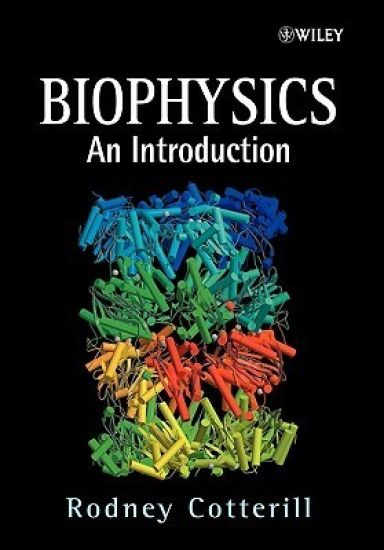
Biophysics is an evolving, multidisciplinary subject which applies physics to biological systems and promotes an understanding of their physical properties and behaviour. Biophysics: An Introduction, is a concise balanced introduction to this subject. Written in an accessible and readable style, the book takes a fresh, modern approach with the author successfully combining key concepts and theory with relevant applications and examples drawn from the field as a whole. Beginning with a brief introduction to the origins of biophysics, the book takes the reader through successive levels of complexity, from atoms to molecules, structures, systems and ultimately to the behaviour of organisms. The book also includes extensive coverage of biopolymers, biomembranes, biological energy, and nervous systems. The text not only explores basic ideas, but also discusses recent developments, such as protein folding, DNA/RNA conformations, molecular motors, optical tweezers and the biological origins of consciousness and intelligence. Biophysics: An Introduction * Is a carefully structured introduction to biological and medical physics * Provides exercises at the end of each chapter to encourage student understanding Assuming little biological or medical knowledge, this book is invaluable to undergraduate students in physics, biophysics and medical physics. The book is also useful for graduate students and researchers looking for a broad introduction to the subject.
Alice has a particular set of skills. Catching murderers is one of them. 97-year-old Alice Atkinson should be comfortably living out her days at the Silvermoon Retirement Village, winning money off her friends at card games. But a lifetime of living in the grey area between right and wrong finds her restless. Then during the annual poker tournament her friend drops dead. No one thinks anything of it, after all death isn't unheard of at a retirement village. But Alice is convinced there's more to it. Dusting off her old skills, she enlists the help of Vanessa a young staff member, to be somewhat reluctant sidekick. Alice is determined to find out the truth of why her friend died and who did it. She's faced con artists, thieves, and murderers. But that was nothing compared to what she's up against now. If you like your mysteries clean, funny, and cozy, then check out the Silvermoon Retirement Village series, where age means nothing when it comes to investigating murder
In the 1920s and ’30s Art Deco influenced everything from art and architecture, interiors and furnishings, automobiles and boats, to the small personal objects that are part of everyday life. The items in this thematically structured book demonstrate Deco style at its most alluring. They were then the height of fashion, and are highly prized collectibles today. They demonstrate an era of close cooperation between designers and manufacturers, who aimed to produce goods that were not only fit for purpose, but also well made and beautiful. This informative showcase of portable classics of avant-garde modern design from Britain, Europe (particularly France) and the United States will appeal both to collectors and to anyone with an interest in Deco style and the history of fashion, taste and design. It is the first book to bring together the small collectibles – from cigarette cases and lighters to powder compacts and cosmetics accessories, watches, jewelry, even cameras – that demonstrate the style, glamour and sophistication of the Jazz Age.
How religious are Americans these days? How many still believe in God, in Biblical miracles, in heaven and hell? Do people pray? How much money is being given to churches, by Episcopalians, Presbyterians, Roman Catholics, Lutherans, and other groups? American Piety, the first of a three-volume study of religious commitment, answers these and a host of other questions about the contemporary religious scene. Particularly startling are the contrasts in beliefs, practices, and experiences revealed among the eleven major Christian denominations whose membership is compared.
The Future of Religion
Rodney Stark; William Sims Bainbridge
University of California Press
1986
pokkari
Religion is alive and well in the modern world, and the social-scientific study of religion is undergoing a renaissance. For much of this century, respected social theorists predicted the death of religion as inevitable consequence of science, education, and modern economics. But they were wrong. Stark and Bainbridge set out to explain the survival of religion. Using information derived from numerous surveys, censuses, historical case studies, and ethnographic field expeditions, they chart the full sweep of contemporary religion from the traditional denominations to the most fervent cults. This wealth of information is located within a coherent theoretical framework that examines religion as a social response to human needs, both the general needs shared by all and the desires specific to those who are denied the economic rewards or prestige enjoyed by the privileged. By explaining the forms taken by religions today, Stark and Bainbridge allow us to understand its persistence in a secular age and its prospects for the future.
Finally, social scientists have begun to attempt to understand religious behavior rather than to discredit it as irrational, ignorant, or foolish--and Rodney Stark and Roger Finke have played a major role in this new approach. Acknowledging that science cannot assess the supernatural side of religion (and therefore should not claim to do so), Stark and Finke analyze the observable, human side of faith. In clear and engaging prose, the authors combine explicit theorizing with animated discussions as they move from considering the religiousness of individuals to the dynamics of religious groups and then to the religious workings of entire societies as religious groups contend for support. The result is a comprehensive new paradigm for the social-scientific study of religion.