This anthology is a compilation of the 13 books by Rodney James White from Double Agents 2 + 2 = 0 to Arctic, Arctic, Arctic it's cold, cold, cold at the North Pole It brings us to the retirement of the MI5 Agents, Bill Parsons and Jack Delaney - or does it?However, Rebecca James, the Australian from Sydney works on with MI5.I do hope you have enjoyed the stories.Rodney James White was born in Perth, Western Australia on September 11, (9/11) 1947. He attended Manning Primary School and Wesley College in South Perth. He obtained a B.D.Sc. from the University of Western Australia in 1970 and first practised dentistry in the Pilbara of Western Australia as a government dentist under a WA government dental cadetship at the Tom Price Hospital for three years. He then worked for 43 years in private practice in Manning, a suburb of Perth, and is now retired. He married his wife Gail in Melbourne, Australia in 1970. They have three children, Julia, Brendan and Robert, and five grandchildren.
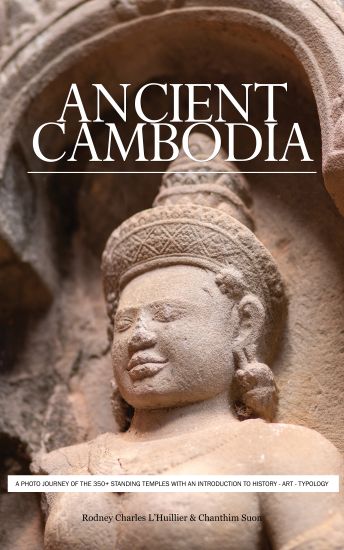
A journey of the hidden ancient wonders of Cambodia from the prehistoric through to the 19th century, with full-color photos of over 350+ sites including every standing temple in Cambodia from the Ancient Funan, Chenla, and Angkorian eras. Including an introduction to History, Temple Typology & Construction, and, an illustrated introduction to the Evolution of Khmer Art over 2000 years.Rod and Chanthim's journey across Cambodia is one of passion, adventure, and discovery. Over the course of 6 years, they traveled over 30,000 kilometers on small motorbikes, visiting over 1,500 archaeological and heritage sites. Along the way, they collected over 100,000 photographs of well-known sites along with the remote and unknown wonders still hidden deep within the clutches of the Cambodian jungle.This book is a collection of their photographs and research providing an informative visual feast that will transport you to the ancient Hindu and Buddhist temples of Angkor and well beyond. Through clear photos, the 350+ standing temples of ancient Cambodia are introduced (sites that are mostly whole, structure above the lintel, or otherwise of interest) province by province with maps.The book also features over 150 illustrations to introduce temple typology and features, gods, guardians, devata through time, diverse artifacts, and, the evolution of Khmer art over the chronological style periods: Prehistory6th c - Phnom Da7th c - Thala Borivat/Early Sambor7th c - Sambor Prei Kuk, Prasat Andet, Prei Khmeng8th c - Kampong Preah9th c - Kulen, Preah Ko10th c - Bakheng, Koh Ker, Pre Rup, Banteay Srei11th c - Khleang & Baphuon12th c - Angkor Wat12th-13th c - Bayon13th-15th c - Post-Bayon/Late Angkor15th-19th c - Post-AngkorianWhether you are a student of history, a seasoned traveler, or simply an armchair adventurer, this book is a must-have for anyone who has ever dreamed of exploring and studying ancient Cambodia.
A journey of the hidden ancient wonders of Cambodia from the prehistoric through to the 19th century, with full-color photos of over 350+ sites including every standing temple in Cambodia from the Ancient Funan, Chenla, and Angkorian eras. Including an introduction to History, Temple Typology & Construction, and, an illustrated introduction to the Evolution of Khmer Art over 2000 years.Rod and Chanthim's journey across Cambodia is one of passion, adventure, and discovery. Over the course of 6 years, they traveled over 30,000 kilometers on small motorbikes, visiting over 1,500 archaeological and heritage sites. Along the way, they collected over 100,000 photographs of well-known sites along with the remote and unknown wonders still hidden deep within the clutches of the Cambodian jungle.This book is a collection of their photographs and research providing an informative visual feast that will transport you to the ancient Hindu and Buddhist temples of Angkor and well beyond. Well over 1000 select photos are used to introduce the 350+ standing temples of ancient Cambodia are introduced (sites that are mostly whole, structure above the lintel, or otherwise of interest) province by province with maps.The book also features over 150 illustrations to introduce temple typology and features, gods, guardians, devata through time, diverse artifacts, and, the evolution of Khmer art over the chronological style periods: Prehistory; 6th c - Phnom Da; 7th c - Thala Borivat/Early Sambor; 7th c - Sambor Prei Kuk, Prasat Andet, Prei Khmeng; 8th c - Kampong Preah; 9th c - Kulen, Preah Ko; 10th c - Bakheng, Koh Ker, Pre Rup, Banteay Srei; 11th c - Khleang & Baphuon; 12th c - Angkor Wat; 12th-13th c - Bayon; 13th-15th c - Post-Bayon/Late Angkor; and 15th-19th c - Post-Angkorian.Whether you are a student of history, a seasoned traveler, or simply an armchair adventurer, this book is a must-have for anyone who has ever dreamed of exploring and studying ancient Cambodia.
Rodney resides with his wife Elizabeth and Jenna, his youngest daughter, in Wollongong NSW, Australia. He is at the time of publishing this book, a Nidan (second dan black belt) with GKR Karate. Apart from his teaching karate classes, he also enjoys writing and public speaking. He also plays guitar, but only for his own personal enjoyment. No ambitions there, though those few people who have caught him singing say he's not bad at it. This book contains some of the stories of his life so far, about at the half way point. All is not revealed of course, simply because some is just too hard to write about...yet. Time is a great healer. Does this mean, there will be another book - 'But, He was with me...the sequel'. Rodney's answer is, "maybe, we will just have to wait and see." This book is firstly for family and friends. "It is my legacy, my gift to my family, Sonja, Heidi and Jenna, and especially my grand children - Shanelle, Sharmayne and Ben. They have always loved hearing my stories from my childhood, and I have loved telling them - though some of them in this book are not really child appropriate and so they haven't been told." There is only one point to the book though - He (referring to God) was always with me. Rodney read a quote recently - "Success has many fathers, and failure is an orphan". This has been, in Rodney's experience, a sad but true story for many he has known along the way. It will never be so for Rodney. You see, he has a heavenly Father who has never left him and there is great confidence that He never will. As a child of God, Rodney will never be an orphan and therefore, will never fail. - But, He was with me.
This book presents Dr Syme's views on the plight of people with dementia, and his suggestion for further legislative change. The book's title reflects a life that has been long, and where all that was possible has been achieved - and so is in a sense 'complete'. There follows consideration of the problems that may follow, and what may be a reasonable response.
When aborigines murdered a sailor from the Dutch ship Duyfken on the west coast of Cape York in 1606, it was the beginning of Australia's 'Race War' Within weeks, another 9 Duyfken sailors were murdered by aborigines near Cape Keerweer. This was Australia's first recorded massacre.The contents of this book portray history as it really happened, rather than the many fictionalised accounts that academics have inserted in recent years.During my 10 years of research into original documentation held in libraries and archives, it became very obvious that many of them, particularly anthropologists and sociologists, were promoting what they personally wanted the public to believe, rather than write an accurate historical record. In effect they have included a mass of fiction into the history books, that is now taught in schools and universities as fact.In the process they effectively covered up the aboriginal invasion of Australia and extermination of the "Original Indigenous Australians" Papuans] less than a thousand years ago.Many of the lies and deceptions published by academics are also exposed and where possible, copies of the hand written reports of last century are included as evidence of academic deceit and naivety.This narrative commences with the Aboriginal Invasion of Australia and exposes the "False Aboriginality" of the 40,000 year myth.It progresses through the violent confrontations of the native tribes and the massacres of hundreds of Europeans, including men, women and children who were cast ashore from the numerous shipwrecks along this hostile coastline of the Cape York Peninsula and the Torres Strait Islands. They were slaughtered by club and spear and in many cases, beheaded.As you journey through these pages you will learn of the incredible settlement of Somerset, at Cape York, established as a "Harbour of Refuge" where shipwrecked castaways found sanctuary from the constant massacres perpetrated by "Islanders and Aborigines at Cape York".Read of the unbelievable Jardine Cattle Drive, in which 10 men fought against all odds, to drive 250 head of cattle over a thousand miles to Somerset. In spite of the savage aboriginal attacks, they made it.Continuing through the 1800's discover the River of Gold Palmer River] where men died from starvation, disease and savage attacks by aborigines. This is followed by the traumatic death of "Lizzie Watson" who fought off aboriginal spears on lonely Lizard Island, only to die of thirst with her baby.When the Quetta sank in 1890 at Cape York, 133 people drowned. Many of the survivors owed their lives to the quick actions of Frank Jardine of Somerset.What of the Jardine Silver Treasure found embedded in a coral reef in 1891? Was it really buried with the Jardine Journals on an Indonesian Island?This is the history that many authors were afraid to write for fear of being branded as racist by a biased and prejudicial press.
Holiness and hedonism. Lonesomeness and community. Tradition and progress. Highly regarded commentator on Christianity and popular culture Rodney Clapp argues that these great tensions form the bedrock of American history and our current culture. Utilizing the life and music of Johnny Cash to illustrate these and other American contradictions, he probes these phenomena with sharp theological questions--seeking the language and knowledge that will enable us to reach across political and cultural divides and encourage a more graceful and constructive negotiation of current contradictions.
Rodney Foster's The Real Dad's Army is the true-life account of Britain's Home Guard and now the subject of the new film Dad's Army (Feb 2016).'Who do you think you are kidding Mr Hitler?' Not Colonel Rodney Foster, a platoon commander of the Kent Home Guard. Dad's Army, the iconic comedy series is as well-known today as it was forty years ago. But the reality of life in the Home Guard was often very different. Here, for the first time, is the full inside story of the Home Guard, the ragtag volunteer army that defended the coast of Britain from German invasion during the Second World War. Colonel Rodney Foster, who retired to Hythe in the south of England after a military career in British India, joined the Home Guard in 1940 and kept a diary every day - a highly illegal act at the time - and in it meticulously chronicled his service in the real Dad's Army. He records with a unique wit and wisdom the everyday details of family life during the war: the domestic routine dogged by air raid warnings, the antics of soldiers stationed nearby taking every chance to improve their lot, the quiet strength of a small community faced with great adversity.'It's magical' Dan Snow, The One Show'If you lament the demise of the stiff upper lip, this is the book for you' Dominic Sandbrook,Evening StandardShaun Sewell is an avid antique dealer and social historian. Shaun lives and works in Northumberland. Rodney Foster was born in India in 1882 and spent his career in the Indian Army. In his retirement he went with his wife and daughter to live in Saltwood, near Hythe on the Kent coastline. Here in 1940 he enrolled in the Home Guard. He died in 1962.
This grand tour of First Amendment law underlines the intimate connection between free expression and democratic values as it leads us through the most treacherous and emotionally charged cases in American jurisprudence. "Intellectually venturesome. . . ."--The New York Times Book Review.
The idea that Christianity started as a clandestine movement among the poor is a widely accepted notion. Yet it is one of many myths that must be discarded if we are to understand just how a tiny messianic movement on the edge of the Roman Empire became the dominant faith of Western civilization. In a fast-paced, highly readable book that addresses beliefs as well as historical facts, Rodney Stark brings a sociologist's perspective to bear on the puzzle behind the success of early Christianity. He comes equipped not only with the logic and methods of social science but also with insights gathered firsthand into why people convert and how new religious groups recruit members. He digs deep into the historical evidence on many issues--such as the social background of converts, the mission to the Jews, the status of women in the church, the role of martyrdom--to provide a vivid and unconventional account of early Christianity. The author plots the most plausible curve of Christian growth from the year 40 to 300. By the time of Constantine, Christianity had become a considerable force, with growth patterns very similar to those of modern-day successful religious movements. An unusual number of Christian converts, for example, came from the educated, cosmopolitan classes. Because it offered a new perspective on familiar concepts and was not linked to ethnicity, Christianity had a large following among persons seeking to assimilate into the dominant culture, mainly Hellenized Jews. The oversupply of women in Christian communities--due partly to the respect and protection they received--led to intermarriages with pagans, hence more conversions, and to a high fertility rate. Stark points out, too, the role played by selflessness and faith. Amidst the epidemics, fires, and other disasters that beleaguered Greco-Roman cities, Christian communities were a stronghold of mutual aid, which resulted in a survival rate far greater than that of the pagans. In the meantime, voluntary martyrdom, especially a generation after the death of Christ, reinforced the commitment of the Christian rank and file. What Stark ultimately offers is a multifaceted portrait of early Christianity, one that appeals to practical reasoning, historical curiosity, and personal reflection.
Western history would be unrecognizable had it not been for people who believed in One True God. There would have been wars, but no religious wars. There would have been moral codes, but no Commandments. Had the Jews been polytheists, they would today be only another barely remembered people, less important, but just as extinct as the Babylonians. Had Christians presented Jesus to the Greco-Roman world as "another" God, their faith would long since have gone the way of Mithraism. And surely Islam would never have made it out of the desert had Muhammad not removed Allah from the context of Arab paganism and proclaimed him as the only God. The three great monotheisms changed everything. With his customary clarity and vigor, Rodney Stark explains how and why monotheism has such immense power both to unite and to divide. Why and how did Jews, Christians, and Muslims missionize, and when and why did their efforts falter? Why did both Christianity and Islam suddenly become less tolerant of Jews late in the eleventh century, prompting outbursts of mass murder? Why were the Jewish massacres by Christians concentrated in the cities along the Rhine River, and why did the pogroms by Muslims take place mainly in Granada? How could the Jews persist so long as a minority faith, able to withstand intense pressures to convert? Why did they sometimes assimilate? In the final chapter, Stark also examines the American experience to show that it is possible for committed monotheists to sustain norms of civility toward one another. A sweeping social history of religion, One True God shows how the great monotheisms shaped the past and created the modern world.
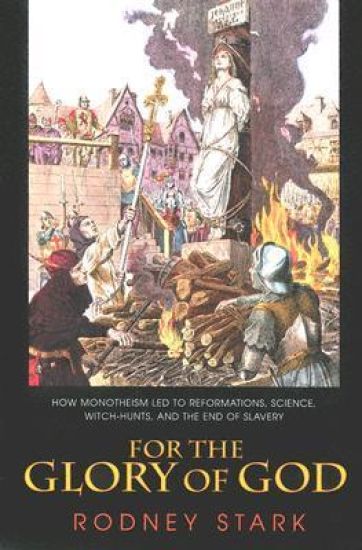
Rodney Stark's provocative new book argues that, whether we like it or not, people acting for the glory of God have formed our modern culture. Continuing his project of identifying the widespread consequences of monotheism, Stark shows that the Christian conception of God resulted--almost inevitably and for the same reasons--in the Protestant Reformation, the rise of modern science, the European witch-hunts, and the Western abolition of slavery. In the process, he explains why Christian and Islamic images of God yielded such different cultural results, leading Christians but not Muslims to foster science, burn "witches," and denounce slavery. With his usual clarity and skepticism toward the received wisdom, Stark finds the origins of these disparate phenomena within monotheistic religious organizations. Endemic in such organizations are pressures to maintain religious intensity, which lead to intense conflicts and schisms that have far-reaching social results. Along the way, Stark debunks many commonly accepted ideas. He interprets the sixteenth-century flowering of science not as a sudden revolution that burst religious barriers, but as the normal, gradual, and direct outgrowth of medieval theology. He also shows that the very ideas about God that sustained the rise of science led also to intense witch-hunting by otherwise clear-headed Europeans, including some celebrated scientists. This conception of God likewise yielded the Christian denunciation of slavery as an abomination--and some of the fiercest witch-hunters were devoted participants in successful abolitionist movements on both sides of the Atlantic. For the Glory of God is an engrossing narrative that accounts for the very different histories of the Christian and Muslim worlds. It fundamentally changes our understanding of religion's role in history and the forces behind much of what we point to as secular progress.
A landmark reinterpretation of why Christianity became the dominant faith of the WestThe idea that Christianity started as a clandestine movement among the poor is a widely accepted notion. Yet it is one of many myths that must be discarded if we are to understand just how a tiny messianic movement on the edge of the Roman Empire became the dominant faith of Western civilization. In a fast-paced, highly readable book that addresses beliefs as well as historical facts, Rodney Stark brings a sociologist's perspective to bear on the puzzle behind the success of early Christianity. He comes equipped not only with the logic and methods of social science but also with insights gathered firsthand into why people convert and how new religious groups recruit members. He digs deep into the historical evidence on many issues—such as the social background of converts, the mission to the Jews, the status of women in the church, the role of martyrdom—to provide a vivid and unconventional account of early Christianity.The author plots the most plausible curve of Christian growth from the year 40 to 300. By the time of Constantine, Christianity had become a considerable force, with growth patterns very similar to those of modern-day successful religious movements. An unusual number of Christian converts, for example, came from the educated, cosmopolitan classes. Because it offered a new perspective on familiar concepts and was not linked to ethnicity, Christianity had a large following among persons seeking to assimilate into the dominant culture, mainly Hellenized Jews. The oversupply of women in Christian communities—due partly to the respect and protection they received—led to intermarriages with pagans, hence more conversions, and to a high fertility rate. Stark points out, too, the role played by selflessness and faith. Amidst the epidemics, fires, and other disasters that beleaguered Greco-Roman cities, Christian communities were a stronghold of mutual aid, which resulted in a survival rate far greater than that of the pagans. In the meantime, voluntary martyrdom, especially a generation after the death of Christ, reinforced the commitment of the Christian rank and file. What Stark ultimately offers is a multifaceted portrait of early Christianity, one that appeals to practical reasoning, historical curiosity, and personal reflection.
The interpreter of Marx's writings faces the task of reconciling, on the one hand, Marx's frequent explicit condemnations and criticisms of morality and, on the other, the obvious way in which his world-view reflects substantive moral judgments. In this book R. G. Peffer tackles the challenges of finding in Marx's work an implicit moral theory, of answering claims that Marxism is incompatible with morality, and of developing the outlines of an adequate Marxist moral and social theory. Peffer analyzes the moral components of Marx's thought and considers all the major interpretations of his moral perspective; he concludes that Marx is a mixed deontologist who is most committed to a maximum system of equal freedoms, both positive and negative. He then utilizes contemporary metaethical theory to show that Marxism is compatible with morality in general and with the concepts of justice and rights in particular. Peffer proposes a radically egalitarian theory of social justice (which subsumes Marx's own moral theory) and a minimal set of Marxist empirical theses, which together entail the Marxist's basic normative political positions. This book demonstrates that contemporary analytic political philosophy is invaluable for coming to terms with Marxism and that it is only Marx's less abstract empirical theories about classes and class struggle, the dysfunctions of capitalism, and the possibility of creating democratic, self-managing postcapitalist societies that are needed for the development of an adequate Marxist moral and social theory. Originally published in 1990. The Princeton Legacy Library uses the latest print-on-demand technology to again make available previously out-of-print books from the distinguished backlist of Princeton University Press. These editions preserve the original texts of these important books while presenting them in durable paperback and hardcover editions. The goal of the Princeton Legacy Library is to vastly increase access to the rich scholarly heritage found in the thousands of books published by Princeton University Press since its founding in 1905.
The interpreter of Marx's writings faces the task of reconciling, on the one hand, Marx's frequent explicit condemnations and criticisms of morality and, on the other, the obvious way in which his world-view reflects substantive moral judgments. In this book R. G. Peffer tackles the challenges of finding in Marx's work an implicit moral theory, of answering claims that Marxism is incompatible with morality, and of developing the outlines of an adequate Marxist moral and social theory. Peffer analyzes the moral components of Marx's thought and considers all the major interpretations of his moral perspective; he concludes that Marx is a mixed deontologist who is most committed to a maximum system of equal freedoms, both positive and negative. He then utilizes contemporary metaethical theory to show that Marxism is compatible with morality in general and with the concepts of justice and rights in particular. Peffer proposes a radically egalitarian theory of social justice (which subsumes Marx's own moral theory) and a minimal set of Marxist empirical theses, which together entail the Marxist's basic normative political positions. This book demonstrates that contemporary analytic political philosophy is invaluable for coming to terms with Marxism and that it is only Marx's less abstract empirical theories about classes and class struggle, the dysfunctions of capitalism, and the possibility of creating democratic, self-managing postcapitalist societies that are needed for the development of an adequate Marxist moral and social theory. Originally published in 1990. The Princeton Legacy Library uses the latest print-on-demand technology to again make available previously out-of-print books from the distinguished backlist of Princeton University Press. These editions preserve the original texts of these important books while presenting them in durable paperback and hardcover editions. The goal of the Princeton Legacy Library is to vastly increase access to the rich scholarly heritage found in the thousands of books published by Princeton University Press since its founding in 1905.
Karate World Champion Rod Batiste has dedicated his life to helping children grow up to be happy, successful, responsible, productive members of society. In this book he shares what he has learned through his own life experiences, and what he has applied in his teaching for over 30 years. "DAGPAW Means Success: A Parent's Guide to Instilling Martial Arts Success Skills Into Their Child From Home" will help you to help your child develop the basic skills that lead to success in life. DAGPAW Means Success is designed to take the guesswork out of how to become successful in anything that the mind can dream of. It is written in a "how to" format that explains clearly and precisely what needs to be done in order to achieve success. And here is the best part Anyone can use it The spectrum is wide-ranging and all-encompassing, from kids that dream of becoming astronauts and veterinarians, to parents who want a better life for their child. This book will teach them how to succeed Is this book for you? Master Batiste says, "this book is for people like me, who know that there is a better way, and that they can do more with their life if given an opportunity." Please note, this book does NOT teach Karate. Instead, it explains the principle of DAGPAW, a set of personal skills that lead to success in all walks of life, including Karate. These skills are Discipline, A's and B's, Goal Setting, Perseverance, Attitude, and Work Ethic.
Well, hello everyone. I'm so glad I have your attention. Now I'm pretty sure that there are quite a few little Benny's out there that haven't been discovered yet. But guess what? If little Benny can overcome adversity, so can you, because you can do anything you put your mind to. Trust me, I know, because I once was a troubled little Benny who traveled down the boulevard of broken dreams only to discover that I had some wonderful jewels to offer the world. All I had to do was look from within because that's where true beauty comes from. So no matter where you are in life, know that good thing can come from unfortunate situations. And always remember children, what you believe is what you will achieve, so reach for the stars