Alexandre Dumas was a French writer. His works have been translated into many languages, and he is one of the most widely read French authors. Many of his historical novels of high adventure were originally published as serials, including The Count of Monte Cristo, The Three Musketeers, Twenty Years After, and The Vicomte of Bragelonne: Ten Years Later. His novels have been adapted since the early twentieth century into nearly 200 films. Prolific in several genres, Dumas began his career by writing plays, which were successfully produced from the first. He also wrote numerous magazine articles and travel books; his published works totalled 100,000 pages. In the 1840s, Dumas founded the Th tre Historique in Paris.
Utilitarianism by John Stuart Mill. John Stuart Mill's book Utilitarianism is a classic exposition and defence of utilitarianism in ethics. The essay first appeared as a series of three articles published in Fraser's Magazine in 1861; the articles were collected and reprinted as a single book in 1863. Mill's aim in the book is to explain what utilitarianism is, to show why it is the best theory of ethics, and to defend it against a wide range of criticisms and misunderstandings. Though heavily criticized both in Mill's lifetime and in the years since, Utilitarianism did a great deal to popularize utilitarian ethics and was "the most influential philosophical articulation of a liberal humanistic morality that was produced in the nineteenth century."
On Liberty is a philosophical work by the English philosopher John Stuart Mill, originally intended as a short essay. The work, published in 1859, applies Mill's ethical system of utilitarianism to society and the state.Mill attempts to establish standards for the relationship between authority and liberty. He emphasizes the importance of individuality, which he conceived as a prerequisite to the higher pleasures-the summum bonum of utilitarianism. Furthermore, Mill criticizes the errors of past attempts to defend individuality where, for example, democratic ideals resulted in the "tyranny of the majority." Among the standards established in this work are Mill's three basic liberties of individuals, his three legitimate objections to government intervention, and his two maxims regarding the relationship of the individual to society. On Liberty was a greatly influential and well received work, although it did not go without criticism. Some attacked it for its apparent discontinuity with Utilitarianism, while others criticized its vagueness. The ideas presented in On Liberty have remained the basis of much liberal political thought. It has remained in print continuously since its initial publication. To this day, a copy of On Liberty is passed to the president of the British Liberal Democrats as a symbol of office. A copy of the same book is also presented to and then held by the president of the Liberal Party as a symbol of office. Mill's marriage to his wife Harriet Taylor Mill greatly influenced the concepts in On Liberty, which was largely finished prior to her death, and published shortly after she died.............. John Stuart Mill (20 May 1806 - 8 May 1873) was a British philosopher, political economist and civil servant. One of the most influential thinkers in the history of liberalism, he contributed widely to social theory, political theory and political economy. Dubbed "the most influential English-speaking philosopher of the nineteenth century," Mill's conception of liberty justified the freedom of the individual in opposition to unlimited state and social control. Mill was a proponent of utilitarianism, an ethical theory developed by his predecessor Jeremy Bentham. He contributed to the investigation of scientific methodology, though his knowledge of the topic was based on the writings of others, notably William Whewell, John Herschel and Auguste Comte, and research carried out for Mill by Alexander Bain. Mill engaged in written debate with Whewell. 8] A member of the Liberal Party, he was also the first Member of Parliament to call for women's suffrage. Works: A System of Logic Main article: A System of Logic Mill joined the debate over scientific method which followed on from John Herschel's 1830 publication of A Preliminary Discourse on the study of Natural Philosophy, which incorporated inductive reasoning from the known to the unknown, discovering general laws in specific facts and verifying these laws empirically. William Whewell expanded on this in his 1837 History of the Inductive Sciences, from the Earliest to the Present Time followed in 1840 by The Philosophy of the Inductive Sciences, Founded Upon their History, presenting induction as the mind superimposing concepts on facts. Laws were self-evident truths, which could be known without need for empirical verification.....
The Subjection of Women is an essay published in 1869 by English philosopher, political economist, and civil servant John Stuart Mill, with ideas he developed jointly with his wife Harriet Taylor Mill. At the time of its publication, the essay's argument for equality between the sexes was an affront to European conventional norms regarding the status of men and women........................... John Stuart Mill (20 May 1806 - 8 May 1873) was a British philosopher, political economist and civil servant. One of the most influential thinkers in the history of liberalism, he contributed widely to social theory, political theory and political economy. Dubbed "the most influential English-speaking philosopher of the nineteenth century", Mill's conception of liberty justified the freedom of the individual in opposition to unlimited state and social control. Mill was a proponent of utilitarianism, an ethical theory developed by his predecessor Jeremy Bentham. He contributed to the investigation of scientific methodology, though his knowledge of the topic was based on the writings of others, notably William Whewell, John Herschel and Auguste Comte, and research carried out for Mill by Alexander Bain. Mill engaged in written debate with Whewell. A member of the Liberal Party, he was also the first Member of Parliament to call for women's suffrage. Biography: John Stuart Mill was born at 13 Rodney Street in Pentonville, Middlesex, the eldest son of the Scottish philosopher, historian and economist James Mill, and Harriet Burrow. John Stuart was educated by his father, with the advice and assistance of Jeremy Bentham and Francis Place. He was given an extremely rigorous upbringing, and was deliberately shielded from association with children his own age other than his siblings. His father, a follower of Bentham and an adherent of associationism, had as his explicit aim to create a genius intellect that would carry on the cause of utilitarianism and its implementation after he and Bentham had died. Mill was a notably precocious child. He describes his education in his autobiography. At the age of three he was taught Greek. By the age of eight, he had read Aesop's Fables, Xenophon's Anabasis, and the whole of Herodotus, and was acquainted with Lucian, Diogenes La rtius, Isocrates and six dialogues of Plato. He had also read a great deal of history in English and had been taught arithmetic, physics and astronomy. At the age of eight, Mill began studying Latin, the works of Euclid, and algebra, and was appointed schoolmaster to the younger children of the family. His main reading was still history, but he went through all the commonly taught Latin and Greek authors and by the age of ten could read Plato and Demosthenes with ease. His father also thought that it was important for Mill to study and compose poetry. One of Mill's earliest poetic compositions was a continuation of the Iliad. In his spare time he also enjoyed reading about natural sciences and popular novels, such as Don Quixote and Robinson Crusoe. His father's work, The History of British India was published in 1818; immediately thereafter, at about the age of twelve, Mill began a thorough study of the scholastic logic, at the same time reading Aristotle's logical treatises in the original language. In the following year he was introduced to political economy and studied Adam Smith and David Ricardo with his father, ultimately completing their classical economic view of factors of production. Mill's comptes rendus of his daily economy lessons helped his father in writing Elements of Political Economy in 1821, a textbook to promote the ideas of Ricardian economics; however, the book lacked popular support. Ricardo, who was a close friend of his father, used to invite the young Mill to his house for a walk in order to talk about political economy. At the age of fourteen, Mill stayed a year in France with the family of Sir Samuel Bentham, brother of Jeremy Bentham. ....
Regal and dazzlingly beautiful, Mary was often misunderstood yet revered for the mystery of her life. Succumbing to the irresistible impulses of passion, she gambled away her throne for love. Unbelievable acts of abduction, rape and even murder were performed at her behest; she stopped at nothing. Ultimately, the deadly game of power she played and lost against her envious cousin, Elizabeth I, cost her not only her kingdom, but also her life. Betrayed by those she trusted most, pampered and adored even as she was led to her own beheading, she remained an enigma. Four centuries after her death, the legendary life of Mary Stuart Queen of Scots, as retold by Alexandre Dumas, still mesmerizes the listener with its drama and intrigue.
Maria Stuart ist ein klassisches Drama von Friedrich Schiller. Das Trauerspiel in f nf Akten wurde am 14. Juni 1800 im Weimarer Hoftheater uraufgef hrt. Die Titelrolle verk rperte Friederike Vohs. Erste Stoffrecherchen und Pl ne Schillers sind bereits 1783 nachweisbar, jedoch griff er erst 1799 den Stoff endg ltig auf.
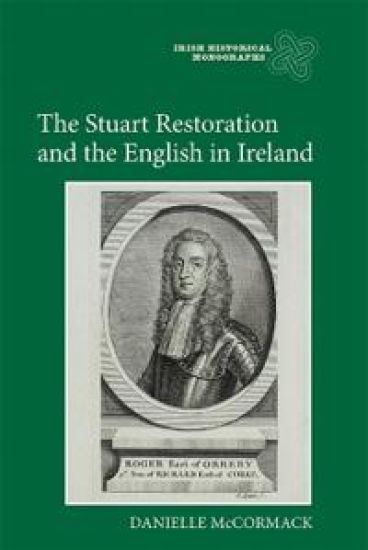
Crossing boundaries of political, intellectual and cultural history, this study highlights the complexity of political culture in Restoration Ireland. This book focuses on how historical memory and political discourse affected land settlement and political processes in early Restoration Ireland. The period 1660-1667 was one of insecurity for the Protestant plantation in Ireland,as Catholic spokesmen undermined the Protestant status quo. The Stuart Restoration and the English in Ireland draws out the dynamism of the rhetorical, moral and legal challenges that Catholics made to Protestant power inIreland and examines the Protestant responses and the rise of a Protestant identity inextricably linked with the possession of power. This identity was expressed as that of the 'English in Ireland', a belligerent self-denominationwhich did little to accommodate the king or the importance of monarchy to the Protestant position in the country. Crossing boundaries of political, intellectual and cultural history, the book highlights the complexity of political culture in Restoration Ireland, which was defined by the intersection of political language, ideas, historical understandings and economic imperatives. DANIELLE McCORMACK is Assistant Professor at the Department of Celtic Languages and Literatures at Adam Mickiewicz University, Poznan, Poland.
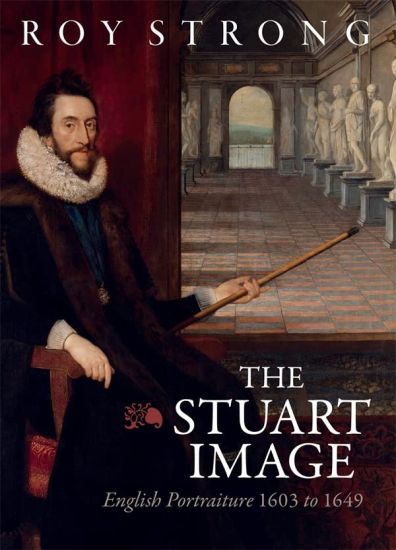
Based on a lifetime's work in the field, Sir Roy Strong offers an expert and engaging new look at portrait painting in Stuart England, studying the sitters as much as the artists. Sir Roy Strong has been writing for over half a century on the painters of the courts of James I and Charles I. While taking account of the mass of scholarly work that has appeared during that time, this book offers a very different approach to the subject. Until now, the universal method has been to look at the artists, in particular van Dyck, and to see half a century of painting through the six years when the latter was in England. Instead, we are offered a view based on portraits and their sitters, and particularly on the dramatic change in their attitudes, from the still medieval (if Protestant) aesthetic of the Elizabethan age to the ambiguity of one which replaced that aesthetic by one based on the Catholic baroque of European art. Portraits after all are permanent records of how a sitter wished to be seen by posterity as well as in his or her own period. The obsession with the painter and with attribution has tended to obscure that very basic fact. They are inevitably self-fashioning images that chart the new mythology not only of a new dynasty, the Stuarts, but also of a burgeoning and assertive aristocracy. Unlike their spectacular court masques, however, which were gone in an evening of glory, the portraits are still with us - or, rather, those that have survived. Through them we are able to trace a new iconography for a new dynasty and also an aesthetic revolution which moved away from the Elizabethan world of ambiguity and hieroglyphs to one set in space defined by the new optics of the Renaissance. But the title, The Stuart Image, is designed to emphasise that above all what we see is the image and not the reality.
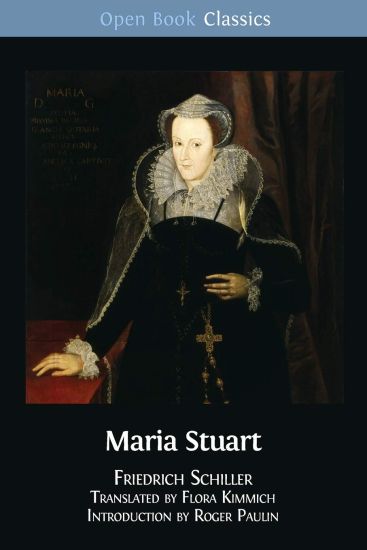
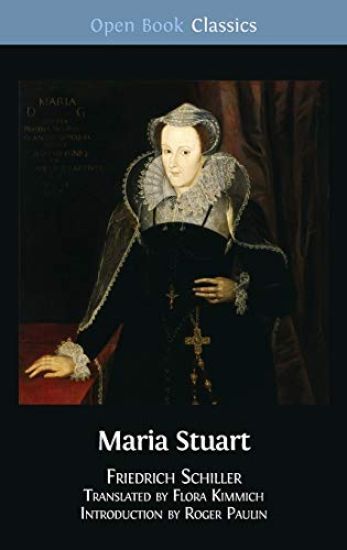
Maria Stuart, described as Schiller's most perfect play, is a finely balanced, inventive account of the last day of the captive Queen of Scotland, caught up in a great contest for the throne of England after the death of Henry VIII and over the question of England's religious confession. Hope for and doubt about Mary's deliverance grow in the first two acts, given to the Scottish and the English queen respectively, reach crisis at the center of the play, where the two queens meet in a famous scene in a castle park, and die away in acts four and five, as the action advances to its inevitable end. The play is at once classical tragedy of great fineness, costume drama of the highest order-a spectacle on the stage-and one of the great moments in the long tradition of classical rhetoric, as Elizabeth's ministers argue for and against execution of a royal prisoner. Flora Kimmich's new translation carefully preserves the spirit of the original: the pathos and passion of Mary in captivity, the high seriousness of Elizabeth's ministers in council, and the robust comedy of that queen's untidy private life. Notes to the text identify the many historical figures who appear in the text, describe the political setting of the action, and draw attention to the structure of the play.Roger Paulin's introduction discusses the many threads of the conflict in Maria Stuart and enriches our understanding of this much-loved, much-produced play. Maria Stuart is the last of a series of five new translations of Schiller's major plays, accompanied by notes to the text and an authoritative introduction.
Maria Stuart, described as Schiller's most perfect play, is a finely balanced, inventive account of the last day of the captive Queen of Scotland, caught up in a great contest for the throne of England after the death of Henry VIII and over the question of England's religious confession. Hope for and doubt about Mary's deliverance grow in the first two acts, given to the Scottish and the English queen respectively, reach crisis at the center of the play, where the two queens meet in a famous scene in a castle park, and die away in acts four and five, as the action advances to its inevitable end. The play is at once classical tragedy of great fineness, costume drama of the highest order-a spectacle on the stage-and one of the great moments in the long tradition of classical rhetoric, as Elizabeth's ministers argue for and against execution of a royal prisoner. Flora Kimmich's new translation carefully preserves the spirit of the original: the pathos and passion of Mary in captivity, the high seriousness of Elizabeth's ministers in council, and the robust comedy of that queen's untidy private life. Notes to the text identify the many historical figures who appear in the text, describe the political setting of the action, and draw attention to the structure of the play.Roger Paulin's introduction discusses the many threads of the conflict in Maria Stuart and enriches our understanding of this much-loved, much-produced play. Maria Stuart is the last of a series of five new translations of Schiller's major plays, accompanied by notes to the text and an authoritative introduction.
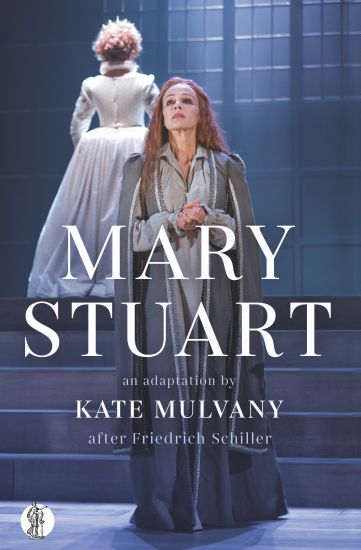
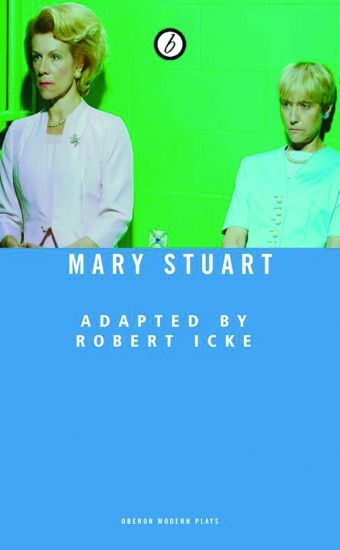
Two queens. One in power. One in prison. It's all in the execution.Schiller's political tragedy takes us behind the scenes of British history's famous rivalry between Elizabeth I and Mary Queen of Scots. Written in verse and based on historical sources, Schiller's play imagines the queens' lives - one in court, the other in prison - surrounded by staff and servants. Their imagined meeting, before Mary's execution, is passionate and enthralling. Robert Icke's lean version condenses the action, cutting the cast to twelve, whilst retaining the play's symmetrical structure and tense atmosphere. In an exciting twist, the first production had two actors learn the roles of both queens, and their roles were decided at each performance by the toss of a coin. Adding a further duality to the play, this also allowed the first word of the evening to anticipate its ending:'Heads'.
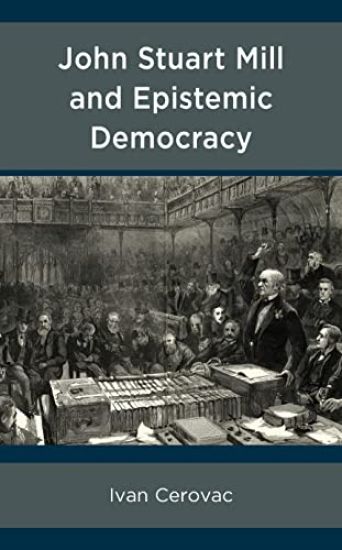
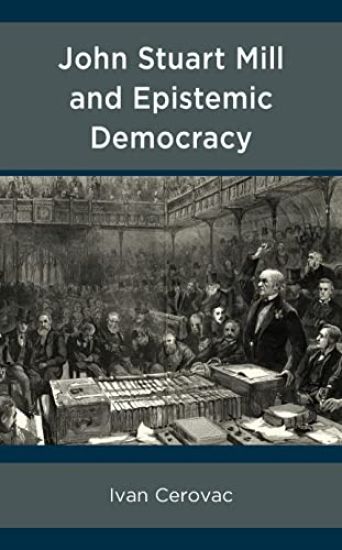
John Stuart Mill and Epistemic Democracy explores the epistemic, or cognitive, character of democratic institutional practices and the protection of basic liberties in Mill's political thought. Mapping Mill's theory of representative democracy and critically engaging Mill's more controversial issues, Ivan Cerovac identifies the epistemic criteria within these proposals and uses them as a basis for unifying Mill's political thought. The book addresses the epistemic role of wide democratic participation on the one hand and institutional mechanisms used to filter the public will—such as political representation, plural voting proposals, partisanship, division of epistemic and political labor—on the other, and it analyzes how Mill tries to resolve the conflict between political and epistemic values. Characterizing Mill as both a political instrumentalist and an epistemic democrat, Cerovac sets Mill's theory in a broader explanatory framework and compares it with contemporary accounts of epistemic justification. Emphasizing Mill's normative considerations regarding franchise and the exercise of political power over others, this book discusses how to implement the epistemic ideal in real-world politics. It will be a fascinating read for anyone interested in democratic decision-making.
John Stuart Mill and Epistemic Democracy explores the epistemic, or cognitive, character of democratic institutional practices and the protection of basic liberties in Mill's political thought. Mapping Mill's theory of representative democracy and critically engaging Mill's more controversial issues, Ivan Cerovac identifies the epistemic criteria within these proposals and uses them as a basis for unifying Mill's political thought. The book addresses the epistemic role of wide democratic participation on the one hand and institutional mechanisms used to filter the public will—such as political representation, plural voting proposals, partisanship, division of epistemic and political labor—on the other, and it analyzes how Mill tries to resolve the conflict between political and epistemic values. Characterizing Mill as both a political instrumentalist and an epistemic democrat, Cerovac sets Mill's theory in a broader explanatory framework and compares it with contemporary accounts of epistemic justification. Emphasizing Mill's normative considerations regarding franchise and the exercise of political power over others, this book discusses how to implement the epistemic ideal in real-world politics. It will be a fascinating read for anyone interested in democratic decision-making.
A young activist and highly-educated Cambridge Union debater, Mill would become in time the highest-ranked English thinker of the nineteenth century, the author of the landmark essay On Liberty and one of the most passionate reformers and advocates of his revolutionary, opinionated age. As a journalist he fired off a weekly article on Irish land reform as the people of that nation starved, as an MP he introduced the first vote on women's suffrage, fought to preserve free-speech and opposed slavery, and, in his private life, pursued for two decades a love affair with another man's wife. To understand Mill and his contribution, Richard Reeves explores his life and work in tandem. His book is a riveting and authoritative biography of a man raised to promote happiness, whose life was spent in the pursuit of truth and liberty for all.
Brendan Stuart Burns (b.1963) is a leading Welsh painter who draws inspiration from the natural world of his native country and beyond. Providing, for the first time, an overview of the artist's career to date, this important publication traces his work's evolution towards full artistic maturity. Addressing key aspects of Burns' oeuvre, such as the materiality of the work and its relationship to the environment, the book discusses the wider philosophical framework which underpins his painting while also considering its historical and contemporary influences. Written in close collaboration with the artist, Ian Massey’s authoritative account of Burns’ impressive career is essential reading for all those interested in contemporary British painting and new visual interpretations of landscape.
In recent years Jacobitism has become a subject of growing interst to historians amid academic controversy over various aspects of the subject. The least-known phase of Jacobitism, although in many ways the most important, is the period 1689 to 1718, when the Stuart court in exile was at Saint-Germain-en-Laye, the residence of the kings of France until Louis XIV built Versailles. This collection of essays illuminates the early development of Jacobitism, placing the movement in a coherent historical context. The volume includes an introduction by Edward Corp on the Stuart court and an essay by Eveline Cruickshanks on the importance of Jacobitism in Britain and its links with the exiled court. Other essays discuss Jacobite ideology and the Jacobite press; the internal workings and external relations of the exiled court; the abortive invasion of England in 1692; and Jacobite exiles - comparable in numbers and influence to the Hugeunots in England - in France.
Schiller's grand historical tragedy, a battle of wits between Mary Queen of Scots and her captor, Queen Elizabeth I. Mary has been held prisoner for nineteen years by her cousin, Elizabeth I, who has condemned her to death, but is reluctant to be seen to carry out the sentence. Leicester, Elizabeth's favorite and Mary's ex-lover, engineers a meeting of the two Queens - an encounter which never took place in historical fact - from which Mary emerges triumphant but doomed. Friedrich Schiller's play Mary Stuart (Maria Stuart in the original German) had its premiere in Weimar, Germany, in June 1800. This English version by Jeremy Sams was first staged at the National Theatre, London, in 1996.