Kirjojen hintavertailu. Mukana 12 354 961 kirjaa ja 12 kauppaa.

Kirjahaku

Etsi kirjoja tekijän nimen, kirjan nimen tai ISBN:n perusteella.

1000 tulosta hakusanalla Theodore Besterman

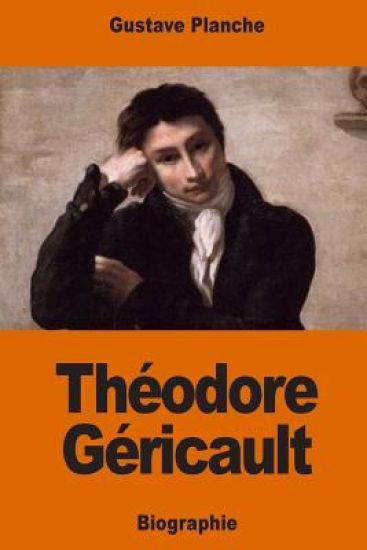
Théodore Géricault

Théodore Géricault

Gustave Planche

Createspace Independent Publishing Platform
2016
nidottu
"... Pour bien comprendre le r le de G ricault dans la peinture fran aise, il ne suffit pas de l' tudier en lui-m me; une telle m thode ne conduirait qu' une v rit incompl te. L'analyse la plus attentive ne nous apprendrait pas ce qu'il a voulu renverser, ce qu'il a voulu difier. G ricault, r duit lui-m me, s par de son ma tre, isol du mi lieu o il s'est produit, ne laisse dans l'esprit qu'une notion st rile. Pour marquer sa place, pour caract riser nettement l'influence qu'il a exerc e sur l' cole fran aise, il faut commencer par d terminer les principes qui pr sidaient l'enseignement de la peinture, quand G ricault, malgr la r sistance de sa famille, quitta les livres pour le pinceau. Sans l'accomplissement de cette condition pr liminaire, il est impossible d'expliquer pourquoi, dans la plupart de ses oeuvres, l'ex cution ne s'accorde pas avec la conception, pourquoi la main est plus habile que la pens e n'est savante. Si G ricault n'e t pas rencontre dans Pierre Gu rin un adorateur fervent, un disciple fid le et obstin des principes proclam s par David, s'il n'e t pas trouv dans ce ma tre habile la ferme r solution de bl mer avec d dain, de proscrire sans piti tous les caprices de la fantaisie, s'il n'e t pas eu soutenir des luttes sans nombre contre la tradition, qui pr tendait poss der seule le secret de la beaut , il est probable que son talent n'aurait pas pris le caract re de violence et de r action qui clate dans ses moindres tudes, et qui se r v le tout entier dans son dernier ouvrage..."
Through the Brazilian Wilderness (1914) by: Theodore Roosevelt

Through the Brazilian Wilderness (1914) by: Theodore Roosevelt

Theodore Roosevelt

Createspace Independent Publishing Platform
2017
nidottu
Roosevelt had originally planned to go on a speaking trip of Argentina and Brazil, followed by a cruise of the Amazon River. Instead, the Brazilian Government suggested that Roosevelt accompany famous Brazilian explorer C ndido Rondon on his exploration of the previously unknown River of Doubt, the headwaters of which had only recently been discovered. Roosevelt, seeking adventure and challenge after his recent defeat for a third term in the White House, agreed. Kermit Roosevelt, Theodore's son, had recently become engaged and did not plan on joining the expedition but did on the insistence of his mother, in order to protect his father. The expedition started in C ceres, a small town on the Paraguay River, with 15 Brazilian porters (camaradas), the two leaders, Roosevelt's son, and American naturalist George Cherrie. They traveled to Tapirapu , where Rondon had previously discovered the Headwaters of the River of Doubt. From Tapirapu , the expedition traveled northwest, through dense forests and then later through the plains on top of the Parecis plateau. They reached the River of Doubt on February 27, 1914. At this point, due to a lack of food supplies, the Expedition split up, with part of the Expedition following the Ji-Paran River to the Madeira River. The remaining party then started down the River of Doubt.
Théodore Jouffroy

Théodore Jouffroy

Charles de Rémusat

Createspace Independent Publishing Platform
2017
nidottu
" Il s'est coul plus de deux ans depuis que nous avons perdu M. Jouffroy. Loin de s' tre effac e, sa m moire a grandi, et son nom est cit chaque jour avec plus de respect; il devient une autorit . Rien ne doit surprendre; c' tait l'infaillible, mais unique consolation que le temps r servait ses amis. D s le jour o il leur fut enlev , les regrets de tous prouv rent bien que c' tait un coup d' clat que la mort venait de frapper. Chose heureuse et remarquable, un homme qui n'avait gu re parcouru que la moiti de la carri re, qui, par la nature de ses tudes, la modestie de sa vie, la r serve de son caract re, n'appelait point l'attention si partag e du public, avait obtenu pourtant la r putation solide et brillante dont il tait digne. Dans un temps o il se fait tant de bruit qu'il semble impossible qu'un nom soit entendu, s'il n'est r p t par les mille porte-voix de la publicit , un philosophe silencieux avait atteint la renomm e, donnant ainsi un utile exemple ceux qui prennent tant de peine pour contrefaire la gloire et r aliser l'oubli, comme ceux qui se plaignent des jugements de la multitude et ne croient pas qu'une soci t tumultueusement d mocratique puisse tre juste. Jamais, au contraire, il ne fut aussi bon qu'aujourd'hui d' tre un homme de m rite; peut- tre m me le m tier est-il devenu trop facile..."
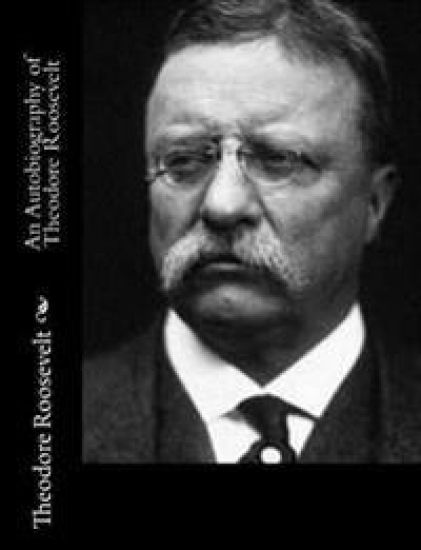
Theodore Roosevelt: an Autobiography

Theodore Roosevelt: an Autobiography

Theodore Roosevelt

Createspace Independent Publishing Platform
2017
nidottu
Naturally, there are chapters of my autobiography which cannot now be written. It seems to me that, for the nation as for the individual, what is most important is to insist on the vital need of combining certain sets of qualities, which separately are common enough, and, alas, useless enough. Practical efficiency is common, and lofty idealism not uncommon; it is the combination which is necessary, and the combination is rare. Love of peace is common among weak, short-sighted, timid, and lazy persons; and on the other hand courage is found among many men of evil temper and bad character. Neither quality shall by itself avail. Justice among the nations of mankind, and the uplifting of humanity, can be brought about only by those strong and daring men who with wisdom love peace, but who love righteousness more than peace. Facing the immense complexity of modern social and industrial conditions, there is need to use freely and unhesitatingly the collective power of all of us; and yet no exercise of collective power will ever avail if the average individual does not keep his or her sense of personal duty, initiative, and responsibility. There is need to develop all the virtues that have the state for their sphere of action; but these virtues are as dust in a windy street unless back of them lie the strong and tender virtues of a family life based on the love of the one man for the one woman and on their joyous and fearless acceptance of their common obligation to the children that are theirs. There must be the keenest sense of duty, and with it must go the joy of living; there must be shame at the thought of shirking the hard work of the world, and at the same time delight in the many-sided beauty of life. With soul of flame and temper of steel we must act as our coolest judgment bids us. We must exercise the largest charity towards the wrong-doer that is compatible with relentless war against the wrong-doing. We must be just to others, generous to others, and yet we must realize that it is a shameful and a wicked thing not to withstand oppression with high heart and ready hand. With gentleness and tenderness there must go dauntless bravery and grim acceptance of labor and hardship and peril. All for each, and each for all, is a good motto; but only on condition that each works with might and main to so maintain himself as not to be a burden to others.
The Titan Theodore Dreiser

The Titan Theodore Dreiser

Theodore Dreiser

Createspace Independent Publishing Platform
2017
nidottu
Sometime after being released from prison, Frank invests in stocks subsequent to the Panic of 1873, and becomes a millionaire again. He decides to move out of Philadelphia and start a new life in the West. He moves to Chicago with Aileen and his attorney is finally able to persuade Lillian to agree to a divorce. Frank decides to take over the street-railway system. He bankrupts several opponents with the help of John J. McKenty and other political allies. Meanwhile, Chicago society finds out about his past in Philadelphia and the couple are no longer invited to dinner parties; after a while, the press turns on him too.
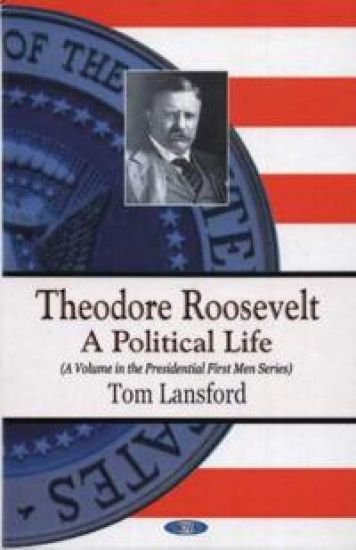
Theodore Roosevelt

Theodore Roosevelt

Mario R. Di Nunzio

CQ Press
2003
sidottu
Each volume in the new American Presidents Reference Series is organized around an individual presidency and gathers a host of biographical, analytical, and primary source historical material that will analyze the presidency and bring the president, his administration, and his times to life. The series focuses on key moments in U.S. political history as seen through the eyes of the most influential presidents to take the oath of office. Unique headnotes provide the context to data, tables and excerpted primary source documents. Theodore Roosevelt was born on October 27, 1858. He was elected to the New York state legislature in 1881. Following the death of his first wife, Alice Roosevelt, in February 1884, Roosevelt left politics to manage a cattle ranch in the Dakota Territory. In 1886 he returned to New York City, ran unsuccessfully for mayor, and married Edith Kermit Carow. Between 1889 and 1895 Roosevelt headed the U.S. Civil Service Commission. From 1895 to 1897 he served as president of the Police Commission in New York City. In 1897 President William McKinley appointed him assistant secretary of the navy. He resigned to serve in the military during the war against Spain. As lieutenant colonel he organized and led the Rough Riders, a regiment of cavalry, in Cuba. In 1889 Roosevelt narrowly won election as the New York State governor. The following year he accepted the Republican Party nomination as vice president on the McKinley reelection ticket. The ticket was victorious. On September 14, 1901, President McKinley died after being shot by anarchist Leon Czolgosz. At age forty-two Roosevelt became the youngest person to serve as president. Key policies and events during the Roosevelt administration were his antitrust efforts (culminating in the landmark 1904 Supreme Court decision Northern Securities Co. v. United States), ending the 1902 coal miners strike, acquiring the land to build the Panama Canal, introducing numerous pieces of reform legislation, and mediating the end to the Russo-Japanese War (an effort that won him the Nobel Peace Prize). In 1908 Roosevelt endorsed the election of his friend and secretary of war, William Howard Taft, to succeed him, but by 1910 he distanced himself from Taft. In 1912 Roosevelt unsuccessfully sought the Republican Party nomination to oust Taft. The Bull Moose Party, a third party of Republican progressives, was created and nominated Roosevelt. While campaigning, Roosevelt was barely sidetracked when he was shot in the chest. Splitting the Republican Party vote, Roosevelt finished in second place to Woodrow Wilson (Taft finished in third). On January 6, 1919, Theodore Roosevelt died. This new volume on the presidency of Theodore Roosevelt will cover his hard-charging personality,reformist, progressive domestic policies,environmental policies,role in the Republican and Bull Moose Parties,relationship with Congress, the Supreme Court, and the media,allegedly imperialistic foreign policies.
Theodore O'Hara

Theodore O'Hara

University of Tennessee Press
1998
sidottu
With this book, Nathaniel Hughes and Thomas Ware offer the first complete biography of O'Hara and also analyze how "The Bivouac of the Dead" - originally written in honor of Kentuckians who had died in the War with Mexico - became so famous even as its author fell into obscurity. Hughes and Ware have meticulously researched O'Hara's life to present as complete a picture as possible of this forgotten figure.
Theodore Roosevelt and the Smithsonian Expedition to British East Africa, 1909-1910
Accompany Theodore Roosevelt on his Smithsonian safari to East Africa with new context and perspectives Features 120 historic duotone photographs Immediately after Theodore Roosevelt left the White House, he led an African expedition for the Smithsonian that collected more than 23,000 specimens for its new natural history museum. Alongside his son, Kermit, Smithsonian naturalists, and African porters, they brought back a wide range of plants, fish, reptiles, and big game. This book takes readers along for the journey, and features: More than 100 expedition photographs printed with stunning reproduction qualityExcerpts from Roosevelt's firsthand account in African Game Trails Historical context and contemporary commentary from author Frank H. Goodyear III that provides an in-depth understanding of the expedition and its significanceA foreword from Secretary of the Smithsonian Lonnie G. Bunch III, who provides nuanced insight on Roosevelt's complicated legacyAn afterword from Dino J. Martins, a Kenyan entomologist and evolutionary biologist, on the role of African communities during the expeditionTheodore Roosevelt and the Smithsonian Expedition to British East Africa, 1909-10 contextualizes the expedition, explores its impact, and reflects on Roosevelt's complex legacy as a president and hunter-conservationist.