Kirjojen hintavertailu. Mukana 12 390 323 kirjaa ja 12 kauppaa.

Kirjahaku

Etsi kirjoja tekijän nimen, kirjan nimen tai ISBN:n perusteella.

1000 tulosta hakusanalla Alison Case

The Right to Have Rights

The Right to Have Rights

Alison Kesby

Oxford University Press
2012
sidottu
Writing in the immediate aftermath of the Second World War, the political theorist Hannah Arendt argued that the plight of stateless people in the inter-war period pointed to the existence of a 'right to have rights'. The right to have rights was the right to citizenship-to membership of a political community. Since then, and especially in recent years, theorists have continued to grapple with the meaning of the right to have rights. In the context of enduring statelessness, mass migration, people flows, and the contested nature of democratic politics, the question of the right to have rights remains of pressing concern for writers and advocates across the disciplines. This book provides the first in-depth examination of the right to have rights in the context of the international protection of human rights. It explores two overarching questions. First, how do different and competing conceptions of the right to have rights shed light on right bearing in the contemporary context, and in particular on concepts and relationships central to the protection of human rights in public international law? Secondly, given these competing conceptions, how is the right to have rights to be understood in the context of public international law? In the course of the analysis, the author examines the significance and limits of nationality, citizenship, humanity and politics for right bearing, and argues that their complex interrelation points to how the right to have rights might be rearticulated for the purposes of international legal thought and practice.
The Beloved Self

The Beloved Self

Alison Hills

Oxford University Press
2012
nidottu
The Beloved Self is about the holy grail of moral philosophy, an argument against egoism that proves that we all have reasons to be moral. Part One introduces three different versions of egoism. Part Two looks at attempts to prove that egoism is false, and shows that even the more modest arguments that do not try to answer the egoist in her own terms seem to fail. But in part Three, Hills defends morality and develops a new problem for egoism, an epistemological problem. She shows that it is not epistemically rational to believe the most plausible versions of egoism. The first part of the book will be most relevant to those interested in moral theory, as it contains detailed discussions of recent interpretations of virtue ethics and especially of Kant's moral theory. The second and third part of the book turn to epistemology, particularly moral epistemology, and include an account of the relationship between knowledge and action, a new theory of moral understanding, and a discussion of the epistemically rational response to various kinds of disagreement. Hills also defends a new account of virtue and of morally worthy action.
Thrive in Genetics

Thrive in Genetics

Alison Thomas

Oxford University Press
2013
nidottu
The Thrive in Bioscience revision guides are written to help students achieve exam success in all core areas of bioscience. Each title encourages the reader to follow four steps to maximise their learning, with features to support this process. Step One: Review the facts The revision guides are designed to help learning be quick and effective: · Information is set out in bullet points, making it easy to digest. · Clear, uncluttered illustrations illuminate what is said in the text. · Key concept panels summarise the essential learning points. Step 2: Check your understanding Readers are encouraged to: · Complete the questions at the end of chapters and online multiple-choice questions to reinforce their learning. · Use the flashcard app to master the essential terms and phrases. Step 3: Take note of extra advice Revision tips, and hints for getting those precious extra marks in exams, are presented throughout. Step 4: Go the extra mile Readers can explore the suggestions for further reading to take their understanding one step further. Each title in the series is tailored to maximise understanding and achievement, to ensure that the reader really can thrive in their studies. They are the perfect course companions for any bioscience degree. Each title in the series is accompanied by the following digital resources: A flashcard glossary app, enabling the user to test their understanding of key terminology; A bank of interactive MCQs, giving users a hands-on way to check they have fully understood the concepts presented.
The Web of Empire

The Web of Empire

Alison Games

Oxford University Press Inc
2009
nidottu
How did England go from a position of inferiority to the powerful Spanish empire to achieve global pre-eminence? In this important second book, Alison Games, a colonial American historian, explores the period from 1560 to 1660, when England challenged dominion over the American continents, established new long-distance trade routes in the eastern Mediterranean and the East Indies, and emerged in the 17th century as an empire to reckon with. Games discusses such topics as the men and women who built the colonial enterprise, the political and fiscal factors that made such growth possible, and domestic politics that fueled commercial expansion. Her cast of characters includes soldiers and diplomats, merchants and mariners, ministers and colonists, governors and tourists, revealing the surprising breath of foreign experiences ordinary English people had in this period. This book is also unusual in stretching outside Europe to include Africa, Asia, and the Middle East. A comparative imperial study and expansive world history, this book makes a lasting argument about the formative years of the English empire.
For the Common Good and Their Own Well-Being

For the Common Good and Their Own Well-Being

Alison K. Smith

Oxford University Press Inc
2014
sidottu
Every subject of the Russian Empire had an official, legal place in society marked by his or her social estate, or soslovie. These sosloviia (noble, peasant, merchant, and many others) were usually inherited, and defined the rights, opportunities, and duties of those who possessed them. They were also usually associated with membership in a specific geographically defined society in a particular town or village. Moreover, although laws increasingly insisted that every subject of the empire possess a soslovie "for the common good and their own well-being," they also allowed individuals to change their soslovie by following a particular bureaucratic procedure. The process of changing soslovie brought together three sets of actors: the individuals who wished to change their opportunities or duties, or who at times had change forced upon them; local societies, which wished to control who belonged to them; and the central, imperial state, which wished above all to ensure that every one of its subjects had a place, and therefore a status. This book looks at the many ways that soslovie could affect individual lives and have meaning, then traces the legislation and administration of soslovie from the early eighteenth through to the early twentieth century. This period saw a shift from soslovie as above all a means of extracting duties or taxes, to an understanding of soslovie as instead a means of providing services and ensuring security. The book ends with an examination of the way that a change in soslovie could affect not just an individual's biography, but the future of his or her entire family. The result is a new image of soslovie as both a general and a very specific identity, and as one that had persistent meaning, for the Imperial statue, for local authorities, or for individual subjects, even through 1917.
Speaking Rights to Power

Speaking Rights to Power

Alison Brysk

Oxford University Press Inc
2013
sidottu
How can "Speaking Rights to Power" construct political will to respond to human rights abuse worldwide? Examining dozens of cases of human rights campaigns, this book shows how carefully crafted communications build recognition, solidarity, and social change. Alison Brysk presents an innovative analysis of the politics of persuasion, based in the strategic use of voice, framing, media, protest performance, and audience bridging. Building on twenty years of research on five continents, this comprehensive study ranges from Aung San Suu Kyi to Anna Hazare, from Congo to Colombia, and from the Arab Spring to Pussy Riot. It includes both well-chronicled campaigns, such as the struggle to end violence against women, as well as lesser-known efforts, including inter-ethnic human rights alliances in the U.S. Brysk compares relatively successful human rights campaigns with unavailing struggles. Grounding her analysis in the concrete practice of human rights campaigns, she lays out testable strategic guidance for human rights advocates. Speaking Rights to Power addresses cutting edge debates on human rights and the ethic of care, cosmopolitanism, charismatic leadership, communicative action and political theater, and the role of social media. It draws on constructivist literature from social movement and international relations theory, and it analyzes human rights as a form of global social imagination. Combining a normative contribution with judicious critique, this book shows not only that human rights rhetoric matters-but how to make it matter more.
Speaking Rights to Power

Speaking Rights to Power

Alison Brysk

Oxford University Press Inc
2013
nidottu
How can "Speaking Rights to Power" construct political will to respond to human rights abuse worldwide? Examining dozens of cases of human rights campaigns, this book shows how carefully crafted communications build recognition, solidarity, and social change. Alison Brysk presents an innovative analysis of the politics of persuasion, based in the strategic use of voice, framing, media, protest performance, and audience bridging. Building on twenty years of research on five continents, this comprehensive study ranges from Aung San Suu Kyi to Anna Hazare, from Congo to Colombia, and from the Arab Spring to Pussy Riot. It includes both well-chronicled campaigns, such as the struggle to end violence against women, as well as lesser-known efforts, including inter-ethnic human rights alliances in the U.S. Brysk compares relatively successful human rights campaigns with unavailing struggles. Grounding her analysis in the concrete practice of human rights campaigns, she lays out testable strategic guidance for human rights advocates. Speaking Rights to Power addresses cutting edge debates on human rights and the ethic of care, cosmopolitanism, charismatic leadership, communicative action and political theater, and the role of social media. It draws on constructivist literature from social movement and international relations theory, and it analyzes human rights as a form of global social imagination. Combining a normative contribution with judicious critique, this book shows not only that human rights rhetoric matters-but how to make it matter more.
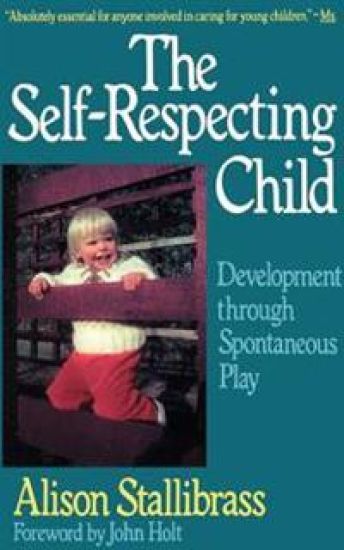
The Self-respecting Child

The Self-respecting Child

Alison Stallibrass

Da Capo Press Inc
1989
pokkari
This classic study of the spontaneous play of young children combines vivid and delightful observations with profoundly important insights. Alison Stallibrass, an expert on children's play and the mother of five children, makes clear the importance of uninhibited games and activities, without adult interference, in building a child's skill, judgment, and self-esteem, and shows how to make this kind of play possible in a nursery school, day-care centre, or at home.
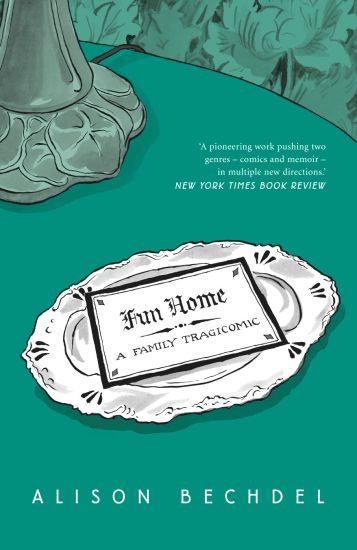
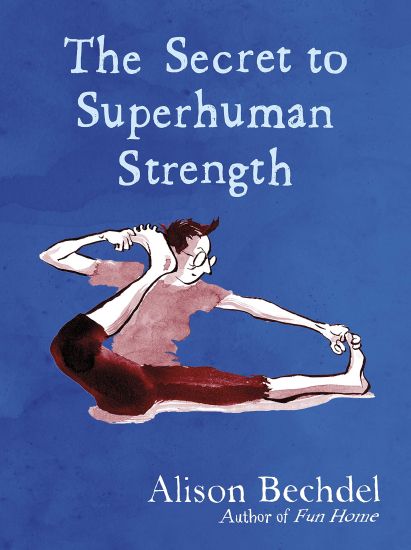
Fun Home

Fun Home

Alison Bechdel

Vintage
2006
pokkari
DISCOVER the BESTSELLING GRAPHIC MEMOIR behind the 2019 Olivier Award nominated musical. â??A sapphic graphic treatâ?? The TimesA moving and darkly humorous family tale, pitch-perfectly illustrated with Alison Bechdel's gothic drawings.
How to Make It as a Woman

How to Make It as a Woman

Alison Booth

University of Chicago Press
2004
sidottu
How to Make It as a Woman outlines the history of prosopography or group biography, focusing on the all-female collections that took hold in nineteenth-century Britain and America. The queens, nurses, writers, reformers, adventurers, even assassins in these collective female biographies served as models to guide the moral development of young women. But often these famous historical women presented untrustworthy examples.Beginning in the fifteenth century with Christine de Pizan, Alison Booth traces the long tradition of this genre, investigating the varied types and stories most often grouped together in illustrated books designed for entertainment and instruction. She claims that these group biographies have been instrumental in constructing modern subjectivities as well as relations among classes, races, and nations.From Joan of Arc to Virginia Woolf, Booth examines a host of models of womanhood—both bad and good. Incorporating a bibliography that includes more than 900 all-female collections published in English between 1830 and 1940, Booth uses collective biographies to decode the varied advice on how to make it as a woman.
How to Make It as a Woman – Collective Biographical History from Victoria to the Present
How to Make It as a Woman outlines the history of prosopography or group biography, focusing on the all-female collections that took hold in nineteenth-century Britain and America. The queens, nurses, writers, reformers, adventurers, even assassins in these collective female biographies served as models to guide the moral development of young women. But often these famous historical women presented untrustworthy examples.Beginning in the fifteenth century with Christine de Pizan, Alison Booth traces the long tradition of this genre, investigating the varied types and stories most often grouped together in illustrated books designed for entertainment and instruction. She claims that these group biographies have been instrumental in constructing modern subjectivities as well as relations among classes, races, and nations.From Joan of Arc to Virginia Woolf, Booth examines a host of models of womanhood—both bad and good. Incorporating a bibliography that includes more than 900 all-female collections published in English between 1830 and 1940, Booth uses collective biographies to decode the varied advice on how to make it as a woman.
Memory

Memory

Alison Winter

University of Chicago Press
2013
nidottu
The workings of memory have fascinated scientists for hundreds of years, and in Memory: Fragments of a Modern History, Alison Winter shows that our understanding of them has changed dramatically in just the past century, with major consequences for science, medicine, and everyday life. Memories have been declared as reliable as sounds caught on tape, and they have been dismissed as inherently volatile. Researchers have tried to understand what we do when we remember by appealing to motion pictures, filing cabinets, and flashbulbs. Tracing the cultural and scientific history of such drastically opposed convictions, Winter introduces us to the innovative scientists, venturesome medical practitioners, determined police interrogators, and, in some cases, incorrigible sensation seekers who sought to master this mysterious power. Culminating in the climactic "memory wars" of the 1980s and '90s, the story she tells illuminates not only the practices of science and medicine, but also a subject that is absolutely essential to how we all live our daily lives.
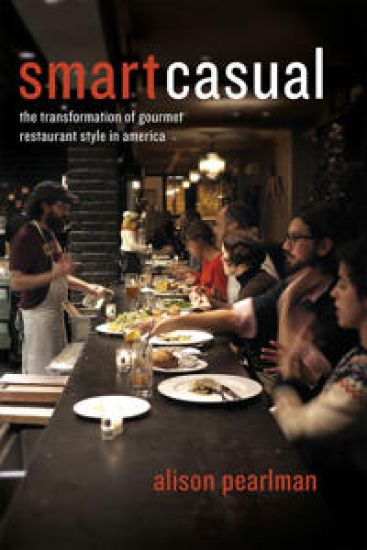
Smart Casual

Smart Casual

Alison Pearlman

University of Chicago Press
2015
nidottu
In Smart Casual, Alison Pearlman investigates what she identifies as the increasing informality in the design of contemporary American restaurants. Pearlman takes us hungrily inside the kitchens and dining rooms of restaurants coast to coast - from David Chang's Momofuku Noodle Bar in New York to the seasonal, French-inspired cuisine of Alice Waters and Thomas Keller in California to the deconstructed comfort food of Homaro Cantu's Moto in Chicago - to explore the different forms and flavors this casualization is taking. Smart Casual examines the assumed correlation between taste and social status, and argues that recent aspects to these distinctions have given rise to a new idea of sophistication, one that champions the omnivorous. The boundaries between high and low have been made flexible because of our desire to eat everything, try everything, and do so in a convivial setting.
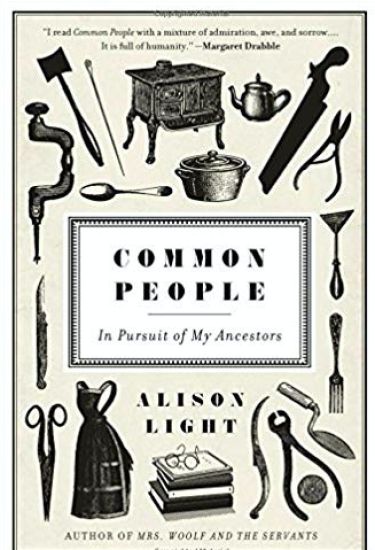
Common People: In Pursuit of My Ancestors

Common People: In Pursuit of My Ancestors

Alison Light

University of Chicago Press
2015
sidottu
"Family history begins with missing persons," Alison Light writes in Common People. We wonder about those we've lost, and those we never knew, about the long skein that led to us, and to here, and to now. So we start exploring. Most of us, however, give up a few generations back. We run into a gap, get embarrassed by a ne'er-do-well, or simply find our ancestors are less glamorous than we'd hoped. That didn't stop Alison Light: in the last weeks of her father's life, she embarked on an attempt to trace the history of her family as far back as she could reasonably go. The result is a clear-eyed, fascinating, frequently moving account of the lives of everyday people, of the tough decisions and hard work, the good luck and bad breaks, that chart the course of a life. Light's forebears--servants, sailors, farm workers--were among the poorest, traveling the country looking for work; they left few lasting marks on the world. But through her painstaking work in archives, and her ability to make the people and struggles of the past come alive, Light reminds us that "every life, even glimpsed through the chinks of the census, has its surprises and secrets." What she did for the servants of Bloomsbury in her celebrated Mrs. Woolf and the Servants Light does here for her own ancestors, and, by extension, everyone's: draws their experiences from the shadows of the past and helps us understand their lives, estranged from us by time yet inextricably interwoven with our own. Family history, in her hands, becomes a new kind of public history.
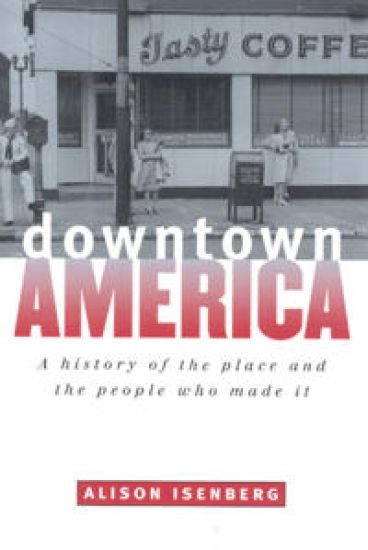
Downtown America

Downtown America

Alison Isenberg

University of Chicago Press
2005
nidottu
Downtown America transcends the archetypal story of downtown's rise and fall and offers a dynamic new story of urban development in the United States. Moving beyond conventional narratives, Alison Isenberg shows-that downtown's trajectory was not dictated by inevitable free market forces or natural life-and-death cycles. Instead it was the product of human actors - the contested creation of retailers, developers, government, leaders, architects, and planners, as well as political activists, consumers, civic clubs, real estate appraisers, and even postcard artists. Throughout the twentieth century, conflicts over downtown's mundane conditions - what it should look like and who should walk its streets - pointed to fundamental disagreements over American values.
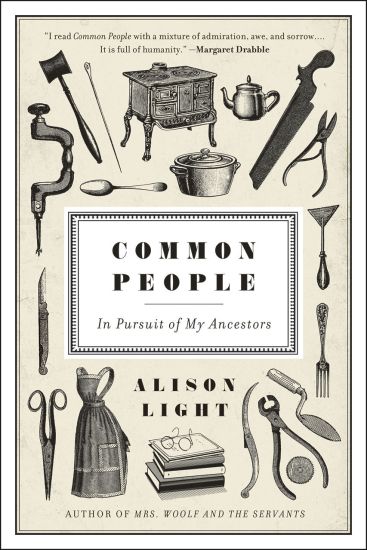
Common People: In Pursuit of My Ancestors

Common People: In Pursuit of My Ancestors

Alison Light

University of Chicago Press
2016
nidottu
"Family history begins with missing persons," Alison Light writes in Common People. We wonder about those we've lost, and those we never knew, about the long skein that led to us, and to here, and to now. So we start exploring. Most of us, however, give up a few generations back. We run into a gap, get embarrassed by a ne'er-do-well, or simply find our ancestors are less glamorous than we'd hoped. That didn't stop Alison Light: in the last weeks of her father's life, she embarked on an attempt to trace the history of her family as far back as she could reasonably go. The result is a clear-eyed, fascinating, frequently moving account of the lives of everyday people, of the tough decisions and hard work, the good luck and bad breaks, that chart the course of a life. Light's forebears-servants, sailors, farm workers-were among the poorest, traveling the country looking for work; they left few lasting marks on the world. But through her painstaking work in archives, and her ability to make the people and struggles of the past come alive, Light reminds us that "every life, even glimpsed through the chinks of the census, has its surprises and secrets." What she did for the servants of Bloomsbury in her celebrated Mrs. Woolf and the Servants Light does here for her own ancestors, and, by extension, everyone's: draws their experiences from the shadows of the past and helps us understand their lives, estranged from us by time yet inextricably interwoven with our own. Family history, in her hands, becomes a new kind of public history.
The Legal Epic

The Legal Epic

Alison A. Chapman

University of Chicago Press
2017
sidottu
The seventeenth century saw some of the most important legal changes in England's history, yet the period has been largely overlooked in the rich field of literature and law. Helping to fill this gap, The Legal Epic is the first book to situate the great poet and polemicist John Milton at the center of late seventeenth-century legal history. Alison A. Chapman argues that Milton's Paradise Lost sits at the apex of the early modern period's long fascination with law and judicial processes. Milton's world saw law and religion as linked disciplines and thought therefore that in different ways, both law and religion should reflect the will of God. Throughout Paradise Lost, Milton invites his readers to judge actions using not only reason and conscience but also core principles of early modern jurisprudence. Law thus informs Milton's attempt to "justify the ways of God to men" and points readers toward the types of legal justice that should prevail on earth. Adding to the growing interest in the cultural history of law, The Legal Epic shows that England's preeminent epic poem is also a sustained reflection on the role that law plays in human society.