

Kirjahaku
Etsi kirjoja tekijän nimen, kirjan nimen tai ISBN:n perusteella.
1000 tulosta hakusanalla Arvind Kumar

All arts and sciences, in their own way, ultimately try to come to grips with reality. What sets philosophy, theology and religion apart is that they grapple with ultimate reality. Over the decades spanned by John Hick's life, in the course of this grappling (reminiscent of Jacob's nocturnal encounter with the angel) philosophy became analytic, theology dialogical and religion comparative along one line of development. In these essays, written in honour of Professor Hick, leading world scholars in these fields share their most recent insights. They are, so to speak, postcards from the cutting edge.

This book explores cognitive behavior among Internet of Things. Using a series of current and futuristic examples – appliances, personal assistants, robots, driverless cars, customer care, engineering, monetization, and many more – the book covers use cases, technology and communication aspects of how machines will support individuals and organizations. This book examines the Cognitive Things covering a number of important questions: • What are Cognitive Things? • What applications can be driven from Cognitive Things – today and tomorrow? • How will these Cognitive Things collaborate with each and other, with individuals and with organizations? • What is the cognitive era? How is it different from the automation era? • How will the Cognitive Things support or accelerate human problem solving? • Which technical components make up cognitive behavior? • How does it redistribute the work-load between humans and machines? • What types of data can be collected from them and shared with external organizations? • How do they recognize and authenticate authorized users? How is the data safeguarded from potential theft? Who owns the data and how are the data ownership rights enforced? Overall, Sathi explores ways in which Cognitive Things bring value to individuals as well as organizations and how to integrate the use of the devices into changing organizational structures. Case studies are used throughout to illustrate how innovators are already benefiting from the initial explosion of devices and data. Business executives, operational managers, and IT professionals will understand the fundamental changes required to fully benefit from cognitive technologies and howto utilize them for their own success.
Sikhism, one of the major spiritual-philosophical traditions of India, is often missing from discussions of cross-cultural philosophy. In this introduction, Arvind-Pal Singh Mandair, an internationally acknowledged expert in Sikh studies, provides the first rigorous engagement in the West with Sikh philosophy. Sensitive both to the historical formation of Sikh thought, and to the decolonial context in which he writes, Mandair examines some of the key concepts of Sikh philosophy and how they inform its vision of life. He asks what Sikh philosophical concepts tell us about the nature of reality, the relationship between mind/self/ego, and whether it is possible to discern broad contours of a Sikh logic, epistemology and ontology. Additionally, the book looks at how these concepts address broader themes such as the body, health and well-being, creation and cosmology, death and rebirth, the nature of action and intention, bioethics and, a theme that undergirds every chapter, spirituality. Each chapter concludes with a set of bullet points highlighting the key concepts discussed, a set of questions for further discussion and teachings points to aid discussion. Through this much-needed introduction we understand the place of Sikh Philosophy within modern Sikh studies and why the philosophical quest became marginalized in contemporary Sikh studies. Most importantly, we recognize the importance of looking beyond the well-trodden terrain of Hindu and Buddhist thinkers and involving Sikh philosophical thought in the emergent field of world philosophies.
Sikhism, one of the major spiritual-philosophical traditions of India, is often missing from discussions of cross-cultural philosophy. In this introduction, Arvind-Pal Singh Mandair, an internationally acknowledged expert in Sikh studies, provides the first rigorous engagement in the West with Sikh philosophy. Sensitive both to the historical formation of Sikh thought, and to the decolonial context in which he writes, Mandair examines some of the key concepts of Sikh philosophy and how they inform its vision of life. He asks what Sikh philosophical concepts tell us about the nature of reality, the relationship between mind/self/ego, and whether it is possible to discern broad contours of a Sikh logic, epistemology and ontology. Additionally, the book looks at how these concepts address broader themes such as the body, health and well-being, creation and cosmology, death and rebirth, the nature of action and intention, bioethics and, a theme that undergirds every chapter, spirituality. Each chapter concludes with a set of bullet points highlighting the key concepts discussed, a set of questions for further discussion and teachings points to aid discussion. Through this much-needed introduction we understand the place of Sikh Philosophy within modern Sikh studies and why the philosophical quest became marginalized in contemporary Sikh studies. Most importantly, we recognize the importance of looking beyond the well-trodden terrain of Hindu and Buddhist thinkers and involving Sikh philosophical thought in the emergent field of world philosophies.

Economics is the social science that analyzes the production, distribution, and consumption of goods and services. Political economy was the earlier name for the subject, but economists in the late 19th century suggested "economics" as a shorter term for "economic science" that also avoided a narrow political-interest connotation and as similar in form to "mathematics", "ethics", and so forth.
A Primal Perspective on the Philosophy of Religion
Arvind Sharma
Springer-Verlag New York Inc.
2006
sidottu
What am I trying to accomplish through the exercise which I have undertaken, namely, to examine the philosophy of religion in the light of primal religions? If to choose someone else’s expression to characterize one’s own intellectual endeavour is an indication of one’s own lack of imagination, then I must plead guilty to that charge; but not to that of lack of gratitude, for I have to thank Robin Horton for describing, better than I can, what I have attempted in the book. It is an exercise in what he calls “translational understanding. ” I quote him now: By ‘translational understanding’, I mean the kind of understanding of a particular thought-system that results from the successful translation of the language and conceptual system that embody it into terms of a language and conceptual system that currently enjoy ‘world’ status. In talking of translation, of course, I am not just talking of the provision of dictionary equivalents for individual words or sentences. I am talking about finding a ‘world-language’ equivalent for a whole realm of discourse, and of showing, in ‘world-language’ terms, what the point of that realm of discourse is in the life of the people who use it. Translation, in this broader sense, can be very arduous. There may be no realm of discourse in the ‘world’ language that exactly fits the bill. We may have to bend and refashion existing realms, and even redefine their guiding intentions.

Enlightening encounters with the world's religions from a Hindu perspective.One Religion Too Many is a Hindu pilgrim's progress through the world's religious traditions. An eminent scholar of comparative religion, Arvind Sharma provides a first-hand account of how he came to be a party to the dialogue of religions-first with his own religion, then with the comparative study of religion, and finally with the religious universalism he has come to espouse because of this heritage. Starting with an account of the Hinduism of his family in Varanasi, India, Sharma then heads west, finding himself dumbfounded by the Christian Eucharist, wondering if there is a "Hinjew Connection," grappling with Zen in Massachusetts, and pressed into service to teach about Islam. Sharma writes with a light touch, but even when his encounters and perceptions are amusing, they are always insightful and thought-provoking. Western readers, in particular, will enjoy seeing their own traditions through the eyes of an Easterner who has come to know them well. Sharma's ultimate perspective on religious universalism is a welcoming vision for the globalizing world of the twenty-first century.

A highly personal meditation on the nature and meaning of suffering.An adequate explanation of suffering is perhaps the most intractable issue in the study of religion and philosophy, and the answer to the question "Why me?" has eluded not only those who are the victims of suffering, but those who sympathize with them and try to understand and explain their suffering. In this highly personal account, Arvind Sharma shares his story of becoming the victim of a severe road accident and his gradual recovery from a fractured knee, which included a hospital stay, surgeries, unexpected setbacks, and a lengthy process of rehabilitation. In the second and most substantial part of the book, Sharma attempts to intellectually come to terms with his experience and to reflect on how the experience of suffering in one form or another is a universal condition of human existence.
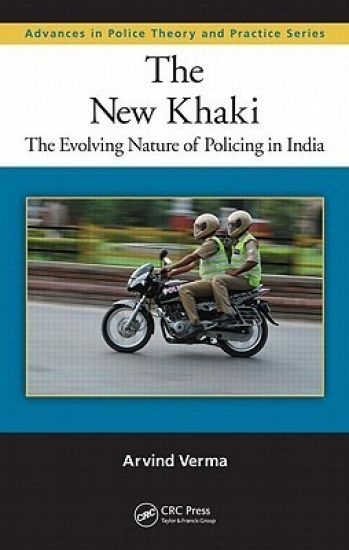
In a democratic society, police are expected to be accountable to the people they serve, upholding the rights of citizens and following due process. In India, however, political pressure in the competitive electoral arena forces the police to adopt questionable means and dubious strategies. As a hierarchical bureaucratic organization, disciplined in a military tradition and schooled in colonial traditions of deference to authority figures, India’s police personnel have effectively alienated the very people they are supposed to serve and protect.In response to the overwhelmingly bleak pessimism of researchers and analysts scrutinizing India’s police force, The New Khaki: The Evolving Nature of Policing in India highlights those unobtrusive and indirect paths toward effective transformation in spite of politicians and bureaucrats. Analyzing the obstacles to reform, the book argues forcefully and systematically to present areas of potential innovation and successful case studies.Focusing on practical and actionable options, the book examines how the use of new technology, the judiciary, and other creative administrative mechanisms can give determined police leaders the methods to change the policing system and its practices. It also provides strong evidence for the role of research and scholarship in transforming the police organization, offering illustrative examples and creative responses to endemic problems.The case studies presented here suggest that even when the powerful sections of society and those who control the police are not ready to bring changes, imaginative police leadership can find creative means to transform their organization to serve the people. The New Khaki: The Evolving Nature of Policing in India is a must-read for all those who are concerned about policing and interested in its improvement for a better world.

Sikhism’s short but relatively eventful history provides a fascinating insight into the working of misunderstood and seemingly contradictory themes such as politics and religion, violence and mysticism, culture and spirituality, orality and textuality, public sphere versus private sphere, tradition and modernity. This book presents students with a careful analysis of these complex themes as they have manifested themselves in the historical evolution of the Sikh traditions and the encounter of Sikhs with modernity and the West, in the philosophical teachings of its founders and their interpretation by Sikh exegetes, and in Sikh ethical and intellectual responses to contemporary issues in an increasingly secular and pluralistic world. Sikhism: A Guide for the Perplexed serves as an ideal guide to Sikhism, and also for students of Asian studies, Sociology of Religion and World Religions.

Sikhism’s short but relatively eventful history provides a fascinating insight into the working of misunderstood and seemingly contradictory themes such as politics and religion, violence and mysticism, culture and spirituality, orality and textuality, public sphere versus private sphere, tradition and modernity. This book presents students with a careful analysis of these complex themes as they have manifested themselves in the historical evolution of the Sikh traditions and the encounter of Sikhs with modernity and the West, in the philosophical teachings of its founders and their interpretation by Sikh exegetes, and in Sikh ethical and intellectual responses to contemporary issues in an increasingly secular and pluralistic world. Sikhism: A Guide for the Perplexed serves as an ideal guide to Sikhism, and also for students of Asian studies, Sociology of Religion and World Religions.


3 D Deceit, Duplicity & Dissimulation of U.S. Foreign Policy Towards India, Pakistan & Afghanistan
Arvind Goswami
Authorhouse
2012
sidottu

3 D Deceit, Duplicity & Dissimulation of U.S. Foreign Policy Towards India, Pakistan & Afghanistan
Arvind Goswami
Authorhouse
2012
pokkari

War Against Cancer: Holistic Approach
Arvind V. Kulkarni M. D.
Createspace Independent Publishing Platform
2012
nidottu

Piers Plowman and the Reinvention of Church Law in the Late Middle Ages
Arvind Thomas
University of Toronto Press
2019
sidottu
It is a medieval truism that the poet meddles with words, the lawyer with the world. But are the poet’s words and the lawyer’s world really so far apart? To what extent does the art of making poems share in the craft of making laws, and vice versa? Framed by such questions, Piers Plowman and the Reinvention of Church Law in the Late Middle Ages examines the mutually productive interaction between literary and legal "makyngs" in England’s great Middle English poem by William Langland. Focusing on Piers Plowman’s preoccupation with wrongdoing in the B and C versions, Arvind Thomas examines the versions’ representations of trials, confessions, restitutions, penalties, and pardons. Thomas explores how the "literary" informs and transforms the "legal" until they finally cannot be separated. Thomas shows how the poem’s narrative voice, metaphor, syntax and style not only reflect but also act upon properties of canon law, such as penitential procedures and authoritative maxims. Langland’s mobilization of juridical concepts, Thomas insists, not only engenders a poetics informed by canonist thought but also expresses an alternative vision of canon law from that proposed by medieval jurists and today’s medievalists.

Handbook For Microbiology Practice In Oral And Maxillofacial Diagnosis
Arvind Babu Rs
iUniverse
2015
pokkari

The Design of a Minimal Sensor Configuration for a Cooperative Intersection Collision Avoidance System ? Stop Sign Assist: CICAS-SSA Final Report #4
Arvind Menon; Pi-Ming Cheng; Craig Shankwitz
Createspace Independent Publishing Platform
2010
nidottu

Amazing and Wonderful World of Flowers (HD Picture Book)
Arvind Katoch
Createspace Independent Publishing Platform
2014
nidottu