Kirjojen hintavertailu. Mukana 12 016 292 kirjaa ja 12 kauppaa.

Kirjahaku

Etsi kirjoja tekijän nimen, kirjan nimen tai ISBN:n perusteella.

1000 tulosta hakusanalla Barnett Singer

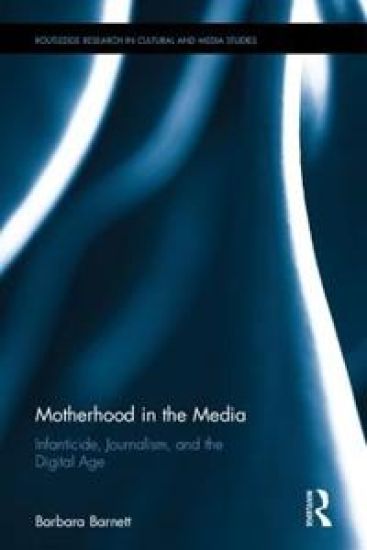
Motherhood in the Media

Motherhood in the Media

Barbara Barnett

Routledge
2018
nidottu
This book examines contemporary media stories about women who kill their children. By analyzing media texts, motherhood blogs, and journalistic interviews, the book seeks to understand better maternal violence and the factors that lead women to harm their children. The central thesis of this book is that media practices have changed dramatically during the past 50 years, as has society’s views on "appropriate" feminine behavior, yet definitions of characteristics of good mothers remain largely defined by 1950s sit coms, Victorian ideals, and Christian theology. The book contends that in spite of media saturation in American society, and the media’s increased opportunities to tell complex and nuanced stories, news media narratives continue to situate maternal violence as rare, unfathomable, and unpredictable. The news media’s shift in focus—from public service to profit-making industry—has encouraged superficial coverage of maternal violence as reporters look for stories that sell, not stories that explain. Motherhood blogs, in contrast, offer an opportunity for women to tell their own stories about motherhood, based on experience. Interviews with journalists offer insights into how the structure of their jobs dictates media coverage of this intimate form of violence.
People, Not Psychiatry

People, Not Psychiatry

Michael Barnett

Routledge
2018
sidottu
Originally published in 1973, this book is about people and psychiatry. About people who rejected psychiatry as it was generally practised at the time, people who sought for and found alternative ways of caring for and healing one another. The author, who had been active in radical alternatives to psychiatry for some time, offers us a programme based not on drugs, repression and a ‘questionable’ expertise, but on human caring, greater awareness of the body, deeper communication between persons and a willingness to let the emotions flow. It is a challenging alternative which came at a time when the viability of scientific, theoretical and chemical approaches to distress were being questioned at all levels of society. This alternative includes the new direct methods of healing (making whole) such as Encounter, Gestalt, Bioenergetics, Psychofantasy – methods that do not do things to people but allow them to feel their way into change through experiment, flow and choice.The main focus of the book is People, not Psychiatry (PNP), the network set up by the author in 1969. PNP is open to all, and people in it help one another in times of stress and crisis, if they are asked to and when they are needed. One of the main assets of these networks is that they are an alternative and they are there. The book tells the story of PNP’s birth and growth. It is a personal story, a moving story, a story about people. In addition, the book contains some lively theoretical discussion, both simple and clear, in the course of which the author tentatively offers his own theory of neurosis – that many people become victims of the primitive logic patterns laid down in infancy, patterns that become reinforced through fear and habit and have to be dissolved or replaced if we are to enjoy a full, healthy, free-flowing life. The book is directed at doctors, patients, consultants, nurses, psychologists, social workers, therapists, in fact anyone involved in any way in the field of psychiatry. It is also offered to all those whom psychiatry touches, that it to say – everyone.
People, Not Psychiatry

People, Not Psychiatry

Michael Barnett

Routledge
2020
nidottu
Originally published in 1973, this book is about people and psychiatry. About people who rejected psychiatry as it was generally practised at the time, people who sought for and found alternative ways of caring for and healing one another. The author, who had been active in radical alternatives to psychiatry for some time, offers us a programme based not on drugs, repression and a ‘questionable’ expertise, but on human caring, greater awareness of the body, deeper communication between persons and a willingness to let the emotions flow. It is a challenging alternative which came at a time when the viability of scientific, theoretical and chemical approaches to distress were being questioned at all levels of society. This alternative includes the new direct methods of healing (making whole) such as Encounter, Gestalt, Bioenergetics, Psychofantasy – methods that do not do things to people but allow them to feel their way into change through experiment, flow and choice.The main focus of the book is People, not Psychiatry (PNP), the network set up by the author in 1969. PNP is open to all, and people in it help one another in times of stress and crisis, if they are asked to and when they are needed. One of the main assets of these networks is that they are an alternative and they are there. The book tells the story of PNP’s birth and growth. It is a personal story, a moving story, a story about people. In addition, the book contains some lively theoretical discussion, both simple and clear, in the course of which the author tentatively offers his own theory of neurosis – that many people become victims of the primitive logic patterns laid down in infancy, patterns that become reinforced through fear and habit and have to be dissolved or replaced if we are to enjoy a full, healthy, free-flowing life. The book is directed at doctors, patients, consultants, nurses, psychologists, social workers, therapists, in fact anyone involved in any way in the field of psychiatry. It is also offered to all those whom psychiatry touches, that it to say – everyone.
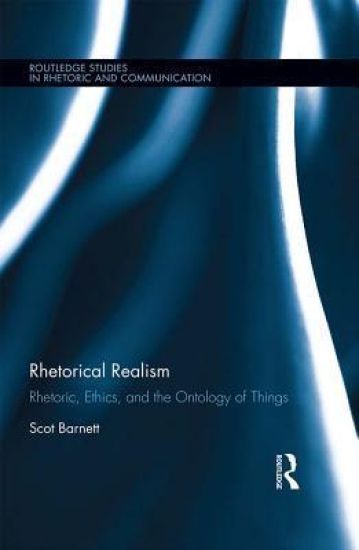
Rhetorical Realism

Rhetorical Realism

Scot Barnett

Routledge
2016
sidottu
Rhetorical Realism responds to the surging interest in nonhumans across the humanities by exploring how realist commitments have historically accompanied understandings of rhetoric from antiquity to the present. For a discipline that often defines itself according to human speech and writing, the nonhuman turn poses a number of challenges and opportunities for rhetoric. To date, many of the responses to the nonhuman turn in rhetoric have sought to address rhetoric’s compatibility with new conceptions of materiality. In Rhetorical Realism, Scot Barnett extends this work by transforming it into a new historiographic methodology attuned to the presence and occlusion of things in rhetorical history. Through investigations of rhetoric’s place in Aristotelian metaphysics, the language invention movement of the seventeenth century, and postmodern conceptions of rhetoric as an epistemic art, Barnett’s study expands the scope of rhetorical inquiry by showing how realist ideas have worked to frame rhetoric’s scope and meanings during key moments in its history. Ultimately, Barnett argues that all versions of rhetoric depend upon some realist assumptions about the world. Rather than conceive of the nonhuman as a dramatic turning point in rhetorical theory, Rhetorical Realism encourages rhetorical theorists to turn another eye toward what rhetoricians have always done—defining and configuring rhetoric within a broader ontology of things.
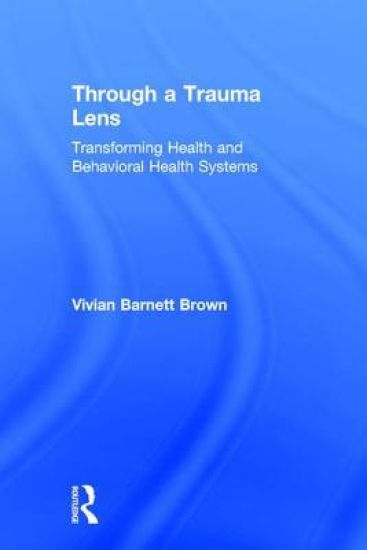
Through a Trauma Lens

Through a Trauma Lens

Vivian Barnett Brown

Routledge
2017
sidottu
Through a Trauma Lens aims to understand and highlight successful examples of health, mental health, substance abuse treatment, and other service delivery systems that have implemented an integrated trauma-informed service model. This innovative volume draws on the author’s first-hand experience working alongside a number of local and state organizations as well as a nationwide survey of notable trauma-informed models. Structured around illustrative case studies, chapters that correspond to stage of adoption, and strategies for cultivating staff support, this valuable new resource include examples and strategies to be applied in any treatment or service setting.
Through a Trauma Lens

Through a Trauma Lens

Vivian Barnett Brown

Routledge
2017
nidottu
Through a Trauma Lens aims to understand and highlight successful examples of health, mental health, substance abuse treatment, and other service delivery systems that have implemented an integrated trauma-informed service model. This innovative volume draws on the author’s first-hand experience working alongside a number of local and state organizations as well as a nationwide survey of notable trauma-informed models. Structured around illustrative case studies, chapters that correspond to stage of adoption, and strategies for cultivating staff support, this valuable new resource include examples and strategies to be applied in any treatment or service setting.
The Rastafari Movement

The Rastafari Movement

Michael Barnett

Routledge
2017
sidottu
The Rastafari Movement: A North American and Caribbean Perspective provides a historical and ideological overview of the Rastafari movement in the context of its early beginnings in the island of Jamaica and its eventual establishment in other geographic locations. Building on previous scholarship and the author's own fieldwork, the text goes on to provide a rich comparative analysis of the Rastafari movement with other Black theological movements, specifically the Nation of Islam and the Black Hebrew Israelites in the context of the United States. The text explores the following topics:• Pan-Africanism, Black nationalism and Rastafari;• gender dynamics;• globalization;• concepts and symbols;• other Black theological movements.This text is ideal for students of religious studies, sociology, anthropology, African Diaspora studies, African American studies, and Black studies who wish to gain an understanding of the history and beliefs of the Rastafari Movement.
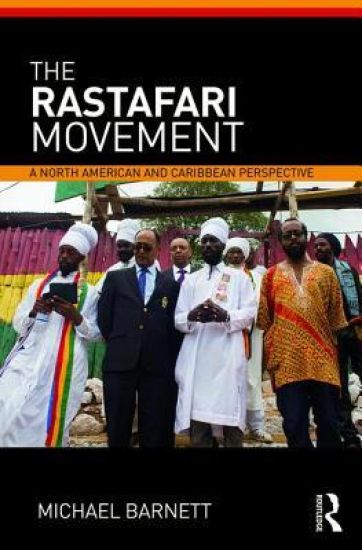
The Rastafari Movement

The Rastafari Movement

Michael Barnett

Routledge
2017
nidottu
The Rastafari Movement: A North American and Caribbean Perspective provides a historical and ideological overview of the Rastafari movement in the context of its early beginnings in the island of Jamaica and its eventual establishment in other geographic locations. Building on previous scholarship and the author's own fieldwork, the text goes on to provide a rich comparative analysis of the Rastafari movement with other Black theological movements, specifically the Nation of Islam and the Black Hebrew Israelites in the context of the United States. The text explores the following topics:• Pan-Africanism, Black nationalism and Rastafari;• gender dynamics;• globalization;• concepts and symbols;• other Black theological movements.This text is ideal for students of religious studies, sociology, anthropology, African Diaspora studies, African American studies, and Black studies who wish to gain an understanding of the history and beliefs of the Rastafari Movement.
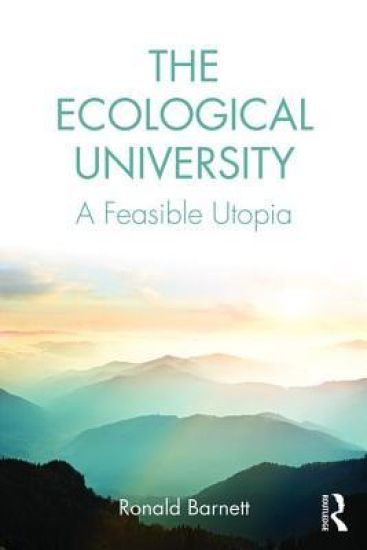
The Ecological University

The Ecological University

Ronald Barnett

Routledge
2017
sidottu
Universities continue to expand, bringing considerable debate about their purposes and relationship to the world. In The Ecological University, Ronald Barnett argues that universities are short of their potential and responsibilities in an ever-changing and challenging environment. This book centres on the idea that the expansion of higher education has opened new spaces and possibilities. The university is interconnected with a number of ecosystems: knowledge, social institutions, persons, the economy, learning, culture and the natural environment. These seven ecosystems of the university are all fragile and in order to advance and develop them universities need to engage with each one.By looking at matters such as the challenges of learning, professional life and research and inquiry, this book outlines just what it could mean for higher education institutions to understand and realize themselves as exemplars of the ecological university. With bold and original insights and practical principles for development, this radical and transformative book is essential reading for university leaders and administrators, academics, students, and all interested in the future of the university.
The Ecological University

The Ecological University

Ronald Barnett

Routledge
2017
nidottu
Universities continue to expand, bringing considerable debate about their purposes and relationship to the world. In The Ecological University, Ronald Barnett argues that universities are short of their potential and responsibilities in an ever-changing and challenging environment. This book centres on the idea that the expansion of higher education has opened new spaces and possibilities. The university is interconnected with a number of ecosystems: knowledge, social institutions, persons, the economy, learning, culture and the natural environment. These seven ecosystems of the university are all fragile and in order to advance and develop them universities need to engage with each one.By looking at matters such as the challenges of learning, professional life and research and inquiry, this book outlines just what it could mean for higher education institutions to understand and realize themselves as exemplars of the ecological university. With bold and original insights and practical principles for development, this radical and transformative book is essential reading for university leaders and administrators, academics, students, and all interested in the future of the university.
Thinking and Rethinking the University
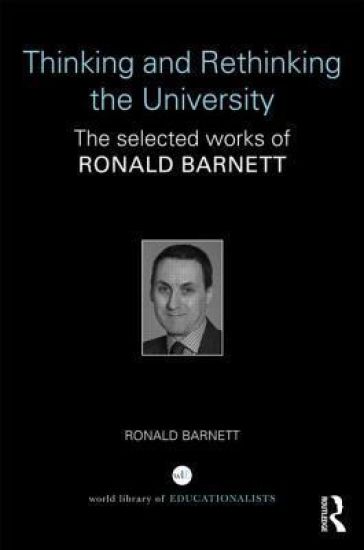
In the World Library of Educationalists series, international scholars compile career-long selections of what they judge to be among their finest pieces so the world has access to them in a single manageable volume. Readers are able to follow the themes and strands and see how their work contributes to the development of the field.Over more than three decades, Professor Ronald Barnett has acquired a distinctive position as a leading philosopher of the university and higher education, and this volume brings together 15 of his key writings, particularly papers from leading journals. This volume also includes, as his introductory chapter, an intellectual autobiography, in which Professor Barnett recounts the history of his scholarship and writing, traces its development across five stages, and identifies the themes and sources of inspiration that lie within his corpus of work.Ronald Barnett has described his corpus of work as a social philosophy of the university that is at once conceptual, critical, practical and imaginative. His concepts of criticality, critical interdisciplinarity, supercomplexity and the ecological university have been taken up in the literature across the world. Through telling examples, and with an incisive clarity of writing, Ronald Barnett’s scholarship has helped to illuminate in fresh ways and reorient practices in the university and in higher education. The chapters in this volume reveal all of these qualities so making this volume a compelling overview of a passionate and yet constructive critic of the university.
Thinking and Rethinking the University
In the World Library of Educationalists series, international scholars compile career-long selections of what they judge to be among their finest pieces so the world has access to them in a single manageable volume. Readers are able to follow the themes and strands and see how their work contributes to the development of the field.Over more than three decades, Professor Ronald Barnett has acquired a distinctive position as a leading philosopher of the university and higher education, and this volume brings together 15 of his key writings, particularly papers from leading journals. This volume also includes, as his introductory chapter, an intellectual autobiography, in which Professor Barnett recounts the history of his scholarship and writing, traces its development across five stages, and identifies the themes and sources of inspiration that lie within his corpus of work.Ronald Barnett has described his corpus of work as a social philosophy of the university that is at once conceptual, critical, practical and imaginative. His concepts of criticality, critical interdisciplinarity, supercomplexity and the ecological university have been taken up in the literature across the world. Through telling examples, and with an incisive clarity of writing, Ronald Barnett’s scholarship has helped to illuminate in fresh ways and reorient practices in the university and in higher education. The chapters in this volume reveal all of these qualities so making this volume a compelling overview of a passionate and yet constructive critic of the university.
E.E. Slutsky as Economist and Mathematician
E.E. Slutsky is perhaps the Russian/Ukrainian economist most quoted by mainstream economists today. This is the first research monograph to examine the life and work of the internationally-renowned economist and mathematician. It does so from both a ‘history of economics’ perspective and a ‘history of science’ perspective, bringing these two strands together in order to demonstrate Slutsky’s enduring legacy as an innovative researcher and an influential intellectual. It also presents some of Slutsky’s lesser-known (and hitherto-unavailable) works in English translation.
The Modern Landscapes of Ted Smyth

The Modern Landscapes of Ted Smyth

Rod Barnett; Jacqueline Margetts

Routledge
2017
sidottu
The modern period in landscape architecture is enjoying the fascinated appreciation of scholars and historians in Europe and the Americas, and new themes, new subjects and new appraisals are appearing. This book contributes to the conversation by focusing on the work of a singular designer who spent his entire career in a province of the North Island of New Zealand. Ted Smyth practiced an assured landscape modernism without ever seeing the designs of his forebears or his contemporaries working in the UK, Europe and the United States. Designing in isolation from the mainstream of modernism, and a little after its high tide, Smyth produced a series of gardens that provoke a revaluation of the diffusionist model of influence. The book explains and describes the evolution of Smyth’s design vocabulary and relates it to the development of tropical landscape modernism in other Asia-Pacific sites. It shows how a culture of garden modernism can be generated from within a particular locale, and highlights Smyth’s engagement with Maori design traditions in search of a specific expression of the high modern essentialism of place.
The Modern Landscapes of Ted Smyth

The Modern Landscapes of Ted Smyth

Rod Barnett; Jacqueline Margetts

Routledge
2017
nidottu
The modern period in landscape architecture is enjoying the fascinated appreciation of scholars and historians in Europe and the Americas, and new themes, new subjects and new appraisals are appearing. This book contributes to the conversation by focusing on the work of a singular designer who spent his entire career in a province of the North Island of New Zealand. Ted Smyth practiced an assured landscape modernism without ever seeing the designs of his forebears or his contemporaries working in the UK, Europe and the United States. Designing in isolation from the mainstream of modernism, and a little after its high tide, Smyth produced a series of gardens that provoke a revaluation of the diffusionist model of influence. The book explains and describes the evolution of Smyth’s design vocabulary and relates it to the development of tropical landscape modernism in other Asia-Pacific sites. It shows how a culture of garden modernism can be generated from within a particular locale, and highlights Smyth’s engagement with Maori design traditions in search of a specific expression of the high modern essentialism of place.
Motherhood in the Media

Motherhood in the Media

Barbara Barnett

Routledge
2016
sidottu
This book examines contemporary media stories about women who kill their children. By analyzing media texts, motherhood blogs, and journalistic interviews, the book seeks to understand better maternal violence and the factors that lead women to harm their children. The central thesis of this book is that media practices have changed dramatically during the past 50 years, as has society’s views on "appropriate" feminine behavior, yet definitions of characteristics of good mothers remain largely defined by 1950s sit coms, Victorian ideals, and Christian theology. The book contends that in spite of media saturation in American society, and the media’s increased opportunities to tell complex and nuanced stories, news media narratives continue to situate maternal violence as rare, unfathomable, and unpredictable. The news media’s shift in focus—from public service to profit-making industry—has encouraged superficial coverage of maternal violence as reporters look for stories that sell, not stories that explain. Motherhood blogs, in contrast, offer an opportunity for women to tell their own stories about motherhood, based on experience. Interviews with journalists offer insights into how the structure of their jobs dictates media coverage of this intimate form of violence.
City Design

City Design

Jonathan Barnett

Routledge
2016
sidottu
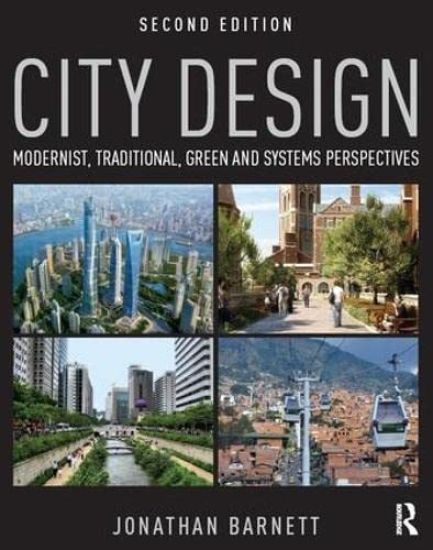
City Design describes the history and current practice of the four most widely accepted approaches to city design: the Modernist city of towers and highways that, beginning in the 1920s, has come to dominate urban development worldwide but is criticized as mechanical and soul-less; the Traditional organization of cities as streets and public places, scorned by the modernists, but being revived today for its human scale; Green city design, whose history can be traced back thousands of years in Asia, but is becoming increasingly important everywhere as sustainability and the preservation of the planet are recognized as basic issues, and finally Systems city design, which includes infrastructure and development regulation but also includes computer aided techniques which give designers new tools for managing the complexity of cities.This new, revised edition of City Design includes a larger format and improved interior design allowing for better image quality. The author has also included wider global coverage and context with more international examples throughout, as well as new coverage on designing for informal settlements and new research conclusions about the immediacy of sea level rise and other climate change issues that affect cities, which sharpen the need for design measures discussed in the book.Authoritative yet accessible, City Design covers complicated issues of theory and practice, and its approach is objective and inclusive. This is a comprehensive text on city design ideal for planners, landscape architects, urban designers and those who want to understand how to improve cities.
City Design

City Design

Jonathan Barnett

Routledge
2016
nidottu
City Design describes the history and current practice of the four most widely accepted approaches to city design: the Modernist city of towers and highways that, beginning in the 1920s, has come to dominate urban development worldwide but is criticized as mechanical and soul-less; the Traditional organization of cities as streets and public places, scorned by the modernists, but being revived today for its human scale; Green city design, whose history can be traced back thousands of years in Asia, but is becoming increasingly important everywhere as sustainability and the preservation of the planet are recognized as basic issues, and finally Systems city design, which includes infrastructure and development regulation but also includes computer aided techniques which give designers new tools for managing the complexity of cities.This new, revised edition of City Design includes a larger format and improved interior design allowing for better image quality. The author has also included wider global coverage and context with more international examples throughout, as well as new coverage on designing for informal settlements and new research conclusions about the immediacy of sea level rise and other climate change issues that affect cities, which sharpen the need for design measures discussed in the book.Authoritative yet accessible, City Design covers complicated issues of theory and practice, and its approach is objective and inclusive. This is a comprehensive text on city design ideal for planners, landscape architects, urban designers and those who want to understand how to improve cities.
Jumpstart! Science Outdoors

Jumpstart! Science Outdoors

Janet Barnett; Rosemary Feasey

Routledge
2016
sidottu
This collection of engaging and simple to use activities will jumpstart students’ understanding of science by taking teaching and learning outdoors and linking it to a specific area of the curriculum.A wealth of practical activities in the book cover all areas from identifying, classifying and grouping to pattern seeking, making observations and comparative and fair testing.This cross-curricular approach encourages teachers to develop useful links with other subjects which support and complement the science. With links to a range of online resources and over 30 motivating and engaging science activities, cross-curricular links cover the following areas of the curriculum: Maths, English, Computing, History, Geography, Music, Art, P.E and Design and Technology.Jumpstart! Science Outdoors is an essential classroom resource that will encourage the personal development of children and is the perfect solution for helping teachers, teaching assistants and students deliver effective and imaginative science lessons.
Jumpstart! Science Outdoors

Jumpstart! Science Outdoors

Janet Barnett; Rosemary Feasey

Routledge
2016
nidottu
This collection of engaging and simple to use activities will jumpstart students’ understanding of science by taking teaching and learning outdoors and linking it to a specific area of the curriculum.A wealth of practical activities in the book cover all areas from identifying, classifying and grouping to pattern seeking, making observations and comparative and fair testing.This cross-curricular approach encourages teachers to develop useful links with other subjects which support and complement the science. With links to a range of online resources and over 30 motivating and engaging science activities, cross-curricular links cover the following areas of the curriculum: Maths, English, Computing, History, Geography, Music, Art, P.E and Design and Technology.Jumpstart! Science Outdoors is an essential classroom resource that will encourage the personal development of children and is the perfect solution for helping teachers, teaching assistants and students deliver effective and imaginative science lessons.