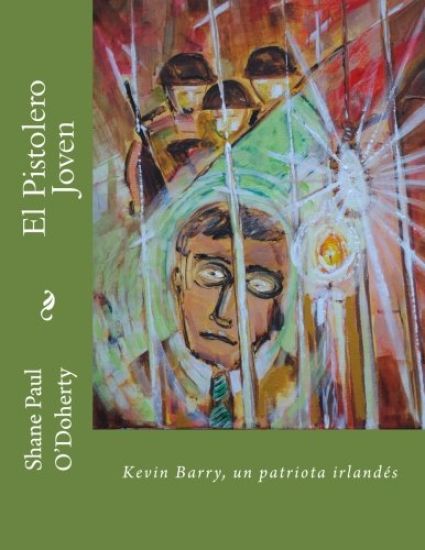
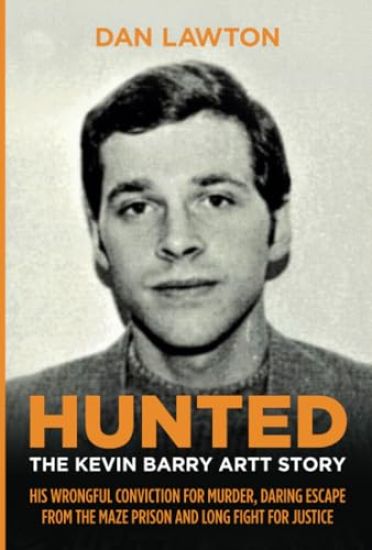
El patriota irland s Kevin Barry ten a 18 a os cuando el uno de noviembre de 1920 fue ejecutado por participar en una emboscada del IRA donde murieron tres j venes soldados brit nicos de 15, 19 y 20 a os de edad. Kevin se convirti en una h roe nacional y en un m rtir de la Guerra de Independencia irlandesa. En este libro, el antiguo voluntario del IRA, Shane Paul O'Doherty, cuenta la verdadera historia de la detenci n, confinamiento y ejecuci n de Kevin y tambi n detalla como la intensa f cat lica de Kevin le ayud a morir con valent a y con una limpia conciencia.
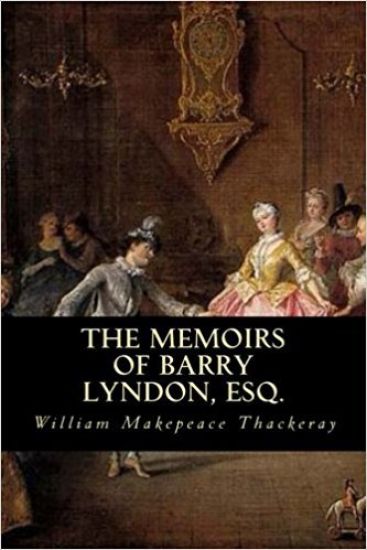
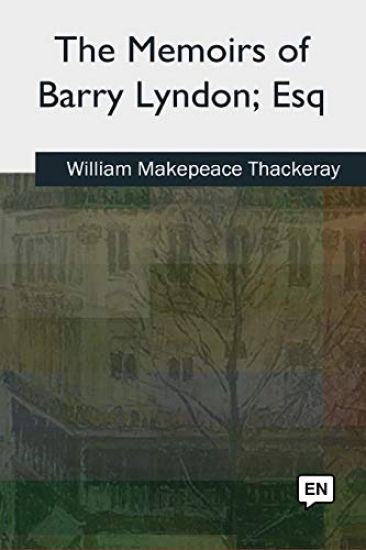
In the number of FRASER'S MAGAZINE for January 1844 appeared the first instalment of 'THE LUCK OF BARRY LYNDON, ESQ., A ROMANCE OF THE LAST CENTURY, by FitzBoodle, ' and the story continued to appear month by month-with the exception of October-up to the end of the year, when the concluding portion was signed 'G. S. FitzBoodle.' FITZBOODLE'S CONFESSIONS, it should be added, had appeared occasionally in the magazine during the years immediately precedent, so that the pseudonym was familiar to FRASER'S readers. The story was written, according to its author's own words, 'with a great deal of dulness, unwillingness and labour, ' and was evidently done as the instalments were required, for in August he wrote 'read for "B. L." all the morning at the club, ' and four days later of '"B. L." lying like a nightmare on my mind.' The journey to the East-which was to give us in literary results NOTES OF A JOURNEY FROM CORNHILL TO GRAND CAIRO-was begun with BARRY LYNDON yet unfinished, for at Malta the author noted on the first three days of November-'Wrote Barry but slowly and with great difficulty.' 'Wrote Barry with no more success than yesterday.' 'Finished Barry after great throes late at night.' In the number of Fraser's for the following month, as I have said, the conclusion appear
William Makepeace Thackeray 18 July 1811 - 24 December 1863) was an English novelist of the 19th century. He is known for his satirical works, particularly Vanity Fair, a panoramic portrait of English society.Thackeray, an only child, was born in Calcutta, British India, where his father, Richmond Thackeray (1 September 1781 - 13 September 1815), was secretary to the Board of Revenue in the British East India Company. His mother, Anne Becher (1792-1864), was the second daughter of Harriet Becher and John Harman Becher, who was also a secretary (writer) for the East India Company. Richmond died in 1815, which caused Anne to send her son to England in 1816, while she remained in British India. The ship on which he travelled made a short stopover at St. Helena, where the imprisoned Napoleon was pointed out to him. Once in England he was educated at schools in Southampton and Chiswick, and then at Charterhouse School, where he became a close friend of John Leech. Thackeray disliked Charterhouse, and parodied it in his fiction as "Slaughterhouse". Nevertheless, Thackeray was honoured in the Charterhouse Chapel with a monument after his death. Illness in his last year there, during which he reportedly grew to his full height of six foot three, postponed his matriculation at Trinity College, Cambridge, until February 1829.Never too keen on academic studies, Thackeray left Cambridge in 1830, but some of his earliest published writing appeared in two university periodicals, The Snob and The Gownsman. Thackeray then travelled for some time on the continent, visiting Paris and Weimar, where he met Goethe. He returned to England and began to study law at the Middle Temple, but soon gave that up. On reaching the age of 21 he came into his inheritance from his father, but he squandered much of it on gambling and on funding two unsuccessful newspapers, The National Standard and The Constitutional, for which he had hoped to write. He also lost a good part of his fortune in the collapse of two Indian banks. Forced to consider a profession to support himself, he turned first to art, which he studied in Paris, but did not pursue it, except in later years as the illustrator of some of his own novels and other writings.
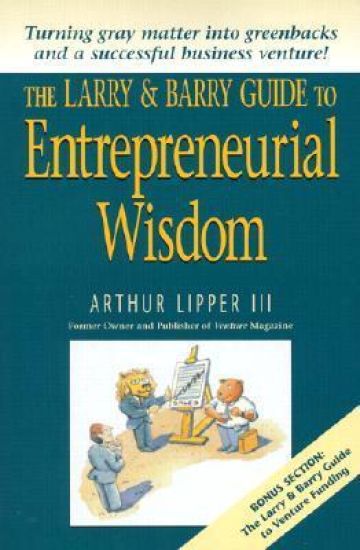
If you have a valuable idea and want make the leap from there to billionaire, let the Larry and Barry guide you through this difficult process -- from business-building to profit-making. These two characters will keep you entertained while offering priceless advice on: Clarifying your idea and determining valueTurning a vision into a businessFinancingStarting your businessStaffing - needs versus wantsNetworking Attracting partners Maintaining cash flowPLUS:Special Bonus section on Venture Funding!Learn what to do and--just as important--what not to do from seasoned professionals that understand how to transform your abstract idea into a money-making enterprise. Having been there and done that, Larry and Barry offer the entrepreneurial nuts-and-bolts required in today's competitive environment to create a prosperous business venture.
Perspectives on Barry Hannah is a collection of essays devoted to the work of the award-winning fiction writer Barry Hannah. The anthology features a broad range of critical approaches and covers the span of Hannah's career from Geronimo Rex (1972) to Yonder Stands Your Orphan (2001). The book also includes a previously unpublished interview with Hannah. The ten essays cover all of Hannah's thirteen published books. The contributors give fresh perspectives on Hannah's classic works (Airships and Ray), provide illuminating readings of important fiction that has received less critical attention (Nighwatchmen, Hey Jack!, and Never Die), and offer the first sustained criticism of Hannah's acclaimed later fiction (Bats Out of Hell, High Lonesome, and Yonder Stands Your Orphan). As Martyn Bone explains in his introduction, the essays--though varied in approach and style--consistently hone in on the recurrent themes that characterize Hannah's career: his relationship to postmodernism; his interrogation of traditional ideas of masculinity and heroism; his complex engagement with southern history, literature, and culture; and his growing concern with spirituality and morality. The essays in Perspectives on Barry Hannah make connections between Hannah's work and that of several prominent modern and postmodern authors, including William Faulkner, Ernest Hemingway, James Joyce, Allen Tate, John Irving, J. M. Coetzee, and Cormac McCarthy. Contributors also consider Hannah's fiction in relation to non-literary cultural forms such as sport, film, and popular music. Ultimately, Perspectives on Barry Hannah affirms Hannah's status as a leading figure in contemporary American literature. Martyn Bone is assistant professor of American literature at the Institute for English, German, and Romance Languages at the University of Copenhagen. His previous publications include The Postsouthern Sense of Place in Contemporary Fiction.
Miller's metaphysics, including his approach to God, is broad, deep, and original, with the potential to make a fruitful contribution to contemporary philosophy. Yet it has not received the critical attention it deserves. Miller's work deserves critical attention because of its thorough and original defense of three highly controversial positions: that existence is a real property of concrete individuals; that it is possible to prove, without assuming any principle of sufficient reason, that there is an uncaused cause of the universe; and that the uncaused cause is the simple God of classical theism. Miller's position on existence is an important alternative in current analytical philosophy to what Miller calls the "Frege-Russell-Quine" theory, and the neo-Meinongian positions of Terence Parsons and Ed Zalta. Miller's argument for an uncaused cause of the universe has been described one of the most ambitious theistic arguments produced by a well-respected, contemporary, analytic philosopher. Analysis of Existing: Barry Miller's Approach to God is the first clear, systematic interpretation of Miller's theistic philosophy.
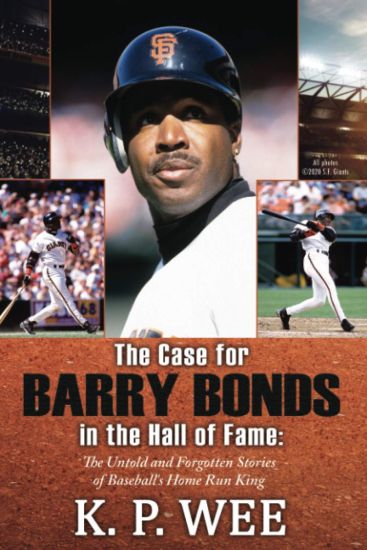
"Barry Bonds is a Hall of Famer. At some point, the best players of their era have to be enshrined. Period. It's part of our game's history."-Trevor Bauer, 2020 National League Cy Young Award Winner Sportswriter K. P. Wee asks the question that many MLB fans have been thinking-Should Barry Bonds be in the Baseball Hall of Fame? In his 22 years in the Major Leagues, Bonds, who played for the Pittsburgh Pirates and the San Francisco Giants, was: the All-time Home Run leader with 762 home runsa seven-time MVPa 14-time All-Staran eight-time Gold Glove winnerAs the final year to vote this home run king in begins, The Case for Barry Bonds in the Baseball Hall of Fame looks at his stunning career from all aspects including his personal life as the son of a baseball legend, as well as never-before told stories of his generosity and mentorship towards other ballplayers. The book also looks at the stories of his distaste for the sports press, as well as the role of racism in professional sports, and how this impacted his career. Join sportswriter K. P. Wee as he shares insights and interviews from baseball insiders, Hall of Fame voters and baseball legends, as he puts to rest the question "Does Barry Bonds belong in the Baseball Hall of Fame?"
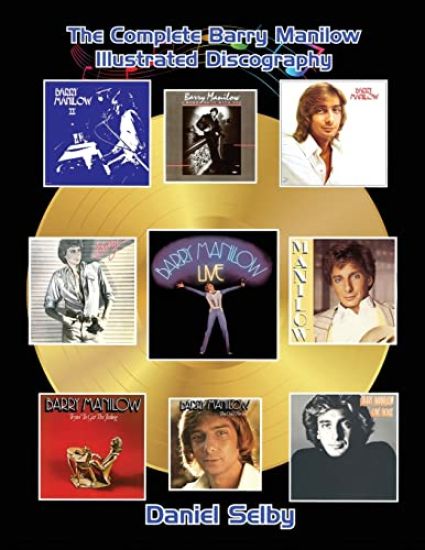
Barry Alan Pincus, better known as Barry Manilow, was born on June 17, 1943 and raised in Brooklyn, New York. From an early age, music was important to Barry. After high school, he studied at New York College of Music and Juilliard. Around 1964 and continuing on for years, Barry wrote jingles for various companies such as Band-Aid, Pepsi, McDonalds, and others. In 1969, Barry signed with Bell Records and recorded several singles as "Featherbed." None of the releases caused any real chart action. On July 7, 1973, Bell Records released the album "Barry Manilow" (Bell-1129) which was the start of a long and productive career that is still going strong today Daniel Selby has research and compiled the most up to date discography ever published on this remarkable music icon. Complete with foreign releases and rare photographs. Also includes TV appearances and a decade of tour dates Career spanning
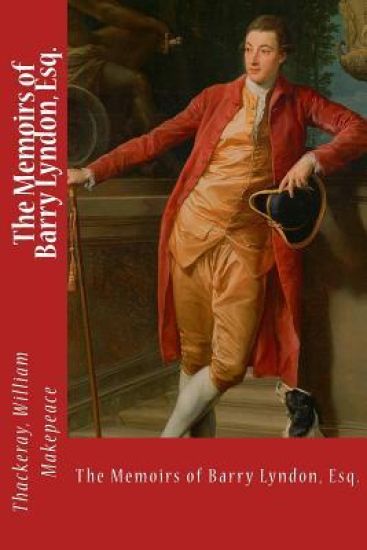
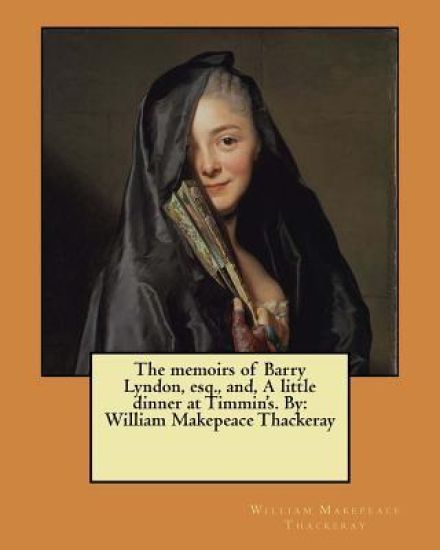
Barry Lyndon-far from the best known, but by some critics acclaimed as the finest, of Thackeray's works-appeared originally as a serial a few years before VANITY FAIR was written; yet it was not published in book form, and then not by itself, until after the publication of VANITY FAIR, PENDENNIS, ESMOND and THE NEWCOMES had placed its author in the forefront of the literary men of the day. So many years after the event we cannot help wondering why the story was not earlier put in book form; for in its delineation of the character of an adventurer it is as great as VANITY FAIR, while for the local colour of history, if I may put it so, it is no undistinguished precursor of ESMOND.
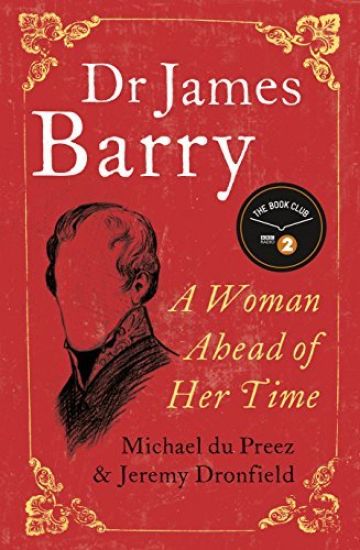
A Sunday Times Book of the Year As featured on the BBC Radio 2 Book Club Dr James Barry: Inspector General of Hospitals, army surgeon, duellist, reformer, ladykiller, eccentric. He performed the first successful Caesarean in the British Empire, outraged the military establishment and gave Florence Nightingale a dressing down at Scutari. At home he was surrounded by a menagerie of animals, including a cat, a goat, a parrot and a terrier. Long ago in Cork, Ireland, he had also been a mother. This is the amazing tale of Margaret Anne Bulkley, the young woman who broke the rules of Georgian society to become one of the most respected surgeons of the century. In an extraordinary life, she crossed paths with the British Empire’s great and good, royalty and rebels, soldiers and slaves. A medical pioneer, she rose to a position that no woman before her had been allowed to occupy, but for all her successes, her long, audacious deception also left her isolated, even costing her the chance to be with the man she loved.
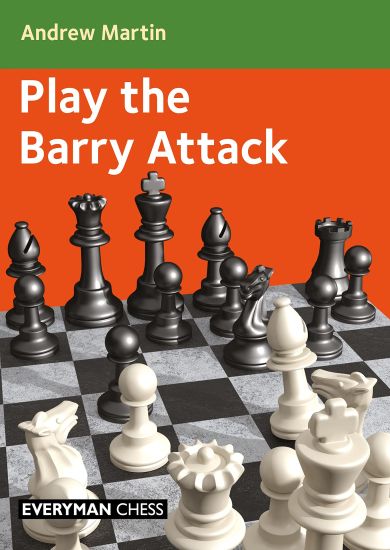
The Barry Attack is a highly aggressive system that arises after 1 d4 Nf6 2 Nf3 g6 3 Nc3 d5 4 Bf4. Although the concept of the Barry Attack has been known for a century or so, the modern interpretation (as with a number of other dynamic white systems) has mainly been developed by English grandmasters over the past couple of decades. This “modern interpretation” is often not very subtle. If Black provides a target by castling early on the kingside, White will often let rip with moves such as Qd2, Bh6, 0-0-0 and h4-h5, playing very directly for a quick checkmate. If this strikes you as too crude to have a chance against a sophisticated and competent defender, then a quick glance through this book will undoubtedly change your mind. You will witness countless games where very strong players are destroyed on the black side in less than 30 moves. Sometimes a lot less. This makes the Barry an ideal weapon for those who love to attack. Black’s defence has to be very accurate. If not, a quick annihilation is on the cards. Play the Barry Attack is the ideal guide to this fascinating opening. Anyone who reads this book carefully and studies all White’s attacking ideas will have a fearsome weapon in their armoury.