Kirjojen hintavertailu. Mukana 11 699 587 kirjaa ja 12 kauppaa.

Kirjahaku

Etsi kirjoja tekijän nimen, kirjan nimen tai ISBN:n perusteella.

1000 tulosta hakusanalla Clyde Forsberg Jr.

Verdi's Aida

Verdi's Aida

Clyde T. McCants

McFarland Co Inc
2005
pokkari
"Verdi was asked to compose a work to premiere in the Cairo Opera House. Although Verdi was uninterested in the project at first, persistence on the part of the khedive as well as a tempting plot line written by Mariette Bey drew him in. Much mystery still surrounds the opera's inception. This book explores that mystery"--Provided by publisher.
Rigoletto, Trovatore and Traviata

Rigoletto, Trovatore and Traviata

Clyde T. McCants

McFarland Co Inc
2009
pokkari
In his "middle period," Verdi was responsible for the creation of three of opera's great works, Rigoletto, Trovatore, and Traviata. This volume examines the history of composition, of performance, and the sourcing of each of these masterpieces. The author provides analyses of the musical and dramatic accompaniments for each work as well as the ways in which their presentation has changed over time. Also included are discographies and videographies with critical analyses.
The Structure of Conflict

The Structure of Conflict

Clyde H. Coombs; George S. Avrunin

Psychology Press
1988
sidottu
A theory that attempts to bring order to the chaotic variety of conflict usually begins by distinguishing types of conflict and formulating general explanatory principles that relate and integrate them. In contrast to traditional methods, this book describes and explores the structural aspects of different types of conflicts, and discusses the important implications involved for both choosing and achieving methods for resolving conflict. Two important facets of conflict structure are recognized: the individuals involved and the behavioral principles that govern them; and the existence of options and their structural relation. This monograph will be of interest to researchers and practitioners of conflict resolution, such as mediators, lawyers, diplomats, counselors and psychologists, and students in experimental and social psychology, labor relations, poilitical science and law.
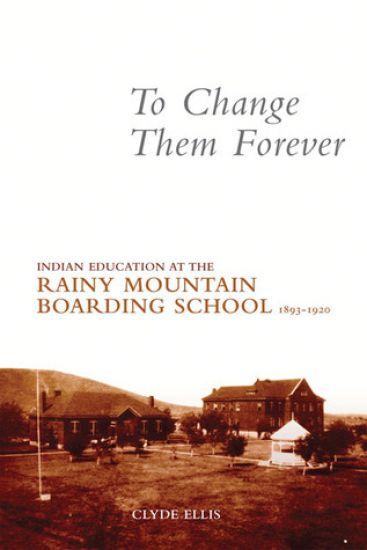
To Change Them Forever

To Change Them Forever

Clyde Ellis

University of Oklahoma Press
2008
nidottu
Reservation boarding schools represented an important component in the U.S. government's campaign in the late nineteenth and early twentieth century to ""civilize"" American Indians according to Anglo-American standards. The history of the Rainy Mountain School in southwestern Oklahoma reveals much about the form and function of the Indian policy and its consequences for the Kiowa children who attended the school. In To Change Them Forever, Clyde Ellis surveys changes in government policy and tells how the Kiowa people resisted and accommodated the efforts of school personnel to transform them. Ellis combines archival research with personal memoirs, conversations with former students, and the school's official records to portray a school often at odds with official policy and frequently neglected by the Indian Service's bureaucracy.
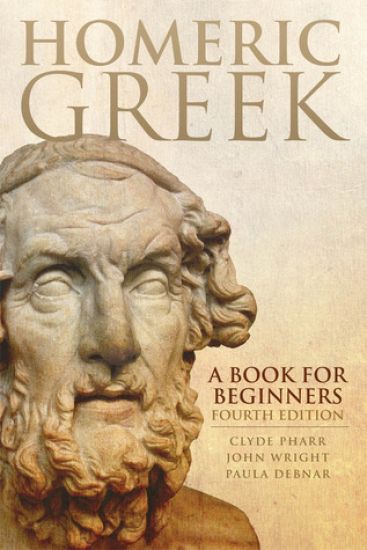
Homeric Greek: A Book for Beginners

Homeric Greek: A Book for Beginners

Clyde Pharr; John Wright; Paula Debnar

University of Oklahoma Press
2012
nidottu
For many years, Homeric Greek has been a standard textbook for first-year Greek courses in college and preparatory schools. It offers students the exciting experience of learning to read a Homeric poem in the original language, while introducing them to the fundamentals of ancient Greek. This fourth edition addresses the needs of today's teachers and students, while retaining those elements of the original book responsible for its longevity. Written and subsequently revised by Clyde Pharr, Homeric Greek was further revised by John Wright in 1985. Paula Debnar has revised the book once again by significantly expanding the introductory material in its first forty lessons. Notable features of this new edition include: · Clear definitions of grammatical terms and explanations of forms and syntax · Easy-to-read charts of grammatical paradigms · A new reference map of the Aegean region, including sites mentioned in the first book of the Iliad · An index of the book's section on grammar · A larger, more attractive format for the entire text, including more legible Greek characters Ideally suited for classroom use but also accessible to independent learners, this fourth edition of Homeric Greek ensures continued life for a book that has stood the test of time.
Behind the Guns

Behind the Guns

Clyde C. Walton; Thaddeus C.S. Brown; Samuel J. Murphy; William G. Putney

Southern Illinois University Press
2000
nidottu
Much has been written of the infantry and cavalry of the American Civil War, but this volume provides a regimental history of a light artillary unit discussing the variety of weapons used by the unit and was originally written by three of its soldiers, including the bugler.
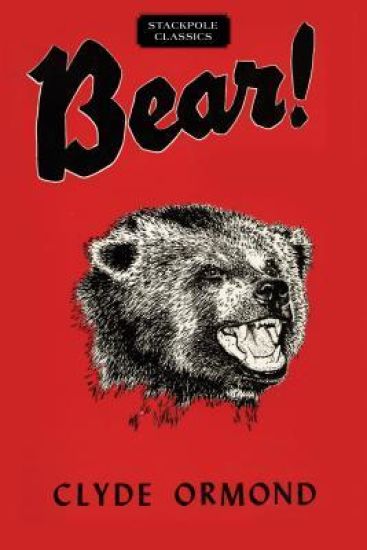
Bear!

Bear!

Clyde Ormond

Stackpole Books
2017
nidottu
Bear! Is a fascinating volume which will grip the interest and fire the imagination of both the seasoned outdoorsman and the one who must enjoy the thrills of big-game hunting from his arm-chair reading. The true, breath-taking field encounters between man and bear, which liberally appear throughout the books' pages, will capture and excite the reader, young or old. Certainly to the big-game hunter--whether he takes to the wooded hills after his black bear, to the remote crags and high basins after his grizzly, to the Coastal regions after his brown bear, or to the Eskimo-land after his great white polar bear--this volume with its wealth of how-to information will prove invaluable reading. But beyond this, Bear! is a revealing story of North America's Bears. It delves deeply into their habitat, their wondrous cycle of living, and their natural place in the scheme of wildlife. This book traces those basic behavior changes which have been forced upon our country's great ursines through man's westward movement, his contact with them, and his gradual driving of them to the last wilderness and sanctuaries for survival. Lastly, Bear! is a documentary of a noble animal's long struggle, in the minds and actions of men, to rise from the lowly status of a pest to that of a grand big-game animal. Bear! by Clyde Ormond, the renowned outdoorsman, is the result of thirty years of observation, study, hunting, and evaluation of a priceless but little known species. It is "must" ready for any sportsman.
Out of the Darkness

Out of the Darkness

Clyde Tombaugh; Patrick Moore

Stackpole Books
2017
nidottu
An adventure in scientific discovery Pluto, the farthermost planet in the solar system, some 3,673 million mites from the Sun, was discovered by Clyde Tombaugh at the Lowell Observatory in 1930. The fiftieth anniversary of Pluto's discovery will be celebrated in 1980 and OUT OF THE DARKNESS: THE PLANET PLUTO tells the exciting scientific story of the twenty-five year search for a planet X beyond Neptune, and its discovery-the only planet found in the twentieth century. The planets Mercury, Venus. Mars, Jupiter, and Saturn were all known since antiquity. Then Sir William Herschel discovered Uranus in 1781, and 65 years later, in 1846, Johann Calle and Urbain le Verner discovered Neptune. Variations in orbital perturbations of the planets and theoretical astronomy were responsible for predicting and discovering the three outermost planets (Uranus, Neptune, and Pluto) and so Pluto's story is also, to some extent, the story of its planetary neighbors. What kind of world is Pluto? Much is still a mystery (its
I Remember

I Remember

Clyde E. B. Bernhardt; John F. Szwed

University of Pennsylvania Press
1986
pokkari
I Remember is a first-hand account of the world of black American music told by a man who has been part of that world for eighty years. Clyde E. B. Bernhardt worked with a number of bands, including King Oliver, Marion Hard, Cecil Scott, the Bascomb Brothers, and Joe Garland. He started his own band, the Blue Blazers, in 1946 and formed the Harlem Blues and Jazz Band in 1972. The book is a primary document that provides information about a part of the history of American music for which there is little documentation.
Reading Cusanus

Reading Cusanus

Clyde Lee Miller

The Catholic University of America Press
2019
nidottu
This book presents careful readings of six of the most important theoretical works of Nicholas of Cusa (1401-1463). Though Nicholas' writings have long been studied as either scholastic Aristotelian or proto-Kantian, Clyde Lee Miller locates Cusanus squarely in the Christian Neoplatonic tradition. He demonstrates how Nicholas worked out his own original synthesis of that tradition by fashioning a conjectural view of main categories of Christian thought: God, the universe, Jesus Christ, and human beings. Each of the readings reveals how Nicholas' project of ""learned ignorance"" is played out in striking metaphors for God and the relation of God to creation. The six works read span the last quarter century of Nicholas' life (1440-1463) and include On Learned Ignorance, Conjectures, The Layman: About Mind, The Vision of God, The Not Other, and The Hunt for Wisdom. These readings are explications of the text; they interpret each work as a whole and focus in particular on the themes that order the work and how these get played out in its details. The Introduction uses a brief early dialogue, On the Hidden God, to orient the reader by locating Nicholas' work in relation to Plato's famous image of the divided line. The book's conclusion presents a reprise of the main ideas in each work and an appraisal of their import.
The Art of Conjecture

The Art of Conjecture

Clyde Lee Miller

The Catholic University of America Press
2021
sidottu
“Learned ignorance,” the recognition that God is beyond us and our knowing capacities is the theological concept for which Nicholas of Cusa is most famous. Despite God’s apparent absence Nicholas offers original ways to think about God that would unite his presence with his absence. He called these proposals “conjectures” (coniecturae). Conjecture and conjecturing are central to the methodology of Nicholas’s philosophical theology and to his thinking about human knowledge.By using concrete examples from the everyday life of his times as symbolic imagery Nicholas makes what we say about God imaginatively available and theoretically plausible. He called such conjectural symbols “aenigmata” (= “symbolic or ‘enigmatic’ conjectures”) because they partially clarify and likewise point to an exact truth that is beyond us. Novel and imaginative, Nicholas’s conjectural examples break with the traditional medieval Aristotelian examples and provide further evidence of his role as a figure bridging medieval and Renaissance thought.Following his earlier book, Reading Cusanus (The Catholic University of America Press, 2003), Clyde Lee Miller here examines and comments on the meaning of “conjecture” in Nicholas of Cusa. The Art of Conjecture: Nicholas of Cusa on Knowledge explores what Nicholas meant by conjecture and its import as demonstrated in his treatises and sermons. Beginning with Nicholas’ On Conjectures, Miller analyzes a series of conjectural symbols and proposals across Nicholas’s less frequently discussed texts and recently published sermons. This early Renaissance thinker offers an original and ground-breaking way of framing speculation in philosophical theology and more generally in philosophy itself.
Black Elk's Religion

Black Elk's Religion

Clyde Holler

Syracuse University Press
1995
nidottu
Black Elk was one of the greatest religious thinkers produced by native North America, and the Sun Dance the central religious ritual of his Lakota tradition. Beginning with a review of the recent critical work on Black Elk by Paul B. Steinmetz, Julian Rice and Michael K. Steltenkamp, Holler reconstructs the history and development of the Lakota Sun Dance, essential background for understanding Black Elk's thought. His analysis is a comprehsnive study of the dance, which was banned by the government in 1883. Holler shows how Black Elk adapted the dance to the conditions and circumstances of reservation life, reinterpreting it in terms commensurate with Christianity. His firsthand account of the dance associated with Frank Fools Crow at Three Mile Camp near Kyle, South Dakota, shows how the contemporary Sun Dance reflects Black Elk's vision. Holler's book offers a philosophical engagement with native North American religion, carried out in close dialogue with anthropology. Readers who were captivated by John G. Neihardt's gripping portrait of Black Elk in ""Black Elk Speaks"" may be surprised to learn that he was a vital and creative leader until his death in 1950, not the broken, despairing old man made famous by Neihardt. Holler establishes that Black Elk was both a sincere traditionalist and a sincere Christian, seeing the two religious traditions as expressions of the sacred. Students of religion should be stimulated by Holler's interpretation of Black Elk as a creative thinker, rather than a passive informant on his people's past. Those interested in Native Americans, especially the Lakota, should appreciate his authoritative reconstruction of the Sun Dance, which proposes new understandings of this central Lakota religious ritual. The book also includes a glossary of terms.
Black Elk's Religion

Black Elk's Religion

Clyde Holler

Syracuse University Press
1995
sidottu
Black Elk was one of the greatest religious thinkers produced by native North America, and the Sun Dance the central religious ritual of his Lakota tradition. Beginning with a review of the recent critical work on Black Elk by Paul B. Steinmetz, Julian Rice and Michael K. Steltenkamp, Holler reconstructs the history and development of the Lakota Sun Dance, essential background for understanding Black Elk's thought. His analysis is a comprehsnive study of the dance, which was banned by the government in 1883. Holler shows how Black Elk adapted the dance to the conditions and circumstances of reservation life, reinterpreting it in terms commensurate with Christianity. His firsthand account of the dance associated with Frank Fools Crow at Three Mile Camp near Kyle, South Dakota, shows how the contemporary Sun Dance reflects Black Elk's vision. Holler's book offers a philosophical engagement with native North American religion, carried out in close dialogue with anthropology. Readers who were captivated by John G. Neihardt's gripping portrait of Black Elk in ""Black Elk Speaks"" may be surprised to learn that he was a vital and creative leader until his death in 1950, not the broken, despairing old man made famous by Neihardt. Holler establishes that Black Elk was both a sincere traditionalist and a sincere Christian, seeing the two religious traditions as expressions of the sacred. Students of religion should be stimulated by Holler's interpretation of Black Elk as a creative thinker, rather than a passive informant on his people's past. Those interested in Native Americans, especially the Lakota, should appreciate his authoritative reconstruction of the Sun Dance, which proposes new understandings of this central Lakota religious ritual. The book also includes a glossary of terms.
The Black Elk Reader

The Black Elk Reader

Clyde Holler

Syracuse University Press
2000
nidottu
This book includes both new essays and revised versions of classic works by recognized authorities on Black Elk. Clyde Roller's introduction explores his life and texts and illustrates his relevance to today's scholarly discussions.Dale Stover considers Black Elk from a postcolonial perspective, and R. Todd Wise investigates similarities between Black Elk Speaks and the Testimonio (as exemplified by I, Rigoberta Menchu: An Indian Woman in Guatemala). Anthropologist Raymond A. Bucko provides an annotated bibliography and a sensitive guide to the issues surrounding cultural appropriation, a subject also explored through Frances Kaye's engaging reading of Hawthorne's The Marble Fawn. Classic essays by Julian Rice and George W. Linden are included in the collection as well as Hilda Niehardt's reflections on the 1931 and 1944 interviews with Black Elk.With its unusually broad range of academic disciplines and perspectives, this book shows that Black Elk stands at the intersection of today's scholarly discussions. In addition to scholars of religion, anthropology, multicultural literature, and Native American studies, The Black Elk Reader will appeal to a general audience.
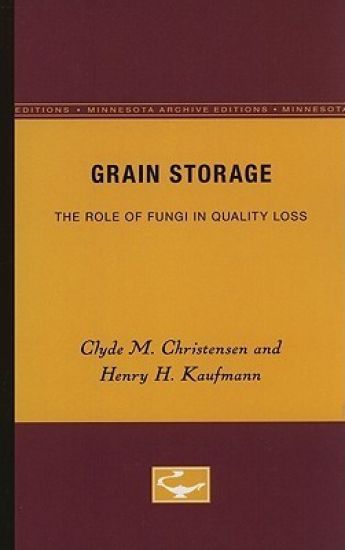
Grain Storage

Grain Storage

Clyde M. Christensen; Henry H. Kaufmann

University of Minnesota Press
1969
nidottu
Grain Storage was first published in 1969. Minnesota Archive Editions uses digital technology to make long-unavailable books once again accessible, and are published unaltered from the original University of Minnesota Press editions.The deterioration or spoilage of stored grain is a problem of serious dimension, both from the standpoint of the financial balance sheet of those engaged in commercial grain enterprises and as a formidable factor in the worldwide fight against hunger. In this useful book the authors present practical information, in non-technical language, about the causes and methods of preventing the deterioration of stored grains and seeds.The emphasis is on the role of fungi but material also is included on problems with insects, mites, and rodents in connection with grain storage. The fungi are of prime importance since not until recently have they been recognized as a major cause of loss of quality in grains and seeds. Even today many of those who deal with grains, from warehouses to management personnel, fail to realize that fungi may play a decisive role in their operations.The book will be of special interest and value to grain merchants and processors, grain elevator managers and operators, grain inspectors, agronomists and agricultural economists concerned with crop production, and many others in agricultural or food processing fields.
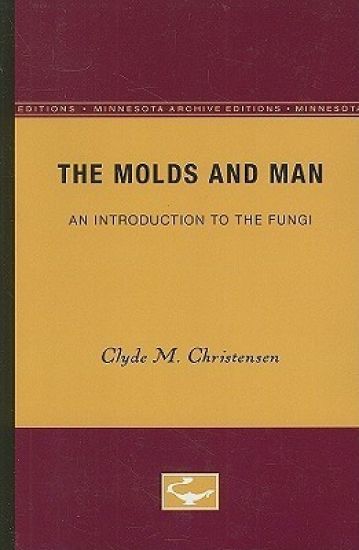
The Molds and Man

The Molds and Man

Clyde M. Christensen

University of Minnesota Press
2009
nidottu
The Molds and Man was first published in 1965. Minnesota Archive Editions uses digital technology to make long-unavailable books once again accessible, and are published unaltered from the original University of Minnesota Press editions.This highly readable volume on a little-known but important subject has been widely used as a text and reference book by the student as well as the interested layman.
Molds, Mushrooms, and Mycotoxins

Molds, Mushrooms, and Mycotoxins

Clyde M. Christensen

University of Minnesota Press
1975
nidottu
Molds, Mushrooms, and Mycotoxins was first published in 1975. Minnesota Archive Editions uses digital technology to make long-unavailable books once again accessible, and are published unaltered from the original University of Minnesota Press editions.As Professor Christensen has made evident in his earlier books, including The Molds and Man,fungi are significantly interesting in their life-styles and in the many ways in which they affect man. Here he continues his exploration of the lives of the fungi and their relation to man, focusing on the harmful or dangerous effects which certain molds, mushrooms, and other fungi can have on human beings.The first several chapters deal with fungi that are toxic in one way or another: either the fungi themselves are toxic when consumed, as with poisonous mushrooms and ergot, or the fungi secrete toxic compounds that diffuse into the substance on which they grow, making that substance toxic when eaten. He discusses hallucinogenic as well as poisonous mushrooms and provides extensive information about mycotoxins in human and animal foods, which are recently discovered health hazards.Other chapters deal with fungus spores, which are a major cause of respiratory allergies, and with fungi which are predators or parasites of insects and nematodes. A chapter is devoted to fungus infections of man and animals, which at times constitute a serious public health problem. Another chapter discusses the nature, cause, and prevention of wood decay in trees and buildings. In a final chapter the author discusses some aspects of organic evolution in general as a background for presenting theories and facts on the evolution of fungi. He summarizes some of the ways in which fungi enter into our lives and economy, and looks to the role of fungi in the future.The illustrations, in both black and white and color, show some of the fungi and processes that are discussed.
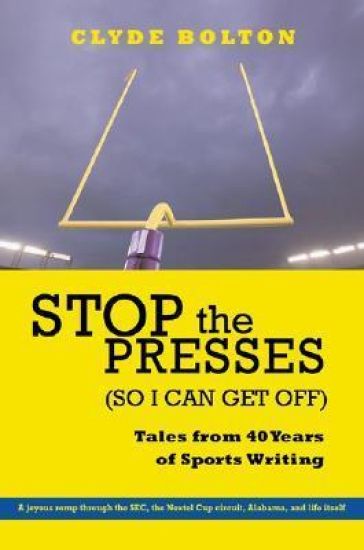
Stop the Presses (So I Can Get Off)

Stop the Presses (So I Can Get Off)

Clyde Bolton

The University of Alabama Press
2005
nidottu
This is a delightful blend of memoir, opinion, and sports from an Alabama original. For 31 years, Clyde Bolton wrote four sports columns per week for the ""Birmingham News"". By his estimation, this makes him the most widely read Alabamian in history. He may be right. In ""Stop the Presses (So I Can Get Off)"" he takes the reader along on a joyride through more than three decades of Alabama sports. Unsurprisingly, tales of Bear Bryant and Shug Jordan, Roll Tide and War Eagle, dominate, but at one point or another, Clyde covered just about every type of sporting event in the state. Personalities and events from the realms of high school sports, minor league baseball, college basketball, and Nextel Cup Racing are just some of the many facets of his personal and professional life that he shares in this, his 17th book. In relating the outlines of his life, Bolton pays homage to his mentors, including famed sports editor Benny Marshall, and shares some insights he's gained after a lifetime in the newspaper game. But throughout the book, he never forgets that any good journalist - any good writer - is in the business of telling stories. And oh, what stories! Bolton writes of meeting Michael Jordan during the basketball star's year with the Birmingham Barons; of having dinner with Muhammad Ali at the Lambda Chi Alpha fraternity house at Auburn University; of walking incognito down sunny Birmingham side walks with Hall-of-Famer Johnny Unitas. He explains why Bear Bryant, in his opinion, is the greatest football coach ever, tells of interviewing Joe Namath in the men's bathroom, and reveals why his grandmother watched professional wrestling on her hands and knees on the floor in front of the television. ""Stop the Presses (So I Can Get Off)"" is a joyous romp through the SEC, the Nextel Cup circuit, Alabama, and, in the end, life itself.