Kirjojen hintavertailu. Mukana 12 239 187 kirjaa ja 12 kauppaa.

Kirjahaku

Etsi kirjoja tekijän nimen, kirjan nimen tai ISBN:n perusteella.

1000 tulosta hakusanalla E. Edmonds

E-leader

E-leader

Robert Hargrove

Perseus Books
2000
sidottu
Today every business is an e-business, and whether you are selling golf outings over the Internet or manufacturing the carts, there is no escaping the fact that every aspect of organizational design is profoundly affected by the new rules of the electronic economy. What many people and organizations overlook, however, is the degree to which these new rules are requiring a fundamentally different style of leadership. In E-Leader , Robert Hargrove identifies the new mindset and skills that leaders must develop in order to thrive in a world where wealth is built on relationships and experiences, not products or even technology. The old model of leader as "steward," protecting the company's brands and assets, is being replaced by a model of leader as "entrepreneur," searching constantly for new sources of wealth creation establishing creative ventures with suppliers, distributors, and even competitors and discovering new ways to attract, retain, and nurture talent- all at the speed of light. E-Leader captures the energy of the mavericks who are redefining leadership on the electronic frontier and shows managers in all types of organizations how to manage for the future, not for the past or even the present.
E-Government 2001

E-Government 2001

Rowman Littlefield Publishers
2001
sidottu
E-Government 2001 provides in-depth case studies of the 'state' of e-government today. The book chronicles the 'early days' of e-government and presents a collective snapshot in time as to where governments—at the federal, state, and local levels—are today as they continue their march toward e-government. Case studies include analysis of the use of auction models by government, privacy strategies for e-government, e-commerce applications in government, the use of the Internet to deliver government services, and a study of how state employment agencies are using technology to provide improved service. From these case studies, Mark A. Abramson and Grady E. Means develop six initial lessons which government leaders should know before undertaking major e-government initiatives. The lessons should prove valuable to all executives who aspire to transform their organizations from traditional bureaucracies to e-enabled organizations.
E-Government 2001

E-Government 2001

Rowman Littlefield Publishers
2001
nidottu
E-Government 2001 provides in-depth case studies of the "state" of e-government today. The book chronicles the "early days" of e-government and presents a collective snapshot in time as to where governments—at the federal, state, and local levels—are today as they continue their march toward e-government. Case studies include analysis of the use of auction models by government, privacy strategies for e-government, e-commerce applications in government, the use of the Internet to deliver government services, and a study of how state employment agencies are using technology to provide improved service. From these case studies, Mark A. Abramson and Grady E. Means develop six initial lessons which government leaders should know before undertaking major e-government initiatives. The lessons should prove valuable to all executives who aspire to transform their organizations from traditional bureaucracies to e-enabled organizations.
E-Government 2003

E-Government 2003

Rowman Littlefield Publishers
2002
nidottu
Provides in-depth case studies of the "state" of e-government today. The book chronicles the "early days" of e-government and presents a collective snapshot in time as to where governments - at the federal, state, and local levels - are today as they continue their march toward e-government. Editors Abramson and Morin present a comprehensive "progress report" on e-government before a distinguished list of contributors discuss such varied topics as the quality of federal websites, technology and innovation in the State Department, online voting, and public-sector information security. Through grants for research and forums, The IBM Endowment for The Business of Government stimulates research and facilitates discussion on new approaches to improving the effectiveness of government at the federal, state, local, and international levels.
E-Writing

E-Writing

Dianna Booher

Gallery
2001
pokkari
Call it THE ELEMENTS OF STYLE for the digital age. Accessible and inviting, without any of the intimidating jargon found in so many writing guides, E-WRITING promises to transform today's anxious e-mail hacks and marble-mouthed memo-writers into eloquent scribes and crystal-clear orators in no time at all. Practicing exactly what she preaches, award-winning communicator and bestselling author Dianna Booher has written this book in a refreshingly straight-forward manner, with clear organisation to make quick, on-the-spot referencing incredibly easy. Readers will learn how to - Write documents and handle e-mail faster - Organise ideas for high impact - Sound more authoritative and persuasive, on the page as well as on the phone. - Improve the clarity of their message and save reading time for others - Eliminate grammatical, punctuation and usage errors - Select an appropriate style to suit the audience they're addressing - Heighten their professional image, self-confidence and career prospects.
From the Mixed-Up Files of Mrs. Basil E. Frankweiler
A Time Best YA Book of All Time (2021) Run away to the Metropolitan Museum of Art with E. L. Konigsburg's beloved classic and Newbery Medal--winning novel From the Mixed-Up Files of Mrs. Basil E. Frankweiler. When Claudia decided to run away, she planned very carefully. She would be gone just long enough to teach her parents a lesson in Claudia appreciation. And she would go in comfort-she would live at the Metropolitan Museum of Art. She saved her money, and she invited her brother Jamie to go, mostly because be was a miser and would have money. Claudia was a good organizer and Jamie bad some ideas, too; so the two took up residence at the museum right on schedule. But once the fun of settling in was over, Claudia had two unexpected problems: She felt just the same, and she wanted to feel different; and she found a statue at the Museum so beautiful she could not go home until she bad discovered its maker, a question that baffled the experts, too. The former owner of the statue was Mrs. Basil E. Frankweiler. Without her--well, without her, Claudia might never have found a way to go home.
E. P. Thompson

E. P. Thompson

Harvey J. Kaye

Polity Press
1990
nidottu
The work of E. P. Thompson as historian, socialist and peace activist has been enormously influential. Yet attempts to assess the impact of his work as a whole - perhaps because of the very diversity of his contributions - have been rare. This book attempts such an evaluation, bringing together a range of authors who, in original essays, assess the main dimensions of Thompson's work. Contributors include, Harvey Kaye, Keith McClelland, Renato Rosaldo, Kate Soper, Robbie Gray, Martin Shaw, Catherine Hall, Geoff Eley, and John Goode. The book is written from a critical but sympathetic standpoint. It makes a very substantial contribution to the scholarly and practical appraisal of Thompson's ideas.
E-Business and Supply Chain Integration
Using e-business technologies to manage supply chains increases the efficiency and performance of logistics, production, distribution and other related activities. E-Business and Supply Chain Integration explains how a number of tools can be used to produce an e-supply chain and achieve higher productivity. This essential book examines supply chain theories along with real life cases and examples from industry to illustrate how e-business can enhance supply chain integration and highlights the negative outcomes when it is poorly managed. Dr Ozlem Bak and a team of expert contributors from practice and academia assess the impact of e-business on numerous different sectors, such as automotive, healthcare, logistics, higher education, and professional services. E-Business and Supply Chain Integration explains the strategic implications of new technologies and provides guidance on effective supply chains in e-businesses.
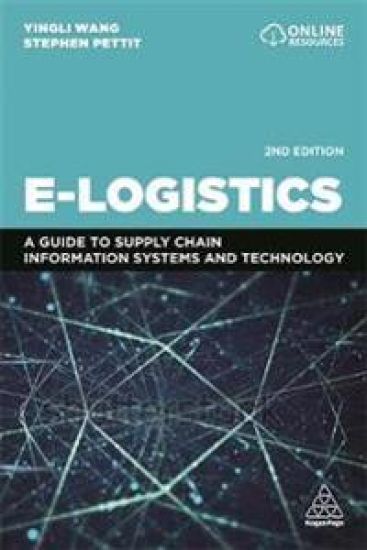
E-Logistics

E-Logistics

Yingli Wang; Stephen Pettit

Kogan Page Ltd
2021
nidottu
E-Logistics serves as the nerve system for the whole supply chain and enables smooth information flow within and between organizations. This new and updated edition provides the latest and most comprehensive coverage on digitalization in logistics and supply chain. It covers all transport modes and the role of ICT in supporting an integrated freight and supply chain network. E-Logistics provides a cross-academic and industry perspective with leading academics and practitioners as contributing authors. A variety of successful e-logistics business approaches are discussed covering a range of commercial sectors and transport modes. Subsequent chapters address in depth support systems for B2C and B2B e-commerce and e-fulfilment, warehouse management, RFID, electronic marketplaces, global supply network visibility and service chain automation. Industry case studies are used to support the discussion. The new edition also covers emerging technologies such as AI, machine learning and autonomous vehicles, Internet of Things, Robotics, drone and last mile deliveries.
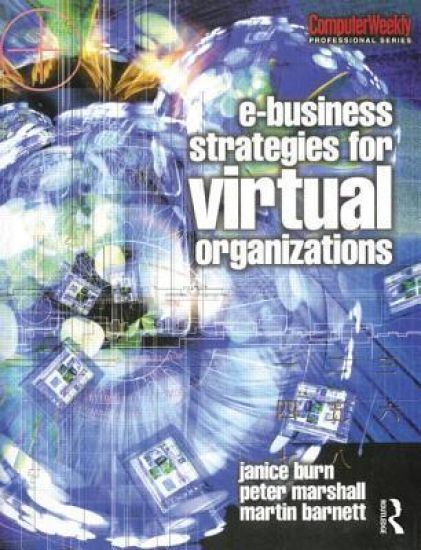
e-Business Strategies for Virtual Organizations

e-Business Strategies for Virtual Organizations

Janice Burn; Peter Marshall; Martin Barnett

Butterworth-Heinemann Ltd
2001
nidottu
'e-Business Strategies for Virtual Organizations' enables IT managers and directors to develop and implement IT strategies and infrastructures for new models of doing business based on the Internet. The authors provide a brief introduction to the concepts and strategic issues surrounding information warfare, managing organizational knowledge, and the information economy. The virtual organization is now an important business model for contemporary business organizations and the flexibility and adaptability of the virtual organization make it ideal for survival in today's highly competitive and dynamically changing markets. Modern corporations may utilize some of the features of the virtual organization to develop the ideal organization to a greater or lesser extent depending on individual business circumstances. This book covers the issues involved in planning, realizing and managing such a virtual organization, and the role of information and communication technologies in supporting virtual organizations and virtual organizing is addressed throughout.
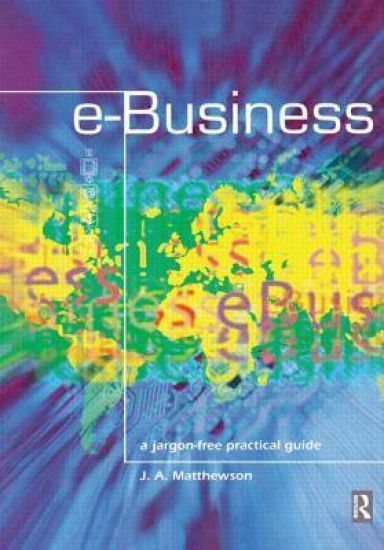
e-Business - A Jargon-Free Practical Guide

e-Business - A Jargon-Free Practical Guide

James Matthewson

Butterworth-Heinemann Ltd
2001
nidottu
'e-Business: a jargon-free practical guide' presents a clear, second-generation account of how your business can harness the latest technology to flourish in the transformed commercial climate of the 21st century. With its emphasis firmly on the business and marketing implications of new technology, this book adopts a hands-on, practical approach, systematically demonstrating how and why businesses should adapt their operations to make the very most of the exciting opportunities available. In simple, jargon-free language, it addresses such vital questions as: * What is e-business and how does it fit into the corporate landscape? * How should marketers adopt e-marketing and why? * What are the processes and stages of developing an e-business strategy? * What are the key issues you will face and how will you overcome them? * What about legislation? * Who is doing e-marketing and e-business well and badly? 'e-Business' is packed with case-studies from well-known international companies, examples, screen grabs, relevant models and checklists. Each chapter meanwhile contains handy hints and tips, examples, exercises and a summary to consolidate learning and highlight key points. Informative, pertinent and easy-to-use, the book is ideal for students on relevant courses or those undertaking in-house training, and is absolutely essential for any practitioner needing a hands-on guide to strategy and best practice in today's altered commercial environment.
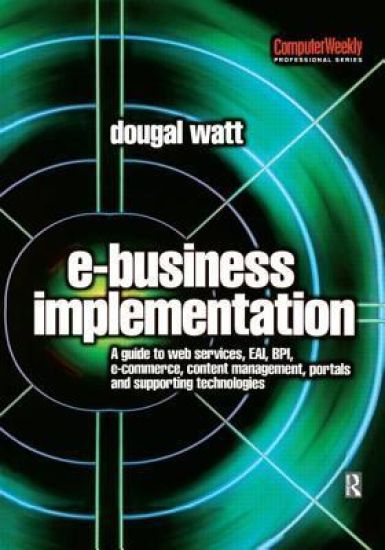
E-business Implementation

E-business Implementation

Dougal Watt

Butterworth-Heinemann Ltd
2002
sidottu
'E-business Implementation' is written as a complete guide to successful e-business delivery, from both a project management and a detailed technological perspective. E-business provides a powerful mechanism for organizations to increase productivity and lower costs. However, in order to utilise these considerable benefits, companies must ensure their e-business is implemented correctly and is appropriate to their market segment. 'E-business Implementation' provides a comprehensive guide to successful implementation and is divided into three parts: * Part one begins with a project management structure designed to deliver successful e-business functionality within time and budget, while avoiding the high failure rates common to many technology projects. * Part two details key concepts, technologies, products, vendors, benefits, limitations, and high-level design architectures for e-business, in a phased and risk-managed approach. These include publishing through the Internet and Intranets, portals and content management systems, transacting using e-commerce, integrating internal enterprise applications, integrating with external partners and suppliers, and responding in real-time to changing levels of demand through dynamic e-business and web services. * Part three details a set of critical foundation technologies that must be implemented correctly for the e-business initiative to be successful. These technologies include e-business development languages such as Java, XML and .Net, hardware platforms and their operating systems, security and networking systems, the Internet Domain Name System, and Open Source technologies.
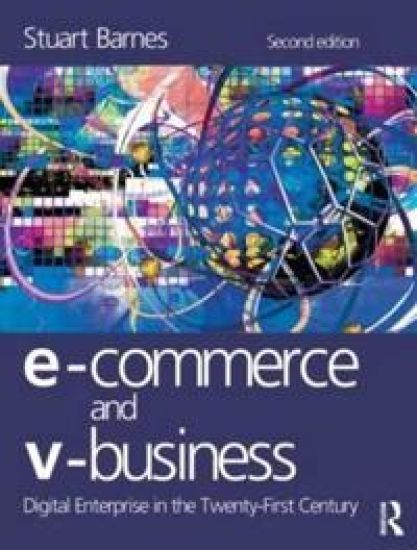
E-Commerce and V-Business

E-Commerce and V-Business

Stuart Barnes

Butterworth-Heinemann Ltd
2007
nidottu
E-commerce and V-business examines the impact of the Internet and associated technologies on two related aspects of business: electronic commerce and virtual organization. Using a combination of recent theory and empirical evidence it demonstrates how forward thinking organizations are reaping considerable advantages from exciting new business models in these areas. Such models require radical rethinking of many aspects of traditional business. The book covers many of the critical and contemporary issues stemming from these important new developments. The collected papers in this book illustrate the wide variety of business opportunities afforded by e-commerce and virtual business. They describe and discuss the important issues that follow in the wake of an organization deciding to pursue consumers electronically and organize its operations virtually. It brings a good balance of theory and practical issues from different perspectives from different parts of the globe
E. Coli

E. Coli

Chris Bell; Alec Kyriakides

Blackie Academic Professional (an Imprint of Chapman Hall)
1999
nidottu
Recent outbreaks of fatal food-borne illness associated with Vero cytotoxin-producing E.Coli (VTEC) have highlighted the need for thorough and coherent information to be provided to the food industry. The book details the causes of selected incidents and assesses the lessons that can be learnt from them. It examines the characteristics of E.Coli and VTEC and identifies factors which make foods susceptible to contamination by these pathogens. Specific product sectors are used to indicate practical measures that can be applied to control VTEC in foods and minimise its potential to cause harm to the consumer. It also provides guidance in selecting effective sampling plans and test methods to monitor and detect the organism and offers pragmatic advice on action taken when the organism is detected during monitoring programmes. This information is designed for use by the food industry, particularly personnel working in manufacturing, safety and quality control. It will also be useful for Environmental Health Officers and food research institutions.
E. J. Rudsdale's Journals of Wartime Colchester

E. J. Rudsdale's Journals of Wartime Colchester

Catherine Pearson

The History Press Ltd
2010
nidottu
E.J. Rudsdale’s role as a museum curator and air-raid shelter superintendent at Colchester Castle during the Second World War gave him the perfect opportunity to record life on the Home Front in his journals. Seventy years later, the selected extracts gathered here provide a remarkable insight into wartime life. Rudsdale’s writing is characterised throughout by his wry observations of wartime officialdom and his lack of conformity with the prevailing views of the time. He was a pacifist, which gives his journals an unusual perspective. However, even as a civilian he could not escape the conflict, living in a garrison town threatened by invasion and regular bombing raids. His journals, therefore, record anxious and tragic events, but throughout it all his sense of humour is never diminished.This absorbing collection demonstrates Rudsdale’s ability to bring a scene vividly to life and each account highlights the daily pressures that people endured as they valiantly tried to carry on with normal life in spite of the war.
e-Learning in Aviation

e-Learning in Aviation

Suzanne Kearns

Ashgate Publishing Limited
2010
sidottu
Whereas traditional classroom instruction requires pilots to be pulled 'off the line', a training facility to be maintained and instructors to be compensated, e-learning is extremely cost-effective and therefore an attractive alternative. However, e-learning only saves money if the training is effective. Eager to reap financial benefits, e-learning courses have a history of varying dramatically in quality. The poorest courses are those that directly convert classroom-based presentations to an online format, not recognizing that computer-based instruction is an entirely different medium. Addressing this issue directly, e-Learning in Aviation explores the characteristics of computer-based course design and multimedia that are associated with improved learning. It then provides guidance regarding how to use research-based instructional design principles to plan, design, develop, and implement an e-Learning course within an aviation organization and continually evaluate whether or not the course is accomplishing instructional goals. A blended learning strategy, which incorporates both face-to-face and computer-based instruction, is suggested as the most appropriate choice for the majority of aviation companies. The goal of this approach is to utilize e-Learning as a tool to reduce time at the training centre and thereby increase pilot productivity and potentially improve the quality of training. Although the examples within this book focus on pilot training, the suggestions and guidelines are applicable to all employee groups within the industry.