Kirjojen hintavertailu. Mukana 12 016 292 kirjaa ja 12 kauppaa.

Kirjahaku

Etsi kirjoja tekijän nimen, kirjan nimen tai ISBN:n perusteella.

1000 tulosta hakusanalla Francesca Gavin

The A to Z of the Fashion Industry

The A to Z of the Fashion Industry

Francesca Sterlacci; Joanne Arbuckle

Scarecrow Press
2009
nidottu
The history of clothing begins with the origin of man, and fashionable dress can be traced as far back as 25,000 years ago. Recent scientific explorations have uncovered graves in northern Russia with skeletons covered in beads made of mammoth ivory that once adorned clothing made of animal skin. The Ancient Egyptians, Greeks, and Romans each made major contributions to fashion's legacy from their textile innovations, unique clothing designs and their early use of accessories, cosmetics, and jewelry. During the Middle Ages, "fashion trends" emerged as trade and commerce thrived allowing the merchant class to afford to emulate the fashions worn by royals. However, it is widely believed that fashion didn't became an industry until the industrial and commercial revolution during the latter part of the 18th century. Since then, the industry has grown exponentially. Today, fashion is one of the biggest businesses in the world, with hundreds of billions of dollars in turnover and employing tens of millions of workers. It is both a profession, an industry, and in the eyes of many, an art. The A to Z of the Fashion Industry examines the origins and history of this billion-dollar industry. This is done through a chronology, an introductory essay, a bibliography, and hundreds of cross-referenced entries on designers, models, couture houses, significant articles of apparel and fabrics, trade unions, and the international trade organizations.
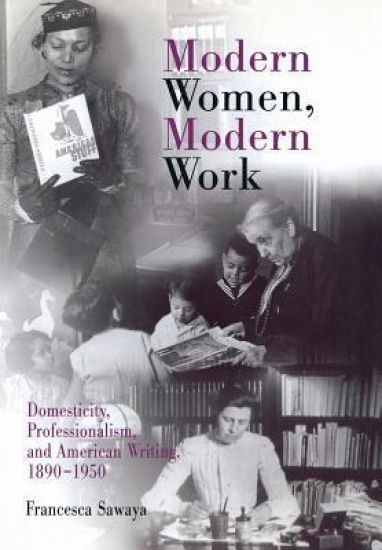
Modern Women, Modern Work

Modern Women, Modern Work

Francesca Sawaya

University of Pennsylvania Press
2003
sidottu
Focusing on literary authors, social reformers, journalists, and anthropologists, Francesca Sawaya demonstrates how women intellectuals in early twentieth-century America combined and criticized ideas from both the Victorian "cult of domesticity" and the modern "culture of professionalism" to shape new kinds of writing and new kinds of work for themselves. Sawaya challenges our long-standing histories of modern professional work by elucidating the multiple ways domestic discourse framed professional culture. Modernist views of professionalism typically told a racialized story of a historical break between the primitive, feminine, and domestic work of the Victorian past and the modern, masculine, professional expertise of the present. Modern Women, Modern Work historicizes this discourse about the primitive labor of women and racial others and demonstrates how it has been adopted uncritically in contemporary accounts of professionalism, modernism, and modernity. Seeking to recuperate black and white women's contestations of the modern professions, Sawaya pairs selected novels with a broad range of nonfiction writings to show how differing narratives about the transition to modernity authorized women's professionalism in a variety of fields. Among the figures considered are Jane Addams, Ruth Benedict, Willa Cather, Pauline Hopkins, Zora Neale Hurston, Sarah Orne Jewett, Josephine St. Pierre Ruffin, and Ida Tarbell. In mapping out the constraints women faced in their writings and their work, and in tracing the slippery compromises they embraced and the brilliant adaptations they made, Modern Women, Modern Work boldly reenvisions the history of modern professionalism in the United States.
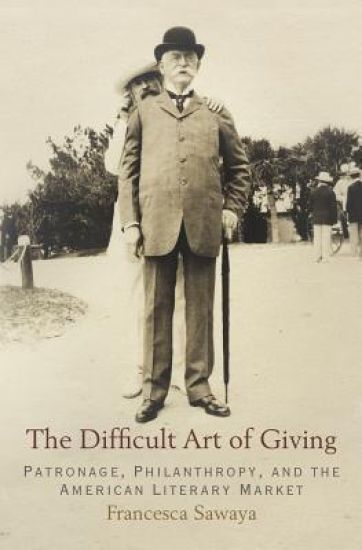
The Difficult Art of Giving

The Difficult Art of Giving

Francesca Sawaya

University of Pennsylvania Press
2014
sidottu
The Difficult Art of Giving rethinks standard economic histories of the literary marketplace. Traditionally, American literary histories maintain that the post-Civil War period marked the transition from a system of elite patronage and genteel amateurism to what is described as the free literary market and an era of self-supporting professionalism. These histories assert that the market helped to democratize literary production and consumption, enabling writers to sustain themselves without the need for private sponsorship. By contrast, Francesca Sawaya demonstrates the continuing importance of patronage and the new significance of corporate-based philanthropy for cultural production in the United States in the postbellum and modern periods. Focusing on Henry James, William Dean Howells, Mark Twain, Charles Chesnutt, and Theodore Dreiser, Sawaya explores the notions of a free market in cultural goods and the autonomy of the author. Building on debates in the history of the emotions, the history and sociology of philanthropy, feminist theory, and the new economic criticism, Sawaya examines these major writers' careers as well as their rich and complex representations of the economic world. Their work, she argues, demonstrates that patronage and corporate-based philanthropy helped construct the putatively free market in literature. The book thereby highlights the social and economic interventions that shape markets, challenging old and contemporary forms of free market fundamentalism.
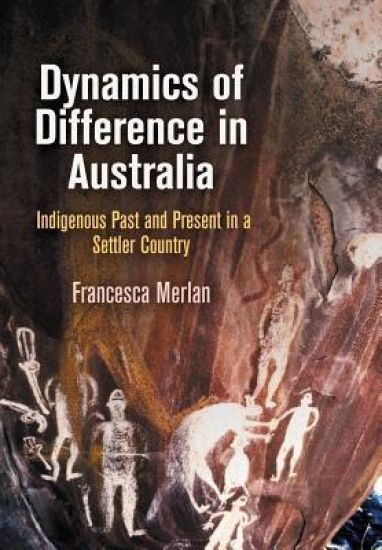
Dynamics of Difference in Australia

Dynamics of Difference in Australia

Francesca Merlan

University of Pennsylvania Press
2018
sidottu
In Dynamics of Difference in Australia, Francesca Merlan examines relations between indigenous and nonindigenous people from the events of early exploration and colonial endeavors to the present day. From face-to-face interactions to national and geopolitical affairs, the book illuminates the dimensions of difference that are revealed by these encounters: what indigenous and nonindigenous people pay attention to, what they value, what preconceived notions each possesses, and what their responses are to the Other. Basing her analysis on her extensive fieldwork in northern Australia, Merlan highlights the asymmetries in the exchanges between the settler majority and the indigenous minority, looking at everything from forms of violence and material transactions, to indigenous involvement in resource development, to governmental intervention in indigenous affairs. Merlan frames the book within the current debate in Australian society concerning the constitutional recognition of indigenous people by the nation-state. Surveying the precursors to this question and its continuing and unresolved nature, she chronicles the ways in which an indigenous minority can remain culturally different while simultaneously experiencing the transformative forces of domination, constraint, and inequality. Conducting an investigation of long-term change against the backdrop of a highly salient and timely public debate surrounding indigenous issues, Dynamics of Difference has far-reaching implications both for public policy and for current theoretical debates about the nature of sociocultural continuity and change.
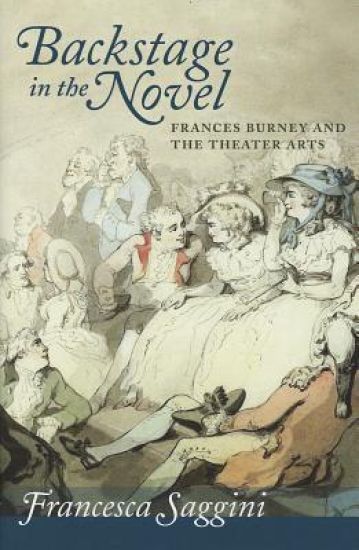
Backstage in the Novel

Backstage in the Novel

Francesca Saggini

University of Virginia Press
2012
sidottu
In Backstage in the Novel, Francesca Saggini traces the unique interplay between fiction and theatre in the eighteenth century through an examination of the work of the English novelist, diarist, and playwright Frances Burney. Moving beyond the basic identification of affinities between the genres, Saggini establishes a literary-cultural context for Burney's work, considering the relation between drama, a long-standing tradition, and the still-emergent form of the novel. Through close semiotic analysis, intertextual comparison, and cultural contextualisation, Saggini highlights the extensive metatextual discourse in Burney's novels, allowing the theater within the novels to surface. Saggini's comparative analysis addresses, among other elements, textual structures, plots, characters, narrative discourse, and reading practices. The author explores the theatrical and spectacular elements that made the eighteenth-century novel a hybrid genre infused with dramatic conventions. She analyses such conventions in light of contemporary theories of reception and of the role of the reader that underpinned eighteenth-century cultural consumption. In doing so, Saggini contextualises the typical reader-spectator of Burney's day, one who kept abreast of the latest publications and was able to move effortlessly between ""high"" (sentimental, dramatic) and ""low"" (grotesque, comedic) cultural forms that intersected on the stage. Backstage in the Novel aims to restore to Burney's entire literary corpus the dimensionality that characterised it originally. It is a vivid, close-up view of a writer who operated in a society saturated by theatre and spectacle and who rendered that dramatic text into narrative. More than a study of Burney or an overview of eighteenth-century literature and theater, this book gives immediacy to an understanding of the broad forces informing, and channelled through, Burney's life and work.
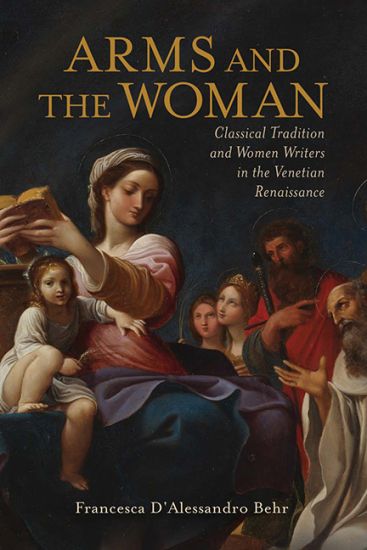
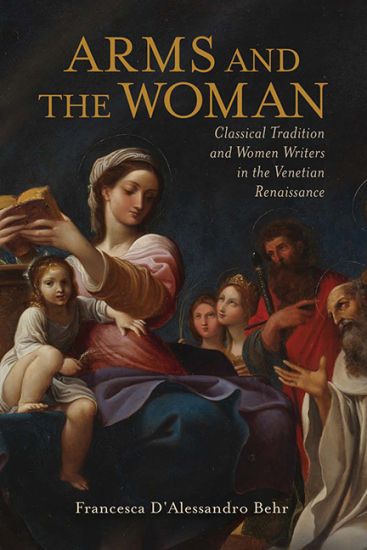
Arms and the Woman

Arms and the Woman

Francesca D'Alessandro Behr

Ohio State University Press
2018
sidottu
Arms and the Woman: Classical Tradition and Women Writers in the Venetian Renaissance by Francesca D'Alessandro Behr focuses on the classical reception in the works of female authors active in Venice during the Early Modern Age. Even in this relatively liberal city, women had restricted access to education and were subject to deep-seated cultural prejudices, but those who read and wrote were able, in part, to overcome those limitations. In this study, Behr explores the work of Moderata Fonte and Lucrezia Marinella and demonstrates how they used knowledge of texts by Virgil, Ovid, and Aristotle to systematically reanalyze the biased patterns apparent both in the romance epic genre and contemporary society. Whereas these classical texts were normally used to bolster the belief in female inferiority and the status quo, Fonte and Marinella used them to envision societies structured according to new, egalitarian ethics. Reflecting on the humanist representation of virtue, Fonte and Marinella insisted on the importance of peace, mercy, and education for women. These authors took up the theme of the equality of genders and participated in the Renaissance querelle des femmes, promoting women's capabilities and nature.
Feeling History

Feeling History

Francesca D'Alessandro Behr

Ohio State University Press
2021
pokkari
Feeling History is a study of apostrophe (i.e., the rhetorical device in which the narrator talks directly to his characters) in Lucan's Bellum Civile. Through the narrator's direct addresses, irony, and grotesque imagery, Lucan appears not as a nihilist, but as a character deeply concerned about ethics. The purpose of this book is to demonstrate how Lucan's style represents a criticism of the Roman approach to history, epic, ethics, and aesthetics. The book's chief interest lies in the ethical and moral stance that the poet-narrator takes toward his characters and his audience. To this end, Francesca D'Alessandro Behr studies the ways in which the narrator communicates ethical and moral judgments. Lucan's retelling of this central historical epic triggers in the mind of the reader questions about the validity of the Roman imperial project as a whole. An analysis of selected apostrophes from the Bellum Civile allows us to confront issues that are behind Lucan's disquieting imagery: how can we square the poet's Stoic perspectives with his poetically conveyed emotional urgency? Lucan's approach seems inspired by Aristotle, especially his Poetics, as much as by Stoic philosophy. In Lucan's aesthetic project, participation and alienation work as phases through which the narrator leads the reader to a desired understanding of his work of art. At the same time, the reader is confronted with the ends and limits of the aesthetic enterprise in general. Lucan's long-acknowledged political engagement must therefore be connected to his philosophical and aesthetic stance. In the same way that Lucan is unable to break free from the Virgilian model, neither can he develop a defense of morality outside of the Stoic mold. His philosophy is not a crystal ball to read the future or a numbing drug imposing acceptance. The philosophical vision that Lucan finds intellectually and aesthetically compelling does not insulate his characters (and readers) from suffering, nor does it excuse them from wrongdoing. Rather, it obligates them to confront the responsibilities and limits of acting morally in a chaotic world.
Teenage Pregnancy and Education in the Global South
Teenage pregnancy is seen as a problem by researchers and policymakers alike all over the world, but particularly so in the context of developing countries. Here, it is seen as an obstacle to personal and national development, exacerbating the gender gap in education, and placing an additional financial burden on low income families. This book considers the opposition between pregnancy and parenthood on the one hand, and education on the other, using the specific case of in-school pregnancy in Mozambique.Drawing on the voices of young people, their families, and their teachers, this book aims to build an understanding of how individuals and communities react to in-school pregnancy policies. The result is a critical challenge of current policy guidelines that indicate pregnant schoolgirls should be transferred to night courses, initially set up to boost adult literacy. The book also demonstrates that young people operate within a range of constantly shifting and interweaving normative frameworks, and that a nuanced understanding of their agency can only be achieved by synthesising their individual perceptions with an understanding of the social, cultural, and historical contexts in which they operate. Concluding by stepping outside of the Mozambique case, this book aims to appeal to scholars and policymakers looking at development, gender, and education within Mozambique, but also within the Global South more generally.
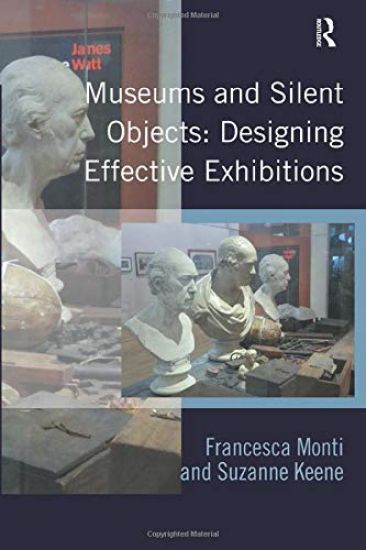
Museums and Silent Objects: Designing Effective Exhibitions

Museums and Silent Objects: Designing Effective Exhibitions

Francesca Monti; Suzanne Keene

CRC Press Inc
2017
nidottu
In a society where split-second decisions about the value of things are grounded on how they look, museum visitors are often drawn to visually striking or iconic objects. This book investigates the question of the treatment of items on display in museums which are less conspicuous but potentially just as important as the striking objects, arguing that it is important to show that all objects illustrate potentially interesting cultural contexts and content. The authors explore the disciplines of architecture, design, cognitive science and museology and offer a methodology by which the quality of museum exhibitions can be judged from a visitor-centred perspective. They provide new insights into the visitor-object encounter and the relationship between visitors, objects and museums. In addition the book offers a set of useful practical tools for museum professionals - for audience research, evaluating museum displays, and for designing new galleries and striking exhibitions. Richly illustrated with photos and diagrams, and based on studies of famous galleries in world-renowned museums, the book will be essential reading for all those concerned with creating effective exhibitions in museum.
Remixing Race after Apartheid

Remixing Race after Apartheid

Francesca Inglese

WESLEYAN UNIVERSITY PRESS
2026
nidottu
The first in-depth study of Kaapse klopse, a carnival tradition in South Africa_x000D_ _x000D_ Remixing Race is the first ethnographic monograph centered on Kaapse klopse, a South African carnival tradition, and it uses this genre as a critical lens to explore how sound mediates racial identity in the postapartheid era. Drawing on immersive fieldwork, interviews, and performance analysis, the book employs methods from sensory ethnography, sound studies, and critical race theory to foreground participants' lived experiences and aesthetic practices._x000D_ _x000D_ The study reveals how klopse has expanded since apartheid's end, particularly among youth and women, serving as a site of cultural resistance and self-making. Participants use klopse to respond to the racial and spatial legacies of apartheid and to marginalization within the everyday social, political, and economic conditions in which they live._x000D_ _x000D_ Challenging the reductive portrayals of klopse as either escapist or criminal, the book critiques the use of imported aesthetic categories and instead centers local meaning-making. Remixing Race shows how klopse operates as a dynamic, multisensory space where performers negotiate identity, history, and belonging—without collapsing their creativity into identity politics or erasing their social positioning. It offers a model for how ethnographic and sonic methodologies can illuminate the affective and political dimensions of racialized cultural expression.
Caging the Rainbow

Caging the Rainbow

Francesca Merlan

University of Hawai'i Press
1998
sidottu
Explores the lives of Aborigines in the small town of Katherine, Australia. Merlan combines ethnography and theory to study issues surrounding the debate about the authenticity of contemporary cultural activity. The vulnerability of Fourth World peoples to others' representations of them and the ethical problems this poses are recognised.
Art and Intellect in the Philosophy of Etienne Gilson

Art and Intellect in the Philosophy of Etienne Gilson

Francesca Aran Murphy

University of Missouri Press
2004
sidottu
In Art and Intellect in the Philosophy of Etienne Gilson, Francesca Aran Murphy tells the story of this French philosopher's struggle to reconcile faith and reason. In his lifetime, Gilson often stood alone in presenting Saint Thomas Aquinas as a theologian, one whose philosophy came from his faith. Today, Gilson's view is becoming the prevalent one. Murphy provides us with an intellectual biography of this Thomist leader throughout the stages of his scholarly development. Murphy covers more than a half century of Gilson's life while supplying the reader with reminders of the political and social realities that confronted intellectuals of the early twentieth century. She shows the effects inner-church politics had on Gilson and his contemporaries such as Alfred Loisy, Lucien Levy Bruhl, Charles Maurras, Henri de Lubac, Marie-Dominique Chenu, and Jacques Maritain, while also contextualizing Gilson's own life and thoughts in relation to these philosophers and theologians. These great thinkers, along with Gilson, continue to be sources of important intellectual debate among scholars, as do the political periods through which Gilson's story threads.
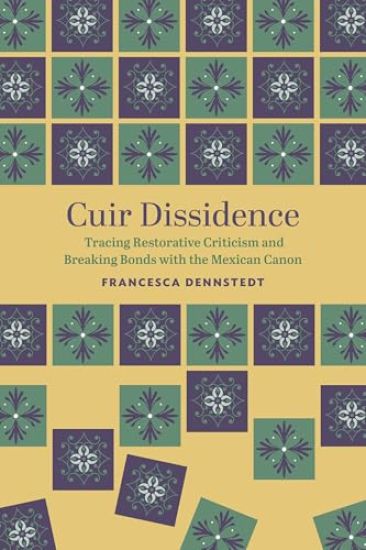
Cuir Dissidence: Tracing Restorative Criticism and Breaking Bonds with the Mexican Canon
In Cuir Dissidence, Francesca Dennstedt uses affect and queer feminist theory to rethink the boundaries and hierarchies of the Mexican literary canon. Steeped in ideas of male genius and intrinsic aesthetic quality, the canon has long marginalized women writers by overlooking their contributions or placing their work into literary categories that perpetuate stereotypes about femininity. In response to this history of erasure and neglect, Dennstedt shows how women writers who identify as non-heterosexual or whose work is focused on critique of heteropatriarchal power structures have challenged the very idea of the canon through affect and non-conformity. Over the course of four chapters, she examines how writers like In s Arredondo, Rosa Maria Roffiel, and Cristina Rivera Garza employ alternative sexual intimacies, gender dissidence, collective authorship, and experimental blending of genres to actively reject the canon. In addition to these creative readings of Mexican women writers, Dennstedt centers her own affective response to these texts to further challenge the traditional boundaries of literary criticism. The book thus prompts readers to see the intellectual project of these writers as a premeditated act of rebellion, one that can help deconstruct the power structures deeply ingrained in Mexican literature written in Spanish and create a space for these voices to flourish across time.
Cuir Dissidence: Tracing Restorative Criticism and Breaking Bonds with the Mexican Canon
In Cuir Dissidence, Francesca Dennstedt uses affect and queer feminist theory to rethink the boundaries and hierarchies of the Mexican literary canon. Steeped in ideas of male genius and intrinsic aesthetic quality, the canon has long marginalized women writers by overlooking their contributions or placing their work into literary categories that perpetuate stereotypes about femininity. In response to this history of erasure and neglect, Dennstedt shows how women writers who identify as non-heterosexual or whose work is focused on critique of heteropatriarchal power structures have challenged the very idea of the canon through affect and non-conformity. Over the course of four chapters, she examines how writers like In s Arredondo, Rosa Maria Roffiel, and Cristina Rivera Garza employ alternative sexual intimacies, gender dissidence, collective authorship, and experimental blending of genres to actively reject the canon. In addition to these creative readings of Mexican women writers, Dennstedt centers her own affective response to these texts to further challenge the traditional boundaries of literary criticism. The book thus prompts readers to see the intellectual project of these writers as a premeditated act of rebellion, one that can help deconstruct the power structures deeply ingrained in Mexican literature written in Spanish and create a space for these voices to flourish across time.
Retailisation

Retailisation

Francesca de Châtel; Robin Hunt

Europa Publications Ltd
2003
nidottu
Investigates the current state of selling, whether this is groceries, politicians, information or motorcars. Unlike any other phenomenon, retailization reflects the complexity and diffusion of information processes and the media in the online market. The authors explore the all-pervasive nature of retail in the physical world, the virtual world and the peripheral spaces in between.Coverage includes:interviews with Asda, MOMA, the Tate Modern, Wal-Mart, Sony, Habitat, Manchester United and Volkswagen, while Bill Mitchell, Dean of Architecture at MIT, architects Jon Jerde, Rem Koolhas and Ben van Berkel, as well as David Peek, psychologist behind the Bluewater Shopping Mall, are all individually interviewed.
Alternative Solvents for Green Chemistry

Alternative Solvents for Green Chemistry

Francesca Kerton

Royal Society of Chemistry
2009
nidottu
Everyone is becoming more environmentally conscious and therefore, chemical processes are being developed with their environmental burden in mind. This also means that more traditional chemical methods are being replaced with new innovations and this includes new solvents. Solvents are everywhere, but how necessary are they? They are used in most areas including synthetic chemistry, analytical chemistry, pharmaceutical production and processing, the food and flavour industry and the materials and coatings sectors. However, the principles of green chemistry guide us to use less of them, or to use safer, more environmentally friendly solvents if they are essential. Therefore, we should always ask ourselves, do we really need a solvent? Green chemistry, as a relatively new sub-discipline, is a rapidly growing field of research. Alternative solvents - including supercritical fluids and room temperature ionic liquids - form a significant portion of research in green chemistry. This is in part due to the hazards of many conventional solvents (e.g. toxicity and flammability) and the significant contribution that solvents make to the waste generated in many chemical processes. Solvents are important in analytical chemistry, product purification, extraction and separation technologies, and also in the modification of materials. Therefore, in order to make chemistry more sustainable in these fields, a knowledge of alternative, greener solvents is important. This book, which is part of a green chemistry series, uses examples that tie in with the 12 principles of green chemistry e.g. atom efficient reactions in benign solvents and processing of renewable chemicals/materials in green solvents. Readers get an overview of the many different kinds of solvents, written in such a way to make the book appropriate to newcomers to the field and prepare them for the 'green choices' available. The book also removes some of the mystique associated with 'alternative solvent' choices and includes information on solvents in different fields of chemistry such as analytical and materials chemistry in addition to catalysis and synthesis. The latest research developments, not covered elsewhere, are included such as switchable solvents and biosolvents. Also, some important areas that are often overlooked are described such as naturally sourced solvents (including ethanol and ethyl lactate) and liquid polymers (including poly(ethyleneglycol) and poly(dimethylsiloxane)). As well as these additional alternative solvents being included, the book takes a more general approach to solvents, not just focusing on the use of solvents in synthetic chemistry. Applications of solvents in areas such as analysis are overviewed in addition to the more widely recognised uses of alternative solvents in organic synthesis. Unfortunately, as the book shows, there is no universal green solvent and readers must ascertain their best options based on prior chemistry, cost, environmental benefits and other factors. It is important to try and minimize the number of solvent changes in a chemical process and therefore, the importance of solvents in product purification, extraction and separation technologies are highlighted. The book is aimed at newcomers to the field whether research students beginning investigations towards their thesis or industrial researchers curious to find out if an alternative solvent would be suitable in their work.
Changing Minds: Social Movements' Cultural Impacts

Changing Minds: Social Movements' Cultural Impacts

Francesca Polletta; Edwin Amenta

RUSSELL SAGE FOUNDATION
2025
nidottu
Social movements--organized efforts by relatively powerless people to change society--can result in legal and policy changes, such as laws protecting same-sex marriage and tax rebates for solar energy. However, movements also change people's beliefs, values, and everyday behavior. Such changes may help bring about new policies or take place in the absence of new policy, yet we still know little about when and why they occur. In Changing Minds, sociologists Francesca Polletta and Edwin Amenta ask why movements have sometimes had fast and far-reaching cultural influence. Polletta and Amenta examine the trajectories of U.S. social movements, including the old-age pension movements of the 1930s and 1940s, the Black rights movement of the 1950s and 1960s, the women's movement of the 1970s, right-wing movements in the 1980s and 1990s, and the environmental movement up to the present, to determine when, why, and how social movements change culture. They find that influential movements are featured in the news, but not only in the news. Movement perspectives may appear also in opinion and commentary outlets, on television talk shows and dramas, in movies, stand-up comedy, and viral memes. Popular culture producers remake movement messages as they transmit them, sometimes in ways that make those messages compelling. For example, while the news largely ignored feminists' challenge to inequality in the home, popular cultural outlets turned "liberation" into a resonant demand for women's right to self-fulfillment outside the home and within it. Widespread attention to the movement may lead people to change their minds individually. But more substantial change is likely when companies, schools, and other organizations outside government strive to get out in front of a newly legitimate issue, whether environmental sustainability or racial equity, by adopting movement-supportive norms and practices. Eventually, ideas associated with a movement may become a new common sense--though not always the ideas that the movement intended. Throughout Changing Minds, Polletta and Amenta provide activists with strategies for getting their message heard and acted on. They suggest how movement actors can get into the news as political players or experts rather than lawbreakers or zealots. They show when it makes sense for activists to work with popular cultural producers and when they should create their own cultural outlets. They explain why the routes to cultural influence have changed and why urging people to take one easy step to save the planet can do more harm than good. Changing Minds is a fascinating exploration of why and how some social movements have caused profound shifts in society.
Babylonian Horoscopes

Babylonian Horoscopes

Francesca Rochberg

American Philosophical Society Press
1998
pokkari
Emerging for the first time in the 5th cent. B.C., horoscopes reflect the application of the idea and practice of celestial divination to the life of the individual. Whereas an omen focuses on a single astronomical phenomenon, the horoscope takes into account the positions of the moon, sun, and five planets at the moment of a birth. As such, Babylonian horoscopes presuppose the concept of the ecliptic and a methodology for obtaining the positions of heavenly bodies when they are not observable. This is the first complete edition of the extant cuneiform horoscopes -- with transcription and philological and astronomical commentary. This study offers a systematic description of the documents as a definable class of Babylonian astronomical/astrological texts.