Profound spiritual and philosophical ideas on ultimate purpose and meaning are presented in a series of bite sized easy to grasp reflections for the everyday person.
Reponse du Cte de Lally-Tolendal a M. l'abbe D....., grand vicaire, auteur de l'ecrit intitule: "Lettre a M. le Cte de Lally, par un officier francais," suivie de sa profession de foi politiqueDate de l'edition originale: 1793Ce livre est la reproduction fidele d'une oeuvre publiee avant 1920 et fait partie d'une collection de livres reimprimes a la demande editee par Hachette Livre, dans le cadre d'un partenariat avec la Bibliotheque nationale de France, offrant l'opportunite d'acceder a des ouvrages anciens et souvent rares issus des fonds patrimoniaux de la BnF.Les oeuvres faisant partie de cette collection ont ete numerisees par la BnF et sont presentes sur Gallica, sa bibliotheque numerique.En entreprenant de redonner vie a ces ouvrages au travers d'une collection de livres reimprimes a la demande, nous leur donnons la possibilite de rencontrer un public elargi et participons a la transmission de connaissances et de savoirs parfois difficilement accessibles.Nous avons cherche a concilier la reproduction fidele d'un livre ancien a partir de sa version numerisee avec le souci d'un confort de lecture optimal. Nous esperons que les ouvrages de cette nouvelle collection vous apporteront entiere satisfaction.Pour plus d'informations, rendez-vous sur www.hachettebnf.fr
Du Partage des biens des pauvres a la suite de demembrements de communes, par P. Gerard, ...Date de l'edition originale: 1883Ce livre est la reproduction fidele d'une oeuvre publiee avant 1920 et fait partie d'une collection de livres reimprimes a la demande editee par Hachette Livre, dans le cadre d'un partenariat avec la Bibliotheque nationale de France, offrant l'opportunite d'acceder a des ouvrages anciens et souvent rares issus des fonds patrimoniaux de la BnF.Les oeuvres faisant partie de cette collection ont ete numerisees par la BnF et sont presentes sur Gallica, sa bibliotheque numerique.En entreprenant de redonner vie a ces ouvrages au travers d'une collection de livres reimprimes a la demande, nous leur donnons la possibilite de rencontrer un public elargi et participons a la transmission de connaissances et de savoirs parfois difficilement accessibles.Nous avons cherche a concilier la reproduction fidele d'un livre ancien a partir de sa version numerisee avec le souci d'un confort de lecture optimal. Nous esperons que les ouvrages de cette nouvelle collection vous apporteront entiere satisfaction.Pour plus d'informations, rendez-vous sur www.hachettebnf.fr
Step into the dazzling world of Louis XIV, the Sun King, whose vision transformed France into a beacon of culture, power, and grandeur. At the heart of his reign stood the Palace of Versailles, a masterpiece of architecture and ambition that became the ultimate symbol of absolute monarchy. In this captivating exploration, Gerard Vuilly delves into the life and legacy of one of history's most influential rulers. From the meticulous construction of Versailles to the centralization of power that redefined governance, the book examines how Louis XIV's reign shaped France's cultural identity and left an indelible mark on European history. Discover the opulence of court life, the intricacies of political strategy, and the artistic innovations that flourished under the Sun King's patronage. Through vivid storytelling and meticulous research, Versailles and the Sun King unveils the era of magnificence that defined a nation and set a new standard for royalty worldwide. Perfect for history enthusiasts, lovers of architecture, and those fascinated by the intersection of culture and power, this book offers a vivid portrait of a king who turned his dreams into an enduring legacy.
Step into the dazzling world of Louis XIV, the Sun King, whose vision transformed France into a beacon of culture, power, and grandeur. At the heart of his reign stood the Palace of Versailles, a masterpiece of architecture and ambition that became the ultimate symbol of absolute monarchy. In this captivating exploration, Gerard Vuilly delves into the life and legacy of one of history's most influential rulers. From the meticulous construction of Versailles to the centralization of power that redefined governance, the book examines how Louis XIV's reign shaped France's cultural identity and left an indelible mark on European history. Discover the opulence of court life, the intricacies of political strategy, and the artistic innovations that flourished under the Sun King's patronage. Through vivid storytelling and meticulous research, Versailles and the Sun King unveils the era of magnificence that defined a nation and set a new standard for royalty worldwide. Perfect for history enthusiasts, lovers of architecture, and those fascinated by the intersection of culture and power, this book offers a vivid portrait of a king who turned his dreams into an enduring legacy.
He presents the Central African Republic as a geostrategic country, due to its position in Central Africa. He then points out that the country's geographical location at the heart of the African continent should, in principle, provide it with opportunities to flourish. Unfortunately, the various conflicts in other neighboring countries have had a negative impact on this country, which nonetheless has assets of all kinds in terms of its inexploitable natural resources. The porous nature of its borders makes it impossible for the country to lead a decent life on its own territory. The natural resources of this country, the Central African Republic, are becoming a source of covetousness on the part of its neighbors, who from time to time take advantage of the weakness of the State to sow disorder on the national territory, and to make the most of the country's untapped wealth. The present work is placed under the sign of the beginning of the evils that the country has known since the colonial period, passing by the famous phase of independence with its corollary, the problem of the succession at the head of the State and the dictatorial period.
Outlines a behavioral approach to lifestyle change by the founder and director of Durham's Structure House, explaining the author's philosophies about the connection between weight and a person's relationship with food, in a guide that defines problematic eating patterns while making specific recommendations for achieving lasting weight loss. Reprint. 50,000 first printing.
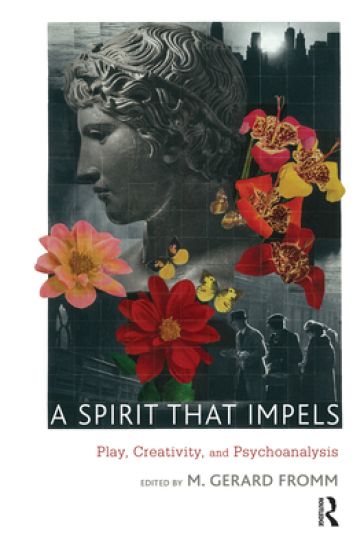
This volume brings together some of the papers presented by leading scholars, artists and psychoanalysts at an annual Creativity Seminar organised by the Erikson Institute of the Austen Riggs Center. Looking at creativity through a psychoanalytic lens - and very importantly, vice versa - the authors examine great works, such as Nathaniel Hawthorne's The Scarlet Letter, Mahler's Eighth Symphony, and William Gibson's The Miracle Worker; as well as great artists, such as Van Gogh and Lennon and McCartney, for what we might learn about the creative process itself. Deepening this conversation are a number of clinical studies and other reflections on the creative process - in sickness and in health, so to speak. A central theme is that of "deep play", the level at which the artist may be unconsciously playing out, on behalf of all of us, the deepest dynamics of human emotion in order that we may leave the encounter not only emotionally spent, but profoundly informed as well.
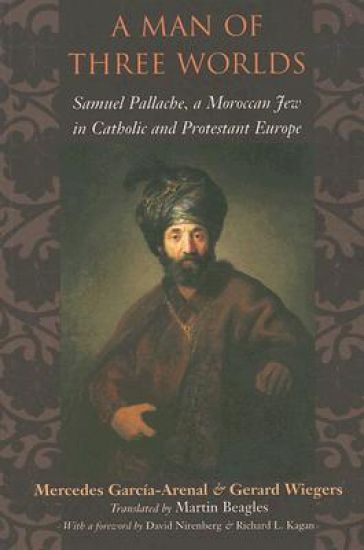
In the late fifteenth century, many of the Jews expelled from Spain made their way to Morocco and established a dynamic community in Fez. A number of Jewish families became prominent in commerce and public life there. Among the Jews of Fez of Hispanic origin was Samuel Pallache, who served the Moroccan sultan as a commercial and diplomatic agent in Holland until Pallache's death in 1616. Before that, he had tried to return with his family to Spain, and to this end he tried to convert to Catholicism and worked as an informer, intermediary, and spy in Moroccan affairs for the Spanish court. Later he became a privateer against Spanish ships and was tried in London for that reason. His religious identity proved to be as mutable as his political allegiances: when in Amsterdam, he was devoutly Jewish; when in Spain, a loyal converso (a baptized Jew). In A Man of Three Worlds, Mercedes Garcia-Arenal and Gerard Wiegers view Samuel Pallache's world as a microcosm of early modern society, one far more interconnected, cosmopolitan, and fluid than is often portrayed. Pallache's missions and misadventures took him from Islamic Fez and Catholic Spain to Protestant England and Holland. Through these travels, the authors explore the workings of the Moroccan sultanate and the Spanish court, the Jewish communities of Fez and Amsterdam, and details of the Atlantic-Mediterranean trade. At once a sweeping view of two continents, three faiths, and five nation-states and an intimate story of one man's remarkable life, A Man of Three Worlds is history at its most compelling.
This work has been selected by scholars as being culturally important and is part of the knowledge base of civilization as we know it.This work is in the public domain in the United States of America, and possibly other nations. Within the United States, you may freely copy and distribute this work, as no entity (individual or corporate) has a copyright on the body of the work.Scholars believe, and we concur, that this work is important enough to be preserved, reproduced, and made generally available to the public. To ensure a quality reading experience, this work has been proofread and republished using a format that seamlessly blends the original graphical elements with text in an easy-to-read typeface.We appreciate your support of the preservation process, and thank you for being an important part of keeping this knowledge alive and relevant.