Kirjahaku
Etsi kirjoja tekijän nimen, kirjan nimen tai ISBN:n perusteella.
1000 tulosta hakusanalla Gerda Muller
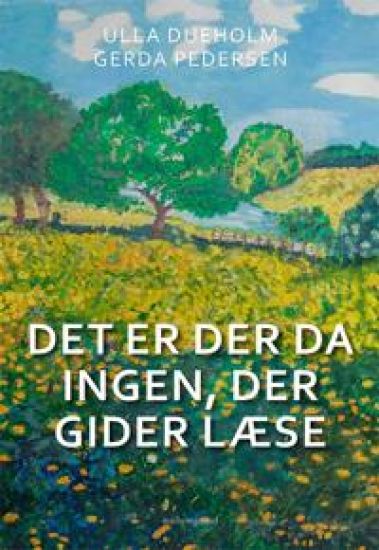
Det er der da ingen, der gider læse
Ulla Dueholm og Gerda Pedersen
Forlaget Mellemgaard
2023
nidottu
”Det er der da ingen, der gider læse!” sagde mormor hovedrystende, da jeg i 1988 spurgte hende, om hun ikke kunne tænke sig at få det her vidnesbyrd udgivet. Jeg fandt manuskriptet og hendes fortællemåde både interessant og vanvittigt spændende. Hun havde skrevet sine 190 siders håndskrevne erindringer tre gange, nemlig et til hvert af sine børn. ”Mormor, hvorfor har du ikke bare fået dem kopieret?” spurgte Thomas (hendes barnebarn og min ægtemand). Der kom en lille kluklyd fra hende: ”Ja, det havde jeg nok også gjort, hvis jeg havde tænkt over det.”Jeg kom til at holde af Thomas’ lille og milde mormor fra første færd. Hun var beundringsværdig, stærk og sej, på trods af sin ringe højde og drøjde, og så var hun alvidende – næsten. Indtil hendes mand døde, var det hendes pligt at gå 100 % op i sit vigtige job som husmor, som hun satte stor ære i. Hun var hustru, mor, bedstemor og familieplejer med stolthed! Jeg har bevaret hendes skrivemåde fra den håndskrevne historie og suppleret med egne og familiens erindringer samt hentet oversættelse af ikke længere kendte ord og vendinger i ordbøger og historiearkiver. Hun døde i 1999, 97 år gammel.Uddrag af bogenJeg var tit hos Lise en uges tid eller mere, bl.a. mens hun var indlagt på Vejle Sygehus. Altid når jeg var der, brugte jeg noget af tiden på at reparere tøj. En dag, da jeg sad med det inde i stuen, hørte jeg Thomas og hans kammerat snakke meget højt og ivrigt udenfor på sandbunken på terrassen. På den havde de anlagt veje og kørte med deres biler. Pludselig kom Thomas ind i stuen og sagde meget alvorligt: ”Mormor, der er noget, vi sådan har diskute’rt og diskute’rt – men så sagde jeg, at nu går jeg selv ind og spø’r min mormor!” ”Nåh, hvad er så det?”, spurgte jeg den meget unge mand på knap 7 år. ”Jo, mormor – hvor stort er universet?” Der overvurderede han mig altså!Om forfatteren Gerda Pedersen (1902-99) skrev sine erindringer om et langt liv med minder fra før Første Verdenskrig til tiden efter Anden Verdenskrig.Ulla Dueholm har siden debuten i 2012 skrevet en række bøger.
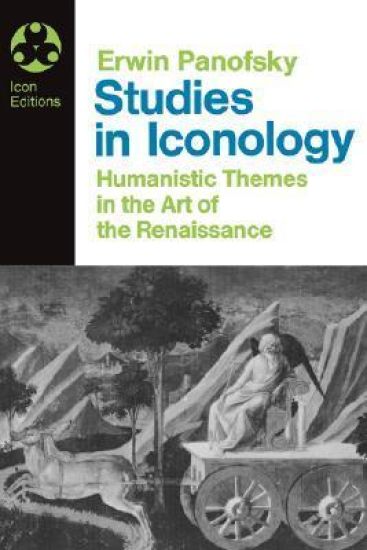
The themes and concepts of Renaissance art are analyzed and related to both classical and medieval tendencies
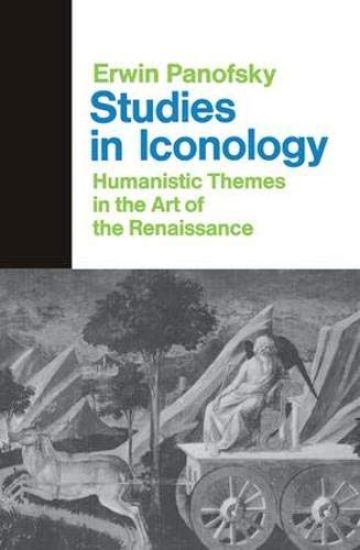
In Studies in Iconology, the themes and concepts of Renaissance art are analysed and related to both classical and medieval tendencies.
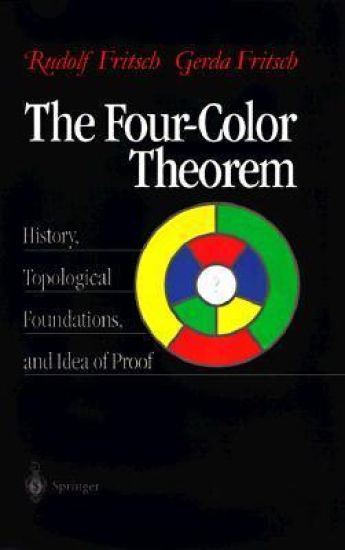
This elegant little book discusses a famous problem that helped to define the field now known as topology: What is the minimum number of colors required to print a map such that no two adjoining countries have the same color, no matter how convoluted their boundaries. Many famous mathematicians have worked on the problem, but the proof eluded fomulation until the 1950s, when it was finally cracked with a brute-force approach using a computer. The book begins by discussing the history of the problem, and then goes into the mathematics, both pleasantly enough that anyone with an elementary knowledge of geometry can follow it, and still with enough rigor that a mathematician can also read it with pleasure. The authors discuss the mathematics as well as the philosophical debate that ensued when the proof was announced: Just what is a mathematical proof, if it takes a computer to provide one - and is such a thing a proof at all?
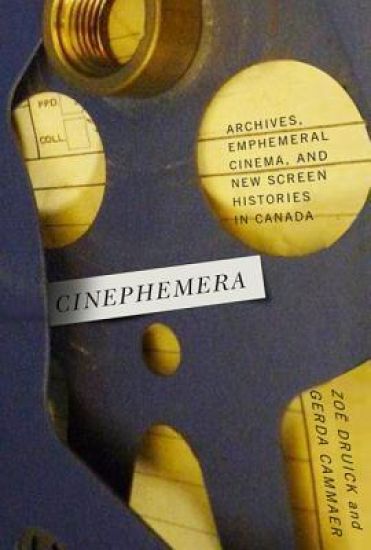
What do digital platforms mean for cinema studies in Canada? In an era when digital media are proliferating and thousands upon thousands of clips are available online, it seems counter-intuitive to say that audio-visual history is quickly disappearing. But the two processes are actually happening in tandem. Adopting a media-archaeological approach to the history of cinema, contributors to Cinephemera cover a wide range of pressing issues relating to Canadian cinema's ephemerality, including neglected or overlooked histories, the work of found footage filmmakers, questions about access and copyright, and practices of film archiving. Spurred by rapid changes to technologies of production, viewing, and preservation, this collection showcases both leading and emerging scholars grappling with the shifting meaning of cinema as an object of study. Film historians are put in conversation with experimental filmmakers and archivists to provide renewed energy for cinema studies by highlighting common interests around the materiality and circulation of films, videos, and other old media. Considering a wide range of cases from the earliest days of silent film production to the most recent initiatives in preservation, Cinephemera exposes the richness of moving image production in Canada outside the genres of feature length narrative fiction and documentary - a history that is at risk of being lost just as it is appearing. Contributors include Andrew Burke (Winnipeg), Jason Crawford (Champlain), Liz Czach (Alberta), Seth Feldman (York), Monika Kin Gagnon (Concordia), Andre Habib (Montreal), Randolph Jordan (SFU), Peter Lester (Brock), Scott Mackenzie (Queen's); Louis Pelletier (Montreal), Katherine Quanz (WLU), Micky Story (New College), Charles Tepperman (Calgary), Jennifer VanderBurgh (Saint Mary's), William C. Wees (McGill), Jerry White (Dalhousie), and Christine York (Concordia).
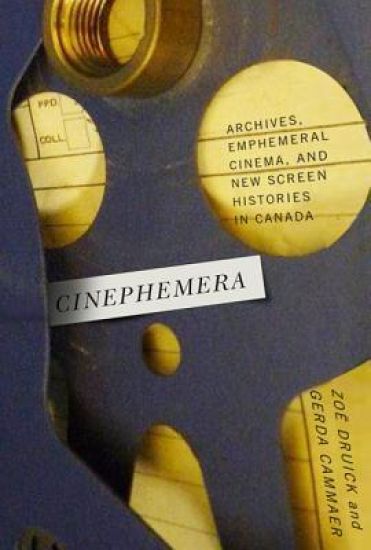
What do digital platforms mean for cinema studies in Canada? In an era when digital media are proliferating and thousands upon thousands of clips are available online, it seems counter-intuitive to say that audio-visual history is quickly disappearing. But the two processes are actually happening in tandem. Adopting a media-archaeological approach to the history of cinema, contributors to Cinephemera cover a wide range of pressing issues relating to Canadian cinema's ephemerality, including neglected or overlooked histories, the work of found footage filmmakers, questions about access and copyright, and practices of film archiving. Spurred by rapid changes to technologies of production, viewing, and preservation, this collection showcases both leading and emerging scholars grappling with the shifting meaning of cinema as an object of study. Film historians are put in conversation with experimental filmmakers and archivists to provide renewed energy for cinema studies by highlighting common interests around the materiality and circulation of films, videos, and other old media. Considering a wide range of cases from the earliest days of silent film production to the most recent initiatives in preservation, Cinephemera exposes the richness of moving image production in Canada outside the genres of feature length narrative fiction and documentary - a history that is at risk of being lost just as it is appearing. Contributors include Andrew Burke (Winnipeg), Jason Crawford (Champlain), Liz Czach (Alberta), Seth Feldman (York), Monika Kin Gagnon (Concordia), Andre Habib (Montreal), Randolph Jordan (SFU), Peter Lester (Brock), Scott Mackenzie (Queen's); Louis Pelletier (Montreal), Katherine Quanz (WLU), Micky Story (New College), Charles Tepperman (Calgary), Jennifer VanderBurgh (Saint Mary's), William C. Wees (McGill), Jerry White (Dalhousie), and Christine York (Concordia).
Basic Allied Health Statistics and Analysis
Lorie Darche; Gerda Koch
Delmar Cengage Learning
2019
kierre
Think statistics is just for statisticians? Think again! BASIC ALLIED HEALTH STATISTICS AND ANALYSIS, 5th Edition shows how Health Information Management (HIM) professionals wield the power of data to improve patient care delivery every day. To build a foundation for your success, this practical work-text demystifies stats by first demonstrating how to use calculations and then by offering practice in clinical case studies and practice problems. You’ll think through the big issues in health care today, consider available data, choose the best statistical analysis, and then make recommendations--just like the pros. And once you have the basic math and stats down, nothing will hold you back! You can master applications such as vital statistics and mortality rates, census and occupancy rates, and more, all while meeting CAHIIM curriculum and competency standards.
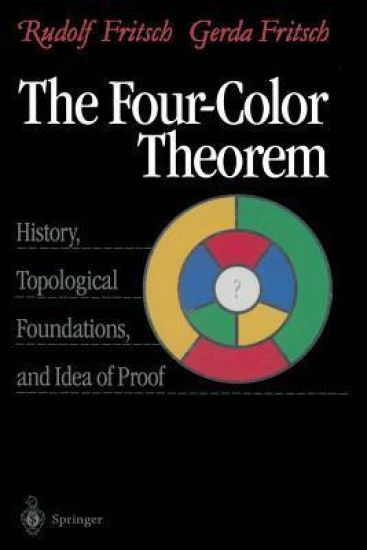
During the university reform of the 1970s, the classical Faculty of Science of the venerable Ludwig-Maximilians-Universitat in Munich was divided into five smaller faculties. One was for mathematics, the others for physics, chemistry and pharmaceutics, biology, and the earth sciences. Nevertheless, in order to maintain an exchange of ideas between the various disciplines and so as not to permit the complete undermining of the original notion of "universitas,,,l the Carl-Friedrich-von-Siemens Foundation periodically invites the pro fessors from the former Faculty of Science to a luncheon gathering. These are working luncheons during which recent developments in the various disciplines are presented by means of short talks. The motivation for such talks does not come, in the majority of cases, from the respective subject itself, but from another discipline that is loosely affiliated with it. In this way, the controversy over the modern methods used in the proof of the Four-Color Theorem had also spread to disciplines outside of mathematics. I, as a trained algebraic topologist, was asked to comment on this. Naturally, I was acquainted with the Four-Color 1 A Latin word meaning the whole of something, a collective entirety. Vll viii Preface Problem but, up to that point, had never intensively studied it. As an outsider,2 I dove into the material, not so much to achieve any scientific progress with it but to make this already achieved objective more understandable.
Design Leadership Ignited
Eric Quint; Gerda Gemser; Giulia Calabretta
Stanford Business Books,US
2022
sidottu
Design leadership at scale requires leaders who design the design function, establish a thriving environment for the creative team, and shape the design organization to drive progress, advance innovation, and enhance meaningful customer experiences. To examine the foundations of successful design leadership, the authors performed extensive in-depth interviews with design leaders working for Fortune 500 organizations across industries. Based on these insights, Design Leadership Ignited delineates a pathway to design excellence, which includes establishing a forward-looking strategy and an adequate organizational structure for the design function, empowering the design team, and scaling the impact of design across the entire organization. This book takes the position that a core challenge in the journey towards design excellence is the need to recognize and balance the often-contradictory objectives and activities that design leaders encounter. Combining their practitioner experience and research, the authors provide a framework to embrace the complexity of design leadership that will elevate design at scale.
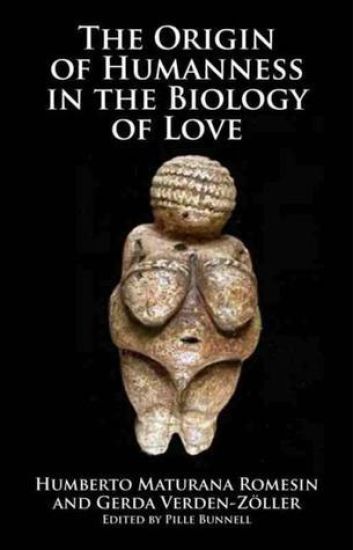
Origin of Humanness in the Biology of Love
Humberto Maturana Romesin; Gerda Verden-Zoller
Imprint Academic
2008
pokkari
The central concern of this book is us human beings. The authors' basic question is: 'How is it that we can live in mutual care, have ethical concerns, and at the same time deny all that through the rational justification of aggression?’ The authors answer this basic question indirectly by providing a look into the fundaments of our biological constitution, concentrating on what they term emotioning, that is the flow of emotions in daily life that guides the flow of the systemic conservation of a manner of living. Maturana and Verden-Zoller claim that the fundamental emotion that gave rise to humans as sapient languaging beings was love, and that this remains our fundament even when other emotions become socially prevalent.
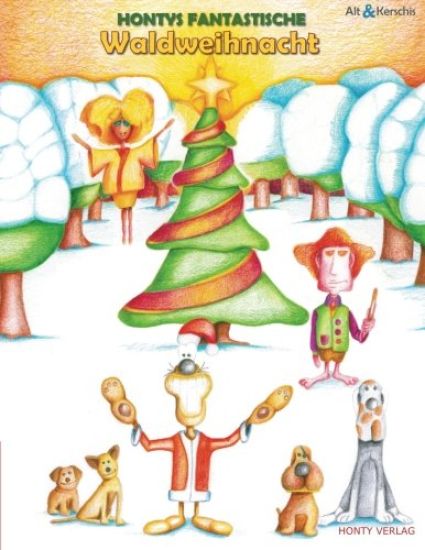
Hontys fantastische Waldweihnacht
Thomas Kerschis; Gerda Alt
Hontys Fantastische Waldweihnacht
2013
nidottu
Was bisher im Band 1 der Hundeheldsaga passierte: Honty ist eigentlich ein Bewohner des Planeten Amar llis und genau wie sein Urgro vater Francis Marius Honty liebt er abenteuerliche Reisen. Als Hontys Vater plant, mit einer Raumf hre auf die Suche nach dem verschollenen Urahn Francis zu gehen, ist Honty sofort Feuer und Flamme. Leider will ihn sein Papa nicht mitnehmen. So packt Honty heimlich seinen Rucksack, nimmt seine Flugdose und schleicht sich als blinder Passagier an Bord der Raumf hre. Damit f ngt das Erdenabenteuer an. Honty strandet ohne seine Flugdose auf einer Wiese und ger t in die H nde eines b sen Hundef ngers. Mit List und viel Mut gelingt ihm die Flucht und auf der Suche nach einem Unterschlupf findet er auf einer Waldwiese eine etwas in die Jahre gekommene H tte. Es scheint ein idealer Ausgangspunkt zu sein, einen Weg zur ck zu seinem Heimatplaneten zu finden. Er beschlie t, sich hier niederzulassen Weihnachten steht vor der T re und Honty bereitet sich mit seinen Freunden auf sein erstes Fest unter dem Weihnachtsbaum vor.

Die Römer an Rhein Und Donau
Burkhard Böttger; Gerda Von Bülow; Hans-Joachim Diesner; Bernhard Döhle; Gudrun Gomolka; Rigobert Günther; Gottfried Härtel; Wieland Held; Karin Iffert; Klaus-Peter Johne; Leiva Petersen; Heinz Schulz-Falkenthal; Wolfgang Seyfarth; Ilse Ulmann; Volker Weber
De Gruyter
1985
sidottu
Automatische Sprachübersetzung. III.
Ingeborg Brand; Gerda Klimonow; Alexander Ljudskanov
De Gruyter
1976
sidottu
Keine ausf hrliche Beschreibung f r "BRAND: AUTOMATISCHE SPRACH BERSETZUNG III AVASP" verf gbar.

Keine ausf hrliche Beschreibung f r "Russisch-Deutsch" verf gbar.

Patientenorientierte Gesprächsführung im Pflegeprozess
Annelies Fitzgerald; Gerda Zwick
Springer Verlag GmbH
2001
nidottu
Pflegeprozess einmal anders – dieses Buch dient dazu, den Prozess der Pflege und die dabei zu führenden Gespräche zu erleichtern. Professionelle Kommunikation ist als Basisfertigkeit für jede Pflegeperson wichtig, um sich Schritt für Schritt in Richtung tatsächlicher Patientenorientierung zu bewegen. Dazu werden in diesem Buch vier verschiedene Menschentypen vorgestellt und auf ihrem Weg durch den Pflegeprozess begleitet. Anhand von Beispielen aus dem Alltag im Krankenhaus zwischen Patienten und Pflegepersonen werden Tipps für die Praxis formuliert. Der Wert dieses Buches liegt vor allem in der praktischen Anwendung. Es vermittelt Fähigkeiten und Fertigkeiten, in einem Gespräch wirklich das zu erreichen, was erreicht werden soll. Es verbessert die Wahrnehmung, die Verarbeitung von Eindrücken und weist auf Einstellungen hin, die Gespräche einfacher oder schwieriger machen können.