Kirjojen hintavertailu. Mukana 12 039 497 kirjaa ja 12 kauppaa.

Kirjahaku

Etsi kirjoja tekijän nimen, kirjan nimen tai ISBN:n perusteella.

1000 tulosta hakusanalla Hans Rust; Rust Hans 1879-

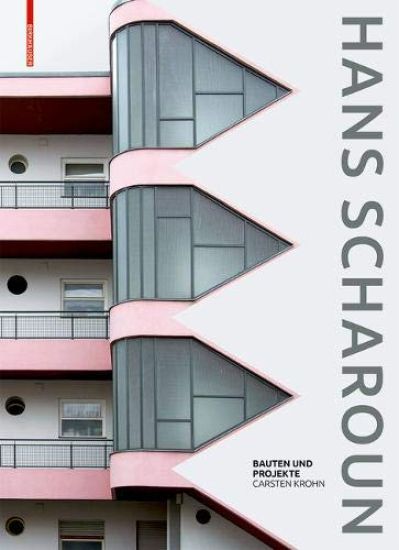
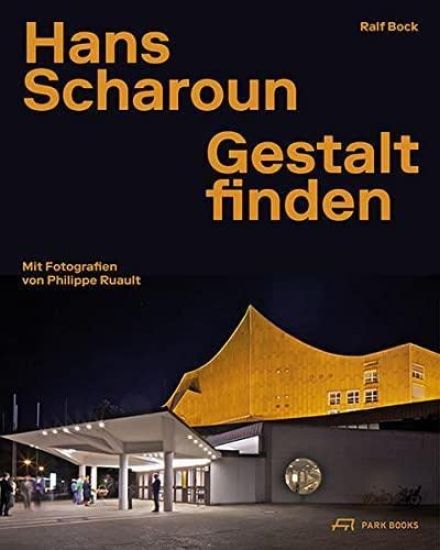
Hans Scharoun

Hans Scharoun

Carsten Krohn

Birkhauser
2018
sidottu
Hans Scharoun is one of the most important architects of the 2 th century as a proponent of organic architecture, he created unconventional and imaginative buildings which adapt to users' needs in a dynamic way. His oeuvre includes family residences and housing estates but also encompasses the German embassy in Brazil, and urban icons such as the Berlin Philharmonie. The book, a cooperation with Baukunstarchiv (the architecture archive) of the Akademie der Künste, Berlin, documents the entire range of known completed buildings by Scharoun, including, for the first time, early works in East Prussia. The specially taken photographs by Carsten Krohn, together with the historic photographs and plans from the Hans-Scharoun-Archive offer a new overview of this expressive organic architecture.
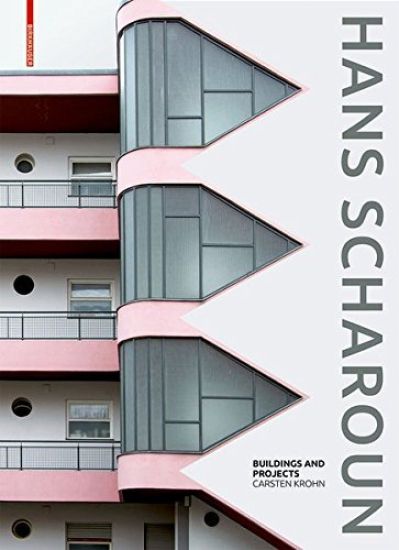
Hans Scharoun

Hans Scharoun

Carsten Krohn

Birkhauser
2018
sidottu
Hans Scharoun is one of the most important architects of the 20th century; as a proponent of organic architecture, he created unconventional and imaginative buildings which adapt to users’ needs in a dynamic way. His oeuvre includes family residences and housing estates but also encompasses the German embassy in Brazil, and urban icons such as the Berlin Philharmonie. The book, a cooperation with Baukunstarchiv (the architecture archive) of the Akademie der Künste, Berlin, documents the entire range of known completed buildings by Scharoun, including, for the first time, early works in East Prussia. The specially taken photographs by Carsten Krohn, together with the historic photographs and plans from the Hans-Scharoun-Archive offer a new overview of this expressive organic architecture.
Hans und Wassili Luckhardt

Hans und Wassili Luckhardt

Carsten Krohn; Michele Stavagna

Birkhauser
2024
sidottu
The architectural work of Hans and Wassili Luckhardt (1890–1954/1889–1972) is not yet adequately appreciated. As members of the Glass Chain initiative and the Ring collective, they shaped, especially through their work with Alfons Anker, the development of Modernist architecture in the 1920s, as evidenced by their winning design for the layout of Berlin’s Alexanderplatz. While their early work was anchored in utopian expressionism, a more objective attitude emerged later, based on the application of new architectural constructs. The book documents all 40 of Hans und Wassili Luckhardt’s realized buildings. Two essays deal with the unbuilt and utopian projects. Newly taken photographs and newly drawn plans by Carsten Krohn complement the historical illustrations. Comprehensive documentation of the work of Hans and Wassili Luckhardt. With approx. 80 new photographs and 80 newly drawn plans by Carsten Krohn
Hans and Wassili Luckhardt

Hans and Wassili Luckhardt

Carsten Krohn; Michele Stavagna

Birkhauser
2024
sidottu
The architectural work of Hans and Wassili Luckhardt (1890–1954/1889–1972) is not yet adequately appreciated. As members of the Glass Chain initiative and the Ring collective, they shaped, especially through their work with Alfons Anker, the development of Modernist architecture in the 1920s, as evidenced by their winning design for the layout of Berlin’s Alexanderplatz. While their early work was anchored in utopian expressionism, a more objective attitude emerged later, based on the application of new architectural constructs.The book documents all 40 of Hans und Wassili Luckhardt’s realized buildings. Two essays deal with the unbuilt and utopian projects. Newly taken photographs and newly drawn plans by Carsten Krohn complement the historical illustrations. Comprehensive documentation of the work of Hans and Wassili Luckhardt. With approx. 80 new photographs and 80 newly drawn plans by Carsten Krohn
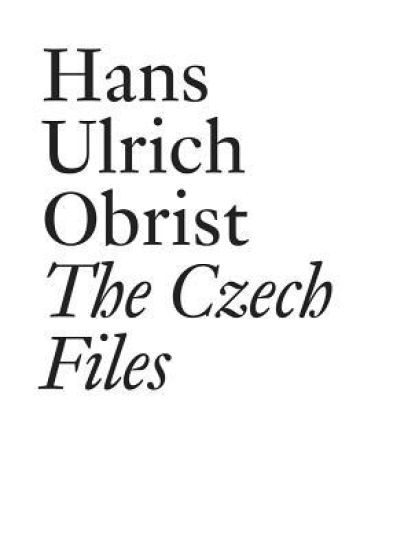
Hans Ulrich Obrist: The Czech Files
This publication is the result of visits carried out by Hans Ulrich Obrist to artists' studios in Prague around 2001 and 2008. Interviews with Milan Grygar, Jiri Kovanda, Karel Malich, Zdenek Sykora and others map the historical events as well as the personal stories of the protagonists of the Czech "second avant-garde" and the "neo-modernism" of the former socialist bloc. Born between 1920 and 1945, this generation lived through the cultural upheaval of the Prague Spring in the 1960s and the "normalization" of the 1970s, when censorship was reintroduced. These interviews contextualize a generation of Czech artists within the historical events that marked their lives and careers, and draw attention to their urgently felt need to resist historical events while keeping their artistic practices sustained, radical and vital. This volume is part of the "Documents" series of critical writings.
Hans Hillmann

Hans Hillmann

Lars Muller Publishers
2009
pokkari
The first in a new series called A5 in which important figures in the history of design will be made accessible to a broader audience. The graphic artist Hans Hillmann is one of Germany's most important poster designers and illustrators who, as a professor of graphic design for more than 30 years, had a formative influence on entire generations of designers. 120 illustrations
Hans Scharoun and the Development of Small Apartment Floor Plans
Romeo and Julia, two residential high-rises in Stuttgart, built 1954-59 and designed by Hans Scharoun (1893-1972), constitute the most original and far-reaching of the various attempts to re-design the entire 'process of living' that this extraordinary protagonist of Germany's modern architecture undertook. Over decades, Scharoun had woven an extensive network of research and knowledge systems as a basis for his floor-plan designs. His unpublished writings and, even more importantly, his lectures from between 1947 and 1958 reveal the countless threads of research and discourse, which his work in residential architecture referenced and absorbed. They highlight the sometimes contradictory, yet constant renewal and consolidation of his knowledge in the field of housing. This new book, based on extensive research in collaboration with Berlin's Akademie der Kunste, demonstrates how closely interlocked Romeo and Julia are with their architect's immense engagement with the topic of housing. Drawing on previously unpublished archive material held at the Akademie der Kunste, the authors for the first time allow the reader an insight into Scharoun's design process. Alongside reproductions of original plans and drawings, the book features excerpts from Scharoun's unpublished text fragments. New images by Swiss architectural photographer Georg Aerni, illustrating the two towers' highly expressive appearance, round out this volume.
Hans Friedrich Blunck

Hans Friedrich Blunck

W. Scott Hoerie

Verlag Peter Lang
2003
nidottu
Oxford, Bern, Berlin, Bruxelles, Frankfurt/M., New York, Wien. Which literary traditions helped carry the Nazis to power? In which parts of Germany were these traditions strongest? This study answers these questions by examining the life and career of one of the Third Reich's most influential literati, the northern German poet Hans Friedrich Blunck (1888-1961). Infamous as a classic Blut und Boden (« blood and earth) writer, Blunck worked in neo-Romantic, traditional folk styles and was best known for his fairy tales and semi-historical works about his native Schleswig-Holstein. From 1933 to 1935, he was president of the Third Reich's Reichs-schrifttumskammer (« Reich Literary Chamber, RSK), a professional union that included all of Nazi Germany's « acceptable (and legally publishable) writers. From 1936 to 1940, he was president of Die Stiftung des deutschen Auslandswerks (« Foundation for German Foreign Work, DAW), a cultural embassy of his own invention that sought to build informal diplomatic links between Germany and its neighbors. While numerous writers distanced themselves from the Nazi regime before the war, Blunck maintained his ties until the end. His activities represent a consequential, and, arguably, the most revealing, story of literary complicity in the Third Reich. Moreover, his life says a great deal about the cultural forces - particularly the regional literary forces - that helped propel the Nazis to power. Contents: National Socialism and literature - Official Nazi literary policy - Provincial traditions and National Socialism - Lower Germany and National Socialism - Germanic traditions and National Socialism - Nordic literature - «Authoritarian democracy - Volkisch literature - « Blood and Earth Literature - Neo-Romanticism - Nazi propaganda - Writers' unions and National Socialism - Cultural aspects of Nazi diplomacy and foreign policy.
Saemtliche Werke - Band 12/I- Musikalische Schriften- Herausgegeben Von Ferdinand Van Ingen Und Hans-Gert Roloff

Saemtliche Werke - Band 12/I- Musikalische Schriften- Herausgegeben Von Ferdinand Van Ingen Und Hans-Gert Roloff

Hans-Gert Roloff; Ferdinand Van Ingen

Peter Lang Gmbh, Internationaler Verlag Der Wissenschaften
2005
sidottu
Die Schriften Johann Beers, dessen eigentliche Entdeckung als einem der reizvollsten Erz hler der zweiten H lfte des 17. Jahrhunderts vor f nfzig Jahren Richard Alewyn gelungen ist, haben seit dieser Zeit nicht nur einen bevorzugten Platz in der Literaturgeschichte, sondern auch im literarischen Interessengebiet des modernen Lesers gefunden. Beer, vielfach als Kontrapunkt zu seinem s ddeutschen Schriftstellerkollegen Grimmelshausen empfunden, erfreut sich zunehmend allgemeiner, nicht nur professioneller Lesergunst.
Hans Arp- Weltbild Und Kunstauffassung Im Spaetwerk
Hans Arp hat seit den spaten 1930er Jahren eine religioese Einstellung und eine Kunstauffassung angenommen, die sich nicht restlos mit seinen UEberzeugungen der Dada-Zeit decken. Die in dieser Arbeit vorgenommenen vergleichenden Analysen fruher und spater Texte sowie eine chronologische Darstellung des Auftauchens zentraler Begriffe in den Essays und Gedichten foerdern Veranderungen im Denken des Kunstlers zutage und erlauben eine detaillierte Rekonstruktion seines spaten Weltbildes. Durch Recherchen in Arps Bibliothek koennen zum ersten Mal wissenschaftlich fundierte Erkenntnisse uber seine Lesegewohnheiten vorgelegt werden. Die Untersuchung geht zudem der Frage nach, wie weit Arps retrospektive Dada-Kommentare von Begriffen und Auffassungen seiner spaten Weltanschauung und der spaten Lekturen geleitet sind. Schliesslich wird das bildnerische, insbesondere das dreidimensionale Spatwerk formal analysiert, vor dem Hintergrund von Arps religioesem Weltbild interpretiert und vom Werk der Dada-Zeit abgehoben. Das Buch entlarvt einige in der Arp-Rezeption fur selbstverstandlich genommene Auffassungen als Klischees und zeigt weitgehend unbekannte, uberraschende Seiten des bildenden Kunstlers und Dichters auf.
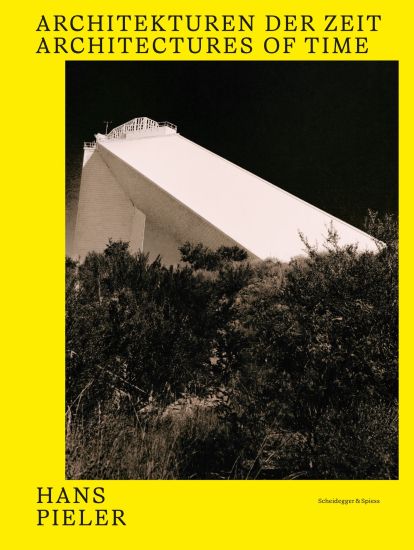
Hans Pieler

Hans Pieler

Hubertus Amelunxen

SCHEIDEGGER UND SPIESS AG, VERLAG
2025
sidottu
For thousands of years, people have built so-called calendar buildings: buildings that served as sundials for measuring time or were used for astronomical calculations. The most famous examples include the Pyramids of Giza, the Megalithic Temples of Malta, the Solarium Augusti on Rome’s Campus Martius, or the ancient observatories in Korea, Baghdad, Cairo, or Samarkand. The oldest known archaeo-astronomical device dates back to around 6000 BC and was discovered only some 20 years ago at Nabta Playa in Egypt. The German photographer Hans Pieler (1951-2012) dedicated himself comprehensively to these calendar buildings. In a wide-ranging photographic project spanning 15 years, Pieler travelled the world in the search for such sites, studied them, and recorded many of them in striking photographs. His interest was focused both on the architecture and its particular coding through the respective culture as well as on the theory of photography, the allegorical image of the time. Due to Pieler’s premature death in 2012, the fascinating project remained unfinished and unpublished. This book now for the first time features a selection of some 100 of the best shots from the artist’s estate. Complemented by illuminating essays, they form a unique photographic study of these architectures and their meaning and purpose as a reflection of time in stone. Text in English and German.
Hans-Georg Gadamer

Hans-Georg Gadamer

Günter Figal

Walter de Gruyter
2011
pokkari
In seinem 1960 erschienenen Hauptwerk "Wahrheit und Methode" nimmt Gadamer die bis in die Antike zur ckreichende hermeneutische Tradition auf, um vor allem im Anschluss an Hegel und Heidegger eine philosophische Hermeneutik zu begr nden. Das Buch brachte seinem Autor internationalen Ruhm, und die philosophische Hermeneutik ist eine der ma geblichen Konzeptionen der neueren Philosophie geworden. Nach wie vor bildet "Wahrheit und Methode" den Ausgangspunkt f r eine philosophische Kl rung des Verstehens und seiner von Gadamer behandelten Auspr gungen in Kunst, Geschichte und Sprache. Der vorliegende Band rekonstruiert und diskutiert in Form eines kooperativen Kommentars, der Gliederung des Werkes folgend, Gadamers Gedankengang, zeigt aber auch die Perspektiven einer Philosophie auf, die sich gegen ber ihrem eigenen hermeneutischen Charakter nicht verschlie t.