Kirjojen hintavertailu. Mukana 12 390 323 kirjaa ja 12 kauppaa.

Kirjahaku

Etsi kirjoja tekijän nimen, kirjan nimen tai ISBN:n perusteella.

1000 tulosta hakusanalla Heidi Nummi

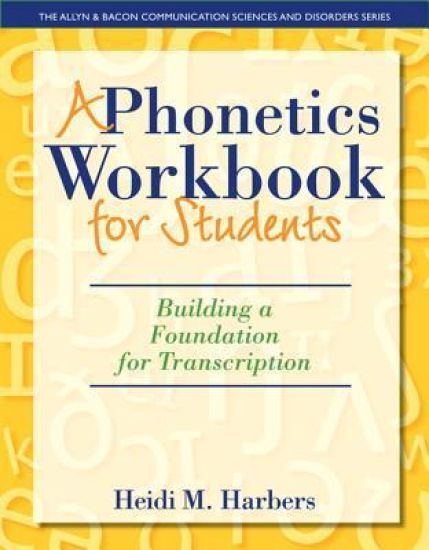
Phonetics Workbook for Students, A
Understanding how sounds form—and how sounds combine to create words— is imperative to learning how to transcribe speech phonetically. Taking a "meta" approach, A Phonetics Workbook for Students by Heidi Harbers prepares students to transcribe speech phonetically by helping them become aware of the sounds of English phonology. Following a systematic, learning-friendly organization, chapter’s progress from awareness of sounds, to articulatory phonetics and IPA symbols, to transcription. Unlike other workbooks, its exercises are varied and challenging and develop both foundational and critical thinking skills. By teaching students how to develop both an ear and eye for phonetics, the workbook provides a superior foundation from which transcription skills can develop.
The Absentee

The Absentee

Heidi Thomson; Maria Edgeworth

Penguin Classics
2000
pokkari
Lord and Lady Clonbrony are more concerned with fashionable London society than with their responsibilities to those who live and work on their Irish estates. Concerned by this negligence, their son Lord Colambre goes incognito to Ireland to observe the situation and to discover the truth about the origins of his beloved cousin Grace. Can he find a solution that will bring prosperity and contentment to every level of society, including his own family? Rich in atmosphere and local character, The Absentee (1812) helped establish the 'regional' novel form, which influenced such varied writers as Scott, Thackeray and Turgenev. In this sparkling satire on Anglo-Irish relations, Maria Edgeworth created a landmark work of morality and social realism.
Dinner with Mugabe

Dinner with Mugabe

Heidi Holland

Penguin Books Ltd
2009
pokkari
This penetrating, timely portrait of Robert Mugabe is the psychobiography of a man whose once brilliant career has ruined Zimbabwe and cast shame on the African continent. Heidi Holland's tireless investigation begins with her having dinner with Mugabe, the freedom fighter, and ends in a searching interview with Zimbabwe's president more than 30 years later. The author charts Mugabe's gradual self-destruction, and uncovers some of the most respectable international players in the Zimbabwe tragedy. Probing the mystery of Africa's loyalty to one of its worst dictators, Holland explores the contradictions that cloud the life of the man who had embodied a continent's promise.
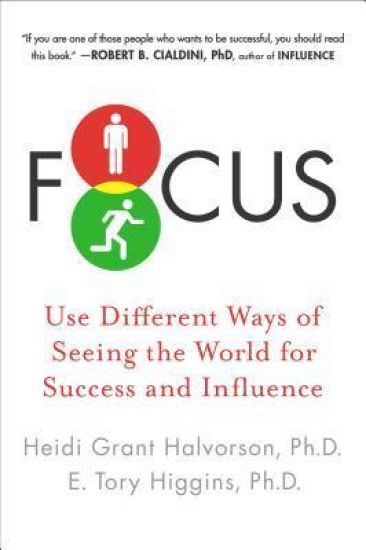
Focus

Focus

Heidi Grant Halvorson; E. Tory Higgins

J.P.Tarcher,U.S./Perigee Bks.,U.S.
2014
nidottu
"A must-read for anyone who wants to understand why they behave as they do." --Art Markman, Ph.D., author of "Smart Thinking " Do you play to win? Or do you play not to lose? As Tory Higgins and Heidi Grant Halvorson have discovered in their work at Columbia University's Motivation Science Center, everything we do is motivated either by a desire to be better off or to simply hang on to what we've got. And understanding the simple but crucial difference between the two can empower you to motivate yourself and influence everyone around you. Examining how promotion/prevention focus applies across a wide range of situations--from selling products to managing employees to raising children to getting a second date--Halvorson and Higgins show us how to identify, change, and use focus to get the results we want.
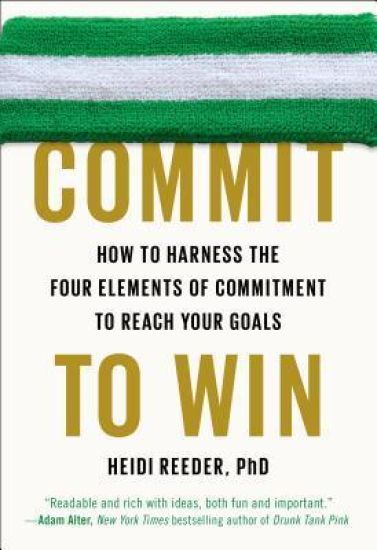
Commit To Win

Commit To Win

Heidi Reeder

Plume
2015
nidottu
Anyone who's ever given up on a New Year's resolution knows: Willpower eventually runs out. Whether the goal is personal or professional, the factor that really determines success is an individual's commitment level. Heidi Reeder, PhD, is a highly regarded communication expert with a slew of high-level clients. In Commit to Win, she unpacks forty years of research by psychologists and economists to show how commitment boils down to just four variables: Treasures, Troubles, Contributions, and Choices. Showing how to harness these elements--and providing practical examples and action plans--Reeder gives everyone the tools to stop wishing--and start achieving.
Stuck

Stuck

Heidi J. Larson

Oxford University Press Inc
2020
sidottu
Vaccine reluctance and refusal are no longer limited to the margins of society. Debates around vaccines' necessity -- along with questions around their side effects -- have gone mainstream, blending with geopolitical conflicts, political campaigns, celebrity causes, and "natural" lifestyles to win a growing number of hearts and minds. Today's anti-vaccine positions find audiences where they've never existed previously. Stuck examines how the issues surrounding vaccine hesitancy are, more than anything, about people feeling left out of the conversation. A new dialogue is long overdue, one that addresses the many types of vaccine hesitancy and the social factors that perpetuate them. To do this, Stuck provides a clear-eyed examination of the social vectors that transmit vaccine rumors, their manifestations around the globe, and how these individual threads are all connected.
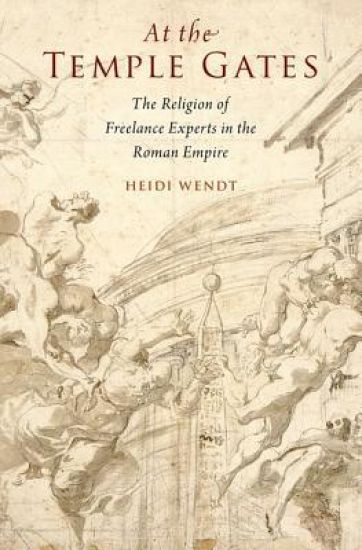
At the Temple Gates

At the Temple Gates

Heidi Wendt

Oxford University Press Inc
2016
sidottu
In his sixth satire, Juvenal deplores the pastimes of Roman women, foremost of which is superstition. Speculating about how wives busy themselves while their husbands are away, the poet introduces a revolving door of visitors who include a eunuch of the eastern goddess Bellona, an impersonator of Egyptian Anubis, a Judean priestess, and Chaldean astrologers. From these religious experts women solicit services ranging from dream interpretation and purification to the coercion of lovers or wealthy acquaintances. Juvenal's catalogue captures not only the popularity of these "freelance" experts at the turn of the second century, but also their familiarity among his Roman audiences, whom he could expect to get the joke. Heidi Wendt investigates the backdrop of this enthusiasm for exotic wisdom and practices by examining the rise of self-authorized experts in religion during the first century of the Roman Empire. Unlike members of civic priesthoods and temples, freelance experts had to generate their own legitimacy, often through demonstrations of skill and learning out on the streets, in marketplaces, and at the temple gates. While historically these professionals have been studied separately from the development of modern conceptions of religion, Wendt argues that they, too, participated in a highly competitive form of religious activity from which emerged the modern-day characters not just of religious experts but specialists of philosophy, medicine, and education as well. Wendt notes affinities across this wider class of activity, but focuses on those experts who directly enlisted gods and similar beings. Over the course of the first century freelance experts grew increasingly influential, more diverse with respect to the skills or methods in which they claimed expertise, and more assorted in the ethnic coding of their wisdom and practices. Wendt argues that this class of religious activity engendered many of the innovative forms of religion that flourished in the second century, including but not limited to phenomena linked with Persian Mithras, the Egyptian gods, and the Judean Christ. The evidence for self-authorized experts in religion is abundant, but scholars of ancient Mediterranean religion have only recently begun to appreciate their impact on the Empire's changing religious landscape. At the Temple Gates integrates studies of Judaism, Christianity, mystery cults, astrology, magic, and philosophy to paint a colorful portrait of religious expertise in early Rome.
Invisible Subjects

Invisible Subjects

Heidi Kim

Oxford University Press Inc
2016
sidottu
Invisible Subjects broadens the archive of Asian American studies, using advances in Asian American history and historiography to reinterpret the politics of the major figures of post-World War II American literature and criticism. Taking its theoretical inspiration from the work of Ralph Ellison and his focus on the invisibility of a racial minority in mainstream history, Heidi Kim argues that the work of American studies and literature in this era to explain and contain the troubling Asian figure reflects both the swift amnesia that covers the Pacific theater of WWII and the importance of the Asian to immigration debates and civil rights. From the Melville Revival through the myth and symbol school, as well as the fiction of John Steinbeck and William Faulkner, the postwar literary scene exhibits the ambiguity of Asian forms in the 1950s within the binaries of foreigner/native and black/white, as well as the constructs of gender and the nuclear family. It contrasts with the tortured redefinitions of race and nationality that appear in immigration acts and court cases, particularly those about segregation and interracial marriage. The Melville Revival critics' discussion of a mythic and yet realistic diabolical Asian, the role of a Chinese housekeeper in preserving the pioneer family in Steinbeck's East of Eden, and the extent to which the history of the Mississippi Chinese sheds light on Faulkner's stagnant societies all work to subsume a troubling presence. Detailing the archaeology and genealogy of Asian American Studies, Invisible Subjects offers an original, important, and vital contribution to both our understanding of American literary history and the general study of race and ethnicity in American cultural history.
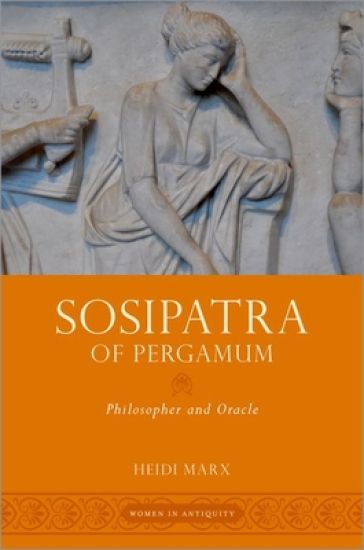
Sosipatra of Pergamum

Sosipatra of Pergamum

Heidi Marx

Oxford University Press Inc
2022
sidottu
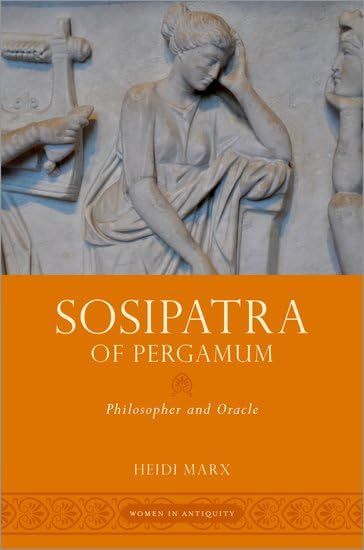
The story of Sosipatra of Pergamum (4th century C.E.) as told by her biographer, Eunapius of Sardis in his Lives of the Philosophers and Sophists, is a remarkable tale. It is the story of an elite young girl from the area of Ephesus, who was educated by traveling oracles (daemons), and who grew up to lead her own philosophy school on the west coast of Asia Minor. She was also a prophet of sorts, channeling divine messages to her students, family, and friends, and foretelling the future. Sosipatra of Pergamum is the first sustained, book length attempt to tell the story of this mysterious woman. It presents a rich contextualization of the brief and highly fictionalized portrait provided by Eunapius. In doing so, the book explores the cultural and political landscape of late ancient Asia Minor, especially the areas around Ephesus, Pergamum, Sardis, and Smyrna. It also discusses moments in Sosipatra's life for what they reveal more generally about women's lives in Late Antiquity in the areas of childhood, education, family, household, motherhood, widowhood, and professional life. Her career sheds light on late Roman Platonism, its engagement with religion, ritual, and “magic,” and the role of women in this movement. By thoroughly examining the ancient evidence, Heidi Marx recovers a hidden yet important figure from the rich intellectual traditions of the Roman Near East.
Time to React

Time to React

Heidi Hardt

Oxford University Press Inc
2017
nidottu
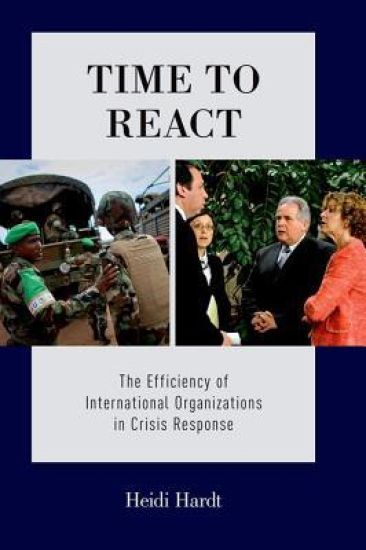
In conflict-affected regions, delays in international response can have life or death consequences. The speed with which international organizations react to crises affects the prospects for communities to re-establish peace. Why then do some international organizations take longer than others to answer calls for intervention? To answer this question and explore options for reform, Time to React builds on contemporary scholarship with original data on response rates and interview evidence from 50 ambassadors across four leading organizations (AU, EU, OAS and OSCE). The explanation for variation in speed ultimately lies in core differences in institutional cultures across organizations. Although wealth and capabilities can strengthen a peace operation, it is the unspoken rules and social networks of peace and security committees at these organizations that dictate the pace with which an operation is established. This book offers a first analysis of the critical importance of and conditions shaping timeliness of crisis response by international organizations.
NATO's Lessons in Crisis

NATO's Lessons in Crisis

Heidi Hardt

Oxford University Press Inc
2018
sidottu
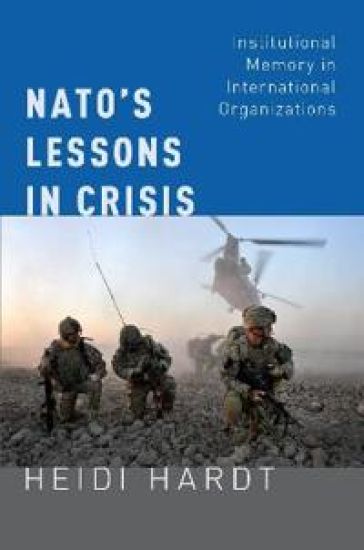
Errors in crisis management operations can have deadly consequences. Some international organizations take steps to reform, whereas other organizations tend to repeat the same errors. As budget cuts have led to increased turnover in personnel, how is it that international organizations have maintained any knowledge about past errors? This book introduces an argument for how and why international organizations develop institutional memory of strategic errors. As Heidi Hardt shows, formal learning processes -- such as lessons learned offices and databases - can ironically deter elite officials from using the processes to share their relevant knowledge. Elites have few professional incentives to report observed strategic errors. As a result, most memory-building occurs behind the scenes via informal processes. These informal processes include elites' use of transnational interpersonal networks, private documentation, and conversations during crisis management exercises. Such processes ensure that institutional memory develops, but they do so at a price: an organization's memory is vulnerable to knowledge loss if even one critical elite chooses to retire. Hardt tests her argument through extensive, original field research inside one of the world's largest crisis management organizations -- the North Atlantic Treaty Organization (NATO). She conducted interviews and a survey experiment with 120 NATO elites, including almost all NATO ambassadors and military representatives, all assistant secretary generals, and civilian and military leaders engaged in the decision-making and planning of operations. Her findings provide insights into NATO's institutional memory concerning three cases of crisis management in Afghanistan, Libya, and Ukraine. Ultimately, this book argues that formal learning processes alone are insufficient for an organization to capture knowledge, learn and change.
NATO's Lessons in Crisis

NATO's Lessons in Crisis

Heidi Hardt

Oxford University Press Inc
2018
nidottu
Errors in crisis management operations can have deadly consequences. Some international organizations take steps to reform, whereas other organizations tend to repeat the same errors. As budget cuts have led to increased turnover in personnel, how is it that international organizations have maintained any knowledge about past errors? This book introduces an argument for how and why international organizations develop institutional memory of strategic errors. As Heidi Hardt shows, formal learning processes -- such as lessons learned offices and databases - can ironically deter elite officials from using the processes to share their relevant knowledge. Elites have few professional incentives to report observed strategic errors. As a result, most memory-building occurs behind the scenes via informal processes. These informal processes include elites' use of transnational interpersonal networks, private documentation, and conversations during crisis management exercises. Such processes ensure that institutional memory develops, but they do so at a price: an organization's memory is vulnerable to knowledge loss if even one critical elite chooses to retire. Hardt tests her argument through extensive, original field research inside one of the world's largest crisis management organizations -- the North Atlantic Treaty Organization (NATO). She conducted interviews and a survey experiment with 120 NATO elites, including almost all NATO ambassadors and military representatives, all assistant secretary generals, and civilian and military leaders engaged in the decision-making and planning of operations. Her findings provide insights into NATO's institutional memory concerning three cases of crisis management in Afghanistan, Libya, and Ukraine. Ultimately, this book argues that formal learning processes alone are insufficient for an organization to capture knowledge, learn and change.
Colonial Women

Colonial Women

Heidi Hutner

Oxford University Press Inc
2001
sidottu
Colonial Women is the first comprehensive study to explore the interpenetrating discourses of gender and race in Stuart drama. Analyzing the plays of Shakespeare, Fletcher, Davenant, Dryden, Behn and other playwrights, Heidi Hutner argues that in drama, as in historical accounts, the symbol of the native woman is used to justify and promote the success of the English appropriation, commodification, and exploitation of the New World and its native inhabitants.
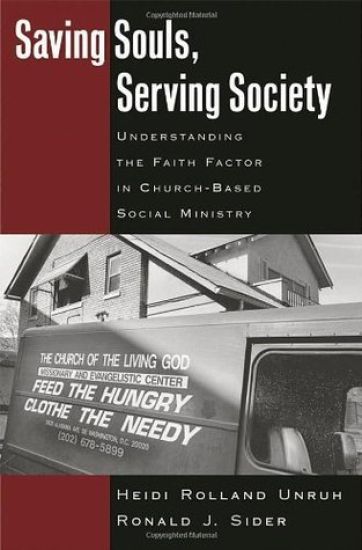
Saving Souls, Serving Society

Saving Souls, Serving Society

Heidi Rolland Unruh; Ronald J. Sider

Oxford University Press Inc
2005
sidottu
As public funding for social services has been slashed, there has arisen an unprecedented interest in the potential (and dangers) of faith-based institutions as agents of social change. Now, as President Bush begins his second term, he has placed government funding of faith-based programs at the top of his domestic agenda. What distinguishes church-based from secular social activism? What is particularly religious about church-based social services? How do churches express their religious identity in the context of social services, and how does this affect their access to resources and partners? This book, based on a Lilly-funded study of fifteen Philadelphia churches with active outreach, seeks to answer these and other pressing questions surrounding this important and controversial issue. Providing a far more objective understanding of faith-based initiatives than previously available, this study will be of interest not only to scholars of sociology of religion, social work, and social policy, but to denominational leaders, non-profit professionals, social policy analysts, community development practitioners, and others with the common goal of aiding struggling communities.
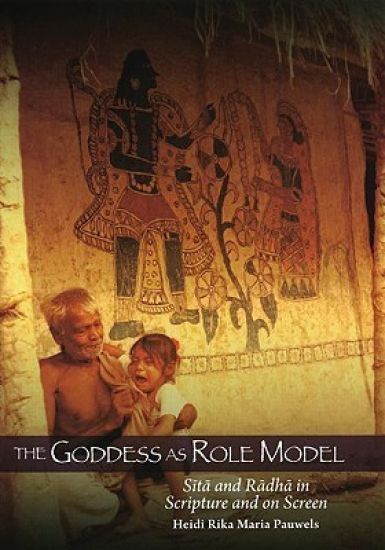
The Goddess as Role Model

The Goddess as Role Model

Heidi R.M. Pauwels

Oxford University Press Inc
2008
sidottu
This book seeks to understand the major mythological role models that mark the moral landscape navigated by young Hindu women. Traditionally, the goddess Sita, faithful consort of the god Rama, is regarded as the most important positive role model for women. The case of Radha, who is mostly portrayed as a clandestine lover of the god Krishna, seems to challenge some of the norms the example of Sita has set. That these role models are just as relevant today as they have been in the past is witnessed by the popularity of the televised versions of their stories, and the many allusions to them in popular culture. Taking the case of Sita as main point of reference, but comparing throughout with Radha, Pauwels studies the messages sent to Hindu women at different points in time. She compares how these role models are portrayed in the most authoritative versions of the story. She traces the ancient, Sanskrit sources, the medieval vernacular retellings of the stories and the contemporary TV versions as well. This comparative analysis identifies some surprising conclusions about the messages sent to Indian women today, which belie the expectations one might have of the portrayals in the latest, more liberal versions. The newer messages turn out to be more conservative in many subtle ways. Significantly, it does not remain limited to the religious domain. By analyzing several popular recent and classical hit movies that use Sita and Radha tropes, Pauwels shows how these moral messages spill into the domain of popular culture for commercial consumption.
Sosipatra of Pergamum

Sosipatra of Pergamum

Heidi Marx

Oxford University Press Inc
2021
nidottu
The story of Sosipatra of Pergamum (4th century C.E.) as told by her biographer, Eunapius of Sardis in his Lives of the Philosophers and Sophists, is a remarkable tale. It is the story of an elite young girl from the area of Ephesus, who was educated by traveling oracles (daemons), and who grew up to lead her own philosophy school on the west coast of Asia Minor. She was also a prophet of sorts, channeling divine messages to her students, family, and friends, and foretelling the future. Sosipatra of Pergamum is the first sustained, book length attempt to tell the story of this mysterious woman. It presents a rich contextualization of the brief and highly fictionalized portrait provided by Eunapius. In doing so, the book explores the cultural and political landscape of late ancient Asia Minor, especially the areas around Ephesus, Pergamum, Sardis, and Smyrna. It also discusses moments in Sosipatra's life for what they reveal more generally about women's lives in Late Antiquity in the areas of childhood, education, family, household, motherhood, widowhood, and professional life. Her career sheds light on late Roman Platonism, its engagement with religion, ritual, and “magic,” and the role of women in this movement. By thoroughly examining the ancient evidence, Heidi Marx recovers a hidden yet important figure from the rich intellectual traditions of the Roman Near East.
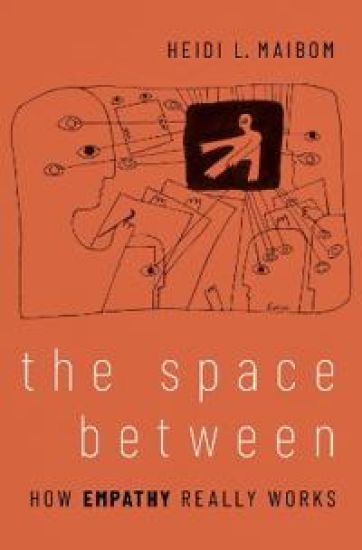
The Space Between

The Space Between

Heidi L. Maibom

OXFORD UNIVERSITY PRESS INC
2022
sidottu
When Barack Obama nominated Sonia Sotomayor to the US Supreme Court, his comments that a judge should have "the heart, the empathy, to recognize what it's like to be a young teenage mom, the empathy to understand what it's like to be poor or African-American or gay, disabled, or old" caused a furor. Objective, reasoned, and impartial judgment were to be replaced by partiality, sentiment, and bias, critics feared. This concern about empathy has since been voiced not just by conservative critics, but by academics and public figures. In The Space Between, Heidi Maibom combines results from philosophy, psychology, and neuroscience to argue that rather than making us more biased or partial, empathy makes us more impartial and more objective. The problem is that we don't see the world objectively in the first place, Maibom explains. We see it in terms of how we are placed in it: as an extension of our interests, capabilities, and relationships. This is a perspective and it determines what we pay attention to, how we interpret events, and what matters to us individually. It is not private, however. By means of the imagination, Maibom contends, we can place ourselves in another person's web interests, capabilities, and relationships and, viewing the world from there, experience a new way of interpreting and valuing what happens. This broadens and deepens our understanding of others and the world around us. It also helps us understand the greater reality of who we are ourselves. Maibom's book weaves together results from philosophy, psychology, and neuroscience to provide a positive up-to-date view of what it really means to take another person's perspective, and how empathy, rather than being the enemy of objectivity, is the foundation of it.
Stuck

Stuck

Heidi Larson

OXFORD UNIVERSITY PRESS INC
2022
nidottu
Vaccine reluctance and refusal are no longer limited to the margins of society. Debates around vaccines' necessity -- along with questions around their side effects -- have gone mainstream, blending with geopolitical conflicts, political campaigns, celebrity causes, and "natural" lifestyles to win a growing number of hearts and minds. Today's anti-vaccine positions find audiences where they've never existed previously. Stuck examines how the issues surrounding vaccine hesitancy are, more than anything, about people feeling left out of the conversation. A new dialogue is long overdue, one that addresses the many types of vaccine hesitancy and the social factors that perpetuate them. To do this, Stuck provides a clear-eyed examination of the social vectors that transmit vaccine rumors, their manifestations around the globe, and how these individual threads are all connected.
Make Rappers Rap Again

Make Rappers Rap Again

Heidi R. Lewis

OXFORD UNIVERSITY PRESS INC
2025
sidottu
In Make Rappers Rap Again: Interrogating the Mumble Rap “Crisis,” author Heidi R. Lewis interrogates the ways Mumble Rap has been subjugated within real Hip Hop. Many critics claim mumble rappers are ignorant about Hip Hop history, disrespectful toward their Hip Hop elders, too similar, unskilled, prone to rapping about nonsense, and too feminine. In contrast, Lewis argues Mumble Rap is real Hip Hop. To do so, she examines Mumble Rap's congruence with oft forgotten or subjugated Hip Hop cornerstones like illegibility, melody, the DJ, and the subgenre, as well as the ways most mumble rappers practice citational and collaborative politics congruent with real Hip Hop. Following an analysis of the Mumble Rap sound, Lewis explains the subgenre's subjugation by situating it as southern and examining the ways it challenges real Hip Hop masculinity norms.
Make Rappers Rap Again

Make Rappers Rap Again

Heidi R. Lewis

OXFORD UNIVERSITY PRESS INC
2025
nidottu
In Make Rappers Rap Again: Interrogating the Mumble Rap “Crisis,” author Heidi R. Lewis interrogates the ways Mumble Rap has been subjugated within real Hip Hop. Many critics claim mumble rappers are ignorant about Hip Hop history, disrespectful toward their Hip Hop elders, too similar, unskilled, prone to rapping about nonsense, and too feminine. In contrast, Lewis argues Mumble Rap is real Hip Hop. To do so, she examines Mumble Rap's congruence with oft forgotten or subjugated Hip Hop cornerstones like illegibility, melody, the DJ, and the subgenre, as well as the ways most mumble rappers practice citational and collaborative politics congruent with real Hip Hop. Following an analysis of the Mumble Rap sound, Lewis explains the subgenre's subjugation by situating it as southern and examining the ways it challenges real Hip Hop masculinity norms.