Kirjojen hintavertailu. Mukana 11 244 527 kirjaa ja 12 kauppaa.

Kirjahaku

Etsi kirjoja tekijän nimen, kirjan nimen tai ISBN:n perusteella.

1000 tulosta hakusanalla Henry-Rider Haggard

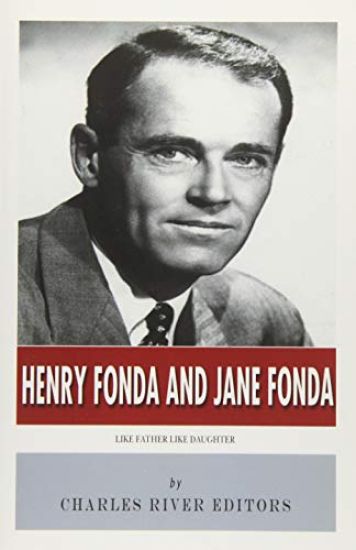
Henry Fonda and Jane Fonda: Like Father Like Daughter

Henry Fonda and Jane Fonda: Like Father Like Daughter

Charles River

Createspace Independent Publishing Platform
2014
nidottu
*Includes pictures. *Includes their own quotes about their lives and careers. *Includes a bibliography for further reading. Among all of Hollywood's iconic leading men, arguably none proved as versatile at acting as Henry Fonda, whose career spanned six decades and earned him Academy Awards for roles in various genres. After breaking into Hollywood in 1935, Fonda quickly rose the ranks, earning an Academy Award nomination in the classic Twelve Angry Men (1940), but Fonda had the kind of staying power that most actors could only dream of. In fact, Fonda had already received an honorary lifetime achievement award from the Academy (in 1980) before winning the Oscar for Best Actor for his role in On Golden Pond (1981), an award he earned when he was already well into his 70s and only about a year away from his death. Fonda would also earn Emmy nominations for his work on two different shows and even a Grammy for a spoken word album in 1977. And as if all that wasn't enough, he was also a critically acclaimed stage performer, winning a Tony for Mister Roberts in 1948. One of the remarkable aspects of Henry Fonda's career is that he was able to play vastly different roles despite not changing his style of acting. As Henry's distant personality would suggest, he hailed from an old-school breed of actors who didn't express emotions outwardly, and even as his progeny would become associated with Method Acting, Henry remained in the same mold as actors like Cary Grant and Jimmy Stewart. Of course, the seemingly effortless nature of Henry's acting only made him more endearing to contemporary audiences, even as his acting style would eventually go out of style. Growing up in the shadow of one of America's most famous actors would be intimidating for anyone, but few have emerged out of that shadow like Jane Fonda, the oldest daughter of screen legend Henry Fonda. In fact, when Jane co-starred with her father in the last film he made, On Golden Pond, he won the Academy Award for Best Actor for it. However, she has accomplished more than enough in her own career to make her father proud, winning 2 Academy Awards, an Emmy and 7 Golden Globe Awards herself. Jane burst onto the scene in the early 1960s, when she was still in her 20s, and when she performed in Sunday in New York, one critic labeled her "the loveliest and most gifted of all our new young actresses". She has been acting at least off and on from that point forward, earning critical acclaim both for her acting skills and for many of the movies she appeared in. However, today many people associate Jane Fonda with political causes, most notoriously her stance against the Vietnam War. Indeed, she might still be the face of the anti-Vietnam movement because of an episode that earned her the notorious nickname "Hanoi Jane". In addition to speaking out against the war, Fonda actually traveled to Hanoi in July 1972 and was photographed sitting in a North Vietnamese anti-aircraft battery, immediately earning widespread condemnation that sought to brand her as anti-American. Fonda has spent the rest of her life trying to explain her regret over it, telling Barbara Walters in a 1988 interview, "I would like to say something, not just to Vietnam veterans in New England, but to men who were in Vietnam, who I hurt, or whose pain I caused to deepen because of things that I said or did. I was trying to help end the killing and the war, but there were times when I was thoughtless and careless about it and I'm very sorry that I hurt them...I will go to my grave regretting the photograph of me in an anti-aircraft gun, which looks like I was trying to shoot at American planes." Nevertheless, it has not tempered her liberal political activism.
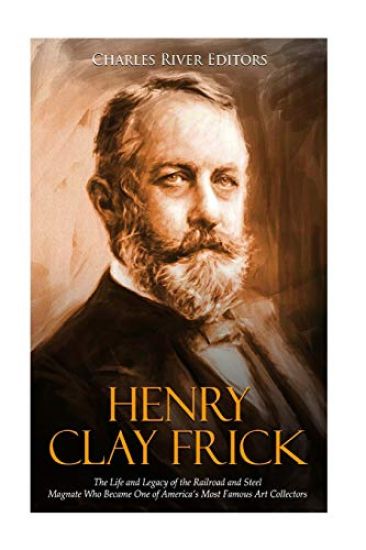
Henry Clay Frick: The Life and Legacy of the Railroad and Steel Magnate Who Became One of America's Most Famous Art Collectors
*Includes pictures *Includes online resources and a bibliography for further reading "Statistics are no substitute for judgment." - Henry Clay Frick The term robber baron has largely fallen into disuse in the 21st century but there was a time when it was a popular epithet that described the kind of man who, it was believed, built his fortune by taking things belonging to others. The Gilded Age and the dawn of the 20th century are often remembered as an era full of monopolies, trusts, and economic giants in heavy industries like oil and steel. Men like Andrew Carnegie built empires like Carnegie Steel, and financiers like J.P. Morgan merged and consolidated them. The era also made names like Astor, Cooke, and Vanderbilt instantly recognizable across the globe. Over time, the unfathomable wealth generated by the businesses made the individuals on top incredibly rich, and that in turn led to immense criticism and an infamous epithet used to rail against them: robber barons. The industrial might wielded by men like Gould in the later 19th century directly led to a public backlash and made President Teddy Roosevelt the "trust buster", and there has since been countless regulations to attempt to avoid the types of monopolies found over 100 years ago. However, many 20th century historians and writers pushed back against the allegations hurled at the "robber barons" and even took issue with the name. For example, Libertarian writer John Stossel argued, "They weren't robbers, because they didn't steal from anyone, and they weren't barons-they were born poor..." Of all the men labeled as robber barons during the Gilded Age, few were as influential as Henry Clay Frick, who rubbed shoulders with men like J.P. Morgan and Andrew Carnegie while overseeing some of the era's biggest companies. Though his was not the "rags to riches" story one often hears of this era, his drive and ambition helped transform a young man from a solidly middle class family into a millionaire by the age of 30. At the same time, despite the characteristic ruthlessness with which he dealt with business associates and foes alike, he was devoted and sometime even tender to his friends and family. After surviving an assassination attempt, he lived to toast the 20th century and avoided going down with so many others of his era on the Titanic, only to see the world he had worked to create consumed by a European war that spread around the world. Perhaps the most amazing thing about Frick is that his most well-known and lasting legacy had nothing to do with his business but with his most prized hobby. Should the name Frick come up in a New York boardroom today, it is not in the context of some business deal but instead in reference to a social event held at his former estate, now one of the most popular art museums in New York City. His own possessions, which grew out of his love of art, formed the initial core of the collection, and upon his death, he bequeathed the lion's share of his fortune to a foundation to preserve and expand upon it for generations to come. Henry Clay Frick: The Life and Legacy of the Railroad and Steel Magnate Who Became One of America's Most Famous Art Collectors analyzes the famous businessman's life and his lasting legacy. Along with pictures depicting important people, places, and events, you will learn about Frick like never before.
Henry Clay Frick: The Life and Legacy of the Railroad and Steel Magnate Who Became One of America's Most Famous Art Collectors
*Includes pictures *Includes online resources and a bibliography for further reading "Statistics are no substitute for judgment." - Henry Clay Frick The term robber baron has largely fallen into disuse in the 21st century but there was a time when it was a popular epithet that described the kind of man who, it was believed, built his fortune by taking things belonging to others. The Gilded Age and the dawn of the 20th century are often remembered as an era full of monopolies, trusts, and economic giants in heavy industries like oil and steel. Men like Andrew Carnegie built empires like Carnegie Steel, and financiers like J.P. Morgan merged and consolidated them. The era also made names like Astor, Cooke, and Vanderbilt instantly recognizable across the globe. Over time, the unfathomable wealth generated by the businesses made the individuals on top incredibly rich, and that in turn led to immense criticism and an infamous epithet used to rail against them: robber barons. The industrial might wielded by men like Gould in the later 19th century directly led to a public backlash and made President Teddy Roosevelt the "trust buster", and there has since been countless regulations to attempt to avoid the types of monopolies found over 100 years ago. However, many 20th century historians and writers pushed back against the allegations hurled at the "robber barons" and even took issue with the name. For example, Libertarian writer John Stossel argued, "They weren't robbers, because they didn't steal from anyone, and they weren't barons-they were born poor..." Of all the men labeled as robber barons during the Gilded Age, few were as influential as Henry Clay Frick, who rubbed shoulders with men like J.P. Morgan and Andrew Carnegie while overseeing some of the era's biggest companies. Though his was not the "rags to riches" story one often hears of this era, his drive and ambition helped transform a young man from a solidly middle class family into a millionaire by the age of 30. At the same time, despite the characteristic ruthlessness with which he dealt with business associates and foes alike, he was devoted and sometime even tender to his friends and family. After surviving an assassination attempt, he lived to toast the 20th century and avoided going down with so many others of his era on the Titanic, only to see the world he had worked to create consumed by a European war that spread around the world. Perhaps the most amazing thing about Frick is that his most well-known and lasting legacy had nothing to do with his business but with his most prized hobby. Should the name Frick come up in a New York boardroom today, it is not in the context of some business deal but instead in reference to a social event held at his former estate, now one of the most popular art museums in New York City. His own possessions, which grew out of his love of art, formed the initial core of the collection, and upon his death, he bequeathed the lion's share of his fortune to a foundation to preserve and expand upon it for generations to come. Henry Clay Frick: The Life and Legacy of the Railroad and Steel Magnate Who Became One of America's Most Famous Art Collectors analyzes the famous businessman's life and his lasting legacy. Along with pictures depicting important people, places, and events, you will learn about Frick like never before.
Henry Fonda and Jane Fonda: Like Father Like Daughter

Henry Fonda and Jane Fonda: Like Father Like Daughter

Charles River

Createspace Independent Publishing Platform
2017
nidottu
*Includes pictures. *Includes their own quotes about their lives and careers. *Includes a bibliography for further reading. Among all of Hollywood's iconic leading men, arguably none proved as versatile at acting as Henry Fonda, whose career spanned six decades and earned him Academy Awards for roles in various genres. After breaking into Hollywood in 1935, Fonda quickly rose the ranks, earning an Academy Award nomination in the classic Twelve Angry Men (1940), but Fonda had the kind of staying power that most actors could only dream of. In fact, Fonda had already received an honorary lifetime achievement award from the Academy (in 1980) before winning the Oscar for Best Actor for his role in On Golden Pond (1981), an award he earned when he was already well into his 70s and only about a year away from his death. Fonda would also earn Emmy nominations for his work on two different shows and even a Grammy for a spoken word album in 1977. And as if all that wasn't enough, he was also a critically acclaimed stage performer, winning a Tony for Mister Roberts in 1948. One of the remarkable aspects of Henry Fonda's career is that he was able to play vastly different roles despite not changing his style of acting. As Henry's distant personality would suggest, he hailed from an old-school breed of actors who didn't express emotions outwardly, and even as his progeny would become associated with Method Acting, Henry remained in the same mold as actors like Cary Grant and Jimmy Stewart. Of course, the seemingly effortless nature of Henry's acting only made him more endearing to contemporary audiences, even as his acting style would eventually go out of style. Growing up in the shadow of one of America's most famous actors would be intimidating for anyone, but few have emerged out of that shadow like Jane Fonda, the oldest daughter of screen legend Henry Fonda. In fact, when Jane co-starred with her father in the last film he made, On Golden Pond, he won the Academy Award for Best Actor for it. However, she has accomplished more than enough in her own career to make her father proud, winning 2 Academy Awards, an Emmy and 7 Golden Globe Awards herself. Jane burst onto the scene in the early 1960s, when she was still in her 20s, and when she performed in Sunday in New York, one critic labeled her "the loveliest and most gifted of all our new young actresses". She has been acting at least off and on from that point forward, earning critical acclaim both for her acting skills and for many of the movies she appeared in. However, today many people associate Jane Fonda with political causes, most notoriously her stance against the Vietnam War. Indeed, she might still be the face of the anti-Vietnam movement because of an episode that earned her the notorious nickname "Hanoi Jane". In addition to speaking out against the war, Fonda actually traveled to Hanoi in July 1972 and was photographed sitting in a North Vietnamese anti-aircraft battery, immediately earning widespread condemnation that sought to brand her as anti-American. Fonda has spent the rest of her life trying to explain her regret over it, telling Barbara Walters in a 1988 interview, "I would like to say something, not just to Vietnam veterans in New England, but to men who were in Vietnam, who I hurt, or whose pain I caused to deepen because of things that I said or did. I was trying to help end the killing and the war, but there were times when I was thoughtless and careless about it and I'm very sorry that I hurt them...I will go to my grave regretting the photograph of me in an anti-aircraft gun, which looks like I was trying to shoot at American planes." Nevertheless, it has not tempered her liberal political activism.
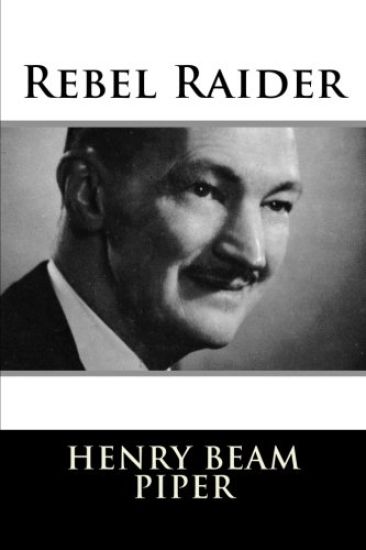
Rebel Raider

Rebel Raider

Henry Beam Piper

Createspace Independent Publishing Platform
2018
nidottu
No Description Available Henry Beam Piper (March 23, 1904 - c. November 6, 1964) was an American science fiction author. He wrote many short stories and several novels. He is best known for his extensive Terro-Human Future History series of stories and a shorter series of "Paratime" alternate history tales. He wrote under the name H. Beam Piper. Another source gives his name as "Horace Beam Piper" and a different date of death. His gravestone says "Henry Beam Piper." Piper himself may have been the source of part of the confusion; he told people the H stood for Horace, encouraging the assumption that he used the initial because he disliked his name.
Fall River

Fall River

Henry Hiliard] [earl

Hansebooks
2017
pokkari
Fall River - And its Manufactories is an unchanged, high-quality reprint of the original edition of 1878. Hansebooks is editor of the literature on different topic areas such as research and science, travel and expeditions, cooking and nutrition, medicine, and other genres. As a publisher we focus on the preservation of historical literature. Many works of historical writers and scientists are available today as antiques only. Hansebooks newly publishes these books and contributes to the preservation of literature which has become rare and historical knowledge for the future.
Fall River

Fall River

Henry Hilliard Earl

Hansebooks
2017
pokkari
Fall River - Its rise and progress is an unchanged, high-quality reprint of the original edition of 1875. Hansebooks is editor of the literature on different topic areas such as research and science, travel and expeditions, cooking and nutrition, medicine, and other genres. As a publisher we focus on the preservation of historical literature. Many works of historical writers and scientists are available today as antiques only. Hansebooks newly publishes these books and contributes to the preservation of literature which has become rare and historical knowledge for the future.
The River Column

The River Column

Henry Brackenbury

Hansebooks
2017
pokkari
The River Column is an unchanged, high-quality reprint of the original edition of 1885. Hansebooks is editor of the literature on different topic areas such as research and science, travel and expeditions, cooking and nutrition, medicine, and other genres. As a publisher we focus on the preservation of historical literature. Many works of historical writers and scientists are available today as antiques only. Hansebooks newly publishes these books and contributes to the preservation of literature which has become rare and historical knowledge for the future.
The Patapsco River Valley

The Patapsco River Valley

Henry K. Sharp

Maryland Historical Society
2000
pokkari
The Patapsco Valley, located in a woodland setting between Baltimore and Washington, witnessed the establishment of numerous foundries, iron mills, and textile factories from the late 18th century until well after the Civil War. The author draws upon 19th-century diaries, newspapers, and journals to chronicle the growth and development of these early industries, and their destruction in the terrible flood of July 1868.
The Connecticut River Banking Company: One Hundred Years of Service: 1825 -1925
This work has been selected by scholars as being culturally important and is part of the knowledge base of civilization as we know it.This work is in the public domain in the United States of America, and possibly other nations. Within the United States, you may freely copy and distribute this work, as no entity (individual or corporate) has a copyright on the body of the work.Scholars believe, and we concur, that this work is important enough to be preserved, reproduced, and made generally available to the public. To ensure a quality reading experience, this work has been proofread and republished using a format that seamlessly blends the original graphical elements with text in an easy-to-read typeface.We appreciate your support of the preservation process, and thank you for being an important part of keeping this knowledge alive and relevant.