Kirjojen hintavertailu. Mukana 12 016 292 kirjaa ja 12 kauppaa.

Kirjahaku

Etsi kirjoja tekijän nimen, kirjan nimen tai ISBN:n perusteella.

1000 tulosta hakusanalla Howard Fast

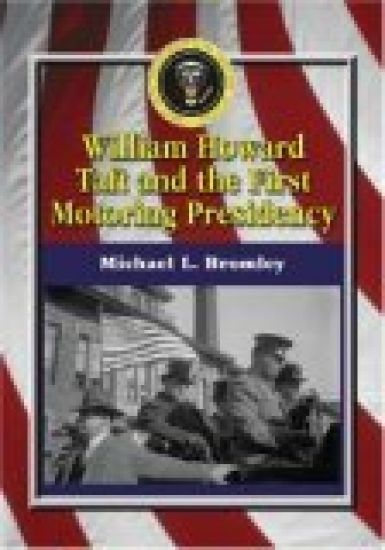
William Howard Taft and the First Motoring Presidency, 1909-1913
William Howard Taft declared, "I am sure the automobile coming in as a toy of the wealthier class is going to prove the most useful of them all to all classes, rich and poor." Unlike his predecessors, who made public their disdain for the automobile, Taft saw the automobile industry as a great source of wealth for this country. The first president to acquire a car in office (Congress granted him three automobiles), Taft is responsible for there being a White House garage in 1909. This is a meticulously researched reappraisal of the oft-maligned Taft presidency focusing particularly on his cars, his relationship to the automobile and the role of the automobile in the politics of his day. Appendices provide information on the White House garage and stable, Taft's speech to the Automobile Club of America and a glossary of terms and names.
John Howard Payne Papers, 3-volume Set
This collection of John Howard Payne’s Papers is a significant recovery of firsthand political and social histories of Indigenous cultures, particularly the Cherokees, a southeastern tribe, whose ancestral lands included parts of the present-day states of Georgia, Alabama, Tennessee, and North Carolina. The papers enable readers to understand how the Cherokees and many other American Indians endured and persevered as they encountered forced removal in the 1830s due to the Indian Removal Act. The papers are also a source of cultural revitalization, elucidating the work of Sequoyah, a Cherokee genius, who in 1821 introduced his syllabary, a phonemic system with eighty-five symbols. John Howard Payne (1791–1852), an American actor, poet, and playwright, was so taken by the Cherokees’ story that he lobbied Congress to forgo their removal and wrote articles in contemporary newspapers supporting Cherokees. In 1835 Payne journeyed to the Cherokee Nation and met with John Ross, Cherokee chief from 1828 to 1866, who found in Payne a colleague to assist him and other Cherokees with their cause against removal and in preserving their ancient social, spiritual, and political heritages. Payne gathered and recorded correspondence between Cherokees such as Ross, who was fluent in English, and U.S. officials. These papers include multiple correspondences, ratified and unratified treaties, contemporary newspaper articles, and resolutions sent to Congress appealing for justice for the Cherokees. Payne also assembled letters and writings by New England Congregationalist missionaries who resided in mission stations throughout the Cherokee Nation. Available in print for the first time, this remarkable repository of information provides a fuller understanding of the political climates Cherokees encountered throughout the early to mid-nineteenth century.
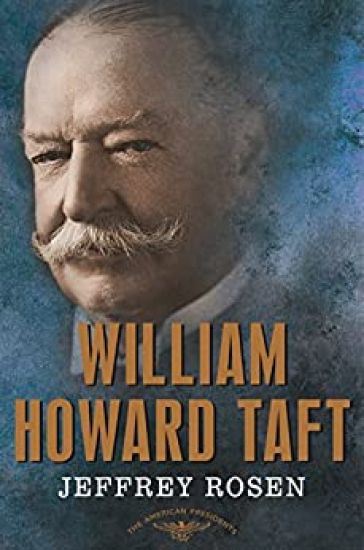
William Howard Taft

William Howard Taft

Jeffrey Rosen

St. Martins Press-3PL
2018
sidottu
The only man to serve as president and chief justice, who approached every decision in constitutional terms, defending the Founders' vision against new populist threats to American democracy William Howard Taft never wanted to be president and yearned instead to serve as chief justice of the United States. But despite his ambivalence about politics, the former federal judge found success in the executive branch as governor of the Philippines and secretary of war, and he won a resounding victory in the presidential election of 1908 as Theodore Roosevelt's handpicked successor. In this provocative assessment, Jeffrey Rosen reveals Taft's crucial role in shaping how America balances populism against the rule of law. Taft approached each decision as president by asking whether it comported with the Constitution, seeking to put Roosevelt's activist executive orders on firm legal grounds. But unlike Roosevelt, who thought the president could do anything the Constitution didn't forbid, Taft insisted he could do only what the Constitution explicitly allowed. This led to a dramatic breach with Roosevelt in the historic election of 1912, which Taft viewed as a crusade to defend the Constitution against the demagogic populism of Roosevelt and Woodrow Wilson. Nine years later, Taft achieved his lifelong dream when President Warren Harding appointed him chief justice, and during his years on the Court he promoted consensus among the justices and transformed the judiciary into a modern, fully equal branch. Though he had chafed in the White House as a judicial president, he thrived as a presidential chief justice.
William Howard Taft

William Howard Taft

Alpheus Thomas Mason

University Press of America
1983
nidottu
Originally published by Simon & Schuster in 1964, this is the ironic story of how William Howard Taft, the only man ever to be both President and Chief Justice of the Supreme Court, reformed judicial processes in this country so thoroughly that he helped to undermine the reactionary power of wealth and privilege in which he believed.
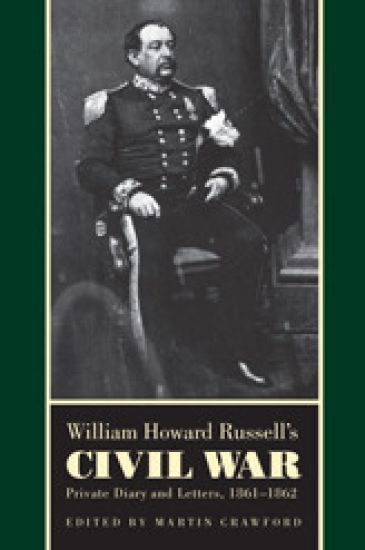
William Howard Russell's Civil War

William Howard Russell's Civil War

William Howard Russell

University of Georgia Press
2008
pokkari
Having won renown in the 1850s for his vivid warfront dispatches from the Crimea, William Howard Russell was the most celebrated foreign journalist in America during the first year of the Civil War. As a special correspondent for The Times of London, Russell was charged with explaining the American crisis to a British audience, but his reports also had great impact in America. They so alienated both sides, North and South, that Russell was forced to return to England prematurely in April 1862.My Diary North and South (1863), Russell's published account of his visit, remains a classic of Civil War literature. It was not in fact a diary but a narrative reconstruction of the author's journeys and observations based on his private notebooks and published dispatches. Despite his severe criticisms of American society and conduct, Russell offered in that work generally sympathetic characterizations of the Northern and Southern leadership during the war. In this new volume, Martin Crawford brings together the journalist's original diary and a selection of his private correspondence to resurrect the fully uninhibited Russell and to provide, accordingly, a true documentary record of this important visitor's first impressions of America during the early months of its greatest crisis.Over the course of his American visit, Russell traveled widely throughout the Union and the new Confederacy, meeting political and social leaders on both sides. Included here are spontaneous—and often unflattering—comments on such prominent figures as William H. Seward, Jefferson Davis, Mary Todd Lincoln, and George B. McClellan, as well as quick sketches of New York, Washington, New Orleans, and other cities. Also revealed for the first time are the anxiety and despair that Russell experienced during his American visit—a state induced by his own self-doubt, by concern over the health and situation of his wife in England, and, finally, by the bitter criticism he received in the United States over his reports.A sometimes vain and pompous figure, Russell also emerges here as an individual of exceptionally tough spirit—a man who abhorred slavery and remained convinced of the essential rectitude of the Northern cause even as he criticized Northern leaders, their lack of preparedness for war, and the apparent disunity of the Northern population.
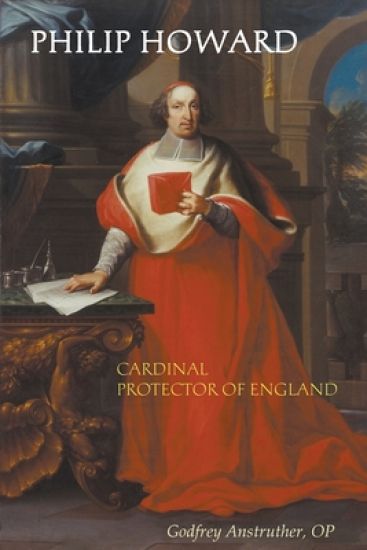
Philip Howard

Philip Howard

Geoffrey Anstruther

Gracewing
2020
nidottu
On 3 January 1666, Father Philip Howard, a Catholic priest trained on the Continent, was appointed Grand Almoner to Catherine of Braganza, Charles II's Catholic queen. Later that same year the Great Fire of London, maliciously attributed to Catholics, reduced much of the City to a smouldering ruin and papists were barred from the capital. The years that followed were not without difficulties for English Catholics, but by the time of the great crisis which ended in the deposition and exile of the Catholic James II the genial former Grand Almoner to James's sister-in-law had long left England, having been called to Rome and created a cardinal. Subsequently, in 1680, the pope appointed him Cardinal Protector of England, the first Englishman to hold this influential post. Born in 1629 into one of the pre-eminent families of England, the future Cardinal Howard was the great-grandson of the Catholic martyr, St Philip Howard, Earl of Arundel. Brought up as an Anglican, he left England in 1642 for the Continent where he came under Catholic influences, and at the age of 15, and despite the fierce opposition of his family, the young Philip determined to join the Dominican Order, which he did, going on to set in motion the revival of its English province. The restoration of the Stuart monarchy in 1660 had rekindled the hopes of English Catholics, and Howard returned to England to take up a career at court that was to flourish until 1675 when he was he raised to the Sacred College, the first Englishman to be appointed a cardinal since the death of William Allen in 1594. Although based in Rome, as Cardinal Protector of England, Howard was seen by the Holy See as the leading authority on all aspects of the life of the Catholic Church in England, a church ravaged by renewed persecution resulting from the explosive fabrications of the virtuoso liar Titus Oates and his deadly fictitious conspiracy, the 'Popish Plot'.
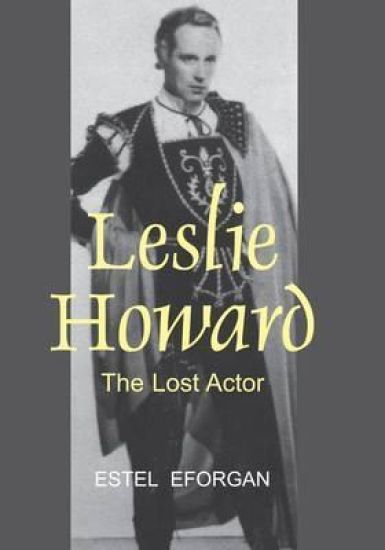
Leslie Howard

Leslie Howard

Estel Eforgan

Vallentine Mitchell Co Ltd
2013
nidottu
Leslie Howard's career as a Hollywood star and his ambitions for the British film industry were well known. He contributed substantially to cinema history, having been featured in Gone With the Wind, The Scarlet Pimpernel, Pygmalion, and others. But, behind his charm was a perceptive and determined man. An ambivalent identity and a penetrating intelligence gave him the confidence to try to influence world opinion at the time of the Second World War. His work at that time is now almost unknown and startlingly unexpected. Howard made efforts to discover exactly what was happening in Nazi Germany and Austria, and what was intended. He struggled with the establishment back in England to get the British film industry restarted in 1940, and he aimed to use it to promote democratic values and unity. Howard worked secretly and alone to develop British propaganda in the US, and to help the SOE and the Free French in Britain. He became a well-loved figurehead in Britain's darkest days, and Churchill made effective use of his charismatic personality to sway neutral countries at crucial times during the battle. This book - now available in paperback - follows Leslie Howard's life by using original material from archives and libraries, personal narratives, newspaper and magazine accounts of the time, and, most of all, Howard's own voice to tell his story through his own humorous and pointed articles in The New Yorker and Vanity Fair, as well as his autobiographical war time radio broadcasts at the BBC.
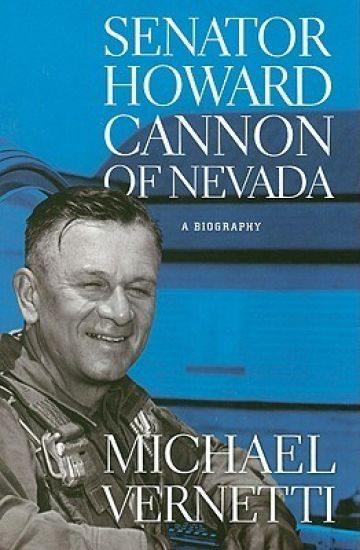
Senator Howard Cannon of Nevada

Senator Howard Cannon of Nevada

University of Nevada Press
2008
sidottu
This is the only biography of one of the twentieth-century's most influential politicians.Howard Cannon, who represented Nevada in the U.S. Senate from 1958 until 1982, was one of its most productive and influential members. And because he was a modest man more comfortable with hard work than self-aggrandizement, he was also one of the Senate's most underappreciated figures. Nonetheless, Cannon's career influenced many major changes in American politics and policies during his time in office.Born to a devout Mormon family in a small farming community in southwest Utah, Cannon served in the U.S. Air Force during World War II and emerged from the war as a hero. Soon he was part of the postwar migration of ambitious and adventurous Americans to the booming desert city of Las Vegas, where he practiced law and entered local politics. In 1958, he was elected to the U.S. Senate and joined a group of influential young Democratic senators who were to play a major role in shaping the country's future.His service on the Commerce, Science, and Transportation; Armed Services; and Rules Committees led to major changes in the transportation industry, U.S. election laws, and national military preparedness, as well as significant measures that were important to the development of Nevada. The result of Vernetti's research is a biography of a brilliant man whose dedication and integrity were ultimately undercut by his stubborn reticence and characteristic modesty. The book is a revealing glimpse into the workings of politics in Nevada and Washington during these tumultuous decades in the nation's history.Author Michael Vernetti served as Cannon's press secretary from 1977 until the end of Cannon's fourth and final term. His intimacy with the inner workings of Cannon's office gives this biography rich insight into Cannon's personality and ideas, and further insights derived from dozens of interviews with Cannon associates further enhance the story.
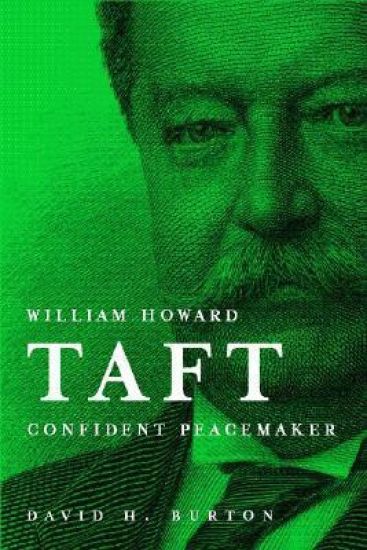
William Howard Taft: Confident Peacemaker

William Howard Taft: Confident Peacemaker

David H. Burton

Fordham University Press
2004
pokkari
This book is a study of the internationalism of William Howard Taft. In the months after war broke out in 1914, Taft was second only to Woodrow Wilson in his awareness of the need to preserve the peace of the world through a new version of international organization. Built upon a synthetic interpretation of Taft's foreign policy ideas and initiatives, the book encompasses the whole of his public career as a statesman, from his years as civil governor of the Philippines through his tenure as chief justice of the Supreme Court. During those years, he moved from a basic belief in the theory and practice of balance of power to the application of dollar diplomacy. In response to the calamity of World War I, Taft came to recognize that world peace must be based upon a combination of idealism and realism, of high-minded principles placed and kept in effect by force, deliberately chosen and carefully applied.
Charles Howard: A Margin of Chaos

Charles Howard: A Margin of Chaos

Lawrence Rinder

University of California Berkeley Art Museum and Pacific Film Archive
2017
sidottu
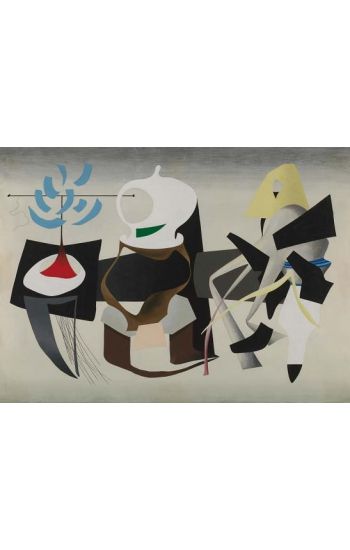
Charles Howard: A Margin of Chaos accompanies the first museum exhibition dedicated to American artist Charles Houghton Howard (1899–1978) since 1956. Howard, part of a circle of artists that included Alexander Calder, Gordon Onslow Ford, Grant Wood and Ben Nicholson, had an active and distinguished career in midcentury America and England. His enigmatic, meticulous paintings, often intimate in scale, bridge figurative, Surrealist and abstract currents in modern art. Though his work evolved over his career, Howard said that all of his pictures “are closely related … They are in fact all portraits of the same general subject, of the same idea, carried as far as I am able at the time.” The first scholarly publication on Howard, this fully illustrated volume includes essays by Apsara DiQuinzio, Robert Gober and Lauren Kroiz, a reprint of one of Howard’s own essays from 1946, an illustrated chronology and exhibition history.
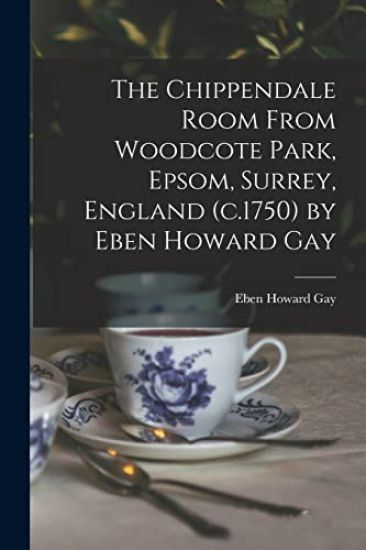
The Chippendale Room From Woodcote Park, Epsom, Surrey, England (c.1750) by Eben Howard Gay
This work has been selected by scholars as being culturally important and is part of the knowledge base of civilization as we know it.This work is in the public domain in the United States of America, and possibly other nations. Within the United States, you may freely copy and distribute this work, as no entity (individual or corporate) has a copyright on the body of the work.Scholars believe, and we concur, that this work is important enough to be preserved, reproduced, and made generally available to the public. To ensure a quality reading experience, this work has been proofread and republished using a format that seamlessly blends the original graphical elements with text in an easy-to-read typeface.We appreciate your support of the preservation process, and thank you for being an important part of keeping this knowledge alive and relevant.
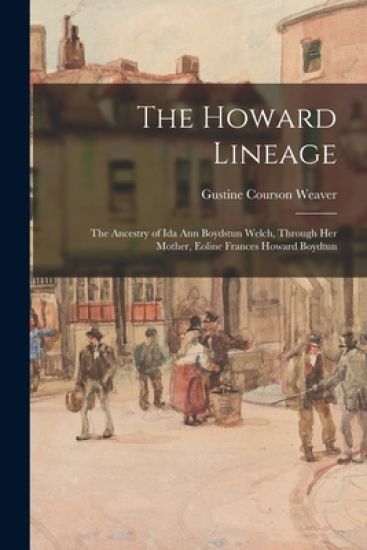
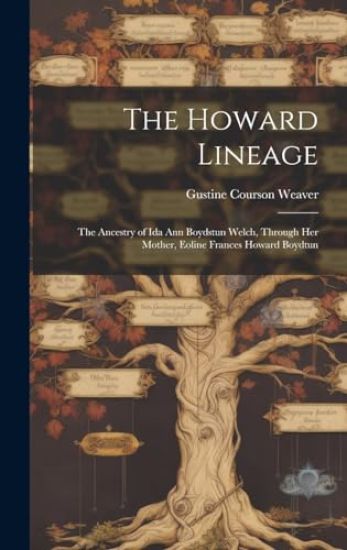
The Howard Lineage; the Ancestry of Ida Ann Boydstun Welch, Through Her Mother, Eoline Frances Howard Boydtun
This meticulously researched genealogy offers a fascinating glimpse into the history of the Howard family and their descendants, including Ida Ann Boydstun Welch. Drawing on archival research and family records, Weaver paints a vivid portrait of this influential family and their impact on American history and culture. Essential reading for anyone interested in genealogy or American history. This work has been selected by scholars as being culturally important, and is part of the knowledge base of civilization as we know it.This work is in the "public domain in the United States of America, and possibly other nations. Within the United States, you may freely copy and distribute this work, as no entity (individual or corporate) has a copyright on the body of the work.Scholars believe, and we concur, that this work is important enough to be preserved, reproduced, and made generally available to the public. We appreciate your support of the preservation process, and thank you for being an important part of keeping this knowledge alive and relevant.