Kirjahaku
Etsi kirjoja tekijän nimen, kirjan nimen tai ISBN:n perusteella.
524 tulosta hakusanalla IMBERT SAINT-AMAND
Originally published in 1986, Abortion and the Private Practice of Medicine was the first book to look at abortion from the perspective of physicians in private practice. Jonathan B. Imber spent two years observing and interviewing all twenty-six of the obstetrician-gynecologists in “Daleton,” a city that did not have an abortion clinic. The decision as to whether, when, and how to perform abortions was therefore essentially up to the individual doctor. Imber begins the volume with a historical survey of medical views on abortion and the medical profession’s response to the legalization of abortion in the United States. Quoting extensively from his interviews, he looks at various characteristics of doctors that may affect their professional opinion on abortion: their age, gender, religious background, and length of residence in the community; the nature of their training and prior experience; and the setting of the practice (whether group or solo). Imber found that the physicians’ reasons for agreeing or refusing to perform abortions revealed considerable differences of opinion about how they construe their responsibilities.

For nearly half a century, social scientists have made claims that there is a "therapeutic ethos" with extensive influence upon numerous aspects of American society. In Therapeutic Culture, twelve authors address the implications of this ethos and its effects on a wide range of social institutions, extending from the family to schools, and operating in religious behavior and within the legal system. Has there been, as the sociological theorist Philip Rieff argued in 1966, a "triumph of the therapeutic?" If so, in what kinds of institutions has it been most pervasive? At the same time, what aspects of modern culture has it replaced or defeated? Therapeutic Culture addresses these questions, and raises others. Part 1 of this volume examines the emergence of the idea of "authenticity" as it defines the manipulation of emotions and behavior both in the United States and Great Britain. Contributors include Elisabeth Lasch-Quinn, Frank Furedi, Jonathan B. Imber, and Alan Woolfolk. Part 2 illustrates specific cases of the effects of therapeutic culture within institutions, including courts, schools, religious communities, and the "virtual community" of the Internet. Contributors include James L. Nolan, Jr., John Steadman Rice, Felicia Wu Song, and James Tucker. Part 3 extends the analyses of specific social institutions to the broader consequences that have resulted as a therapeutic ethos has taken root in contemporary life. Contributors include Digby Anderson, Ellen Herman, and James Davison Hunter. Part 4 is devoted to a previously unpublished essay by Philip Rieff whose significant influence can be seen in many of the contributions. Rieff revisits the highly controversial confirmation hearings of Supreme Court Associate Justice Clarence Thomas in 1991 and offers ample evidence of the therapeutic uses of politics as well as the political manipulations available within a therapeutic culture to provide a fitting conclusion. This volume establishes a benchmark for further theoretical reflection and empirical research on the nature of therapeutic culture. It will be of interest to sociologists, psychologists, political scientists, and cultural studies specialists.
This study of the US relations with the ILO, IAEA and UNESCO examines three cases in which American sensitivity to politicization has brought about a toughening response of financial sanctions, boycott and, in the cases of the ILO and UNESCO, withdrawal from the agencies in question.
Originally published in 1986, Abortion and the Private Practice of Medicine was the first book to look at abortion from the perspective of physicians in private practice. Jonathan B. Imber spent two years observing and interviewing all twenty-six of the obstetrician-gynecologists in “Daleton,” a city that did not have an abortion clinic. The decision as to whether, when, and how to perform abortions was therefore essentially up to the individual doctor. Imber begins the volume with a historical survey of medical views on abortion and the medical profession’s response to the legalization of abortion in the United States. Quoting extensively from his interviews, he looks at various characteristics of doctors that may affect their professional opinion on abortion: their age, gender, religious background, and length of residence in the community; the nature of their training and prior experience; and the setting of the practice (whether group or solo). Imber found that the physicians’ reasons for agreeing or refusing to perform abortions revealed considerable differences of opinion about how they construe their responsibilities.

British Rule And Jurisdiction Beyond The Seas (1902)
Henry Jenkyns; Courtenay Ilbert
Kessinger Publishing
2008
pokkari
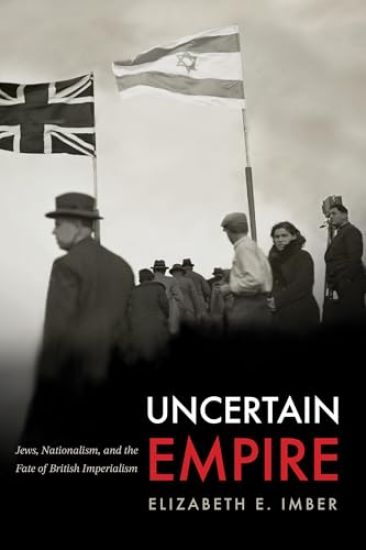
Following the British conquest of Ottoman Palestine, Jews across the British Empire—from Jerusalem to Johannesburg, London to Calcutta—found themselves at the heart of global Jewish political discourse. As these intellectuals, politicians, activists, and communal elites navigated shifting political landscapes, some envisioned Palestine as a British dominion, leveraging imperial power for Jewish state-building, while others fostered ties with anticolonial movements, contemplating independent national aspirations. Uncertain Empire considers this intricate interplay between British imperialism, Zionism, and anticolonial movements from the 1917 British conquest of Palestine to the establishment of the state of Israel in 1948. Elizabeth Imber highlights diverse and sometimes conflicting visions of Jewish political futures, offering detailed case studies of key figures including Chaim Arlosoroff, Moshe Shertok, Helen Bentwich, Rachel Ezra, and Hermann Kallenbach. She explores a "politics of uncertainty" in which Jews engaged with both imperial stability and the rise of anticolonial mobilization, when many were likewise forced to reconsider Palestine as a viable refuge and political solution. Ultimately, this book provides a nuanced understanding of how the British Empire's fate became central to Zionist and broader Jewish political thought, revealing the complex intersections of empire, state power, and Jewish politics during a time marked by profound urgency and exigency.
The Art of the Architect celebrates the role that drawing and watercolor painting play in architecture. Architectural drawing as we know it dates from the Renaissance, but with the arrival of computer design programmes this ancient art—formed of pen, pencil, and brushstrokes on paper—is sometimes regarded as obsolete. The work of Michael G. Imber, whose watercolors and sketches are published for the first time in paperback, shows what a vital contribution they can still make at every stage of an architectural project. His personal example is followed by his colleagues in a visual culture that permeates his practice, Michael G. Imber Architects. Whatever the place occupied by photographs, simulations, and visual graphics in the design process of today, hand drawing still facilitates a moment of deeper connection between an architect and his environment. Unlike a snap taken on a smart phone, a hand drawing is an active response to its subject: what is understood about a place in sensory terms cannot help but inform the finished design, creating buildings which maintain the balance between the way we live and the natural world around us. Not only do Michael’s sketches allow him to visualize his environment more clearly, but they provide an immediate visual language with which he can communicate with his team, his craftsmen, and his clients. Pen and wash is a suggestive, selective, and emotive technique. Rich in examples of the art and philosophy that have inspired him over the years, this book is both an ode to a precious art form, and a visual delight to anyone who may turn its pages. Michael’s attention to light, color, line, shape, and space in these “working paintings” reveals a love for the medium that extends from his architectural practice into the time he spends both traveling, and at his summer home on an island in Maine. The beauty of the result will be inspiring to anyone who loves architecture and the attendant arts.
The poems in Paul Nemser's A THOUSAND CURVES find inspiration from nature, travel, mysticism, memory. Time is understood in glimpses-raindrops, tides changing, splashes of a waterfall. Sometimes the background leaps out of the foreground. Bugs grind leaves, a line from a rock song repeats and repeats. Here are ecstasies and nightmares, mysteries and clarities of daily life, fateful steps, chance encounters, donkeys braying, one nightingale calling, reflections off an office building's floor-to-ceiling window. These glimpses can become a poem overnight or take decades to finish. In time the poems come together as a book that moves among traces of these myriad conversations. The internal speaks with the external. Permanence speaks with change. Ultimately the book is about the twists and turns that life takes over a lifetime, the record of a journey with a thousand curves.
Digitalisation : nouvelle source de Shadow IT ? Comment la gérer ?
Lucas Girardin; Emerich Imbart
ÉDITIONS UNIVERSITAIRES EUROPÉENNES
2016
nidottu
Arquitectura configurable para el pago de servicios por Internet
Danny Trejo; Ilbert Esculpi
Editorial Academica Espanola
2012
pokkari
Tailored Gamification to Educational Technologies
Wilk Oliveira; Ig Ibert Bittencourt
Springer Verlag, Singapore
2019
sidottu
This book introduces and explores the field of tailored gamified educational technologies. Providing a theoretical overview of the domain, including a number of related psychological and educational theories along with a complete state-of-the-art analysis on this topic, it presents an approach and architecture to tailor these systems to students’ gamer type and age.
Tailored Gamification to Educational Technologies
Wilk Oliveira; Ig Ibert Bittencourt
Springer Verlag, Singapore
2020
nidottu
This book introduces and explores the field of tailored gamified educational technologies. Providing a theoretical overview of the domain, including a number of related psychological and educational theories along with a complete state-of-the-art analysis on this topic, it presents an approach and architecture to tailor these systems to students’ gamer type and age.
Popular Nonfiction Authors for Children
Margaret Coggins; Jane H. Imber; Flora R. Wyatt
Libraries Unlimited Inc
1998
sidottu
Introduce students to some of today's best nonfiction authors and their writing-and promote nonfiction reading to young learners! Engaging biographical sketches of 65 current nonfiction authors (some of them award winners) are accompanied by selective, annotated bibliographies for further reading. In addition, author photos and an author message to students enhance the experience. Biographies outline the childhoods of the authors, how they became writers, and how they go about their work. A detailed subject index allows you to plan thematic units of study and to assist students in finding reading material that matches their interests. A diversity of current authors and subjects are represented in this useful work.
Morgenkreis & Co. - Die Bedeutung von Ritualen für die Jüngsten
Mareike Völkel; Ulrike Fetzer; Katrin Imbery
Herder Verlag GmbH
2025
lehtivihko, moniste
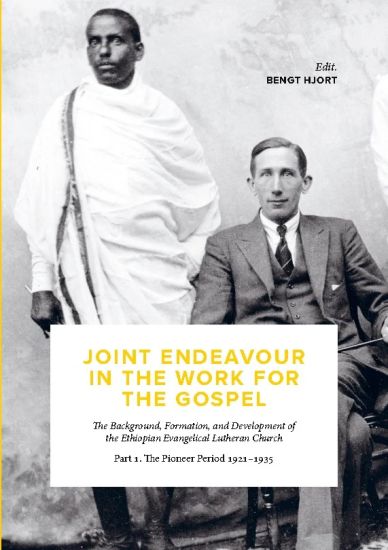
Joint endeavour in the work for the gospel : the background, formation and development of the Ethiopian Evangelical Lutheran Church. Part 1, The pioneer period 1921-1935
Bengt Hjort; Mekonnen Gerremew; Rune Imberg
BoD
2022
nidottu
The Ethiopian Evangelical Lutheran Church (EELC) was formed in 1960 as a fruit of the mission work of Swedish Mission Bibeltrogna Vänner (SMBV), founded in 1911, its roots dating back to the evangelical revival that swept across Sweden in the 19th century. The main goal of the society was to reach the Oromo people in Ethiopia with the Gospel. In 1911 mission work began in Eritrea and in 1921 the first SMBV missionaries reached Addis Ababa, from where work was expanded into the cities of Harar and Dire-Dawa as well as into the Arsi province. When EELC was founded, members were few, estimated to around 500. Since then the church has grown and today has a membership of about 25,000. This book covers the first part of EELC:s history, describing the development from 1921 to 1935, ultimately leading up to the establishment of the church in 1960. As a background the development leading to the establishment of SMBV and the mission work of SMBV in Eritrea are described
Education Law, Sixth Edition provides a comprehensive survey of the legal problems and issues confronting school leaders, teachers, and policymakers today. Court cases accompanied by explanation and analysis can help aspiring educators understand the subtlety and richness of the law. Accordingly, each of the 12 thematic chapters begins with an overview, concludes with a summary, and balances an explanation of the important principles of education law with actual court decisions to illuminate those issues most relevant for educational policy and practice.This updated and expanded Sixth Edition includes: Revision of case law, education policy, and citations to reflect the most recent decisions and developments in the field. Cases and commentary on key topics such as constitutional rights of students in public schools, school discipline, safety, and zero tolerance policies, school choice and parental rights claims, the regulation of charter schools and home-based education, cyberbullying and the regulation of online speech, racial and sexual harassment policies, and collective bargaining, unions, and working conditions. eResources accessible at www.routledge.com/9780367195250 include a Glossary for students, Chapter Outlines and Abstracts for instructors, as well as Tables of Cases.
The Procedure of the House of Commons
Josef Redlich; A. Ernest (TRN) Steinthal; Courtenay Peregrine Ilbert
Kessinger Pub
2009
pokkari
The Procedure of the House of Commons
Josef Redlich; A. Ernest (TRN) Steinthal; Courtenay Peregrine Ilbert
Kessinger Pub
2009
sidottu