
Kirjahaku
Etsi kirjoja tekijän nimen, kirjan nimen tai ISBN:n perusteella.
1000 tulosta hakusanalla James R Cook

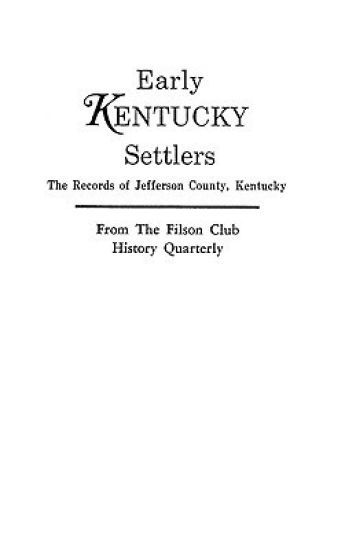
Petitions of the Early Inhabitants of Kentucky
James R. Robertson
Genealogical Publishing Company
2009
pokkari

In a surprisingly upbeat, heartfelt book about a serious subject, The Wall Street Journal's veteran obituary writer, award-winning journalist James R. Hagerty, shares his unique skills with those who want to have the last word with flourish, honesty, and even humor. Whether in-brief for future newspapers and websites, or as a more complete mini-memoir for friends and family, Yours Truly is a guide to making sure your story is told the way you want - and how the process of preparing your own life story can help you live a better life. Someday, your life story is likely to be boiled down to a few lines. If you leave things to chance, your obituary is almost sure to be solemn, formulaic, and full of errors--an obligatory final chapter written in haste by others. James R. Hagerty, longtime obit writer for The Wall Street Journal, knows how to get the job done right: Do it yourself, starting now, while you still can. In this heartfelt and reassuring guide, Hagerty explains how to preserve your personal history--from crafting a brief obituary for newspapers and websites, to a more thoughtful and detailed mini-memoir for those close to you. Through his personal stories, on-the-job anecdotes, and insights, you will learn what to include, what to leave out, and how to provide historical context, record oral histories and make the most of details, all with candor and wit. Best of all, you'll find that reviewing your life story helps you think about what you're doing with your time on Earth and whether you're on the right path. It isn't too late to improve the narrative with a stronger ending. Telling your story your way can be the best gift you ever give to friends and loved ones--and yourself.

Grass-Roots Socialism answers two of the most intriguing questions in the history of American radicalism: why was the Socialist party stronger in Oklahoma than in any other state, and how was the party able to build powerful organisations in nearby rural southwestern areas?Many of the same grievances that had created a strong Populist movement in the region provided the Socialists with potent political issues, the railroad monopoly, the crop lien system, and political corruption. With these widely felt grievances to build on, the Socialists led the class-conscious farmers and workers to a radicalism that was far in advance of that advocated by the earlier People's party. Examined in this broadly based study of the movement are popular leaders like Oklahoma's Oscar Ameringer (""The Mark Twain of American Socialism""), ""Red Tom"" Hickey of Texas, and Kate Richards O'Hare, who was second only to Eugene Debs as a Socialist orator. Included also is information on the party's propaganda techniques, especially those used in the lively newspapers which claimed fifty thousand subscribers in the Southwest by 1913, and on the attractive summer camp meetings which drew thousands of poor white tenant farmers to week-long agitation and education sessions.
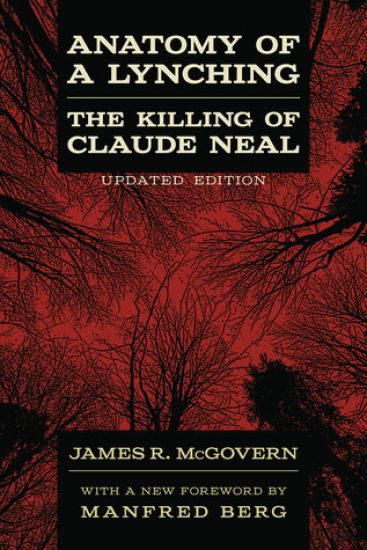
A sensitive and forthright analysis of one of the most gruesome episodes in Florida history... McGovern has produced a richly detailed case study that should enhance our general understanding of mob violence and vigilantism."" -- Florida Historical Quarterly""[McGovern] has succeeded in writing more than a narrative account of this bloodcurdling story; he has explored its causes and ramifications."" -- American Historical Review""A finely crafted historical case study of one lynching, its antecedents, and its aftermath."" -- Contemporary SociologyFirst published in 1982, James R. McGovern's Anatomy of a Lynching unflinchingly reconstructs the grim events surrounding the death of Claude Neal, one of the estimated three thousand blacks who died at the hands of southern lynch mobs in the six decades between the 1880s and the outbreak of World War II.Neal was accused of the brutal rape and murder of Lola Cannidy, a young white woman he had known since childhood. On October 26, 1934, a well-organized mob took Neal from his jail cell. The following night, the mob tortured Neal and hanged him to the point of strangulation, repeating the process until the victim died. A large crowd of men, women, and children who gathered to witness, celebrate, and assist in the lynching further mutilated Neal's body. Finally, the battered corpse was put on display, suspended as a warning from a tree in front of the Jackson County, Florida, courthouse.Based on extensive research as well as on interviews with both blacks and whites who remember Neal's death, Anatomy of a Lynching sketches the social background of Jackson County, Florida -- deeply religious, crushed by the Depression, accustomed to violence, and proud of its role in the Civil War -- and examines which elements in the county's makeup contributed to the mob violence. McGovern offers a powerful dissection of an extraordinarily violent incident.
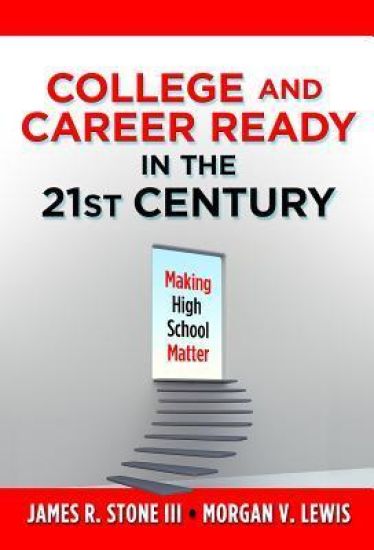
College and Career Ready in the 21st Century
James R. Stone III; Morgan V. Lewis
Teachers' College Press
2012
nidottu
More than half of 9th graders in the United States will never complete a college degree. High schools must do more than prepare some students for college: They must prepare all American youth for productive lives as well as continued learning beyond high school. In this timely volume, two educational leaders advocate for a more meaningful high school experience. To accomplish this, the authors argue that we need to change the focus of our current high school reform efforts from ''college for all'' to ''careers for all.'' This work shows how schools can prepare young people both for the emerging workplace and post secondary education.
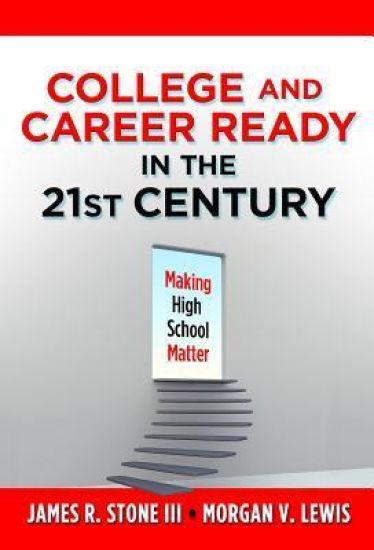
College and Career Ready in the 21st Century
James R. Stone III; Morgan V. Lewis
Teachers' College Press
2012
sidottu
More than half of 9th graders in the United States will never complete a college degree. High schools must do more than prepare some students for college: They must prepare all American youth for productive lives as well as continued learning beyond high school. In this timely volume, two educational leaders advocate for a more meaningful high school experience. To accomplish this, the authors argue that we need to change the focus of our current high school reform efforts from ''college for all'' to ''careers for all.'' This work shows how schools can prepare young people both for the emerging workplace and post secondary education.
How does the body politic reflect the nature of human embodiment? To pursue this question in a new and productive way, James Mensch employs a methodology consistent with the fact of our embodiment; he uses Merleau-Ponty's concept of 'intertwining' - the presence of one's self in the world and of the world in one's self - to understand the ideas that define political life. Mensch begins his inquiry by developing a philosophical anthropology based on this concept. He then applies the results of his investigation to the relations of power, authority, freedom, and sovereignty in public life. This involves confronting a line of interpretation, stretching from Hobbes to Agamben, which sees violence as both initiating and preserving the social contract. To contest this interpretation, Mensch argues against its presupposition, which is to equate freedom with sovereignty over others. He does so by understanding political freedom in terms of embodiment - in particular, in terms of the finitude and interdependence that our embodiment entails. Freedom, conceived in these terms, is understood as the gift of others. As a function of our dependence on others, it cannot exist apart from them. To show how public space and civil society presuppose this interdependence is the singular accomplishment of Embodiments. It accomplishes a phenomenological grounding for a new type of political philosophy.
How does the body politic reflect the nature of human embodiment? To pursue this question in a new and productive way, James Mensch employs a methodology consistent with the fact of our embodiment; he uses Merleau-Ponty's concept of 'intertwining' - the presence of one's self in the world and of the world in one's self - to understand the ideas that define political life. Mensch begins his inquiry by developing a philosophical anthropology based on this concept. He then applies the results of his investigation to the relations of power, authority, freedom, and sovereignty in public life. This involves confronting a line of interpretation, stretching from Hobbes to Agamben, which sees violence as both initiating and preserving the social contract. To contest this interpretation, Mensch argues against its presupposition, which is to equate freedom with sovereignty over others. He does so by understanding political freedom in terms of embodiment - in particular, in terms of the finitude and interdependence that our embodiment entails. Freedom, conceived in these terms, is understood as the gift of others. As a function of our dependence on others, it cannot exist apart from them. To show how public space and civil society presuppose this interdependence is the singular accomplishment of Embodiments. It accomplishes a phenomenological grounding for a new type of political philosophy.

By virtue of the originality and depth of its thought, Emmanuel Levinas's masterpiece, Totality and Infinity: An Essay on Exteriority, is destined to endure as one of the great works of philosophy. It is an essential text for understanding Levinas's discussion of ""the Other,"" yet it is known as a ""difficult"" book.Modeled after Norman Kemp Smith's commentary on Kant's Critique of Pure Reason, Levinas's Existential Analytic guides both new and experienced readers through Levinas's text. James R. Mensch explicates Levinas's arguments and shows their historical referents, particularly with regard to Heidegger, Husserl, and Derrida. Students using this book alongside Totality and Infinity will be able to follow its arguments and grasp the subtle phenomenological analyses that fill it.

By virtue of the originality and depth of its thought, Emmanuel Levinas's masterpiece, Totality and Infinity: An Essay on Exteriority, is destined to endure as one of the great works of philosophy. It is an essential text for understanding Levinas's discussion of ""the Other,"" yet it is known as a ""difficult"" book.Modeled after Norman Kemp Smith's commentary on Kant's Critique of Pure Reason, Levinas's Existential Analytic guides both new and experienced readers through Levinas's text. James R. Mensch explicates Levinas's arguments and shows their historical referents, particularly with regard to Heidegger, Husserl, and Derrida. Students using this book alongside Totality and Infinity will be able to follow its arguments and grasp the subtle phenomenological analyses that fill it.
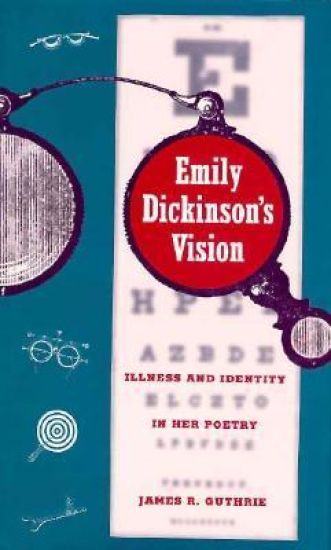
In this contribution to Emily Dickinson biography and criticism, the author demonstrates how the poet's optical disease - strabismus, a deviation of the cornea - directly affected her subject matter, her poetic method, and indeed her sense of her own identity.
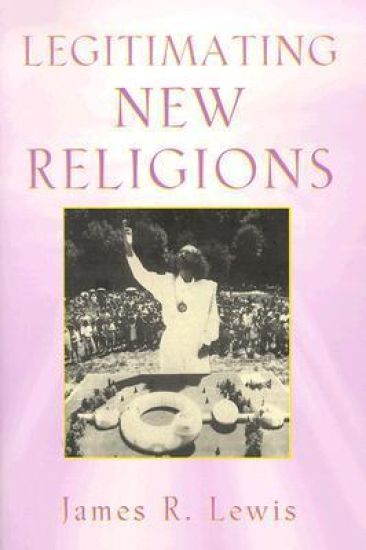
James R. Lewis has written the first book to deal explicitly with the issue of how emerging religions legitimate themselves. He contends that a new religion has at least four different, though overlapping, areas where legitimacy is a concern: making converts, maintaining followers, shaping public opinion, and appeasing government authorities. The legitimacy that new religions seek in the public realm is primarily that of social acceptance. Mainstream society's acknowledgement of a religion as legitimate means recognizing its status as a genuine religion and thus recognizing its right to exist. Through a series of wide-ranging case studies Lewis explores the diversification of legitimation strategies of new religions as well the tactics that their critics use to de-legitimate such groups. Cases include the Movement for Spiritual Inner Awareness, Native American prophet religions, spiritualism, the Church of Christ-Scientist, Scientology, Church of Satan, Heaven's Gate, Unitarianism, Hindu reform movements, and Soka Gakkai, a new Buddhist sect.Since many of the issues raised with respect to newer religions can be extended to the legitimation strategies deployed by established religions, this book sheds an intriguing new light on classic questions about the origin of all religions.

Supplies information on the pathogenesis and morphology of equine diseases organised by major body systems, with diseases discussed by pathologic process and supplemental chapters on related aspects. More than 200 photographs and illustrations enhance descriptions.
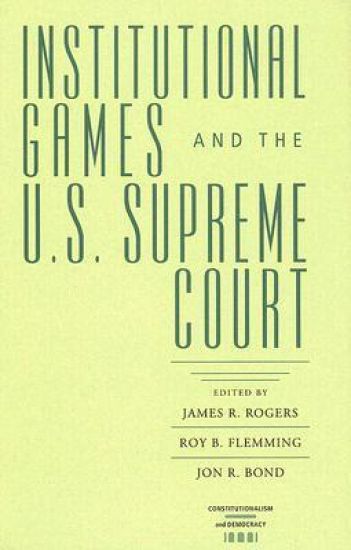
Institutional Games and the U.S. Supreme Court
James R. Rogers
University of Virginia Press
2006
sidottu
Over the course of the past decade, the behavioral analysis of decisions by the Supreme Court has turned to game theory to gain new insights into this important institution in American politics. Game theory highlights the role of strategic interactions between the Court and other institutions in the decisions the Court makes as well as in the relations among the justices as they make their decisions. Rather than assume that the justices' votes reveal their sincere preferences, students of law and politics have come to examine how the strategic concerns of the justices lead to "sophisticated" behavior as they seek to maximize achievement of their goals when faced with constraints on their ability to do so.In Institutional Games and the U.S. Supreme Court, James Rogers, Roy Flemming, and Jon Bond gather various essays that use game theory to explain the Supreme Court's interactions with Congress, the states, and the lower courts. Offering new ways of understanding the complexity and consequences of these interactions, the volume joins a growing body of work that considers these influential interactions among various branches of the U.S. government.Contributors: Kenneth A. Shepsle, Andrew De Martin, James R. Rogers, Christopher Zorn, Georg Vanberg, Cliff Carrubba, Thomas Hammond, Christopher Bonneau, Reginald Sheehan, Charles Cameron, Lewis A. Kornhauser, Ethan Bueno de Mesquita, Matthew Stephenson, Stefanie A. Lindquist, Susan D. Haire, Lawrence Baum

In this unique volume, James Hackney invites readers to enter the minds of 10 legal experts that in the late 20th century changed the way we understand and use theory in law today. True to the title of the book, Hackney spent hours in conversation with legal intellectuals, interviewing them about their early lives as thinkers and scholars, their contributions to American legal theory, and their thoughts regarding some fundamental theoretical questions in legal academe, particularly the law/politics debate. Legal Intellectuals in Conversation is a veritable "Who's Who" of legal thought, presented in a sophisticated yet intimate manner.

Said to contain the words of the earliest of the biblical prophets (8th century BCE), the book of Amos is reinterpreted by the author in light of new and sometimes controversial historical approaches to the Bible. Amos is read as the literary product of the Persian-era community in Judah. Its representations of divine-human communication are investigated in the context of the ancient writers' own role as transmitters and shapers of religious traditions. Amos's extraordinary poetry expresses mythical conceptions of divine manifestation and a process of destruction and recreation of the cosmos which reveals that behind the appearances of the natural world is a heavenly, cosmic temple.
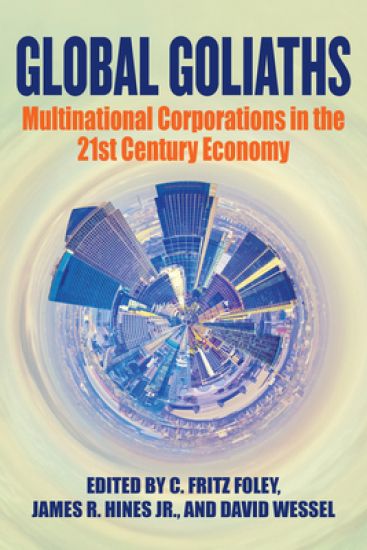
How multinationals contribute, or don't, to global prosperity.Globalization and multinational corporations have long seemed partners in the enterprise of economic growth: globalization-led prosperity was the goal, and giant corporations spanning the globe would help achieve it. In recent years, however, the notion that all economies, both developed and developing, can prosper from globalization has been called into question by political figures and has fueled a populist backlash around the world against globalization and the corporations that made it possible.In an effort to elevate the sometimes contentious public debate over the conduct and operation of multinational corporations, this edited volume examines key questions about their role, both in their home countries and in the rest of the world where they do business. Is their multinational nature an essential driver of their profits? Do U.S. and European multinationals contribute to home country employment? Do multinational firms exploit foreign workers? How do multinationals influence foreign policy? How will the rise of the digital economy and digital trade in services affect multinationals?In addressing these and similar questions, the book also examines the role that multinational corporations play in the outcomes that policymakers care about most: economic growth, jobs, inequality, and tax fairness.
The strike that paralyzed the mining camps of Clifton and Morenci during 1915–16 and gained nationwide attention was one of the most remarkable that ever occurred in the West. During an era when physical violence, death, and property destruction were almost accepted elements of Western labor difficulties, this walkout was peaceful. With few exceptions, law and order continually predominated. This, then, is the seldom-seen side, a positive side, to a state's labor history. Coming at a time when western labor was purging itself of radicalism and recharting its goals, the Clifton-Morenci strike may well have been that "milestone" in organized labor's groping for recognition in the West. Violence did not erupt- this notable absence of bloodshed thereby making the strike unique in that time of industrial turbulence. Kluger's answer to the question of why and how peace prevailed is significant reading. Strikers and managers hurled charges at each other, but both sides showed restraint when it came to action. When negotiations reached an impasse, Gov. George W. P. Hunt moved to prevent the managers from importing strike-breakers. At the same time, the Department of Labor entered the situation, and the rise in copper prices and loss of wages made a settlement desirable for both sides. When the mine whistles blew on January 26, 1916, to signal the end of the strike, the repercussions of the events of 1915 were still to be felt. Author Kluger traces how the strike affected working conditions, wages, and the cause of unionism in the district. Overall, he provides insight into feelings concerning the fears of management regarding unionism, and labor's manner of making itself heard during these years. Western historians, labor historians, and all those concerned with labor relations will recognize the importance of this highly readable work.
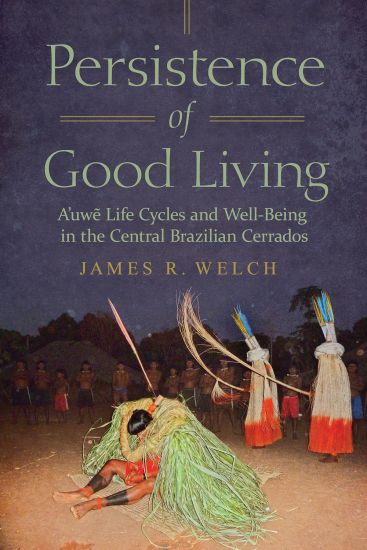
Cultural understandings of well-being often differ from scientific measures such as health, happiness, and affluence. For the Indigenous A’uw? (Xavante) people in the tropical savannas of Brazil, special forms of intimate and antagonistic social relations, camaraderie, suffering, and engagement with the environment are fundamental aspects of community wellness. Anthropologist James R. Welch transparently presents ethnographic insights from his long-term fieldwork in two A’uw? communities. He addresses how distinctive constructions of age organization contribute to social well-being in an era of major ecological, economic, and sociocultural change. Welch shows how A’uw? perspectives on the human life cycle help define ethnic identity, promote cultural resilience, and encourage the betterment of youth. They provide frameworks that people may creatively mobilize to responsibly and respectfully engage with others at different stages of life. They also motivate people to access and manage landscape resources essential to the social construction of good living. Through careful analysis, Welch shows how contemporary traditional peoples can foster enthusiasm for service to family and community amid dominant cultures that prioritize individual well-being. This book is an essential resource for students and scholars interested in sociocultural anthropology, Indigenous cultures, health and culture, and human ecology.