Kirjojen hintavertailu. Mukana 12 567 523 kirjaa ja 12 kauppaa.

Kirjahaku

Etsi kirjoja tekijän nimen, kirjan nimen tai ISBN:n perusteella.

1000 tulosta hakusanalla Jamie Rowen

Oxford Reading Tree Story Sparks: Oxford Level 8: Superhero Bunny League Saves the World!
Meet the rabbits who eat carrots, fight robots and save the world - it's the Superhero Bunny League! A laser, set off by the villainous Dr Fuzzleglove, gives all of the rabbits in the world superpowers. There's Handsome Steve who is super-strong, Derek who is enormous and Windy who can fly ... and then there's Stumpy, who isn't sure what his superpower is yet. When Dr Fuzzleglove and his robots attack, the bunnies must work together to defeat him! With a lovable cast of crazy bunnies, this is a superhero comic like no other. Oxford Reading Tree Story Sparks is an emotionally-engaging fiction series that will fire children's imaginations. These 36 original stories will get children thinking, and develop and deepen their comprehension skills. The variety of authors and illustration styles broadens children's reading experience, with something to appeal to every child. All the books in the series are carefully levelled, so it's easy to match every child to the right book for them. They also contain inside cover notes, to enable parents and teachers to support children in their reading. Help with children's reading development is also available at www.oxfordowl.co.uk.

Oxford Reading Tree Story Sparks: Oxford Level 9: Superhero Bunny League in Space!
The superhero bunnies are back in their latest comic-strip adventure! This time they must stop cake-loving space pirates from stealing all of Earths sweets. But can the bunnies stop arguing and work as a team to save Earth, before its too late? This vibrant comic-strip is full of fun, adventure and pudding! Oxford Reading Tree Story Sparks is an emotionally-engaging fiction series that will fire children's imaginations. These 36 original stories will get children thinking, and develop and deepen their comprehension skills. The variety of authors and illustration styles broadens children's reading experience, with something to appeal to every child. All the books in the series are carefully levelled, so it's easy to match every child to the right book for them. They also contain inside cover notes, to enable parents and teachers to support children in their reading. Help with children's reading development is also available at www.oxfordowl.co.uk.

Oxford Reading Tree Story Sparks: Oxford Level 4: Pip, Lop, Mip, Bop and the Stuck Star
A star has fallen out of the sky and now it is stuck! Can Pip, Lop, Mip and Bop think of a way to get it back? Oxford Reading Tree Story Sparks is an emotionally-engaging fiction series that will fire children's imaginations and develop their comprehension skills. The variety of authors and illustrators broadens children's reading experience, with something to appeal to every child. This story is one of six titles at Oxford Level 4, which are phonically decodable with some extra high-interest words to expand children's vocabularies and enrich the stories. All the books in the series are carefully levelled, making it easy to match every reader to the right book.
Oxford Reading Tree Story Sparks: Oxford Level 5: Mixed Pack of 6

Oxford Reading Tree Story Sparks: Oxford Level 5: Mixed Pack of 6

Jamie Smart; Joanna Nadin; Timothy Knapman; Simon Puttock; Abie Longstaff; Narinder Dhami

Oxford University Press
2017
nidottu
Oxford Reading Tree Story Sparks is an emotionally-engaging fiction series that will fire children's imaginations and develop their comprehension skills. The variety of authors and illustrators broadens children's reading experience, with something to appeal to every child. The titles at Oxford Levels 1+ to 5 are phonically decodable with some extra high-interest words to expand children's vocabularies and enrich the stories. All the books in the series are carefully levelled, making it easy to match every reader to the right book. This pack contains six books, one of each of the following titles: Pip, Lop, Mip, Bop and the Bumbles, Tomorrow Never Comes, The Night Knight, Snoot's Birthday Surprise, Sometimes Mum is Silly and The Festival of Colours.
Oxford Reading Tree Story Sparks: Oxford Level 5: Class Pack of 36

Oxford Reading Tree Story Sparks: Oxford Level 5: Class Pack of 36

Jamie Smart; Joanna Nadin; Timothy Knapman; Simon Puttock; Abie Longstaff; Narinder Dhami

Oxford University Press
2017
nidottu
Oxford Reading Tree Story Sparks is an emotionally-engaging fiction series that will fire children's imaginations and develop their comprehension skills. The variety of authors and illustrators broadens children's reading experience, with something to appeal to every child. The titles at Oxford Levels 1+ to 5 are phonically decodable with some extra high-interest words to expand children's vocabularies and enrich the stories. All the books in the series are carefully levelled, making it easy to match every reader to the right book. This pack contains 36 books, six of each of the following titles: Pip, Lop, Mip, Bop and the Bumbles, Tomorrow Never Comes, The Night Knight, Snoot's Birthday Surprise, Sometimes Mum is Silly and The Festival of Colours.
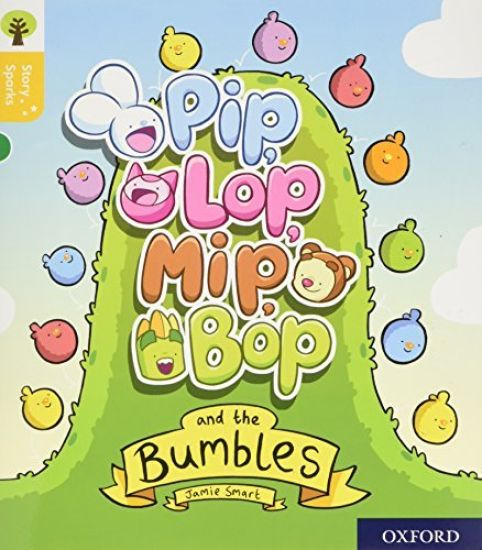
Oxford Reading Tree Story Sparks: Oxford Level 5: Pip, Lop, Mip, Bop and the Bumbles
Pip, Lop, Mip and Bop make some new friends - the bumbles. But disaster strikes and the bumbles get trapped in a moat! Pip, Lop, Mip and Bop need to get the bumbles out and safely back to King Bumble. Oxford Reading Tree Story Sparks is an emotionally-engaging fiction series that will fire children's imaginations and develop their comprehension skills. The variety of authors and illustrators broadens children's reading experience, with something to appeal to every child. This story is one of six titles at Oxford Level 5, which are phonically decodable with some extra high-interest words to expand children's vocabularies and enrich the stories. All the books in the series are carefully levelled, making it easy to match every reader to the right book.
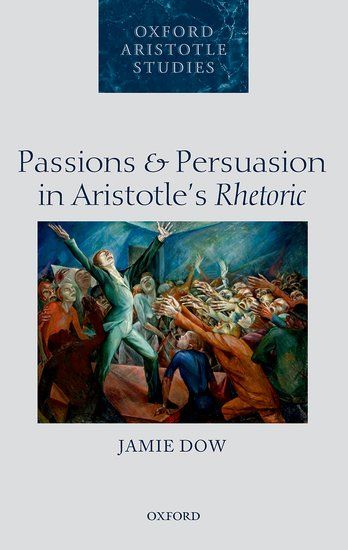
Passions and Persuasion in Aristotle's Rhetoric

Passions and Persuasion in Aristotle's Rhetoric

Jamie Dow

Oxford University Press
2015
sidottu
For Aristotle, arousing the passions of others can amount to giving them proper grounds for conviction. On that basis a skill in doing so can be something valuable, an appropriate constituent of the kind of expertise in rhetoric that deserves to be cultivated and given expression in a well-organised state. Such are Jamie Dow's principal claims in Passions and Persuasion in Aristotle's Rhetoric. He attributes to Aristotle a normative view of rhetoric and its role in the state, and ascribes to him a particular view of the kinds of cognitions involved in the passions. In the first sustained treatment of these issues, and the first major monograph on Aristotle's Rhetoric in twenty years, Dow argues that Aristotle held distinctive and philosophically interesting views of both rhetoric and the nature of the passions. In Aristotle's view, he argues, rhetoric is exercised solely in the provision of proper grounds for conviction (pisteis). This is rhetoric's valuable contribution to the proper functioning of the state. Dow explores, through careful examination of the text of the Rhetoric, what normative standards must be met for something to qualify in Aristotle's view as 'proper grounds for conviction', and how he supposed these standards could be met by each of his trio of 'technical proofs' (entechnoi pisteis)--those using reason, character and emotion. In the case of the passions, Dow suggests, meeting these standards is a matter of arousing passions that constitute the reasonable acceptance of premises in arguments supporting the speaker's conclusion. Dow then seeks to show that Aristotle's view of the passions is compatible with this role in rhetorical expertise. This involves taking a stand on a number of controversial issues in Aristotle studies. In Passions and Persuasion, Dow rejects the view that Aristotle's Rhetoric expresses inconsistent views on emotion-arousal. Aristotle's treatment of the passions in the Rhetoric is, he argues, best understood as expressing a substantive theory of the passions as pleasures and pains. This is supported by a new representationalist reading of Aristotle's account of pleasure (and pain) in Rhetoric 1. Dow also defends a distinctive understanding of how Aristotle understood the contribution of phantasia ('appearance') to the cognitive component of the passions. On this interpretation, Aristotelian passions must involve the subject's affirming things to be the way that they are represented. Thus understood, the passions of an emotionally-engaged audience can constitute a part of their reasonable acceptance of a speaker's argument.
Offshore

Offshore

Jamie Peck

Oxford University Press
2017
sidottu
Offshore outsourcing-the movement of jobs to lower-wage countries-is one of the defining features of globalization. Routine blue-collar work has been going offshore for decades, but the digital revolution beginning in the 1990s extended this process to many parts of the service economy too. Politically controversial from the beginning, "offshoring" is conventionally seen as a threat to jobs, wages, and economic security in higher-income countries-having become synonymous with the dirty work of globalization. Even though the majority of corporations make some use of offshore outsourcing, fearful of negative publicity most now choose to manage these activities in a discreet manner. Partly as a result, the global sourcing business, now reckoned to be worth more $120 billion, largely operates under the radar, its ocean-spanning activities in low-cost labour arbitrage being poorly documented and poorly understood. Offshore is the first sustained investigation of the workings of the global sourcing industry, its business practices, its market dynamics, its technologies, and its politics. The book traces the complex transformation of the worlds of global sourcing, from its origins in the new international division of labour in the 1970s, through the rapid growth of back-office economies in India and the Philippines since the 1990s, to the development of "nearshore" markets in Latin America and Eastern Europe. Recently, this evolving process of geographical and organizational restructuring has included experiments in "backshoring" within low-cost, ex-urban locations in the United States and a wave of software-enabled automation, which threatens to remove labour from many back offices altogether. In these and other ways, the offshore revolution continues.
Synthetic Biology

Synthetic Biology

Jamie A. Davies

Oxford University Press
2018
nidottu
Synthetic biology is one of the 21st century's fastest growing fields of research, as important for technology as for basic science. Building on traditional genetic engineering, which was restricted to changing one or two genes, synthetic biology uses multi-gene modules and pathways to make very significant changes to what cells can do. Synthetic biologists aim to have an impact in fields as diverse as drug manufacture, biofuel production, tackling pollution, and medical diagnostics. Further ahead, synthetic biology may even make possible the long-standing goal of creating new life from non-living starting materials. This Very Short Introduction provides a concise explanation of what synthetic biology is, and how it is beginning to affect many fields of technology. Jamie Davies also discusses the considerable controversies surrounding synthetic biology, from questions over the assumption that engineering concepts can be applied to living systems easily, to scepticism over the claims for commercial promise, fears that the dangers of engineering life are worse than its benefits, and concerns over whether humans should be designing living systems at all. ABOUT THE SERIES: The Very Short Introductions series from Oxford University Press contains hundreds of titles in almost every subject area. These pocket-sized books are the perfect way to get ahead in a new subject quickly. Our expert authors combine facts, analysis, perspective, new ideas, and enthusiasm to make interesting and challenging topics highly readable.
Future Politics

Future Politics

Jamie Susskind

Oxford University Press
2018
sidottu
Future Politics confronts one of the most important questions of our time: how will digital technology transform politics and society? The great political debate of the last century was about how much of our collective life should be determined by the state and what should be left to the market and civil society. In the future, the question will be how far our lives should be directed and controlled by powerful digital systems - and on what terms? Jamie Susskind argues that rapid and relentless innovation in a range of technologies - from artificial intelligence to virtual reality - will transform the way we live together. Calling for a fundamental change in the way we think about politics, he describes a world in which certain technologies and platforms, and those who control them, come to hold great power over us. Some will gather data about our lives, causing us to avoid conduct perceived as shameful, sinful, or wrong. Others will filter our perception of the world, choosing what we know, shaping what we think, affecting how we feel, and guiding how we act. Still others will force us to behave certain ways, like self-driving cars that refuse to drive over the speed limit. Those who control these technologies - usually big tech firms and the state - will increasingly control us. They will set the limits of our liberty, decreeing what we may do and what is forbidden. Their algorithms will resolve vital questions of social justice, allocating social goods and sorting us into hierarchies of status and esteem. They will decide the future of democracy, causing it to flourish or decay. A groundbreaking work of political analysis, Future Politics challenges readers to rethink what it means to be free or equal, what it means to have power or property, what it means for a political system to be just or democratic, and proposes ways in which we can - and must - regain control.
Offshore

Offshore

Jamie Peck

Oxford University Press
2019
nidottu
Offshore outsourcing- the movement of jobs to lower-wage countries- is one of the defining features of globalization. Routine blue-collar work has been going offshore for decades, but the digital revolution beginning in the 1990s extended this process to many parts of the service economy too. Politically controversial from the beginning, "offshoring" is conventionally seen as a threat to jobs, wages, and economic security in higher-income countries, having become synonymous with the dirty work of globalization. Even though the majority of corporations make some use of offshore outsourcing, fearful of negative publicity most now choose to manage these activities in a discreet manner. Partly as a result, the global sourcing business, reckoned to be worth more than $120 billion, largely operates under the radar, its ocean-spanning activities in low-cost labour arbitrage being poorly documented and poorly understood. Offshore is the first sustained investigation of the workings of the global sourcing industry, its business practices, its market dynamics, its technologies, and its politics. The book traces the complex transformation of the worlds of global sourcing, from its origins in the new international division of labour in the 1970s, through the rapid growth of back-office economies in India and the Philippines since the 1990s, to the development of "nearshore" markets in Latin America and Eastern Europe. Recently, this evolving process of geographical and organizational restructuring has included experiments in "backshoring" within low-cost, ex-urban locations in the United States and a wave of software-enabled automation, which threatens to remove labour from many back offices altogether. In these and other ways, the offshore revolution continues.
Future Politics

Future Politics

Jamie Susskind

Oxford University Press
2020
nidottu
Politics in the Twentieth Century was dominated by a single question: how much of our collective life should be determined by the state, and what should be left to the market and civil society? Now the debate is different: to what extent should our lives be directed and controlled by powerful digital systems - and on what terms? Digital technologies - from artificial intelligence to blockchain, from robotics to virtual reality - are transforming the way we live together. Those who control the most powerful technologies are increasingly able to control the rest of us. As time goes on, these powerful entities - usually big tech firms and the state - will set the limits of our liberty, decreeing what may be done and what is forbidden. Their algorithms will determine vital questions of social justice. In their hands, democracy will flourish or decay. A landmark work of political theory, Future Politics challenges readers to rethink what it means to be free or equal, what it means to have power or property, and what it means for a political system to be just or democratic. In a time of rapid and relentless changes, it is a book about how we can - and must - regain control. Winner of the Estoril Global Issues Distinguished Book Prize.
Prostitution and Subjectivity in Late Medieval Germany
Prostitution played an important part in structuring gender relations in medieval Germany. Prostitutes were often viewed as an example of the extreme female sinfulness which all women risked falling into, yet their social role was also seen as vital to the unmarried men for whom they provided a sexual outlet. Prostitution and Subjectivity in Late Medieval Germany is the first full-length study of medieval prostitution to focus primarily on how gender discourse shaped the lives of prostitutes themselves. Based on three legal case studies from the late medieval Empire, Prostitutes and Subjectivity in Late Medieval Germany examines constructions of subjectivity between 1400 and 1500. This period saw the rapid rise of tolerated prostitution across much of western Europe and the emergence of the public brothel as a central institution in the regulation of social order, followed by its equally rapid suppression from the early 1500s. By analysing how individuals interacted with cultural discourses surrounding the body, sexuality, and sin, the book explores how the concepts which defined prostitution in the Middle Ages shaped individual lives, and how individuals were able - or not - to exert agency, both within the circumstances of their own lives, and in response to official attempts to regulate sexual behaviour.
Human Physiology

Human Physiology

Jamie A. Davies

Oxford University Press
2021
nidottu
Very Short Introductions: Brilliant, Sharp, Inspiring Physiology is the science of life, and sets out to understand how living things work and what makes them distinct from the non-living. It considers how our bodies are supplied with energy, how they maintain their internal parameters, the ways in which we gather and process information, the ways we take action, and the creation of new generations. This Very Short Introduction explores the field of human physiology, considering how the body works, senses, reacts, and defends itself. As Jamie A. Davies shows, human life (and indeed, all life) is sustained by the interplay of a wide variety of physiological mechanisms and principles. He discusses the physiological experiments and research undertaken to understand these processes, and analyses the ethical issues involved. He also considers the evolution of the scientific field itself, showing how enhanced understandings of physiological knowledge can help inform medical research and care. ABOUT THE SERIES: The Very Short Introductions series from Oxford University Press contains hundreds of titles in almost every subject area. These pocket-sized books are the perfect way to get ahead in a new subject quickly. Our expert authors combine facts, analysis, perspective, new ideas, and enthusiasm to make interesting and challenging topics highly readable.
The Changing Electoral Map of England and Wales

The Changing Electoral Map of England and Wales

Jamie Furlong; Will Jennings

Oxford University Press
2024
nidottu
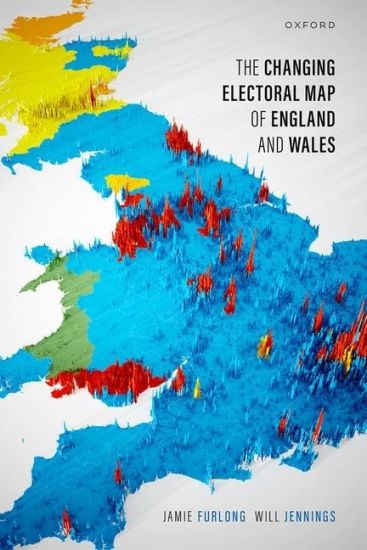
The 2019 British general election saw a dramatic redrawing of the electoral map, with the Labour Party losing seats to the Conservatives in former heartlands in the North of England and Midlands. Yet this had been a long-term shift, with the opposite trend occurring in major cities and university towns, where Labour's support has been increasing. What has driven these changes in electoral geography? Why do they matter? This book offers a definitive account of the changing electoral geography of England and Wales over the past half century. Jamie Furlong and Will Jennings argue that long-term trends in social and economic structure have significantly altered the spatial distribution of voters and, combined with changes in the parties' appeal to those voters, have led to a gradual, though recently accelerating, realignment of the geographical basis of electoral competition. Constituency-level analysis of voting at general elections between 1979 and 2019 reveals a swing from Labour to the Conservatives in demographically 'left behind' areas (areas with largely white, working-class populations and lower levels of educational attainment), while Labour's support has remained stable in areas characterized by high levels of economic deprivation and insecure employment. Areas that have experienced improvements in their socioeconomic condition - typically cities where Labour have inefficiently stacked up votes - have swung towards Labour, whereas areas characterized by economic and population decline have swung towards the Conservatives. Spatial analysis reveals clusters of seats where each party has more support than expected based on sociodemographic composition - places where, in short, place matters. In Merseyside, Labour's vote is much higher than would be predicted by demographics, while this is similarly the case for the Conservatives in Lincolnshire and parts of the West Midlands. But what makes these areas distinctive? We present qualitative case studies for Merseyside and Lincolnshire to identify the place-based, contextual factors that help explain their unusual political characteristics. The book argues for the need to recognize the importance of people, places, and parties in shaping the geography of electoral outcomes.
Loyal Enemies: British Converts to Islam, 1850-1950

Loyal Enemies: British Converts to Islam, 1850-1950

Jamie Gilham

Oxford University Press, USA
2014
sidottu
Loyal Enemies uncovers the history of the earliest British converts to Islam who lived their lives freely as Muslims on British soil, from the 1850s to the 1950s. Drawing on original archival research, it reveals that people from across the range of social classes defied convention by choosing Islam in this period. Through a series of case studies of influential converts and pioneering Muslim communities, Loyal Enemies considers how the culture of Empire and imperialism influenced and affected their conversions and subsequent lives, before examining how they adapted and sustained their faith. Jamie Gilham shows that, although the overall number of converts was small, conversion to Islam aroused hostile reactions locally and nationally. He therefore also probes the roots of antipathy towards Islam and Muslims, identifies their manifestations and explores what conversion entailed socially and culturally. He also considers whether there was any substance to persistent allegations that converts had "divided" loyalties between the British Crown and a Muslim ruler, country or community. Loyal Enemies is a book about the past, but its core themes--about faith and belief, identity, Empire, loyalties and discrimination-- are still salient today.
Constructions of Neoliberal Reason

Constructions of Neoliberal Reason

Jamie Peck

Oxford University Press
2010
sidottu
Amongst intellectuals and activists, neoliberalism has become a potent signifier for the kind of free-market thinking that has dominated politics for the past three decades. Forever associated with the conviction politics of Ronald Reagan and Margaret Thatcher, the free-market project has since become synonymous with the 'Washington consensus' on international development policy and the phenomenon of corporate globalization, where it has come to mean privatization, deregulation, and the opening up of new markets. But beyond its utility as a protest slogan or buzzword as shorthand for the political-economic Zeitgeist, what do we know about where neoliberalism came from and how it spread? Who are the neoliberals, and why do they studiously avoid the label? Constructions of Neoliberal Reason presents a radical critique of the free-market project, from its origins in the first half of the 20th Century through to the recent global economic crisis, from the utopian dreams of Friedrich von Hayek through the dogmatic theories of the Chicago School to the hope and hubris of Obamanomics. The book traces how neoliberalism went from crank science to common sense in the period between the Great Depression and the age of Obama. Constructions of Neoliberal Reason dramatizes the rise of neoliberalism and its uneven spread as an intellectual, political, and cultural project, combining genealogical analysis with situated case studies of formative moments throughout the world, like New York City's bankruptcy, Hurricane Katrina, and the Wall Street crisis of 2008. The book names and tracks some of neoliberalism's key protagonists, as well as some of the less visible bit-part players. It explores how this adaptive regime of market rule was produced and reproduced, its logics and limits, its faults and its fate.
The Ice Age

The Ice Age

Jamie Woodward

Oxford University Press
2014
nidottu
The study of the Quaternary ice age has revolutionized ideas about Earth system change and the pace of landscape and ecosystem dynamics. The Ice Age: A Very Short Introduction looks at evidence from the continents, the oceans, and the ice core records, and the human stories behind it all. Jamie Woodward examines the remarkable environmental shifts that took place during the Great Ice Age of the Quaternary Period. He explores the evolution of ideas, evaluates the contributions of the leading players in the great debates, and presents some of the ingenious methods that have been used to retrieve information about the recent geological past. In an era of warming climate, the study of the ice age past is now more important than ever. This book examines the wonders of the Quaternary ice age - to show how ice age landscapes and ecosystems were repeatedly and rapidly transformed as plants, animals, and humans reorganized their worlds. ABOUT THE SERIES: The Very Short Introductions series from Oxford University Press contains hundreds of titles in almost every subject area. These pocket-sized books are the perfect way to get ahead in a new subject quickly. Our expert authors combine facts, analysis, perspective, new ideas, and enthusiasm to make interesting and challenging topics highly readable.
Constructions of Neoliberal Reason

Constructions of Neoliberal Reason

Jamie Peck

Oxford University Press
2012
nidottu
Amongst intellectuals and activists, neoliberalism has become a potent signifier for the kind of free-market thinking that has dominated politics for the past three decades. Forever associated with the conviction politics of Ronald Reagan and Margaret Thatcher, the free-market project has since become synonymous with the 'Washington consensus' on international development policy and the phenomenon of corporate globalization, where it has come to mean privatization, deregulation, and the opening up of new markets. But beyond its utility as a protest slogan or buzzword as shorthand for the political-economic Zeitgeist, what do we know about where neoliberalism came from and how it spread? Who are the neoliberals, and why do they studiously avoid the label? Constructions of Neoliberal Reason presents a radical critique of the free-market project, from its origins in the first half of the 20th Century through to the recent global economic crisis, from the utopian dreams of Friedrich von Hayek through the dogmatic theories of the Chicago School to the hope and hubris of Obamanomics. The book traces how neoliberalism went from crank science to common sense in the period between the Great Depression and the age of Obama. Constructions of Neoliberal Reason dramatizes the rise of neoliberalism and its uneven spread as an intellectual, political, and cultural project, combining genealogical analysis with situated case studies of formative moments throughout the world, like New York City's bankruptcy, Hurricane Katrina, and the Wall Street crisis of 2008. The book names and tracks some of neoliberalism's key protagonists, as well as some of the less visible bit-part players. It explores how this adaptive regime of market rule was produced and reproduced, its logics and limits, its faults and its fate.
Life Unfolding

Life Unfolding

Jamie A. Davies

Oxford University Press
2014
sidottu
Where did I come from? Why do I have two arms but just one head? How is my left leg the same size as my right one? Why are the fingerprints of identical twins not identical? How did my brain learn to learn? Why must I die? Questions like these remain biology's deepest and most ancient challenges. They force us to confront a fundamental biological problem: how can something as large and complex as a human body organize itself from the simplicity of a fertilized egg? A convergence of ideas from embryology, genetics, physics, networks, and control theory has begun to provide real answers. Based on the central principle of 'adaptive self-organization', it explains how the interactions of many cells, and of the tiny molecular machines that run them, can organize tissue structures vastly larger than themselves, correcting errors as they go along and creating new layers of complexity where there were none before. Life Unfolding tells the story of human development from egg to adult, from this perspective, showing how our whole understanding of how we come to be has been transformed in recent years. Highlighting how embryological knowledge is being used to understand why bodies age and fail, Jamie A. Davies explores the profound and fascinating impacts of our newfound knowledge.