Kirjojen hintavertailu. Mukana 11 699 587 kirjaa ja 12 kauppaa.

Kirjahaku

Etsi kirjoja tekijän nimen, kirjan nimen tai ISBN:n perusteella.

1000 tulosta hakusanalla Jan Scheffler

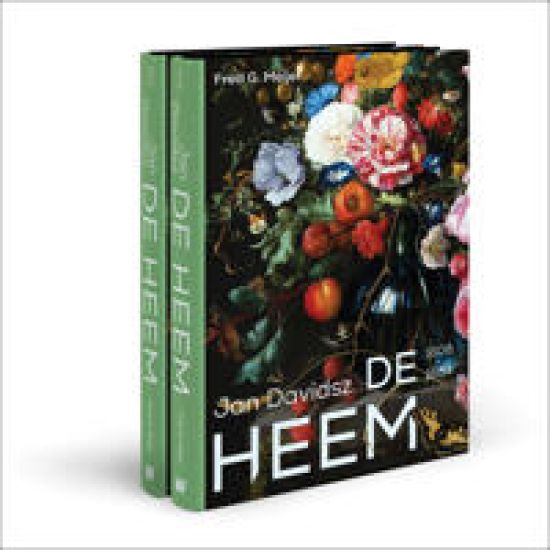
Jan Davidsz. de Heem

Jan Davidsz. de Heem

Fred G. Meijer

Uitgeverij de Kunst
2024
sidottu
Jan Davidsz. de Heem (1606-1684) was one of the best still-life painters of the 17th century. His work, which is enchanting to the eye, has always enjoyed international fame. Throughout his painting career of nearly 60 years, de Heem continued to search for new and better ways to depict his subjects. He trained several pupils and had countless followers and imitators, in the Netherlands as well as abroad, and throughout the centuries. The fact that he was active in both the Northern and Southern Netherlands enhanced his success and fame. He worked successively in Leiden, (presumably) in Amsterdam, in Antwerp, in Utrecht and again in Antwerp. De Heem is perhaps best known for his exuberant floral still lifes, which, however, were mainly created after 1660. By then, already for decades, he had painted still lifes of many themes and motifs, and in a variety of sizes, modest as well as luxurious. In Antwerp he had developed the large, rich still lifes which earned him part of his renown. This comprehensive monograph written by Fred G. Meijer, contains the complete catalogue of de Heem's oeuvre. Volume 1 includes an introduction, a biography and description of the development of his work. Volume 2 contains the catalogue raisonné of all paintings now known by de Heem, as well as several appendices.
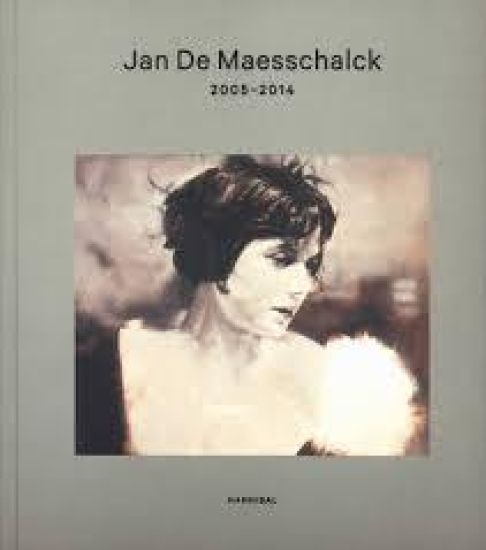
Jan De Maesschalck

Jan De Maesschalck

Jan De Maesschalck; Bernard Dewulf; Eric Rinckhout

Cannibal/Hannibal Publishers
2015
sidottu
Jan De Maesschalck's paintings represent a sharp view on topical subjects and the news. However, his clear observation of current events is depicted within an atmosphere of muse and memory. As such, his work represents an impression of melancholy and mockery, yet both in a mild form. According to De Maesschalck, melancholy leads to beauty. The tone set in the depiction of shadowy interiors and forlorn women is relativising and even humorous. All works speak of a strong but indefinable desire. De Maesschalck's metier reveals an extreme attention for detail. With technical precision, he prepares his paper and draws with paint. Utilising acrylic paint that dries immediately, De Maesschalck has to work fast. He is drawer and painter at once. Brushstrokes are visible, and hence his secure draughtsmanship contributes to the vibrant quality of the works.
Jan tai soihtu numero 1

Jan tai soihtu numero 1

Ville Ylitervo

Aviador
2025
nidottu
Jan,en saa koskaan tietää silmiesi väriäkaikki kuvat sinusta ovat mustavalkoisiaen tiedä miksi haluaisin niin kovasti tietäämaailman suuressa mittakaavassatällaiset pikkuasiat ovat täydellisen yhdentekeviäkaikille muille paitsi minulleJAN tai soihtu numero 1 on vapaaseen runomittaan puettu kokoelma kirjeitä tsekkiläisopiskelija Jan Palachille, joka Euroopan hullun vuoden 1968 jälkimainingeissa poltti itsensä hengiltä Neuvosto-liiton miehitettyä hänen maansa. Miksi vain 20-vuotias päätyi niin äärimmäiseen ratkaisuun? Miksi se puhuttelee reilusti yli kolmekymppistä suomalais-miestä? Vetääkö itsetuhoisuus itsetuhoisuutta puoleensa? Kuka pystyy asumaan kolmenkymmenen neliön yksiössä? Synkät mielenmaisemat, pakkomielle ja ihailu sekoittuvat runoissa, jotka kurkottavat ajan ja paikan yli kohti Jania, kohti mer-kitystä ja ymmärrystä.Ville Ylitervo (s. 1986) on helsinkiläinen runoilija ja zineisti.
Jan Gossart

Jan Gossart

Sytske Weidema; Anna Koopstra

Harvey Miller Publishers
2012
sidottu
For the catalogue of the 1965 monographic exhibition in Rotterdam and Bruges on Jan Gossart (ca. 1472-1532) a compilation was made of 68 documentary references pertaining to the artist's life and works. Now, forty-five years later, there has been a reassessment of Gossart and his oeuvre which has resulted in a new catalogue raisonne, Man, Myth, and Sensual Pleasures: Jan Gossart's Renaissance. The present text, Jan Gossart: The Documentary Evidence accompanies this volume. This tome covers more than 130 documents, including inventories, accounts, biographies, descriptions and other records about Gossart's life and works, up until the mid-18th century. These mainly archival records have been re-examined and transcribed anew, and subsequently discovered documents have been added. Each transcription is accompanied by a short description and comment as well as published references. The book includes photographs of original records. Additionally, two of Gossart's works for which most of our knowledge is based on documentary evidence are discussed: the so-called Salamanca Triptych and the famous, now lost, Middelburg Altarpiece.
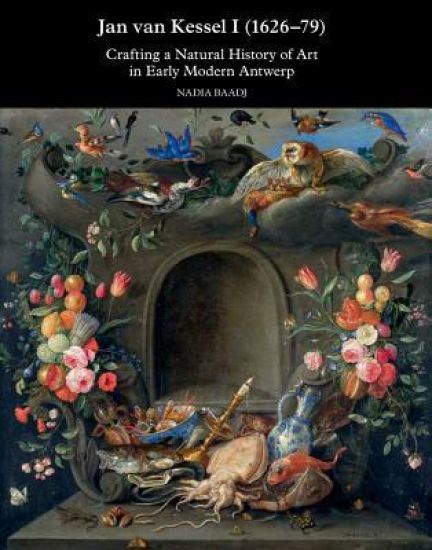
Jan Van Kessel I (1626-79)

Jan Van Kessel I (1626-79)

Nadia Baadj

Harvey Miller Publishers
2016
sidottu
The Antwerp artist Jan van Kessel the Elder (1626-1679) was esteemed throughout Europe for producing finely-wrought, miniature paintings on copper that depict a wide range of flora and fauna, exotic landscapes, and objects of natural artistry (e.g. shells, coral, precious stones). The 'natural' world presented in Van Kessel's art was not a transparent window onto nature, however, but instead was ambitiously crafted through the artist's reappropriation of Antwerp's artistic traditions, material culture, and artisanal knowledge practices. Through a combination of wit, technical virtuosity, self-referentiality, and allusions to local art-historical lineage, Van Kessel's paintings encourage viewers to simultaneously think about art, in terms of collecting, connoisseurship, citation, and media, and think anew about nature. This study uses Van Kessel's art as a distinctive lens through which to examine the relationship between craft, curiosity, and the pursuit of natural knowledge in the early modern period. Each chapter situates Van Kessel within a particular context where art and natural history intersected in late seventeenth-century Antwerp. Taken together, these investigations reveal how his production responded to a unique convergence of circumstances in that city which included the growth of a popular, commercial strand of natural history, a thriving culture of art collecting and connoisseurship focused on local artists, and a burgeoning luxury industry. Van Kessel's material and conceptual interventions into the representation of nature, such as his innovative, painted cabinets without drawers and witty signatures formed from insects and snakes, enabled him to redefine the scope of natural historical illustration and negotiate the value and status of the small-format cabinet picture.
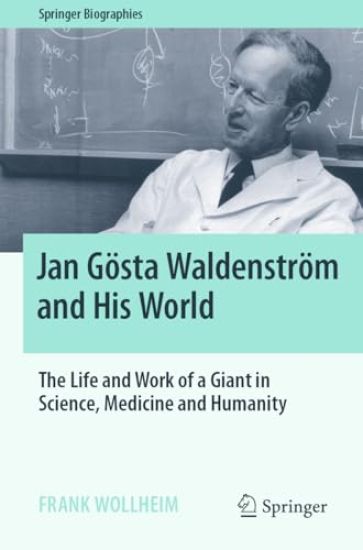
Jan Gösta Waldenström and His World

Jan Gösta Waldenström and His World

Frank Wollheim

Springer International Publishing AG
2024
nidottu
His legacy is emphasized by Waldenström lectures, Waldenström Prizes, and by the International Waldenström’s Macroglobulinemia Foundation, IWMF, and the Bing Center for Waldenström’s macroglobulinemia at the Dana Farber Institute of Cancer Institute of the Harvard University in Boston.
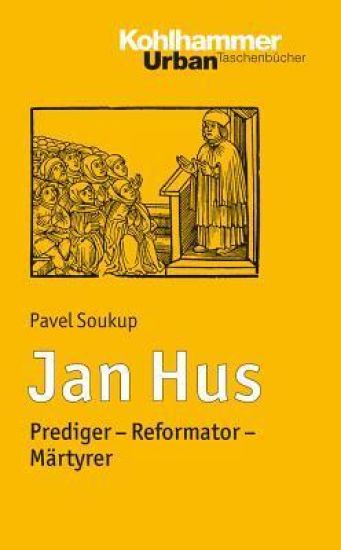
Jan Hus

Jan Hus

Pavel Soukup

Kohlhammer
2014
nidottu
English summary: Jan Hus (around 1370-1415) was a heretic for the Catholic Church. In many ways he symbolises the epoch of the late Middle Ages: in an attempt to bring back the church, which had been rocked by the Great Occidental Schism, he develops a reform programme, which goes way beyond the limits of the Middle Ages. His death by burning on the Constance Council 1415 turned him into a martyr. The illustration shows Jan Hus in his time: he is researched as a scholar and preacher of the late Middle Ages, as well as a publicly involved intellectual. The book draws a picture of Jan Hus, which is underpinned by historic arguments, and which places the events in Bohemia in a European context. German description: Jan Hus (um 1370-1415) war fur die katholische Kirche ein Haretiker. In Vielem versinnbildlicht er die Epoche des Spatmittelalters: In der Bemuhung, die durch das Grosse Abendlandische Schisma erschutterte Kirche in ihren Urzustand zuruck zu setzen, entwirft er ein Reformprojekt, das uber die Grenzen des Mittelalters hinaus weist. Sein Feuertod auf dem Konstanzer Konzil 1415 hat ihn zum Martyrer gemacht. Die Darstellung zeigt Jan Hus in seiner Zeit: Er wird als spatmittelalterlicher Gelehrter und Prediger untersucht, sowie als offentlich engagierter Intellektueller. Was genau hat ihn auf den Scheiterhaufen gebracht? Als Antwort auf diese Frage entsteht ein mit historischen Argumenten untermauertes Bild von Jan Hus, das die Ereignisse in Bohmen in die europaischen Zusammenhange einordnet. Das Buch ist ein aktueller Beitrag zum Jubilaum des Konstanzer Konzils.
Jan de Visscher und Lambert Visscher

Jan de Visscher und Lambert Visscher

Joseph Eduard Wessely

Antigonos Verlag
2025
sidottu
Unver nderter Nachdruck der Originalausgabe von 1866. Der Verlag Antigonos spezialisiert sich auf die Herausgabe von Nachdrucken historischer B cher. Wir achten darauf, dass diese Werke der ffentlichkeit in einem guten Zustand zug nglich gemacht werden, um ihr kulturelles Erbe zu bewahren.
Jan Blaufink, oder, See und Theater

Jan Blaufink, oder, See und Theater

Heinrich Smidt

Antigonos Verlag
2025
sidottu
Unver nderter Nachdruck der Originalausgabe von 1864. Der Verlag Antigonos spezialisiert sich auf die Herausgabe von Nachdrucken historischer B cher. Wir achten darauf, dass diese Werke der ffentlichkeit in einem guten Zustand zug nglich gemacht werden, um ihr kulturelles Erbe zu bewahren.
Jan van Dijk

Jan van Dijk

Steven Harmensz Ten Cate

Antigonos Verlag
2025
sidottu
Ongewijzigde herdruk van de oorspronkelijke uitgave uit 1881. Uitgeverij Antigonos is gespecialiseerd in de uitgave van herdrukken van historische boeken. We zorgen ervoor dat deze werken in goede staat aan het publiek beschikbaar worden gesteld om hun culturele erfgoed te behouden.