
Kirjahaku
Etsi kirjoja tekijän nimen, kirjan nimen tai ISBN:n perusteella.
1000 tulosta hakusanalla John Hardingham
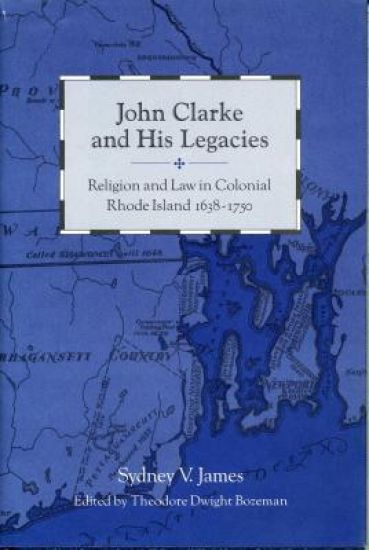
John Clarke and His Legacies is the first full-length biography of John Clarke (1609–76), a principal founder of colonial Rhode Island. Although Roger Williams usually gets most of the attention, Sydney James shows that Clarke made a lasting contribution to the colony—perhaps more so than Williams. Williams was the first Baptist minister in America, but he left his church after a very short time. And although Williams won the first charter for Rhode Island, the charter soon had to be replaced. Clarke, however, founded the first Baptist church in Newport, where he continued to contribute to the Baptist community. And in 1663 he procured the royal charter that would remain the foundation of government in Rhode Island until 1842.This inquiry into Clarke's life engages a variety of intriguing topics. It surveys a formative stage in American Baptist history, one that spurned dependency upon government more thoroughly than any part of the United States does today. Through the experience of Clark, we see pioneering American religious volunteerism, problems of church-state relations, and the peculiar nature of colonial relations with the parent country.
This volume is made up of the letters of British general John Forbes, who led the campaign against Fort Duquesne, a pivotal episode in the French and Indian War. Primarily from the year 1758, the letters, to William Pitt, Governor Denny of Pennsylvania, General Sharpe of Maryland, and others, offer readers a firsthand glimpse of the campaign, from the preparation through the expedition to Fort Duquesne and the eventual British capture of the fort, where Pittsburgh now stands. The correspondence is accompanied by various related letters between other key players in the expedition.
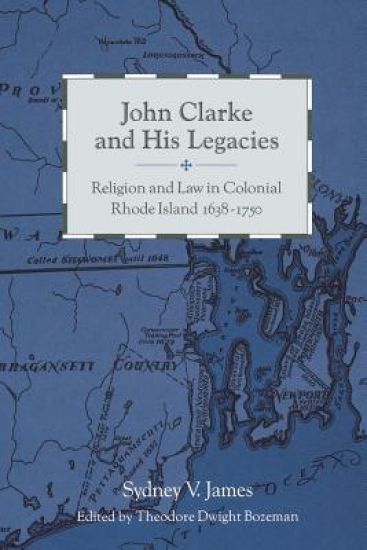
John Clarke and His Legacies is the first full-length biography of John Clarke (1609–76), a principal founder of colonial Rhode Island. Although Roger Williams usually gets most of the attention, Sydney James shows that Clarke made a lasting contribution to the colony—perhaps more so than Williams. Williams was the first Baptist minister in America, but he left his church after a very short time. And although Williams won the first charter for Rhode Island, the charter soon had to be replaced. Clarke, however, founded the first Baptist church in Newport, where he continued to contribute to the Baptist community. And in 1663 he procured the royal charter that would remain the foundation of government in Rhode Island until 1842.This inquiry into Clarke's life engages a variety of intriguing topics. It surveys a formative stage in American Baptist history, one that spurned dependency upon government more thoroughly than any part of the United States does today. Through the experience of Clark, we see pioneering American religious volunteerism, problems of church-state relations, and the peculiar nature of colonial relations with the parent country.
Aesthetic experience has had a long and contentious history in the Western intellectual tradition. Following Kant and Hegel, a human’s interaction with nature or art frequently has been conceptualized as separate from issues of practical activity or moral value. This book examines how art can be seen as a way of moral cultivation. Scott Stroud uses the thought of the American pragmatist John Dewey to argue that art and the aesthetic have a close connection to morality. Dewey gives us a way to reconceptualize our ideas of ends, means, and experience so as to locate the moral value of aesthetic experience in the experience of absorption itself, as well as in the experience of reflective attention evoked by an art object.
Aesthetic experience has had a long and contentious history in the Western intellectual tradition. Following Kant and Hegel, a human’s interaction with nature or art frequently has been conceptualized as separate from issues of practical activity or moral value. This book examines how art can be seen as a way of moral cultivation. Scott Stroud uses the thought of the American pragmatist John Dewey to argue that art and the aesthetic have a close connection to morality. Dewey gives us a way to reconceptualize our ideas of ends, means, and experience so as to locate the moral value of aesthetic experience in the experience of absorption itself, as well as in the experience of reflective attention evoked by an art object.

Lopeman examines the impact advocacy of intentional judicial activism by a justice of a state supreme court can have on establishing the court as a policy maker. He examines the attitudinal model and the judicial role model of decision making and concludes that, while the attitudinal model might describe the decision-making process in the U.S. Supreme Court, the judicial role model better describes decision making in state supreme courts. This judicial role model allows the activist to transform a court into a policy maker.The traditions, recent history, and biographies of recent justices of the Indiana, West Virginia, and Ohio courts are examined to establish a significant relationship between the presence of an activist advocate justice and active policy making by the courts. These courts' decisions in cases with policy making potential are contrasted with decisions in similar cases of three state supreme courts that did not have an advocate justice. Lopeman argues that the presence of an activist advocate explains a court's transformation to active policy making, and that other apparent explanations are insufficient. He emphasizes that the motives of an activist advocate are likely to determine the permanence of policy making in the court. This volume is an important resource for political scientists, legal scholars, and other researchers involved with judicial decision making, state politics, and state constitutional law.
John Basil Turchin and the Fight to Free the Slaves
Stephen Chicoine
Praeger Publishers Inc
2003
sidottu
This book highlights the contributions of a Russian immigrant who became a Union officer during the Civil War. John Basil Turchin left Czarist Russia to embrace democracy in America. When the Civil War began, he rushed to defend the Union, his formal training in the Imperial Russian Army and his combat experience in the Crimean making him a valuable officer. A man of conviction, he refused to be intimidated by commanding officers that were lenient toward rebels and the return of fugitive slaves to their masters. His subsequent court martial turned the trial into a focal point for Northern debate on the conduct of the war and the issue of slavery.John Basil Turchin left Czarist Russia to embrace democracy in America. When the Civil War began, he rushed to defend the Union, his formal training in the Imperial Russian Army and his combat experience in the Crimean making him a valuable officer. He was among those determined to see the war as revolutionary—a vehicle by which to put an end to Southern aristocracy and the institution of slavery. A man of conviction, he refused to be intimidated by commanding officers that were lenient toward rebels and the return of fugitive slaves to their masters. His actions during the Union thrust into northern Alabama in the spring of 1862 led to his court martial. The national attention given to the proceedings turned the trial into a focal point for Northern debate on the conduct of the war and the issue of slavery.Turchin took advantage of his exposure during the trial to express his position to the nation. His reinstatement by Lincoln in the aftermath of the court-martial and his promotion to brigadier general signaled that the administration was beginning to take a stronger position. The Emancipation Proclamation, delivered by Lincoln shortly thereafter, transformed the war into a crusade to free the slaves. John Basil Turchin returned to the field and played important roles on the battlefields of Chickamauga and Missionary Ridge.

John Jebb and the Enlightenment Origins of British Radicalism
Anthony Page
Praeger Publishers Inc
2003
sidottu
A supporter of the American rebellion and advocate of radical ideas on religion, philosophy, education, law, medicine, and politics, John Jebb (1736-1786) provides an ideal case to examine the nature of radicalism in 18th-century Britain. Jebb began his career as a clergyman and academic at Cambridge in the 1760s and died as a doctor and leading figure among political reformers in Enlightenment London. Profoundly influenced by David Hartley's attempt to combine a Christian theology of universal salvation with a materialist and determinist account of the mind, Jebb's philosophical and religious radicalism inspired him to work tirelessly for reform. This is the first modern extended study of his life.While at Cambridge, Jebb provoked strong conservative opposition to his religious views and proposals for academic reform. Increasingly marginalized in church and university, as a tide of loyalism swept the country in response to rebellion in America, Jebb resigned as a clergyman and moved to London to work as a doctor. As the American war dragged on with no end in sight, a popular movement urging political reform developed. Jebb became a leader of this movement and was instrumental in establishing a platform that called for universal suffrage and annual elections. British radicals would continue to campaign for this platform until the mid-19th century.
John Dee
Praeger Publishers Inc
2004
sidottu
When it was discovered in 1976, John Dee's The Limits of the British Empire (1577-78) was quickly recognized as a seminal text in the history of English Atlantic discovery, settlement, and imperial ideology. Writing directly to Queen Elizabeth and drawing on ancient and contemporary history, geography, and law as his supporting evidence, Dee argued for the existence and recovery of a vast British Empire. This included much of the North Atlantic and North America, Ireland and Scotland, and even portions of Scandinavia and the Iberian Peninsula. King Arthur, Geoffrey of Monmouth, Robert the Bruce, Pope Alexander VI, Martin Frobisher, and the Emperor Justinian are just a few of the historical agents who help to make this treatise at once erudite, elegant, and effusive. Offered for the first time in print, this volume uses sources that will be of interest to scholars in history and historical geography, English and British studies, and legal and empire studies. The book shows that Dee was an important propagandist of empire, that English antiquarianism was used to practical purpose, and that the legal foundations of the empire were not based solely on the indigenous, common law. In making these claims, this study contributes directly to several debates about the ideological development of the British Empire, especially the work of David Armitage and Anthony Pagden.

John F. Kennedy entered the White House hoping to make America and the world a better and safer place in which to live. Through diplomacy, he wanted to achieve a settlement of the East-West tensions and to bring about a peaceful resolution to such issues as the Israeli-Arab conflict. Although his provision of defensive HAWK anti-aircraft missiles, in response to Russian, French, and British arms sales to the Arabs, made him the first President to supply arms to Israel, Kennedy feared both exacerbation of the arms race and the proliferation of nuclear weapons. While he remained an honest and loyal friend to Israel, he also attempted to further America's relationship with the Arab states and to encourage a settlement of the Arab refugee issue.Kennedy was an independent thinker who learned how to rely upon his own best judgment and intelligence rather than upon his father or officials like Dean Rusk or Allen Dulles. Kennedy ultimately agreed to regular consultations between Israeli and American military personnel, but he would not agree to a dual alliance nor would he allow America to become Israel's main source of military equipment. The author contends that it was this precarious and uncertain diplomatic and military situation that encouraged Israel to develop its own defense industries and to investigate the possibilities of producing its own nuclear weapons systems.
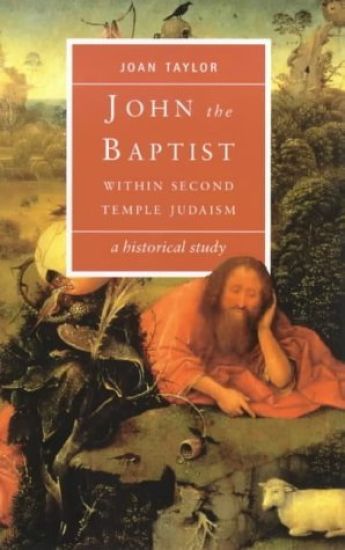
An historical portrait of one of the most fascinating figures of the Gospels: John the Baptist. Joan Taylor brings the world and work of this strange wandering ascetic to life, and seeks answers to some intriguing questions such as what was the origin of baptism as a symbol for repentance.
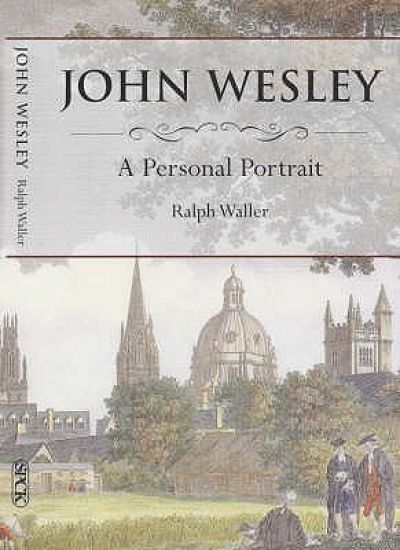
A major new biography and analysis of the life and work of John Wesley - his family, influences, contemporary context, friends and writings. Publication is scheduled to coincide with the celebrations to mark the 300th anniversary of John's birth, in May 2003. The writing will be popular, and will provide a good grounding for those coming new to the subject, and new information and fresh insights make it required reading for those already familiar with Wesley and his work.

John Henry Newman is recognized as one of the greatest Christian thinkers of the modern age. He was also a man of prayer and deep spirituality. A. N. Wilson's wide-ranging anthology of Newman's prayers, poems and meditations will appeal to all those who are fascinated by this inspirational man. The readings cover the general themes of faith, prayer, the contemplation of Christ, discipleship, the meaning of holiness, and the hope of heaven. In an engaging Introduction, Wilson brings fresh insight to Newman's life and thought. This carefully arranged anthology will provide comfort and sustenance to all those who cherish Newman's writings and to those who are keen to discover one of our best loved spiritual writers for the first time.

At a time when the world is thrown into financial crisis, this detailed study of John Wesley and his attitude to money would make a contribution to our understanding of Christian stewardship. His own life style, his concern for the poor, his constant need to raise money to support the emerging Methodist Societies, together with his attitude towards debt and the national lottery in the eighteenth century, all combine to make this an important study for the modern day.
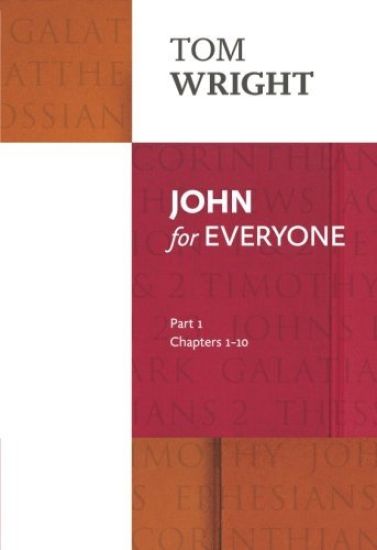
Making use of his true scholar's understanding, yet writing in an approachable and anecdotal style, Tom Wright manages to unravel the great complexity of this extraordinary gospel. He describes it as 'one of the great books in the literature of the world; and part of its greatness is the way it reveals its secrets not just to high-flown learning, but to those who come to it with humility and hope'. Wright's stimulating comments are combined with his own translation of the Bible text. Tom Wright has undertaken a tremendous task: to provide guides to all the books of the New Testament, and to furnish them with his own fresh translation of the entire text. Each short passage is followed by a highly readable discussion with background information. The series is suitable for personal or group use. The format makes it appropriate also for daily study.
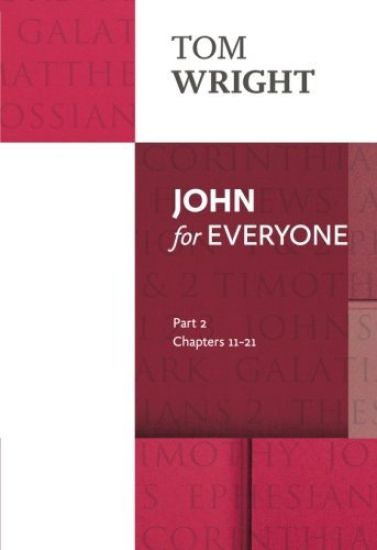
Making use of his true scholar's understanding, yet writing in an approachable and anecdotal style, Tom Wright manages to unravel the great complexity of this extraordinary gospel. He describes it as 'one of the great books in the literature of the world; and part of its greatness is the way it reveals its secrets not just to high-flown learning, but to those who come to it with humility and hope'. Wright's stimulating comments are combined with his own translation of the Bible text. Tom Wright has undertaken a tremendous task: to provide guides to all the books of the New Testament, and to furnish them with his own fresh translation of the entire text. Each short passage is followed by a highly readable discussion with background information. The series is suitable for personal or group use. The format makes it appropriate also for daily study.
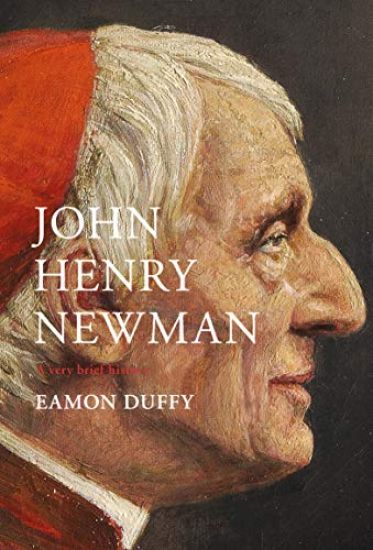
‘In another world it is otherwise, but here below to live is to change, and to be perfect is to have changed often.’ From An Essay on the Development of Christian Doctrine (1903) Canonized by Pope Francis in October 2019, Saint John Henry Newman (1801–90) was one of the most controversial and influential thinkers of his day. He is now recognized as one of the finest prose stylists of modern times, as well as a popular poet and hymn-writer. His spiritual autobiography, Apologia Pro Vita Sua, is a modern classic, and his many theological writings continue to be widely read and highly regarded by Christians of all traditions. As Eamon Duffy brilliantly demonstrates in this fresh assessment of Newman’s life and achievement, other theologians of his time are now largely of historical interest whereas Newman is still very much our contemporary. ‘This splendid book. . . expertly illuminates every aspect of Newman's life [and] work.’ Wall Street Journal