Kirjojen hintavertailu. Mukana 12 595 353 kirjaa ja 12 kauppaa.

Kirjahaku

Etsi kirjoja tekijän nimen, kirjan nimen tai ISBN:n perusteella.

1000 tulosta hakusanalla KATHLEEN NORRIS

Indigenous Land Management in West Africa

Indigenous Land Management in West Africa

Kathleen Baker

Oxford University Press
2000
sidottu
The success of rural development schemes in Africa, particularly those involving land, is heavily dependent on understanding the local ecology. Any farmer knows this, yet rarely has development project design catered adequately for the vicissitudes of the African environment. Although environmental unpredictability was recognized in the temperate zone by the mid-nineteenth century, the ecological theory which was subsequently developed and most widely accepted, was based on concepts of norms and equilibria. History has shown that the application of such ecological assumptions to African environments is wholly inappropriate. This book argues that many methods used by West African smallholder farmers and pastoralists are properly adapted to the region's unpredictable physical environment. Field examples from the semi-arid and humid zones demonstrate the nature of environmental variability, and the skill of indigenous farmers and pastoralists in exploiting this. It is thus argued that development planners should, where possible, model development schemes on the more successful, ecologically sound methods of indigenous land management.
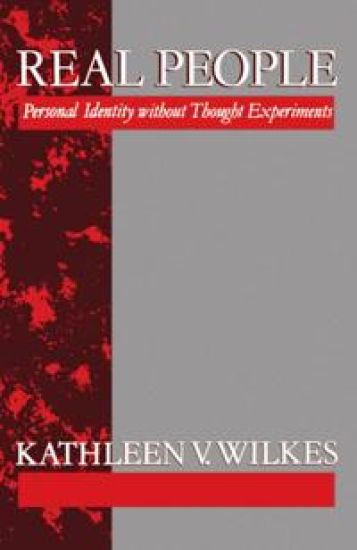
Real People

Real People

Kathleen V. Wilkes

Clarendon Press
1993
nidottu
This book explores the scope and limits of the concept of person–a vexed question in contemporary philosophy. The author begins by questioning the methodology of thought-experimentation, arguing that it engenders inconclusive and unconvincing results, and that truth is stranger than fiction. She then examines an assortment of real-life conditions, including infancy, insanity and dementia, dissociated states, and split brains. The popular faith in continuity of consciousness, and the unity of the person is subjected to sustained criticism. The author concludes with a look at different views of the person found in Homer, Aristotle, the post-Cartesians, and contemporary cognitive science.
Morgan Grenfell 1838-1988

Morgan Grenfell 1838-1988

Kathleen Burk

Clarendon Press
1989
sidottu
This is the arresting 150-year story of one of the oldest and most illustrious merchant banks and of the men who made it. Founded in 1838 by an American, George Peabody, Morgan Grenfell quickly became the most important American banking house in London, and by the turn of the century held an unrivalled position as part of the most powerful investment bank in the world. The book chronicles its role in financing the overseas purchases of Britain and her allies during the First World War, in taking the lead amongst the private London bankers in reconstructing Europe during the 1920s, and in pioneering the new field of corporate finance. In the 1980s Morgan Grenfell took off with a substantial rise in profits and an extraordinarily powerful Corporate Finance Department: an epilogue summarises recent events to the end of 1988 when it decided to exit from securities in London and to concentrate on developing its areas of traditional strength. Based on a wide range of original sources, this book is unmatched as a banking history: no other book combines the unrestricted access to the bank's archives afforded to the author with a narrative of events up to the 1980s.
Novels of the Eighteen-Forties

Novels of the Eighteen-Forties

Kathleen Tillotson

Oxford University Press
1983
nidottu
This book examines four novels and contemporary views about novels which can contribute to a fuller understanding of the great English novels of the 1840s. The novels chosen for this study are of the 1840s as well as for all time. English novels of the 1840s are particularly interesting because it was during this period that the novel was in the process of becoming the dominant form and it was during this same period that critics began to say what they continued to say more forcibly for the next forty years or so.
The Politics of Everyday Europe

The Politics of Everyday Europe

Kathleen R. McNamara

Oxford University Press
2015
sidottu
How do political authorities build support for themselves and their rule? Doing so is key to accruing power, but it can be a complicated affair. The European Union, as a novel political entity, faces a particularly difficult set of challenges. The Politics of Everyday Europe argues that the legitimation of EU authority rests in part on a transformation in the symbols and practices of everyday life in Europe. The Single Market and the Euro, European citizenship and the dismantling of borders within Europe, EU public architecture, arts and popular entertainment, and EU diplomacy and foreign policy are important not only for their material effects but for how they change peoples' day-to-day experiences and naturalize European governance. The modern nation-state has long used similar strategies to legitimize its political power. But the EU's cultural infrastructure is unique, as it navigates national identities with a particular banality , framing the EU as complementary to, rather than in competition with, the nation-states. These underlying social processes have supported the surprising political development of the EU, but they do so in a way that makes EU authority inherently fragile. As economic and political crises have stretched European social solidarity to the breaking point, this book offers a clear theoretical framework for understanding both the power of everyday culture, and its limits, in legitimating the EU
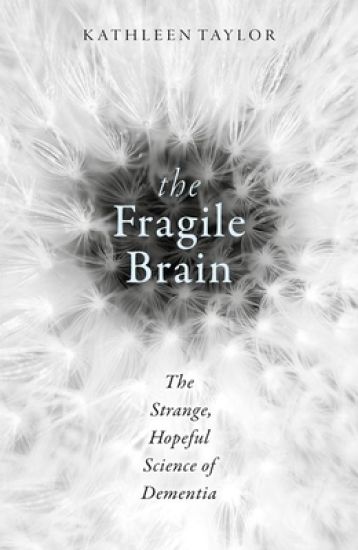
The Fragile Brain

The Fragile Brain

Kathleen Taylor

Oxford University Press
2016
sidottu
Neurodegenerative diseases, such as a stroke, Alzheimer's and dementia, are now tragically commonplace within the western world. Our brains are a strange and complex organ, and there is much to be discovered about what causes them to fail in such devastating ways. In this book Kathleen Taylor presents the ever-developing research into the cause and cure of these life-changing conditions, focusing on insights arising from the relatively new field of neuroimmunology - the increasing recognition of the important role of the immune system in the brain. Interweaving the latest scientific ideas on neurodegenerative diseases with accounts of the devastation which illnesses affecting the brain can cause to sufferers and to anyone who cares about them, The Fragile Brain is not only an important account of current research in this field, but a very personal study. As instances of dementia rise in our ageing populations, many harbour anxieties concerning the future.This book is about knowing the enemy.
The Politics of Everyday Europe

The Politics of Everyday Europe

Kathleen R. McNamara

Oxford University Press
2017
nidottu
How do political authorities build support for themselves and their rule? Doing so is key to accruing power, but it can be a complicated affair. The European Union, as a novel political entity, faces a particularly difficult set of challenges. The Politics of Everyday Europe argues that the legitimation of EU authority rests in part on a transformation in the symbols and practices of everyday life in Europe. The Single Market and the Euro, the legal category of European Citizen and policies promoting the free movement of people, EU public architecture, arts and popular entertainment, and EU diplomacy and foreign policy all generate symbols and practices that change peoples' day-to-day experiences naturalizing European governance.The modern nation-state has long used similar strategies of nationalism and 'imagined communities' to legitimize its political power. But the EU's cultural infrastructure is unique, as it navigates European national identities with a particularly banality, trying to make the EU seem complementary to, not in competition with, the nation-states. While this cultural legitimation has successfully underpinned the EU's surprising political development, Europe today is more often met with indifference by its citizens rather than affection. As economic and political crises have stretched European social solidarity to the breaking point, this book offers a clear theoretical framework for understanding how everyday culture matters fundamentally in the political life of the EU, and how the construction of meaning can be a potent power resource-albeit one open to contestation and subversion by the very citizens it calls into being.
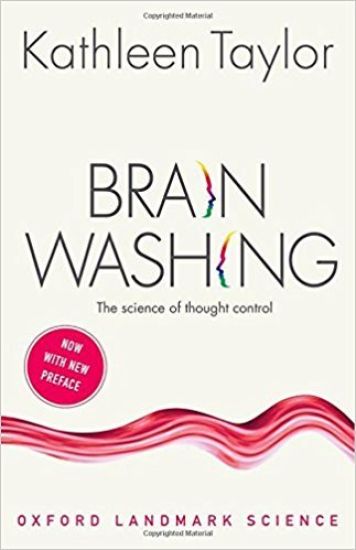
Brainwashing

Brainwashing

Kathleen Taylor

Oxford University Press
2016
nidottu
Throughout history, humans have attempted to influence and control the thoughts of others. Since the word 'brainwashing' was coined in the aftermath of the Korean War, it has become part of the popular culture and been exploited to create sensational headlines. It has also been the subject of learned discussion from many disciplines: including history, sociology, psychology, and psychotherapy. But until now, a crucial part of the debate has been missing: that of any serious reference to the science of the human brain. Descriptions of how opinions can be changed, whether by persuasion, deceit, or force, have been almost entirely psychological. In Brainwashing, Kathleen Taylor brought the worlds of neuroscience and social psychology together for the first time. In elegant and accessible prose, and with abundant use of anecdotes and case-studies, she examines the ethical problems involved in carrying out the required experiments on humans, the limitations of animal models, and the frightening implications of such research. She also explores the history of thought-control and shows how it persists all around us, from marketing and television, to politics and education. This edition includes a new preface from the author reflecting on the uses of brainwashing today, including by the Islamic State. Oxford Landmark Science books are 'must-read' classics of modern science writing which have crystallized big ideas, and shaped the way we think.
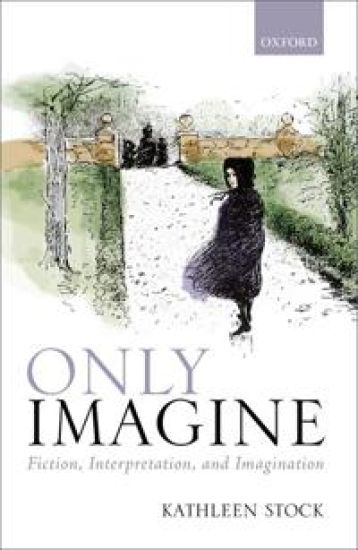
Only Imagine

Only Imagine

Kathleen Stock

Oxford University Press
2017
sidottu
Only Imagine offers a theory of fictional content or, as it is sometimes known, 'fictional truth'. The theory of fictional content Kathleen Stock argues for is known as 'extreme intentionalism'; the idea that the fictional content of a particular work is equivalent to exactly what the author of the work intended the reader to imagine. Historically, this sort of view has been highly unpopular. Literary theorists and philosophers alike have poured scorn upon it. The first half of this book attempts to argue that it should in fact be taken very seriously as an adequate account of fictional truth: better, in fact, than many of its more popular rivals. The second half explores various explanatory benefits of extreme intentionalism for other issues in the philosophy of fiction and imagination. Namely, can fiction give us reliable knowledge? Why do we 'resist' imagining certain fictions? What, in fact, is a fiction? And, how should the imagination be characterised?
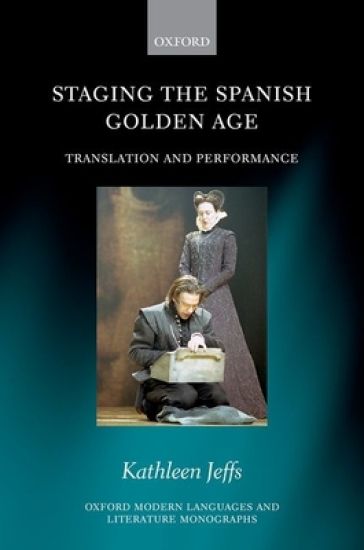
Staging the Spanish Golden Age

Staging the Spanish Golden Age

Kathleen Jeffs

Oxford University Press
2018
sidottu
In this volume, Kathleen Jeffs draws on first-hand experience of the Royal Shakespeare Company's rehearsal room for the 2004-05 Spanish Golden Age season to put forth a collaborative model for translating, rehearsing, and performing Spanish Golden Age drama. Building on the RSC season, the volume offers methodologies for translation and communication that can feed the creative processes of actors and directors, while maintaining an ethos of fidelity with regards to the original texts. It argues that collaboration between academics and theatre practitioners was instrumental in the success of the season and that the work carried out has repercussions for critical debate of Comedia. The volume posits a model for future productions of the Comedia in English, one that recognizes the need for the languages of the scholar and the theatre artist to be made mutually intelligible by the use of collaborative strategies, mediated by a consultant or dramaturg proficient in both tongues. This model applies more generally to theatrical collaborations involving a translator, writer and director, and will be useful for translation and performance processes in any language.
Dementia

Dementia

Kathleen Taylor

Oxford University Press
2020
nidottu
As more of us live longer, the fear of an old age devastated by brain diseases like dementia is growing. Many people are already facing the challenges posed by these progressive and terminal conditions, whether in person or because they are caring for loved ones. Dementia is now the fifth most common cause of death across the world. It is small wonder that understanding, preventing, and finally curing these illnesses is now a global priority. Recent advances in brain research have given scientists a better chance than ever of finding ways to help patients, carers, and clinicians dealing with dementia. Yet there is still no effective treatment. Why has progress been so slow? And what can we all do to reduce our chances of getting the disease? In this Very Short Introduction Kathleen Taylor offers a guide to the science of dementia and brain ageing. Never forgetting the human costs of brain disorders - movingly illustrated throughout the book - she also discusses their costs to society. Clearly explaining the research, she sets out the main ideas which have driven dementia science, and the new contenders hoping to make a breakthrough. Taylor also looks at risk factors, and how to lower our chances of succumbing to dementia. Assessing current and potential treatments, including both drugs and other approaches, she explains, clearly and gently, what help is available for someone who is diagnosed with dementia, and how to boost the chances of living well with the condition. ABOUT THE SERIES: The Very Short Introductions series from Oxford University Press contains hundreds of titles in almost every subject area. These pocket-sized books are the perfect way to get ahead in a new subject quickly. Our expert authors combine facts, analysis, perspective, new ideas, and enthusiasm to make interesting and challenging topics highly readable.
Only Imagine

Only Imagine

Kathleen Stock

Oxford University Press
2019
nidottu
Only Imagine offers a theory of fictional content or, as it is sometimes known, 'fictional truth'. The theory of fictional content Kathleen Stock argues for is known as 'extreme intentionalism'; the idea that the fictional content of a particular work is equivalent to exactly what the author of the work intended the reader to imagine. Historically, this sort of view has been highly unpopular. Literary theorists and philosophers alike have poured scorn upon it. The first half of this book attempts to argue that it should in fact be taken very seriously as an adequate account of fictional truth: better, in fact, than many of its more popular rivals. The second half explores various explanatory benefits of extreme intentionalism for other issues in the philosophy of fiction and imagination. Namely, can fiction give us reliable knowledge? Why do we 'resist' imagining certain fictions? What, in fact, is a fiction? And, how should the imagination be characterised?
Imagining Ithaca

Imagining Ithaca

Kathleen Riley

Oxford University Press
2021
sidottu
'Though home is a name, a word, it is a strong one', said Charles Dickens, 'stronger than magician ever spoke, or spirit answered to, in strongest conjuration.' The ancient Greek word nostos, meaning homecoming or return, has a commensurate power and mystique. Irish philosopher-poet John Moriarty described it as 'a teeming word... a haunted word... a word to conjure with'. The most celebrated and culturally enduring nostos is that of Homer's Odysseus who spent ten years returning home after the fall of Troy. His journey back involved many obstacles, temptations, and fantastical adventures and even a katabasis, a rare descent by the living into the realm of the dead. All the while he was sustained and propelled by his memories of Ithaca ('His native home deep imag'd in his soul', as Pope's translation has it). From Virgil's Aeneid to James Joyce's Ulysses, from MGM's The Wizard of Oz to the Coen Brothers' O Brother, Where Art Thou?, and from Derek Walcott's Omeros to Margaret Atwood's Penelopiad, the Odyssean paradigm of nostos and nostalgia has been continually summoned and reimagined by writers and filmmakers. At the same time, 'Ithaca' has proved to be an evocative and versatile abstraction. It is as much about possibility as it is about the past; it is a vision of Arcadia or a haunting, an object of longing, a repository of memory, 'a sleep and a forgetting'. In essence it is about seeking what is absent. Imagining Ithaca explores the idea of nostos, and its attendant pain (algos), in an excitingly eclectic range of sources: from Rebecca West's The Return of the Soldier and Remarque's All Quiet on the Western Front, through the exilic memoirs of Nabokov and the time-travelling fantasies of Woody Allen, to Seamus Heaney's Virgilian descent into the London Underground and Michael Portillo's Telemachan railway journey to Salamanca. This kaleidoscopic exploration spans the end of the Great War, when the world at large was experiencing the complexities of homecoming, to the era of Brexit and COVID-19 which has put the notion of nostalgia firmly under the microscope.
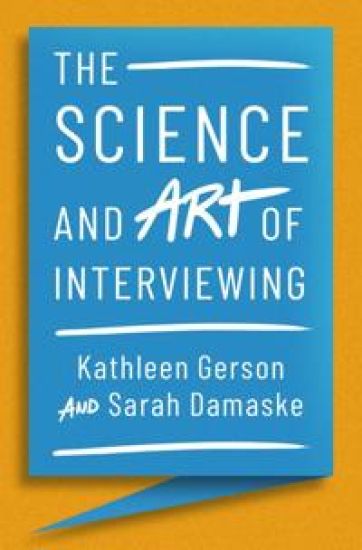
The Science and Art of Interviewing

The Science and Art of Interviewing

Kathleen Gerson; Sarah Damaske

Oxford University Press Inc
2020
sidottu
Qualitative interviewing is among the most widely used methods in the social sciences, but it is arguably the least understood. In The Science and Art of Interviewing, Kathleen Gerson and Sarah Damaske offer clear, theoretically informed and empirically rich strategies for conducting interview studies. They present both a rationale and guide to the science-and art-of in-depth interviewing to take readers through all the steps in the research process, from the initial stage of formulating a question to the final one of presenting the results. Gerson and Damaske show readers how to develop a research design for interviewing, decide on and find an appropriate sample, construct a questionnaire, conduct probing interviews, and analyze the data they collect. At each stage, they also provide practical tips about how to address the ever-present, but rarely discussed challenges that qualitative researchers routinely encounter, particularly emphasizing the relationship between conducting well-crafted research and building powerful social theories. With an engaging, accessible style, The Science and Art of Interviewing targets a wide range of audiences, from upper-level undergraduates and graduate methods courses to students embarking on their dissertations to seasoned researchers at all stages of their careers.
The Science and Art of Interviewing

The Science and Art of Interviewing

Kathleen Gerson; Sarah Damaske

Oxford University Press Inc
2020
nidottu
Qualitative interviewing is among the most widely used methods in the social sciences, but it is arguably the least understood. In The Science and Art of Interviewing, Kathleen Gerson and Sarah Damaske offer clear, theoretically informed and empirically rich strategies for conducting interview studies. They present both a rationale and guide to the science-and art-of in-depth interviewing to take readers through all the steps in the research process, from the initial stage of formulating a question to the final one of presenting the results. Gerson and Damaske show readers how to develop a research design for interviewing, decide on and find an appropriate sample, construct a questionnaire, conduct probing interviews, and analyze the data they collect. At each stage, they also provide practical tips about how to address the ever-present, but rarely discussed challenges that qualitative researchers routinely encounter, particularly emphasizing the relationship between conducting well-crafted research and building powerful social theories. With an engaging, accessible style, The Science and Art of Interviewing targets a wide range of audiences, from upper-level undergraduates and graduate methods courses to students embarking on their dissertations to seasoned researchers at all stages of their careers.
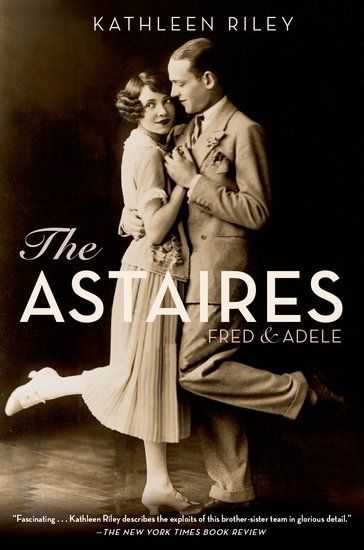
The Astaires

The Astaires

Kathleen Riley

Oxford University Press Inc
2014
nidottu
Before "Fred and Ginger," there was "Fred and Adele," a show-business partnership and cultural sensation like no other. In our celebrity-saturated era, it's hard to comprehend what a genuine phenomenon these two siblings from Omaha were. At the height of their success in the mid-1920s, the Astaires seemed to define the Jazz Age. They were Gershwin's music in motion, a fascinating pair who wove spellbinding rhythms in song and dance. In this book, the first comprehensive study of their theatrical career together, Kathleen Riley traces the Astaires' rise to fame from humble midwestern origins and early days as child performers on small-time vaudeville stages (where Fred, fatefully, first donned top hat and tails) to their 1917 debut on Broadway to star billings on both sides of the Atlantic. They became ambassadors of an art form they helped to revolutionize, adored by audiences, feted by royalty, and courted socially by elites everywhere they went. From the start, Adele was the more natural performer, spontaneous, funny, and self-possessed, while Fred had to hone his trademark timing and elegance through endless hours of rehearsal, a disciplined regimen that Adele loathed. Ultimately, Fred's dancing expertise surpassed his sister's, and their paths diverged: Adele married into British aristocracy, and Fred headed for Hollywood. The Astaires examines in depth the extraordinary story of this great brother-sister team, with full attention to its historical and theatrical context. It is not merely an account of the first part of Fred's long and illustrious career but one with its own significance. Born at the close of the 1800s, Fred and Adele grew up together with the new century, and when they reached superstardom during the interwar years, they shone as an affirmation of life and hope amid a prevailing crisis of faith and identity.
Low Carbon Energy Transitions

Low Carbon Energy Transitions

Kathleen Araújo

Oxford University Press Inc
2018
sidottu
The world is at a pivotal crossroad in energy choices. There is a strong sense that our use of energy must be more sustainable. Moreover, many also broadly agree that a way must be found to rely increasingly on lower carbon energy sources. However, no single or clear solution exists on the means to carry out such a shift at either a national or international level. Traditional energy planning (when done) has revolved around limited cost projections that often fail to take longer term evidence and interactions of a wider set of factors into account. The good news is that evidence does exist on such change in case studies of different nations shifting toward low-carbon energy approaches. In fact, such shifts can occur quite quickly at times, alongside industrial and societal advance, innovation, and policy learning. These types of insights will be important for informing energy debates and decision-making going forward. Low Carbon Energy Transitions: Turning Points in National Policy and Innovation takes an in-depth look at four energy transitions that have occurred since the global oil crisis of 1973: Brazilian biofuels, Danish wind power, French nuclear power, and Icelandic geothermal energy. With these cases, Dr. Araújo argues that significant nationwide shifts to low-carbon energy can occur in under fifteen years, and that technological complexity is not necessarily a major impediment to such shifts. Dr. Araújo draws on more than five years of research, and interviews with over 120 different scientists, government workers, academics, and members of civil society in completing this study. Low Carbon Energy Transitions is written for professionals in energy, the environment and policy as well as for students and citizens who are interested in critical decisions about energy sustainability. Technology briefings are provided for each of the major technologies in this book, so that scientific and non-scientific readers can engage in more even discussions about the choices that are involved.
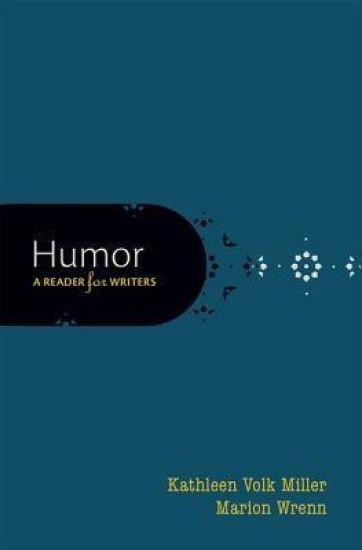
Humor: A Reader for Writers

Humor: A Reader for Writers

Kathleen Volk Miller; Marion Wrenn

Oxford University Press
2014
nidottu
Read. Write. Oxford. From Jerry Seinfeld's legendary standup to Kristen Wiig's sidesplitting impersonations, Humor: A Reader for Writers explores the key patterns and features within numerous comedic sources in order to show how jokes work. This survey looks at comedy in a variety of genres including popular media, academic essays, personal narratives, fiction, and poetry. Developed for the freshman composition course, Humor: A Reader for Writers includes an interdisciplinary mix of public, academic, and cultural reading selections, providing students with the rhetorical knowledge and compositional skills required to participate effectively in discussions about humor. Humor: A Reader for Writers is part of a series of brief single-topic readers from Oxford University Press designed for today's college writing courses. Each reader in this series approaches a topic of contemporary conversation from multiple perspectives.
Inside the Politics of Self-Determination

Inside the Politics of Self-Determination

Kathleen Gallagher Cunningham

Oxford University Press Inc
2014
sidottu
There are currently over 100 stateless nations pressing for greater self-determination around the globe. The vast majority of these groups will never achieve independence. Many groups will receive some accommodation over self-determination, many will engage in civil war over self-determination, and in many cases, internecine violence will plague these groups. This book examines the dynamic internal politics of states and self-determination groups. The internal structure and political dynamics of states and self-determination groups significantly affect information and credibility problems faced by these actors, as well as the incentives and opportunities for states to pursue partial accommodation of these groups. Using new data on the internal structure of all self-determination groups and their states and on all accommodation in self-determination disputes, this book shows that states with some, but not too many, internal divisions are best able to accommodate self-determination groups and avoid civil war. When groups are more internally divided, they are both much more likely to be accommodated and to get into civil war with the state, and also more likely to have fighting within the group. Detailed comparison of three self-determination disputes in the conflict-torn region of northeast India reveals that internal divisions in states and groups affect when these groups get the accommodation they seek, which groups violently rebel, and whether actors target violence against their own co-ethnics. The argument and evidence in this book reveal the dynamic effect that internal divisions within SD groups and states have on their ability to bargain over self-determination. Kathleen Gallagher Cunningham demonstrates that understanding the relations between states and SD groups requires looking at the politics inside these actors.
Inside the Politics of Self-Determination

Inside the Politics of Self-Determination

Kathleen Gallagher Cunningham

Oxford University Press Inc
2014
nidottu
There are currently over 100 stateless nations pressing for greater self-determination around the globe. The vast majority of these groups will never achieve independence. Many groups will receive some accommodation over self-determination, many will engage in civil war over self-determination, and in many cases, internecine violence will plague these groups. This book examines the dynamic internal politics of states and self-determination groups. The internal structure and political dynamics of states and self-determination groups significantly affect information and credibility problems faced by these actors, as well as the incentives and opportunities for states to pursue partial accommodation of these groups. Using new data on the internal structure of all self-determination groups and their states and on all accommodation in self-determination disputes, this book shows that states with some, but not too many, internal divisions are best able to accommodate self-determination groups and avoid civil war. When groups are more internally divided, they are both much more likely to be accommodated and to get into civil war with the state, and also more likely to have fighting within the group. Detailed comparison of three self-determination disputes in the conflict-torn region of northeast India reveals that internal divisions in states and groups affect when these groups get the accommodation they seek, which groups violently rebel, and whether actors target violence against their own co-ethnics. The argument and evidence in this book reveal the dynamic effect that internal divisions within SD groups and states have on their ability to bargain over self-determination. Kathleen Gallagher Cunningham demonstrates that understanding the relations between states and SD groups requires looking at the politics inside these actors.