
Kirjahaku
Etsi kirjoja tekijän nimen, kirjan nimen tai ISBN:n perusteella.
1000 tulosta hakusanalla Luke Pitcher

Ein f nfzehnj hriger Junge namens Luke lebt mit seiner Familie in Bochum. Er f hrt ein schwieriges Leben, da er oft wegen seiner Hautfarbe und seiner Herkunft ge rgert wird Als er eines Tages die Fassung verliert, begeht er einen folgenschweren Fehler, der ihn immer begleiten wird

Ein f nfzehnj hriger Junge namens Luke lebt mit seiner Familie in Bochum. Er f hrt ein schwieriges Leben, da er oft wegen seiner Hautfarbe und seiner Herkunft ge rgert wird Als er eines Tages die Fassung verliert, begeht er einen folgenschweren Fehler, der ihn immer begleiten wird
Luke ist kein gew hnlicher Junge. In seinen Tr umen ertr umt er nicht nur eine fantastische Welt, sondern auch eine treue Gef hrtin: Prinzessin Samira. Gemeinsam erleben sie Abenteuer, die ihr Leben f r immer ver ndern. Als Samira in Gefahr ger t, muss Luke lernen, auf seine Freunde zu z hlen und seine eigenen ngste zu berwinden. Eine bewegende Geschichte ber Freundschaft, Mut und die Kraft der Tr ume.
Luke's gentile motif. The defense of Paul's mission to the gentiles
Simba Musvamhiri
Grin Publishing
2014
pokkari




Reproduction of the original: Luke Barnicott and Other Stories by William Howitt

Nach ihrem turbulenten Abenteuer in der Gallenblase m ssen sich Luke, Bene, Tamtam, Brady und Tachy bald schon einer neuen Herausforderung stellen. Dieses Mal werden alle von schlimmen Alptr umen heimgesucht und auch in der Schule ist die Pathologie komplett au er Kontrolle. Doch so schnell lassen sich die Freunde nicht unterkriegen. Gemeinsam stellen sie sich den Gefahren der Anatomie-Magie.


Als w re das Magiechaos nicht schon genug Arbeit, will ein Lehrer jetzt auch noch ein Oster-Theaterst ck auff hren. Das hei t Luke und seine Freunde m ssen proben, w hrend sie gleichzeitig eine besonders listige Pathologie jagen. Doch diese ist anders, als alle zuvor: Sie kann reden Und sie ist extrem nervig. Um sie wieder loszuwerden, m ssen sich die Abenteurer tief in das Reich der Knochen wagen und niemand kann sagen, was sie dort noch alles erwartet.



While travelling overland to India from Europe in the fall of 1971, Luke Powell ran into the war between India and Pakistan, and he spent the following winter in neighbouring Afghanistan. Powell was stunned by the beauty of the country, the state of preservation of the culture, and by the Afghans’ ability to be totally self-sustaining. He returned nearly every year until 1978, when he left the country three days before a Communist coup. Powell’s ability to transform raw 35 mm film into refined printed images grew during 15 years when he printed his work with the legendary Dye Transfer Process. The Afghan Folio exhibition travelled to over 120 museums and galleries in North America and Europe, during the years when the Russians were occupying Kabul. In early 2000 the Taliban government invited Luke Powell to come back to Afghanistan, and later that year the Northern Alliance allowed him to travel alone in areas under their control. Through 2003 Powell took photographs for the United Nations Demining Program for Afghanistan and other UN agencies. In Afghan Gold Luke Powell has tried to separate art from journalism and show only the beautiful, traditional side of Afghanistan. In the text, published in a separate volume, Powell acts as a spokesman for an essentially peace-loving people who have been at war for the last three decades, placing the images in an unusually broad historical context.


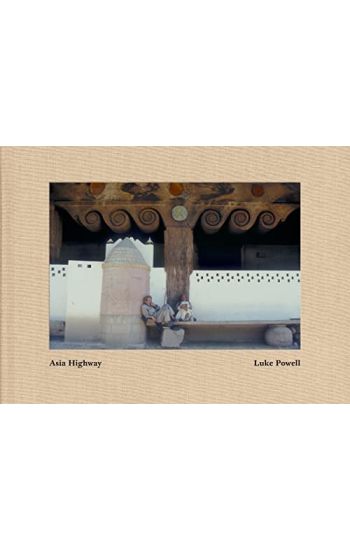
In Asia Highways, American photographer Luke Powell (born 1946) undertakes a photographic examination of Iran and particularly Pakistan, acknowledging the destruction these cultures have undergone while emphasizing the beautiful and good that Powell discovered on his travels.The photos in the first chapter were taken in Iran in 1974 and include the historical bazaar of Tabriz (a crucial center on the Silk Road and since 2010 a UNESCO World Heritage Site), while the succeeding chapters depict northern Pakistan. The story of the book's origins orbits around various political events: Powell photographed a series on Pakistan's Swat district after he had left Afghanistan just ahead of the Taraki coup in 1978; and in 2000 the Taliban invited him to return while restricting his subsequent movements, prompting Powell to travel to Pakistan and work in Chitral and Gilgit. Other chapters explore Peshawar and the Kalash people in Chitral.