Kirjojen hintavertailu. Mukana 11 717 486 kirjaa ja 12 kauppaa.

Kirjahaku

Etsi kirjoja tekijän nimen, kirjan nimen tai ISBN:n perusteella.

1000 tulosta hakusanalla Maral Atmaca

Moral Principles and Political Obligations

Moral Principles and Political Obligations

A. John Simmons

Princeton University Press
1981
pokkari
Outlining the major competing theories in the history of political and moral philosophy--from Locke and Hume through Hart, Rawls, and Nozick--John Simmons attempts to understand and solve the ancient problem of political obligation. Under what conditions and for what reasons (if any), he asks, are we morally bound to obey the law and support the political institutions of our countries?
Moral Tradition and Individuality

Moral Tradition and Individuality

John Kekes

Princeton University Press
1991
pokkari
In this study, John Kekes develops the view that good lives depend on maintaining a balance between one's moral tradition and individuality. Our moral tradition provides the forms of good lives and the permissible ways of trying to achieve them. But to do so, the author argues, we must grow in self-knowledge and self-control to make our characters suitable for realizing our aspirations. In addressing general readers as well as scholars, Kekes makes these philosophical views concrete by drawing on a rich variety of literary sources, including, among others, the works of Sophocles, Henry James, Tolstoy, and Edith Wharton. The first half of the work concentrates on social morality, establishing the conditions all good lives must meet. The second discusses personal morality, the sphere of individuality. Its development enables us to discover what is important to us and how we can fit our personal aspirations into the forms of life our moral tradition provides. Kekes's argument derives its inspiration from Aristotle's objectivism, Hume's emphasis on custom and feeling, and Mill's concentration on individuals and their experiments in living. This book is a nontechnical yet closely reasoned attempt to provide a contemporary answer to the age-old question of how to live well.
Moral Vision in International Politics

Moral Vision in International Politics

David Halloran Lumsdaine

Princeton University Press
1993
pokkari
Can moral vision influence the dynamics of the world system? This inquiry into the evolving foreign aid policies of eighteen developed democracies challenges conventional international relations theory and offers a broad framework of testable hypotheses about the ways ethical commitments can help structure global politics. For forty years development assistance has been the largest and steadiest net financial flow to the Third World, far ex- ceeding investment by multinational corporations. Yet fifty years ago aid was unheard of. Investigating this sudden and widespread innovation in the postwar political economy, David Lumsdaine marshals a wealth of historical and statistical evidence to show that aid was based less on donor economic and political interests than on humanitarian convictions and the belief that peace and prosperity could be sustained only within a just international order. Lumsdaine finds the developed countries adhered to rules that, increasingly, favored the neediest aid recipients and reduced their own leverage. Furthermore, the donors most concerned about domestic poverty also gave more foreign aid: the U.S. aid effort was weaker than that of other donors. Many lines of evidence--how aid changed over time, which donors contributed heavily, where the money was spent, who supported aid efforts--converge to show how humanitarian concerns shaped aid. Seeking to bridge the gap between normative theory and empirical analysis, Lumsdaine's broad comparative study suggests that renewed moral vision is a prerequisite to devising workable institutions for a post-cold war world.
Moral Disquiet and Human Life

Moral Disquiet and Human Life

Monique Canto-Sperber

Princeton University Press
2008
sidottu
Attempting to steer moral philosophy away from abstract theorizing, Moral Disquiet and Human Life argues that moral philosophy should be a practical, rational, and argumentative engagement with reality, and that moral reflection should have direct effects on our lives and the world in which we live. Illustrating her discussion with vivid examples from literature, music, drama, and current events, the noted French philosopher Monique Canto-Sperber resumes the most ancient pursuit of philosophy: the examination of human life itself. What did Socrates mean when he said that the unexamined life is not worth living? How can reflecting on one's existence incorporate human singularity, the contingency of events, the certainty of death, the presence of the past, or the irreversibility of time? Carefully analyzing and proposing answers to such questions, Moral Disquiet and Human Life eloquently calls for a redefinition of the task of moral philosophy and of its limits.
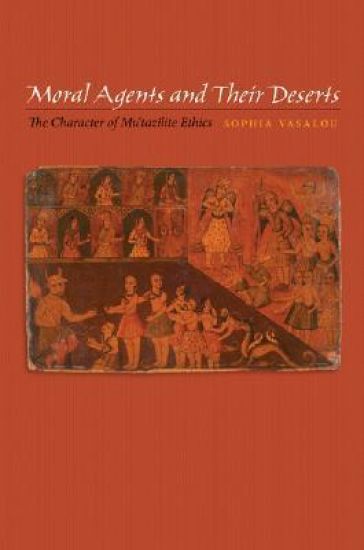
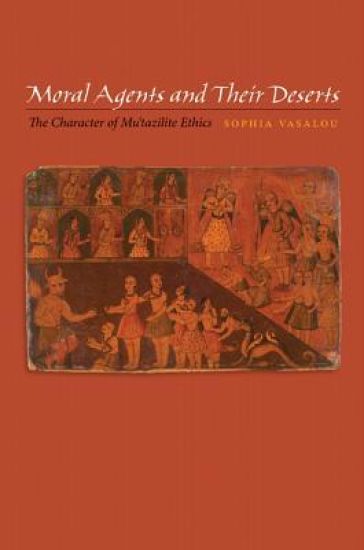
Moral Agents and Their Deserts

Moral Agents and Their Deserts

Sophia Vasalou

Princeton University Press
2008
sidottu
Must good deeds be rewarded and wrongdoers punished? Would God be unjust if He failed to punish and reward? And what is it about good or evil actions and moral identity that might generate such necessities? These were some of the vital religious and philosophical questions that eighth- and ninth-century Mu'tazilite theologians and their sophisticated successors attempted to answer, giving rise to a distinctive ethical position and one of the most prominent and controversial intellectual trends in medieval Islam. The Mu'tazilites developed a view of ethics whose distinguishing features were its austere moral objectivism and the crucial role it assigned to reason in the knowledge of moral truths. Central to this ethical vision was the notion of moral desert, and of the good and evil consequences--reward or punishment--deserved through a person's acts. Moral Agents and Their Deserts is the first book-length study of this central theme in Mu'tazilite ethics, and an attempt to grapple with the philosophical questions it raises. At the same time, it is a bid to question the ways in which modern readers, coming to medieval Islamic thought with a philosophical interest, seek to read and converse with Mu'tazilite theology. Moral Agents and Their Deserts tracks the challenges and rewards involved in the pursuit of the right conversation at the seams between modern and medieval concerns.
Moral Markets

Moral Markets

Michael C. Jensen

Princeton University Press
2008
pokkari
Like nature itself, modern economic life is driven by relentless competition and unbridled selfishness. Or is it? Drawing on converging evidence from neuroscience, social science, biology, law, and philosophy, Moral Markets makes the case that modern market exchange works only because most people, most of the time, act virtuously. Competition and greed are certainly part of economics, but Moral Markets shows how the rules of market exchange have evolved to promote moral behavior and how exchange itself may make us more virtuous. Examining the biological basis of economic morality, tracing the connections between morality and markets, and exploring the profound implications of both, Moral Markets provides a surprising and fundamentally new view of economics--one that also reconnects the field to Adam Smith's position that morality has a biological basis. Moral Markets, the result of an extensive collaboration between leading social and natural scientists, includes contributions by neuroeconomist Paul Zak; economists Robert H. Frank, Herbert Gintis, Vernon Smith (winner of the 2002 Nobel Prize in economics), and Bart Wilson; law professors Oliver Goodenough, Erin O'Hara, and Lynn Stout; philosophers William Casebeer and Robert Solomon; primatologists Sarah Brosnan and Frans de Waal; biologists Carl Bergstrom, Ben Kerr, and Peter Richerson; anthropologists Robert Boyd and Michael Lachmann; political scientists Elinor Ostrom and David Schwab; management professor Rakesh Khurana; computational science and informatics doctoral candidate Erik Kimbrough; and business writer Charles Handy.
Moral Gray Zones

Moral Gray Zones

Michel Anteby

PRINCETON UNIVERSITY PRESS
2008
sidottu
Anyone who has been employed by an organization knows not every official workplace regulation must be followed. When management consistently overlooks such breaches, spaces emerge in which both workers and supervisors engage in officially prohibited, yet tolerated practices--gray zones. When discovered, these transgressions often provoke disapproval; when company materials are diverted in the process, these breaches are quickly labeled theft. Yet, why do gray zones persist and why are they unlikely to disappear? In Moral Gray Zones, Michel Anteby shows how these spaces function as regulating mechanisms within workplaces, fashioning workers' identity and self-esteem while allowing management to maintain control. The book provides a unique window into gray zones through its in-depth look at the manufacture and exchange of illegal goods called homers, tolerated in a French aeronautic plant. Homers such as toys for kids, cutlery for the kitchen, or lamps for homes, are made on company time with company materials for a worker's own purpose and use. Anteby relies on observations at retirees' homes, archival data, interviews, and surveys to understand how plant workers and managers make sense of this tacit practice. He argues that when patrolled, gray zones like the production of homers offer workplaces balanced opportunities for supervision as well as expression. Cautioning against the hasty judgment that gray zone practices are simply wrong, Moral Gray Zones contributes to a deeper understanding of the culture, group dynamics, and deviance found in organizations.
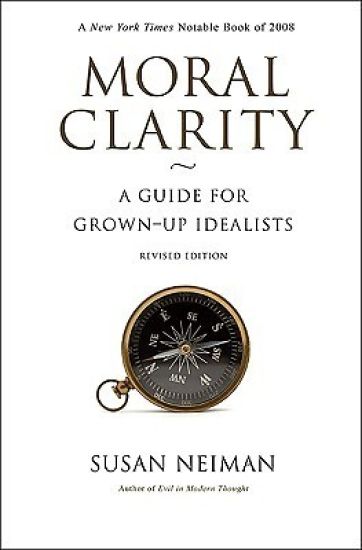
Moral Clarity

Moral Clarity

Susan Neiman

Princeton University Press
2009
pokkari
For years, moral language has been the province of the Right, as the Left has consoled itself with rudderless pragmatism. In this profound and powerful book, Susan Neiman reclaims the vocabulary of morality--good and evil, heroism and nobility--as a lingua franca for the twenty-first century. In constructing a framework for taking responsible action on today's urgent questions, Neiman reaches back to the eighteenth century, retrieving a series of values--happiness, reason, reverence, and hope--held high by Enlightenment thinkers. In this thoroughly updated edition, Neiman reflects on how the moral language of the 2008 presidential campaign has opened up new political and cultural possibilities in America and beyond.
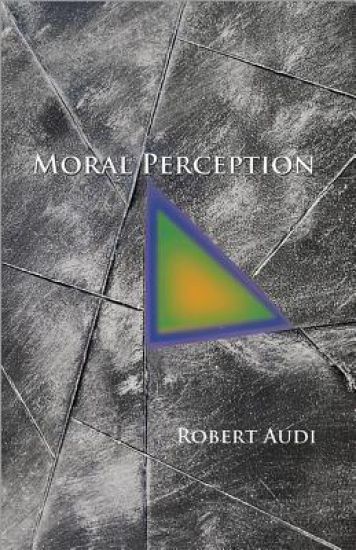
Moral Perception

Moral Perception

Robert Audi

PRINCETON UNIVERSITY PRESS
2013
sidottu
We can see a theft, hear a lie, and feel a stabbing. These are morally important perceptions. But are they also moral perceptions--distinctively moral responses? In this book, Robert Audi develops an original account of moral perceptions, shows how they figure in human experience, and argues that they provide moral knowledge. He offers a theory of perception as an informative representational relation to objects and events. He describes the experiential elements in perception, illustrates moral perception in relation to everyday observations, and explains how moral perception justifies moral judgments and contributes to objectivity in ethics. Moral perception does not occur in isolation. Intuition and emotion may facilitate it, influence it, and be elicited by it. Audi explores the nature and variety of intuitions and their relation to both moral perception and emotion, providing the broadest and most refined statement to date of his widely discussed intuitionist view in ethics. He also distinguishes several kinds of moral disagreement and assesses the challenge it poses for ethical objectivism. Philosophically argued but interdisciplinary in scope and interest, Moral Perception advances our understanding of central problems in ethics, moral psychology, epistemology, and the theory of the emotions.
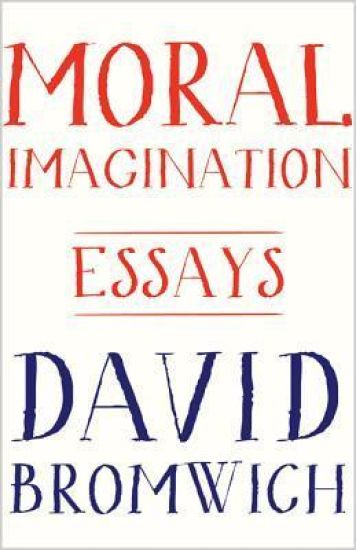
Moral Imagination

Moral Imagination

David Bromwich

Princeton University Press
2014
sidottu
Spanning many historical and literary contexts, Moral Imagination brings together a dozen recent essays by one of America's premier cultural critics. David Bromwich explores the importance of imagination and sympathy to suggest how these faculties may illuminate the motives of human action and the reality of justice. These wide-ranging essays address thinkers and topics from Gandhi and Martin Luther King on nonviolent resistance, to the dangers of identity politics, to the psychology of the heroes of classic American literature. Bromwich demonstrates that moral imagination allows us to judge the right and wrong of actions apart from any benefit to ourselves, and he argues that this ability is an innate individual strength, rather than a socially conditioned habit. Political topics addressed here include Edmund Burke and Richard Price's efforts to define patriotism in the first year of the French Revolution, Abraham Lincoln's principled work of persuasion against slavery in the 1850s, the erosion of privacy in America under the influence of social media, and the use of euphemism to shade and anesthetize reactions to the global war on terror. Throughout, Bromwich considers the relationship between language and power, and the insights language may offer into the corruptions of power. Moral Imagination captures the singular voice of one of the most forceful thinkers working in America today.
Moral Disquiet and Human Life

Moral Disquiet and Human Life

Monique Canto-Sperber

Princeton University Press
2014
pokkari
Attempting to steer moral philosophy away from abstract theorizing, Moral Disquiet and Human Life argues that moral philosophy should be a practical, rational, and argumentative engagement with reality, and that moral reflection should have direct effects on our lives and the world in which we live. Illustrating her discussion with vivid examples from literature, music, drama, and current events, the noted French philosopher Monique Canto-Sperber resumes the most ancient pursuit of philosophy: the examination of human life itself. What did Socrates mean when he said that the unexamined life is not worth living? How can reflecting on one's existence incorporate human singularity, the contingency of events, the certainty of death, the presence of the past, or the irreversibility of time? Carefully analyzing and proposing answers to such questions, Moral Disquiet and Human Life eloquently calls for a redefinition of the task of moral philosophy and of its limits.
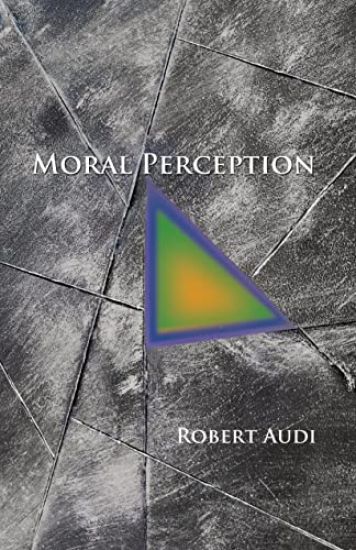
Moral Perception

Moral Perception

Robert Audi

Princeton University Press
2015
pokkari
We can see a theft, hear a lie, and feel a stabbing. These are morally important perceptions. But are they also moral perceptions--distinctively moral responses? In this book, Robert Audi develops an original account of moral perceptions, shows how they figure in human experience, and argues that they provide moral knowledge. He offers a theory of perception as an informative representational relation to objects and events. He describes the experiential elements in perception, illustrates moral perception in relation to everyday observations, and explains how moral perception justifies moral judgments and contributes to objectivity in ethics. Moral perception does not occur in isolation. Intuition and emotion may facilitate it, influence it, and be elicited by it. Audi explores the nature and variety of intuitions and their relation to both moral perception and emotion, providing the broadest and most refined statement to date of his widely discussed intuitionist view in ethics. He also distinguishes several kinds of moral disagreement and assesses the challenge it poses for ethical objectivism. Philosophically argued but interdisciplinary in scope and interest, Moral Perception advances our understanding of central problems in ethics, moral psychology, epistemology, and the theory of the emotions.
Moral Agents and Their Deserts

Moral Agents and Their Deserts

Sophia Vasalou

Princeton University Press
2016
pokkari
Must good deeds be rewarded and wrongdoers punished? Would God be unjust if He failed to punish and reward? And what is it about good or evil actions and moral identity that might generate such necessities? These were some of the vital religious and philosophical questions that eighth- and ninth-century Mu'tazilite theologians and their sophisticated successors attempted to answer, giving rise to a distinctive ethical position and one of the most prominent and controversial intellectual trends in medieval Islam. The Mu'tazilites developed a view of ethics whose distinguishing features were its austere moral objectivism and the crucial role it assigned to reason in the knowledge of moral truths. Central to this ethical vision was the notion of moral desert, and of the good and evil consequences--reward or punishment--deserved through a person's acts. Moral Agents and Their Deserts is the first book-length study of this central theme in Mu'tazilite ethics, and an attempt to grapple with the philosophical questions it raises. At the same time, it is a bid to question the ways in which modern readers, coming to medieval Islamic thought with a philosophical interest, seek to read and converse with Mu'tazilite theology. Moral Agents and Their Deserts tracks the challenges and rewards involved in the pursuit of the right conversation at the seams between modern and medieval concerns.
Moral Imagination

Moral Imagination

David Bromwich

Princeton University Press
2016
pokkari
Spanning many historical and literary contexts, Moral Imagination brings together a dozen recent essays by one of America's premier cultural critics. David Bromwich explores the importance of imagination and sympathy to suggest how these faculties may illuminate the motives of human action and the reality of justice. These wide-ranging essays address thinkers and topics from Gandhi and Martin Luther King on nonviolent resistance, to the dangers of identity politics, to the psychology of the heroes of classic American literature. Bromwich demonstrates that moral imagination allows us to judge the right and wrong of actions apart from any benefit to ourselves, and he argues that this ability is an innate individual strength, rather than a socially conditioned habit. Political topics addressed here include Edmund Burke and Richard Price's efforts to define patriotism in the first year of the French Revolution, Abraham Lincoln's principled work of persuasion against slavery in the 1850s, the erosion of privacy in America under the influence of social media, and the use of euphemism to shade and anesthetize reactions to the global war on terror. Throughout, Bromwich considers the relationship between language and power, and the insights language may offer into the corruptions of power. Moral Imagination captures the singular voice of one of the most forceful thinkers working in America today.
Moral Foundations of Constitutional Thought

Moral Foundations of Constitutional Thought

Graham Walker

Princeton University Press
2014
pokkari
Graham Walker boldly recasts the debate over issues like constitutional interpretation and judicial review, and challenges contemporary thinking not only about specifically constitutional questions but also about liberalism, law, justice, and rights. Walker targets the "skeptical" moral nihilism of leading American judges and writers, on both the political left and right, charging that their premises undermine the authority of the Constitution, empty its moral words of any determinate meaning, and make nonsense of ostensibly normative theories. But he is even more worried about those who desire to conduct constitutional government by direct recourse to an authoritative moral truth. Augustine's political ethics, Walker argues, offers a solution--a way to embrace substantive goodness while relativizing its embodiment in politics and law. Walker sees in Augustinian theory an understanding of the rule of law that prevents us from mistaking law for moral truth. Pointing out how the tensions in that theory resonate with the normative ambivalence of America's liberal constitutionalism, he shows that Augustine can provide successful but decidedly nonliberal grounds for the artifices and compromises characteristic of law in a liberal state. Originally published in 1990. The Princeton Legacy Library uses the latest print-on-demand technology to again make available previously out-of-print books from the distinguished backlist of Princeton University Press. These editions preserve the original texts of these important books while presenting them in durable paperback and hardcover editions. The goal of the Princeton Legacy Library is to vastly increase access to the rich scholarly heritage found in the thousands of books published by Princeton University Press since its founding in 1905.
Moral Differences

Moral Differences

Richard W. Miller

Princeton University Press
2014
pokkari
In a wide-ranging inquiry Richard W. Miller provides new resources for coping with the most troubling types of moral conflict: disagreements in moral conviction, conflicting interests, and the tension between conscience and desires. Drawing on most fields in philosophy and the social sciences, including his previous work in the philosophy of science, he presents an account of our access to moral truth, and, within this framework, develops a theory of justice and an assessment of the role of morality in rational choice. In Miller's view, we are often in a position to claim that our moral judgments are true descriptions of moral facts. But others, relying on contrary ways of moral learning, would reject truths that we are in a position to assert, in dissent that does not depend on irrationality or ignorance of relevant evidence or arguments. With this mixed verdict on "moral realism," Miller challenges many received views of rationality, scientific method, and the relation between moral belief and moral choice. In his discussion of justice, Miller defends the adequacy, for modern political choices, of a widely shared demand that institutions be freely and rationally acceptable to all. Drawing on social research and economic theories, he argues that this demand has dramatically egalitarian consequences, even though it is a premise of liberals and conservatives alike. In the final chapters, Miller investigates the role and limits of morality in the choice of conduct, arguing for new perspectives on reason and impartiality. Originally published in 1992. The Princeton Legacy Library uses the latest print-on-demand technology to again make available previously out-of-print books from the distinguished backlist of Princeton University Press. These editions preserve the original texts of these important books while presenting them in durable paperback and hardcover editions. The goal of the Princeton Legacy Library is to vastly increase access to the rich scholarly heritage found in the thousands of books published by Princeton University Press since its founding in 1905.
Moral Foundations of Constitutional Thought

Moral Foundations of Constitutional Thought

Graham Walker

Princeton University Press
2016
sidottu
Graham Walker boldly recasts the debate over issues like constitutional interpretation and judicial review, and challenges contemporary thinking not only about specifically constitutional questions but also about liberalism, law, justice, and rights. Walker targets the "skeptical" moral nihilism of leading American judges and writers, on both the political left and right, charging that their premises undermine the authority of the Constitution, empty its moral words of any determinate meaning, and make nonsense of ostensibly normative theories. But he is even more worried about those who desire to conduct constitutional government by direct recourse to an authoritative moral truth. Augustine's political ethics, Walker argues, offers a solution--a way to embrace substantive goodness while relativizing its embodiment in politics and law. Walker sees in Augustinian theory an understanding of the rule of law that prevents us from mistaking law for moral truth. Pointing out how the tensions in that theory resonate with the normative ambivalence of America's liberal constitutionalism, he shows that Augustine can provide successful but decidedly nonliberal grounds for the artifices and compromises characteristic of law in a liberal state. Originally published in 1990. The Princeton Legacy Library uses the latest print-on-demand technology to again make available previously out-of-print books from the distinguished backlist of Princeton University Press. These editions preserve the original texts of these important books while presenting them in durable paperback and hardcover editions. The goal of the Princeton Legacy Library is to vastly increase access to the rich scholarly heritage found in the thousands of books published by Princeton University Press since its founding in 1905.
Moral Differences

Moral Differences

Richard W. Miller

Princeton University Press
2016
sidottu
In a wide-ranging inquiry Richard W. Miller provides new resources for coping with the most troubling types of moral conflict: disagreements in moral conviction, conflicting interests, and the tension between conscience and desires. Drawing on most fields in philosophy and the social sciences, including his previous work in the philosophy of science, he presents an account of our access to moral truth, and, within this framework, develops a theory of justice and an assessment of the role of morality in rational choice. In Miller's view, we are often in a position to claim that our moral judgments are true descriptions of moral facts. But others, relying on contrary ways of moral learning, would reject truths that we are in a position to assert, in dissent that does not depend on irrationality or ignorance of relevant evidence or arguments. With this mixed verdict on "moral realism," Miller challenges many received views of rationality, scientific method, and the relation between moral belief and moral choice. In his discussion of justice, Miller defends the adequacy, for modern political choices, of a widely shared demand that institutions be freely and rationally acceptable to all. Drawing on social research and economic theories, he argues that this demand has dramatically egalitarian consequences, even though it is a premise of liberals and conservatives alike. In the final chapters, Miller investigates the role and limits of morality in the choice of conduct, arguing for new perspectives on reason and impartiality. Originally published in 1992. The Princeton Legacy Library uses the latest print-on-demand technology to again make available previously out-of-print books from the distinguished backlist of Princeton University Press. These editions preserve the original texts of these important books while presenting them in durable paperback and hardcover editions. The goal of the Princeton Legacy Library is to vastly increase access to the rich scholarly heritage found in the thousands of books published by Princeton University Press since its founding in 1905.
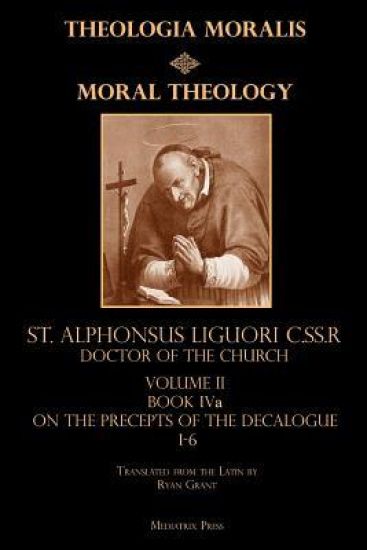
Moral Theology Volume II: Book Iva: On the 1st-6th Commandments
St. Alphonsus Liguori's Moral Theology has long been praised and held in the highest regard by the Church, covering every moral question of his day. This first ever English translation features book 4 of the Theologia Moralis, on The First through Sixth Commandments. These will cover topics as broad as the sin of divination, worshiping demons, blasphemy, oaths, vows, and when they are binding; when you must go to Mass and abstain from work, as well as considerations on the fourth commandment in regard to obedience, the fifth in terms of murder, just war and abortion, and in the 6th, adultery and the various sins against chastity. The famous theologian Reginald Garrigou Lagrange, O.P. declared: " The Casuistic method] was inefficacious in urging men to lead good lives, and] tends to laxism. ... But during this period there appeared a man, sent by God, to remedy the evils of casuistry. This man was St. Alphonsus Liguori, doctor of the Church, founder of the Redemptorists, renowned author of many works, ascetic and moral, highly praised by various popes. He is rather practical than speculative. As founder of aequiprobabilism, he cleansed casuistry from the defects of probabilism and laxism." Reginald Garrigou-Lagrange Beatitude, c. II, p. 13. "One of St. Alphonsus' names is Doctor Moralis, the moral doctor. This name is deserved for three reasons: 1) his work Theologia Moralis, translated into English here for the first time, as well as various other works, treated moral theology with a thoroughness like no other work of a prior saint. 2) St. Alphonsus was a true scholar by mastering virtually all contributors in the field of moral theology up to his own time. Like St. Thomas who was known for his synthesis of theology in general, St. Alphonsus is clearly a master of synthesizing the various moral authors throughout time. ... 3) He addressed moral problems that had not been addressed by St. Thomas himself or other authors. ... St. Alphonsus provides a thoroughness to moral theology which is very much needed today, in which approaches are often not based upon reality, the natural law, or sound reasoning." Fr. Chad Ripperger, PhD Mediatrix Press is pleased to bring you the first English Translation of this excellent work, once widely read but relegated to obscurity on account of the loss of Latin fluency in Western Society. Volume 1 embraces the first three Books of Alphonsus' Moral Theology.