...However, the boxes behind me pertain to this deposition and the individual responsible for all of this! They pertain to the events of October 31, to the death of a State Judge, his bodyguard, two of his Security Officers, and one of his guests. The kidnapping of twelve children, the death of one child, the arrest of five Police Officers...on charges ranging from...racketeering, possession with intent to distribute controlled substances, drugs, corruption, child prostitution to possession and distribution of child pornography and the confiscation of over a million dollars of cold hard cash and William T. Maxwell's connection to it all. Now, allow me to give you a narrative, a chronicle if you will, or just a story, about a man. A story about a man named William T. Maxwell...
Robert Maxwell -- ruthless, volatile, defiant; a man of gargantuan appetites, for food, wine, women, power, money -- unabashedly bared his ambition to the world, as he strove to build a publishing empire. But, throughout his career, Robert Maxwell also nurtured another, more driving, and -- until now -- altogether hidden ambition, and that was to spy for Israel's Mossad. In the end, as Gordon Thomas, an author who has long been trolling the murky waters of international intelligence, shows in this gripping narrative, the conflict between the tycoon's public interests and spy's secret pursuits led to his mystifying death, officially by drowning, in November 1991, offshore of the Canary Islands. According to Thomas's well-placed sources in Israel, Washington, and London, Maxwell first came into Mossad's orbit in the 1970s, when the crack Israeli spy organization stole from the United States its most sophisticated piece of intelligence-gathering software, Enhanced Promis. Of it Mossad made an electronic Trojan horse, secretly amassing strictly classified information from inside the very organizations worldwide to which they were selling it. Mossad's representative for these extremely sensitive transactions costing tens of millions of dollars in China, Russia, India, and twenty other countries was Robert Maxwell. Only Maxwell was also helping himself to some of Mossad's profits -- as well as 750 million from his employees' pension fund -- in desperate attempts to maintain his empire and to meet the demands of increasingly intolerant creditors. Aboard his yacht that November night in 1991 Maxwell no doubt still clung to the hope of a bailout by Mossad. But Mossad's spy masters could not afford to smile on blackmail. This book reveals all the shocking reasons why. Eight pages of black-and-white photographs add to this astonishing tale of international intrigue, espionage, the Mossad, and murder.
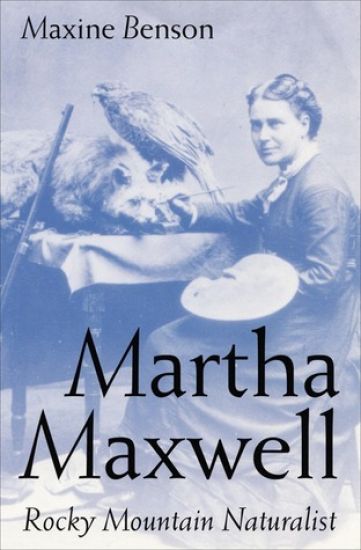
"Martha Maxwell, Rocky Mountain Naturalist": "Highly enjoyable ...Maxwell, called a 'modern Diana' in the popular press of her day, devoted her life to taxidermy, which she thought of 'as a fine art, subservient to science.' A childhood love of animals developed into a hobby and then, to her daughter's and husband's distress, a consuming, but never lucrative, profession...[A] lively biography." ("Journal of American History"). "Martha Maxwell was a most unusual pioneer, fully conscious of the feminist implications of her life and work...Anyone interested in western woman's history should not miss this book." ("Western Historical Quarterly"). "Maxwell displayed not only a reforming zeal but also ambition and ability. But she paid a price for expressing an independent spirit. Her marriage dissolved and her relationship with her daughter was far from harmonious...Martha Maxwell was more than just a field naturalist...As Benson aptly describes, she expanded the horizon of opportunities for those who followed her." ("Rocky Mountain News"). "A fascinating human interest story as well as a rich historical account of the times." ("Western American Literature"). NP Maxine Benson has served as a university teacher, state historian of the Colorado Historical Society, and publications director at the Kansas Historical Society. She is the author or editor of several books including "One Thousand One Colorado Place Names."
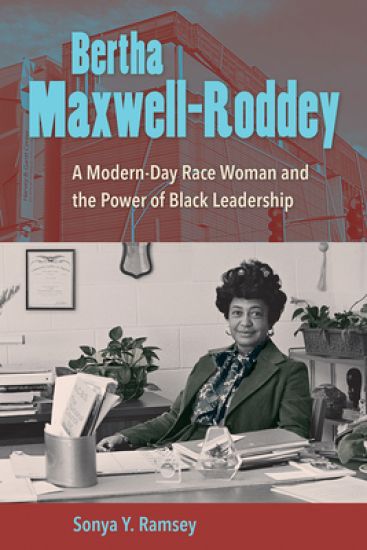
The life and accomplishments of an influential leader in the desegregated South.This biography of educational activist and Black studies pioneer Bertha Maxwell-Roddey examines a life of remarkable achievements and leadership in the early years of the desegregated South. Sonya Ramsey modernizes the nineteenth-century term “race woman” to describe how Maxwell-Roddey and her peers turned hard-won civil rights and feminist milestones into tangible accomplishments in North Carolina and nationwide from the late 1960s to the 1990s.Born in 1930, Maxwell-Roddey became one of Charlotte’s first Black woman principals of a white elementary school; she was the founding director of the University of North Carolina at Charlotte’s Africana Studies Program; and she cofounded the Afro-American Cultural and Service Center, now the Harvey B. Gantt Center for African-American Art + Culture. Maxwell-Roddey founded the National Council for Black Studies, helping institutionalize the field with what is still its premiere professional organization, and served as the 20th National President of Delta Sigma Theta Sorority, Inc., one of the most influential Black women’s organizations in the United States.Using oral histories and primary sources that include private records from numerous Black women’s home archives, Ramsey illuminates the intersectional leadership strategies used by Maxwell-Roddey and other modern race women to dismantle discriminatory barriers in the classroom and the boardroom. Bertha Maxwell-Roddey offers new insights into desegregation, urban renewal, and the rise of the Black middle class through the lens of a powerful leader’s life story.
The life and accomplishments of an influential leader in the desegregated South.This biography of educational activist and Black studies pioneer Bertha Maxwell-Roddey examines a life of remarkable achievements and leadership in the early years of the desegregated South. Sonya Ramsey modernizes the nineteenth-century term “race woman” to describe how Maxwell-Roddey and her peers turned hard-won civil rights and feminist milestones into tangible accomplishments in North Carolina and nationwide from the late 1960s to the 1990s.Born in 1930, Maxwell-Roddey became one of Charlotte’s first Black woman principals of a white elementary school; she was the founding director of the University of North Carolina at Charlotte’s Africana Studies Program; and she cofounded the Afro-American Cultural and Service Center, now the Harvey B. Gantt Center for African-American Art + Culture. Maxwell-Roddey founded the National Council for Black Studies, helping institutionalize the field with what is still its premiere professional organization, and served as the 20th National President of Delta Sigma Theta Sorority, Inc., one of the most influential Black women’s organizations in the United States.Using oral histories and primary sources that include private records from numerous Black women’s home archives, Ramsey illuminates the intersectional leadership strategies used by Maxwell-Roddey and other modern race women to dismantle discriminatory barriers in the classroom and the boardroom. Bertha Maxwell-Roddey offers new insights into desegregation, urban renewal, and the rise of the Black middle class through the lens of a powerful leader’s life story.
Matilda and Maxwell Are in Trouble Homework is creating a BIG problem for Matilda and Maxwell. And there is so much drama happening at school, who can keep up? So many questions: Will Matilda (the most popular girl at Chichester? ) miss the latest episode of Never Have I Ever? Is Maxwell, soccer player and llama joke authority, doomed to spend the whole year in detention?Will Astrid's ADHD keep her from entering the All-State Science Fair?In this very funny book, best friends Matilda and Maxwell find answers to these questions and solve their homework problems, too.
PostGame Cartoons features an off the collar look into the Oiler's game of the night throughout the season, through descriptive illustrations and comical situations. This collection encompasses the entire NHL season from the viewpoint of a diehard fan If you are a fan of hockey, here's a new way of looking at the game we love. Enjoy
This book brings together an extensive and varied collection of Sir Peter Maxwell Davies's written and spoken-word items for the first time. Spanning the composer's entire career, this compendium offers a balanced selection of Davies's articles and essays, speeches and lectures, interviews, radio broadcasts, programme notes, tributes and letters to newspapers. A number of items are published for the first time, including a new article from Davies himself (commissioned specially for this book), and several BBC radio broadcast interviews and talks from the 1960s. The structure of the book is chronological and divided into three parts, allowing readers to trace the development of Davies's thought and work over time, and to place each item in its biographical and historical context. The introduction and notes by Nicholas Jones place the writings in context, making this volume invaluable for those interested in the music and wider culture of post-war Britain.
This title was first published in 2002. Sir Peter Maxwell Davies is one of Britain's most distinguished composers. This source book documents as much of the material on his music as is available to 2001. As Richard McGregor points out in his foreword to the volume, Stewart Craggs has made valuable advances in sorting out the origins of many unknown works and gleaning details of many private compositions. The book also supplies details of those unknown works which haven't appeared in any previous catalogues, including broadcasts of early works from the BBC Archives. With information given on first performances, manuscript locations and recordings, in addition to details of composition dates, authors/librettists, durations, commissions and dedications amongst much else, this book is a key reference source for all those interested in Peter Maxwell Davies and his music.
The 18th century was a wealth of knowledge, exploration and rapidly growing technology and expanding record-keeping made possible by advances in the printing press. In its determination to preserve the century of revolution, Gale initiated a revolution of its own: digitization of epic proportions to preserve these invaluable works in the largest archive of its kind. Now for the first time these high-quality digital copies of original 18th century manuscripts are available in print, making them highly accessible to libraries, undergraduate students, and independent scholars.Medical theory and practice of the 1700s developed rapidly, as is evidenced by the extensive collection, which includes descriptions of diseases, their conditions, and treatments. Books on science and technology, agriculture, military technology, natural philosophy, even cookbooks, are all contained here.++++The below data was compiled from various identification fields in the bibliographic record of this title. This data is provided as an additional tool in helping to insure edition identification: ++++British LibraryT088720With a half-title.Edinburgi: apud Balfour et Smellie, 1787. 6],35, 1]p.; 8