

Kirjahaku
Etsi kirjoja tekijän nimen, kirjan nimen tai ISBN:n perusteella.
1000 tulosta hakusanalla Melvin L. Butler

Poetry comes in different forms, times, patterns and most of all passions. For me, my life has been the author of my poetry. The loves, trials, tribulations, and pains leading to joys and vice-versa are what encompass my writings. As life shows up and presents itself! I write. Yes, I write to express my inner most feelings. Most of all, I write what others are afraid to say or feel. However, I write out of love, for love and with love.
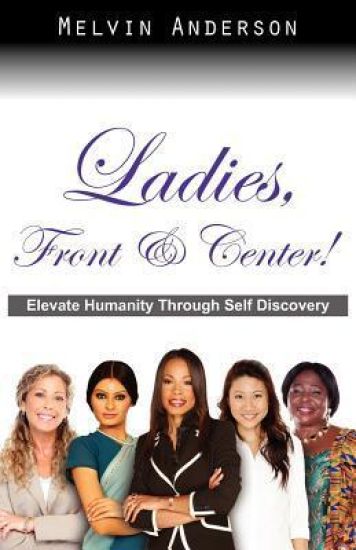
Ladies, Front & Center! Elevate Humanity Through Self Discovery
Melvin Anderson
ItsMyCareer, Inc.
2011
nidottu

The Prophet: One Nation Under God, in All Her Wickedness
Melvin Barnett
Gateswood Press
2011
nidottu

Applied Faith 101: Understanding the Origin, Principles and Dimensions of Your Christian Faith
Melvin Barnett
Gateswood Press
2011
nidottu


Vape Mania: A Newbie's Guide to the Evils of the Electronic Cigarette
Melvin Provario
Vaporacle
2014
nidottu
Also available from Vaporacle, the Vape Mania sequel, Angel of Vape. Buy both books to enjoy the full experience. Vape Mania is The laugh out loud comedy of the year And a first of its kind too. Introducing the one and only fiction book that features a vaper as the main character. Vape Mania does to the world of electronic cigarettes what the movie King Pin did to the world of bowling. Follow one man's hilarious downward spiral into the "seedy world" of vape addiction and laugh your atty off while doing it. Those who have read Vape Mania who have commented on it at e-cigarette-forum describe themselves reading it -- "laughing out loud with tears rolling down my cheeks" -- and describe this book as "absolutely hilarious and very true to what goes on." Others have said of Vape Mania: "it's been a long long time since a book made me laugh out loud" and "Great read I'm savoring it like Five Pawns." If your are into vaping, this book is a must have for your juice shelf. If you are a newbie and want to learn something about the world of vaping while having a blast doing it, this book is for you. You already have enough juice coming via vape mail to last the next decade. So it's time to get your copy of Vape Mania. What are you waiting for? You won't regret it.


Alexander Hamilton. Thirty-One Orations Delivered at Hamilton College from 1864 to 1895 Upon the Prize Foundation Established by Franklin Harvey Head, A. M
Melvin Gilbert Dodge
Trieste Publishing
2018
nidottu

This book is an intellectual tour de force: a comprehensive Darwinian interpretation of human development. Looking at the entire range of human evolutionary history, Melvin Konner tells the compelling and complex story of how cross-cultural and universal characteristics of our growth from infancy to adolescence became rooted in genetically inherited characteristics of the human brain.All study of our evolution starts with one simple truth: human beings take an extraordinarily long time to grow up. What does this extended period of dependency have to do with human brain growth and social interactions? And why is play a sign of cognitive complexity, and a spur for cultural evolution? As Konner explores these questions, and topics ranging from bipedal walking to incest taboos, he firmly lays the foundations of psychology in biology. As his book eloquently explains, human learning and the greatest human intellectual accomplishments are rooted in our inherited capacity for attachments to each other. In our love of those we learn from, we find our way as individuals and as a species. Never before has this intersection of the biology and psychology of childhood been so brilliantly described."Nothing in biology makes sense except in the light of evolution," wrote Dobzhansky. In this remarkable book, Melvin Konner shows that nothing in childhood makes sense except in the light of evolution.

Much of our law is based on authoritative texts, such as constitutions and statutes. The common law, in contrast, is that part of the law that is established by the courts. Common law rules predominate in some areas of law, such as torts and contracts, and are extremely important in other areas, such as corporations. Nevertheless, it has been far from clear what principles courts use—or should use—in establishing common law rules. In this lucid yet subtly argued book, Melvin Eisenberg develops the principles that govern this process.The rules established in every common law case, he shows, are a product of the interplay between the rules announced in past precedents, on the one hand, and moral norms, policies, and experience, on the other. However, a court establishing a common law rule is not free, as a legislator would be, to employ those norms and policies it thinks best. Rather, it can properly employ only those that have a requisite degree of social support. More specifically, the common law should seek to satisfy three standards. First, it should correspond to the body of rules that would be arrived at by giving appropriate weight to all moral norms, policies, and experiential propositions that have the requisite support, and by making the best choices where norms, policies, and experience conflict. Second, all the rules that make up the body of the law should be consistent with one another. Third, the rules adopted in past precedents should be applied consistently over time. Often, these three standards point in the same direction. The central problems of legal reasoning arise when they do not. These problems are resolved by the principles of common law adjudication. With the general principles of common law adjudication as a background, the author then examines and explains the specific modes of common law reasoning, such as reasoning from precedent, reasoning by analogy, drawing distinctions, and overruling. Throughout the book, the analysis is fully illustrated by leading cases.This innovative and carefully worked out account of the common law will be of great interest to lawyers, law students, students in undergraduate legal studies programs, scholars interested in legal theory, and all those who want to understand the basic legal institutions of our society.

WINNER OF THE BANCROFT PRIZEA New York Times Book Review and Atlantic Monthly Editors' ChoiceThomas Jefferson denied that whites and freed blacks could live together in harmony. His cousin, Richard Randolph, not only disagreed, but made it possible for ninety African Americans to prove Jefferson wrong. Israel on the Appomattox tells the story of these liberated blacks and the community they formed, called Israel Hill, in Prince Edward County, Virginia. There, ex-slaves established farms, navigated the Appomattox River, and became entrepreneurs. Free blacks and whites did business with one another, sued each other, worked side by side for equal wages, joined forces to found a Baptist congregation, moved west together, and occasionally settled down as man and wife. Slavery cast its grim shadow, even over the lives of the free, yet on Israel Hill we discover a moving story of hardship and hope that defies our expectations of the Old South.

Contributions to the Theory of Games, Volume III
Melvin Dresher; Albert William Tucker; Philip Wolfe
Princeton University Press
1957
pokkari
A new group of contributions to the development of this theory by leading experts in the field. The contributors include L. D. Berkovitz, L. E. Dubins, H. Everett, W. H. Fleming, D. Gale, D. Gillette, S. Karlin, J. G. Kemeny, R. Restrepo, H. E. Scarf, M. Sion, G. L. Thompson, P. Wolfe, and others.

William Penn is justly famous for his part in the political development of colonial America. Yet he was also one of the leading Quaker theologians of the seventeenth century and the most important translator of Quaker religious thought into social and political reality, and his life and works cannot be fully understood without a knowledge of his religious hopes and ideals. Melvin Endy goes beyond the political histories, biographies, and histories of Quakerism to provide a comprehensive account of Penn's religious thought, its influence on his political thought and activity, and the significance of his life and thought to the Quaker movement. His assessment of Penn's place in the Quaker movement and his discussion of Penn's thought in relation to Puritan, Spiritualist. Anglican, and pre-Enlightenment developments has led to an understanding of Quakerism that differs from the recent tendency to stress strongly its Puritan origins and affinities. Because of the revisionist nature of this interpretation and the author's conviction that early Quaker thought has never been adequately related to its intellectual milieu, this study of Penn has been developed into a vehicle for a new analysis of aspects of early Quaker thought. Finally, the Pennsylvania venture is examined and assessed as a laboratory in which the vision of a society run according to the principles of a spiritual religion was put to the test. Originally published in 1973. The Princeton Legacy Library uses the latest print-on-demand technology to again make available previously out-of-print books from the distinguished backlist of Princeton University Press. These editions preserve the original texts of these important books while presenting them in durable paperback and hardcover editions. The goal of the Princeton Legacy Library is to vastly increase access to the rich scholarly heritage found in the thousands of books published by Princeton University Press since its founding in 1905.

"The most critical dimension of desegregation in our region is found in the attitudes of members of the dominant white communities. Melvin Tumin, a sociology professor at Princeton University, and eleven associates...have done a first-rate job mapping this vital dimension in an opinion study of citizens of Guilford County, North Carolina...the best effort yet to plumb citizens' attitudes on this agonizing modern problem."--Reading Guide, Law Library of University of Virginia. Originally published in 1958. The Princeton Legacy Library uses the latest print-on-demand technology to again make available previously out-of-print books from the distinguished backlist of Princeton University Press. These editions preserve the original texts of these important books while presenting them in durable paperback and hardcover editions. The goal of the Princeton Legacy Library is to vastly increase access to the rich scholarly heritage found in the thousands of books published by Princeton University Press since its founding in 1905.

An important contribution to our cumulative knowledge of castes, based on a case study of the pueblo of San Luis Jilotepeque, about ninety miles from Guatemala City in Central America. "Much of the fascination of the book derives from the intrinsic interest of the material itself its exotic locale, and its broader significance for other parts of Latin America."--The Annals. Originally published in 1952. The Princeton Legacy Library uses the latest print-on-demand technology to again make available previously out-of-print books from the distinguished backlist of Princeton University Press. These editions preserve the original texts of these important books while presenting them in durable paperback and hardcover editions. The goal of the Princeton Legacy Library is to vastly increase access to the rich scholarly heritage found in the thousands of books published by Princeton University Press since its founding in 1905.

William Penn is justly famous for his part in the political development of colonial America. Yet he was also one of the leading Quaker theologians of the seventeenth century and the most important translator of Quaker religious thought into social and political reality, and his life and works cannot be fully understood without a knowledge of his religious hopes and ideals. Melvin Endy goes beyond the political histories, biographies, and histories of Quakerism to provide a comprehensive account of Penn's religious thought, its influence on his political thought and activity, and the significance of his life and thought to the Quaker movement. His assessment of Penn's place in the Quaker movement and his discussion of Penn's thought in relation to Puritan, Spiritualist. Anglican, and pre-Enlightenment developments has led to an understanding of Quakerism that differs from the recent tendency to stress strongly its Puritan origins and affinities. Because of the revisionist nature of this interpretation and the author's conviction that early Quaker thought has never been adequately related to its intellectual milieu, this study of Penn has been developed into a vehicle for a new analysis of aspects of early Quaker thought. Finally, the Pennsylvania venture is examined and assessed as a laboratory in which the vision of a society run according to the principles of a spiritual religion was put to the test. Originally published in 1973. The Princeton Legacy Library uses the latest print-on-demand technology to again make available previously out-of-print books from the distinguished backlist of Princeton University Press. These editions preserve the original texts of these important books while presenting them in durable paperback and hardcover editions. The goal of the Princeton Legacy Library is to vastly increase access to the rich scholarly heritage found in the thousands of books published by Princeton University Press since its founding in 1905.

"The most critical dimension of desegregation in our region is found in the attitudes of members of the dominant white communities. Melvin Tumin, a sociology professor at Princeton University, and eleven associates...have done a first-rate job mapping this vital dimension in an opinion study of citizens of Guilford County, North Carolina...the best effort yet to plumb citizens' attitudes on this agonizing modern problem."--Reading Guide, Law Library of University of Virginia. Originally published in 1958. The Princeton Legacy Library uses the latest print-on-demand technology to again make available previously out-of-print books from the distinguished backlist of Princeton University Press. These editions preserve the original texts of these important books while presenting them in durable paperback and hardcover editions. The goal of the Princeton Legacy Library is to vastly increase access to the rich scholarly heritage found in the thousands of books published by Princeton University Press since its founding in 1905.

An important contribution to our cumulative knowledge of castes, based on a case study of the pueblo of San Luis Jilotepeque, about ninety miles from Guatemala City in Central America. "Much of the fascination of the book derives from the intrinsic interest of the material itself its exotic locale, and its broader significance for other parts of Latin America."--The Annals. Originally published in 1952. The Princeton Legacy Library uses the latest print-on-demand technology to again make available previously out-of-print books from the distinguished backlist of Princeton University Press. These editions preserve the original texts of these important books while presenting them in durable paperback and hardcover editions. The goal of the Princeton Legacy Library is to vastly increase access to the rich scholarly heritage found in the thousands of books published by Princeton University Press since its founding in 1905.