Kirjojen hintavertailu. Mukana 12 083 050 kirjaa ja 12 kauppaa.

Kirjahaku

Etsi kirjoja tekijän nimen, kirjan nimen tai ISBN:n perusteella.

1000 tulosta hakusanalla Michelle Perry

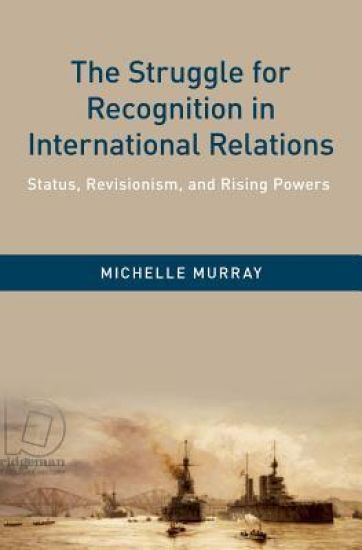
The Struggle for Recognition in International Relations

The Struggle for Recognition in International Relations

Michelle Murray

Oxford University Press Inc
2018
sidottu
How can established powers manage the peaceful rise of new great powers? With The Struggle for Recognition in International Relations, Michelle Murray offers a new answer to this perennial question in international relations, arguing that power transitions are principally social phenomena whereby rising powers struggle to obtain recognition as world powers. At the center of great power identity formation is the acquisition of particular symbolic capabilities-such as battleships, aircraft carriers or nuclear weapons-that are representative of great power status and which allow rising powers to experience their uncertain social status as a brute fact. When a rising power is recognized, this power acquisition is considered legitimate and its status in the international order secured, leading to a peaceful power transition. If a rising power is misrecognized, its assertive foreign policy is perceived to be for revisionist purposes, which must be contained by the established powers. Revisionism-rather than the product of a material power structure that encourages aggression or domestic political struggles-is a social construct that emerges through a rising power's social interactions with the established powers as it attempts to gain recognition of its identity. To highlight the explanatory reach of the argument, Murray compares the United States and Imperial Germany's contemporaneous rise to world power status at the turn of the twentieth century. Whereas successful acts of recognition constructed American expansionism as legitimate thereby facilitating its peaceful rise, ongoing misrecognition increased German status insecurity, constructing it as a revisionist threat to the international order. The question of peaceful power transition has taken on increased salience in recent years with the emergence of China as an economic and military rival of the United States. Highlighting the social dynamics of power transitions, The Struggle for Recognition in International Relations offers a powerful new framework through which to understand the rise of China and how the United States can facilitate its peaceful rise.
Starving for Salvation

Starving for Salvation

Michelle M. Lelwica

Oxford University Press Inc
1999
sidottu
Presently, doctors and psychiatrists are professing their inability to develop theoretical approaches that lead to effective clinical methods to help women suffering from eating disorders. Michelle Lelwica puts forward a hypothesis that has both theoritical and clinical implications. She identifies eating disorders as a specifically religious problem and contends that it can be addressed with religious resources. She argues that the remnants of religious legacies that have historically effaced the diversity and complexity of women's spiritual yearnings and struggles are alive and well under the guise of a host of "secular" practices, pictures and promises. Until these legacies are recognized, contested, and changed, she predicts, many girls and women will continue to turn to the symbolic and ritual resources most readily available to them --- food and their bodies --- in a passionate but precarious quest for freedom and fulfilment.
Starving For Salvation

Starving For Salvation

Michelle M. Lelwica

Oxford University Press Inc
2002
nidottu
In recent years, eating disorders among American girls and women have become a subject of national concern. Conventional explanations of eating problems are usually framed in the language of psychology, medicine, feminism, or sociology. Although they differ in theory and approach, these interpretations are linked by one common assumption--that female preoccupation with food and body is an essentially secular phenomenon. In Starving for Salvation, Michelle Lelwica challenges traditional theories by introducing and exploring the spiritual dimensions of anorexia, bulimia, and related problems. Drawing on a range of sources that include previously published interviews with sufferers of eating disorders, Lelwica claims that girls and women starve, binge, and purge their bodies as a means of coping with the pain and injustice of their daily lives. She provides an incisive analysis of contemporary American culture, arguing that our dominant social values and religious legacies produce feelings of emptiness and dissatisfaction in girls and women. Trapped in a society that ignores and denies their spiritual needs, girls and women construct a network of symbols, beliefs, and rituals around food and their bodies. Lelwica draws a parallel between the patriarchal legacy of Christianity, which associates women with sin and bodily cravings, and the cultural preference for a thin female body. According to Lelwica, these complimentary forces form a popular salvation myth that encourages girls and women to fixate on their bodies and engage in disordered eating patterns. While this myth provides a sense of meaning and purpose in the face of uncertainty and injustice, Lelwica demonstrates that such rigid and unhealthy devotion to the body only deepens the spiritual void that women long to fill. Although Lelwica presents many disturbing facts about the origins of eating disorders, she also suggests positive ways that our society can nourish the creative and spiritual needs of girls and women. The first step, however, is to acknowledge that female preoccupation with thinness and food signifies a strong desire for fulfillment. Until we recognize and contest the religious legacies and cultural values that perpetuate eating disorders, many women will continue to turn to the most accessible symbolic and ritual resources available to them--food and their bodies--in an attempt to satiate their profound spiritual hunger.
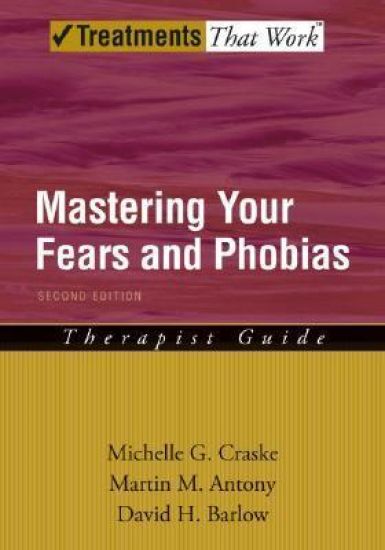
Mastering Your Fears and Phobias

Mastering Your Fears and Phobias

Michelle G. Craske; Martin M. Antony; David H Barlow

Oxford University Press Inc
2006
nidottu
Specific phobia is the most commonly occurring anxiety disorder with approximately 12.5% of the general population reporting at least one specific phobia during their lives. People may fear heights, flying, spiders, blood, water, and any other number of circumscribed objects or situations. Research has shown the most effective treatment for these fears and phobias is an exposure-based, cognitive-behavioural program. Written by renowned researchers, this Therapist Guide provides you with all the information you need to help your clients ease their anxiety and conquer their fears. Whether they are afraid of dentists, dogs, or driving, you can teach your clients the necessary skills to overcome their phobia in as little as a few weeks. The strategies outlined in this book include exposure exercises and cognitive restructuring techniques. The corresponding Workbook includes blank forms and records for tracking progress and allows the client to extend the therapeutic experience outside of the office. Together, both books form a comprehensive package that has proven to be the most effective and successful treatment available for specific phobia.
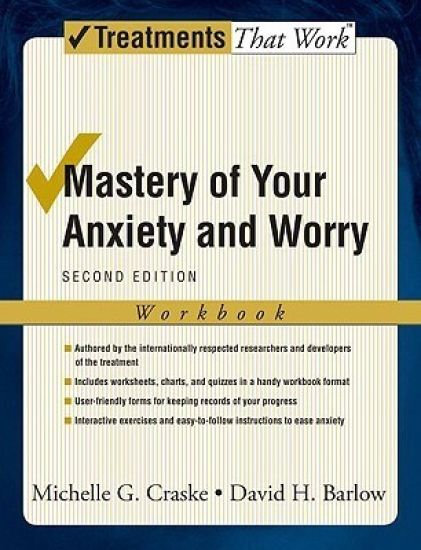
Mastery of Your Anxiety and Worry

Mastery of Your Anxiety and Worry

Michelle G. Craske; David H. Barlow

Oxford University Press Inc
2006
nidottu
Do you constantly worry about the "what ifs" of life? Does your anxiety over events that have yet to happen cause you physical discomfort? If you are prone to problems with anxiety and worry, you may suffer from Generalised Anxiety Disorder (GAD). Those who have been diagnosed with GAD know that it can cause chronic tension, fatigue, irritability and difficulties sleeping. What can be done to help? In recent years it has been proven that the most effective treatment for GAD is a program like the one outlined in this book, based on the principles of cognitive-behavioural therapy (CBT). Written by renowned therapists, this Workbook includes all the information you need to learn the appropriate skills to combat your anxiety and worry. For use in conjunction with supervised therapy, this book makes it easy for you to become an active participant in your treatment. Bring the workbook to your sessions while your therapist uses the corresponding Mastery of Your Anxiety and Worry, Therapist Guide to teach you techniques to help you relax and decrease your level of anxiety. This revised workbook includes user-friendly devices to aid you in overcoming your excessive worry, such as self-assessment quizzes, homework exercises, and case studies of individuals experiencing the same issues as you. It also includes interactive forms that can be photocopied or downloaded from the companion website, for you to monitor your progress throughout treatment. This one of a kind resource allows you to work alongside your therapist to personalise your treatment strategy and learn recovery skills that are useful for a lifetime.
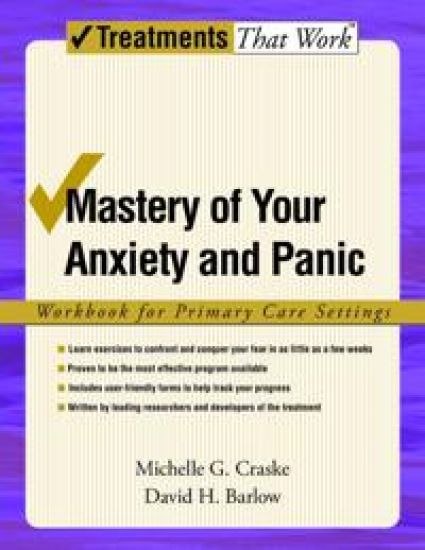
Mastery of Your Anxiety and Panic

Mastery of Your Anxiety and Panic

Michelle G. Craske; David H. Barlow

Oxford University Press Inc
2007
nidottu
Do you have rushes of fear accompanied by a pounding heart, trembling, dizziness, and feelings of unreality that make you think you're sick, dying, or losing your mind? Do these feelings interfere with your normal daily routine, or prevent you from doing things you would normally do? Do you find yourself seeking medical treatment for symptoms related to your panic? If you are prone to panic attacks and constantly worry about when the next attack may come, you may suffer from panic disorder and/or agoraphobia. Mastery of Your Anxiety and Panic: Workbook for Primary Care Settings outlines a time-limited treatment for dealing with panic disorder and agoraphobia. If you primarily seek treatment from your family doctor, this workbook will be useful. Based on the principles of cognitive-behavioral therapy (CBT), the program described can be delivered by your general practitioner or other health or mental health care provider in the primary care setting in up to six sessions. A modified version of the more intensive 12-session program that currently exists, this treatment represents an introduction of the skills and techniques for overcoming panic disorder that you can easily learn and continue on your own. This workbook will teach you the importance of record-keeping and monitoring your progress, as well as breathing techniques and thinking skills to reduce your anxiety. You will learn how to face your fear of physical symptoms and anxiety-inducing situations. Self-assessment tools, homework exercises, and interactive forms allow you to become an active participant in your treatment. This program will help you take charge of your panic and allow you the freedom to stop relying on medication and health services for relief of your symptoms.
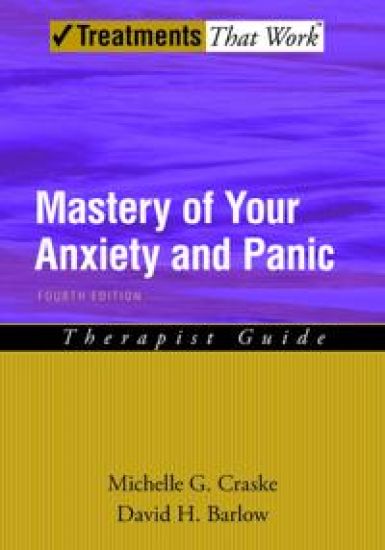
Mastery of Your Anxiety and Panic

Mastery of Your Anxiety and Panic

Michelle G. Craske; David H. Barlow

Oxford University Press Inc
2007
nidottu
Now in its 4th edition, Mastery of Your Anxiety and Panic, Therapist Guide updates, extends, and improves upon the most effective, evidence-based treatment program available for panic disorder and agoraphobia. * Program is now organised by skill, instead of by session so treatment can be tailored to the individual * Presents breathing and thinking skills as methods for facing, rather than reducing fear and anxiety * Focuses on learning how to face agoraphobic situations and the scary physical symptoms of panic from an entirely new perspective * Includes a completely new chapter for adapting the treatment for effective delivery in 6 sessions within primary care settings * Provides up-to-date information on pharmacology Written and revised by the developers of the program, this book provides therapists with all the tools necessary to deliver effective treatment for panic disorder and agoraphobia. It provides step-by-step instructions for teaching clients the skills to overcome their fear of panic and panic attacks, as well as case vignettes and techniques for addressing atypical and problematic responses. This therapist guide is a one-of-a-kind resource that has been recommended for use by public health services around the world.
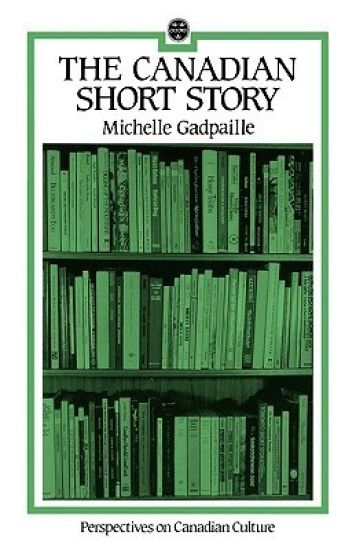
The Canadian Short Story

The Canadian Short Story

Michelle Gadpaille

Oxford University Press, USA
1989
pokkari
This survey traces the development of the Canadian short story from its 19th-century origins in the sketch and the tale to widespread international recognition in the 1980s. Gadpaille traces the beginnings of realism in the work of such early writers as Roberts, Seton, Knister, Callaghan, and Garner; explores the positive and negative influence of the realist tradition in the work of later writers; and looks in depth at the work of the three most important modern practitioners of the Canadian short story--Mavis Gallant, Alice Munro, and Margaret Atwood.
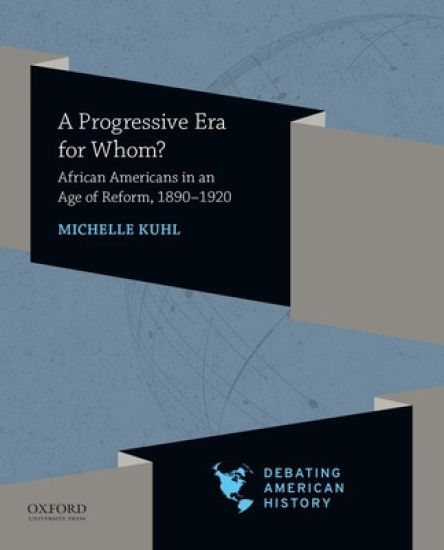
Progressive Era for Whom?: African Americans in an Age of Reform, 1890-1920

Progressive Era for Whom?: African Americans in an Age of Reform, 1890-1920

Michelle Kuhl; Joel M. Sipress; David J. Voelker

Oxford University Press
2020
nidottu
Embracing an argument-based model for teaching history, the Debating American History series encourages students to participate in a contested, evidence-based discourse about the human past. Each book poses a question that historians debate--How democratic is the U.S. Constitution? or Why did Civil War erupt in the United States in 1961?--and provides abundant primary sources so that students can make their own efforts at interpreting the evidence. They can then use that analysis to construct answers to the big question that frames the debate and argue in support of their position. A Progressive Era for Whom? poses this big question: Was the early 20th Century a Progressive Era for African Americans?
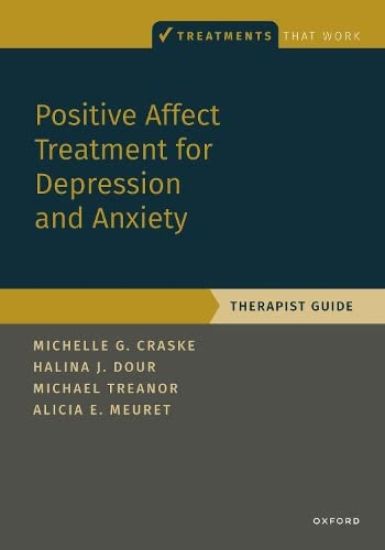
Positive Affect Treatment for Depression and Anxiety

Positive Affect Treatment for Depression and Anxiety

Michelle G. Craske; Halina Dour; Michael Treanor; Alicia E. Meuret

OXFORD UNIVERSITY PRESS INC
2022
nidottu
Anhedonia is a risk factor for poor prognosis and suicidality, and yet treatments to date have been relatively ineffective for anhedonia. Based on advances in behavioral and neural science, Positive Affect Treatment was developed to specifically target areas of reward sensitivity that are believed to contribute to anhedonia. These include the anticipation and motivation for reward, the response to attainment of reward, and the learning of associations between actions and reward outcomes. Positive Affect Treatment for Depression and Anxiety: Therapist Guide is intended to be used by clinicians who are familiar with cognitive-behavioral therapy (CBT) generally and with clinical presentation of depression, anxiety and anhedonia. Results show that Positive Affect Treatment not only improves positive mood state but also decreases depression and anxiety. This guide will be an indispensable resource for all practitioners who wish to effectively and efficiently help individuals regain interest and enjoyment in their usual activities while improving their quality of life.
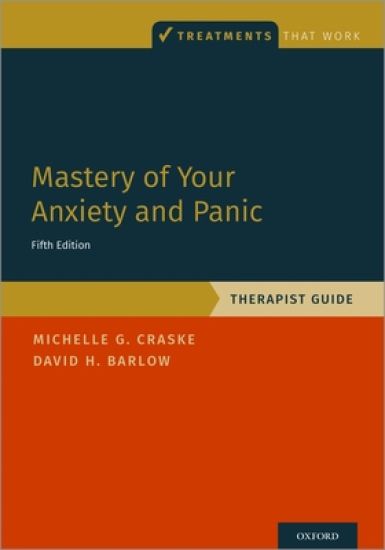
Mastery of Your Anxiety and Panic

Mastery of Your Anxiety and Panic

Michelle G. Craske; David H. Barlow

OXFORD UNIVERSITY PRESS INC
2022
nidottu
Now in its fifth edition, Mastery of Your Anxiety and Panic, Therapist Guide provides practitioners with the tools necessary to deliver effective treatment for panic disorder and agoraphobia. Reflecting the most up-to-date research on etiology and treatment, as well as cutting-edge scientific information on inhibitory learning, this guide provides step-by-step instructions for teaching clients the skills to overcome their fear of panic and panic attacks, as well as techniques for addressing atypical and problematic responses. The program is organized by skill, enabling therapists to tailor treatment to individual clients, and case vignettes illustrate how panic disorder presents differently in clients-and how therapists can respond accordingly. The book also includes a chapter on adapting the treatment for effective delivery in 6 sessions within primary care and related settings. Written in accessible language aimed at facilitating comprehension and easy implementation, and complete with worksheets and activities to support learning, this Therapist Guide is a gold-standard one-of-a-kind resource that has been recommended for use by public health services around the world.
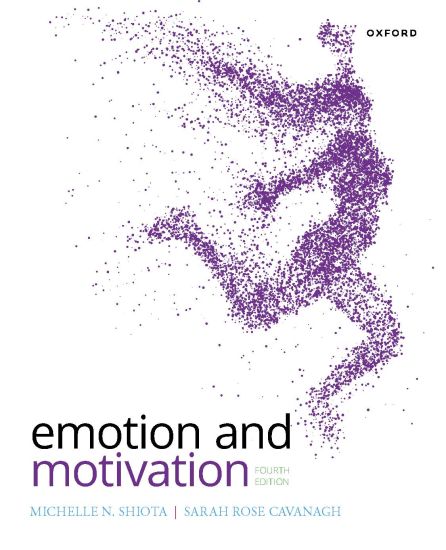
Emotion and Motivation

Emotion and Motivation

Michelle (Lani) Shiota; Sarah Rose Cavanagh

OXFORD UNIVERSITY PRESS INC
2023
nidottu
Emotion and Motivation, Fourth Edition, blends unprecedented scholarship with a friendly and accessible writing style that makes the study of these subject areas both interesting and relevant. This text includes both classic and cutting-edge research to reflect thinking about the area of emotion and motivation. Emotion and Motivation, Fourth Edition, encourages critical thinking by openly tackling ongoing controversies, contradictory findings, methodological limitations, and even replication failures in a balanced and constructive way. While highly rigorous, the text is also student-friendly, with a light, humorous tone. With real-world stories and an intuitive structure, Emotion and Motivation addresses questions undergraduates are most likely to ask: Why do we have emotions? How do they affect our lives? What motivates human behavior? How can we improve well-being?
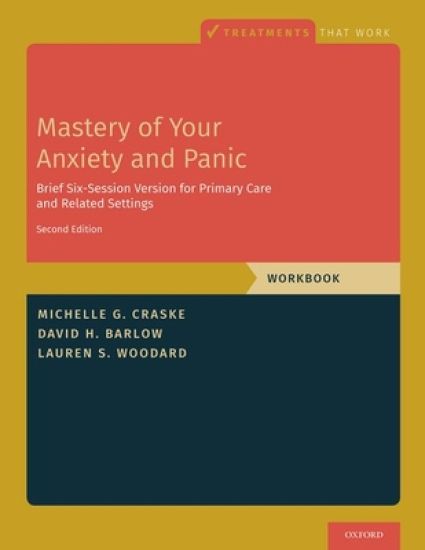
Mastery of Your Anxiety and Panic

Mastery of Your Anxiety and Panic

Michelle G. Craske; David H. Barlow; Lauren S. Woodard

OXFORD UNIVERSITY PRESS INC
2022
nidottu
This edition of Mastery of Your Anxiety and Panic: Brief Six-Session Version for Primary Care and Related Settings, Workbook, outlines a time-limited treatment for those dealing with panic disorder and agoraphobia. Developed for use with patients who seek treatment from a primary care provider, this guide is based on the principles of cognitive-behavioral therapy (CBT). The program described can be delivered by a general practitioner or other health or mental health care provider in primary care or related settings in up to six sessions. A modified version of the more intensive 12-session version of the program, this treatment represents an introduction to the skills and techniques that have been proven effective for overcoming panic disorder, and that patients can easily learn and continue on their own.
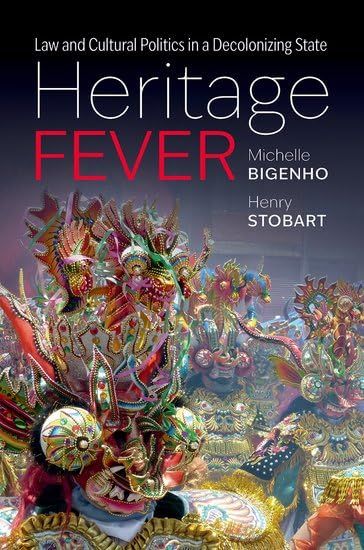
Heritage Fever

Heritage Fever

Michelle Bigenho; Henry Stobart

OXFORD UNIVERSITY PRESS INC
2025
sidottu
The early twenty-first century ushered in a period of change in Bolivia. The country welcomed its first Indigenous president, a new constitution, and a profusion of laws that recognized individual music and dance expressions as intangible cultural heritage. Using cultural heritage lawmaking as a window through which to view the de-centered workings of the Indigenous-focused Plurinational Bolivian State, Heritage Fever unpacks the myriad motivations for heritage making in this this politically transformative moment. Heritage Fever reorients UNESCO-driven heritage debates towards a different set of questions--a pivot the authors call “heritage otherwise.” These inquiries focus on how citizens use law to frame expressive culture and engage their new state. Through grounded case studies, Bigenho and Stobart reveal how competing claims over cultural expressions stimulate aficionado research and produce an abundance of cultural activities. Managing these productive conflicts often involves strategic uses of scale within the country's new political autonomies, even as old-style nationalisms lurk beneath a plurinational sheen. One case study highlights imagined Indigenous autonomy as bolstered by decolonizing historiography that predates the Plurinational State by several decades. Privileging the stories told by those who championed or who were bureaucratically involved in the respective heritage-making campaigns, Heritage Fever's research draws from the authors' combined fieldwork in Bolivia over the last 30 years, recent multi-sited fieldwork conducted as a team, and ethnographic interviews conducted with Bolivians involved in heritage-making projects. Contributing to legal anthropology, critical heritage studies, ethnomusicology, and anthropology of the state, Heritage Fever looks beyond intellectual property frames, opens new perspectives on archival thinking, reflects on decolonizing practices in expertise and knowledge production, and uncovers the agency of mid-level citizens in a decolonizing state.
Heritage Fever

Heritage Fever

Michelle Bigenho; Henry Stobart

OXFORD UNIVERSITY PRESS INC
2025
nidottu
The early twenty-first century ushered in a period of change in Bolivia. The country welcomed its first Indigenous president, a new constitution, and a profusion of laws that recognized individual music and dance expressions as intangible cultural heritage. Using cultural heritage lawmaking as a window through which to view the de-centered workings of the Indigenous-focused Plurinational Bolivian State, Heritage Fever unpacks the myriad motivations for heritage making in this this politically transformative moment. Heritage Fever reorients UNESCO-driven heritage debates towards a different set of questions--a pivot the authors call “heritage otherwise.” These inquiries focus on how citizens use law to frame expressive culture and engage their new state. Through grounded case studies, Bigenho and Stobart reveal how competing claims over cultural expressions stimulate aficionado research and produce an abundance of cultural activities. Managing these productive conflicts often involves strategic uses of scale within the country's new political autonomies, even as old-style nationalisms lurk beneath a plurinational sheen. One case study highlights imagined Indigenous autonomy as bolstered by decolonizing historiography that predates the Plurinational State by several decades. Privileging the stories told by those who championed or who were bureaucratically involved in the respective heritage-making campaigns, Heritage Fever's research draws from the authors' combined fieldwork in Bolivia over the last 30 years, recent multi-sited fieldwork conducted as a team, and ethnographic interviews conducted with Bolivians involved in heritage-making projects. Contributing to legal anthropology, critical heritage studies, ethnomusicology, and anthropology of the state, Heritage Fever looks beyond intellectual property frames, opens new perspectives on archival thinking, reflects on decolonizing practices in expertise and knowledge production, and uncovers the agency of mid-level citizens in a decolonizing state.
The 'Shepheard's Nation'

The 'Shepheard's Nation'

Michelle O'Callaghan

Clarendon Press
2000
sidottu
This is a study of a group of Jacobean Spenserian poets, William Browne, George Wither, and Christopher Brooke, and of the ways in which these writers represented themselves as a distinctive oppositional community in the years 1612 to 1625. This Spenserian community had its social basis in the culture of early modern London and was given physical expression through the practice of collaboration and an innovative use of print. Yet, it was also an 'imagined community' expressed through fictions that drew on common literary and political traditions. The result was a type of literary commonwealth that claimed the authority to engage in public debate on issues of politics and culture. By drawing attention to the relationships between writers and the traditions and environments that enable textual communities, this book provides a new perspective for studying early modern culture.
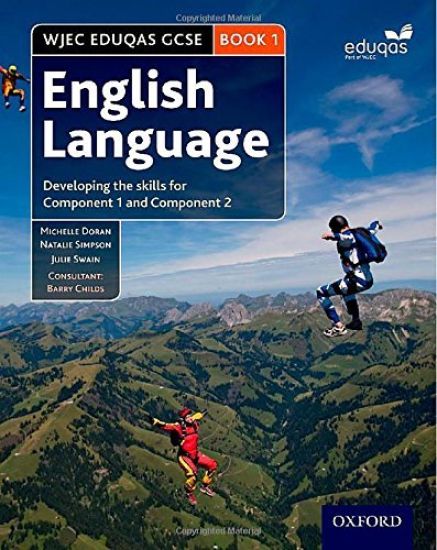
WJEC Eduqas GCSE English Language: Student Book 1

WJEC Eduqas GCSE English Language: Student Book 1

Michelle Doran; Natalie Simpson; Julie Swain; Barry Childs

Oxford University Press
2015
nidottu
Please note this title is suitable for any student studying: Exam Board: Eduqas Level: GCSE Subject: English Language First teaching: 2015 First exams: 2017 Student Book 1 develops the key reading and writing skills that students will be assessed on in Component 1 and Component 2 of the WJEC GCSE English Language qualification. Structured around the Assessment Objectives, the book engages students through a thematic approach with inspiring texts that helps prepare students for the thematic connections they will face in the examinations. Through a range of texts, activities, stretch and support features as well as tips and key terms, this book helps students of all abilities develop their reading and writing skills. Spelling, punctuation and grammar activities and guidance are provided in context to help improve students' technical accuracy. In addition to the regular peer and self-assessment activities, teachers can monitor progress through the substantive end-of-chapter assessments and the sample exam papers.
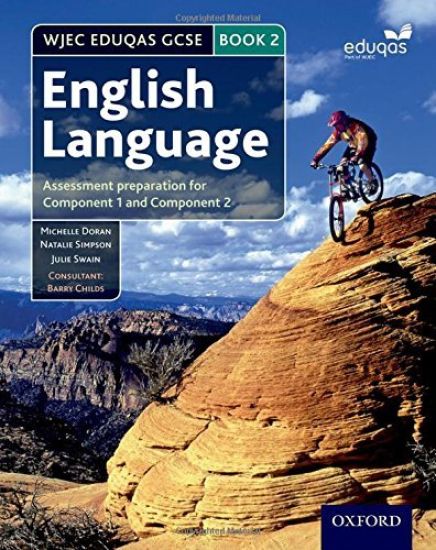
WJEC Eduqas GCSE English Language: Student Book 2

WJEC Eduqas GCSE English Language: Student Book 2

Michelle Doran; Natalie Simpson; Julie Swain

Oxford University Press
2015
nidottu
Please note this title is suitable for any student studying: Exam Board: Eduqas Level: GCSE Subject: English Language First teaching: 2015 First exams: 2017 Student Book 2 provides extensive guidance and activities, in the context of the Component 1 and Component 2 exam questions, on how to improve reading and writing skills. With sample student responses, at different levels, students can improve their own responses and gain an enhanced understanding of the skills required to succeed in the exams. Featuring the types of texts and tasks that students will face in the exam papers, a range of activities with exam tips and key terms, all students can demonstrate their skill-development in the context of exam-style questions. Spelling, punctuation and grammar activities and guidance are provided in context to help improve students' technical accuracy. In addition to the regular peer and self-assessment activities, teachers can monitor progress through the substantive end-of-chapter assessments and the sample exam papers.
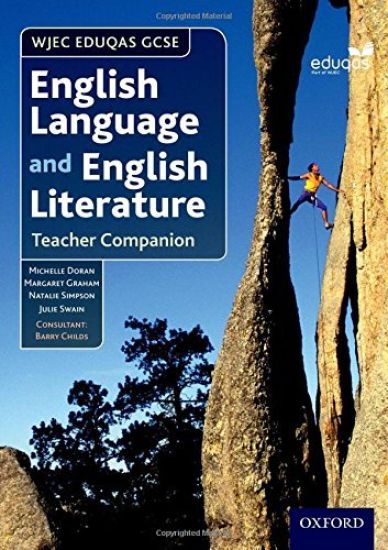
WJEC Eduqas GCSE English Language and English Literature: Teacher Companion

WJEC Eduqas GCSE English Language and English Literature: Teacher Companion

Michelle Doran; Natalie Simpson; Julie Swain; Barry Childs

Oxford University Press
2015
nidottu
Please note this title is suitable for any student studying: Exam Board: Eduqas Level: GCSE Subject: English Language First teaching: 2015 First exams: 2017 The Teacher Companion provides comprehensive guidance on how to deliver an effective GCSE programme in line with the requirements of the 2015 WJEC GCSE English Language and English Literature specifications to help ensure all students progress. Covering the key requirements of both qualifications, the Teacher Companion supports teachers from the planning phase through to the delivery of lessons and setting of progress-monitoring assessments. In-depth support for delivering the teaching of the reading and writing skills, including additional lesson ideas and a focus on differentiation and self and peer assessment, is a key feature of the Teacher Companion and will help to provide a strong base for exam success. Guidance and activities on the Spoken Language requirements are also included.