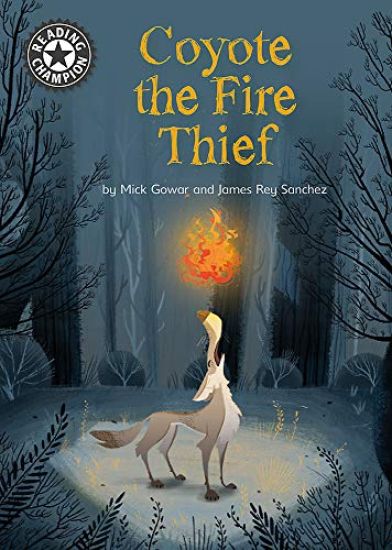
In this retelling of a native American myth, Coyote feels sorry for the helpless humans and steals fire to bring them warmth and comfort. But the humans are not grateful for her gift and use the fire against Coyote and the natural world.This first colour chapter book is a perfectly levelled, accessible text for Key stage 2 readers aged 9-10. Reading Champion offers independent reading books for children to practise and reinforce their developing reading skills.Fantastic, original stories are accompanied by engaging artwork and activities to provoke deeper response and encourage writing. Each book has been carefully graded so that it can be matched to a child's reading ability, encouraging reading for pleasure.The Key Stage 2 Reading Champion Books are suggested for use as follows:Independent Reading 11: start of Year 3 or age 7+Independent Reading 12: end of Year 3 or age 7+Independent Reading 13: start of Year 4 or age 8+Independent Reading 14: end of Year 4 or age 8+Independent Reading 15: start of Year 5 or age 9+Independent Reading 16: end of Year 5 or age 9+Independent Reading 17: start of Year 6 or age 10+Independent Reading 18: end of Year 6 or age 10+
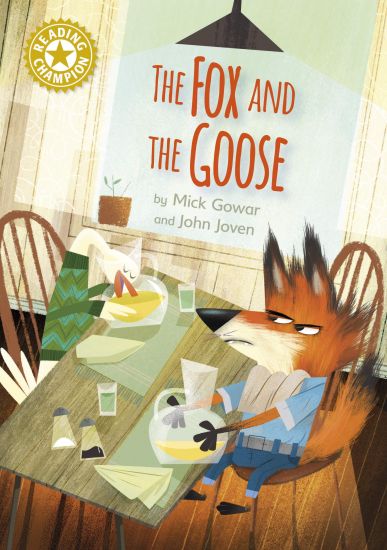
This story is part of Reading Champion, a series carefully linked to book bands to encourage independent reading skills, developed with Dr Sue Bodman and Glen Franklin of UCL Institute of Education (IOE).A traditional Aesop fable is retold as the story of Fox and Goose, who try to be friends, but end up misunderstanding one another and not showing compassion for each other's needs, with disastrous consequences.Reading Champion offers independent reading books for children to practise and reinforce their developing reading skills.Fantastic, original stories are accompanied by engaging artwork and a reading activity. Each book has been carefully graded so that it can be matched to a child's reading ability, encouraging reading for pleasure.
This story is part of Reading Champion, a series carefully linked to book bands to encourage independent reading skills, developed with Dr Sue Bodman and Glen Franklin of UCL Institute of Education (IOE).A traditional Aesop fable is retold as the story of Fox and Goose, who try to be friends, but end up misunderstanding one another and not showing compassion for each other's needs, with disastrous consequences.Reading Champion offers independent reading books for children to practise and reinforce their developing reading skills.Fantastic, original stories are accompanied by engaging artwork and a reading activity. Each book has been carefully graded so that it can be matched to a child's reading ability, encouraging reading for pleasure.
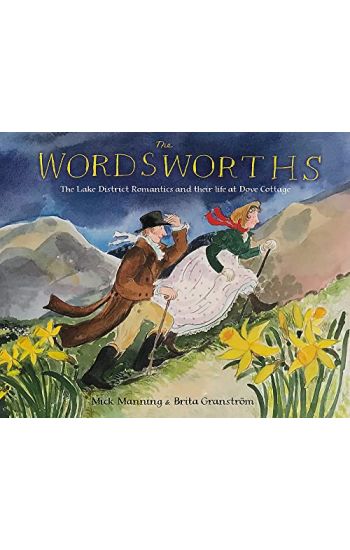
Celebrate William Wordsworth's 250th birthday with this beautiful retelling of his life.Produced to coincide with the 250th birthday of Wordsworth in 2020, this book adapts the lyrical diary of his sister, Dorothy Wordsworth, detailing their life together roaming the beautiful Lake District. Dorothy's works are now considered essential early examples of a women's role in literature, underpinnning her position as a female role model, as they confront issues spanning from social justice, the French revolution and nature.Lush Lake District and London landscapes, and carefully researched costumes bring the era to life, while extracts from longer works such as The Prelude tie into the national curriculum.
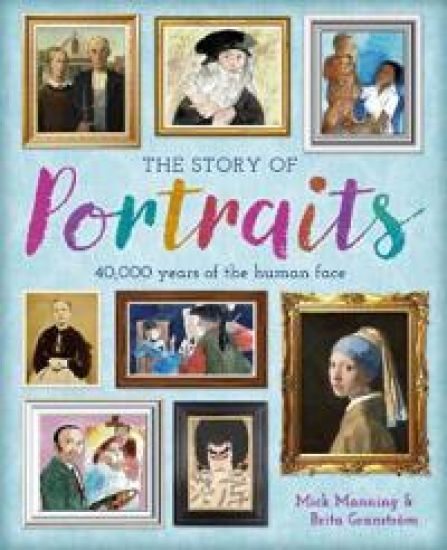
An inspiring introduction to art history, telling the stories of the world's greatest portraits, the artists and their sitters from Picasso to Cindy ShermanThe Story of Portraits begins with an ivory sculpture of a female head carved during the last ice age, and takes the reader through to the modern day, with iconic photos, including the first ever photographic selfie, and sculpture. Mick Manning and Brita Granström take you on a tour of their personally selected gallery which showcases the work of some of the world's most famous portrait artists and a few less well-known ones. The artists featured include Rembrandt, Picasso, da Vinci, Vermeer, Kahlo, Klimt, Sekoto, Warhol and more ... The friendly text and illustrations help children to appreciate the art, highlighting interesting biographical details and picking out key details to spot. The book's large format means the art is reproduced on a wonderfully impactful scale. This really is a book to treasure. The creative team of Mick Manning and Brita Granström are well-known for their ground breaking children's information books. Their many awards range the TES Information Book Award for What's Under the Bed? and the English Association Non-fiction award for Charlie's War Illustrated.
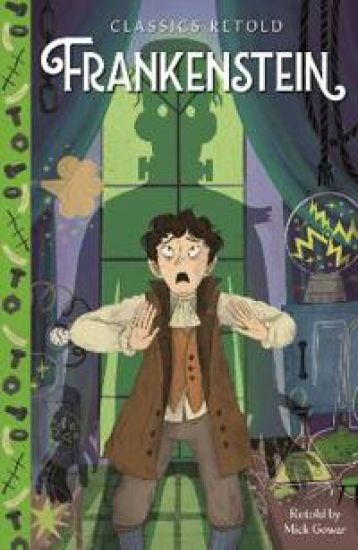
Beautifully simple abridged versions of the Classics for a young new audience. In this story retelling Mary Shelley's original text, Victor Frankenstein embarks on a dangerous experiment to recreate a human being ... with terrifying results! Enter the world of literary classics with these expertly retold chapter books for young readers. Atmospheric and evocative colour artwork accompanies accessible text in a dyslexia friendly-font. Extra features include a short biography of Mary Shelley, plus some extra facts and comprehension exercises at the back of the book to help students study the text in more depth. A brilliant edition for all classrooms and perfect for readers age 7+. Books to collect in this series: Dracula; Frankenstein; Jane Eyre; Oliver Twist; Journey to the Centre of the Earth; 20,000 Leagues Under the Sea.
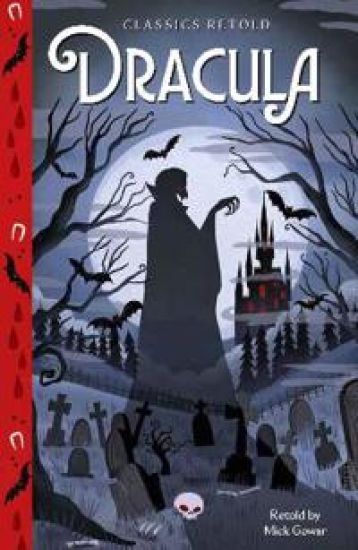
Beautifully simple abridged versions of the Classics for a young new audience. In this story based on Bram Stoker's original text, Count Dracula aims to leave his castle in Transylvania and head across the sea to England, where he plans to unleash his vampires ... can he be stopped before it's too late? Enter the world of literary classics with these expertly retold chapter books for young readers. Atmospheric and evocative colour artwork accompanies accessible text in a dyslexia friendly-font. Extra features include a short biography of Bram Stoker, plus some extra facts and comprehension exercises at the back of the book to help students study the text in more depth. A brilliant edition for all classrooms and perfect for readers age 7+ making the next step to longer texts. Books to collect in this series: Dracula; Frankenstein; Jane Eyre; Oliver Twist; Journey to the Centre of the Earth; 20,000 Leagues Under the Sea.
Being a lover of steam locomotives is a bit like chasing a setting sun - with the real diehards searching out survivors further and further from their home territory. Many enthusiasts would mark August 1968 as the end of ‘proper’ steam locomotives in the United Kingdom, the date when British Rail withdrew their final examples. However, for those in the know, steam continued to contribute to the British economy in industrial settings for nearly a further two decades. In the coal and ironstone mining industry, in power generation, in chemical factories, steelworks and foundries, small, rugged locomotives continued to toil away on a daily basis. Some were lovingly cared for, while others were worked into the ground. The author discovered colliery steam by accident and often explored this world while accompanied by his younger, equally enthusiastic, brother. This led them to some of the more obscure and less traditionally scenic parts of the country, but some of these industrial settings had a haunting beauty of their own. The photographs featured here give a taste of this particular setting for steam workhorses.
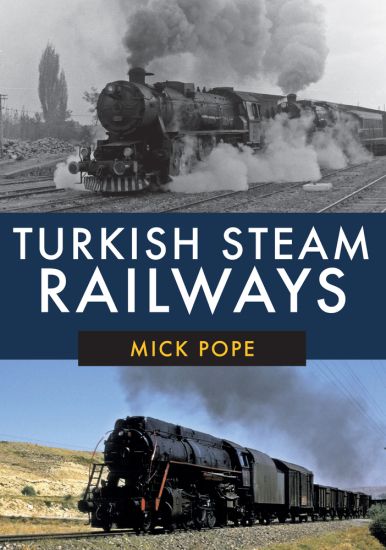
Turkey, the country that straddles Europe and Asia, reflects this in the mix of cultures from both continents to be found there. The western and southern coastal areas are the most familiar to Western holidaymakers but the interior, Black Sea coast and east of the country are less visited. As Western railway enthusiasts found less and less to attract them in Europe they discovered that Turkey had steam locomotives aplenty, reflecting the fact that this was a country that had embraced Western industrialisation and modernisation ahead of most other Middle Eastern countries. This, and the shifting alliances Turkey had embraced, was also reflected in the variety of countries that had built the steam locomotives. Examples could be found from builders in Germany, Sweden, France, the United States and the United Kingdom. These varied from ancient specimens of Prussian State railway design to modern ten coupled designs built after the Second World War. Finding and photographing trains presented certain problems. Train services in this large country could be sparse, timekeeping notoriously unreliable and the roads, very often of dirt, hazardous. However, if these problems could be endured the landscape offered fantastic photographic opportunities.
The Corgi model of James Bond’s Aston Martin DB5 is the best-selling toy car ever produced and found a place in the hearts of children of all ages around the world. Corgi Toys was founded in Swansea in 1956 and was always highly innovative, introducing many new gimmicks that children loved. Corgi became the first maker of zinc diecast toy cars to compete successfully with Dinky Toys and the Matchbox 1-75 series made by Lesney. Author Mick Overton provides an informative introduction to Corgi Toys, illustrated with beautiful, previously unpublished photographs that show the most desirable variants worth collecting when spotted in an antique store or at a car-boot sale. He also covers the pitfalls of Ebay, fakes and customs. This book is part of the Britain’s Heritage series, which provides definitive introductions to the riches of Britain’s past, and is the perfect way to get acquainted with Corgi Toys in all their variety.
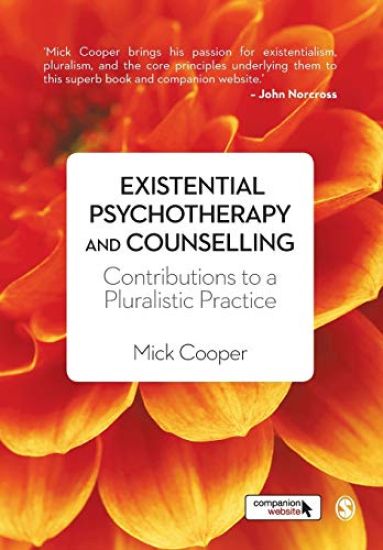
What does it mean to practice therapy in an existential way? What are the different existential approaches? What are their strengths and limitations? Focusing on practical, face-to-face work with clients, the book introduces students to six existential therapies, highlighting areas of commonality and difference, and discusses key figures and their contributions, including Yalom, van Deurzen, Spinelli, Frankl and Laing. It outlines the critical perspectives and key debates, and presents implications for practice, reflection and further reading. Fully updated to reflect current issues, this book now includes: · Sections presenting research evidence for each approach · An extended case study running through the book, demonstrating how different therapies might approach the same case · Chapter overviews, questions for reflection, and additional case studies of actual existential practice.
What does it mean to practice therapy in an existential way? What are the different existential approaches? What are their strengths and limitations? Focusing on practical, face-to-face work with clients, the book introduces students to six existential therapies, highlighting areas of commonality and difference, and discusses key figures and their contributions, including Yalom, van Deurzen, Spinelli, Frankl and Laing. It outlines the critical perspectives and key debates, and presents implications for practice, reflection and further reading. Fully updated to reflect current issues, this book now includes: · Sections presenting research evidence for each approach · An extended case study running through the book, demonstrating how different therapies might approach the same case · Chapter overviews, questions for reflection, and additional case studies of actual existential practice.
This book is for trainees and practitioners across the orientations who wish to incorporate an existential approach into their practice. Using a pluralistic perspective that recognises the diversity of clients and their individual needs, it shows trainees how and when existential concepts and practices can be used alongside other approaches. A wealth of resources and the author’s writing style make this is one of the most accessible and inspiring introductions to existential therapy. Videos of existential counselling in practice and written case studies ensure existential theory is illustrated in practice, while reflective questions and exercises help trainees relate notoriously complex existential themes to their own knowledge and experience. A companion website offers relevant journal articles, video tutorials on existential counselling skills, the results of the author’s survey of the ‘Top 10’ existential films, novels and songs, and much more. This passionate and insightful book is the ideal guide to help your trainees understand existential therapy and learn how to integrate its ideas and practices into their therapeutic work. Mick Cooper is Professor of Counselling Psychology at University of Roehampton.
This book is for trainees and practitioners across the orientations who wish to incorporate an existential approach into their practice. Using a pluralistic perspective that recognises the diversity of clients and their individual needs, it shows trainees how and when existential concepts and practices can be used alongside other approaches. A wealth of resources and the author’s writing style make this is one of the most accessible and inspiring introductions to existential therapy. Videos of existential counselling in practice and written case studies ensure existential theory is illustrated in practice, while reflective questions and exercises help trainees relate notoriously complex existential themes to their own knowledge and experience. A companion website offers relevant journal articles, video tutorials on existential counselling skills, the results of the author’s survey of the ‘Top 10’ existential films, novels and songs, and much more. This passionate and insightful book is the ideal guide to help your trainees understand existential therapy and learn how to integrate its ideas and practices into their therapeutic work. Mick Cooper is Professor of Counselling Psychology at University of Roehampton.
In his ground-breaking new textbook, Mick Fryer offers students of Business Ethics clear explanations of a range of theoretical perspectives, along with examples of how these perspectives might be used to illuminate the ethical challenges presented by business practice. The book includes: Realistic scenarios which gently introduce a theory and demonstrate how it can be applied to a real-life ethical dilemma that everyone can relate to, such as borrowing money from a friendReal organisational case studies in each chapter which illustrate how each theory can be applied to real business situations. Cases include Nike, Coca Cola, BMW, Shell, Starbucks and GSK‘Pause for Reflection’ boxes and ‘Discussion Questions’ which encourage you to challenge the established notions of right and wrong, and empower you to develop your own moral codeVideo Activities in each chapter with accompanying QR codes which link to documentaries, films, debates and news items to get you thinking about real-life ethical dilemmas Visit the book’s companion website for self-test questions, additional web links and more at: study.sagepub.com/fryer
In his ground-breaking new textbook, Mick Fryer offers students of Business Ethics clear explanations of a range of theoretical perspectives, along with examples of how these perspectives might be used to illuminate the ethical challenges presented by business practice. The book includes: Realistic scenarios which gently introduce a theory and demonstrate how it can be applied to a real-life ethical dilemma that everyone can relate to, such as borrowing money from a friendReal organisational case studies in each chapter which illustrate how each theory can be applied to real business situations. Cases include Nike, Coca Cola, BMW, Shell, Starbucks and GSK‘Pause for Reflection’ boxes and ‘Discussion Questions’ which encourage you to challenge the established notions of right and wrong, and empower you to develop your own moral codeVideo Activities in each chapter with accompanying QR codes which link to documentaries, films, debates and news items to get you thinking about real-life ethical dilemmas Visit the book’s companion website for self-test questions, additional web links and more at: study.sagepub.com/fryer
The Masonic regalia of the Ancient and Accepted Scottish Rite from the 4th untill the 14th degree. Les decors Maconniques du Rite Ecossais Ancien et Accepte du 4e au 14e degre. De Vrijmetselaars regalia van de Aloude en Aangenome Schotse Ritus van de 4de tot de 14de graad.
We live in troubled times: climate crisis, war and authoritarian ‘populism’ are just some of the challenges we are currently facing. Never has there been such a need for a new approach to politics – nor such an opportunity for one. To create a world in which people thrive, we need to know what thriving is. Over the past century, psychotherapy – and its parent discipline, psychology – has built up a vibrant, nuanced and highly practical understanding of human wellbeing and distress. This book describes a progressive political approach that integrates insights from the psychotherapeutic and psychological domain, moving us from a politics of blame to a politics of understanding. In this vision of society – surrounded by a culture of radical acceptance – all individuals can live rich and fulfilling lives. We need those shaping our political landscape to understand psychological needs and processes more deeply to enhance our ability to work with others in a spirit of collaboration, dialogue and respect.
We live in troubled times: climate crisis, war and authoritarian ‘populism’ are just some of the challenges we are currently facing. Never has there been such a need for a new approach to politics – nor such an opportunity for one. To create a world in which people thrive, we need to know what thriving is. Over the past century, psychotherapy – and its parent discipline, psychology – has built up a vibrant, nuanced and highly practical understanding of human wellbeing and distress. This book describes a progressive political approach that integrates insights from the psychotherapeutic and psychological domain, moving us from a politics of blame to a politics of understanding. In this vision of society – surrounded by a culture of radical acceptance – all individuals can live rich and fulfilling lives. We need those shaping our political landscape to understand psychological needs and processes more deeply to enhance our ability to work with others in a spirit of collaboration, dialogue and respect.