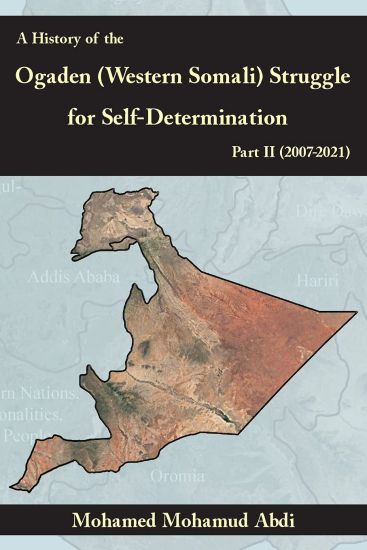
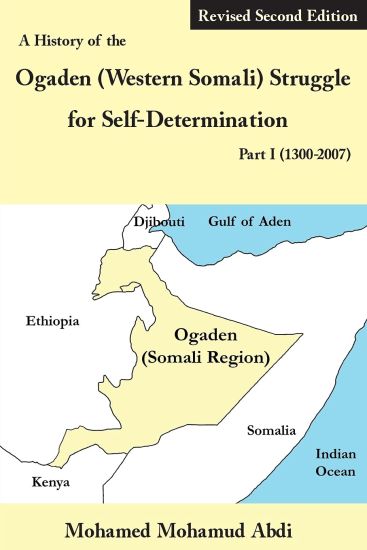
The Ogaden region/Somali state is inhabited by Somalis and is geographically and administratively part of Ethiopia, but its political status remains unsettled. The war between Ethiopia and the resistance began with the Ethiopian incursion into the territory and intensified after the completion of the occupation but has never stopped. Because the inhabitants rejected the Ethiopian annexation, successive Ethiopian regimes pursued repressive policies to continue the occupation. This repression and the ensuing resistance to both the occupation and subsequent violations of human rights has meant that the region has not seen real peace since its forced incorporation into Ethiopia. The consequences of this protracted war and the subsequent crackdowns have adversely and severely affected the lives and livelihoods of the inhabitants. As a result of this insecurity and the persistent repression by successive Ethiopian governments, normal life has become unattainable there, and instead, persistent hunger, refugee crises and human rights abuses have become the norms. The inhabitants are constantly displaced internally and externally. Over a million people fled to neighbouring countries during the 1970s and 1980s. This historical analysis consists of two parts. The first part begins with the root causes of the Ogaden conflict, highlights the different stages of the fighting and its impacts on the living conditions of the inhabitants, and ends with a discussion on the prospects for a resolution to the conflict. The second part picks up the history from where the first one ended, casting light on the progress and political and humanitarian consequences of the conflict for the inhabitants of the Somali Region and for the wider Horn of Africa. It concludes with a prediction of the future scenarios for conflict resolution.The Ogaden conflict is the main source of the wars and instability that persist in the Horn of Africa region. Because of this conflict's wider impacts on that part of the African continent, a resolution to this conflict will not only lead to the alleviation of the suffering of the inhabitants of the Ogaden region but will also immensely contribute to peace in the Horn of Africa. As a foundation for the study of Somali society in the Ogaden region, this historical book aims to shed light on the main issues affecting the conflict to contribute to the understanding of the problem and thereby hopefully to the resolution of the conflict.
This book is about the history of the Ogaden region. Since its forced incorporation into Ethiopia, the region has been a zone of conflict. The war between the Ethiopian occupiers and the resistance forces of the Somalis began with the first Ethiopian incursions. It intensified after the completion of the occupation and still persists despite intermittent periods of respite. Because of the inhabitants' rejection of the annexation, the oppressive policies that successive Ethiopian regimes pursued to maintain the occupation and the ensuing resistance to both the occupation and the subsequent violations of human rights, the region has not seen real peace since the occupation began. The protracted war and persistent repression have made normal life unattainable there, and instead, hunger, refugee crises and human rights abuses have become the norm. The inhabitants are constantly being displaced. Over a million people fled to neighbouring countries during the 1970s and 1980s. Despite the long suffering of the inhabitants of the Ogaden region, the victims did not receive the attention that was due from the international community. This history work consists of two parts. The first part begins with the root causes of the conflict and highlights the different stages of the struggle and its impacts. It ends with a discussion of the case for self-determination and the prospects for a resolution to the conflict. The second part picks up the history from where the first part ended, casting light on the political and humanitarian consequences of the conflict for the region's inhabitants and for the wider Horn region. It concludes with a prediction about future resolution scenarios.The Ogaden issue is crucial to the Horn of Africa. Because of the wider impacts that the conflict is having on this part of the African continent, a resolution to the Ogaden conflict would not only lead to the alleviation of the suffering of the inhabitants of the Ogaden region but also make that part of the world a better place to live in. Despite the superpowers' involvement in the conflict and its devastating consequences, serious attempts have not been made to resolve it. Ethiopia's voice has always been louder than that of the Ogaden region, and as a result, the issue has been misrepresented in international arenas. As a foundation for the study of the Somali Ogaden region, this history work aims to shed light on the main issues affecting the conflict, in order to contribute to a better understanding of the problem and, hopefully, to the resolution of the conflict.
A Song by the Aegean Sea is a song for the unsung heroes of the coast of Izmir, Turkey, or Smyrna, that cosmopolitan city through the different ages. The book celebrates the underbelly of the city; the gypsies selling flowers, the roving musicians, the mussel-sellers, and the protestors. The elements of the city’s coastline are also merged with the characters in an impressionistic, yet surreal canvas from a stranger’s point of view. The traveler, i.e., the poet, or the singer of the Aegean song yearns to become part of the scene.
This book examines the evolution of Islam in our modern world. The renowned Tunisian scholar Mohamed Haddad traces the history of the reformist movement and explains recent events related to the Islamic religion in Muslim countries and among Muslim minorities across the world. In scholarly terms, he evaluates the benefits and drawbacks of theological-political renovation, neo-reformism, legal reformism, mystical reformism, radical criticism, comprehensive history and new approaches within the study of Islam. The book brings to life the various historical, sociological, political and theological challenges and debates that have divided Muslims since the 19th century. The first two chapters address failed reforms in the past and introduce the reader to classical reformism and to Mohammed Abduh. Haddad ultimately proposes a non-confessional definition of religious reform, reinterpreting and adjusting a religious tradition to modern requirements. The second part of the book explores perspectives on contemporary Islam, the legacy of classical reformism and new paths forward. It suggests that the fundamentalism embodied in Wahhabism and Muslim Brotherhood has failed. Traditional Islam no longer attracts either youth or the elites. Mohamed Haddad shows how this paves the way for a new reformist departure that synthesizes modernism and core Islamic values.
This book examines the evolution of Islam in our modern world. The renowned Tunisian scholar Mohamed Haddad traces the history of the reformist movement and explains recent events related to the Islamic religion in Muslim countries and among Muslim minorities across the world. In scholarly terms, he evaluates the benefits and drawbacks of theological-political renovation, neo-reformism, legal reformism, mystical reformism, radical criticism, comprehensive history and new approaches within the study of Islam. The book brings to life the various historical, sociological, political and theological challenges and debates that have divided Muslims since the 19th century. The first two chapters address failed reforms in the past and introduce the reader to classical reformism and to Mohammed Abduh. Haddad ultimately proposes a non-confessional definition of religious reform, reinterpreting and adjusting a religious tradition to modern requirements. The second part of the book explores perspectives on contemporary Islam, the legacy of classical reformism and new paths forward. It suggests that the fundamentalism embodied in Wahhabism and Muslim Brotherhood has failed. Traditional Islam no longer attracts either youth or the elites. Mohamed Haddad shows how this paves the way for a new reformist departure that synthesizes modernism and core Islamic values.
This book introduces basic and practical information on fertigation to researchers, extension agents and growers. To provide understanding of the basic issues regarding the appropriate selection of fertilizer injectors, fertilizer compounds used in fertigation for growing various field and horticultural crops. The book provides useful basic principles and practical information concerning fertilizer management and fertigation techniques of field, horticulture, and medicinal and aromatic crops. The book focuses on the agronomic value of fertigation practice and provides the reader with best practical advice required for successful fertigation based on the field experience. This book summarizes the basic principles and practices of fertigation techniques to ensure accurate and efficient crop nutrition. The book consists of 5 chapters covering the following topics: Introduction to chemigation and fertigation, selecting an injector for fertilizer/chemicalinjection, fertilizers for fertigation, major, secondary, and micronutrient fertilizers used in fertigation, and fertigation practices: Egyptian case study. It also includes appendixes for fertigation calculation examples, calibration of an injection pump, calculating the quantities of fertilizers needed for fertigation, nutrients requirements per each ton of crop yield produced, macronutrient requirements for some filed, fiber, fruit, vegetable crops, and medicinal and aromatic plants.Fertigation is one of the smart practices that help attains sustainable food production and minimize environmental pollution. Fertigation is the application of dissolved mineral fertilizers, soil amendments, and other water-soluble products to the roots of crops through irrigation water. This book provides understanding of the basic issues regarding the appropriate selection of injectors and fertilizer compounds used in fertigation for growing various field and horticultural crops which are essential to attain higher productivity, increasing food security and reducing food contaminations. It also clarifies the advantages of fertigation and set solutions to overcome its disadvantages.
This book journeys through human history, beginning with the tribal age and ending with an option for what's to come after the knowledge age. It examines the profound influence that culture, civilization, and materialism have on the distribution of wealth, knowledge, and power. It critically examines the shortcomings of current education and healthcare systems, shedding light on the difficulties nations face in effectively addressing the needs of citizens and population including refugees. The author challenges the existing societal frameworks, advocating for the adoption of novel political and economic systems firmly grounded in the principles of justice, freedom, and equity. At the core of this is a folk-political system that values productivity and empowers workers and workforces to innovate.Written for a discerning audience of economists, policymakers, scholars, and students, the book shifts the paradigm of the knowledge age away from issues with power and toward a future that values justice, freedom, and sustainability. Readers will gain invaluable insights into reshaping our societies, fostering inclusive economic growth, and ensuring a better world for all.
This book journeys through human history, beginning with the tribal age and ending with an option for what's to come after the knowledge age. It examines the profound influence that culture, civilization, and materialism have on the distribution of wealth, knowledge, and power. It critically examines the shortcomings of current education and healthcare systems, shedding light on the difficulties nations face in effectively addressing the needs of citizens and population including refugees. The author challenges the existing societal frameworks, advocating for the adoption of novel political and economic systems firmly grounded in the principles of justice, freedom, and equity. At the core of this is a folk-political system that values productivity and empowers workers and workforces to innovate.Written for a discerning audience of economists, policymakers, scholars, and students, the book shifts the paradigm of the knowledge age away from issues with power and toward a future that values justice, freedom, and sustainability. Readers will gain invaluable insights into reshaping our societies, fostering inclusive economic growth, and ensuring a better world for all.
RAMADy, MahdiOPec in a sHALE oil world –where to NEXT? With PREFACE by Dr. Sadad Al Husseini , former Board Member and Executive Vice President , Saudi Aramco. "OPEC has played an important role since its founding and continues to do so, but it has to recognize that this role has now changed and the organization has to adapt to new challenges. This book provides some possible solutions" Abdulsamad Al Awadhi, former Kuwait National Representative at OPEC . "Authoritative, well-informed, and excellent account of the role of OPEC in managing the oil market, present, past, and future" Hassan Qabazard, former Director of Research Division , OPEC. ". The call for action by Mohamed Ramady and Wael Mahdy in this book makes it clear that time, and not oil, is the precious commodity that is running out fast on OPEC’s side", Sadad Al Husseini , former Board Member and EVP Saudi Aramco “OPEC is dead. Long live OPEC”. The organization is now going through a mid life crisis in its 54 years of existence trying to figure out where it goes next in a world whereOPEC has been relegated from being the energy swing producer, and Saudi Arabia as the ‘Sultan of the Swing,’ to one where it now faces competition from both non- OPEC traditional well as non-conventional shale producers. The Authors examine how OPEC has had to come to terms with the reality that the earlier decades ‘call on OPEC’ has now been replaced by a ‘call on non-OPEC’ and that a new ‘swing’ has been identified- the producers of shale oil. Drawing upon the Authors combined academic and practical first hand insights on OPEC, the book discusses how a new OPEC paradigm has emerged following the oil price rout of 2014, whereby the organization’s principal concern is now protecting market share, without being in charge unlike earlier fleeting periods of the late 1970’s, which brought with it a lasting myth of the OPEC cartel. Mohamed Ramady is Visiting Associate Professor, King Fahd University of Petroleum and Minerals, Saudi Arabia; Wael Mahdi is Bloomberg OPEC Energy Correspondent.
RAMADy, MahdiOPec in a sHALE oil world –where to NEXT? With PREFACE by Dr. Sadad Al Husseini , former Board Member and Executive Vice President , Saudi Aramco. "OPEC has played an important role since its founding and continues to do so, but it has to recognize that this role has now changed and the organization has to adapt to new challenges. This book provides some possible solutions" Abdulsamad Al Awadhi, former Kuwait National Representative at OPEC . "Authoritative, well-informed, and excellent account of the role of OPEC in managing the oil market, present, past, and future" Hassan Qabazard, former Director of Research Division , OPEC. ". The call for action by Mohamed Ramady and Wael Mahdy in this book makes it clear that time, and not oil, is the precious commodity that is running out fast on OPEC’s side", Sadad Al Husseini , former Board Member and EVP Saudi Aramco “OPEC is dead. Long live OPEC”. The organization is now going through a mid life crisis in its 54 years of existence trying to figure out where it goes next in a world whereOPEC has been relegated from being the energy swing producer, and Saudi Arabia as the ‘Sultan of the Swing,’ to one where it now faces competition from both non- OPEC traditional well as non-conventional shale producers. The Authors examine how OPEC has had to come to terms with the reality that the earlier decades ‘call on OPEC’ has now been replaced by a ‘call on non-OPEC’ and that a new ‘swing’ has been identified- the producers of shale oil. Drawing upon the Authors combined academic and practical first hand insights on OPEC, the book discusses how a new OPEC paradigm has emerged following the oil price rout of 2014, whereby the organization’s principal concern is now protecting market share, without being in charge unlike earlier fleeting periods of the late 1970’s, which brought with it a lasting myth of the OPEC cartel. Mohamed Ramady is Visiting Associate Professor, King Fahd University of Petroleum and Minerals, Saudi Arabia; Wael Mahdi is Bloomberg OPEC Energy Correspondent.
Revision with unchanged content. The wide adoption of XML and related technologies led to the rise of a new paradigm for applications development. Web Services: WS, extend the traditional role of the Web for a stronger support for business to business interactions. The WS paradigm is based on the exposure of WS functionality via an interface description which has the potential of making WS available for various kinds of end-users. Another very promising future of WS consists of the potential of composing basic WS to produce more complex WS with a wide range of functionalities. The SOA was proposed to position the key players in this new paradigm where main operations will be executed using technologies such as SOAP, WSDL, and UDDI. The management of Quality of Web services: QoWS, as integral part of WS management will play an important role for the success of this paradigm. In this work, we investigate the management of QoWS for basic and composite WS by taking it into consideration as part of a systematic process for the development of WS. We studied the development of a new framework that intends to capture major management operations and the necessary extensions of SOA to support QoWS management.