Kirjahaku
Etsi kirjoja tekijän nimen, kirjan nimen tai ISBN:n perusteella.
1000 tulosta hakusanalla Nicholas Muskovac
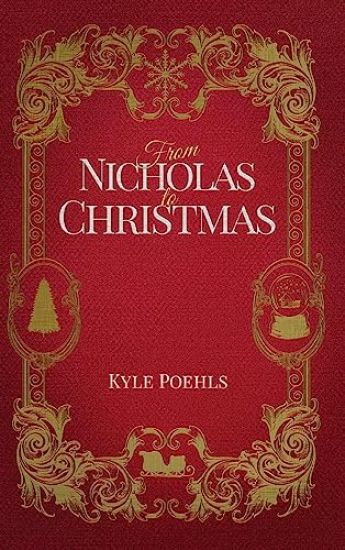
Embark on an extraordinary literary journey that will captivate the hearts of young children and adults alike. Step into a children's book like no other, offering a fresh and mesmerizing perspective that will keep your imagination soaring.Within the pages of this enchanting tale, you will be introduced to Nicholas, a skilled carpenter who possesses an unwavering dedication to helping those in need. Join him as he embarks on incredible adventures to distant lands, where he not only trades his craftsmanship but also spreads joy by sharing gifts with people from all walks of life.But everything changes when Nicholas crosses paths with a young girl named Mary. Little did he know that this fateful encounter would ignite a holiday spirit that transcends time and culture, becoming a cherished tradition celebrated by millions around the world.Prepare to be spellbound as this book unveils a secret magic, unlike anything you've ever imagined, that enables the delivery of gifts and Christmas miracles to countless souls. Discover a world where belief in this magic prolongs the wonder and excitement, igniting the imagination of young and old alike.Unearth the origins of cherished holiday traditions as this captivating narrative takes you on a breathtaking journey, leaving no question unanswered. Ever wondered how Santa Claus miraculously traverses the globe in a single night? How the magic of Christmas brings immeasurable joy to billions across the world? Or perhaps, the very origins of the jolly old man himself?This is the story of Nicholas before he became the iconic Santa Claus, revealing his extraordinary encounter with a unique form of magic, the birth of the Christmas Spirit, and the inception of the traditions we hold dear. Brace yourself for a tale that will ignite your curiosity and reignite the youthful spirit within.
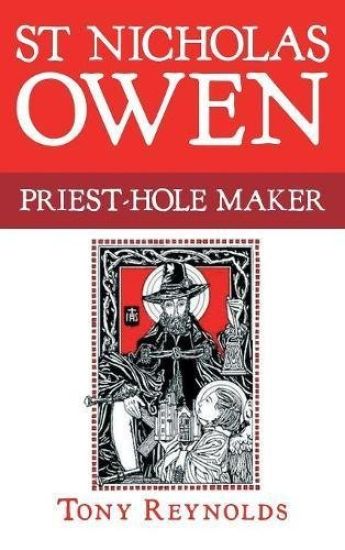
During the reigns of Elizabeth I and James I it was high treason, and therefore death, to be a Catholic priest in England. It was consequently vital that there be somewhere to hide when the pursuivants came battering at the door. One name is prominent in the construction of priest-holes that of Nicholas Owen. A very short and later crippled man, he built the majority of these shelters, so saving the lives of untold numbers of priests and fugitives. His early apprenticeship as a joiner and his knowledge of construction served him well as he burrowed into walls and constructed near-invisible entrance holes. Although a well-known figure in Recusant studies, and almost invariably mentioned in histories of the Gunpowder Plot, this is his first detailed biography. St Nicholas Owen was born in Oxford, the son of a carpenter. Two of his brothers were to train as Catholic priests on the continent. A third, Henry, the first apprentice at what was to become the Oxford University Press, went on to assist the Mission with the production of Catholic books and pamphlets. Nicholas was himself apprenticed to an Oxford joiner in 1577. Acting as a servant to Fr Henry Garnet SJ for nearly twenty years, Owen had many adventures, narrowly evading capture, and assisted in the escape of the Jesuit Fr John Gerard from the Tower of London in 1597. St Nicholas was tortured at the Poultry Compter in 1594 but later released. He was finally taken in one of his own priest-holes during the rigorous pursuit of Catholics that followed the failure of the Gunpowder Plot, and died upon the rack in the Tower of London in 1606. Evidence of St Nicholas Owen's work is still visible in country houses and mansions across England, and recent research has unveiled greater detail of his fascinating career assisting the English Mission at the close of the 16th and beginning of the 17th centuries. Tony Reynolds read Architecture at University College London in the 'sixties, and became interested in the application of computers to architecture, then very much in its pioneering stages. A staunch member of the caving club at college, this love of confined spaces combined with his architectural training may have given him special insight into the construction of priest-holes. Working as a computer manager and resident programmer, he has published several textbooks on computer use by architects, and, most recently, a well-received book of pastiche Sherlock Holmes stories.
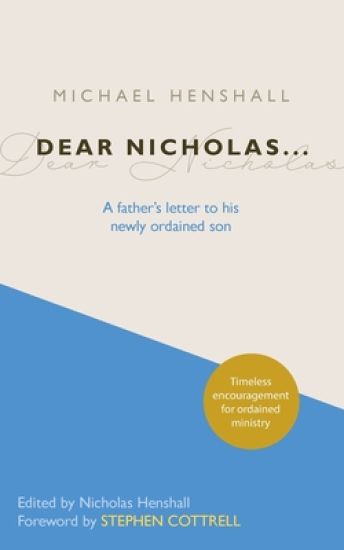
Dear Nicholas... was originally written in 1988 as a letter by the then Bishop of Liverpool Michael Henshall to his newly-ordained son. Revised and edited for today's audience, it continues to be a source of encouragement and challenge to reflect upon for all in ministry today, whether newly-ordained or in service for many years.Among the many books on ordained ministry, Dear Nicholas... stands out with its deeply personal and direct approach to the challenges and rewards of the ordained life.This new edition, with a Foreword by Stephen Cottrell, Bishop of Chelmsford, includes an Epilogue by the original recipient of the letter, Nicholas Henshall, who is now Dean of Chelmsford. It is an ideal gift for all in ministry or ministerial training.
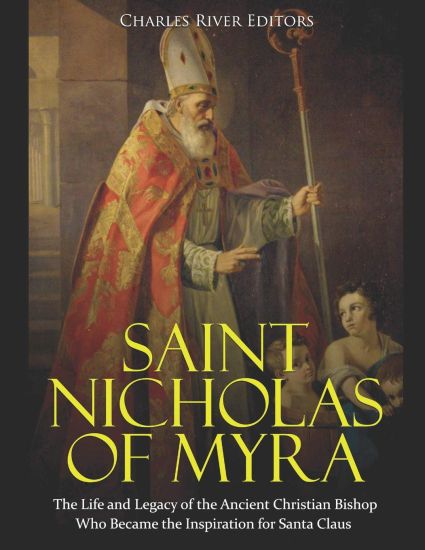
Saint Nicholas of Myra: The Life and Legacy of the Ancient Christian Bishop Who Became the Inspiration for Santa Claus
Charles River
Independently Published
2018
nidottu
*Includes pictures*Includes ancient accounts*Includes online resources and a bibliography for further readingChristmas is the most important holiday of the year. After the corresponding days that exalt the national pride of each country, such as Independence Day in the United States, Victory Day in Russia, or Bastille Day in France, it's December 25 that articulates the life, the work and the economy in much of the world, including many non-Christian countries. Since ancient times, the beginning of winter has been the occasion for most people to eat, drink, dance, and get together to beat the drum and take a break. One of the most important figures constantly brought up during the Christmas season is Saint Nicholas, despite the fact most people know little about him. In the 21st century, Saint Nicholas (or as people often refer to him, "Jolly Old Saint Nick") has been reduced to a pretend, adorably portly grandfather-type, a visual often accompanied by a fleet of magical reindeer and a bustling workshop staffed by endlessly cheerful elves. Most assume, quite understandably, that Saint Nicholas was the fount of inspiration that Santa Claus' myth weavers steadily drank from over the centuries. While this is accurate to some extent, it is important to remember that the parallels between Saint Nicholas and the present-day Santa Claus marketed by mass media are actually quite limited. Santa Claus is a man with many monikers - Kris Kringle, Father Christmas, Papai Noel, among others - and is perhaps the most iconic and internationally recognized personality in recent history. Pop culture enthusiasts know to trace Santa's roots to Saint Nicholas, and it's widely accepted that Coke manufactured the contemporary image of Santa embraced by the world today. On both counts, they are only partially correct, because in reality, Santa is a colorful amalgamation of different figures who appear in various countries' folk stories across a wide range of centuries.For starters, despite centuries of unabashed whitewashing, science has confirmed that Saint Nicholas, as his birthplace should suggest, was not white, nor was he excessively overweight. In the early 2000s, teams of researchers acquired copies of x-rays and logs of measurements originally compiled by scientists of Nicholas's skull in 1950, in the hopes of examining its framework in further detail. In 2004, a facial anthropologist at the University of Manchester, Dr. Caroline Wilkinson, succeeded in producing a forensically reconstructed 3D model of Nicholas's face; the reconstruction was refined in 2014. In both reconstructions, which captured Nicholas around the time of his death, his skin is olive-toned. It seems that he did sport a full beard, but it was untamed, scraggly, and silvery. He was balding and had benign, but forgettable features, with slightly protruding ears, brown eyes the shape of almonds, and small, sunken cheeks. And whereas Santa is, to most young ones, deceptively tremendous in both height and girth, more so when pictured with his tiny elves, Nicholas was roughly 5'6. Then there are the scientists who insist that he was shorter, and that his height was considerably below average, at just about 5'0.
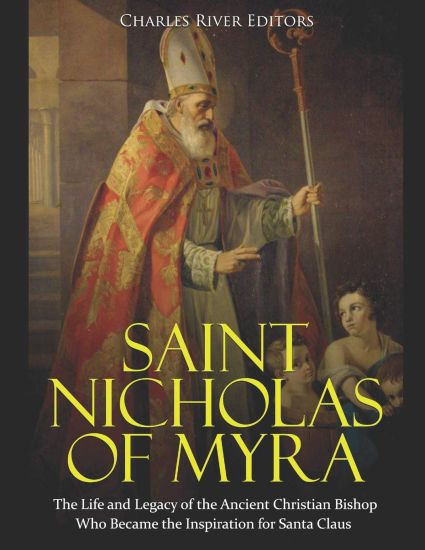
Saint Nicholas of Myra: The Life and Legacy of the Ancient Christian Bishop Who Became the Inspiration for Santa Claus
Charles River
Independently Published
2018
nidottu
*Includes pictures*Includes ancient accounts*Includes online resources and a bibliography for further readingChristmas is the most important holiday of the year. After the corresponding days that exalt the national pride of each country, such as Independence Day in the United States, Victory Day in Russia, or Bastille Day in France, it's December 25 that articulates the life, the work and the economy in much of the world, including many non-Christian countries. Since ancient times, the beginning of winter has been the occasion for most people to eat, drink, dance, and get together to beat the drum and take a break. One of the most important figures constantly brought up during the Christmas season is Saint Nicholas, despite the fact most people know little about him. In the 21st century, Saint Nicholas (or as people often refer to him, "Jolly Old Saint Nick") has been reduced to a pretend, adorably portly grandfather-type, a visual often accompanied by a fleet of magical reindeer and a bustling workshop staffed by endlessly cheerful elves. Most assume, quite understandably, that Saint Nicholas was the fount of inspiration that Santa Claus' myth weavers steadily drank from over the centuries. While this is accurate to some extent, it is important to remember that the parallels between Saint Nicholas and the present-day Santa Claus marketed by mass media are actually quite limited. Santa Claus is a man with many monikers - Kris Kringle, Father Christmas, Papai Noel, among others - and is perhaps the most iconic and internationally recognized personality in recent history. Pop culture enthusiasts know to trace Santa's roots to Saint Nicholas, and it's widely accepted that Coke manufactured the contemporary image of Santa embraced by the world today. On both counts, they are only partially correct, because in reality, Santa is a colorful amalgamation of different figures who appear in various countries' folk stories across a wide range of centuries.For starters, despite centuries of unabashed whitewashing, science has confirmed that Saint Nicholas, as his birthplace should suggest, was not white, nor was he excessively overweight. In the early 2000s, teams of researchers acquired copies of x-rays and logs of measurements originally compiled by scientists of Nicholas's skull in 1950, in the hopes of examining its framework in further detail. In 2004, a facial anthropologist at the University of Manchester, Dr. Caroline Wilkinson, succeeded in producing a forensically reconstructed 3D model of Nicholas's face; the reconstruction was refined in 2014. In both reconstructions, which captured Nicholas around the time of his death, his skin is olive-toned. It seems that he did sport a full beard, but it was untamed, scraggly, and silvery. He was balding and had benign, but forgettable features, with slightly protruding ears, brown eyes the shape of almonds, and small, sunken cheeks. And whereas Santa is, to most young ones, deceptively tremendous in both height and girth, more so when pictured with his tiny elves, Nicholas was roughly 5'6. Then there are the scientists who insist that he was shorter, and that his height was considerably below average, at just about 5'0.
Saint Nicholas and Santa Claus: The History of the Man and the Character Behind the Most Popular Christmas Traditions
Charles River
Independently Published
2019
nidottu
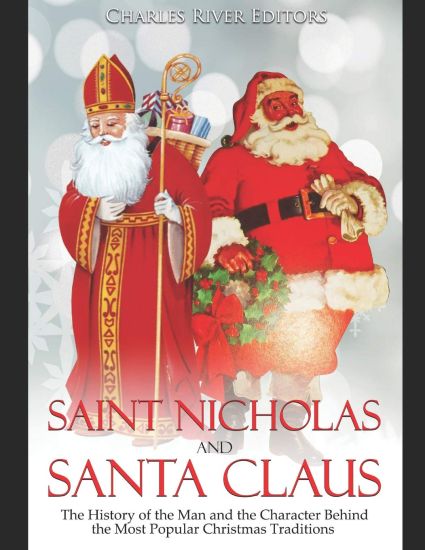
*Includes pictures*Includes contemporary accounts*Includes online resources and a bibliography for further readingChristmas is the most important holiday of the year. After the corresponding days that exalt the national pride of each country, such as Independence Day in the United States, Victory Day in Russia, or Bastille Day in France, it's December 25 that articulates the life, the work and the economy in much of the world, including many non-Christian countries. Since ancient times, the beginning of winter has been the occasion for most people to eat, drink, dance, and get together to beat the drum and take a break. Especially since the 20th century on, the days adjacent to the holiday have become an occasion to do big business. The winter season is the most solid stimulus for the economy - more than any fiscal package - since the incomes of families, spending, credit, and consumption in all productive sectors are significantly increased. In the United States alone, Christmas sales are estimated to generate $3 trillion. One of the most important figures constantly brought up during the Christmas season is Saint Nicholas, despite the fact most people know little about him. In the 21st century, Saint Nicholas (or as people often refer to him, "Jolly Old Saint Nick") has been reduced to a pretend, adorably portly grandfather-type, a visual often accompanied by a fleet of magical reindeer and a bustling workshop staffed by endlessly cheerful elves. Most assume, quite understandably, that Saint Nicholas was the fount of inspiration that Santa Claus' myth weavers steadily drank from over the centuries. While this is accurate to some extent, it is important to remember that the parallels between Saint Nicholas and the present-day Santa Claus marketed by mass media are actually quite limited. As a result, this internationally celebrated figure has become more fiction than fact. However, when historians peel back the superficial layers of whimsy and caricatural perkiness swathed around his name, an image arises of a far more complex and fascinating character who did more than kick off the timeless tradition of gift-giving. Nicholas was not just a seasonal gift-giver, but a philanthropist who dedicated his life to helping the disadvantaged. He was not just a beloved bishop, but a fierce defender of the faith who remained undaunted in the face of persecution. To brand him a pious and God-fearing individual would be a massive understatement - indeed, he was, to those around him, the definition of a walking divinity, and an unrivaled miracle-worker sent straight from Heaven.Meanwhile, the turning point for old St. Nicholas, now Santa Claus, came with the December 24, 1881 edition of Harper s Weekly. Artist Thomas Nast gave him his definitive look for the Christmas issue as an old man with a huge round belly and a belt, a thick white beard, a red nose, a cap, mistletoe on his head, a miniature horse toy in one hand, a pipe between his fingers, and a child hanging from his neck. Ever since, Santa has been known the world over for being delightfully paunchy and endlessly jolly. To most, these two descriptors alone are enough to conjure up his name, and lead them to envision a round-bellied, grandfather-type, clad in a fur-trimmed, cherry-red ensemble, armed with candy canes and a bottomless sack of presents, and blessed with a bushy, silvery-white beard.Saint Nicholas and Santa Claus: The History of the Man and the Character Behind the Most Popular Christmas Traditions looks at what the real bishop's life was like, and how he served as the historical inspiration for Santa. Along with pictures depicting important people, places, and events, you will learn about Saint Nicholas and Santa Claus like never before.
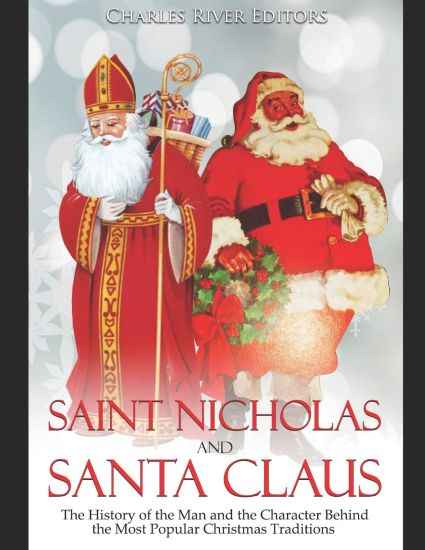
Saint Nicholas and Santa Claus: The History of the Man and the Character Behind the Most Popular Christmas Traditions
Charles River
Independently Published
2019
nidottu
*Includes pictures*Includes contemporary accounts*Includes online resources and a bibliography for further readingChristmas is the most important holiday of the year. After the corresponding days that exalt the national pride of each country, such as Independence Day in the United States, Victory Day in Russia, or Bastille Day in France, it's December 25 that articulates the life, the work and the economy in much of the world, including many non-Christian countries. Since ancient times, the beginning of winter has been the occasion for most people to eat, drink, dance, and get together to beat the drum and take a break. Especially since the 20th century on, the days adjacent to the holiday have become an occasion to do big business. The winter season is the most solid stimulus for the economy - more than any fiscal package - since the incomes of families, spending, credit, and consumption in all productive sectors are significantly increased. In the United States alone, Christmas sales are estimated to generate $3 trillion. One of the most important figures constantly brought up during the Christmas season is Saint Nicholas, despite the fact most people know little about him. In the 21st century, Saint Nicholas (or as people often refer to him, "Jolly Old Saint Nick") has been reduced to a pretend, adorably portly grandfather-type, a visual often accompanied by a fleet of magical reindeer and a bustling workshop staffed by endlessly cheerful elves. Most assume, quite understandably, that Saint Nicholas was the fount of inspiration that Santa Claus' myth weavers steadily drank from over the centuries. While this is accurate to some extent, it is important to remember that the parallels between Saint Nicholas and the present-day Santa Claus marketed by mass media are actually quite limited. As a result, this internationally celebrated figure has become more fiction than fact. However, when historians peel back the superficial layers of whimsy and caricatural perkiness swathed around his name, an image arises of a far more complex and fascinating character who did more than kick off the timeless tradition of gift-giving. Nicholas was not just a seasonal gift-giver, but a philanthropist who dedicated his life to helping the disadvantaged. He was not just a beloved bishop, but a fierce defender of the faith who remained undaunted in the face of persecution. To brand him a pious and God-fearing individual would be a massive understatement - indeed, he was, to those around him, the definition of a walking divinity, and an unrivaled miracle-worker sent straight from Heaven.Meanwhile, the turning point for old St. Nicholas, now Santa Claus, came with the December 24, 1881 edition of Harper s Weekly. Artist Thomas Nast gave him his definitive look for the Christmas issue as an old man with a huge round belly and a belt, a thick white beard, a red nose, a cap, mistletoe on his head, a miniature horse toy in one hand, a pipe between his fingers, and a child hanging from his neck. Ever since, Santa has been known the world over for being delightfully paunchy and endlessly jolly. To most, these two descriptors alone are enough to conjure up his name, and lead them to envision a round-bellied, grandfather-type, clad in a fur-trimmed, cherry-red ensemble, armed with candy canes and a bottomless sack of presents, and blessed with a bushy, silvery-white beard.Saint Nicholas and Santa Claus: The History of the Man and the Character Behind the Most Popular Christmas Traditions looks at what the real bishop's life was like, and how he served as the historical inspiration for Santa. Along with pictures depicting important people, places, and events, you will learn about Saint Nicholas and Santa Claus like never before.
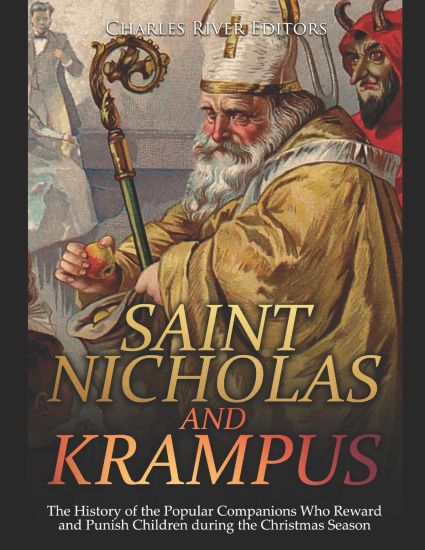
Saint Nicholas and Krampus: The History of the Popular Companions Who Reward and Punish Children during the Christmas Season
Charles River
Independently Published
2019
nidottu
*Includes pictures*Includes contemporary accounts*Includes online resources and a bibliography for further readingChristmas is the most important holiday of the year. After the corresponding days that exalt the national pride of each country, such as Independence Day in the United States, Victory Day in Russia, or Bastille Day in France, it's December 25 that articulates the life, the work and the economy in much of the world, including many non-Christian countries. Since ancient times, the beginning of winter has been the occasion for most people to eat, drink, dance, and get together to beat the drum and take a break. Especially since the 20th century on, the days adjacent to the holiday have become an occasion to do big business. The winter season is the most solid stimulus for the economy - more than any fiscal package - since the incomes of families, spending, credit, and consumption in all productive sectors are significantly increased. In the United States alone, Christmas sales are estimated to generate $3 trillion. One of the most important figures constantly brought up during the Christmas season is Saint Nicholas, despite the fact most people know little about him. In the 21st century, Saint Nicholas (or as people often refer to him, "Jolly Old Saint Nick") has been reduced to a pretend, adorably portly grandfather-type, a visual often accompanied by a fleet of magical reindeer and a bustling workshop staffed by endlessly cheerful elves. Most assume, quite understandably, that Saint Nicholas was the fount of inspiration that Santa Claus' myth weavers steadily drank from over the centuries. While this is accurate to some extent, it is important to remember that the parallels between Saint Nicholas and the present-day Santa Claus marketed by mass media are actually quite limited. Santa Claus is a man with many monikers - Kris Kringle, Father Christmas, Papai Noel, among others - and is perhaps the most iconic and internationally recognized personality in recent history. Pop culture enthusiasts know to trace Santa's roots to Saint Nicholas, and it's widely accepted that Coke manufactured the contemporary image of Santa embraced by the world today. On both counts, they are only partially correct, because in reality, Santa is a colorful amalgamation of different figures who appear in various countries' folk stories across a wide range of centuries.After Nicholas of Myra's death, December 6 became his feast day, and over the centuries, children anticipated his appearance with gifts. However, other children, particularly those of the mischievous sort, trembled under their covers on December 6, because they could not look forward to tinkling sleigh bells or belly-shaking laughs. Instead, they feared the disconcerting sounds of heavy breathing, guttural growls, and rattling chains, all of which came from the terrifying Krampus. Despite the best efforts of the Catholic Church and other conservative groups, Krampus is in the midst of a major Renaissance, penetrating not only modern literature, but even becoming a fixture of pop culture. This is evidenced by the creature's recent starring roles in the films Krampus, Night of the Krampus, and Mother Krampus, and its cameos in such TV shows and animations as Grimm, Supernatural, American Dad, and Venture Brothers.Saint Nicholas and Krampus: The History of the Popular Companions Who Reward and Punish Children during the Christmas Season looks at what the real St. Nicholas's life was like, how he served as the historical inspiration for Santa, and how Krampus developed as a sidekick of sorts. Along with pictures depicting important people, places, and events, you will learn about Saint Nicholas and Krampus like never before.
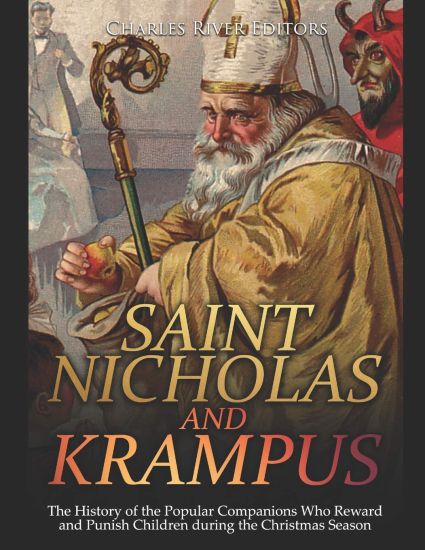
Saint Nicholas and Krampus: The History of the Popular Companions Who Reward and Punish Children during the Christmas Season
Charles River
Independently Published
2019
nidottu
*Includes pictures*Includes contemporary accounts*Includes online resources and a bibliography for further readingChristmas is the most important holiday of the year. After the corresponding days that exalt the national pride of each country, such as Independence Day in the United States, Victory Day in Russia, or Bastille Day in France, it's December 25 that articulates the life, the work and the economy in much of the world, including many non-Christian countries. Since ancient times, the beginning of winter has been the occasion for most people to eat, drink, dance, and get together to beat the drum and take a break. Especially since the 20th century on, the days adjacent to the holiday have become an occasion to do big business. The winter season is the most solid stimulus for the economy - more than any fiscal package - since the incomes of families, spending, credit, and consumption in all productive sectors are significantly increased. In the United States alone, Christmas sales are estimated to generate $3 trillion. One of the most important figures constantly brought up during the Christmas season is Saint Nicholas, despite the fact most people know little about him. In the 21st century, Saint Nicholas (or as people often refer to him, "Jolly Old Saint Nick") has been reduced to a pretend, adorably portly grandfather-type, a visual often accompanied by a fleet of magical reindeer and a bustling workshop staffed by endlessly cheerful elves. Most assume, quite understandably, that Saint Nicholas was the fount of inspiration that Santa Claus' myth weavers steadily drank from over the centuries. While this is accurate to some extent, it is important to remember that the parallels between Saint Nicholas and the present-day Santa Claus marketed by mass media are actually quite limited. Santa Claus is a man with many monikers - Kris Kringle, Father Christmas, Papai Noel, among others - and is perhaps the most iconic and internationally recognized personality in recent history. Pop culture enthusiasts know to trace Santa's roots to Saint Nicholas, and it's widely accepted that Coke manufactured the contemporary image of Santa embraced by the world today. On both counts, they are only partially correct, because in reality, Santa is a colorful amalgamation of different figures who appear in various countries' folk stories across a wide range of centuries.After Nicholas of Myra's death, December 6 became his feast day, and over the centuries, children anticipated his appearance with gifts. However, other children, particularly those of the mischievous sort, trembled under their covers on December 6, because they could not look forward to tinkling sleigh bells or belly-shaking laughs. Instead, they feared the disconcerting sounds of heavy breathing, guttural growls, and rattling chains, all of which came from the terrifying Krampus. Despite the best efforts of the Catholic Church and other conservative groups, Krampus is in the midst of a major Renaissance, penetrating not only modern literature, but even becoming a fixture of pop culture. This is evidenced by the creature's recent starring roles in the films Krampus, Night of the Krampus, and Mother Krampus, and its cameos in such TV shows and animations as Grimm, Supernatural, American Dad, and Venture Brothers.Saint Nicholas and Krampus: The History of the Popular Companions Who Reward and Punish Children during the Christmas Season looks at what the real St. Nicholas's life was like, how he served as the historical inspiration for Santa, and how Krampus developed as a sidekick of sorts. Along with pictures depicting important people, places, and events, you will learn about Saint Nicholas and Krampus like never before.
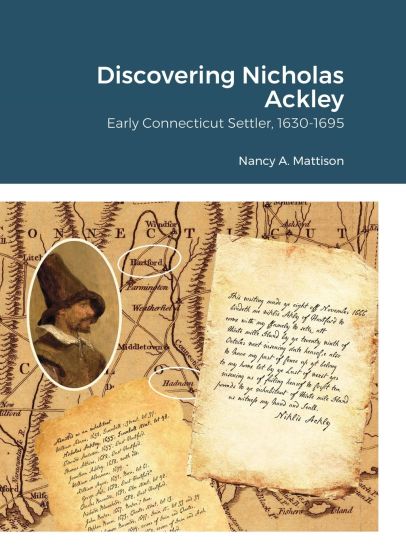
This genealogy focuses on Nicholas Ackley, born about 1630 most likely in the East Anglia area of England to Puritan parents. He arrived in Hartford, Connecticut about 1650. In 1662, Nicholas was one of 28 young men who agreed to carve a new town out of the wilderness at what became Haddam, Connecticut. Nicholas and Hannah Ackley welcomed 10 children, 5 boys and 5 girls. After Hannah's death in the mid-1680s, Nicholas married the widow Miriam. Less than a decade later, Nicholas Ackley died, on 29 April 1695 in Haddam. Nearly half a millennium later, myths and errors about Nicholas Ackley and his family are splashed over various genealogy sites on the internet. This book details what documented facts exist and what else is most likely to be true, using the norms and customs of the time as a guide. It sets the Ackleys in the context of early Connecticut, providing a richer view of their lives than just names and dates.
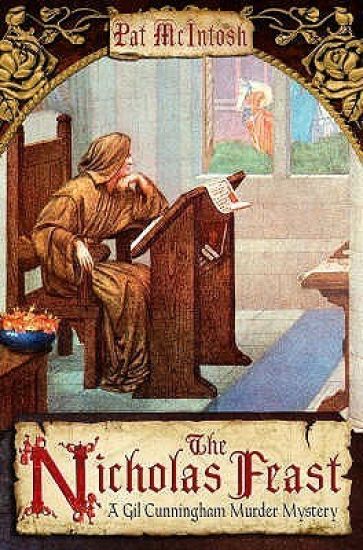
Glasgow 1492. Gil Cunningham remarked later that if he had known he would find a corpse in the university coal house, he would never have gone to the Arts Faculty feast.In this mysterious adventure, Gil Cunningham returns to his old university for the Nicholas Feast, where he and his colleagues are entertained by a play presented by some of the students. One of the actors, William Irvine, is later found murdered and Gil assisted by Alys, begins to disentangle a complex web of espionage and blackmail involving William's tutors and fellow students. Matters are further complicated by the arrival of Gil's formidable mother who is determined to inspect his betrothed. Little do Alys and Gil realise that it will be she who provides the final, vital key to unmask the murderer and lay his motives clear.

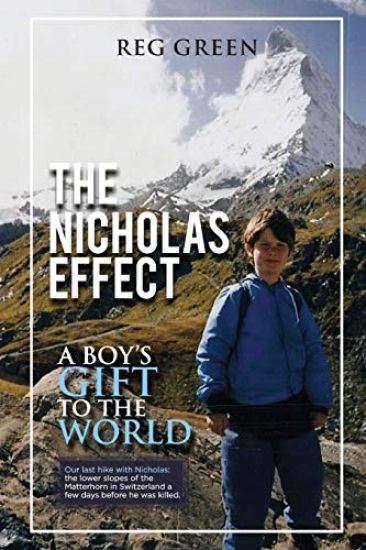
This is the story of how a seven-year old American boy, Nicholas Green, was shot in a botched robbery while traveling along a major highway in the south of Italy on a family vacation, how his parents, Reg and Maggie Green, donated his organs and corneas to seven very sick Italians, four of them teenagers and how that decision changed the views of millions of people around the world about organ donation.In Italy alone donation rates in the next 10 years tripled, a rate of increase no other country has ever come close to so that thousands of people are alive there who would now be dead. Newspaper and television channels around the world covered the story and its aftermath: an increase in understanding worldwide of the power of a single decision to save multiple lives. "The Nicholas Effect" describes every stage in how this one decision changed the world's view of what until then had been to most people an obscure and frightening surgical procedure. It tells how the seven recipients, some on the point of death, resumed their lives, including one who had a baby four years later and called him Nicholas. It tells how the Green family adapted to life without Nicholas including the birth of twins to Maggie, two years after Nicholas' death and how Nicholas' sister, Eleanor, four years old at the time of the shooting, found the strength to overcome his loss and deal with the whirlwind in which meeting celebrities and photo sessions with leading politicians became a way of life.The book covers the arrest, trial and conviction of two Mafia men who had attacked the Greens' rented car because they thought it was carrying a cargo of jewelry. It describes in detail the making of a made-for-television movie, "Nicholas' Gift," starring Jamie Lee Curtis and Alan Bates which has been seen by a hundred million people worldwide. It ends on a note of hope, reflecting on the much-increased numbers of people around the world who are now willing to donate a loved one's organs to complete strangers.
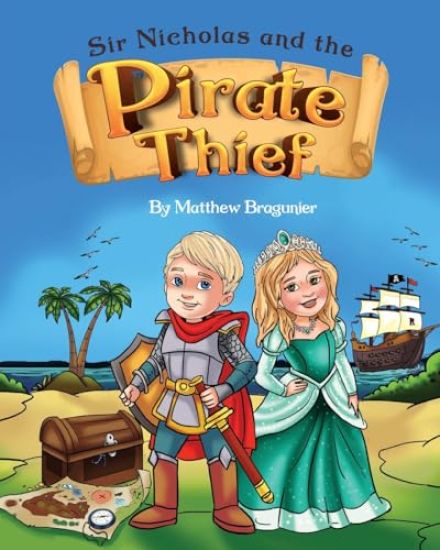
A Knight. A Princess. A Pirate.... and a Stolen Treasure.A pirate ship has landed on the shore of Mystical Springs, and the townspeople are in an uproar Their most valuable treasures have gone missing, and all signs point to Pirate Robert. Princess Amelia and Sir Nicholas set out to uncover the truth-but not everything is as it seems.Will they find the missing treasure? And what will happen when they finally come face-to-face with the pirate?A thrilling journey full of surprises, brave choices, and the power of second chances that will keep young readers hooked until the very last page
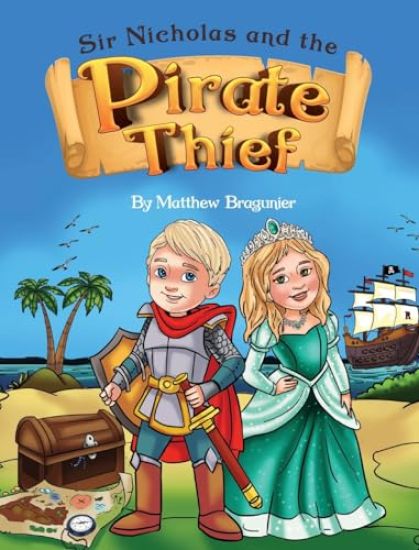
A Knight. A Princess. A Pirate.... and a Stolen Treasure.A pirate ship has landed on the shore of Mystical Springs, and the townspeople are in an uproar Their most valuable treasures have gone missing, and all signs point to Pirate Robert. Princess Amelia and Sir Nicholas set out to uncover the truth-but not everything is as it seems.Will they find the missing treasure? And what will happen when they finally come face-to-face with the pirate?A thrilling journey full of surprises, brave choices, and the power of second chances that will keep young readers hooked until the very last page
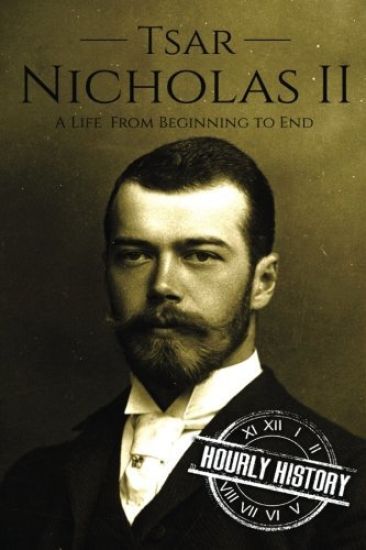
Tsar Nicholas II Reigning from 1894 to 1917, Nicholas II was the last emperor of Russia. His rule served as the bookends between what were essentially two Russian empires; the one that his forefathers carved out through imperial ambition and the one dictated by the zealous communists of the Soviet Union bent on socialist expansion. Nicholas was by most accounts a conflicted ruler; a man viewed as kind and generous in his mannerisms yet alleged to be greatly disconnected and apathetic toward the subjects he was supposed to rule over. Inside you will read about... - Nicholas and the Funeral Bride - The Coronation Tragedy - Bloody Sunday - Nicholas' Reluctant Reforms - Three Hundred Years of Romanov Rule - The Tsar and World War I - The Last Russian Tsar And much more Find out how this last Russian tsar rose to power and oversaw the end of a 300-year family dynasty as it teetered, tottered, and finally fell over the edge of oblivion. This is the story of Tsar Nicholas II.