Kirjojen hintavertailu. Mukana 12 016 292 kirjaa ja 12 kauppaa.

Kirjahaku

Etsi kirjoja tekijän nimen, kirjan nimen tai ISBN:n perusteella.

1000 tulosta hakusanalla Philo

Philosophies of Justice in Acholi

Philosophies of Justice in Acholi

Benedetta Lanfranchi

INDIANA UNIVERSITY PRESS
2025
sidottu
Since 2008 Ugandans residing in the northern region of Acholiland have been faced with the uncertainties of justice stemming from the twenty-year civil war waged between the Ugandan government and Joseph Kony's Lord's Resistance Army (LRA). Seeking accountability and reconciliation within their communities, Acholi and non-Acholi have had to grapple with large-scale practical and philosophical questions: Whose legal system should deliver justice for victims, and what are the aims and responsibilities of justice as a concept? Philosophies of Justice in Acholi focuses on Acholi traditional mechanisms of justice (ATJMs), which became the central framework for jurisprudence outlined in the peace agreements that were brokered from 2006 to 2008. Framing community members' responsibilities in terms of their ancestral beings has facilitated a justice process that understands the inseparable relations between individuals and groups and thus provides pathways to reclaim social, moral, and material lives. While ATJMs have thus far fallen short of addressing national and global polities' responsibilities in the conflict, their core premises hold promise for defining Uganda's still-developing political justice process and for humans everywhere seeking justice. Delving into understandings of fairness, responsibility, and group identity, Philosophies of Justice in Acholi reveals that justice, and its effect on collective existence, is always political.

Philosophies of Justice in Acholi

Philosophies of Justice in Acholi

Benedetta Lanfranchi

INDIANA UNIVERSITY PRESS
2025
pokkari
Since 2008 Ugandans residing in the northern region of Acholiland have been faced with the uncertainties of justice stemming from the twenty-year civil war waged between the Ugandan government and Joseph Kony's Lord's Resistance Army (LRA). Seeking accountability and reconciliation within their communities, Acholi and non-Acholi have had to grapple with large-scale practical and philosophical questions: Whose legal system should deliver justice for victims, and what are the aims and responsibilities of justice as a concept? Philosophies of Justice in Acholi focuses on Acholi traditional mechanisms of justice (ATJMs), which became the central framework for jurisprudence outlined in the peace agreements that were brokered from 2006 to 2008. Framing community members' responsibilities in terms of their ancestral beings has facilitated a justice process that understands the inseparable relations between individuals and groups and thus provides pathways to reclaim social, moral, and material lives. While ATJMs have thus far fallen short of addressing national and global polities' responsibilities in the conflict, their core premises hold promise for defining Uganda's still-developing political justice process and for humans everywhere seeking justice. Delving into understandings of fairness, responsibility, and group identity, Philosophies of Justice in Acholi reveals that justice, and its effect on collective existence, is always political.
Philosophy As Passion

Philosophy As Passion

Karen Vintges

Indiana University Press
1996
pokkari
"Accessible, attractively written (and very well translated), Vintges's study is a convincing defence of de Beauvoir against some of the more common criticisms." —Radical Philosophy " . . . Vintges's meticulous textual analysis, logical clarity, and sweeping originality guarantee her book its enduring value. Indispensable for students of Beauvoir's philosophy and existentialism, Vintges's book will prove valuable as well in courses on ethics, postmodernism, and feminist theory." —Ethics ". . . a highly informative book." —Teaching Philosophy " . . . important . . . well worth reading." —Library Journal ". . . clearly written, comprehensive . . . will prove valuable as well in courses on ethics, postmodernism, and feminist theory." —Ethics "The book is essential reading for those interested in Beauvoir and in existentialism generally." —Women's Philosophy Review "The moral theory revealed offers ethical answers to some of today's most difficult issues." —AAUW Outlook Philosophy as Passion refutes the commonly held view of Simone de Beauvoir as no more than an acolyte of Jean-Paul Sartre. Karen Vintges delineates Beauvoir's independent, original ethics and philosophy, drawing on the moral-philosophical treatises of the 1940s and '50s, The Second Sex, The Mandarins, and her autobiographical works. Vintges shows that Beauvoir's unique notions added an ethical dimension to existentialist philosophy.
Philosophy and Freedom

Philosophy and Freedom

John McCumber

Indiana University Press
2000
pokkari
John McCumber asserts that the true target of philosophical liberation is to break the structures of domination that have been encoded in western civilization. Because of the emancipatory nature of their thought, Derrida, Foucault, Habermas, and Rorty challenge domination, but they do not see their challenge clearly and it does not rise to the level of conscious critique in their writings. Using Nietzsche's writings on "the great liberation" as a starting point, McCumber captures the valuable, but elusive insights of these thinkers and places them in the larger, pluralistic movement toward philosophical freedom.
Philosophical Tools for Technological Culture

Philosophical Tools for Technological Culture

Larry A. Hickman

Indiana University Press
2001
pokkari
"Hickman['s] . . . style of pragmatism provides us with flexible, philosophical 'tools' which can be used to analyze and penetrate various technology and technological cultural problems of the present. He, himself, uses this toolkit to make his analyses and succeeds very well indeed." —Don Ihde A practical and comprehensive appraisal of the value of philosophy in today's technological culture. Philosophical Tools for Technological Culture contends that technology—a defining mark of contemporary culture—should be a legitimate concern of philosophers. Larry A. Hickman contests the perception that philosophy is little more than a narrow academic discipline and that philosophical discourse is merely redescription of the ancient past. Drawing inspiration from John Dewey, one of America's greatest public philosophers, Hickman validates the role of philosophers as cultural critics and reformers in the broadest sense. Hickman situates Dewey's critique of technological culture within the debates of 20th-century Western philosophy by engaging the work of Richard Rorty, Albert Borgmann, Jacques Ellul, Walter Benjamin, Jürgen Habermas, and Martin Heidegger, among others. Pushing beyond their philosophical concerns, Hickman designs and assembles a set of philosophical tools to cope with technological culture in a new century. His pragmatic treatment of current themes—such as technology and its relationship to the arts, technosciences and technocrats, the role of the media in education, and the meaning of democracy and community life in an age dominated by technology—reveals that philosophy possesses powerful tools for cultural renewal. This original, timely, and accessible work will be of interest to readers seeking a deeper understanding of the meanings and consequences of technology in today's world.
Philosophy, Feminism, and Faith

Philosophy, Feminism, and Faith

Indiana University Press
2003
pokkari
"The stories are powerful, sometimes heart-rending, sometimes lyrical, but always deeply personal. And there is some very good philosophizing as part of the bargain." —Merold Westphal How can the seemingly separate lives of philosopher, feminist, and follower of a religious tradition come together in one person's life? How does religious commitment affect philosophy or feminism? How does feminism play out in religious or philosophical commitment? Wrestling with answers to these questions, women who balance philosophy, feminism, and faith write about their lives. The voices gathered here from several different traditions—Catholic, Protestant, Quaker, Jewish, and Muslim—represent diverse ethnicities, races, and ages. The challenging and poignant reflections in Philosophy, Feminism, and Faith show how critical thought can successfully mesh with religious faith and social responsibility.
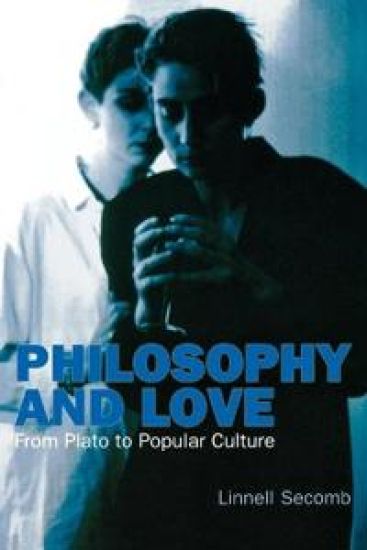
Philosophy and Love

Philosophy and Love

Linnell Secomb

Indiana University Press
2007
pokkari
Philosophy and Love introduces readers to philosophical reflections on love from Plato to the present. Bringing philosophy together with popular cultural analysis, Linnell Secomb provides an interesting and engaging account of theories of love throughout history. Along the way, reflections on same-sex desire, cross-cultural love, and internet romance are considered against the ideas of Nietzsche, Beauvoir, Irigaray, Derrida, and Fanon, and other contemporary cultural commentators on the human condition. The work also looks at cultural productions of love ranging from Sappho to Frankenstein by focusing on archetypal stories of love and love gone wrong. Philosophy and Love reveals an ethics and politics of love that discloses the paradoxes, conflicts, and intensity of human love relations.
Philosophy and Comedy

Philosophy and Comedy

Bernard Freydberg

Indiana University Press
2008
pokkari
Aristophanes' comedies have stood the test of time as some of the greatest comic literature ever produced. While there have been numerous commentaries on Aristophanes and his world, until now there has been no systematic philosophical treatment of his comedies. In Philosophy and Comedy, Bernard Freydberg illuminates the philosophical insights in Aristophanes' texts by presenting close readings of Clouds, Wasps, Assemblywomen, and Lysistrata, addressing their comic genius at the same time. Freydberg challenges notions that philosophy is best served by a tragic disposition and arrives at a new assessment of the philosophical importance of comedy.
Philosophy of Mathematics

Philosophy of Mathematics

Charles S. Peirce

Indiana University Press
2010
pokkari
The philosophy of mathematics plays a vital role in the mature philosophy of Charles S. Peirce. Peirce received rigorous mathematical training from his father and his philosophy carries on in decidedly mathematical and symbolic veins. For Peirce, math was a philosophical tool and many of his most productive ideas rest firmly on the foundation of mathematical principles. This volume collects Peirce's most important writings on the subject, many appearing in print for the first time. Peirce's determination to understand matter, the cosmos, and "the grand design" of the universe remain relevant for contemporary students of science, technology, and symbolic logic.
Philosophers in Exile

Philosophers in Exile

Indiana University Press
1989
sidottu
This book presents the remarkable correspondence between Alfred Schutz and Aron Gurwitsch, emigre philosophers influenced by Edmund Husserl, who fled Europe on the eve of World War II and ultimately became seminal figures in the establishment of phenomenology in the United States. Their deep and lasting friendship grew out of their mutual concern with the question of the connections between science and the life-world. Interwoven with philosophical exchange is the two scholars' encounter with the unfamiliar problems of American academic life—what Gurwitsch called the "passology" of exile. Apart from its brilliant and moving portrait of two distinguished men, the correspondence holds rich significance for current issues in philosophy and the social sciences.
Philosophical Provocations

Philosophical Provocations

Colin McGinn

MIT Press
2017
sidottu
Pithy, direct, and bold: essays that propose new ways to think about old problems, spanning a range of philosophical topics.In Philosophical Provocations, Colin McGinn offers a series of short, sharp essays that take on philosophical problems ranging from the concept of mind to paradox, altruism, and the relation between God and the Devil. Avoiding the usual scholarly apparatus and embracing a blunt pithiness, McGinn aims to achieve as much as possible in as short a space as possible while covering as many topics as possible. Much academic philosophical writing today is long, leaden, citation heavy, dense with qualifications, and painful to read. The essays in Philosophical Provocations are short, direct, and engaging, often challenging philosophical orthodoxy as they consider issues in mind, language, knowledge, metaphysics, biology, ethics, and religion.McGinn is looking for new ways to think about old problems. Thus he writes, about consciousness, "I think we have been all wrong," and goes on to suggest that both consciousness and the unconscious are mysteries. Summing up his proposal on altruism, he remarks, "My suggestion can now be stated, somewhat brutally, as follows: human altruism is the result of parasitic manipulation." He takes a moment to reflect: "I really don't know why it is good to be alive, though I am convinced that the standard suggestions don't work." McGinn gets straight to the point and states his position with maximum clarity. These essays offer provocative invitations to think again.
Philosophy of Love

Philosophy of Love

Irving Singer; Alan Soble

MIT Press
2011
pokkari
The author of the classic philosophical treatment of love reflects on the trajectory, over decades, of his thoughts on love and other topics.In 1984, Irving Singer published the first volume of what would become a classic and much acclaimed trilogy on love. Trained as an analytical philosopher, Singer first approached his subject with the tools of current philosophical methodology. Dissatisfied by the initial results (finding the chapters he had written "just dreary and unproductive of anything"), he turned to the history of ideas in philosophy and the arts for inspiration. He discovered an immensity of speculation and artistic practice that reached wholly beyond the parameters he had been trained to consider truly philosophical. In his three-volume work The Nature of Love, Singer tried to make sense of this historical progression within a framework that reflected his precise distinction-making and analytical background. In this new book, he maps the trajectory of his thinking on love. It is a "partial" summing-up of a lifework: partial because it expresses the author's still unfolding views, because it is a recapitulation of many published pages, because love-like any subject of that magnitude-resists a neatly comprehensive, all-inclusive formulation. Adopting an informal, even conversational, tone, Singer discusses, among other topics, the history of romantic love, the Platonic ideal, courtly and nineteenth-century Romantic love; the nature of passion; the concept of merging (and his critique of it); ideas about love in Freud, Schopenhauer, Nietzsche, Dewey, Santayana, Sartre, and other writers; and love in relation to democracy, existentialism, creativity, and the possible future of scientific investigation. Singer's writing on love embodies what he has learned as a contemporary philosopher, studying other authors in the field and "trying to get a little further." This book continues his trailblazing explorations.
Philosophy of Communication
Classical, modern, and contemporary philosophical writings that address the fundamental concepts of communication.To philosophize is to communicate philosophically. From its inception, philosophy has communicated forcefully. Socrates, Plato, and Aristotle talk a lot, and talk ardently. Because philosophy and communication have belonged together from the beginning-and because philosophy comes into its own and solidifies its stance through communication-it is logical that we subject communication to philosophical investigation. This collection of key works of classical, modern, and contemporary philosophers brings communication back into philosophy's orbit. It is the first anthology to gather in a single volume foundational works that address the core questions, concepts, and problems of communication in philosophical terms.The editors have chosen thirty-two selections from the work of Plato, Leibniz, Hegel, Husserl, Heidegger, Wittgenstein, Benjamin, Lacan, Derrida, Sloterdijk, and others. They have organized these texts thematically, rather than historically, in seven sections: consciousness; intersubjective understanding; language; writing and context; difference and subjectivity; gift and exchange; and communicability and community. Taken together, these texts not only lay the foundation for establishing communication as a distinct philosophical topic but also provide an outline of what philosophy of communication might look like.
Philosophy of Language

Philosophy of Language

Colin McGinn

MIT Press
2016
pokkari
An introduction to philosophy of language through systematic and accessible explanations of ten classic texts by such thinkers as Frege, Kripke, Russell, and Putnam.Many beginning students in philosophy of language find themselves grappling with dense and difficult texts not easily understood by someone new to the field. This book offers an introduction to philosophy of language by explaining ten classic, often anthologized, texts. Accessible and thorough, written with a unique combination of informality and careful formulation, the book addresses sense and reference, proper names, definite descriptions, indexicals, the definition of truth, truth and meaning, and the nature of speaker meaning, as addressed by Frege, Kripke, Russell, Donnellan, Kaplan, Evans, Putnam, Tarski, Davidson, and Grice. The explanations aim to be as simple as possible without sacrificing accuracy; critical assessments are included with the exposition in order to stimulate further thought and discussion.Philosophy of Language will be an essential resource for undergraduates in a typical philosophy of language course or for graduate students with no background in the field. It can be used in conjunction with an anthology of classic texts, sparing the instructor much arduous exegesis.ContentsFrege on Sense and Reference * Kripke on Names * Russell on Definite Descriptions * Donnellan's Distinction * Kaplan on Demonstratives * Evans on Understanding Demonstratives * Putnam on Semantic Externalism * Tarski's Theory of Truth * Davidson's Semantics for Natural Language * Grice's Theory of Speaker Meaning
Philosophy, Technology, and the Environment
Contributions by prominent scholars examining the intersections of environmental philosophy and philosophy of technology.Environmental philosophy and philosophy of technology have taken divergent paths despite their common interest in examining human modification of the natural world. Yet philosophers from each field have a lot to contribute to the other. Environmental issues inevitably involve technologies, and technologies inevitably have environmental impacts. In this book, prominent scholars from both fields illuminate the intersections of environmental philosophy and philosophy of technology, offering the beginnings of a rich new hybrid discourse. All the contributors share the intuition that technology and the environment overlap in ways that are relevant in both philosophical and practical terms. They consider such issues as the limits of technological interventions in the natural world, whether a concern for the environment can be designed into things, how consumerism relates us to artifacts and environments, and how food and animal agriculture raise questions about both culture and nature. They discuss, among other topics, the pessimism and dystopianism shared by environmentalists, environmental philosophers, and philosophers of technology; the ethics of geoengineering and climate change; the biological analogy at the heart of industrial ecology; green products and sustainable design; and agriculture as a bridge between technology and the environment.ContributorsBraden Allenby, Raymond Anthony, Philip Brey, J. Baird Callicott, Brett Clark, Wyatt Galusky, Ryan Gunderson, Benjamin Hale, Clare Heyward,Don Idhe, Mark Sagoff, Julian Savulescu, Paul B. Thompson, Ibo van de Poel, Zhang Wei,Kyle Powys Whyte
Philosophy and the Christian Faith

Philosophy and the Christian Faith

UNIVERSITY OF NOTRE DAME PRESS
1988
sidottu
In Philosophy and the Christian Faith, Thomas V. Morris brings together prominent contemporary philosophers to examine a number of doctrines central to traditional Christian theology. The essays straddle a complete spectrum of topics such as original sin, salvation, the Trinity, and eschatological pragmatism, all to the end of launching new philosophical research into the foundational ideas of Christian faith. The perspectives peculiar to Christianity on human nature and the reality of God richly reward this philosophic investigation.
Philosophy and the Christian Faith

Philosophy and the Christian Faith

University of Notre Dame Press
1988
nidottu
In Philosophy and the Christian Faith, Thomas V. Morris brings together prominent contemporary philosophers to examine a number of doctrines central to traditional Christian theology. The essays straddle a complete spectrum of topics such as original sin, salvation, the Trinity, and eschatological pragmatism, all to the end of launching new philosophical research into the foundational ideas of Christian faith. The perspectives peculiar to Christianity on human nature and the reality of God richly reward this philosophic investigation.
Philosophical Consequences of Quantum Theory

Philosophical Consequences of Quantum Theory

University of Notre Dame Press
1989
sidottu
From the beginning, the implications of quantum theory for our most general understanding of the world have been a matter of intense debate. Einstein argues that the theory had to be regarded as fundamentally incomplete. Its inability, for example, to predict the exact time of decay of a single radioactive atom had to be due to a failure of the theory and not due to a permanent inability on our part or a fundamental indeterminism in nature itself. In 1964, John Bell derived a theorem which showed that any deterministic theory which preserved "locality" (i.e., which rejected action at a distance) would have certain consequences for measurements performed at a distance from one another. An experimental check seems to show that these consequences are not, in fact, realized. The correlation between the sets of events is much stronger than any "local" deterministic theory could allow. What is more, this stronger correlation is precisely that which is predicted by quantum theory. The astonishing result is that local deterministic theories of the classical sort seem to be permanently excluded. Not only can the individual decay not be predicted, but no future theory can ever predict it. The contributors in this volume wrestle with this conclusion. Some welcome it; others leave open a return to at lease some kind of deterministic world, one which must however allow something like action-at-a distance. How much lit it? And how can one avoid violating relativity theory, which excludes action-at-a-distance? How can a clash between the two fundamental theories of modern physics, relativity and quantum theory, be avoided? What are the consequences for the traditional philosophic issue of causality explanation and objectivity? One thing is certain; we can never return to the comfortable Newtonian world where everything that happened was, in principle, predictable and where what happened at one measurement site could not affect another set of measurements being performed light-years away, at a distance that a light-signal could not bridge. Contributors: James T. Cushing, Abner Shimony, N. David Mermin, Jon P. Jarrett, Linda Wessels, Bas C. van Fraassen, Jeremy Butterfield, Michael L. G. Redhead, Henry P. Stapp, Arthur Fine, R. I. G. Hughes, Paul Teller, Don Howard, Henry J. Folse, and Ernan McMullin.
Philosophical Consequences of Quantum Theory

Philosophical Consequences of Quantum Theory

University of Notre Dame Press
1992
nidottu
From the beginning, the implications of quantum theory for our most general understanding of the world have been a matter of intense debate. Einstein argues that the theory had to be regarded as fundamentally incomplete. Its inability, for example, to predict the exact time of decay of a single radioactive atom had to be due to a failure of the theory and not due to a permanent inability on our part or a fundamental indeterminism in nature itself. In 1964, John Bell derived a theorem which showed that any deterministic theory which preserved "locality" (i.e., which rejected action at a distance) would have certain consequences for measurements performed at a distance from one another. An experimental check seems to show that these consequences are not, in fact, realized. The correlation between the sets of events is much stronger than any "local" deterministic theory could allow. What is more, this stronger correlation is precisely that which is predicted by quantum theory. The astonishing result is that local deterministic theories of the classical sort seem to be permanently excluded. Not only can the individual decay not be predicted, but no future theory can ever predict it. The contributors in this volume wrestle with this conclusion. Some welcome it; others leave open a return to at lease some kind of deterministic world, one which must however allow something like action-at-a distance. How much lit it? And how can one avoid violating relativity theory, which excludes action-at-a-distance? How can a clash between the two fundamental theories of modern physics, relativity and quantum theory, be avoided? What are the consequences for the traditional philosophic issue of causality explanation and objectivity? One thing is certain; we can never return to the comfortable Newtonian world where everything that happened was, in principle, predictable and where what happened at one measurement site could not affect another set of measurements being performed light-years away, at a distance that a light-signal could not bridge. Contributors: James T. Cushing, Abner Shimony, N. David Mermin, Jon P. Jarrett, Linda Wessels, Bas C. van Fraassen, Jeremy Butterfield, Michael L. G. Redhead, Henry P. Stapp, Arthur Fine, R. I. G. Hughes, Paul Teller, Don Howard, Henry J. Folse, and Ernan McMullin.